Tag: trades

  • The Human War with Technology

    The Human War with Technology

    Technology has become the essence of our everyday lifestyle. A life without our Blackberry’s or iPhone’s is a life that cannot be lived. Imagine how everyday tasks that have been simplified to suit our preference have been altered by technology to get the job done faster. Whether at school, work, or home, technology has made life easier by replacing everyday tasks with machines that process the work efficiently, saving you time and energy. However, one thing to be wary about is the replacement of, well, human beings. You see, with this booming techno-era becoming so dependent on machinery tools to operate us, they will soon operate without us. Technological innovation is so consistent and rapid that every day a couple of new items enter the market for competition and since every company is aware of this massive command, they go to extreme measures. For instance, the need to save time, reduce costs, and improve the safety and reliability of their product, companies will lay off and downsize their staff to hire professionals in the same field located overseas for cheaper labour, but who possess the same credibility and education level (if not more).

    According to Career Planner, some of the jobs that will witness a reduction from North America and Europe in the near future are data entry, programming, technical support, and customer service jobs. Even accounting will be done in countries unfamiliar to our roots; yet have perfectly mastered our education and language. Talent and expertise are no longer suited with a job offer and great pay; the willingness for companies to pay high prices for local contenders will soon be obsolete, and lower cost labour will move to other countries.

    However, students can surpass these challenges by choosing wisely their career path today. By picking a profession that cannot be performed remotely by someone else overseas, you can guarantee security. Here are some of the secure jobs of the future (to list a few) that will still be in demand, cannot be replaced, and require face-to-face interaction, speed, and are complex in their nature. When searching for the right career, make sure it requires physical energy, high level of skills and creativity (so it is not easily completed by someone else), and are hands on. Do not panic if the career you really love is technology based; do your homework and make sure you get familiar with onshore/offshore jobs for the future. No job is ever guaranteed, therefore to secure your position for tomorrow you must be aware of the fluctuation of the economy, along with its unexpected changes.  Plan it right today!

    High Demand Jobs for the Next 10 Years
    1.    Carpentry
    2.    Plumbing
    3.    Electrician
    4.    Hair Stylist
    5.    Construction Contractors
    6.    Auto Mechanics
    7.    Dental Hygienist
    8.    Truck Drivers for delivery service (UPS, FEDEX, Postal Service)
    9.    Airplane Mechanics
    10.  Entertainment (Actor, Singer)
    11.  Writer
    12.  Marketing Strategist
    13.  Lawyers
    14.  Doctors
    15.  Nurses (particularly home healthcare and nursing homes)
    16.  Politician
    17. Security and Financial Service Rep
    18. Real Estate Agent
    19. Teachers
    20. Emergency Medical Technicians
    21. Surgeon
    22. Chiropractor
    23. Therapists
    24. Medical Lab Technician

  • Joining the Trades: What Can I Be?

    Joining the Trades: What Can I Be?

    Are you wondering what types of careers are available to you in the trades sector? There is literally thousands to choose from. Check out just a few of the careers we found on CareersInTrades.ca!

    Construction
    Construction and Maintenance is the best known skilled trades sector. These jobs are available across Canada in both urban and rural areas. Some of its apprenticeable trades are:
    – Bricklayer
    – Heavy equipment operator
    – Painter and decorator
    – Ironworker
    – Mechanic
    – Plumber
    – Welder

    Transportation
    Transportation trades cover vehicles ranging from automobiles and motorcycles to airplanes and cranes. These jobs are anywhere vehicles can be found, which can be a farm, an airport, a harbour or any street! Some of the apprenticeship trades include:
    – Agricultural Equipment Technician
    – Aircraft Maintenance Mechanic
    – Auto Body Repairer
    – Motorcycle Mechanic
    – Transport Trailer Technician

    Manufacturing
    Manufacturing trades can lead to careers in many different sectors, including cars, textiles and even food production. These careers can secure a job in many manufacturers and bring you to the root of product development. Some of the apprenticeable trades include:
    – Automotive Machinist
    – Graphic Arts (Pre-Press, Press and Bindery)
    – Industrial Electrician
    – Power System Operator
    – Sawfiler/Fitter
    – Tool and Die Maker

    Service
    The service sector offers jobs for those interested in working more closely with the public. From chefs to hairstyling, this sector offers many career opportunities. Some of the apprenticeable trades include:
    – Arboriculturist
    – Baker
    – Barber
    – Graphic Arts Technician
    – Hairstylist
    – Jeweler and Goldsmith
    – Upholsterer

  • Trades Make the Grade!

    Trades Make the Grade!

    With so much attention brought to the business and management industries during Canada’s rekindling economic climate, many core fields of work are being overlooked by the students; one of these being the trades.

    The skilled trades are a growing field of work that is in constant need of well-trained workers.

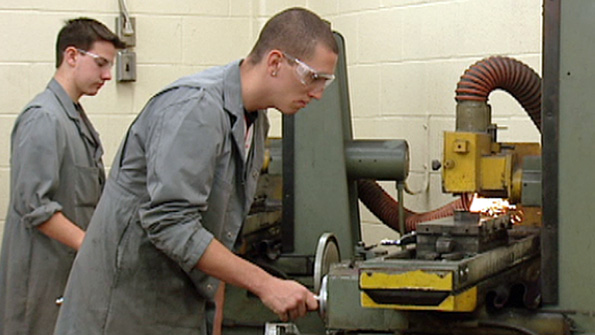
    What exactly is a skilled trade? It can be defined as an expertness of a specific skill, usually attained through years of training and commonly related to construction and repair. The skills that are considered “trades skills” range broadly from carpenter, electrician, automotive technician, plumber, pipe fitter, welder and much more.

    There is a common misconception that the trades are considered “blue collar” jobs done through informal training. In reality there are a plentitude of academic institutions that provide education and preparation in the trades.

    Although it is common to get into the trades through practical training, it doesn’t mean you will be making less money than someone who attended university. Tradespeople are some of the highest paid employees in Canada. Not only is a customer paying for your knowledge about a trade, but they are also paying for expert performance.

    If you enjoy learning new lessons everyday and aren’t afraid to be challenged, a career in the trades might suit you. Trades jobs are considered demanding and will put your mind and body to the test daily. If you enjoy a hands-on work environment, and are interested in how things work, this field may be what you want to look at.

    There is an increasing shortage in the skilled trades. According to careersintrades.ca, 67% of young adults choose university over a college education in the trades because it was encouraged more by friends and family. There were also instances in which a lack of information about the trades swayed students away from the sector.

    So, what exactly are the steps to take to become a tradespeople? The most efficient and reputable manner to becoming certified in the trades is an apprenticeship. This way, you are getting one-on-one experience with a master in the trade who can help you further your knowledge and skills. Many college programs that deal with the trades have their own apprenticeship training programs. So go and check out your local college to see what they offer, or look on Jobs People Do to see what colleges offer certain apprenticeships.

    The best thing to do in your early years of education is to look at high schools that provide introductory training of a trades skill you are interested in. Julian Finbow Westlane graduate, claims that: “Taking the refrigeration course at such a young age was extremely beneficial for the jobs I am interested in.”

    Julian is looking to develop his trade skills in refrigeration, and is planning on either taking a apprenticeship or going to college.
    Become involved and research trade skills you think will peak your interest. It may be beneficial to shaping your career path! So put on that thinking cap (or hardhat for this situation) and immerse yourself in the trades.

  • Co-Opportunities

    Co-Opportunities

    With Canada’s unemployment rate at an estimated 7.6 per cent and the youth unemployment rate almost double that at approximately 14 per cent, it is becoming evident that one of the greatest tolls of the global economic downturn in this country is not necessarily job loss, but a lack of entry-level positions. Statistics suggest that higher education is key to improving the standard of living. University degrees are often not useful in predicting a person’s career prospects, particularly in regard to the types of employment a graduate may be best suited to undertake.

    In many instances, individuals will not directly use their degrees in their future professions. There are varying reasons for this, including the fact that individuals may change their minds or circumstances, or select a field of study that does not have a corresponding profession. However, to a large extent, the reason is the same as the cause of high youth unemployment: most degrees do not offer practical experience in a particular field of employment.

    There’s a saying about employment: you can’t get hired without job experience, but you can’t get job experience without being hired. This is the bind in which many university students are caught under our current system.

    So, how can it be remedied? How can students be free to pursue their desired degrees while at the same time gaining a leg up in the job market? Well, we don’t need to look far to see how it is done. Canada’s own University of Waterloo offers the country’s largest co-operative education program. Waterloo’s co-op system offers a combination of study and work semesters in which each student has access to an administrator who helps students find placements during work terms. This has the added bonus of providing students with paid employment during the school year, which means that, in many instances, students in the co-op program can graduate with a lower level of student debt than their non-co-op counterparts.

    But it is not just Waterloo that uses a co-op system. U of T’s Scarborough campus also has a program. And recently, the country of Singapore announced that it is adopting co-op programs in all of its public universities in order to address the concerns voiced by employers about graduates having insufficient work experience to do their jobs properly. This was putting a drag on the economy as businesses had to invest in costly training programs for new hires — making them less likely to hire recent grads.

    The biggest concern regarding implementing a plan like this on a wide-scale basis, as Singapore has done, is that not every degree program has a corresponding list of potential jobs. However, co-op programs are voluntary and it should also be noted that every student has some idea of the types of jobs that might interest them — which leads to another advantage of the co-op program: instead of graduating and jumping into a career only to realize that it isn’t the right fit, students have four years in which to try out different career options.

    Say you are studying political science in university and have a desire to work in journalism. You get a co-op job at a newspaper and suddenly you find it isn’t as much like All the President’s Men as you had initially thought. If you had already graduated you would be in some serious trouble. Instead, in a co-op program you get to return to a semester of school and think about all the different placements that might mesh with your major. You could work at a polling company, a political advisory firm, or find a job in a government department. You can try each of them out and, after your time at university, you have a better understanding of what career you want to pursue, while also having an impressive resume to help you get the job you want.

    Students need jobs. If a generation is saddled with unemployment, it harms everyone, causing a lack of dignity, lower standards of living, strained public services, and employers who cannot find the necessary talent to fill positions. Instead, Ontario can respond to youth unemployment with a plan that will not only help young people, but will also ensure that the province leaves the recession in a stronger position than when it first entered it. The way forward is to adopt a co-op program to ensure that students have the option of practical work experience to complement their traditional degree program when attending university.

  • Renewable Energy – A Trade for the Future

    Renewable Energy – A Trade for the Future

    Are you seeking a future-centric career? Looking to make a difference in the world? Want to join an industry destined to flourish significantly within your lifetime?

    With a growing awareness of the negative impacts humans have had on the environment, the increasing concern of environmental problems such as global warming, and the fight to preserve and find alternative ways to sustain the environment and human life, the renewable energy sector provides many opportunities for a rewarding career.

    As more alternative energy options are unveiled, more positions within the renewable energy sector are becoming available. Perhaps you’ll be the person responsible for energy audits, a technician working on solar panels, a designer of wind farms, or working to promote more sustainable building practices. The opportunities are endless and will continue to grow thanks to government initiatives to improve energy practices.

    In 2009, Ontario introduced a Green Energy Act, which was committed to promoting and supporting green energy projects and supporting energy efficiency province-wide, joining in a worldwide initiative to move toward renewable practices.

    The Ministry of Energy has also introduced many incentive programs, including tax rebates, to encourage Canadians to make energy updated to their homes. This could include installing solar panels or wind turbines, geothermal heating or cooling, and more.

    As the renewable energy sector grows, more programs are being offered at post secondary institutions throughout the province and country. Programs are for energy technicians, renewable energy technicians, sustainable building construction, sustainable agriculture, wind turbine technicians and more.

    If you’re looking to explore a rewarding career with opportunities for further growth, development and innovation, then a renewable energy career is perfect for you.

    Depending on the type of renewable energy career you’re interested in pursuing, there are apprenticeship, diploma, and degree opportunities available to suit your wants and needs. The opportunities are endless.

  • Why Red Seal Trades Might Work For You

    Why Red Seal Trades Might Work For You

    You may have heard the advice, “learn a trade – it’s an important skill to have.” That’s good advice: there will always be a need for carpenters, electricians, plumbers, mechanics, and welders. But what exactly is a Red Seal trade? What financial assistance is there for a person interested in becoming a tradesperson? How do you find out which trade is right for you? Read on to find out.

    In short, a Red Seal trade is one where you may work as a tradesperson in any province without having to take extra qualifications. The training and certifications of Red Seal trades are not individualized to each province; rather, they are standardized on a national level. Although each province is responsible for educating and training apprentices, or those who are at an entry level in their industry of choice, the Red Seal Program promotes the coordination of standards across the country. But in order to qualify as a journeyperson with a Red Seal, apprentices need a mix of classroom instruction and on-the-job training. Although they earn money while training on the job, acquiring necessary tools and classroom instruction is expensive.

    The government recognizes the necessity to fund tradespeople. There is a provision called the Apprenticeship Incentive Grant, which is a $1000-$2000 per year taxable cash grant for apprentices once they have successfully completed their first or second year or level of their program in one of the Red Seal trades. Another is the Apprenticeship Completion Grant, which is available to an apprentice who completes their training and acquires their journeyperson certification in a Red Seal trade. But tools are expensive, too. The government provides the Tradesperson’s Tools Deduction of up to $500 yearly to assist in the purchase of new tools necessary for the trade in question. That leaves one final question: which trade to choose?

    In Ontario, there are forty seven trades of the Program’s available 55 that you may choose from. These range from Automotive Service Technician to Baker to Hairstylist to Welder. The official website, www.red-seal.ca, contains a detailed job description of each. For instance, its page on carpentry tells us that “Carpenters construct, renovate and repair residential, institutional, commercial, and industrial … structures made of wood, steel, concrete and other materials.” We read about the risks involved, knowledge that a carpenter ought to have, and other skills that are useful. It tells us the career path a carpenter may be interested in taking. Further down the page, there is a chart that tells us that there is a provincial certification in all thirteen provinces and territories. Beyond that is additional information with links to relevant documents. You can also find this information on any of the other Red Seal trade pages. Read them over and decide which one may fit you best. Do you have an affinity for working in the kitchen? Bakers and Chefs can become Red Seal certified. Like tinkering with engines and other machines? A wide variety of trades will let you do just that: Automotive Service Technicians and Heavy Duty Equipment Technicians are among those who may acquire their Red Seal.

    The opportunities are numerous, and you can work anywhere in the country. Why not look into qualifying for a Red Seal trade?

  • I’m an Apprentice – How Do I Find an Employer?

    I’m an Apprentice – How Do I Find an Employer?

    Finding an employer is the first and often most difficult step in an apprenticeship. If the employer you’re interested in approaching doesn’t employ apprentices, check out our list of resources for employers and know your facts when you go meet with them. They might be willing to consider hiring an apprentice, once they are aware of the business case that supports apprenticeship training.

    Network
    Just like any job seeker, talking with people who are already employed in the trade for a good source of information about becoming a skilled tradesperson. Some apprentices find employers through family and friends. Another good place to meet potential contacts is through organizations such as trade unions, professional association or training institutions. Don’t forget to consider local employment offices, programs and agencies, especially those that specialize in trades-related training and employment. You may also want to consider approaching an employer or training instructor to ask for an informational interview. This is a great way to learn about job opportunities and connect with potential employers.

    Upgrade your job
    Some skilled tradespeople start working for an employer in a different capacity, then apply for a trades position when one becomes available. For example, one man began working as a general delivery person for a construction company. After a year or two, he decided to approach his employer about hiring him as a plumbing apprentice. Today, several years later, he is a fully qualified journeyperson plumber working for the same construction company and earning more than twice the pay.

    Search job boards/internet
    Job leads can also be found on major job boards, such as Monster.ca, Workopolis and working.canada.com. Search using terms such as “trades,” “construction” and “manufacturing” or go to sections designed for jobs in these fields. While you’re there, check out their resources for résumé and interview tips.

    Don’t forget – once you’ve found an employer, you still have to:
    – Register at your local apprenticeship office
    – Apply for grants and supports

  • What Does an Environmental Engineer Do?

    What Does an Environmental Engineer Do?

    Environmental engineers are the technical professionals who identify and design solutions for environmental problems. Environmental engineers provide safe drinking water, treat and properly dispose of wastes, maintain air quality, control water pollution, and remediate sites contaminated due to spills or improper disposal of hazardous substances. They monitor the quality of the air, water and land. They also develop new and improved means to protect the environment.

    Although many people are concerned about the state of our environment, environmental engineers are the people who do things to protect it from damage and to correct existing problems. Environmental engineers possess the scientific and technical knowledge to identify, design, build, and operate systems that make modern society possible.

    The environmental engineering field and environmental engineering education are multi-disciplinary. They involve traditional engineering components such as mathematics, physics, chemistry, and engineering design. But environmental engineering education and practice also includes a range of other disciplines, such as biology, microbiology, ecology, public health, geology, meteorology, economics, political science, and computer science. To address the spectrum of issues facing the environment, environmental engineers are broadly educated, as well as technically trained.

    Where do Environmental Engineers Work?

    Environmental engineers work in many places.

    • Engineering consulting firms that design and construct water pollution-control systems
    • Industries that need to treat their air or waste-water discharges
    • Private and municipal agencies that supply drinking water
    • Companies that treat and dispose of hazardous chemicals
    • Companies that operate treatment facilities for municipalities or industries
    • Government agencies that monitor and regulate waste discharges
    • Universities that teach and conduct research on environmental control
    • Private and government laboratories that develop the new generations of pollution-control systems
    • International agencies that transfer knowledge and technology to the developing world
    • Public-interest groups that advocate environmental protection

    What do Environmental Engineers Know?

    Like most engineers, environmental engineers must have a strong background in mathematics, physics, and chemistry. They learn engineering problem-solving and how to work in teams to accomplish goals. They develop the ability to apply scientific principles as part of making engineering decisions. Environmental engineers are skilled at analysis and design, and they apply their knowledge to protect the environment and human health.

    The breadth and multi-disciplinary nature of environmental issues requires that environmental engineers expand their skills beyond the range normally associated with any single engineering field. Depending upon their specific career goals, environmental engineers gain knowledge and skills in areas such as chemical technology, geology, water and atmospheric chemistry, microbiology, toxicology, hydrology, soil science, computers, economics, and law.

    What is Required to be Licensed as an Environmental Engineer?

    Engineering licensure is a prestigious step in professional growth and development. Licensure is a way for engineers to demonstrate to their employer and clients their commitment to the profession. Licensure is a four-step process. It requires graduation from an accredited civil engineering program, passing the Fundamentals of Engineering exam, having four years of work experience, and passing the professional engineering examination.

    How do You Become an Environmental Engineer?

    You can pursue environmental engineering as part of a Bachelor’s degree program in civil engineering.

    Graduate education, leading to a Master of Science or to a Doctor of Philosophy degree, is an important part of environmental engineering. Graduate programs are open to students who do not have a Bachelors degree in civil or environmental engineering, as well as to those students who study environmental engineering as undergraduates. This openness to students with a wide range of backgrounds is a hallmark of environmental engineering and continually brings fresh ideas to the environmental engineering field.

  • Why the Trades?

    Why the Trades?

    With so much attention brought to the business and management industries during Canadaʼs rekindling economic climate, many core fields of work are being overlooked by the students; one of these being the trades.

    The skilled trades are a growing field of work that is in constant need of well-trained workers.

    What exactly is a skilled trade? It can be defined as an expertness of a specific skill, usually attained through years of training and commonly related to construction and repair. The skills that are considered “trades skills” range broadly from carpenter, electrician, automotive technician, plumber, pipe fitter, welder and much more.

    There is a common misconception that the trades are considered “blue collar” jobs done through informal training. In reality there are a plentitude of academic institutions that provide education and preparation in the trades.

    Although it is common to get into the trades through practical training, it doesnʼt mean you will be making less money than someone who attended university. Tradespeople are some of the highest paid employees in Canada.  Not only is a customer paying for your knowledge about a trade, but they are also paying for expert performance.

    If you enjoy learning new lessons everyday and arenʼt afraid to be challenged, a career in the trades might suit you. Trades jobs are considered demanding and will put your mind and body to the test daily. If you enjoy a hands-on work environment, and are interested in how things work, this field may be what you want to look at.

    There is an increasing shortage in the skilled trades. According to careersintrades.ca, 67% of young adults choose university over a college education in the trades because it was encouraged more by friends and family. There were also instances in which a lack of information about the trades swayed students away from the sector.

    So, what exactly are the steps to take to become tradespeople? The most efficient and reputable manner to becoming certified in the trades is an apprenticeship. This way, you are getting one-on-one experience with a master in the trade who can help you further your knowledge and skills. Many college programs that deal with the trades have their own apprenticeship training programs. So go and check out your local college to see what they offer, or look on Jobs People Do to see what colleges offer certain apprenticeships.

    The best thing to do in your early years of education is to look at high schools that provide introductory training of a trades skill you are interested in. Julian Finbow Westlane graduate, claims that:

    “Taking the refrigeration course at such a young age was extremely beneficial for the jobs I am interested in.”

    Julian is looking to develop his trade skills in refrigeration, and is planning on either taking a apprenticeship or going to college.

    Become involved and research trade skills you think will peak your interest. It may be beneficial to shaping your career path! So put on that thinking cap (or hardhat for this situation) and immerse yourself in the trades.

  • Women in Skilled Trades – The Time is Now

    Women in Skilled Trades – The Time is Now

    You’re a girl that knows what she wants.

    Rolling up your sleeves for a demanding, rewarding, and well-paying career that combines both your hands-on and creative interests; that’s the future you want. And now is the perfect time to go get it!

    Currently, the Canadian government is working to address a skills mismatch, which has many workers under trained or unprepared for the current economy’s workforce.

    According to a February 2013 publication titled Looking for a job? Why you should consider a trade in The Globe and Mail, there will be a shortage of one million tradespeople in Canada by 2020. For women interested in pursuing a career in the skilled trades, this means that now is the perfect time to start the path to career success in this high-demand industry.

    While some may be nervous to start a career in the skilled trades, which has been and is predominantly male, there are a number of support programs and aids available to assist women as they train for a career in the trades.

    The government of Ontario offers a Women in Skilled Trades and Information Technology Training program, which provides unemployed and underemployed women in communities with a high demand for skilled trades and IT professionals funding and training both in-class and on-the-job.

    Additionally there are other organizations and support programs throughout the province, country, and world dedicated to women interested in the trades. For example, Women in Nuclear (WIN) offers mentorship, networking and professional development opportunities for women interested in nuclear energy.

    Similarly, the Canadian Association of Women in Construction provides support for women interested in pursuing a successful career in the construction industry.

    There are plenty of other programs designed for women interested in pursuing a career in the skilled trades, offering a community of mentorship, funding, networking, and support specifically for women.

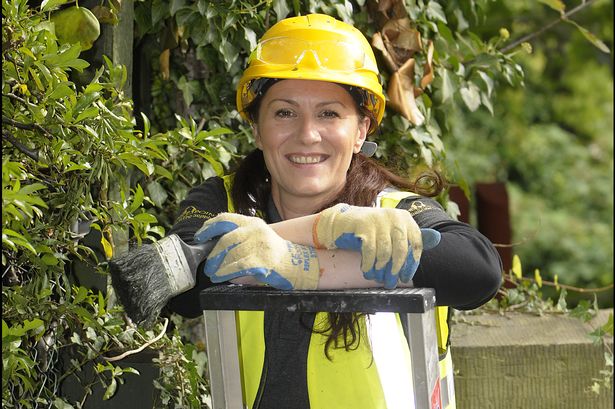
    With a growing presence of women entering the skilled trades, there has also been a growing presence of women’s skilled trades equipment and clothing. Moxie Trades provides mentorship, support, and apparel for women working in the trades. Whether it’s pink work boots, hard hats or safety glasses, or speaking at events across North America, Moxie Trades is a voice for women in the trades.

    Once thought of as primarily a male industry, women are moving toward more inclusion in the skilled trades.

    If you’re looking for a rewarding, secure, financially stable career in your future – it’s time to invest in the next steps toward a career in the skilled trades.