Tag: trades

  • STEM Jobs: Petroleum Engineer

    STEM Jobs: Petroleum Engineer

    What is a Petroleum Engineer?
    Oil and gas are two of the most crucial energy resources we rely upon in the modern world. Oil and gas companies extract the deposits of these resources from the earth and facilitate their distribution as an energy source. But how do they know where to dig? This is where a petroleum engineer enters the picture. Petroleum engineers are tasked with finding oil and gas deposits as well as developing ways to extract those deposits from the ground. They design, plan and execute drilling projects to ensure the safest, most effective way of implementing oil and gas wells.

    On-the-Job Duties
    The day-to-day duties of a petroleum engineer include designing and implementing ideal methods of drilling. Often they are responsible for monitoring the drilling area (including the ground, the rocks and the equipment) to ensure optimal conditions for drilling operations that harvest the maximum amount of oil and gas deposits.

    Who do they work for?
    Petroleum engineers are most often hired by companies who produced petroleum, but they can also find employment as consultants, researchers, and policymakers with the government. In some sectors petroleum engineers can also be called oil and gas reservoir engineers, well logging engineers, mud engineers, sub-sea engineers and drilling engineers.

    Salary
    Petroleum engineers can earn a yearly salary of anywhere from $35,000 to over $130,000, depending on seniority.

    Required Education
    The educational background of petroleum engineers can vary, but all are rooted in engineering. Attaining a bachelor’s degree in either petroleum engineering or a related program like biochemical engineering is the best way start off. Next, earn a master’s degree in petroleum engineering followed by a PhD to maximize career opportunities. For some aspects of the job, like approving drilling designs, a professional engineering license will be required.

    Other Skills
    Leadership, time management, critical thinking, logic, creativity, team work, and communication are crucial to the success of a petroleum engineer.

  • Hairdressing – Beauty as a Trade

    Hairdressing – Beauty as a Trade

    Hammer, screwdriver, wrench, scissors, shampoo, styling product – on the outside, a career in hairdressing shares little with a career in engineering or construction, yet they’re more similar than one would think.

    Often, when thinking about careers in the trades, the first thought is to the construction, industrial, or automotive industry. In fact, many service-based careers such as chef, child and youth worker, special events coordinator, and hairdresser are also considered skilled trades. Through on-the-job training and in-class sessions, you can become a certified hairstylist.

    Similar to a construction worker, a hairdresser prepares their work area with an array of tools including scissors, razors, combs, curling iron, and other specialized apparatus to accomplish different styles and techniques. With training, this equipment can be used to meet clientele needs, whether it be a quick trim or a full make over.

    A position in hairdressing is much more than just styling and beautifying clients. A hairdresser can also be responsible for the training or supervision of other stylists and assistants. Hairdressers are often business-minded individuals; often completing administrative tasks such as record keeping, supply ordering, and salon upkeep.

    A career as a hairstylist fits into the service sector in the Ontario College of Trades, requiring those interested in becoming a hairdresser to earn a Certificate of Qualification through apprenticeship training and examination.

    With individuals always seeking to invest time into looking good and feeling good, there is always a demand for hairstylists. Hairstylists can find work in this high-demand career working for beauty salons, hotels, and hospitals, or working in an at-home salon.

    While contemplating future career options, it’s important to investigate all opportunities available. Many may skip over the skilled trades assuming there aren’t any opportunities suited to their needs; when in fact there are plenty of opportunities within the skilled trades for creative, business-minded, driven individuals seeking a rewarding, high-paying career in a secure industry.

    From construction to automotive to the beauty-inspiring, service-based industry that includes hairdressing, there’s a career in the skilled trades for you.

  • Financial Benefits of Going to Trade School

    Financial Benefits of Going to Trade School

    These days, student debt is big news. Television programs and newspaper reports often feature the stories of university graduates, tens of thousands of dollars in debt, being forced to take low-paying jobs because there is no work in their fields. If you are close to graduating from high school, you might be worried about how you can ever manage the pressures of such a difficult situation. Have you ever considered trade school as an option? Going to a trade school rather than university or college can be a good decision for both personal and financial reasons.

    Making the decision to attend trade school depends very much on your interests and career goals. If you want to become an engineer, lawyer, or doctor, university is your only option. If you want to work in many other fields, such as technical writing, a community college is a good place to become qualified. However, earning official qualifications at a trade school might be best if you want to become an electrician, pipefitter, or hairstylist. Certification through a trade program will give you the practical skills you need to become qualified for the job you want.

    Going to trade school is a good way of getting into a stable, high-paying career quickly. Graduates of colleges or trade schools are more likely than university graduates to find work in their chosen field soon after graduation. Trade programs are generally only a few months long, and then the graduates can usually find work almost immediately. People who graduate from a trade school are likely to become successful in their chosen careers quite quickly.

    One of the main benefits of trade school is its practical focus. In a university engineering program, for example, students might learn about the theory behind why pulleys make it easier to lift heavy objects. In trade school, students would learn how to build and use pulleys. The background information on why things work is important for people in the planning and theoretical branches of the job. For day-to-day work, however, practical knowledge is often more useful. Graduates from universities and colleges often have little practical experience when they graduate, but trade school graduates come out ready to work.

    Going to trade school also has an advantage over going straight from school into a job. In trade school, people learn the job in a logical, step-by-step manner while also having the chance to apply what they have learned on the job. In many countries in Europe and elsewhere, graduates of trade schools receive higher wages than people who have no particular qualifications. The financial benefits can be worth the initial expense.

    Are you interested in getting into a high-paying, stable job after you finish high school? Consider trade school as an option for your future.

  • Career Profile: Carpenter

    Career Profile: Carpenter

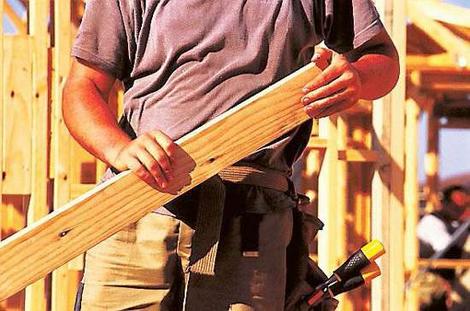
    Most people like building things at some point of their lives. Do you remember piling blocks on top of each other when you were younger? How would you like to spend your working life building anything from skyscrapers to bathroom cabinets? If you like the idea, you might want to consider a career as a carpenter.

    Carpenters do a variety of jobs in any construction project. They help estimate costs, read the blueprints that help builders know what to do, and help measure and cut materials for construction. They might supervise other workers and help make sure that they follow all of the rules for safe building procedures. Being able to follow detailed instructions is important in carpentry work.

    Carpenters work with many different tools as they help shape wood or sometimes other materials into whatever structure is needed. Many famous buildings, including the CN Tower in Toronto, have had carpenters involved in the building process. Most carpenters in Canada work in the construction industry, although some still work with smaller projects for individual customers. Some carpenters have their own businesses, while others work for established companies.

    What qualities to carpenters need to have? Besides an interest in building things, they need certain personal characteristics. They need to be fairly healthy and strong, with the ability to work when they’re standing, crouching, or kneeling. They need to be good with their hands and to have good balance. Small injuries are common for carpenters, especially when they deal with dangerous chemicals or work with materials that can fly out and hit them. Because of the dangers, an awareness of safety is an important quality for carpenters.

    Besides all of these characteristics, carpenters need to have the right mental qualities. Sometimes, carpenters’ work involves quick calculations of measurements, and they have to be good at mathematics. An ability to work well with people is also important, as well as a tolerance for long working days. Both technical and personal skills are important in carpentry work.

    Do you have the qualities that carpenters need to succeed? If you do, you can start to plan the next steps of your career. The first step is to find a company or an individual carpenter willing to take you on as an apprentice. After learning on the job and receiving technical training at a school for about four years, you can then take an exam. If you pass, you will be a registered carpenter with the ability to work anywhere in Canada. Salaries in carpentry can range from about $45,000 per year to $60,000, and sometimes even more.

    Carpentry is a great choice for anyone who likes to build. If that describes you, a career in carpentry might be your best choice.

  • Why Trades? Labour Shortages in Canada

    Why Trades? Labour Shortages in Canada

    The trades are one of the fastest growing sectors in Canada and, as such, there are projected labour shortages in the coming years. This means there are more jobs than there are people to fill them. For this reason, a career in trades is a great way to ensure you will have employment when you leave school.

    Red Seal Trades:
    Based on the Canadian Occupations Projections for Red Seal trades, there are 24 Red Seal trades with projected labour shortages.

    Construction:
    The national construction labour force is estimated to rise by 100,000 workers between 2012 and 2020. The industry will need to replace 219,000 workers that are expected to retire over the next decade.

    To address expansion and replacement demand requirements, industry will need to recruit an estimated 319,000 new workers to construction.

    Growth in construction will be concentrated in the non-residential sector related mostly to resource projects. Trades required for this type of construction work include: boilermakers, carpenters, construction estimators, construction millwrights and industrial mechanics, crane operators, electricians, gasfitters, ironworkers, plumbers, sheet metal workers, steamfitters and pipefitters, and welders.

    Oil and Gas:
    By 2015, employment in the oil sands sector is projected to increase by 29 per cent over 2011 levels, or approximately 5,850 jobs.

    The pipeline sector will add about 530 jobs over the same period.

    The industry will need to do significant hiring to replace retiring workers and for turnover.

    Mining:
    The mining industry will need 112,000 new workers by 2020.

    Forty per cent of the industry are 50 years old or older. One third of the workforce will be eligible to retire by 2015.

    In Ontario, for example, employers will have significant hiring requirements– almost 16,000 workers over the coming decade will be needed just to replace retiring workers and people who leave the mining workforce in Ontario for other reasons.

    Automotive:
    In the automotive industry, cumulative shortages over the next ten years are projected to range between 43,700 to 77,150 positions.

    Overall, almost one-half (48.1%) of employers reported that the insufficient supply of qualified staff to hire was a significant or very significant issue for their organization.

    Labour shortages were seen as a major problem among employers in the motorcycle repair sector (57.1%) and auto body/collision repair sector (54.3%).

    Tourism:
    By 2030, demand for labour in the tourism sector will grow to 2.1 million jobs, an increase of 33 per cent.

    The growing gap between labour demand and the number of available workers will cause a significant number of jobs to go unfilled over the next 20 years.

    By 2030, shortages in the tourism sector could grow to 228,000 jobs, leaving 10.7 per cent of potential labour demand unfilled.

    If the expected shortages are not mitigated, the sector could forgo $31.4 billion in potential revenues by 2030.

  • A Career in Trades: Automotive Service Technician

    A Career in Trades: Automotive Service Technician

    Do you…
    • Enjoy working with your hands?
    • Enjoy fixing cars, trucks, motorcycles or small engines?
    • Want to learn more about electrical, hydraulics (fluid power), pneumatics (air power) and mechanical components in machines?

    If you answered “yes” to any of the questions above, then a career as an Automotive Service Technician may be right for you!

    What Is An Automotive Service Technician?
    An Automotive Service Technician is a certified and skilled tradesperson who diagnoses and repairs motor vehicles (e.g. cars, minivans, SUV’s, light duty trucks and medium duty trucks).

    An Automotive Service Technician performs various duties that help maintain a vehicle as well as repair it. Some of these job activities include:
    • Engine maintenance and repair
    • Transmission maintenance and repair
    • Exhaust system repair
    • Body repair and adjustments
    • Brake maintenance and repair
    • Steering, suspension and alignment repairs

    Where Does An Automotive Service Technician Work?
    An Automotive Service Technician may work in:
    • Dealerships
    • Independent automotive shops, repair shops and garages (owned by other people or themselves)

    Some Automotive Service Technicians may prefer to work as:
    • Teachers in high school teaching automotive class
    • Teachers in colleges that offer an accredited Automotive Service Training program

    What Does A Typical Day For An Automotive Service Technician Look Like?
    A typical day for an Automotive Service Technician in a dealership or automotive shop usually begins when a customer brings their vehicle to the shop. The customer tells the service advisor what the problems are with their vehicle. The service advisor documents the problems on a work order. The vehicle and corresponding work order is then given to an Automotive Service Technician who begins to work on this particular job.

    An Automotive Service Technician follows a certain procedure when working on a new job. He/she:
    1. Reads the work order written up by the service advisor.
    2. Examines the vehicle to further assess the problems mentioned on the work order.
    3. Provides the service advisor with an estimate on how much it will cost to fix the problems.
    4. Waits for the service advisor to confirm that the customer is OK with the repair costs before fixing the problems.
    5. Fixes the problems once the service advisor gives the go ahead.
    6. Takes the vehicle for a test drive and/or performs operational checks to ensure that the customer’s concerns are resolved.
    7. Informs the service advisor that the customer can pick up their vehicle.

    How Do You Become An Automotive Service Technician?
    1. Attend a college that offers a certified Automotive Service Technician training program.
    2. Complete the Automotive Service Technician program successfully.
    3. Find a suitable employer who will hire and train you as an Automotive Service Technician apprentice. (Complete your apprenticeship booklet/hours/activities at work and get it signed off by your employer).
    4. Write the Automotive Service Technician certification exam put out by the Ministry of Training, Colleges and Universities.
    5. Pass the exam, obtain your 310S license and become a licensed Automotive Service Technician!

  • A Look at the Trades from Insiders

    A Look at the Trades from Insiders

    With a plethora of career paths available to students once they leave high school, it can sometimes be difficult to determine where you should turn. You can go to university and spend four years gaining a Bachelors degree, you can obtain a diploma through college, or you can decide to study a trade. Increasingly, the latter option is becoming more and more popular with young people. But why?

    According to Line Breton, counsellor with the Ministry of Training, Colleges and Universities, a job in a trade is a stable career path. “Trades will always be needed in any economy,” she told us, “and your certification will always be recognized.”

    While going to school to obtain your certification, you will have the opportunity to work as an apprentice in your chosen field. JobsPeopleDo.com spoke with Bob Benner, owner of Hamill Machine Shop in Niagara Falls, Ontario. Benner has been regularly hiring apprentices for over 14 years and gave us the scoop on why the experience is so valuable.

    “An apprentice has the benefit of watching how the job is done and being able to go back to class with that experience,” said Benner. “They go to school to learn the right way to do things, but then get the practical experience and learn new methods while on the job.”

    Another often-overlooked benefit of a career in the trades is your ability to move up quickly and earn more money.

    “Once you start working, it gives you a chance to prove your worth,” says Benner. “In our shop, you may start at $14 per hour but can move up to as much as $27 per hour. If you work hard and keep your certification up-to-date, there is really nothing holding you back from earning more money. That is a big incentive for many students interested in trades.”

    The trades cover a wide array of different career paths, from mechanics to hairdressers, electricians to carpenters. No matter what path you decide on, both Benner and Breton agree that you need to follow your natural instincts.

    “Spend a semester working in a trade that interests you. It will expose you to both the positive and negative aspects of the job,” says Breton. This will help you to decide if this is the right trade for you.

    “Love what you do,” says Benner. “If you like working in trades, there will always be a place for you if you have your papers.”

    So why not discover the different options available to you in the trades sector? Check out all of the editorials and career profiles that we have for you right here on the JobsPeopleDo.com trades page!

  • Women in the Trades

    Women in the Trades

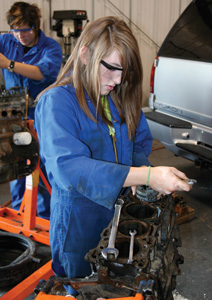
    Let’s be honest how many of us girls grew up dreaming of being a mechanic or a welder? The answer is probably not many, and if you did you probably didn’t tell anybody because of the possibility of them thinking you were weird. When I was little I first wanted to be a marine biologist, I loved animals and wanted to work with them very badly. Then my life goal changed from a stunt car driver, to a photographer, to a mechanic and finally a welder.

    One of the things I was most excited about going to high school was that I was now able to take the auto mechanics and construction classes. I took them all through high school and loved every minute of it. I learned, fixed and made things that a lot of people didn’t, how many of you can honestly say you are comfortable with changing a flat tire on your own? I can say with all honesty I am and that’s because of my awesome auto teacher. My technology teachers not only gave me the skills and knowledge about their trades but also the courage to love the trades. To not be scared of trying something totally out of my comfort zone and to not care about what people think.

    I got the smart remarks in class “Girls can’t do that” and the classic “Don’t break a nail!” Taking those courses gave me the courage to pick something not many girls pick for a college program, Welding Technician. I knew two things that I wanted for sure out of what I picked for a program, I wanted to be able to get a job and I wanted to make money. I know those are not the best driving reasons for someone to pick a program, but they were honest. I had originally wanted to be a mechanic because of how much I loved my auto class but I soon realized there were a lot of mechanics and not a lot of jobs. So I had cut up an exhaust pipe about two times in auto with an old oxy-acetylene torch and I knew welding was an in demand job, so I decided on being a welder. The only knowledge I had on welding was what I learned from those two experiences using the torch, so not a whole lot.

    I remember showing up for my first welding class and them telling me that I would need safety boots, safety glasses and a welding helmet for tomorrow. The first thing I thought to myself is, “What have I done?! I have gotten myself into something I can’t handle, I know nothing about welding this is a horrible idea”. Then it got worse after I got all my equipment and they asked me to actually weld something, I don’t think I have ever sweated that much for a school assignment and it wasn’t from the heat of my torch. But with practice, some really great teachers and perseverance I got the hang of it and now I am actually a good welder. I am able to weld in shielded metal arc welding in flat, horizontal and vertical positions. I can use gas metal arc and flux core arc welding machines and I am learning tungsten arc welding at the moment.

    For those of you out there wondering what kind of woman I am, I would say I am not your typical looking welder, but then again isn’t that what we are trying to change? The notion of what the “typical” welder looks like? So this is what the typical welder looks like, a petite 19 year old woman, who stands at five feet and 2 inches, has a boyfriend and loves to go shopping just as much as anyone. The moral of the story is look at trades when you are deciding on college programs, any trade, believe me it’s a rewarding experience, that is challenging but if I can do it, you can do it.

  • Making the Case for Trades

    Making the Case for Trades

    Times have changed in the world of jobs. You might have heard from your parents or teachers that the best way to get a high-paid, reliable job is through a university education. Sometimes that still holds true. These days, however, a better choice for both men and women might be a skilled trade, where there are many opportunities for a rewarding career.

    What comes to your mind when you hear the term “trade”? Do you think of low-paid labourers, barely making enough money to pay their bills and never sure how much longer their jobs will last? Many unskilled labourers work under these conditions, but the situation is different for skilled tradespeople. They are often well-educated, with diplomas or certificates in their fields.

    Tradespeople might have as much education as university graduates. Unlike many university programs, however, training in the trades is geared specifically to learning the practical skills needed on the job. Tradespeople might be trained as carpenters, auto mechanics, electricians or any of the other trades. Through practical work and classroom studies, they learn everything they need to know to work in their trades. Another important part of the training process in the trades is an apprenticeship, in which students work together with an experienced person to learn practical skills for the job. For some trades they might also need to get an official license or certificate.

    Becoming qualified in a trade can take from one to three years of classroom education, between two and four years of apprenticeship, and two or three years of on-the-job training. Many university programs are just as long or even longer and more expensive. Graduates can also have trouble finding work in their field. In contrast, tradespeople can usually find work soon after they finish their studies and can easily pay off any loans they received for their school tuition.

    Almost anyone can become qualified to work in a trade. Most tradespeople, about 97 % in 2007, are men. However, more women are joining the trades and becoming qualified to work in carpentry, welding and other skilled trades. Possibly up to 320,000 people in Canada currently working in construction alone will be retiring in the next few years and that could open up good opportunities for both men and women. Becoming a journeyperson (someone with official qualifications in a skilled trade) could be a wise career move.

    How do you know if you could be successful in skilled trade? Natural ability and interest are important places to start. If you love to take things apart to see how they work, you might want to choose to be a mechanic or electrician. If you have a fear of heights, on the other hand, you might not want to choose the construction industry. The best way to decide whether or not a trade would suit you is to research it and to talk with people about it. Then, if you decide to pursue a trade, you’ll have a good basis for a stable and rewarding lifelong career.

  • Learning about the Red Seal Program

    Learning about the Red Seal Program

    What is the Interprovincial Standards Red Seal Program?

    The Red Seal program was established to provide skilled workers with greater mobility across Canada. Through the program, certified journeypersons are able to obtain a Red Seal endorsement on their Certificate of Qualification by successfully completing, where applicable, an interprovincial standards examination. The program encourages standardization of provincial and territorial apprenticeship training and certification programs. The Red Seal allows qualified persons to practice their respective occupation in any province or territory in Canada where it is designated, without having to attempt further examinations. To date, there are forty-five occupations included in the Interprovincial Red Seal Program.

    What other benefits come from enrolling in a “Red Seal” Trade Apprenticeship?

    You have probably heard the radio commercials from the Government of Canada recently about the Apprenticeship Incentive Grant program. Right now there is a very high demand for tradespeople of all varieties. This is why the Government of Canada created the Incentive Program to attract people to learn a trade.

    That’s right – you can get paid twice to learn a trade, instead of running up high tuition bills while you learn! To learn more about the Apprenticeship Incentive Grant Program, please visit the Service Canada website.