Tag: trades

  • Women in Trades

    Women in Trades

    In the past, asking a girl what she wanted to do when she grew up probably would have resulted in a blank stare. Most girls got married and raised families. Even if they worked, they had only a few choices for the kinds of work they could do, and they were discouraged from getting into other types of work. If they chose another kind of work, they would probably face all kinds of barriers and problems. Many things have changed over the years and women now find it much easier to get into professions like law and medicine. They can work as editors, scientists, and computer analysts. Women are also entering traditionally male-dominated trades and are becoming electricians, plumbers, construction workers, and more.

    The history of women in the trades really began during the Second World War (1939-1945), when many of the men from North America and Europe were away fighting in the war. Their jobs as welders, ship-builders and painters still needed to be done, and women took over and learned to work in job fields that included electricians, insulators, and pipe-fitters. When men returned after the war, many women went back to their regular work while men took over the trades again. However, women had discovered that they could do much more than their traditional work. Slowly, they began to get back into the trades that they had left at the end of the war.

    Getting women back into the trades after so long has not been easy. Teachers and parents have had to encourage girls to consider the trades instead of getting into more traditional fields like teaching or nursing. Training schools have had to make their programs appealing to women so that they would consider trades as possible careers. Even the government has become involved by funding support programs for women entering the trades or lending students the money they need to pay their tuition fees. Other groups have had to help, as well.

    One way that organizations can help is by guiding women into the right training program. Canada has over two hundred different trades, and making a decision about which trade is best can be difficult. The next stage is finding a good training program. Training is important for anyone who wants to be a skilled tradesperson rather than a labourer. Even if no job is available for people after they graduate, their skills are always valuable.

    Most training programs in the trades involve a combination of classroom work and practical training, often ending with a work-placement segment. This is when students get to work at an actual job but still learn at the same time. A typical program might include about seven or eight months of instruction, followed by four or five months of work on the job to gain experience. Sometimes, a full-time job can be the result of the work placement.

    Women are entering the trades in greater numbers than they have in years. If you’re a girl, maybe you should consider being one of these trendsetters!

  • Career Profile: Cartographer

    Career Profile: Cartographer

    What is a Cartographer?
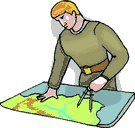
    When was the last time you looked at a map? Though you may not realize it, it probably wasn’t that long ago. Cartographers (or map makers) are usually associated with the paper incarnation of the navigation tool – the professional has learned to adapt to rapidly developing technologies. If you’ve looked up directions online, chances are a cartographer is responsible for building and updating the digital map you used.

    Traditionally, a cartographer would draw the lay of the land on paper. Depending on the nature of the map and what its intended use was, maps would typically depict important markers like major landmarks and cities. Aerial photography, computer programming and worldwide networks have forever changed how members of this profession complete their work. For instance, have you ever seen the Google Maps car or used the ‘street view’ function? Using onsite photographs, cartographers are able to reconstruct locations around the world. Another crucial tool is satellite imagery; Aerial pictures taken by satellites allow cartographers to keep maps up-to-date, preserving accuracy.

    Education and Skills
    There are a variety of ways to become a cartographer, but a having an interest in geography, math and science is key. Cartographers usually have a bachelor’s degree in cartography, geography, surveying, engineering, forestry, computer science, or earth sciences. With the advent of digital information sources, a strong aptitude for computer programming is highly desirable.
    Cartographers must be technically-minded and able to easily solve discrepancies in logic. Creating and maintaining geological and statistical data can be tedious work, making patience and endurance invaluable skills.

    Salary
    Most cartographers earn between $50,000-$60,000 annually.

    Day-To-Day
    Cartographers tend to spend the bulk of their time in offices working on computers. Much of their time is spent collecting, analyzing, interpreting and publishing data. Most of their work involves interpreting multiple factors, including but not limited to: landscape, law, climate conditions and changes in population and cultures. Mechanical drawing and map composition remains a fundamental part of the job, but these tasks are usually completed in a digital capacity.

  • Career Profile: Dental Hygienist

    Career Profile: Dental Hygienist

    Do you…
    • Enjoy working with your hands?
    • Enjoy working with people one-on-one?
    • Want to learn more about teeth and oral health?
    If you answered “yes” to any of the questions above, then a career as a Dental Hygienist may be right for you!

    What Is A Dental Hygienist?
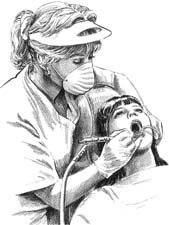
    A Dental Hygienist is a registered dental professional who specializes in preventative oral care and proper oral hygiene. Dental Hygienists typically offer three types of general services:
    1. Preventative Services – to promote and maintain good oral health
    2. Educational Services – teaching patients about the importance of maintaining good oral health and showing them ways to maintain their oral health
    3. Therapeutic services – treatments to help stop diseases in the mouth

    Specific job duties performed under these three services include:
    • Assessment, Diagnostics, Planning, Implementing and Evaluating the individual needs of the patient (ADPIE)
    • Scaling and root planning (cleaning)
    • Polishing stains off teeth
    • Fluoride treatments
    • Taking and exposing x-rays
    • Conducting oral cancer screening
    • Making whitening trays and sport guards for patients
    • Placing pit and fissure sealants on the grooves of the teeth
    • Irrigating the tissues (gums) with therapeutic agents to help stop/prevent disease
    • Educating patients about proper brushing, flossing, mouth rinse etc.
    • Explaining oral health conditions with patients (such as gingivitis, periodontitis) as well as how to prevent such conditions

    Where Does A Dental Hygienist Work?
    A Dental Hygienist may work in a variety of settings:
    • Private dental offices (general and specialized dentistry)
    • Self-initiated Dental Hygienists can open their own dental hygiene practice in certain provinces such as Ontario, Alberta and British Columbia
    • Hospitals
    • Public health offices

    Some Dental Hygienists may also prefer to work:
    • As teachers and administrators in Dental Hygiene Colleges and Universities
    • In dental sales and dental research

    What Is A Typical Day For A Dental Hygienist Like?
    A typical day for a Dental Hygienist in a general dentistry dental office is to:
    • Set up their work space for the day (stock up, place barriers, set up dental trays etc.)
    • Review charts of patients coming in for appointments
    • Take in patient – review their medical history, ask if they have any concerns with their oral health. Take any prescribed x-rays (optional)
    • Follow ADPIE with patient
    • Complete an assessment of their oral health – assess teeth, gums and surrounding tissues
    • Diagnose problems or concerns and decide on a course of action for the appointment
    • Implement action plan: begin to scale (clean) teeth, polish stains, administer fluoride or therapeutic agents (if required)
    • Educate the patient on their oral health and on proper brushing and flossing techniques and other dental aids specific to their mouth
    • Ask the dentist to perform an oral examination on the patient
    • Record notes from the appointment in the patient’s chart. Dismiss patient.
    • Disinfect the operatory between patients (place dental instruments in sterilizer) and set up operatory for next patient

    How Do You Become A Dental Hygienist?
    1. Attend a college or university (Western Canada) that offers a Dental Hygiene training program (preferably an accredited program).
    2. Complete the Dental Hygiene program successfully.
    3. Write the Dental Hygienist certification exam put out by the National Dental Hygiene Certification Board (NDHCB).
    4. Pass the exam and register with the College of Dental Hygienists of Ontario (or province of work) and then become a registered Dental Hygienist or RDH.

  • What is “Red Seal”? Why is it Important?

    What is “Red Seal”? Why is it Important?

    What is the Red Seal Program?
    The Red Seal Program is Canada’s standard of excellence for skilled trades. Obtaining a Red Seal endorsement acknowledges a journeyperson’s competence and quality workmanship, and facilitates recognition of his/her trade certification across Canada. Upon successful completion of a Red Seal examination, the endorsement is affixed to the provincial or territorial trade certificate. To date, there are fifty-five occupations included in the Red Seal Program.

    What are the benefits of the Red Seal?
    The Red Seal provides confidence to both employers and consumers that a tradesperson is skilled and knowledgeable. It is widely recognized and respected by the trades industry across Canada. A Red Seal endorsement is an employment advantage that opens the door to job opportunities, higher wages, sustaining employment, and career advancement.

    How to obtain a Red Seal?
    To obtain a Red Seal endorsement, a candidate must pass the Red Seal examination administered by a provincial/territorial apprenticeship authority. Red Seal examinations are trade-specific and cover the skills and knowledge required in the trade. The examinations are used to determine whether apprentices and tradespersons meet the Canadian standard. To qualify to write a Red Seal examination, a tradesperson must have completed one of the following:
    1. Graduated from a recognized provincial or territorial apprenticeship training program;
    2. Obtained a journeyperson level Certificate of Qualification from a province or territory;
    3. Provided confirmation of the requisite time and experience working in a Red Seal trade.

    What other benefits come from enrolling in a “Red Seal” Trade Apprenticeship?
    You have probably heard the radio commercials from the Government of Canada recently about the Apprenticeship Incentive Grant program. Right now there is a very high demand for tradespeople of all varieties. This is why the Government of Canada created the Incentive Program to attract people to learn a trade.

    That’s right – you can get paid twice to learn a trade, instead of running up high tuition bills while you learn! To learn more about the Apprenticeship Incentive Grant Program, please visit www.red-seal.ca or the HRSDC website.

  • Career Profile: Automotive Service Technician

    Career Profile: Automotive Service Technician

    Do you…
    • Enjoy working with your hands?
    • Enjoy fixing cars, trucks, motorcycles or small engines?
    • Want to learn more about electrical, hydraulics (fluid power), pneumatics (air power) and mechanical components in machines?

    If you answered “yes” to any of the questions above, then a career as an Automotive Service Technician may be right for you!

    What Is An Automotive Service Technician?
    An Automotive Service Technician is a certified and skilled tradesperson who diagnoses and repairs motor vehicles (e.g. cars, minivans, SUV’s, light duty trucks and medium duty trucks).

    An Automotive Service Technician performs various duties that help maintain a vehicle as well as repair it. Some of these job activities include:
    • Engine maintenance and repair
    • Transmission maintenance and repair
    • Exhaust system repair
    • Body repair and adjustments
    • Brake maintenance and repair
    • Steering, suspension and alignment repairs

    Where Does An Automotive Service Technician Work?
    An Automotive Service Technician may work in:
    • Dealerships
    • Independent automotive shops, repair shops and garages (owned by other people or themselves)

    Some Automotive Service Technicians may prefer to work as:
    • Teachers in high school teaching automotive class
    • Teachers in colleges that offer an accredited Automotive Service Training program

    What Does A Typical Day For An Automotive Service Technician Look Like?
    A typical day for an Automotive Service Technician in a dealership or automotive shop usually begins when a customer brings their vehicle to the shop. The customer tells the service advisor what the problems are with their vehicle. The service advisor documents the problems on a work order. The vehicle and corresponding work order is then given to an Automotive Service Technician who begins to work on this particular job.

    An Automotive Service Technician follows a certain procedure when working on a new job. He/she:
    1. Reads the work order written up by the service advisor.
    2. Examines the vehicle to further assess the problems mentioned on the work order.
    3. Provides the service advisor with an estimate on how much it will cost to fix the problems.
    4. Waits for the service advisor to confirm that the customer is OK with the repair costs before fixing the problems.
    5. Fixes the problems once the service advisor gives the go ahead.
    6. Takes the vehicle for a test drive and/or performs operational checks to ensure that the customer’s concerns are resolved.
    7. Informs the service advisor that the customer can pick up their vehicle.

    How Do You Become An Automotive Service Technician?
    1. Attend a college that offers a certified Automotive Service Technician training program.
    2. Complete the Automotive Service Technician program successfully.
    3. Find a suitable employer who will hire and train you as an Automotive Service Technician apprentice. (Complete your apprenticeship booklet/hours/activities at work and get it signed off by your employer).
    4. Write the Automotive Service Technician certification exam put out by the Ministry of Training, Colleges and Universities.
    5. Pass the exam, obtain your 310S license and become a licensed Automotive Service Technician!

  • Tree Planting as a Summer Job

    Tree Planting as a Summer Job

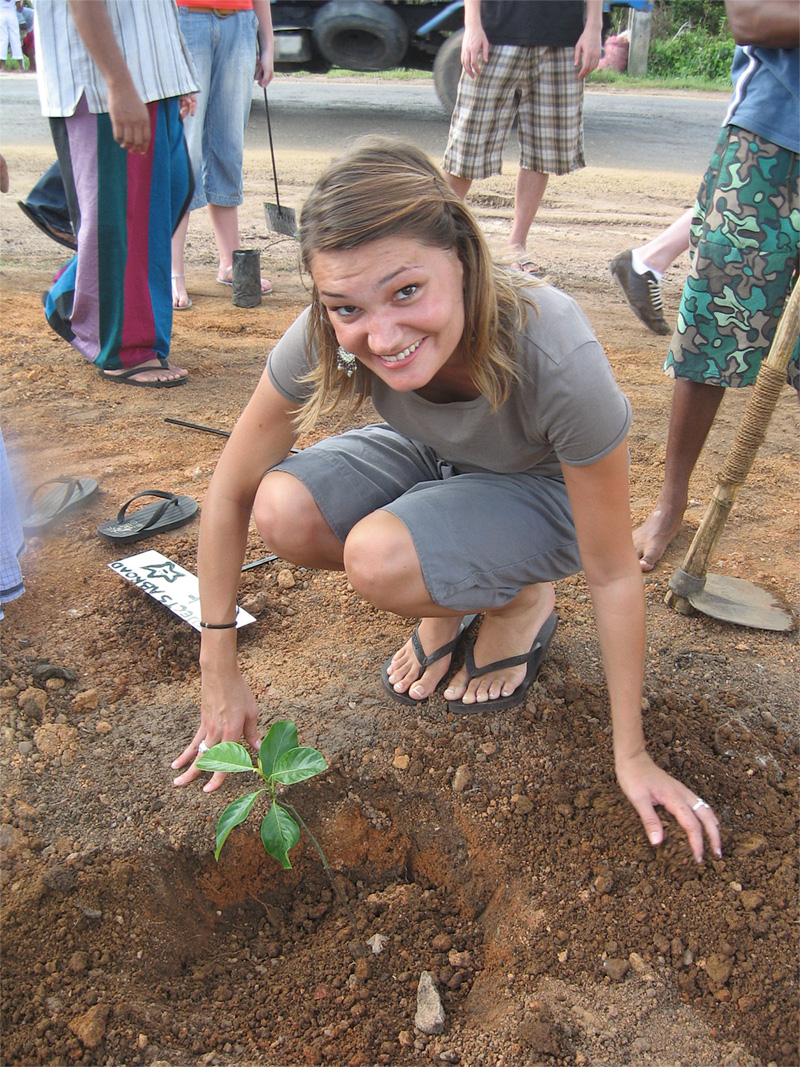
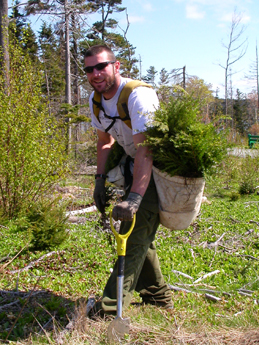
    The most common summer job field for teens is the food service industry followed closely by the retail trade industry, according to the American Bureau of Labour Statistics. That means that most of us spend our summers flipping burgers or folding t-shirts, honest work that feeds and clothes the capitalist masses. But for some, the call of consumer culture falls on deaf ears. 17 year old Sam Krawec has decided to earn his summer income while serving a greater purpose; tree-planting in Northern Ontario.

    Sam is a freshman in St. Francis Xavier University’s Development Studies program. He has always been environmentally conscious, thanks to a family that values sustainable living and global citizenship. “My mom inspired me to care about the world when I was very young,” he explains. “I always felt that it was important to give back.”

    By planting trees, Sam will be helping to filter pollutants from the air, reducing carbon dioxide levels in a community and producing healthy oxygen in a renewable, recyclable, and biodegradable way. Summer tree planting jobs generally coincide with the planting season; between six and eight weeks beginning in early May and ending in late June/early July. The average worker ends up planting upwards of 20,000 trees in that time, making a substantial impact in removing large quantities of the major greenhouse gases involved in global climate change.

    Tree planting is ‘piece work’, wherein you are paid according to the amount of trees you produce. This means that the income you earn is a direct reflection of your productivity. In Ontario, agencies generally pay planters between 8 and 12 cents per tree, with first year planters averaging between $2500 and $5000 in gross pay for the season. This varies depending on several factors, including whether or not your agency is unionized. Unionized agencies typically have better health and safety options, and may pay slightly more. The Ontario Forestry Safe Workplace Association produces written packages to educate planters on their health and safety rights.

    Joanna Gillies of Lakehead University compiled “A Qualitative Pilot Study of the Physical Demands of Tree Planting”, outlining them as specific areas of concern for any wishing to apply to a tree planting program. She claims that, “factors affecting a planter’s performance include flexibility, grip strength, balance and agility, back strength, hand-eye coordination, manual dexterity, strength endurance, mental toughness, aerobic fitness, and body fat percentage.” There are tests online to see if your general health is cohesive to the demands of life as a tree planter. If so, you are ready to start digging and making a difference in your environment.

    For Sam, every little bit he can contribute is worth the physical demands and summer time commitment. “The pay is good, and it’s something tangible that I can do to help the planet. The world is a beautiful place, and I want to have a positive part in maintaining that”.

    If you are interested in working with a tree planting agency, check out http://www.tree-planter.com/, http://www.replant.ca/ or http://hardcoretreeplanters.com/.

    Maybe your summer working in tree planting will encourage you to continue working in this in-demand trade for years to come!

  • Becoming An Architect

    Becoming An Architect

    What is Architecture all about?

    Architecture is the art, the science and the business of building.

    Architects create homes, office towers, schools and churches. They are talented people with a flair for design, an awareness of social trends, keen business sense, solid engineering skills and an understanding of the law. The word “versatile” may have been invented to describe Architects!

    Today’s Architect may practice alone or be part of a small, medium or large firm. Some Architects are self-employed. Others may be on salary, as employees of government, real estate developers or large corporations.

    “Clients” are the people who use the services of Architects. A client may be a family, a school board, a company, a housing authority, a government department or a building contractor.

    Why does Architecture matter?

    There’s no place like home

    The design or re-design of a home is one of the most fascinating and important things an Architect can do. Homes house the daily activities of families and individuals. Sometimes they offer privacy and shelter. On festive occasions, they are places of open hospitality. Rural or urban, row house or apartment, the home may be used year-round or only for vacations. Beyond our homes, the community takes shape.

    Keeping the past alive

    Old buildings add variety to city streets and remind us of our links to the past. Public interest in restoring old buildings is as strong as the economic pressure to re-use them. The result ? Architects are using modern techniques and ideas to renew historic buildings across Canada.

    Inside the home and office

    Respected Architects have designed chairs, tables, cabinets and fabrics–objects that lend comfort and pleasure to people’s homes and work spaces. When the desire to create something “organic” or whole, is strong, Architects design not only a building and the space around a building, they will also shape the space inside the building.

    Mirrors of time

    Great civilizations leave behind great architecture. Think of the pyramids of Egypt, the columns of Greece and Rome, the great Gothic cathedrals. Architecture reflects the religious, political and social values of the day. Today’s buildings express our society’s common purposes and will tell our story long after we are gone.

    Where is Architecture going?

    Big and sleek

    In giant cities, the voices of commerce, finance, business and government call out for giant buildings. Big buildings can cause big problems, such as increased traffic flow. They also create a need for parking, water, sewer and fire-fighting access. Putting large buildings into a city involves balancing the technical, planning and aesthetic problems posed by size. Architects with special design skills are needed to tackle these big jobs.

    Designing the city

    Cities are where the action is. The social and economic character of a city is often expressed in urban design. Many Architects serve on planning boards or help people who live in urban neighbourhoods shape the city around them. Sometimes Architects get involved in restoring parts of a city, developing housing projects or industrial parks, or designing shopping centres.

    What do Architects do?

    It all starts with a commission–or contract–from a client. The commission may involve the design of a single building or a group of buildings and the spaces between them. The client may be a person, a board of directors, a government department or a business.

    Usually, the Architect leads a team of specialists including structural, mechanical and electrical engineers, as well as others. The Architect must also understand and deal with building codes and bylaws set out by municipal, provincial and federal governments.

    The Architect keeps everyone on time and on budget. Technical knowledge, good people skills and no-nonsense business sense are all important to this task.

    What’s the bottom line? Architecture is a business. Being creative and designing something beautiful are only the first steps in making a vision come to life.

    What is a typical day?

    Such a thing may not exist. But on any given day, an Architect may have to:

    • Meet with clients.
    • Win contracts.
    • Solve problems.
    • Estimate costs.
    • Meet with consultants.
    • Produce drawings.
    • Present at public hearings.
    • Draw up specifications.
    • Call tenders (bids).
    • Visit construction sites.

    It can be a real challenge to juggle all the aspects of this demanding job.

    What do Architects do?

    They Draw

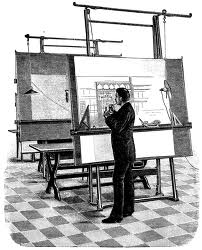
    Simple diagrams show the link between spaces or activities. Detailed working drawings show every last detail. Contractors and sub-contractors estimate the cost of the work based on the working drawings of an Architect. When the time to build comes, these drawings will be the building plan.

    Taking a drawing off the page and onto the computer screen through 3-D computer modeling can bring an Architect’s design to life, in living colour! Scale models or animated videos that help the viewer “see” the project from start to finish are other ways Architects present ideas to the public or clients.

    They Write

    Architects must

    • Write business letters.
    • Document all aspects of a project.
    • Develop charts and tables to analyse the project.
    • Develop specifications which define the building.
    • Prepare articles for professional journals and magazines.

    They Speak

    Being able to think on your feet and communicate clearly is a big part of being an Architect. Explaining, discussing, teaching and persuading are tools of an Architect’s trade.

    Architects are often called upon to:

    • Make presentations to clients.
    • Outline concepts, discuss options and offer creative solutions to problems.
    • Appear before public bodies as an expert.

    They Calculate

    It has to add up! Architects must be able to prepare accurate construction and office budgets. They also have to understand structural analysis, heat loads, electrical distribution and traffic flow.

    They Take Responsibility

    When an Architect “signs-off” on a certificate, it means that part of the job has been completed to the Architect’s satisfaction. Several certificates are signed-off during a contract.

    They Manage

    Architects often manage their own offices and businesses. They must also manage projects from the first spark of an idea to the ribbon cutting at a new building. During the construction phase, Architects manage contract administration, oversee drawings and specifications, handle problems that arise on the job site and monitor work in progress.

    What does it take to be an Architect?

    Ask yourself these questions:

    • Do details matter to me?
    • Do I understand and get along with people?
    • Do I truly value the things I see?
    • Can I analyze what I see?
    • Am I a creative thinker?
    • Do I think in a logical and orderly way?

    Spend some time in an Architect’s office. Ask questions. Read all you can about architecture. (Your local library can help you find books on the subject). Look at professional magazines. Visit the Schools of Architecture.

    How can I become an Architect?

    To be a licensed Architect, you will need

    • Education
    • Experience, and
    • a passing grade on an Examination.

    Education

    The vast majority of Architects complete a bachelor’s or master’s degree in architecture from a university program approved by the Canadian Architectural Certification Board (CACB).

    An alternative way to become an Architect is through the “apprenticeship” offered through the RAIC Syllabus Program.

    Experience

    To get experience, you must complete the Internship in Architecture Program. This program is offered through the associations of architects in each province. If you are accepted into the program, you will require a “Mentor” (a licensed Architect) who will guide your work over a period of time, according to the rules of the Internship in Architecture Program. Usually, interns or intern architects complete the program in about 3 years.

    Examination

    In all provinces, passing a computerized exam is one of the final steps in becoming a licensed Architect. Architects in Canada are licensed at the provincial or territorial level.

    Some provincial or territorial associations may have additional requirements before licensing or registration.

    Why must Architects be licensed?

    Architects are professionals. The public must be sure that people who call themselves Architects are qualified to practice in their field. So, all across Canada, Architects are licensed by provincial or territorial associations of architects. The goals of the associations are:

    • to encourage members to improve their skills and knowledge, and
    • to maintain high standards in the practice of architecture.

    Like other professionals, such as doctors and lawyers, Architects are legally responsible for the decisions they make. In some provinces, all licensed Architects must have professional liability insurance if they wish to practice architecture. This insurance protects both the public and the Architect. As well, each province and territory has an “Architects Act” which regulates the practice of architecture. It is against the law for anyone who is not licensed to use the title “Architect”.

    What courses should I take in high school?

    It’s hard to say which courses are best, because Schools of Architecture vary greatly in what they offer students at the university level. It is a good idea to find out now what is required for admittance to a university you would like to attend.

    Mature students (people who are not recent high school graduates) are also welcomed by most Schools of Architecture.

    As well, there is an important place in architecture for people who do not wish to pursue a university degree. You could take courses at a technical school, community college or university to become:

    • an architectural technologist,
    • an architectural technician, or
    • a draftsperson or CAD (computer assisted drafting) technician.

    What other work is available for Architects?

    Here are some job titles that tell you the kind of work Architects can do :

    • Architectural Critic
    • Graphic Designer
    • Architectural Photographer
    • Heritage Planner
    • Architectural Programmer
    • Illustrator
    • Architectural Renderer
    • Industrial Designer
    • Builder Inspector
    • Interior Designer
    • Building Envelope Scientist
    • Landscape Architect
    • CAD Coordinator
    • Market Researcher
    • Campus Planner
    • Model Maker
    • Carpenter
    • Municipal Architect
    • Cartographer
    • Museum Curator
    • Computer Presentation Designer
    • Printmaker
    • Computer Systems Analyst
    • Professor
    • Conservator
    • Property Assessor
    • Construction Inspector
    • Publisher
    • Construction Manager
    • Real Estate Agent
    • Contractor
    • Real Estate Project Manager
    • Corporate Consultant
    • Researcher
    • Design/Build Team Manager
    • Set Designer
    • Developer
    • Structural Engineer
    • Document Designer
    • Technical Writer
    • Environmental Planner
    • TV/Film Producer
    • Furniture Designer
    • Urban Planner
  • Education Options for Registered Nurses

    The Canadian Nurses Association believes that the knowledge, skills and personal attributes that today’s health system demands of its RNs can be gained only through broad-based bachelor’s nursing programs.

    With the exception of Quebec, all Canadian provinces/territories require a bachelor’s in nursing (BN or BScN) to enter the profession. In most cases, more career opportunities will be open to nurses with degrees.

    How long is the program?
    Bachelor’s programs can be completed in two to four years. Accelerated, condensed and advanced entry programs are in place in all jurisdictions.A growing proportion of nursing students have already completed a degree in another discipline; many of these students can access two-year bachelor nursing programs. Degree programs are offered in universities and in some university college institutes.

    What will I learn?
    Nursing students will study psychology, child development, sociology, anatomy and physiology. The nursing courses include theory and clinical practice. In addition to learning social and physical sciences, university programs generally offer additional studies in leadership, health teaching, research and other disciplines. You will be supervised and supported in the clinical setting to ensure the safety of clients, as well as your own safety.

    What are the entrance requirements?
    Entrance requirements differ from one school to another. Generally, the admission requirements are high school graduation with senior level English or French, mathematics, chemistry, physics and biology. You can contact your provincial/territorial nurse’s association or individual schools for their specific requirements and information on funding.

    Is there funding?
    Contact your relevant school of nursing for possible contacts regarding funding, student loans, or scholarships. For more information, consult the Canadian Nurses Foundation.

    Are there graduate studies in nursing?
    Canada has 32 master’s programs available all across Canada and a total of 15 doctoral programs are available in British Columbia, Alberta, Saskatchewan, Manitoba, Ontario, Quebec and Nova Scotia. Some schools are offering graduate courses by distance. To learn more, consult Nursing education programs in Canada.

    For more information
    Canadian Association of Schools of Nursing
    Association of Community Colleges of Canada

  • Becoming A Registered Nurse

    Thinking about a career? Think registered nurse! It’s more than a job, it’s a growing profession offering an astonishing range of choices and opportunities.

    You believe in a healthy lifestyle? Janet has been talking to teenagers about how to deal with sex and drugs. “These kids have their whole lives before them and I feel it’s so important to help them now when they need it. With some groups I get into fitness and diet, too. They really want the information and someone to talk to.”

    You want excitement? So does Robin, so she works in the emergency department of a city hospital. “When people burst through those doors, they need help, fast and our ER team gives it. I have to think on my feet here, make immediate decisions about what a person needs. No other job could give me the same challenge – or satisfaction.”

    Intrigued by health questions? So is Nicole, and she’s finding the answers. Nicole is the head of a research team studying the care needs of AIDS patients. “I used to give nursing care to people in their homes and then a great AIDS patient I had motivated me to move into research. I was shocked by how little knowledge and how few resources there seemed to be to care for people like Ted, so I decided to do something about it.”

    More interested in helping people over the long term? That’s what Michael wants, so he’s head nurse at a rehabilitation centre. “A lot of rehab patients start out fighting against our care; they’re depressed, angry, and worried about their future. Helping them work through that is as important as their physical therapy. It’s an incredible feeling to help a person go through the whole process back to health.”

    Michael, Janet, Robin and Nicole became registered nurses because they wanted to work with people in a career that offers challenges and the independence to make decisions. Nursing involves caring for the whole person – the physical, intellectual and social needs. Nurses also plan and deliver health programs for groups or communities.

    Nurses are the heart of care. As a registered nurse, you can make a difference in one person’s life through one-on-one, and in the health of all Canadians through research and leadership.

    Jobs, the real story

    This is an excellent time to enter nursing as there is a shortage. At some point in their life, every Canadian will require the services of a nurse. Since many nurses will soon retire, Canada needs bright young men and women to choose nursing as a career. Changes in the health care system continue to broaden the opportunities for nurses. An especially important trend is the increasing number of services that emphasize illness prevention and health promotion programs. Many of these are planned and staffed by registered nurses.

    Registered nurses earn salaries that compare with other professionals with a similar amount of education. Health care is offered 24 hours a day, so expect to work some nights and weekends, like doctors, law enforcement officers and others who provide essential services.

    As in any profession, salaries vary across the country, and people make more as they gain experience and responsibility. Graduates of degree programs usually have more opportunities for advancement, and in some provinces, make more money than graduates of diploma programs. Your provincial or territorial nurses’ association can provide current salary ranges.

    To see nursing jobs across Canada, visit NursingCareersCanada.ca, The National job board of the Canadian Nurses Association.

    Choices… lots!

    Nursing is full of opportunities to grow, to advance and to change your career direction. Whatever your interest – working with children, scientific procedures and high tech equipment, teaching and promoting healthy practices, developing your management skills – nursing has something for you. Here are just a few examples:

    In the Community

    • health clinics
    • schools
    • wellness programs in the workplace
    • doctors’ offices
    • home care
    • family planning clinics
    • poison control centres
    • prenatal and well-baby clinics
    • rehabilitation centres
    • sexually transmitted disease units
    • AIDS hospices

    IN A HOSPITAL:

    • emergency
    • intensive care
    • operating room
    • post-surgery
    • maternity
    • cardiovascular (heart)
    • oncology (cancer)
    • psychiatry
    • pediatrics (children)
    • palliative (dying people)
    • geriatrics (seniors)

    One of the most exciting opportunities for nurses in Canada is Northern nursing. Often, community health centres in Canada’s North are run completely by the nurse – independent and in charge. Many Aboriginal nurses return home to help their communities, other nurses find they enjoy learning about a different culture.

    The great thing about nursing is that your choices never end. With some years of experience and further studies you could branch out in almost any direction imaginable. After a few years in practice you might decide to become an advanced practice nurse. An expert nurse with a master’s degree, an advanced practice nurse provides direct care to clients and serves as a role model and consultant to other practising nurses. There are currently two types of ANPs in Canada, clinical nurse specialist and nurse practitioner.

    Or you might decide, like Nicole, that you want to investigate current issues in health care. On the leading edge of health care discoveries, nurse researchers design studies, collect data and analyze results. Their findings contribute to the vast body of scientific knowledge that supports and improves nursing.

    Leadership

    All nurses are teachers, helping people learn to prevent illness and manage health problems. But you might want to become a nurse educator, preparing future nurses to enter practice. You could work at a community college or a university, and research would be part of what you do.

    A nurse administrator coordinates nursing services in a hospital or community health centre. Handling large budgets, supervising staff and setting the standards for excellent care takes strength and good management skills.

    The sky is the limit

    And any of these choices could lead you still further. Nurses’ ideas and opinions are sought after by the media, politicians, and national and international groups. Imagine being a consultant to Health Canada, or the World Health Organization.

    Or you could travel. Northern Canada is a close-to-home example, but Canadian nurses are so highly regarded that other countries – both developing and developed – actively recruit them. Your skills and knowledge could take you places. The possibilities are endless!

    Degree or diploma?

    If you’re thinking about a career in nursing, you should seriously consider studying for a degree (BN or BNSc). More career opportunities and the possibility of graduate study will be open to nurses with university degrees. Most provinces already require a baccalaureate in nursing (BN or BScN) to enter the profession.

    Degree programs take four years. Besides learning social and physical sciences, and nursing, as in the diploma program, university programs generally offer additional studies in leadership, health teaching, research and other disciplines.

    Diploma programs take three years. Graduates generally work in hospitals, nursing homes or other structured settings. Many colleges now offer their diploma courses in collaboration with a university with the option of continuing on after graduation to obtain a degree. However, getting a diploma and then a degree generally takes longer, and costs more, than enrolling in a degree program from the beginning.

    Nursing students in both university and diploma schools of nursing will study psychology, child development, sociology, anatomy and physiology. The nursing courses include theory and clinical practice. You will be supervised and supported in the clinical setting to ensure the safety of patients and your own safety.

    If you are interested in continuing your education, master’s and doctoral programs in nursing are available in many places in Canada.

    Get ready

    Entrance requirements differ from one school to another. Generally, the admission requirements are high school graduation with senior level English or French, mathematics, chemistry, physics and biology. You can contact your provincial nurses’ association or individual schools for their specific requirements and information on funding.

    Caring for people, the independence to make decisions, the challenge and excitement of being on the leading edge of health care. Sound interesting? Then ask today for more information about a career as a registered nurse!

    Provincial associations

    • * Association of Registered Nurses of Newfoundland and Labrador
    • * Association of Registered Nurses of Prince Edward Island
    • * College of Registered Nurses of Nova Scotia
    • * Nurses Association of New Brunswick
    • * Ordre des infirmières et infirmiers du Québec
    • * Registered Nurses Association of Ontario
    • * College of Registered Nurses of Manitoba
    • * Saskatchewan Registered Nurses’ Association
    • * College and Association of Registered Nurses of Alberta
    • * College of Registered Nurses of British Columbia
    • * Registered Nurses Association of the Northwest Territories and Nunavut
    • * Yukon Registered Nurses Association
    • * Native Access Program to Nursing
  • Work Safety Risks and Tips for Tree Planters

    Work Safety Risks and Tips for Tree Planters

    What does a tree planter do?
    Tree planters and other forestry workers perform physically demanding work. Some of their main duties are to:
    – Clear brush.
    – Carry and plant trees using manual tools.
    – Feed machines manually.
    – Prepare a site for planting.
    – Use, clean and maintain various equipment.
    – Work with chemicals for growth, or for weed and pest control.
    – Supervise other workers.

    What are some health and safety issues for tree planters?
    Tree planters face a variety of physical, biological, chemical, ergonomic and safety hazards. These include:
    – Insect bites or stings.
    – West Nile virus (mosquitoes).
    – Lyme disease or rocky mountain spotted fever.
    – Rabies.
    – Allergic reaction to plants.
    – Exposure to bird or rodent droppings:
    – Histoplasmosis
    – Psittacosis
    – Hantavirus
    – Exposure to chemicals.
    – Risk of pain or injury from working in awkward positions, performing repetitive tasks or lifting.
    – Risk of injury from hitting a hidden rock with a shovel.
    – Exposure to extreme temperatures or other extreme weather conditions.
    – Driving – vehicle safety hazards.
    – Slips, trips and falls.
    – Working with chainsaws and other tools/equipment.
    – Stress.
    – Working alone.
    – Extended work days.

    What are some preventive measures for tree planters?
    – Learn safe lifting procedures.
    – Keep tools and equipment in good working order.
    – Use appropriate personal protective equipment (PPE) for the task.
    – Wear appropriate footwear.
    – Avoid awkward postures and repetitive manual tasks, or take frequent breaks.
    – In the warmer months, cover up for protection from sun, heat and insects.
    – Stay hydrated.
    – In vehicles, always wear a seatbelt.

    What are some good general safe work practices?
    Use safety procedures for:
    – Safe lifting
    – Selection, use, maintenance and storage of PPE
    – Working with pesticides and other substances
    – Using chainsaws and other tools or equipment
    – Follow company safety rules.
    – Learn about chemical safety, WHMIS and MSDSs.
    – Know how to report a hazard.
    – Follow good housekeeping procedures.