Author: Meghan Brown

  • Carrière dans les métiers : fabricant de produits microélectroniques

    Tous les instruments électroniques sont composés de nombreux petits éléments électroniques qui ont besoin d’être assemblés soit par une machine soit par l’humain. Ces petits éléments électroniques sont appelés microélectroniques et ils sont particulièrement importants pour les équipements de haute technologie comme les téléphones intelligents, les ordinateurs portables et ordinateurs de bureau, les voitures et les camions ainsi que les consoles de jeux vidéo – pour n’en nommer que quelques-uns.

    Il existe beaucoup de possibilités d’emplois dans le domaine de la fabrication de ces produits microélectroniques, car ils sont très importants dans vos vies. Leurs fabricants sont des gens de métiers qui utilisent des machines et des outils pour construire ou assembler les minuscules éléments électroniques. Ils peuvent faire fonctionner et contrôler de grands équipements de fabrication automatiques ou semi-automatiques ou assembler les pièces eux-mêmes.

    La plupart des fabricants de produits microélectroniques travaillent dans une usine, qu’elle soit une petite entreprise de technologie indépendante ou une grande usine de production de masse à grand débit. Cela signifie qu’ils travaillent surtout à l’intérieur dans une salle propre. Ces emplois peuvent demander du travail physique comme lever, se pencher, pousser, tirer et exigent une grande habileté manuelle pour apprendre comment utiliser les outils et faire du travail d’assemblage délicat. Les fabricants de produits microélectroniques doivent être aussi très minutieux, parce que les tâches d’assemblage impliquent d’être attentif aux détails, de suivre des instructions complexes, ainsi que de pouvoir tester et dépanner des appareils et les éléments assemblés.

    Les tâches de cette profession comprennent le brasage, la gravure chimique, le travail avec des microscopes et des loupes, la cuisson d’éléments, le dépannage des instruments défectueux, ainsi que leur réparation, leur remplacement et l’évaluation de leur qualité et de leur efficacité.

    Pour la formation, on exige l’obtention du diplôme d’études secondaires et suivant votre lieu de travail, on peut vous demander une formation postsecondaire. La plupart des emplois ne demandent qu’une formation sur le tas, ou un apprentissage qui vous donne une certification. Cependant, certaines entreprises ou spécialisations exigent également de suivre des cours collégiaux ou d’écoles des métiers en théorie électronique, en tests d’éléments, dans la fabrication et l’assemblage ou la conception de produits électroniques.

    Le domaine de la fabrication des produits électroniques offre des professions fiables qui accordent de bons salaires. Le salaire des postes de début de carrière se situe au salaire minimum, entre 12 $ et 15 $ l’heure et augmente à 40 $ ou 50 $ avec de l’expérience ou un haut niveau de spécialisation. Cela donne un salaire annuel entre 35 000 $ et 65 000 $. La plupart des postes d’usine offrent des horaires ordinaires en quarts de travail, et bien que ceux-ci soient très souvent dans la journée, il peut y avoir des emplois qui exigent de travailler le soir, la nuit et le weekend, ainsi que des heures supplémentaires.

    Sources:

    https://www.jobbank.gc.ca/marketreport/wages-occupation/18692/ca

    https://www.collegeoftrades.ca/wp-content/uploads/MICRO-ELECTRONICS-MANUFACTURER-630A-SOT-EN.km_.pdf


    https://oyap.com/trades/?fuseaction=Profile&appnum=071

  • All Things Grow in April

    All Things Grow in April

    How was your March Break?! Did you learn new things? Did you veg-out on the couch with some new Netflix shows? Did you visit family and friends? You might still be feeling a bit dizzy from that time off- everyone does. It can take a while to get back into your routine, but the bright side of going back to school after the break is that the winter thaw has already begun. You are stepping back into school and routine, but with much lighter shoes-literally and metaphorically!

    Thank you to all the new JPD writers this month- your contributions were stellar! We have opened up a new era of JPD that includes even more student writers and researchers. Some of this month’s articles include: novels every student should read in 2019, marketing and body image, practicing gratitude, volunteering options and idea, 2 scholarship listing articles, and new trades career profiles.

    Is there a Career Profile you haven’t seen on JPD but would like to? Let us know at jpdeditor@magiclanternmedia.com

    Have a great April and see you back here in May!

    Erin Lynne Kelly

    Content Editor

  • How Social Media Can Impact the Mental Health of Teens of Today

    How Social Media Can Impact the Mental Health of Teens of Today

    Being a teenager is easily one of the most challenging times in life that you’ll ever have to experience. It’s difficult dealing with raging hormones-everything around you seems to change completely. Your body is changing both mentally and physically, and your view on the world begins to alter.. As we grow older, we learn that the world is much scarier than we think, and we need to be careful. Mental illness has been the second leading cause of death for young Canadians aged 15- 24. Over 3.2 million Canadians aged 12-19 are at risk of developing depression.  It’s difficult because this is the age where things are starting to change, and we’re faced with more responsibilities as we get closer to adulthood…

    Now life is getting more complicated. We begin to realize we must grow up, everyone knows this, but when it really hits you, it all becomes real and terrifying. I think that the reason it’s been particularly hard for today’s generation of teens is because our generation had to grow up alongside the rise and popularity of social media., We’re all addicted to it-even I’ll admit I can’t go very long without taking a scroll through Instagram. The problem with social media is that a lot of the time, we teenagers feel like we have to look like what we see on the internet, and if we don’t, we automatically see ourselves as “less than” everyone else around us. It can turn into a vicious cycle. Sometimes we do get competitive with each other, and we don’t even realize it. It’s this constant need to look “good” in a post on social media. This adds on to the social issues that we face at school or around other teens sometimes because teenagers can be petty, often times.

    I remember growing up watching classic Disney movies such as “High School Musical” and thinking that it would be like that once I got to high school and it made me idolize every teenager I met..  I used to love the idea of being a teenager; I thought all teens seemed so cool and independent. To me, being a teenager was basically like being an adult and I used to hate the idea of being treated as a kid…

    Then, I became a teenager myself, and being a teenager in the age where social media is huge is quite challenging. I think today on social media, a lot of the idea of being “perfect” comes in to play. Sometimes we think that we must dress or look a certain way to come off as attractive or appealing to our fellow classmates and peers. As social media advances it gets worse and we think that we’re not good enough for anyone, including ourselves. Teenagers go through a lot; school itself is very stressful and causes most (but not all) teens anxiety. Sometimes our parents never really seem to understand how much pressure and stress school can cause. On top of that, teens also deal with a lot of social problems when it comes to the people in school and around them and it can be tough to fit in.  When I was in elementary school, everyone seemed carefree and happy; this changed when I started going to high school. It was like suddenly everyone had problems and was horribly sad- I didn’t understand the change at first. Now, I figured out that everyone has problems in their lives, even as kids. As we get older, we become more self-aware and pay more attention to the little details in our lives.. The great part of all this though, is that we can always improve ourselves and make things better.

    A lot of the time we let out our feelings by posting it on social media, or we listen to a lot of depressing music. Based on personal experience, music helps a lot because you don’t feel so alone and, in a sense, you feel like someone understands the situations in your life and what you’re going through. Even if we’re all alone, we’re together in that too. If you look to the better side of things in your life (there is always a brighter side) than you will start to feel better; it is all about perspective.

    Social media is a big part of a teenager’s life, today. It is hard to ignore and hard not to participate in it because everyone uses it for a number of different reasons. No matter how you use social media, for contact with friends, to make a statement or otherwise, always remember that it is not solely who you are. Don’t feel dragged down by it for if you allow it to “influence” you too much, you may find yourself feeling confused about your true identity. As cliché as it sounds, never compare yourself to others because there is only one you- this thought alone should give you all the confidence you need. You are unique in your own way and no social media post could ever change that!

    Resources:

    https://cmha.ca/about-cmha/fast-facts-about-mental-illness

  • Bonus! More Entrance Scholarships in Canada

    Bonus! More Entrance Scholarships in Canada

    Student Scholarship Program

    Provided by: Wholesale Furniture Brokers

    Scholarship Value: $2,000

    Awards Available: 1

    Deadline: August 24, 2019

    https://www.gowfb.ca/pages/scholarship


    Arts Entrance Scholarship

    Provided by: University of Waterloo- St. Jerome’s University

    Scholarship Value: $1,000

    Awards Available: Unlimited

    Deadline: Mid-May, 2019

    https://www.sju.ca/feesfinancing


    University of Guelph Entrance Scholarships

    Provided by: University of Guelph

    Scholarship Value: $2,000 – $3,000

    Available Awards: Several

    https://www.uoguelph.ca/registrar/studentfinance/scholarships/grid


    Nipissing University Alumni Entrance Award

    Provided by: Nipissing University

    Scholarship Value: $500

    Available Awards: 1

    Deadline: May 1, 2019

    https://www.nipissingu.ca/sites/default/files/2019-02/Application_Entrance_Awards.pdf


    Humber International Entrance Scholarships

    Provided by: Humber College

    Scholarship Value: $1,000 – $5,000

    Available Awards: Varies

    Deadline: May 17, 2019

    https://international.humber.ca/student-services/managing-your-finances/scholarships-awards.html


    Renewable Entrance Scholarship(75%-79.9%)

    Provided by: University of Guelph-Humber

    Scholarship Value: $2,000

    Available Awards: Varies

    https://www.guelphhumber.ca/sfs/renewable-entrance-scholarship

  • Community Events in April 2019!

    Community Events in April 2019!

    Organizer: Holland Bloorview

    Title: WEBINAR: Inclusion, Disability Disclosure & Accommodations: Employers’ Perspectives

    Category: Employment

    Location: Toronto, Ontario

    Date: April 25, 2019

    Web site: https://www.eventbrite.ca/e/inclusion-disability-disclosure-accommodations-employers-perspectives-tickets-53961124175?ref=enivtefor001&invite=MTYwNDk4MDEvZnJhbmsuc21pdGhAbmVhZHMuY2EvMA%3D%3D%0A&utm_source=eb_email&utm_medium=email&utm_campaign=inviteformalv2&utm_term=attend

    Description: WEBINAR:Inclusion, Disability Disclosure & Accommodations: Employers’ Perspectives

    April 25th, 2019: Date and Time

    Thu, 25 April 2019

    12:00 PM – 1:00 PM EDT


    Organizer: Alliance for the Equality of Blind Canadians

    Title: Does accessibility equal inclusion? – Alliance for the Equality of Blind Canadians national conference

    Category: Accessibility

    Location: Ottawa, Ontario

    Date: April 26, 2019

    Web site: http://www.blindcanadians.ca/programs/conf/2019

    Description: Does accessibility equal inclusion?

    2019 Conference – Ottawa, ON – Does accessibility equal inclusion?


    Organizer:York University’s Critical Disability Studies Student Association

    Title: Bridging Narratives – York University’s Critical Disability Studies Student Association Conference

    Category: Education

    Location: Toronto, Ontario

    Date: April 27, 2019

    Web site: https://cdssa.wordpress.com/past-conferences/conference-2019/?fbclid=IwAR3b6N5Pk-I9tyS9WpV7kgsLx8NEqvuFat4UZ28QAt4A73UDirlLu289NRQ

    Description: York University’s Critical Disability Studies Student Association is pleased to present our 13th annual conference, this year entitled Bridging Narratives.

  • Why it is Necessary to Keep Hope, even During your Darkest Times

    Why it is Necessary to Keep Hope, even During your Darkest Times

    Hope: “Hold On Pain Ends”

    Hope is a feeling of expectation and desire for a certain outcome  to happen. Hope pushes us and encourages us to do our daily tasks, in pursuit of a goal It helps us imagine  a better future.  When people are going through a difficult time, it is common for them to say things such as “I’ve lost all hope” or “I have no hope anymore”. In this article, we will talk about why it is important to find and grasp a hold of hope, even in your toughest times:

    What exactly is hope and why it is so important to have?

    The  definition of hope defined by Merriam-Webster Dictionary is “to desire with expectation of obtainment or fulfillment, to cherish a desire with anticipation, to want something to happen or be true, to expect with confidence.”. Hope gives us something to look forward to, something to hold on to throughout our lives. It makes us happy, it helps us through tough times.. Sometimes, the word hope is used as an acronym for “hold on pain ends”. I think this acronym is perfect and sums up the word in its entirety. Hope is like a rope to grab onto that will guide you through life.

    The Tunnel, the Backpack, and the Rope

    I have used the example of “the tunnel, the backpack, and the rope” many times to explain to others  how  I feel, and also to teach  others how they might be feeling or someone they love and care about may be feeling. Try to think of life as a tunnel. When you are born, you get put in this tunnel with nothing but a backpack which only you can see, and a rope that guides you to the end (this rope is hope). When you make friends and create relationships and are happy, the tunnel is optimistic and the backpack is light, the tunnel is filled with windows and brightness and life is easy. It’s easy to hold onto the rope that guides you through life… but sometimeslife gets hard when you start to isolate yourself, or your friends and family seem to be less present; the tunnel’s windows start to shrink, leaving you in the dark. The backpack starts to get filled with grief, loss, sadness, and worry. It feels like you’re going to collapse because the weight of the backpack is pulling you down, and you are scared because you’re all alone in the dark, never-ending tunnel. This is the time when you couldn’t get out bed because you were too sad, this is the time you couldn’t go to school because you were too scared, this is the time when you said: “I’ve lost all hope”. When you are deep in the dark tunnel with the backpack weighing you down, this is the most important time to grab ahold of that rope. The rope gives you the strength and the power to get out of the tunnel and find the end. The rope also can help you open up those windows again and help you find brightness.

    In conclusion, the reason that it is necessary to keep hope even during your darkest times is that hope is the key to life. It helps guide you and helps you find your way, and finally, hope allows us to see and wish for a better future. Never give up!

    Sources:

    1. Campbell, Polly. “How Hope Helps Us.” Imperfect Spirituality, 10 July 2013, http://imperfectspirituality.com/2013/08/05/how-hope-helps-us/
    2. “Finding Hope in Dark Times.” Psychology Today, Sussex Publishers, www.psychologytoday.com/ca/blog/your-personal-renaissance/201702/finding-hope-in-dark-times.
    3. “Hope.” Merriam-Webster, Merriam-Webster, www.merriam-webster.com/dictionary/hope.
  • The Future of Jobs

    The Future of Jobs

    When it comes time to think about your future career, take heed of what you are learning presently in class. Examining what you are currently learning will help you figure out what you will be competing against in the future.  Computers are a big field right now, particularly in terms of infrastructure – internal and external. There are many jobs  available within the world of computers, from physically repairing them to designing websites to designing and building applications, maintaining a company’s computers, to even creating products for computers.  You can even work to build computer networks by becoming an electrician or an electrical engineer. There are so many career and job options for people interested in the world of computers!

    There are many specialized IT careers out there, which is why career counselors strongly recommend you know what you are passionate about and what you would enjoy doing long-term..  It is a good idea to focus on jobs that are in demand, and that will be in demand for an extended period of time. If you focus on a career stream that will shortly become extinct, it is best to not invest your time and money into it. But that doesn’t necessarily happen when you are in school – opportunities open up all the time; it’s a matter of finding out what you want to do, when you want to do it, and how you’re going to do it.Remember as well that technology changes.  You need to be able to learn new things quickly when a company moves from one version of something to another.

    Think big and different too: the skilled trades are in demand for various reasons. Technology breaks down, so you need a repair person. HVAC (heat, ventilation and air conditioning) systems are a growing field, in both new construction and existing buildings. You may even find a job within the trades that not many people know about that is both interesting to you and competitive in the job market, such as installing elevators or medical technology. You never know until you research both the things you’re interested in or searching through job profiles. The idea is to keep an open mind!

    However, specialization is not always needed: you need to be able to vary your skills instead. Office jobs in particular seem like you need to be a jack-of-all-trades, because that’s the case – you need to be able to multitask and do your job quickly and effectively while you work on several other items. You can be handling phone calls while answering emails or filing papers. But more than ever, you need to vary your skills and experience with various kinds of software, varying from the older versions (as it can be expensive for a company to upgrade to the newest product), to the newest versions. But it’s not just software, either – there are several applications to help you communicate with your team better.

    When it comes to the future of the job market, there are no hard-and-fast answers.  Things remain somewhat vague. It’s a rapidly changing world, with a focus on computers and technology, but other fields remain in constant demand. Ultimately, the best thing to do is to do your research to find what you want, and develop the skills and knowledge that future employers are searching for.

  • What is body shaming and what is it doing to teenagers in 2019?

    What is body shaming and what is it doing to teenagers in 2019?

    Body shaming. This is a concept that most of us have heard before, but a lot of us don’t fully understand what it is and the impact that it has on teenagers. In 2019, more and more teenagers are developing mental health-related issues due to this terrible problem that needs to be stopped.

    What is body shaming?

    Body shaming is when somebody humiliates, makes fun of, or mocks someone else by making critical comments about their body shape or size. Although it most commonly starts off by one person saying mean remarks to another, body shaming can also be done to yourself. Body shaming is a severe form of bullying and can be the start of so many issues, for example, eating disorders, depression, lack of self-esteem and confidence, anxiety and other related issues.

    Why is body shaming such a big deal in 2019?

    Have you looked in magazines and advertisements lately? Most of the models in those advertisements and magazines are the idea of a “perfect body type” that society has created; slim, small, tan, etc. Many teenagers have had problems with accepting their bodies because of these ads and models. Teenagers feel like they need to meet the only “acceptable” body type of the season, (which is the ones we see in ads and magazines), and they will do anything to meet this standard set by society. This can include starving themselves and working out excessively so that they become thinner. Teenagers are being told to change their appearances on the daily. Magazines are constantly offering tips on how to lose weight “in days”, how to appear slimmer “instantly,” and how to hide our “imperfections”.  It has become normal for people to criticize aspects of our bodies as some type of “bonding” experience with our friends, (if we all hate our bodies, it makes us feel connected and united). Social media is a big contributor to body shaming. Messages often imply that we should want to change our bodies, that we should be slimmer, smaller and tanner and if we don’t follow suit, people will hate us and we will become the target of someone else’s body shaming comments.

    Why body shaming needs to be stopped!

    Teenagers are becoming more desperate for other people to like and accept their bodies. It boosts their self-esteem because they dislike their bodies due to daily body shaming. Most of us don’t realize how often body shaming comes up in our day to day life; how many billboards have weight loss images on them, how many advertisements come up on our devices for “a slimmer look”.  People who are experiencing high levels of body dissatisfaction feel like they are flawed in comparison to others. This is one of the highest risk factors for feelings of depression, isolation, low self-esteem, and eating disorders. Body shaming is the best-known contributor to the development of serious eating disorders called anorexia nervosa and bulimia nervosa.

    How can we make a difference and stop body shaming?!

    This all starts out as one single movement. Accepting and loving your own body; being body positive. What you do to help prevent body shaming might feel like it has little to no impact at all, but the best way to help others is to help yourself first. Some small steps to defeat body shaming yourself may include: using mindfulness activities, using positive affirmation lists for yourself, turning your focus away from what you look like and instead how you feel, getting support from a professional or trusted adult (for example: family doctor, dietitian, specialized mental health worker, parent, guardian, school social workers or guidance counsellors.), taking a social media cleanse – or at least surrounding yourself with positivity on social media platforms, and most importantly, believe in yourself!

    Sources:

    1. “Body Shaming, Social Media, Bullying And The Drive To Be Best – What 2019 Holds For Kids On Social Media According To Selfie Filmmaker And Positive Psychologist Barbara Becker Holstein.” Home – CBS News 8 – San Diego, CA News Station – KFMB Channel 8, 19 Dec. 2018, www.cbs8.com/story/39666342/body-shaming-social-media-bullying-and-the-drive-to-be-best-what-2019-holds-for-kids-on-social-media-according-to-selfie-filmmaker-and-positive.
    2. “Body-Shaming: What Is It & Why Do We Do It?” Walden Eating Disorders Treatment, 10 Sept. 2018, www.waldeneatingdisorders.com/body-shaming-what-is-it-why-do-we-do-it/.
    3. “Body Image & Eating Disorders.” National Eating Disorders Association, 22 Feb. 2018, www.nationaleatingdisorders.org/body-image-eating-disorders.
    4. Rugh, Sooji. “Body-Shaming: How To Spot It How To Stop It.” Mindbodygreen, Mindbodygreen, 22 May 2015, www.mindbodygreen.com/0-12452/bodyshaming-how-to-spot-it-how-to-stop-it.html.

    “How to Overcome Body Shame.” Psychology Today, Sussex Publishers, www.psychologytoday.com/ca/blog/modern-sex/201707/how-overcome-body-shame

  • The Basics of Bullying

    The Basics of Bullying

    What is Bullying?

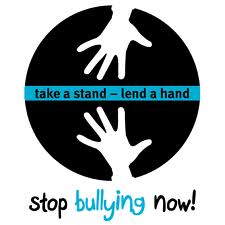
    Bullying is when someone hurts someone else either by using words or actions. It is an issue that affects many people. Bullying can happen over a short period of time or can happen for a long time. It can be very dangerous and lead to worse situations. It can also harm people that are not involved in the bullying.

    Where Can Bullying Happen?

    Bullying can happen anywhere and at any time. It is most common for bullying to take place in schools, school buses, at a playground, or even online. Bullying is not just something kids and teens experience; it can be experienced by adults, too.

    Why do People Bully Others?

    There could be many reasons as to why people become bullies. Sometimes they do not even realize that they are bullying someone else.

    Somebully others because they are looking for attention. They might find that picking on others is a way to make them feel much more powerful. They use the victim’s reactions to help build their self-esteem.

    Other bullies grew up with families who are abusive in many different ways. Since they grew up in that environment, they might have learned from what they wereused to seeing and hearing. They use what they have experienced to harm others, and this is not always intentional.

    Types of Bullying

    Sometimes it is difficult to know if one is being bullied or not. It is important to know different types of bullying.

    Here are four common types of bullying that you, or a friend might experience:

    1. Physical Bullying

    This type of bullying involves using physical actions to harm others.

    Physical bullying includes:

    • Punching and hitting
    • Kicking
    • Pinching
    • Pushing and shoving
    • Taking or breaking someone’s belongings
    • Yelling
    1. Verbal Bullying

    This type of bullying uses words to make others feel bad about themselves.

    Verbal bullying includes:

    • Name calling
    • Teasing
    • Embarrassing or humiliating others
    • Insulting
    • Inappropriate comments
    • Taunting
    • Making threats
    1. Social Bullying

    This type of bullying is often, but not always, done behind someone’s back. It is done to humiliate others and to ruin their social reputation.

    Social bullying includes:

    • Spreading rumours
    • Purposely excluding others from groups and activities
    • Embarrassing or humiliating others
    • Mimicking
    1. Cyber Bullying

    This type of bullying involves technology, such as cellphones, computers, social media or text messaging. Although it is not done in person, it can be just as harmful as other types of bullying.

    Cyberbullying includes:

    • Sending rude text messages
    • Posting unwanted posts of someone else
    • Creating mean comments about others

    How Can One Handle Bullying?

    If you or someone you know is being bullied, you should tell someone right away. You could tell an adult you trust, such as your parents, a teacher, or your principal. If you are unsure if you are being bullied and feel that the issue is affecting you, it is best to tell a trusted adult about how you are feeling. There is no reason for anyone to have to feel unsafe and hurt. Never feel the need to have to hide your feelings and any problems that may be affecting your day to day life. There is always someone who is there to listen to you. Don’t be afraid!

    Resources:

    https://www.stopbullying.gov/what-is-bullying/index.html

    https://www.ncab.org.au/bullying-advice/bullying-for-parents/types-of-bullying/

    https://kidshealth.org/en/kids/bullies.html?ref=search

    https://www.pacerkidsagainstbullying.org/what-is-bullying/

  • Practicing Gratitude

    Practicing Gratitude

    Practicing gratitude is a great way to remain present, focused, and calm. There are various ways to practice gratitude, but all of them result in tremendously positive results.

    One way to practice gratitude is to write down a list of the things you are grateful for. When doing this activity, you appreciate the things in your life, despite how big or small they might seem. You become grounded and are reminded that even if unfortunate experiences arise in your life, you can always reflect back on this list or create a new one to realize that you have many good things in your life to relish..

    Another way to practice gratitude is to spend time with loved ones. This simple activity will make you feel relaxed and loved. By spending time with those you love, you may become joyful and grateful..

    Lastly, another way you can practice gratitude is by listening to a guided gratitude meditation. You can listen to a podcast or a video where they bring you to the present and help you to become thankful for everything in your life. Research proves that people who practice gratitude have countless more benefits to themselves, their relationships, and in their lives.A few benefits of this activity include having lower blood sugar, a stronger immune system, better psychological health, steady sleep patterns, and much more. Therefore, there are many simple ways to practice gratitude that result in you ultimately having better psychological and physical health, leading to  a more positive life.

    Sources:

    1. https://blog.mindvalley.com/practice-gratitude/?utm_source=google
    2. https://www.forbes.com/sites/amymorin/2014/11/23/7-scientifically-proven-benefits-of-gratitude-that-will-motivate-you-to-give-thanks-year-round/
    3. https://www.forbes.com/sites/womensmedia/2016/07/08/8-ways-to-have-more-gratitude-every-day/#7720d6001d54