Author: Rochelle C. Pangilinan

  • When They Can’t Call You on Your Cellphone – How to Cope when You Lose Your Mobile Phone

    When They Can’t Call You on Your Cellphone – How to Cope when You Lose Your Mobile Phone

    When your mobile phone is confiscated, do you feel that your world has suddenly stopped turning? OK, maybe we’re being overly dramatic here, but according to a report published by the Varnier Institute, that statement isn’t entirely stretching it. In fact, the study revealed that 49% of Canadian young students said they will be upset or unhappy when they lose their cellphone privileges. In addition, these students are obviously so dependent on their phones that more than 1/3 of those surveyed said that they sleep with their smartphones beside them.

    Still, there are situations when your parents decide to remove access from your precious device for a certain period of time, which often feel like an eternity if you’ve grown so accustomed to it. You may have an important test coming up, a valuable family member coming for a visit, a household chore that’s overdue, or simply a form of discipline enforced on you for violating your curfew. Now, while it’s fine to feel displeased or hurt with the decision, remember that it’s not the end of the world. You can survive these times when no one can call you on your cellphone. In turn, be ready to gain these valuable experiences.

    You can actively engage.

    Do you remember the last time you were 100% present for a family activity, like game night or movie night, or a day out with your friends at the mall? By this, we mean 100% attentive or in the moment—no distractions like looking at your text messages or seeing if you got lots of likes with your Instagram photo. Yes, even a quick peek at your email inbox means a point against that 100%. If you don’t remember, then most likely it hasn’t happened yet or it’s been too long. Now that you can’t go online or send text messages, use this time to connect with your family or friends and give them your undivided attention. Who knows, you might be happier without your mobile device after all.

    You can enhance your verbal communication skills.

    OK, you might ace it in Emojispeak, but when was the last time you shared your thoughts and ideas without relying on emoticons or emojis? Probably another thing that’s hard to remember, right? With your mobile phone out of your hands now, you can discover the value of communicating the old-fashioned way—by perusing your vocal chords and making sounds to form actual words or what people normally refer to as speech. Yes, you may not have noticed it, but relying too much on technology to communicate can derail speech abilities, according to a Baylor University study published in the Journal of Personality and Individual Differences.

    You can be a healthier you.

    Having no access to your cellphone does not mean keeping away the doctor completely, but you can for sure pick up healthy habits while you are smartphone-free. For one, too much screentime actually causes eyestrain, something that you might not feel yet but will eventually in the long run. In addition, excessive cellphone use leads to disruptive sleep. This is because mobile phone use prevents bedrooms from being sensory deprivation zones, thus resulting in sleep deprivation. With non-existent cellphone access, you’ll notice that you feel well-rested when you wake up in the morning.

    You can focus on other things.

    Not having to worry about whether you’re invited to a party or not by checking your phone every minute will give you peace of mind, while at the same time, you’ll noticed that you’re now more focused on other things. Maybe you’ve always wanted to join the field hockey team but never got around to it because of online distraction or maybe you’ve always wished to try your hand at playing guitar but never had the attention to take up guitar classes? Now is the best time to explore what your interests are and find out where you can excel at (aside from texting and taking Instagram-worthy shots, of course).

    It’s normal to feel anxious the first few days without your smartphone, but trust us, you’ll surprise yourself and realize that there are so many things you are capable of doing without having to rely on your mobile phone. While you’re in protest now that your parents confiscated your phone, in due time, you’ll appreciate the gesture they’ve done for you and savour the things mentioned above.

    SOURCES:

    https://vanierinstitute.ca/online-lives-canadian-youth/

    https://www.womansday.com/relationships/family-friends/a58985/mom-took-sons-phone-away/

    https://www.telegraph.co.uk/family/parenting/will-happen-take-childs-phone-away/

  • Being One with Nature: Dos and Don’ts of Hiking

    Being One with Nature: Dos and Don’ts of Hiking

    In this era of smartphone companies churning out new models by the minute and social networking sites and apps mushrooming by the second, it may be hard to imagine that there’s an activity that allows you to tune out from the modern world ( only temporarily) and be one with nature: hiking.

    Outdoor enthusiasts look forward to this activity whenever they can although they may have different reasons for loving it—some long for the relaxing fresh air or the breathtaking scenery, while some long for the exercise that goes along with it. Whatever the reason is, there’s no denying its ever-growing popularity across all cultures that one Canadian retailer specializing in outdoor recreational gear and clothing found itself in hot water recently for allegedly targeting a limited audience with their advertising and marketing campaigns (the company has since apologized and vowed to make changes).

    Hiking is an activity that is open to anyone who enjoys partaking in nature sightseeing and getting much-needed physical exercise at the same time. One can be as young as a toddler or as old as 82 (like Dale Sanders who became the oldest person to hike all 2,190 miles of the Appalachian Trail within a year). It’s always good to start young as long as you keep these tips handy for a safe hiking:

    Dos

    Do plan the hike carefully.

    If you’re a beginner hiker, it’s best to work with adults who are veteran hikers. They can best choose the right trail which is ideal for young hikers. For example, the scenic West Coast Trail in Vancouver Island has a rough terrain that calls for crossing rivers and walking on slippery hills and uneven paths, so this is best left for the seasoned hikers. Meanwhile, the Pointe-Taillon National Park, Quebec Park is an ideal choice for novice hikers like you since it offers minimum elevation changes. One other very important thing to do is ALWAYS tell someone where you are going and what time. If you were ever to get lost and no one knew where you were, it could turn out very badly.

    Do pack wisely.

    Be smart about the provisions you bring for the day! Keep a light first aid kit handy as it’s better to be safe than sorry. As for the food, keep in mind that it must be easy to prepare or requires minimal or no preparation, must not need to be refrigerated, and must remain intact all throughout (so a slice of blueberry cheesecake is out of the question because it would not hold up during a hike). Some recommend making your very own homemade trail mix consisting of healthy chips or crackers, nourishing dried fruits, and nutritious nuts like cashews or almonds. And of course, bring enough water to avoid dehydration during the hike.

    Don’ts

    Don’t think that nature is always your friend.

    Another one good reason why hiking is a great way to pass the time is the Instagram-worthy views that you’ll encounter. Who doesn’t want a selfie when you’re in magnificent spot like the BANFF? However, nature can turn into your worst enemy if you aren’t careful. Canada for one boasts of dangerous foliage and flora like the infamous Poison Ivy so be aware of what you may face during the hike. Some are even like a sheep in wolf’s clothing like the wild parsnip which has lovely yellow flowers that form a flat-topped umbrella-esque cluster—they are pretty to look at, but underneath they can turn a nice time into a nightmare, giving you itchy, red blisters upon touch.

    Don’t rush.

    Beginners’ hiking trails can vary in distance—some may be just under two hours, some may be more. Whatever it is, know that hiking may be a physical activity, but there’s no need to rush yourself as if you are running the marathon. Take your time in walking through the path and remember that you’re out in nature, so take in the breathtaking views for as long as you like. It’s cliché, but yes, a hike is the best time to stop and smell the roses.

    So now that you know essential do’s and don’ts in hiking, are you ready for your first hike?

    SOURCES

    https://www.ctvnews.ca/business/outside-is-for-everyone-mec-apologizes-for-lack-of-minorities-in-its-ads-1.4147396

    https://www.washingtonpost.com/news/inspired-life/wp/2017/10/26/an-82-year-old-man-hiked-the-entire-appalachian-trail-then-he-danced-a-jig/?noredirect=on&utm_term=.3feeb125e22c

    https://www.slice.ca/travel/photos/best-hiking-trails-in-canada/#!west-coast-trail-vancouver-hike

    https://www.canadianliving.com/life-and-relationships/travel/article/10-best-hiking-trails-in-canada

    https://www.ourwindsor.ca/whatson-story/5743130-5-poisonous-plants-of-southern-ontario-you-should-avoid/

    https://www.livescience.com/54456-tips-for-hiking-with-kids.html

    http://www.sandiegofamily.com/out-and-about/hiking-with-kids

  • Inclusivity for the Differently Abled: Much Done and Much to be Done

    Inclusivity for the Differently Abled: Much Done and Much to be Done

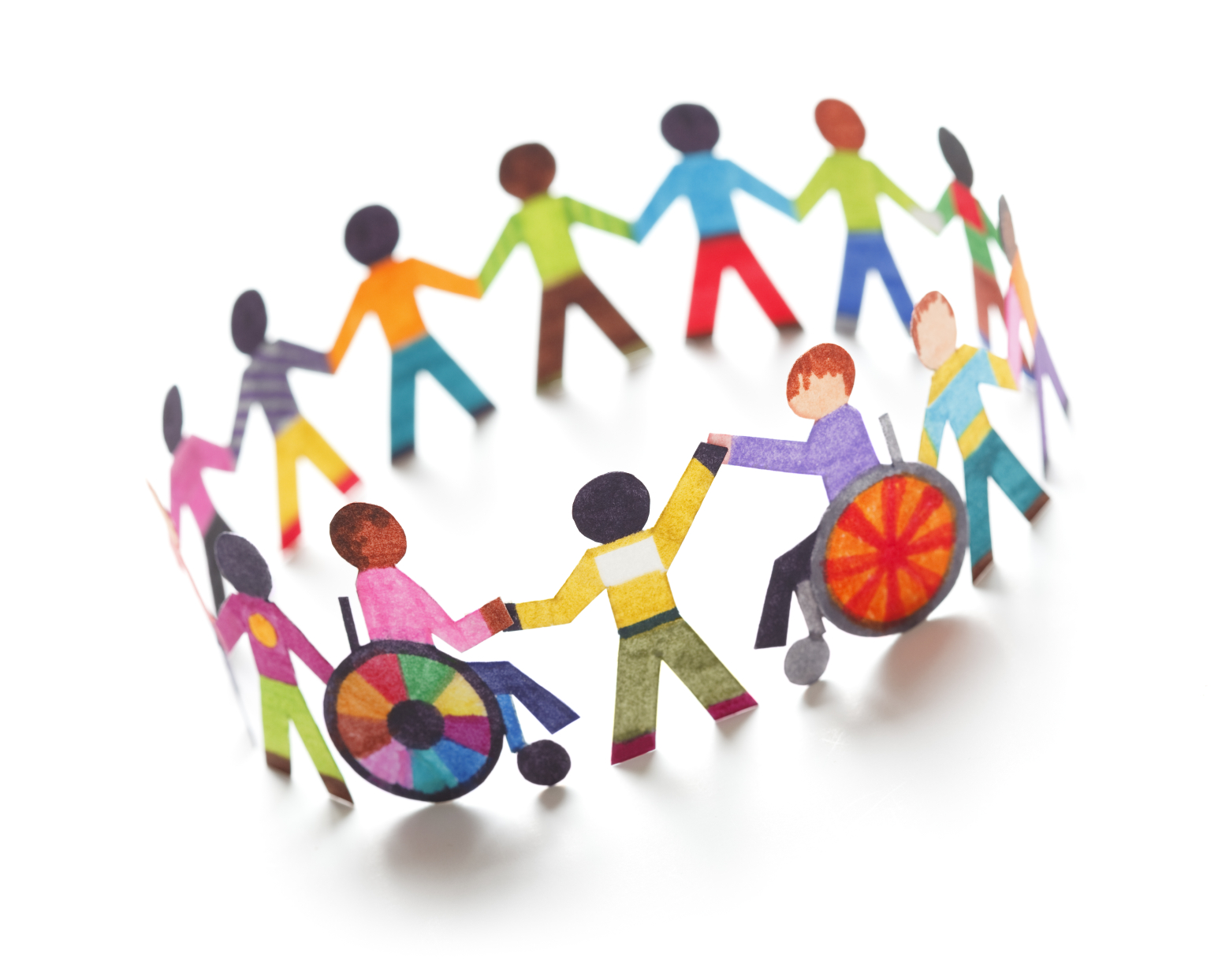
    There has been great progress made to make the world a more inclusive place. We have witnessed greater exposure and acceptance of sexuality, gender, and abilities that do not conform to preconceived norms. However, that progress can easily be mistaken as success. Although much as changed, there is still far more that has to be done for genuine inclusivity. People who are differently abled still face many obstacles despite the social narrative of progress. It is necessary to make ourselves aware of these social shortcomings in order to address the problem and find a solution.

    One in seven people around the world have some form of disability, according to the World Health Organization. People of different abilities are a critical part of the fabric of our society. Yet, there are still many countries with laws that restrict those with disabilities in terms of marriage, housing, and healthcare. These important decisions are legally handed to guardians instead of the individual. Despite the progress made, there is still a prevalent mindset that those with disabilities are to be pitied. They are viewed as charity projects as opposed to human beings with thoughts and wants like anyone else. This results in progress being stalled in ways we may not fully realize.

    Modern technology is advancing at a breakneck pace. We are on the verge of artificial intelligence on the same level of the human brain, automation that will replace countless jobs, and power sources far beyond what was capable a mere century ago. These are resulting in mind-blowing advancements for many, but those with disabilities are not truly reaping those benefits. Innovation of mobility devices has been surprisingly slow, with the same prototype for the modern wheelchair still being used since 1933. A lot has changed since the 1930s in unbelievable ways, but for many people things have remained very much the same.

    These issues persist because the issue goes beyond discrimination. Even in progressive cities and countries, simply doing away with discrimination is not enough. We must push for policies and changes that do away with the structures that hold certain people back. These barriers range from the assumptions we make when we see someone who uses canes when walking, to assuming that a small set of stairs leading to a public space is not an issue. Mobility Unlimited is a global initiative looking to change that by having inventors and technologists submit ideas that can transform mobility for those afflicted with lower-limb paralysis. Initiatives such as that one, as well as Austria requiring that 4% of all jobs be filled by those with long-term disabilities, help move things in the right direction. But it will take persistent similar steps to truly solve the problem.

    With the amazing strides seen in modern technology, advancements made for the differently abled, and the improved attitudes regarding inclusivity, it is easy to mistake progress for success. We cannot afford to fall for that trap. There is still much to be done to create a world of equality and inclusivity. It starts with awareness, which paves the path for new ways of thinking and concrete actions for genuine change. We must simultaneously cheer our progress and acknowledge our shortcomings. Transforming our ways of thinking, coupled with advancing technology, gives us the potential for a radically different and inclusive future. But we must choose to make it happen.

    Sources:

    Barriga, Shantha Rau. “We need to stop treating people with disabilities as less than human.” The Guardian. https://www.theguardian.com/global-development-professionals-network/2016/jun/20/we-need-to-stop-treating-people-with-disabilities-as-less-than-human

    McFadden, Tatyana. “Technology has changed our world, but hasn’t done enough for people with disabilities.” CNN.  https://www.cnn.com/2017/11/21/opinions/technology-can-help-people-with-disabilities-opinion/index.html

    Saba, Roberto. “Around the globe, people with disabilities face unseen discrimination. We must do better.” The Conversation. http://theconversation.com/around-the-globe-people-with-disabilities-face-unseen-discrimination-we-must-do-better-70235

  • How Travel Can Change You Forever

    How Travel Can Change You Forever

    The world has never before been so vast and so small all at once. Human civilization spans the globe, but modern technology and travel makes it easier than ever to connect with people from anywhere. Trips that once took our ancestors months to complete can now be traversed in a matter of hours. If you plan it right, it is not that expensive, either. Take advantage of this to venture to other countries while still in university or after graduation. The benefits of this go far beyond simply having fun.

    Traveling lets you see the world in a whole new way. Reading about or watching videos of other places is nothing at all like being there in person. These are only glimpses into another town or country, sharing tidbits that the content creator selected from their perspective. The only way to truly know a place, to see the good and the bad, is to be there. Instead of simply reading about cultural differences, you will be faced with them constantly as you walk the streets. Instead watching a YouTube video on another language, you will be forced to use it to order dinner or get to your Airbnb. These are unforgettable experiences that shatter preconceived notions about the planet and bombard you with the reality that the world is a massive, complex, and nuanced mixture of people and ways of thinking.

    We live in an interconnected society. Traveling can now be far more than an isolated adventure or an escape from your life at home. You can meet new friends and continue that friendship online through social media. Job opportunities in other countries can be pursued remotely, which allows you to continue immersing yourself in that culture via work and offers flexibility to continue traveling. The insights and experience you gain can be utilized in your studies when you come back to your college or university classes. Your trek allows you to bring a lot back with you, and it can have a lifelong impact.

    There are studies reinforcing the idea that travel actually changes your brain and how you think. By engaging in local environments abroad, you can improve your creativity in both your studies and work. Navigating the streets and trains of a foreign town, ordering dinner in the local language, and diving into an environment that is completely different from what you are used to are all ways to sharpen your mind. Your brain takes in all of these stimuli and this acts like a workout that strengthens and improves your mental performance. You will return home with a greater sense of independence and confidence. This will help you tackle the complex and scary world of post-secondary education, as well as the even grander world of work and adulthood. After high school, we are plunged into huge decisions and greater control over our own lives, and you need to do all you can to prepare yourself for that.

    There are many ways to broaden your mind and improve your chances for success in adulthood. Traveling is an exciting way to go about that. The new experiences, challenges and challenges you will face in other countries will help you grow into a stronger, smarter, and more confident person. By venturing to other places, you will be more prepared for the place you call home.

    Sources:

    Asthana, Deepak. “Five Reasons Why Traveling Can Broaden Your Horizons.” Travel & Escapes. https://travelnescapes.com/2016/04/28/five-reasons-why-traveling-can-broaden-your-horizons/

    Les Roches. “How travel broadens the mind: learn new skills and discover different cultures.” http://blog.lesroches.edu/the-industry/how-travel-broadens-mind/

    Shaw, Kira. “Travel broadens the mind, but can it alter the brain?” The Guardian. https://www.theguardian.com/education/2016/jan/18/travel-broadens-the-mind-but-can-it-alter-the-brain

  • Interesting Environmental and Sustainability Careers

    Interesting Environmental and Sustainability Careers

    Careers in the field of environmental sustainability are growing fast, as the increased awareness of global environmental concerns such as global warming, deforestation, agricultural production, and ocean acidification brings with it a need for more professionals working on solutions.  Whether you’re interested in helping preserve the Earth’s natural environment, fighting climate change, or making sure that humans are getting the best use of their natural resources, there is an environmental sustainability career for you.

    Biofuel Production

    Biofuel is fuel for cars and other machines that is made from natural plant matter, such as ethanol made from corn.  Most biofuel is made from non-food crops that are farmed just like food crops, but which need to be processed into a form that can be used as fuel.  Tradespeople can find jobs in this area doing work such as operating farms and harvesting the biofuel crops, operating factories and refineries where the plant matter is processed, working in labs testing samples of plants and processed fuels, or being part of the supply chain transporting the finished fuel to its destination.

    Eco-Tourism

    Travel is an important experience, and sustainable travel is often something that means a lot to people who want to see the world but also want to ensure they are having minimal impact on the environment.  People who work in eco-tourism are in charge of visiting unique natural locations and planning environmentally friendly trips for individuals and groups.  This includes making sure that transportation methods are sustainable and not damaging to the natural locations.  Other jobs include acting as a travel guide to lead a group of tourists, or working in museums and tourist information centers to inform visitors about the natural area and how they can visit without harming the local plants and animals.

    Solar Energy

    One of the most promising sustainable energy sources is solar energy, which can be used to power cars, buildings, and most other things that run on gas or electricity.  There are many careers in the solar industry, including operating solar power plants, building and installing solar panels at power plants or buildings, or working in manufacturing plants producing solar panels.  Other careers include solar engineering to develop new and better solar technologies, advising companies or municipalities on how to include solar infrastructure, and consulting for the government on solar energy policies.

    Agroforestry and Reforestation

    Reforestation is an essential aspect of environmental sustainability, which involves planting large numbers of trees in areas which have been harvested or experienced forest fires.  Agroforestry has a focus on including forestry practices alongside agriculture, such as structuring farms to include beneficial trees and shrubs in food rop farms to help maximize yields and optimize the environment.  Forestry careers include managing woodlands, planning selective cutting operations, planting trees, or working at tree nurseries.  Agroforestry jobs include managing farms, soil technicians, harvesting, and advising municipal or government agencies on reforestation projects and policies.

    These are only a few of the many possible careers in the environmental sustainability field.  Other jobs include water quality technicians, wetlands management, paper and plastics recycling, green and eco-friendly architecture, renewable wind energy, air quality technicians, environment and sustainability public relations, and landscape architecture.

    Sources:

    https://www.nationalgeographic.com/environment/sustainable-earth/11-of-the-fastest-growing-green-jobs/

    https://www.environmentalscience.org/careers/sustainability-and-green-jobs

    https://environment.acadiau.ca/Potential_Careers.html

    https://www.eco.ca/blog/5-things-youve-wanted-to-know-about-sustainability-careers/

  • Different Types of Resumes

    Different Types of Resumes

    Most students will start their first job in high school or college students, whether it is a part time job during the school year, or full time work during the summer break.  Since in many cases this will be the first official job you have to apply and interview for, you will need a resume.

    There are a lot of different types of resumes, and it can be difficult to know which one is the best option for the job you’re applying for, and will display your skills to your advantage.  Usually, the type of resume you choose will depend on how much relevant experience you have for the job, because each resume type will highlight different information.

    All resumes need to include your contact details clearly displayed, usually across the top of the page.  You should have your full name, address, phone number, and email address included, so that prospective employers will know who you are, and how to get in touch with you.

    Chronological Resume

    Like the name suggests, a chronological resume organizes your information in chronological order, backwards from most recent work experience to older experience.  This is the most common type of resume, and is most useful for students who already have a decent amount of work experience, such as several previous jobs or volunteer positions over the course of a few years.

    Chronological resumes are ideal for showcasing your most recent work experience when that experience is the most relevant to the job you are applying for. Group your information according to each job or volunteer position, and include the job title, whether it was full-time, part-time, casual, or seasonal employment, and the company name.  Beneath that, you should list short bullet points of what you did in that job — responsibilities, regular tasks, notable projects, and other skills that are relevant to the new job’s list of requirements.

    Following the work experience section, you should include the details of your education, including the school name, city, and years you started and graduated.  If you are still in school, you can note your expected future graduation date.  Follow this up with a section listing any additional skills, awards, or notable accomplishments.

    Skills-Based or Functional Resume

    A functional or skills-based resume is one that can be very useful for students, especially those applying for their very first job, as it highlights skills and abilities rather than specific previous employment.

    Your first section in this resume format should list skills you possess that are relevant to the job you’re applying for.  It’s a good idea to group related skills together, such as Organizational, Interpersonal, Technical, Physical, Customer Service, and any other skill groups you might have, such as skills with animals. Generally, you will want to list the most important skills first, followed by other skills.

    Follow your skills section with your education information, the same as in a chronological resume, and any notable achievements or extra-curricular activities.

    Creative Resume

    While this is another common type of resume, it comes with a note to use with caution.  Creative resumes are ones that use non-traditional layouts, formatting, colours, or images, in addition to text.  It’s important to remember that not every company or job will appreciate a resume that is fancy or non-standard, as these can be harder to read or process.  Also, in many cases digital resumes will still be printed out in black and white, or will be submitted through an online applicant management software, both of which will negate any creative look you add to your resume.

    There are some jobs where creative resumes are appropriate, such as jobs in the visual arts, graphic and web design, videography, or marketing.  However, your best bet–to be sure that prospective employers can see your creative efforts properly–will always be a clean, professional, standard resume with links to your online portfolio or with separate samples of your work attached, depending on the job requirements.

    Regardless of which resume type you use, be sure that all information is well organized, written clearly and concisely, and with no spelling or grammar errors.

    Sources:

    https://www.interactiontalks.com/best-type-of-resume-for-a-high-school-student/

    http://www.success.uwo.ca/careers/resumes__letters/resumes/index.html

    https://www.thebalancecareers.com/student-resume-examples-and-templates-2063555

  • Spot the Difference: How to Distinguish a Resume from a LinkedIn Profile

    Spot the Difference: How to Distinguish a Resume from a LinkedIn Profile

    For businesses, the information age led them to adapt the “if you can beat ’em, join ’em” mentality, and for the majority of them, it paid off. Still, there were companies who refused to embrace technological advancements by staying true to their bricks and mortar roots through and through. The result? Such companies went the way of the dinosaur, to say the least. A good case in point is HMV, which was once Canada’s largest chain for total entertainment experience with 102 stores nationwide at one point during its height. Now HMV is extinct.

    Embracing the digital age is not only for businesses, mind you. An online presence these days is also a must for everyone who is on a job hunt because, sad to say, a resume—even a well-written one—is often insufficient. These days, a resume goes hand in hand with an online profile. So how exactly do you have an online profile that you can specifically use for your employment aspirations? Simple! Create a LinkedIn Profile.

    What exactly is a LinkedIn Profile?

    First things first, it would help to define what a LinkedIn Profile is to avoid confusion as we go more in-depth as to how it differs from a resume. So we go straight to the source itself. LinkedIn.com says that “Your LinkedIn profile is a professional landing page for you to manage your own, personal brand. It’s a great way for you to tell people who you are and what you do by displaying a general history of your professional experiences and achievements.”

    Why do you need to establish your personal brand?

    You might be wondering why it’s important to have a personal brand, especially since you’re a novice to the Canadian employment statistic or maybe have not even started out yet anyway. Well, as the adage goes, it’s always good to start early. You need to build your personal brand so you can stand out from the competition by emphasizing your skills and qualifications and the characteristics that make you, well, you. Remember, the days of being in the Cookie Cutter breed are over. You need to tell the world what sets you apart from the rest, and a LinkedIn Profile can help with that.

    LinkedIn Profile vs. Resume

    Now that you’re caught up with what a LinkedIn Profile is and how it helps boost your individual brand, let’s get on to the main show. How exactly does it differ from a resume? Just to be clear, a resume does share a few similarities with a LinkedIn Profile. Think of them as being cut from the same vein.

    For instance, both should ideally focus on your accomplishments and include an impactful summary section. Another similarity is that ideally they should be both be short and succinct. Whereas it’s more difficult to have a quintessential resume kept at 2 pages to align with brevity objectives, keeping a LinkedIn Profile brief and to the point is a lot easier because of the limited number of characters that go with the website.

    Now, let’s look into the other features that distinguish the two.

    A resume is target-specific, a LinkedIn Profile is general.

    Perhaps you know that it’s best to tailor your resume to the role that you’re targeting. For example, if you’re aiming for a position that calls for a great deal of accounting responsibilities, highlight your accounting experience in your previous jobs, for example, at a retail store where you handled the cash register or your volunteer experience for an animal shelter where you managed donations for events.

    A LinkedIn Profile, on the other hand, is not something you can customize per job or it will eat a lot of your time. So it’s acceptable that you keep your duties in previous roles in a more general way. However, if you’re set on going for a particular industry, then you can prepare your LinkedIn Profile exactly to attract employers from that field.

    A resume is formal, a LinkedIn Profile is casual.

    A resume is always written in a professional tone and uses more active words or phrases instead of passive. It’s recommended as well for you to drop the pronouns like “I” when writing a resume. With your resume, you want to give the impression that you’re someone who relishes to don a suit and tie or something truly dressy.

    A LinkedIn Profile, meanwhile, is more casual in tone, which means you want to give off the vibe that you’re easy to go along with and like to have a bit of relaxation and fun. In addition, it’s perfectly acceptable to use pronouns, so don’t be shy about using “I.”

    A resume is show, a LinkedIn Profile is show and tell.

    Listing your achievements is a must for both, but hiring managers may actually want more than merely relying on your word.

    This is how LinkedIn profile differs because since it’s a networking site, your previous bosses or colleagues can actually validate the skills you’ve listed through the website’s endorsement feature.

    We hope you now have a wonderful idea on how you can separate your resume from a LinkedIn Profile. Now, what are you waiting for? Sign up for an account and create your profile right away!

    SOURCES:

    https://www.themuse.com/advice/wait-dont-just-copy-and-paste-there-are-real-differences-between-linkedin-and-your-resume

    https://www.forbes.com/sites/forbescoachescouncil/2018/06/08/the-importance-of-crafting-a-powerful-personal-brand/#578ca9056d52

    https://www.linkedin.com/help/linkedin/topics/6042/6043/15493/your-linkedin-profile-overview?lang=en

    https://www.linkedin.com/pulse/20140701163631-1001091-resumes-vs-linkedin-profiles-what-you-should-know

    https://business.financialpost.com/news/retail-marketing/hmv-canada-to-close-all-102-stores

  • The Job Searching Emotional Rollercoaster

    The Job Searching Emotional Rollercoaster

    Applying for a job can be an exciting experience, but not being successful can be very disappointing. You might already know how hard it can be not to get a job, but you might still have felt only part of the emotional rollercoaster that comes with a job search.

    People have many reasons for choosing what kinds of jobs they want and where to apply. Sometimes, they choose jobs that they are unlikely to get because they have too few qualifications or because they are not suited to the job for another reason. A person with a degree in English literature, for example, will not be able to find a job as a doctor and an accountant could not be a science teacher. Still, people often have to deal with not getting jobs for which they are well qualified.

    Many factors come into play when qualified people fail to get jobs. These days, hundreds of people might apply for the same job, but only one will be chosen. It can be very disappointing for the other qualified applicants not to get the job, but if the company can hire only one person, the others have to look elsewhere. Sometimes it has nothing to do with how qualified you are or if it was something you said or did; it just might be that you were not at the top of the pile of resumes. It can be that simple. Companies do not often have a lot of time to go through over a hundred resumes. In some cases, they will, depending on the weight of the job.

    Another problem for job seekers is called phantom jobs. Sometimes, companies list jobs that do not actually exist, possibly because they need to post a certain number of jobs every month to keep their listing on job websites. If a job seeker never hears back from an employer about a position, it could have been a phantom job.

    The interview process can make the difference between getting a job and going back to the search. Job seekers should try to research the company and to prepare for the kinds of questions the interviewer might ask. If the job involves working with plants, for example, the job seeker should try to learn enough to show an interest in the subject. If the company has some new projects, the job seeker should know at least a bit about that, as well.

    Despite their best efforts, job seekers might not be able to get the work they want. Has that ever happened to you? If possible, you need to analyze what happened. Instead of feeling overwhelmed and fearful, you can ask yourself a few questions. Were you prepared for the interview? Was the job close to your abilities and training? How can you find a job that matches your skills and avoid past mistakes?

    Sometimes, you might be full of hope when you apply for the job, knowing that you are well qualified and enthusiastic. When the job goes to someone else, you might feel depressed and unhappy, just like someone who has lost a job where they worked for a long time. It is important to take enough time to accept what has happened before moving on to other jobs- you might take that frustration and grief with you.

    You might never know why one employer seems to ignore your application while another one offers you a job, but you can manage the emotional rollercoaster of the job search. Remember that even experienced workers often deal with the same kinds of situations. Be persistent and learn from your mistakes, and you’ll have a chance of getting a good job.

    Bibliography:

    Howell, Dave. Job Loss is an Emotional Roller Coaster.” https://www.linkedin.com/pulse/job-loss-emotional-roller-coaster-dave-howell/.

    Monster.ca. “How to Ride the Emotions of Your First Job Search.” https://www.monster.com/career-advice/article/how-to-ride-emotions-first-job-search.

    The Undercover Recruiter. “Why Do Imaginary Jobs Exist?” https://theundercoverrecruiter.com/why-do-imaginary-job-openings-exist/

    Workopolis.com. “The Number One Reason Why People Don’t Get Hired (and How to Fix it).” https://careers.workopolis.com/advice/the-number-one-reason-why-people-dont-get-hired/

  • A Guide to Resume Preparation

    A Guide to Resume Preparation

    For the first time in 40 years, Canada’s unemployment rate is lower than ever at 5.8 per cent as of October 2018.  This piece of good news means there are more opportunities for Canadians, motivating you more now take a stab at the job you’ve been eyeing.

    The first step to landing that position is to ensure you have a well-prepared resume to submit to the hiring or Human Resources department. This is probably where you hit a stumbling block. Don’t fret because you’re not alone. Even those who have been working for with years and years of experience still struggle on how to have a well-written resume, so more so for individuals like you who are just starting out on their career path. The fact that you’re reading this article means you’re on the right track so that’s what’s important. So let’s get you started, shall we?

    Know the essential components of a resume.

    Ever heard of the term the “elevator pitch” that’s very common among salespeople? Well, the principle somewhat applies to a resume as well. Sure, a resume is a document that lists your objective, skills, education, and work experience, but it doesn’t need to be lengthy that it can fill out an entire text book. Like an elevator pitch, it needs to be short and snappy. So be sure to stick to the highlights such as your main responsibilities and your greatest accomplishments. For example, hiring managers don’t need to know that as a fill-in administrative assistant, you were responsible for opening and closing the office. The trick on knowing which to include or not? Well, it may be a blunt approach, but if the task seems like a monkey can do it, then it’s best to leave it out.

    Create a profile summary that makes an impact.

    Hiring professionals scan resumes that land on their desks or show up in their computer screens on an average of 30 seconds. This means that they may not have time to read through all the work experience and the skills you offer, so the best thing to do is provide a powerful and attention-grabbing profile summary or a summary statement right at the beginning of your resume. This will be a snapshot of what exactly you can offer them, and you can do this around 100 words or maybe even less. In just a few sentences, HR people can have a good idea of your skills and credentials and assess how you would fit into their organization.

    Only mention the relevant and recent experience.

    It’s exciting to prepare resumes as it gives a people a chance to sell themselves, which some may not be accustomed to doing. However, too much eagerness can lead to going overboard—they sell themselves too much and mention items that are not aligned with their job objective or are so far back in the past that the skill or education may not be applicable now. For example, you may be tempted to point out how you have an amazing work ethic, which is good, but this does not mean you’d need to bring up the Punctuality and Perfect Attendance awards you got during your entire middle school. Another instance may be that you were a prolific pianist in your elementary days, even having a recital every year, but you have not touched a piano in years—no need to mention that.

    Be proud of your community involvement.

    Most companies now are involved in community outreach programs or have committed to give a portion of their profits to a cause they believe in. Some organizations even have their own social responsibility departments. In line with this, don’t underestimate your unpaid volunteer work as this shows your civic-mindedness and can impress potential employers. List those experiences chronologically, from most recent to oldest, and when you can, add a short description of your duties.

    Keep it simple.

    A resume is not a good time to show off your graphic design skills—unless you are applying for a graphic designer opening. Remember to keep it simple—chose a basic font because readability is priority. Some good font types are Arial, Times New Roman, and Calibri. Use colours sparingly, or stick to the neutrals—black or white, light greys, and light blues. As for the font size, make it 10 if you’re having a hard time fitting everything to two pages. If you have lots of white space, keep it to 12.

    The above are all good tips to keep in mind when you’re preparing your resume. In addition, always try to customize your resume for each job posting to ensure that you state the specific skills and qualifications for the position. Good luck!

    SOURCES:

    https://www.businessinsider.com/why-this-is-an-excellent-resume-2013-11#6-it-uses-keywords-like-forecasting-and-strategic-planning-6

    https://www.careereducation.columbia.edu/resources/how-write-resume-profile-or-summary-statement

    https://careerwise.minnstate.edu/jobs/resumecontents.html

    https://www.monster.ca/career-advice/article/top-resume-questions

    https://www.monster.ca/career-advice/article/resume-101-canada

    https://www.businessinsider.com/why-this-is-an-excellent-resume-2013-11

    https://www.roberthalf.com/blog/writing-a-resume/the-dos-and-donts-of-resume-writing

    https://www.themuse.com/advice/42-resume-dos-and-donts-every-job-seeker-should-know

  • In November We Remember

    In November We Remember

    On November 11th, we celebrate and remember the veterans of war in Canada. Traditionally, we all wear a poppy on our shirts to signify that we are taking some time to remember the veterans. The poppy shows respect for those lost and also, those currently in war. Your school may give 5 minutes of silence or will conduct an assembly with choir songs and speeches. We have a lot to be thankful for in Canada, and having these soldiers protect us and serve our country is one thing to be very grateful for, especially during these uncertain times. In November’s issue of JPD, we have important articles on: careers that might be phased out by robotics and what to do, how to make exercise a habit, jobs that make a difference in the world, and how to use your highly sensitive nature to your advantage in your job or career. We also put together some more important Career Profiles like being a First Responder and Flight Attendant. We have over 3 articles that list scholarships for November for every discipline, plus trades. These scholarships can be year round with various deadlines, but also specific November deadlines- Apply NOW!

    Stay safe as always,

    Erin Kelly

    Content Editor