Author: Giselle Mazurat

  • Career Profile: Air Conditioning Mechanic

    Career Profile: Air Conditioning Mechanic

    An Air Conditioning Systems Mechanic prepares, installs, maintains, overhauls and services residential central air conditioning systems, commercial and industrial air conditioning systems, and combined heating, ventilation and cooling systems.

    Typical responsibilities include taking proper measurements of air conditioning components, measuring, connecting and cutting piping, working with hand and power tools, starting up heating or air conditioning systems and testing them for leaks, recording test readings to ensure the system is functioning properly, replacing and repairing components, preparing work estimates, reading and interpreting blueprints, and communicating with customers.

    To be a successful mechanic, you need a strong mechanical aptitude and excellent problem solving skills since you may have to troubleshoot problems on your own. You must be strong to lift heavy objects and be well-coordinated to bend, stretch and reach in awkward or confined places. Good people skills are important for success since you may deal with customers or work on a team with other construction professionals. You must also be very adaptable because your work conditions may vary depending on the project.

    Since safety is a top priority in construction careers, you must take training in working safely and wear protective equipment because there may be some risk of injury depending on where you work. You have to keep work safety in mind at all times, especially if you’re repairing heating equipment, troubleshooting gas-fired equipment, or calibrating gas-related controls.

    To enter the Air Conditioning Systems Mechanic apprentice program, you must be at least 16 years old and have a Grade 12 education or equivalent. If you’re in high school, you can take courses in Math, Physics, English and Chemistry to start preparing for your career. Some provinces and territories offer secondary school apprenticeship programs where you can get credits toward an apprenticeship training program and a high school diploma at the same time.

    The apprentice training is rigorous. It includes a four-year term, 8 weeks of technical training in each year and a minimum of 1500 hours of on-the-job training. You must find a job at an employer who is willing to train you as an apprentice. Employers usually prefer candidates who completed technical programs, high school graduates who demonstrate a strong mechanical aptitude, or journeymen who are trained in other trades. Once you complete the training, you can write the Interprovincial Exam and, if you’re successful, be granted the Red Seal that fully qualifies you to practise your trade anywhere in Canada.

    The typical work week is 40 hours per week (8 hours a day, 5 days a week), but this can vary during peak times such as a very hot summer day or a cold snap in the winter. Mechanics can find employment with installation contractors, construction companies, food wholesalers, engineering firms and service establishments. An experienced Air Conditioning Systems Mechanic can earn up to $74,000 per year or $44.00 per hour.

    If you’re mechanically inclined, practical and love problem solving, a career as an Air Conditioning Systems Mechanic may be your ticket to a bright, successful future.
    ____________
    Giselle Mazurat is a resume writer living in Winnipeg, Manitoba. She also writes technical and business content for government and private companies.  

    References:
    Interprovincial Red Seal
    https://tradesecrets.alberta.ca/experiencedworkers/interprovincial-red-seal/

    Pay Scale – Heating, Ventilating, and Air Conditioning (HVAC) Mechanic Salary
    http://www.payscale.com/research/CA/Job=HVAC_Mechanic/Hourly_Rate

    Refrigeration and Air Conditioning Mechanic
    http://www.careersinconstruction.ca/en/career/refrigeration-and-air-conditioning-mechanic

    Refrigeration and Air Conditioning Mechanic
    https://tradesecrets.alberta.ca/trades-occupations/profiles/014/

    What Does a Residential Air Conditioning Systems Mechanic Do?
    http://www.apprenticesearch.com/AboutTrades/GetTradeDetails?tradeId=272&TradeName=residential-air-conditioning-system-mechanic-branch-2


  • Career Profile: Sprinkler System Installer

    Career Profile: Sprinkler System Installer

    Suppose you want to help protect buildings and people from fire, but you don’t want to work as a firefighter. Is there anything else you could do? One option would be to train as a sprinkler system installer and work to help put out fires while they are still small.

    Preventing fires from growing and spreading is the main purpose of sprinkler systems in many buildings. Have you ever been in an office or school where someone has burnt a piece of toast or has started a small fire? If the building had a sprinkler system, all of the people nearby would be soaked.

    For businesses or other organizations, one option for putting out fires is a built-in sprinkler system. These systems of pipes, tubes, and connections in offices and schools are designed to come on automatically when they detect smoke. Often, these systems spray water from the ceilings, but they might also use foam, fog, and carbon dioxide to put out the flames. The people working in this trade need to know how to handle all kinds of materials safely.

    Whether they work in apartment buildings, factories, hotels, or offices, sprinkler system installers need to be physically fit and be able to work well with their hands. They should be able to handle pipes and hoses, sometimes in very high parts of the buildings or in narrow spaces. Installers should be good with their hands and be able to lift heavy objects if necessary. Being able to work with other people is important, since sprinkler system installers need to be able to coordinate their work with everyone else involved in constructing a building.

    Besides the initial work of putting sprinkler systems into buildings, installers need to know how to repair and maintain the systems. They need to be able to spot and fix any problems, and keep the systems working properly. Sometimes, this might mean working in the evenings or on weekends, especially if a system suddenly breaks down.
    If you want to become a sprinkler system installer, the best way is through a combination of education at a technical college, and an apprenticeship. Before you get to that point, however, you can already practice your mathematical skills for calculating the cost of the materials and labour. You can also begin to work at developing your manual skills at building machines and putting pipes together.

    Wages for most sprinkler system installers begin at about $15 per hour and can go to more than $40 per hour, or about $30,000 to almost $90,000 per year. Being a sprinkler system installer is a good job for anyone who enjoys helping to keep people safe from fire.

    Bibliography:

    Alberta Advanced Education. “Sprinkler Systems Installer.” http://tradesecrets.alberta.ca/trades-occupations/profiles/037/.

    Education Planner.ca. “Sprinkler System Installer.” http://www.educationplanner.ca/program/view/camosun/35179/sprinkler-system-installer.

    Industry Training Authority. “Sprinkler System Installer.” http://www.itabc.ca/program/sprinkler-system-installer.

    Payscale.com. “Sprinkler Fitter Salary (Canada).” http://www.payscale.com/research/CA/Job=Sprinkler_Fitter/Hourly_Rate.

    Trades Info.ca. “Sprinkler System Installer Description.” https://bc.tradesinfo.ca/trade-information/sprinkler-system-installer/description.

  • Career Profile: Bricklayer

    Career Profile: Bricklayer

    When you were younger, you probably played with bricks made of plastic or wood. Many children enjoy building with toys, but sometimes that interest carries on into adulthood. One way to continue to work in this kind of area is to become a bricklayer.

    Constructing a building takes many different people doing various, important tasks. Some people pour the concrete for the basement and others put the roof on at the end of the process. Bricklayers work with skilled tradespeople like brick masons or tile setters to put brick and stone together in many different kinds of buildings, such as houses, schools, and factories. Often this means working outside, and sometimes the work can be limited by the weather. However, many construction sites are now winterized so that people can continue to work, even in the snow and cold.

    Depending on their level of skill and the other people on the job, bricklayers might work in different parts of the construction process. Often, they assist the masons by carrying the building materials to the right spot and making sure that the right tools are available. At the end of the job, they might be the ones to clean up the area and put the equipment away. However, some bricklayers become specialists in certain areas such as installing bricks around furnaces or other high-temperature areas. Learning to do the work on their own can help bricklayers advance in their field.

    The best way to become a bricklayer is to learn on the job. However, the majority of bricklayers finish high school, and some continue on to college or university. Some mathematical skills are useful, as well as the ability to think logically and so solve problems. Bricklayers should be good with their hands and be able to use machines and small tools. They need to be able to lift heavy materials and manage work that can be physically demanding and sometimes high off the ground. This is not a good job for anyone who is afraid of heights.

    Like many of the trades, job prospects for bricklayers can vary according to the rest of the economy. When most people are doing well, they spend money on new houses and other buildings, but when they are doing badly, they might cut back on any new construction. However, the bricklayers can increase their chances of getting work by learning new skills and getting additional training. Salaries generally start at about $38,000 per year, but they can grow to twice that much as bricklayers gain experience and new skills.

    When you see a building under construction, do you wonder how all of the parts fit together? If so, you might want to think of becoming a bricklayer.

    Bibliography:

    Careers.org. “Career Occupational Profile for: Bricklayer.” http://www.careers.org/occupations/25471/bricklayer.

    Payscale.com. “Bricklayer Salary (Canada).” http://www.payscale.com/research/CA/Job=Bricklayer/Hourly_Rate.

    TradesInfo.ca. “Bricklayer Description.” https://bc.tradesinfo.ca/trade-information/bricklayer/description.

    Wikipedia.org. “Bricklayer.” https://en.wikipedia.org/wiki/Bricklayer.

  • Career Profile:  General Carpenter

    Career Profile: General Carpenter

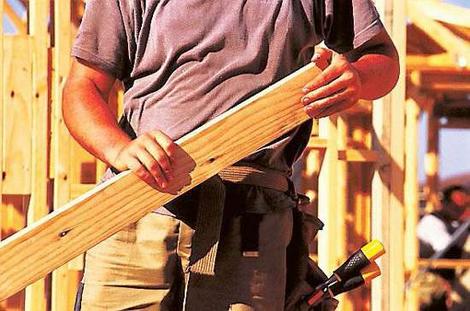
    If you like working with your hands, designing and building things large and small, and working with tools and machinery, a career as a carpenter is a great idea.

    Carpenters work mainly with wood to construct, install, repair, and maintain things like houses, apartments, and other buildings, as well as smaller projects such as cabinets, stairs, or artistic wood projects. They can also work with materials such as wood composites, drywall, lightweight steel products, and other materials used in building.
    General carpenters are trained in a wide variety of building construction and detailed woodworking skills. In carpentry, you also have options to specialize. You can be a rough work carpenter who does framework and construction work. You can also be a detail woodworker who builds and installs cabinets and other wood furniture, stairs, trim, and railings. You can also specialize in either new construction, or repair and renovation.

    As a carpenter, you need skills like drawing and reading blueprints, knowing how to measure and calculate sizes and specifications, how to calculate cost estimates for clients, and how to cut and join wood and wood materials.
    For rough construction, you will need to know how to frame walls, floors, and stairs, and how to install support beams for floors and roofs. For detail woodworking, you will build smaller wood projects, install doors, ceiling trim and floorboards, install hardwood flooring or wall panels, molding, and all associated hardware.

    Carpenters can work independently in a sole proprietorship or small business, which usually means working a variety of short-term contract jobs. You can also work with a company, such as a construction company that employs a number of carpenters and woodworkers, as well as other trades people, and is hired to do specific construction projects from beginning to end.

    Generally, carpenters will require at least their high school diploma or equivalent, and also either a three-to-four year college program, or several years of an apprenticeship program or work experience. Currently, there is mandatory certification only in Quebec; other Canadian provinces have a voluntary certification process for carpenters. The Red Seal inter-provincial trade certification is also available for carpenters who meet the required qualifications.

    In terms of wages, carpenters start around minimum wage to $17/hour. With experience, and depending on the market in your area, skilled carpenters can make up to $30-60/hour. These days the skilled trades are always in demand, with new construction and renovation projects starting every day, so the future job prospects are very promising.

    With hard work and diligence, you will have a great career as a carpenter!

  • Scholarships in the Trades

    Scholarships in the Trades

    When you finish high school, you will have many decisions to make. Should you go to university or trade school, or maybe just start to work right away? If you decide that you want to get into a trade and become an electrician, hair stylist, or metalworker, you might already be wondering how you are going to pay for your studies. Going to trade school can be very expensive, but one option is to look for a scholarship that can help pay for your studies.

    Many people have heard of scholarships for people who are very good in sports or who have high marks in academic subjects like science or mathematics. However, scholarships are also available for people who want to study in the trades. Some of these scholarships might come from the government or specific schools, but many of them also come from businesses and other groups that are interested in helping people learn their trades. You just need to know where to look.

    When you begin your search for money to help pay your tuition, a good place to check is on government websites that deal with grants, bursaries, and scholarships. Normally, grants and bursaries are based on financial need or special projects, and scholarships are based on high marks, but sometimes money is also available for other reasons, such as a physical disability.

    For the trades, apprenticeship grants are good places to start. Many places offer grants for people who want to get into apprenticeships, and sometimes this help can add up to a lot of money. If your program includes an apprenticeship or you want to do one for your own benefit, this could be a good option.

    Another good place to check is with companies where you might want to work someday, since many of these businesses offer help for students. Suppose that you wanted to work in the oil and gas industry. You could check with the oil companies in your area for scholarships. By getting to know some of the people in that company, you might help yourself find work after you finish your program.

    Many other organizations also give grants, scholarships, and bursaries. Community organizations like Girl Guides, Boy Scouts, or environmental organizations give scholarships which are likely tied to a particular activity or program. Even if you have to volunteer with the organization to qualify for financial help, it could be worth the effort.

    Finding scholarships, grants, or bursaries can take time, and you might think that the effort is not worth the trouble. However, if you can save a few thousand or even a few hundred dollars while you are studying, it can add up to a large amount of money for you to save for other purposes, like paying for food. If you want to get into the trades, why not start looking for financial help now?

    Bibliography:
    Alberta Advanced Education. “Scholarships.” https://tradesecrets.alberta.ca/financial-assistance/scholarships/.

    CanLearn. “Canada Student Grants.” http://www.canlearn.ca/eng/loans_grants/grants/index.shtml.

    Jobworks Adult Learning Centre. “Websites Offering Scholarships, Bursaries, etc…” http://www.jobworksschool.com/index.php/awards-websites.

    New Youth.ca. “What are Scholarships, Grants and Bursaries?” http://www.newyouth.ca/school/pay-school/what-are-scholarships-grants-and-bursaries.

    Service Canada. “Apprenticeship Grants.” http://www.servicecanada.gc.ca/eng/goc/apprenticeship/index.shtml.

  • Disability Studies: Exploring the Margins ( Conference in Hawaii)

    Disability Studies: Exploring the Margins ( Conference in Hawaii)

    The conference Disability Studies: Exploring the Margins from the Center and the Center from the Margins will take place from April 25-26, 2016 at the Hawaii Convention Center, Honolulu, Hawaii. The due date for conference submissions is December 17, 2015.

    Follow this link for proposal questions: http://neads.ca/en/about/media/index.php?id=302

    Disability-related issues are becoming more and more mainstreamed. For instance, several universities are starting to offer Disability Studies as an undergraduate major option. At the same time, people with various disabilities, ethnic backgrounds, sexual orientations and gender issues, for example, expressly discuss how they remain at the margins and may be even at the margins of the margins.

    Where does Disability Studies fit in these discussions of multiple oppressions/identities and social inequalities, and what are scholars doing to advance theories and understandings of intersectionality? We are interested in presentations that will address less discussed areas of contemplation, critical reflection and analysis.

    If you have a proposal that may not fit in to the above targets, we will welcome them as part of our discussion. We welcome proposals in any presentation format. We also welcome presentations in innovative formats including readings, performance art, graphics and roundtables. Please see presentation formats on our webpage at http://www.pacrim.hawaii.edu/presenters/formats. Please check the criteria for each format and ensure that you have the appropriate number of presenters for your chosen format. You may submit proposals online at: http://www.pacrim.hawaii.edu/submissions or send your proposals via email to prcall@hawaii.edu. For more information about this topic area, contact the topic chair, Steve Brown, sebrown@hawaii.edu.

  • Muscular Dystrophy: From Immobility to Opportunity

    Muscular Dystrophy: From Immobility to Opportunity

    Many things are so second nature that we never give them a second thought. Your legs take those steps out the door in the morning, and your thumbs dance across the phone screen to text your friend. Now imagine losing the ability to take a step or to move your fingers. That is muscular dystrophy, a devastating disease that eats away at the body’s muscles and leaves the affected individual immobilized. It primarily affects male children, with studies indicating 1.3 to 1.8 cases for every 10 000 boys.

    My uncle, Frank Ritacca, was born with the condition. He went from a walking toddler to a weakened youth in a wheelchair by the time he was a teenager. The prognosis was not a good one: a life expectancy in the early 20s with increasing debilitation.

    In December of 2015, my uncle celebrates his 52nd birthday. He has been a lifelong inspiration to his family, his friends, and me. A smiling face in the midst of adversity, his optimism and humour make the man with a muscle-weakening disease the strongest man I know.

    Many years ago, severe conditions like that were death sentences. But one of the greatest, if not the greatest, aspects of advancing technology is the improvement in quality of life for those who need it most. Frank’s wheelchair has allowed him some mobility, and his healthcare equipment has allowed him to breathe and be fed. Yet those are the basics for survival, and we humans want more than that from our lives. Through buttons operated via his knees and his finger, Frank is able to fully operate a computer.

    Companies such as Invacare offer devices for those with limited mobility. Their MK6i remote programmer attaches to Frank’s wheelchair and connects him to the on-screen mouse of his computer. A man who could not write now sends emails and posts on Facebook via his on-screen keyboard. A man who could not walk since childhood now meets people from around the world and has a great group of friends to chat with. A man who lost his ability to make things or use his hands now creates websites and videos, and destroys his competition in chess, Scrabble, and Settlers of Catan. Of course, he will always make time to binge watch Star Trek on Netflix. Technology has allowed for a much greater harnessing of human potential, moving discussions away from limitations and towards capabilities.

    In a world where a person’s merit is measured by their contribution to society, it is easy for someone like Frank to feel disadvantaged and weak. Technology has given him and others like him the opportunity to do more. Yet just like for all of us, that technology is merely a tool. It is his optimism, determination, and unyielding strength that make Frank who he is. My uncle is a techie, a Trekkie, a gamer, a friend, a beloved member of the family, and an invaluable inspiration to us all.

  • Diversity Bursary – Communications Nova Scotia

    Diversity Bursary – Communications Nova Scotia

    Are you creative, innovative, connected? Are you embarking on a career in communications, technology, design, video, photography or marketing? Do you belong to a diverse group — including persons with disabilities. If you are studying at a college or university if Nova and the answer is yes to these questions, you are eligible to apply for 3, $1,000 Diversity Bursaries offered by Communications Nova Scotia. To apply, visit www.novascotia.ca/cns or look for an application at your school.

    Communications Nova Scotia: General Information 3rd floor, Provincial Building 1723 Hollis St. Halifax, Nova Scotia, Canada P.O. Box 608, B3J 2R7 Phone: 902-424-7690 Fax: 902-424-0515 www.novascotia.ca/cns

  • NEADS News December 2015: The Assessment and Resource Centres of Ontario Student Mental Health Survey

    NEADS News December 2015: The Assessment and Resource Centres of Ontario Student Mental Health Survey

    We need post-secondary students with mental health difficulties to help us develop an online transition program geared towards students like you. The Assessment and Resource Centres of Ontario (one at Queen’s University and one at Cambrian College) have been funded to develop an online transition program in both a northern and southern region of Ontario for students with mental health issues transitioning from high school to post-secondary education. In order to address current gaps in transition programming, we need information from students with mental health concerns who are 18 and older and who have been accepted into or are currently studying at a post-secondary institution in Ontario.

    The National Educational Association of Disabled Students (NEADS) is a research partner in this project and is conducting a series of focus groups and an online survey as part of an environmental scan. Focus groups are being held at four locations in Ontario: Timmins, Toronto, Kingston, and Sudbury. The online survey will allow students to participate in a manner that is accessible to them even if they cannot/do not wish to participate in the focus groups. Who is eligible to participate in the study? Any student who has been accepted into or is currently enrolled in a post-secondary program and who has experienced significant mental health difficulties is eligible. Students should be at least 18 years old, in their first or second year of college or university and have graduated from high school in the past two years. Participants can provide opinions via the anonymous online survey.

    The survey takes about 10 minutes to complete and you can fill it out here: https://www.surveymonkey.com/r/ZL57MDT This research has been approved by the Cambrian College Research Ethics Board, the Queen’s University General Research Ethics Board and also by the Limestone District School Board. For additional information, please contact Alana Holmes at alana.holmes@cambriancollege.ca or at 705-566-8101 ext. 7643.

  • NEADS: December 2015 Event Calendar

    NEADS: December 2015 Event Calendar

    Organizer: Ability Starts Here – Conference on Inclusive Education and Employment
    Title: Ability Starts Here – Conference on Inclusive Education and Employment
    Category: Employment
    Location: Ottawa, Ontario
    Date: December 1, 2015 – December 2, 2015
    Web site: http://abilitystartshere.ca/
    Description: The Power of Participation

    8th Annual Symposium On Inclusive Education And Employment
    In Celebration of the International Day of Persons with Disabilities
    Tuesday and Wednesday December 1 & 2, 2015
    World Trade and Convention Centre, Halifax, Nova Scotia

    Over 350 participants – educators, employers, labour organizations, entrepreneurs, persons with disabilities, government representatives and service agencies – will gather in Halifax for Symposium 2015. Learn, from each other and experts in the field, about the initiatives of and for persons with disabilities in the areas of education, employment and human rights. Inclusive and Accessible best practices will be shared. This further develops the opportunities for persons with disabilities to fully participate and contribute to the workforce in our communities across Nova Scotia.


    Organizer: Ability Starts Here – Conference on Inclusive Education and Employment
    Title: Women with Disabilities Series: Symposium 2015 – Ability Starts Here – Inclusion is Everyone’s Business
    Category: Education
    Location: Halifax, Nova Scotia
    Date: December 1, 2015 – December 2, 2015
    Web site: http://www.abilitystartshere.ca
    Description: Women with Disabilities Series: Symposium 2015 – Ability Starts Here – Inclusion is Everyone’s Business

    Women with Disabilities Series: Breaking the Barriers – Women’s Success in Education; Exploring the Connection among Gender, Disability and Employment; Exploring Violence Against Women with Disabilities. December 1-2, at the World Trade and Convention Centre in Halifax, Nova Scotia.

    Check out our website www.abilitystartshere.ca for more information and registration.


    Organizer: Tangled Art + Disability
    Title: Fixed: The Science/Fiction of Human Enhancement – Documentary
    Category: Accessibility
    Location: Toronto, Ontario
    Date: December 3, 2015
    Web site: http://http://tangledarts.org/season-2015-16/

    Description: Please join Tangled in celebrating the International Day of People with Disabilities at the TIFF Lightbox. As part of TIFF’s Higher Learning Series, Tangled is co-presenting the documentary Fixed: The Science/Fiction of Human Enhancement. The documentary and the panel that follows will explore the drive to make ourselves ‘better than human’ and debate the radical technologies, like prosthetic limbs and mechanical eyeballs, that promise to take us there.

    DECEMBER 3RD, 2015 11AM-1:30PM
    TIFF Bell Lightbox, Reitman Square
    350 King Street West
    FREE AND OPEN TO THE PUBLIC
    This event is a co-presentation between TIFF Higher Learning and Ryerson University’s School of Disability Studies.


    Organizer: South Saskatchewan Independent Living Centre
    Title: United Nations International Day of Persons With Disabilities – Regina
    Category: Education
    Location: Regina, Saskatchewan
    Date: December 3, 2015

    Description: The South Saskatchewan Independent Living Centre, with support from the City of Regina is holding its United Nations International Day of Persons With Disabilities event on December 3rd, 2015. It will be held from 1:30 p.m. – 5:00 p.m. at the Core Ritchie Neighbourhood Centre, 445 14th in Regina. The theme is: Inclusiion Matters: Access and Empowerment for People of All Abilities, featuring presentations and discussion on the topics of Education, Recreation and Employment of persons with disabilities. Attendant support will be provide. Light refreshments will be served.