Author: Susan Huebert

  • Career Profile: Clinical Psychologist

    Career Profile: Clinical Psychologist

    Suppose that you could solve people’s problems just by talking with them. Maybe you already talk with your friends or your family about their issues, and maybe you give them good advice about what to do. If so, you might want to consider becoming a clinical psychologist and learning ways to help not just your family, but also many other people.

    When people go through difficult times or suffer from a mental illness like depression, they might need help from professionals. If they need medication to treat the problem, they might need to go to a psychiatrist or other trained doctor. However, they might also need help from a clinical psychologist.

    When people need to talk about their problems with someone who can listen and help them work through the issues, they might want to contact a clinical psychologist. These professionals study psychology in university so that they know the techniques of helping people understand the roots of their problems and how to solve them.

    Basically, clinical psychologists assess people’s mental health and then recommend treatments for them. They might work with children, adults or teenagers and help families or individuals. Some of them work in community programs or schools, but others might work in their own clinics or in doctors’ offices. The average salary for clinical psychologists is almost $71,000 per year, but it can take some time to work up to that point. Most people in this profession move on to something else after about twenty years.

    The first step towards becoming a clinical psychologist is to get a degree from a university. Most people in this field have some kind of specialty, such as with a certain age group or illness. They might also decide to get into teaching or research. If you want to become a clinical psychologist, you might already want to think about the kinds of work you want to do.

    One of the first steps in training as a clinical psychologist is to develop the ability to listen. Even when you are trained in your profession, you will need to be able to listen to people without interrupting them or becoming bored or distracted. You can already start to develop that skill as you interact with your friends and family at school or at home.

    Right now, job prospects for clinical psychologists are good in Canada. Besides having a degree in a related field, clinical psychologists need to have certification from the government to show that they have the necessary qualifications. Each province or territory might have slightly different requirements, and it is important to find out what they are. When you have your training and certification, you can start to work at helping people professionally.

    Consultations with other professionals like doctors will be a large part of your work since many different factors can contribute to people’s problems. Finding out what other professionals know can help clinical psychologists understand their patients better. If they do their work well, clinical psychologists can help many people feel better about themselves and the world.

  • Career Profile: Power Line Technician

    Career Profile: Power Line Technician

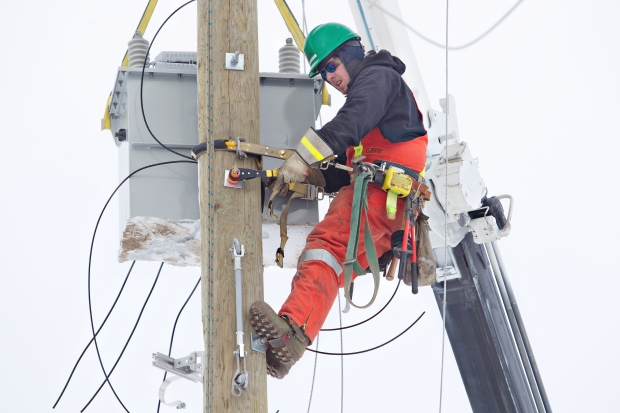
    As a power line technician, what would you do? Well, their tasks range from working with high and low voltage cabling to operating and maintaining structures associated with electrical equipment, such as switches and transformers. They work in all types of weather conditions and it’s a job that offers great benefits and flexibility.

    Most power line technicians have some sort of post-secondary education in the trade itself or experience in a related field, such as a construction line  or cable technician. In general, these type of courses last 2 or more years. Both math and English prerequisites are essential, and selection is very competitive.

    Power line technicians are often present after storms that have caused power outages. They normally work in aerial devices and in trees. It is important that candidates looking to get into the field do not have acrophobia (fear of heights) or claustrophobia (fear of confined spaces.) Candidates should enjoy working with their hands and constantly moving around.

    Wages for power line technicians vary, but as an apprentice they usually receive 50% of the regular earnings of a journeyman. In this case, as an apprentice, one would earn $27/hour and eventually earn $49/hour.

    Potential candidates should be aware that employers will require a clean driving record and may want you to have a valid CPR certification.

    If you’re looking for an exciting career that involves constant mobility and excellent dexterity, then this might be the career for you!


  • Motivation Management with ADHD

    Motivation Management with ADHD

    Time management always makes me think of having to manage time to work, get things done, tackling my to-do list. Boring! And having an ADHD wired brain, if things are boring they are unlikely to get done. So managing time often does not happen. There is always something more fun that is on my list of things I “should” get done. Always something that takes my full attention and makes me unaware of time passing that I had planned to use to get something more mundane accomplished. Sometimes I get things done from my to-do list and I am really efficient about it. But when does this actually happen?

    I decided to start tracking when I was actually working on my to-do list. What did I do before these moments of focus and productivity? What did I do after? Sleep was a big one. There are some days that I wake up after having slept really well and I have time to get stuff done. My mind is clear, my energy is good, I am wide awake, and everything in the house is quiet. I don’t even need coffee to get me going on these mornings! Exercise is another one (I hear you groaning!). It’s true if I have a good workout. I need to sweat, have fun, and feel rejuvenated (not wiped out), then I am ready to go. A good workout makes me feel happy, focused, and energetic. Sorry to my office mates – there are times I skip the shower and sit right down and get working on my list of “stuff.”

    If you’re like me another great motivator to get stuff done is Play. If I have to get something done in order to have fun, I get to work. If I get to go on vacation after I send in a report that I have been putting off writing, that report gets finished so I can pack and leave. I admit that sometimes I wait until the last minute, but if I have a deadline that involves having fun, I will have ALL of my work done on time.

    I actually have my clients build their own time management strategies once they figure out what motivates them to get the “stuff” on their lists done. They use alarms on their phones, watches, clocks, paper planners, phone a friend, diet, exercise, various forms of to-do lists, incentives, consequences (no one has used electric shock yet, thankfully), and other forms of accountability. One thing I notice is if the focus is only on the work, most of the time they get little done.

    How do you use fun to motivate you to manage your time? This week notice each time you get “work” done. How did you do it? Did you make a deal with yourself? Was there a deadline? Did you eat well, get good sleep or go to the gym? Let us know what helps you “manage time.”

  • Are the Trades a Viable Career Path?

    Are the Trades a Viable Career Path?

    To put it simply, yes. The trades are some of the largest growing industries in Canada and they face a deficit of skilled workers to fill up high paying positions. While they aren’t for everyone, if you’re good with your hands and eager to learn then the trades can take you far – and fast.

    While there are currently more law students and university graduates than their industries can handle, the trades are essential to society and are always expanding. This means that they are a great employment opportunity; going into the trades is almost guaranteed to land you a job once you’ve learned the basic skills of your chosen trade.

    For example, electricity and plumbing are seen as essential parts of society, which means they always need upkeep and installation, both commercial and residential. This provides near endless opportunities for jobs and careers that are both well paying and secure. Another benefit of deciding to go into the trades as a career path is the steady work and good salaries, as well as powerful unions and worker’s rights advocates.

    What are some examples of viable trades?

    The trades cover a wide spectrum of skilled, mainly hands-on, labour. A few examples of some good trades to get into include; an electrician, a pipe welder, a cabinetmaker, machinist, welder, and brick layer. These are only a few of the many Red Seal trade skills available to learn. For a more comprehensive list, check out Canada’s official Red Seal Trades website at: https://on.tradesinfo.ca/search?at=4665814

    What steps should I follow if I want a career in the trades?

    There are several ways to become a skilled tradesperson, however, every Red Seal trade will require you to take a standardized government test. An aspiring tradesperson must log a certain amount of hours of work in their chosen field before being they are qualified enough to become a journeyman, which is a fully certified tradesperson. One of the main ways to learn a trade is to apprentice under a master tradesperson, working for them and learning as you go. After enough time as an apprentice, and if you are skilled enough, you can move on to become a journeyman, or even a master yourself. An average apprenticeship lasts about five years. There are also large numbers of trade schools across the country and many colleges offer programs in the trades, such as welding and cabinetmaking. Look into the various methods of learning your chosen trade before deciding on an apprenticeship or school program, and take the time to figure out which style of learning best suits you.

    What are the salaries like for tradespeople?

    Since they are in such high demand and need to be very skilled to do their jobs, tradespeople are generally paid very well for what they do. The typical starting pay for an apprentice is between $18 and $30 dollars per hour, depending on how many years they have been apprenticing for.

    As you can see the trades are a widely varied, well paying career path, and are strongly recommended for those that enjoy working with their hands. As a bonus the government offers $1000 tax free a year to each skilled apprentice in trade school.

  • How to Write an Effective, Powerful Resume

    An effective, powerful resume is an advertisement for you. It tells the employer what you can do for them and proves you’re the best person for the job. If your resume is strong, it will get you interviews and put you on the fast track to the job you want.

    An employer decides in less than a minute whether to read your resume or put it aside. You can be one of over 100 applicants, so your resume must be short (no more than two pages), sweet and to the point. It must make a powerful impact immediately, otherwise you’ll be knocked out by the competition.

    An employer has many questions on their mind: Who are you? Can you do the job? Will you get along with my staff? Can I trust you? Your resume must answer these questions.

    Contact Information. The header of your resume includes your name, phone number (home and/or cell), email and social network address like LinkedIn or Twitter.

    Objective. Some experts say you don’t need an objective; however, it can be useful if you just finished school because it tells the employer exactly what you want. Your objective can be one or two lines and can say something like, “Seeking a challenging opportunity where I can use my skills to contribute to the organization’s success.”

    Professional Profile. Here is where you really get to sell yourself and show off all your key strengths, but be careful not to come across as arrogant. You tell the employer what makes you different to anyone else – known in the world of advertising as your Unique Selling Proposition, or USP. It explains why you’re the best person for the job using adjectives like “reliable”, “punctual” and “positive”.

    Skills. An employer must know if you can do the job. List your skills as nouns and organize them in groups like Technical, Administrative or Research. Mention any foreign languages you speak since that is an asset in today’s workplace.

    Work Experience. Start with your most recent job first then work backward. Include the employer’s name, city and province, job title and employment dates. Use short bulleted points to explain what you did, beginning with powerful action verbs such as “organized”, “planned” and “developed”. Rather than listing only job duties, explain how you benefitted your last employer so the potential employer can understand how you would help them. For example, instead of saying “Handled phone inquiries”, it’s better to say “Handled telephone inquiries in a professional, friendly manner to ensure customers were highly satisfied.”

    Education. List your most recent education first then work backward. Include your degree, school name and graduation year. Include your GPA only if it’s 3.0 or higher. If you have less than three years of work experience, your education is your strongest point so list it before your work experience. Include your high school if you haven’t yet started university or college.

    Personal Interests. You can include hobbies but don’t mention partying or socializing because this will send a negative message to the employer.

    References. Some experts say you don’t need this section. If you need to fill empty space on the last page, say “References available upon request.”

    If you remember these simple points, you’ll write an effective, powerful resume and get the job you want.

  • Tips for Writing the Perfect Paper

    Tips for Writing the Perfect Paper

    The perfect paper is a true work of art. It’s perfectly organized and has a clear, structured flow from thesis to conclusion. It has a flawless bibliography and citations, with no spelling or grammar mistakes in sight. It has a title that’s both concise and clever; maybe it even has headings. But that perfect paper can be hard to come by—because it takes a whole lot of work to nail down.

    If you’re in the pursuit of the perfect paper, here are some tips to help you out.

    Use your own words. You may feel the urge to pretty up your sentences with lots of figures of speech and adjectives you dug out of the thesaurus. Don’t. You’d be surprised at how effectively you can get the point across if you just use your own words. Of course, you should be professional and use academic language, but going on in circles just because you want to sound competent will actually make you seem anything but. An embellished paper is not necessarily well written; simpler is better.

    Be specific. Provide historical examples, data sets and any information that you feel will best back up your claims. Specificity provides clarity on your subject, as well as credibility that you actually understand the information you are presenting. A good paper can then connect the facts you present to broader themes in the discipline. Vague statements that don’t have evidence to support them will unfortunately fall flat.

    Cite well. This is specific to research papers: keep a detailed record of what information you got from what source. Make sure you are keeping up with footnotes/endnotes or in-text citations (depending on the required format), and that they fall in line with what is written in your bibliography. This becomes especially crucial once you enter university, because plagiarism is considered a serious academic offence (even if it’s accidental). Keep track of your information and you’ll be in the clear.

    Proofread—repeatedly. No matter how good a writer you are, you should never hand in your first draft as a final copy! Look over your paper not only for spelling and grammar mistakes, but in order to eliminate redundant words, rephrase awkward sentences and overall make your paper flow as seamlessly as possible. You should do this a couple of times until you’re sure what you’ve produced is your best work. Still in doubt? Have a classmate look it over and see if there’s anything you missed.

    Take these tips to heart, put pen to paper and get writing!

  • April Showers Bring May Exams

    April Showers Bring May Exams

    Spring has sprung, and so has the exam season. From tests to essays to final exams, your days are now busier than ever. JobsPeopleDo.com is here to help! We’ve got tips on how to study, how to organize yourself (whether it’s your schedule or your work space) and, as always, tons of scholarships that you can apply for to help fund your post-secondary education.

    If you’re heading in to university or college this coming fall, now is the time to get your scholarship and bursary applications in. In many cases, it can only take a few minutes to apply – but it will make a huge difference in your life. Help reduce your stress by getting free money to fund your educational dreams!

    The season for summer jobs is upon us, so we’ve got all the tips and tricks you need for writing an effective, eye-catching resume. We’ve also got you covered when it comes to your health. After all, if you’re not feeling your best, how can you excel in your exams and at your summer job?

    If you have suggestions for topics you’d like to see covered on JobsPeopleDo.com, send us an e-mail at info@jobspeopledo.com.

    Have a great April!

    Jasmin Bollman

    Content Editor

  • Keeping a Journal

    Keeping a Journal

    Keeping a journal is a great way to find clarity in your thoughts and to express yourself. Maybe there are issues you are going through in your personal life such as family problems,  issues with your friends or maybe the passing of a loved one.

    Writing daily or weekly in a journal/diary is a great way to let your emotions and feelings out. It can prove to be very therapeutic.

    Getting started is very simple. Grab a notebook or diary from the dollar store, write the date and just start writing. It would be helpful to write alone in your room or outside in quiet area that you may find peaceful. Write about anything that comes to mind and don’t over think it. There’s no right or wrong. Write about what you did that day. Where did you go? Who did you see? What did you accomplish? What do you feel during that moment? Are you sad about something? Are you happy? Are you stressed?

    You can even write about your short-term or long-term goals. What steps do you need to take to get there? Write them down. By writing down your dreams and goals, you are making more of a concrete commitment to them instead of just thinking about them. By writing them down and seeing them, you are more likely to act upon them later.

    Keeping a journal is not about just writing in it. It’s a great way to reflect as well by reading past entries. Maybe as the days go on and you read what you wrote before, you’ll realize that life isn’t so bad after all. You may feel better about a particular issue you were having before or maybe you changed something in your life for the better. You will see progress in your life. Maybe you accomplished some of your goals. Knowing that you achieved something that you wrote down from before is a great feeling in itself.

    As you get older, you will be glad that you kept a journal to see how your life was like in your younger days and how your life is different now. It’s a great way to keep track of memories and important moments in your life that you may forget otherwise if you didn’t write them down.

    Overall, keeping a journal is a great tool that serves many purposes. Happy writing!

  • How to Handle a Fight at Home

    How to Handle a Fight at Home

    Life as a student can be stressful enough—the last thing you need is trouble at home. Unfortunately, family fights are normal every once in a while. It’s undeniably difficult to deal with a strained situation in your home life, but remember that a loud argument is often indicative of a deeper, underlying issue between members of your family. Instead of trying to avoid conflict, it’s best to work out your issues honestly and openly.

    Sometimes a fight at home can be between you and a parent, a sibling, or another relative—or sometimes it can have nothing to do with you altogether. Both situations are tough to deal with. Regardless of the situation, it’s best to stop a fight before it goes too far, and everyone ends up hurt. Consider my advice with an open mind, because it might not apply to all circumstances, but some of these tips may be worth considering the next time you find yourself in the middle of an argument. Here’s some help for handling a fight at home.

    Stay calm. Personally, whenever I am in an argument with my family, I get very emotional, and find it difficult to keep my voice down. From this, I’ve learned the importance of staying calm, even when you’re extremely upset. I cannot stress this enough: if you stay calm, you’ll be able to handle a tough situation easier. Don’t let stress and anger take over.

    Talk it out. Voice your concerns, and be honest. If you’re angry with your mother for not respecting your privacy, or with your brother for always leaving his dirty clothes in your room, tell them how you feel. Be respectful when you give your opinion, though, and make sure everyone has a chance to tell his or her side of the story. But if you let a fight fizzle out without confronting it at the source, you might be in for a repeat.

    Don’t blame yourself. If a fight doesn’t involve you, the best course of action may be to stay out of it altogether. But make sure you understand that if your family is arguing, it’s probably not because of something you did. The members of your family are people too, and it’s normal for them to get frustrated sometimes. Make sure you understand the different reasons a fight can happen—you don’t always have to be responsible.

    Compromise. Not everyone’s going to get what they want from a fight. Sometimes, someone has to back down in order to resolve the conflict (even if that someone is you). Make sure, though, that giving in or getting your way doesn’t become a permanent pattern. Compromise when you have to – and sometimes you’re going to want to.

    Best wishes to all of your families. Stay close.

  • Real Jobs: Comedian

    Real Jobs: Comedian

    Knock, knock. Who’s there? It’s a comedian.

    Do you like to tell jokes? Do your friends and family tell you that you’re funny? If so, you might want to consider becoming a comedian when you grow up.

    Telling jokes to make people laugh is only part of what it takes to be a comedian. Finding humour in everyday life is also important. Comedians observe people and try to understand why they act the way they do. Often, they begin by looking at their own lives and finding the humour in what they do and then seeing how it applies to other people. A joke about how the comedian eats popcorn, for example, might make other people think about the funny ways that they eat. All comedians find ways to laugh about everyday life, but some comedians do even more.

    Satire is a special kind of comedy that points out people’s weaknesses, usually in a funny way. Often, satire is about politicians, business leaders, or other well-known people. The idea of satire is not just to laugh, but also to change the way people think and act. Rick Mercer is a good example of a Canadian satirist. He began his comedy career in 1994 with This Hour Has 22 Minutes, and he later became known for his own program, the Rick Mercer Report. The program is about current events, political leaders and the ways that people work together.

    Not all comedians have their own television programs. Some of them play small parts on other people’s shows, but others perform in clubs, at parties or even restaurants. Most comedians start slowly, maybe by telling a joke or two at a special event and then working their way up to presenting their jokes at a comedy club.

    Becoming a comedian basically takes a lot of practice and a sense of humour. Although some comedians take classes to learn the skills they need, most prefer to learn from other entertainers as they work. The main quality that these people need is an ability to talk in front of large groups of people. If you love to be with people and you love to be funny, a career as a comedian might be right for you.