Author: Jack Blare

  • L’évolution des responsabilités: la transition entre l’école primaire et l’école secondaire

    La transition entre l’école primaire et l’école secondaire en est une importante. À mesure que vous vieillissez et passez au niveau des études secondaires, vos responsabilités changeront également. Par contre, ne soyez pas nerveux! L’école secondaire n’est pas aussi effrayante qu’elle le parait, et vous trouverez peut-être que vous rencontrez beaucoup de nouveaux amis et essayez plein de toutes nouvelles expériences. C’est l’une des périodes les plus excitantes de votre vie!

    Alors, quelles sont certaines de ces nouvelles responsabilités? Pour commencer, la plupart des écoles ne tolèrent pas les retardataires et certains enseignants verrouillent même leurs portes aux étudiants qui arrivent en retard. Il est donc très important d’arriver à vos cours à l’heure. Il peut être difficile de trouver votre chemin au cours de vos premières semaines à l’école secondaire, mais vous y arriverez en un rien de temps. Assurez-vous d’amener une copie de votre horaire de cours avec vous de sorte que vous savez où et quand vos classes commence.

    Deuxièmement, on s’attendra à ce que vous soyez beaucoup plus indépendant que dans les années précédentes. Les enseignants ne cours pas après les étudiants qui n’ont pas fait leurs devoirs ou remis leurs travaux, et pénalisent souvent les élèves qui remettent leurs comptes rendus en retard. Ceci est la raison pour laquelle vous devriez garder une trace sur les dates que vos travaux sont dus. La meilleure façon de faire cela est en ayant un cartable individuel pour chaque classe (chacun d’une couleur différente) afin que vous ne mélangiez pas vos notes de cours et travaux. Un agenda, un cahier de notes ou un calendrier est également un outil essentiel à l’école secondaire. Vous voulez être en mesure de garder une trace sur les dates de vos examens, quand vos travaux scolaires sont dus et le début de vos vacances.

    Vous aurez un casier dans lequel vous pourriez ranger vos manuels scolaires, vos cartables, votre équipement de sports et tout autre assortiment de stylos, papiers et articles de vêtements. Vous êtes responsable du maintien de la propreté de votre casier – ou tout au moins de le garder dans un état présentable.

    Faites de nouvelles connaissances! Bien que cela ne fasse pas nécessairement partie de vos responsabilités, vous trouverez que si vous communiquez avec d’autres étudiants, vous finirez par développer des amitiés que vous aurez pour des années à venir. Rappelez-vous, ceci est une nouvelle expérience pour tous les élèves dans vos classes.

    Travaillez fort! Maintenant que vous êtes rendu à l’école secondaire vous ne pouvez pas prendre vos études au relax. Les résultats que vous obtiendrez peuvent avoir un effet sur quels cours vous pouvez prendre dans les années suivantes, et peuvent même limiter vos options lorsqu’il est temps de choisir in programme d’études collégiale ou universitaire. Si vous écoutez en classe, arrivez à vos cours à l’heure, faites vos devoirs et remettez vos travaux scolaires, vous réussirez alors bien dans vos cours. Assurez-vous de rester bien organisé et au courant des dates de vos examens et remises de travaux.

    Faire la transition entre l’école primaire et l’école secondaire est un grand changement, et avec ce changement vient de nouvelles responsabilités et de nouvelles libertés. Si vous travaillez fort, vous présentez à vos cours à l’heure et créez de nouvelles amitiés, vous trouverez peut-être même que vous voulez aller à l’école à chaque matin. C’est un grand ajustement à faire, mais en peu de temps vous vous sentirez aussi confortable dans votre nouvelle école que vous l’étiez dans l’ancienne.

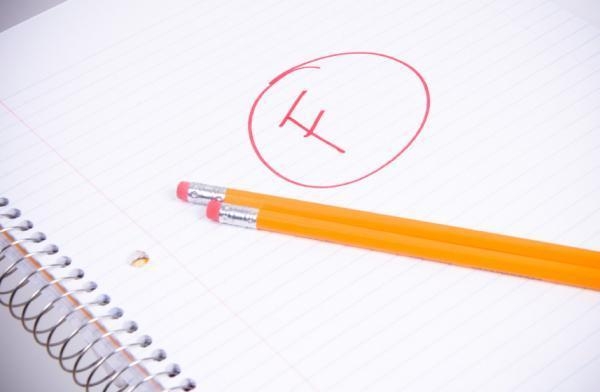
  • Comment faire face à un échec: s’en remettre après avoir obtenu un mauvais résultat scolaire

    Nous avons tous fait des erreurs dans nos carrières académiques. Que ce soit un examen pour lequel nous n’étions tout simplement pas préparés ou un travail scolaire qui ne s’est pas déroulé comme prévu, un mauvais résultat scolaire ou deux —ou même un échec—fait partie de la vie normale d’un étudiant. Cela étant dit, il est important de se mettre dans le bon état d’esprit lorsque vous faites faces à vos erreurs. En fait, ceci vous permettra effectivement de mieux réussir dans l’avenir.

    Il peut sembler bête de dire cela, mais si vous obtenez un mauvais résultat, ce n’est pas la fin du monde. Il y aura d’autres examens et d’autres travaux scolaires; vous avez amplement d’occasions pour vous améliorer. S’il n’y a aucun autre moyen de remonter une note dans un de vos cours, peut-être que bien réussir dans vos autres cours vous aidera à compenser pour un mauvais résultat final. Quoi qu’il arrive, l’école est très importante, mais vos résultats scolaires ne devraient pas définir qui vous êtes. Dans l’avenir, lorsque vous regarderez en arrière et pensez à vos années à l’école, vous allez probablement penser à toutes les choses formidables que vous avez apprises et à tous vos bons souvenirs — pas à la fois que vous avez échoué un examen.

    C’est seulement lorsque vous arrêtez de vous culpabiliser à cause de vos erreurs que vous finirez par tirer des leçons de celles-ci. Restez positif, mais tentez d’examiner pourquoi exactement vous n’avez pas bien réussi de sorte que vous puissiez vous améliorer la prochaine fois. N’avez-vous pas bien étudié pour cet examen et avez été pris par surprise, non préparé? Avez-vous laissé ce compte rendu pour la dernière minute? Si vous corrigez ces erreurs dès le début, il est peu probable que vous allez les faire à nouveau. Traité chaque échec comme une opportunité pour apprendre et une occasion positive pour continuer à vous améliorer.

    Ensuite, il y a la possibilité que vous n’ayez aucune idée de ce qui s’est mal passé. Nous avons tous vécus des coups de malchance—des travaux scolaires qui ont été corrigés de manière « ambiguë », des directives que nous avons mal comprises, des examens que nous avons simplement ratés pour une raison quelconque. Heureusement, ces genres de situations n’arrivent pas trop souvent, alors une mauvaise note ne va pas établir le ton du restant de votre dossier scolaire. Toutefois, si vous apercevez une tendance à toujours être surpris par des résultats faibles, considérez examiner vos travaux d’un œil plus critique ou discutez avec vos professeurs ou enseignants afin d’avoir plus d’éclaircissements et de conseils.

    Finalement, il est important de tirer des leçons de ses échecs, mais vous pouvez également apprendre de ce que vous avez fait correctement. Il y a de bonnes chances qu’il y a des cours dans lesquels vous réussissez beaucoup mieux que d’autres. Peut-être que vous trouvez la matière plus intéressante, alors vous travaillez plus fort; peut-être que le cours dans son ensemble est plus facile à faire. Après avoir considéré tous ces aspects, évaluez ce que vous pouvez faire dans un cours afin de vous en remettre après avoir obtenu un mauvais résultat dans un autre cours. Si les choses tournent au pire et que vous éprouvez beaucoup de difficultés, vous avez toujours des options—abandonnez le cours, enregistrez-vous pour un cours différent, ou renseignez-vous sur le tutorat par les pairs ou les heures de bureaux de vos professeurs.

    La prochaine fois que vous faites face à une mauvaise note, prenez ces conseils en considération. En restant positif et en apprenant de vos expériences passées, vous verrez une amélioration non seulement dans vos résultats scolaires, mais dans votre attitude envers l’apprentissage en général.


  • Aller de l’avant: Programmes d’aide financière et de bourses d’études

    Un premier aspect à considérer pour tout étudiant intéressé à poursuivre des études postecondaires, c’est de payer leurs frais d’études. Les frais de scolarité dans nombre de provinces et territoires sont augmentés annuellement. Si on ajoute à ces frais, ceux relatifs à l’achat de livres et d’autres fournitures scolaires, au transport aller-retour de la résidence au campus, au logement pour ceux et celles qui vivent loin de la résidence familiale, et à l’engagement financier que comporte la poursuite d’études postsecondaires, l’entrée aux études peut représenter une démarche quelque peu intimidante.

    Alors que certains étudiant-e-s ont la chance de disposer d’épargnes suffisantes pour leurs études ou qui ont des parents prêts à payer leurs études, beaucoup d’autres n’ont pas les moyens financiers suffisants. La présente section offre des renseignements relatifs aux prêts et aux bourses d’études offerts par le gouvernement fédéral. Elle décrit également certaines des principales bourses d’études offertes aux étudiant-e-s handicapés provenant de diverses sources.

    La plupart de l’information a été adaptée et tirée du répertoire de NEADS : Répertoire national des programmes d’aide financière aux étudiant-e-s handicapés de niveau postsecondaire, qui se trouve sur le site Web de l’association au www.neads.ca sous la rubrique ” Centre de ressources en ligne de NEADS “. L’information relative aux programmes d’aide financière aux étudiant-e-s a été revue et mise à jour au cours de la rédaction du présent guide. En dernier lieu, notons que l’on peut trouver un grand nombre de bourses d’études sur Internet et aux bureaux d’aide financière des collèges et des universités.

    Visitez le site Web de NEADS pour une information complète.

  • Be Internet Smart

    Be Internet Smart

    The internet plays a vital role in most of our lives. We use it to communicate with one another, research and educate ourselves and create things. But the dangers of the internet are always there and carelessness and misuse of it can result in some serious consequences.

    We have all heard of computer viruses. They aren’t limited to harming just a single computer, they can attack multiple computers within seconds. Viruses are used to spy on random targets and collect confidential information such as bank or credit card information. It is important to make sure your computer has its firewall set up as well as anti-virus. Before playing on the Internet, ask your parents or a teacher if the computer you are using is protected. Also be aware of deceiving ads that often unknowingly install software on your computer to steal personal information.

    As the Internet offers an array of entertaining activities, such as movies, television and games, it can be very addictive. It may sound funny, but there is a medical condition known as IAD (Internet Addiction Disorder). Symptoms may include excessive or compulsive use of websites used for social media and online purchasing.  It is a good idea to take consistent breaks from the internet every so often.

    We know the Internet is a great place to interact. You meet people through chat rooms and games. However, it can be very dangerous as we cannot always put a face behind the person on the other side. Individuals may become victims of cyberbullying or may be coerced into sending photos or sharing personal information. So be aware of who you are chatting with and only chat with people you personally know, such as classmates and your friends, on a safer platform like Skype. And NEVER go into random Internet chat rooms.

    Although the Internet offers a variety of activities, it also poses a major threat in many ways. Always be cautious of viruses, personal usage and potential predators online. Be safe and have fun.

  • Dealing With Failure: Recovering from a Bad Grade

    Dealing With Failure: Recovering from a Bad Grade

    We’ve all made mistakes in our academic careers. Whether it’s a test we just weren’t prepared for or an assignment that didn’t go as planned, a poor grade or two—or even a failure—is a normal part of being a student. That being said, it’s important to get into the right mindset when confronting your mistakes. In fact, this will actually allow you to do better in the future.

    It may seem silly to say this, but if you do poorly, it’s not the end of the world. There will be other exams and projects; you have ample opportunity to improve. If there’s no longer a way to boost your mark in one course, maybe doing well in your other courses will make up for it. In any case, school is very important, but your grades shouldn’t define who you are. When you look back on your school days in the future, you’re likely going to think about the great things you learned and the memories you made—not that one test you bombed.

    It’s only when you stop beating yourself up over your mistakes that you finally get an opportunity to learn from them. Stay positive, but consider why exactly you didn’t do well so that hopefully you improve next time. Did you not study properly for that exam and were caught unprepared? Did you leave that essay to the last minute? If you correct those mistakes early on, it’s unlikely you’re going to make them again. Treat each failure as a learning situation, and a positive opportunity for you to continue improving yourself.

    Then there’s the possibility that you have no idea what went wrong. We all have flukes—assignments that were marked “mysteriously”, guidelines we didn’t understand, tests that we just dropped the ball on for some reason. Luckily, these types of situations don’t happen very often, so one bad grade isn’t going to set the tone for the rest of your academic record. However, if you notice a recurring pattern in being surprised by your low grades, consider looking at your work more critically or speak to your teacher or professor for clarification and advice.

    Finally, it’s important to learn from failure, but you can also learn from what you did right. Chances are there are courses you’re doing much better in than others. Maybe you like the material more, so you work harder; maybe the course overall is easier to do well in. Considering these things, evaluate what you can take from one course in order to recover from a poor grade in another. If worst comes to worst and you’re really struggling, you always have options—drop the course, take an alternative credit, or look into peer tutoring or office hours.

    The next time you’re faced with a bad grade, take some of this advice into consideration. By staying positive and learning from your past experiences, you’ll see an improvement not only in your grades, but in your attitude towards learning overall.

  • Turning a Hobby into a Small Business

    Turning a Hobby into a Small Business

    Everyone’s got something they’re good at—and there might be a way for you to turn your weekend hobby into pocket money. More and more people are starting their own businesses from scratch, with some hard work and just a little help from the Internet. Wondering how to get your own skills out on the market? Here are some things to consider.

    First of all, think about what you have to offer. Once you’ve pinned down a unique (and marketable) talent, you can brainstorm ways to apply it in order to win over your customers. This is a good opportunity to combine your interests with your skills: if you’re into fashion and you’re good with your hands, for example, jewelry-making, sewing or dyeing might be a good place to start. The best part about launching your own business is that no talent is too “out there”. In fact, having an original, unconventional talent can make you stand out in a positive way.

    By connecting to your audience early on, you can quickly think of ways to adapt your concept to fit your potential clients. Don’t shy away from networking tools like YouTube, Instagram or Etsy: the Internet is a great way to connect supply to demand. Considering you’re taking on a new initiative, though, the support (and probably help) of your family, friends and community is invaluable to get the word out about your new idea. You might want to start locally and branch out from there.

    If your idea gets off the ground, building a team is a fantastic way to expand your franchise. Recruiting friends (AKA newfound business partners) to take over branches of your small business has great potential for new epiphanies. Plus, there undoubtedly will be ways that a talented friend or two could take your business to the next level—a people-person (to network, find opportunities and spread the word), a graphic designer (to promote you with posters and flyers), or an organizer (to make sure you’re staying on top of things and under budget) are just some examples of teamwork at its finest.

    If you’re serious about turning your hobby into a small business, take it from someone who’s been there: seek more advice from business professionals, whether they’re individuals in your community or those who have managed to make it big (if you can get a hold of them!). They were once in your shoes, and they’ll definitely have some insight to offer.

    Most importantly, don’t be afraid to take a risk. Many successful businesses started very small (and took ages to get off the ground), so don’t get discouraged if your idea doesn’t stick right away. Reflect, revise and reinvent your initiative as time goes on, and keep a positive attitude throughout. Think of it this way: if you don’t keep trying, you’re definitely not going to succeed. You can do it!

  • Career Profile: Acoustical Engineer

    Career Profile: Acoustical Engineer

    Sometimes it can be very hard to understand what people are saying in a large room. The construction of a room can have a large impact on how much people can hear. Acoustical engineers work with all kinds of rooms and equipment to help make it easier for people to understand each other and to produce clear and full sounds.

    Have you ever listened to the different quality of sounds in rooms? If you play an instrument or sing, you might already know that your music sounds very different in your living room than it does in a large auditorium. At concerts, plays and other events, audience members have to be able to hear well, no matter where they are sitting. The acoustics (sound quality) have to be good for the functions of the space.

    Acoustics are important in any type of building. Factories with loud machines should have enough sound barriers to keep the noise from disturbing other workers. Offices need to have the right construction to prevent echoes and to keep the noise of photocopiers and other machines from drowning out all other sounds. Acoustical engineers can help.

    Working as an acoustical engineer usually requires at least a bachelor’s degree in the field. Students learn the principles of architecture, engineering, and physics so that they know how different types of construction affect the way that sound waves travel through the air. They need to understand something about how the sounds of music and speech differ from each other and know the needs of each one.

    Besides acoustics, vibrations and outside noise can affect the people in a room. A concert hall might have very good acoustics, but if people can hear the noise or feel the vibrations from every truck passing on the road outside the building, they will find it hard to listen to anything inside the room. Acoustical engineers need to work with keeping outside noise from coming inside without cutting people off from what is happening around them.

    Acoustical engineers often work with the plans of buildings before construction begins, but they might also sometimes advise people on how to improve the sound in a room. They work with concert halls or theatres, but they also work with recording studios, school auditoriums, and sports arenas. Some acoustical engineers might work mainly onsite to ensure that the sound quality is good and that recording equipment works well. Others might work mainly in offices to produce plans for building construction.

    Depending on where they work, acoustical engineers might earn between $50,000 and $100,000 per year. They work in many of the same areas as structural engineers, with an average salary of about $66,000 per year. Experience can have a small effect on salary, but the difference is not always very large.

    After working in this field for ten or twenty years, many people switch jobs. However, some stay for their entire careers. Do you like to work with space and sound? The job of acoustical engineer might be right for you.

  • Career Profile: Museum Curator

    Career Profile: Museum Curator

    People often say that an interest in history has little relation to any kind of paying work. How can anyone get a job by knowing when King Henry VIII lived or what people ate in the fourteenth century? However, museum curators are different. They get to work with books, papers and objects that show a region’s history and culture. Do you love history? Are you good at organizing things? You might want to consider becoming a museum curator when you finish school.

    Curators work in many different places, from traditional museums and historic sites to zoos and botanical gardens. They might work with ancient Egyptian pottery or with recent videos and DVDs. Sometimes the objects they work with are tiny and light, such as rings and other pieces of jewelery. At other times, the exhibits are massive and heavy, such as ancient coffins or stone monuments.

    What curators do every day depends on where they work. Much of the work requires strong organizational skills as curators take in new exhibits, label them, and decide what to display and what to leave in storage. Sometimes curators have to arrange for travelling shows to come to the museum. If an exhibit of Leonardo Da Vinci’s inventions is moving from place to place, for example, a curator might want to arrange to have it as a temporary exhibit in the local museum.

    Curators have to make sure that items are properly displayed and stored. This is especially important for delicate exhibits that require special treatment, such as climate control or protection from insects. Curators have to be very careful to take good care of museum exhibits that are in their charge.

    Besides taking care of the exhibits, museum curators need to be able to talk to people. They need to keep the people on the museum boards and committees informed about what is happening in the museum. They also need to make sure that members of the public know about which exhibits are being shown. They might help arrange school trips or community visits. If curators do their job well, they help other people become excited about history.

    Most curators need more than just an interest in history to get a job in their field. A master’s degree in history or administration is helpful, but a university degree in museum and curatorial studies is even better. With that education, museum curators can make salaries between about $27,000 and $69,000 per year. Job prospects are often better in a big city than in a town, but a small, local museum might be a good place to gain experience.

    History can come alive when the curators of museums work together with the boards, committees, staff, and the public to display interesting and meaningful exhibits. Do you have an interest in history? Do you love to explain your love of the past to others? You might want to consider pursuing a career as a museum curator.

  • Age and Work

    Age and Work

    How old do you have to be to work? The ages vary, but in Ontario the legal age of employment is 14 years. For students in particular, there are certain laws and procedures employers are provided by the Employment Standards Act (ESA) that they must follow, and it’s essential that you as a young employee know them as well.

    In Ontario, it is mandatory that employers only schedule working hours  for students after school hours, on weekends and on statutory holidays where permitted. This ensures students stay in school and have an appropriate amount to time to study. Unless a student has been excused from school, only then they may work during school hours.

    Depending on your age, your work place options may be limited. From age 14 you may be employed in an office, arena or store; age 15, factories and repair shops; and age 16, construction and logging.

    It is also important to note that the student minimum wage is $10.30 an hour while it is $11.00 an hour for any non-student worker.

    Set by the ESA, it is you right to refuse, question and know about any hazards or unsafe practices in the your workplace. You have the right to refuse any type of work you feel is unsafe.

    Always be aware of your surroundings and report any conditions you feel may be unsafe. Ensure you have been properly trained and know the facts to be safe.

  • Why Do We Have to Study History?

    Why Do We Have to Study History?

    History is a very interesting subject. It is the study of ancient times up until the present since the discovery of writing. History is basically the written account of events since the very dawn of human civilization. So why is it so important to study the past? What’s so interesting about history?

    History is very important for a large number of different reasons. It isn’t only important to just remember the people and events of the past because we want to remember them; the events of the past have all, in some way, led to the way things are in the present. Studying history can help us understand this series of events, and how the changes that occurred led up to the present day.

    It is often repeated that, “if we don’t study history, we are doomed to repeat it.” This statement is very true.  Since the past affects us so much now it is important to know where ancient people went wrong, such as which decisions led to unpleasant things like wars, technological innovations, and laws.

    For example, World War One, which lasted from 1914 to 1918 was one of the most deadly and dangerous wars that ever occurred. This war changed the balance of power in the world, creating whole new countries and destroying old ones. Its easy to see why its so important to learn about this war, many of the reasons that things are as they are, is due to the changes that the war brought about.

    Another very big historical changing point was known as the Protestant Reformation. This event changed the entire world. Before the Reformation all of Christianity was controlled by the Pope and the Roman Catholic Church. Martin Luther was a German man who disagreed with the way the church was being run, so he nailed his 95 Theses to the front of a church door. This event led to the creation of many new sects of Christianity and more huge changes in the world. Wars happened between countries that supported the Catholic Church, and those who did not.

    The most important reason to study history is so that the mistakes of the past are never repeated again, for the good of all of humanity. Two major examples of this are the Holocaust and the atomic bombing of Hiroshima and Nagasaki, two Japanese cities. The Holocaust was a horrible atrocity that occurred in World War Two where millions of Jewish, Gypsy, Polish, and communists died under the orders of Adolf Hitler, the dictator of Nazi Germany. Knowing history is so important because awful events like this can never be repeated. As long as we remember the tragedies and mistakes of the past, we can take steps to avoid them in the present.

    Hiroshima and Nagasaki were destroyed entirely by American atomic bombs at the end of World War Two. The cities were completely destroyed with only one each. The power of the bombs shocked the world, and since then no country has ever again used a nuclear weapon in war. This is an example of people learning from the past by studying history, and putting the information to peaceful use  in the present.

    For these reasons, it is important for us to learn about the history of our world.