
Author: Neetu Duhra

  • Using Kids Help Phone

    Using Kids Help Phone

    Everyone has those days where they may be feeling a little down or are dealing with something scary or sad. Sometimes, on days like those, you just need someone to talk to! On the other hand, you may have questions that you just feel too embarrassed to ask your parents or friends. It is good to know that there is a place you can go to – whether it’s picking up a phone or going online.

    Kids Help Phone (1-800-668-6868) is a free service for all youth up to the age of 20. The phone lines are open 24/7 and you can remain anonymous and discuss anything you wish to in complete confidentiality. The agency does not have caller ID display and you do not have to leave your name. If you are hesitant to call in, they also offer advice via their website – www.kidshelpphone.ca. Ask your question online!

    The website provides valuable information on topics such as dating, bullying, family, friends, school, mental health, violence, abuse, money and so much more. I looked up the topic “Bullying” on their website and it listed many different types (physical, emotional, social, cyber-bullying, etc.). I also learned that if you are victim of bullying, you should always tell someone, whether it be your teacher, parents, friends or even someone at Kids Help Phone. The next important tip I read on this topic was to make sure that I stay safe by taking the necessary steps to protect myself as much as I can. If the bully is targeting you when you are alone, try to walk with friends and keep in the company of others when at school. Try to avoid the person and, again, reporting this person is the best course of action to take.

    Take a look at the website and browse the topics which offer so much advice and reading material on the daily issues that may be a part of your life right now. There is also a forum in which you can see other readers’ questions and posts under any topic. The best part is that a counsellor from Kids Help Phone responds to the posts, so you know you will be getting great advice. This may help you if you are going through a similar life event or situation. Just remember that this service exists for a reason – to help kids know that there is someone out there who cares and wants to listen. Even if you feel that you don’t need to call this number right now, it is helpful to keep the number handy by putting it in your cell phone or writing it down somewhere. No question or concern is too little, so feel welcome to use Kids Help Phone at any time!

  • Women in Skilled Trades

    Women in Skilled Trades

    You’re a girl that knows what she wants.

    Rolling up your sleeves for a demanding, rewarding, and well-paying career that combines both your hands-on and creative interests; that’s the future you want. And now is the perfect time to go get it!

    Currently, the Canadian government is working to address a skills mismatch, which has many workers under trained or unprepared for the current economy’s workforce.

    According to a February 2013 publication titled Looking for a job? Why you should consider a trade in The Globe and Mail, there will be a shortage of one million tradespeople in Canada by 2020. For women interested in pursuing a career in the skilled trades, this means that now is the perfect time to start the path to career success in this high-demand industry.

    While some may be nervous to start a career in the skilled trades, which has been and is predominantly male, there are a number of support programs and aids available to assist women as they train for a career in the trades.

    The government of Ontario offers a Women in Skilled Trades and Information Technology Training program, which provides unemployed and underemployed women in communities with a high demand for skilled trades and IT professionals funding and training both in-class and on-the-job.

    Additionally there are other organizations and support programs throughout the province, country, and world dedicated to women interested in the trades. For example, Women in Nuclear (WIN) offers mentorship, networking and professional development opportunities for women interested in nuclear energy.

    Similarly, the Canadian Association of Women in Construction provides support for women interested in pursuing a successful career in the construction industry.

    There are plenty of other programs designed for women interested in pursuing a career in the skilled trades, offering a community of mentorship, funding, networking, and support specifically for women.

    With a growing presence of women entering the skilled trades, there has also been a growing presence of women’s skilled trades equipment and clothing. Moxie Trades provides mentorship, support, and apparel for women working in the trades. Whether it’s pink work boots, hard hats or safety glasses, or speaking at events across North America, Moxie Trades is a voice for women in the trades.

    Once thought of as primarily a male industry, women are moving toward more inclusion in the skilled trades.

    If you’re looking for a rewarding, secure, financially stable career in your future – it’s time to invest in the next steps toward a career in the skilled trades.

  • Motorcycle Mechanic

    Motorcycle Mechanic

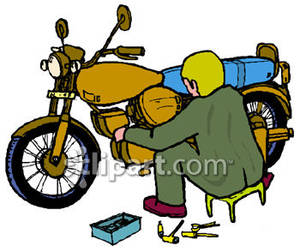
    Motorcycle mechanics work on motorcycles and other units such as motor scooters and all-terrain units. They inspect, clean, test, assemble, diagnose, maintain and repair engines, transmissions, drive systems, steering assemblies, braking systems, chassis, suspension, electrical systems, vehicle management systems, fuel systems and exhaust systems.

    Motorcycle mechanics work on motorcycles and other units such as motor scooters and all-terrain units. They inspect, clean, test, assemble, diagnose, maintain and repair engines, transmissions, drive systems, steering assemblies, braking systems, chassis and suspension, electrical systems, vehicle management systems, fuel systems and exhaust systems. They may specialize in repairing, rebuilding, customizing or servicing these systems or assemblies.

    Motorcycle mechanics work with hand, power, pneumatic and measuring tools, shop equipment, and diagnostic and testing tools. Reference material, documentation and computers are also necessary tools in this trade.

    Motorcycle mechanics may work in service shops of motorcycle dealerships, manufacturers and retailers or in independent service establishments. They may specialize in specific motorcycle, scooter and all-terrain unit makes or types.

    The work environment may include noise, fumes, odours, hazardous compounds, drafts and vibrations; therefore, safety procedures are important. The work often requires considerable standing, bending, crawling, lifting, pulling and reaching.

    Some important attributes of motorcycle mechanics are good hand-eye coordination, mechanical aptitude, time management skills, document use, numeracy, logical thinking and decision making skills, excellent communication and the ability to educate themselves as technology advances. They must also be competent to test ride units.

    Experienced motorcycle mechanics may advance to supervisory positions, shop foreman, service manager or instructors. Some mechanics may open their own garage or motorcycle specialty shop. With additional training, motorcycle mechanics can transfer their skills and knowledge to related units and equipment such as, but not limited to, snowmobiles, watercraft and outdoor power equipment.

  • Grants for Students with Disabilities

    Grants for Students with Disabilities

    Am I eligible?
    You are eligible if you:
    – apply and qualify for a Canada Student Loan;
    – are enrolled in a full-time or part-time program (minimum 32 weeks) at a designated post-secondary institution;
    – meet the criteria for students with permanent disabilities; and
    – include one of the following with your loan application as proof of your disability: a medical certificate, a psycho-educational assessment, or documentation proving receipt of federal or provincial disability assistance.

    What’s available?
    $2,000 per academic year (August 1 to July 31).
    This grant is available for each year of post-secondary studies, provided you continue to meet the eligibility criteria. This includes post-secondary studies beyond the undergraduate level. Grant money is issued by your province or territory of permanent residence at the beginning and in the middle of the school year.

    Since grant amounts are fixed, the amount you receive may exceed your assessed need.
    Example: If you qualify for the grant and you have an assessed need of $1,400, you will receive a $2,000 grant. In this case, the grant would cover your assessed need, so you would not need a student loan.

    How do I apply?
    The application process for this grant differs in each jurisdiction. To make sure you meet all the application requirements, contact your province or territory’s student financial assistance office.

  • Scholarships for Aboriginal Students

    Scholarships for Aboriginal Students

    Bursaries and Scholarships
    The Aboriginal Financial Officers Association of Canada is dedicated to helping Aboriginals reach the highest standard of excellence in finance and management. AFOA’s initiatives in the development of Awards and Scholarships are examples of that commitment.

    See link below for scholarships and bursaries.
    http://www.metisnation.org/programs/education–training/education/bursaries–scholarships

  • Using a Volunteer Centre to Get Your 40 Hours

    Using a Volunteer Centre to Get Your 40 Hours

    As you know, all high school students need to have 40 hours of community service in order to graduate. Use this information to discover where your 40 hours can best be used.

    Volunteer Centres work in local communities to strengthen volunteering and citizen engagement. With more than 200 in Canada, each volunteer centre’s name, size, structure and services reflect the unique characteristics of their community.

    To find a volunteer centre in your area, click here.

    Many volunteer centres are independent non-profit organizations, while others are part of a United Way, Social Planning Council, Community Information and Referral Centre or municipal services. Though diverse in many ways, they share the following common functions:

    – Promote volunteering

    – Build the capacity of organizations to engage volunteers

    – Facilitate connections between people with volunteer opportunities

    – Provide leadership on issues related to volunteering and citizen engagement

    If you want to volunteer, your local volunteer centre is there to connect you to opportunities in your community. It may have a database of volunteer opportunities or can connect you directly to opportunities within its member organizations.

  • Finding a Career in a Non-Red Seal Trade

    Finding a Career in a Non-Red Seal Trade

    There is more to the trades than you think – here are other jobs that are part of the trade industry. See if one feels right for you! Click through to see more information on select trades from Service Canada, and check back each month as we feature profiles of some of these exciting careers right here on Jobs People Do.

    Construction Sector
    –Cement (concrete) Finisher
    -Concrete Pump Operator
    –Construction Millwright
    –Electrician (Domestic and Rural)
    -Exterior Insulated Finishing Systems Mechanic
    -Hazardous Materials Worker
    –Heat and Frost Insulator
    – Heavy Equipment Operator
    – Dozer Operator
    – Excavator Operator
    – Tractor Loader, Backhoe Operator
    -Native Residential Construction Worker
    –Painter and Decorator: Industrial
    -Precast Concrete Erector
    –Precast Concrete Finisher
    –Refractory Mason
    –Residential Air Conditioning Systems Mechanic
    –Residential (low rise) Sheet Metal Installer
    -Restoration Mason

    Industrial Sector
    -Bearings Mechanic
    –Blacksmith
    -CNC Programmer
    -Composite Structures Technician
    –Die Designer
    –Draftsperson (Mechanical, Plastic Mould Design, Tool and Die Design)
    -Electrical Control (Machine) Builder
    -Electrician – Signal Maintenance (TTC)
    -Elevating Devices Mechanic
    -Entertainment Industry Power Technician
    -Facilities Mechanic
    -Facilities Technician
    –Fitter-Assembler(Motor Assembly)
    –Gas Technician
    -Hydraulic/Pneumatic Mechanic
    -Light Rail Overhead Contact System Lineperson (TTC)
    -Locksmith
    -Machine Tool Builder and Integrator
    -Mould Designer
    -Mould Or Die Finisher
    -Mould Maker
    -Optics Technician (Lens and Prism Maker)
    –Packaging Machine Mechanic
    –Pattern Maker
    -Precision Metal Fabricator
    -Pressure Systems Welder
    -Process Operator (Food Manufacturing; Power; Refinery, Chemical and Liquid Process; Wood Products)
    -Pump Systems Installer/Mechanic
    –Railway Car Technician
    -Relay and Instrumentation Technician
    -Roll Grinder/Turner
    -Saw Filer/Fitter
    -Ski Lift Mechanic
    –Surface Blaster
    –Surface Mount Assembler
    -Thin Film Technician
    –Tool And Cutter Grinder
    -Tool And Gauge Inspector
    –Tool/Tooling Maker
    –Tractor Trailer Commercial Driver
    –Water Well Driller

    Motive Power Sector
    –Alignment and Brakes Technician
    –Auto Body Repairer – Br.2
    -Automotive Electronic Accessory Technician
    –Automotive Glass Technician
    –Marine Engine Mechanic
    -Motive Power Machinist
    -Powered Lift Truck Technician
    –Small Engine Technician
    -Tire, Wheel and Rim Mechanic
    –Transmission Technician
    -Turf Equipment Technician

    Service Sector
    -Aboriginal Child Development Practitioner
    –Agriculture – Dairy Herdsperson
    –Agriculture – Fruit Grower
    –Agriculture – Swine Herdsperson
    –Arborist
    –Baker
    -Bicycle Mechanic
    –Chef
    –Child and Youth Worker
    -Child Development Practitioner
    –Cook – Assistant Br. 1
    –Developmental Services Worker
    –Educational Assistant
    –Electronic Service Technician
    -Gem Setter/Goldsmith
    -Hardware, Lumber and Building Materials Retailer
    –Service Sector Horse Groomer
    -Horse Harness Maker
    –Information Technology (Hardware Technician,  Network Technician)
    –Institutional Cook
    -IT Contact Centre (Customer Care Agent, Sales Agent, Technical Support Agent)
    -Micro-Electronics Manufacturer
    -Native Clothing and Crafts Artisan
    -Network Cabling Specialist
    –Pool and Hot Tub/Spa Installer
    –Pool and Hot Tub/Spa Service Technician
    –Retail Meat Cutter
    -Saddlery
    –Special Events Coordinator
    -Utility Arborist
    -Wooden Boat Rebuilder/Repairer

  • Métiers – Il est plus que rencontre l’oeil!

    Il ya plus à des métiers que vous pensez – voici d’autres emplois qui font partie de l’industrie du commerce. Voir si on se sent bon pour vous! Cliquez sur le lien pour voir plus d’informations sur certains métiers de Service Canada, et vérifier chaque mois, nous vous proposons des profils de certains de ces carrières passionnantes ici JobsPeopleDo.com.

    Secteur de la construction
    -Finisseur ou finisseuse de béton
    -Opérateur ou Opératrice de Pompe à béton
    –Électricien ou électricienne (secteurs domestique et rural)
    -Technicien ou technicienne de parements extérieurs isolants
    -Travailleur ou travailleuse en décontamination
    –Poseur ou poseuse de matériaux isolants
    –Conducteur ou conductrice d’équipement lourd : bouteur
    –Conducteur ou conductrice d’équipement lourd : excavatrice
    –Conducteur ou conductrice d’équipement lourd : tracto-pelle rétrocaveuse
    –Ouvrier ou ouvrière de construction
    –Peintre – décorateur ou peintre – décoratrice (secteur industriel)
    -Monteur ou monteuse de béton préfabriqué
    –Finisseur ou finisseuse de béton préfabriqué
    –Maçon ou maçonne d’ouvrages en briques réfractaires
    –Mécanicien ou mécanicienne en systèmes de climatisation résidentiels
    -Poseur ou poseuse de tôles pour systèmes résidentiels (petits immeubles)
    –Maçon ou maçonne en restauration

    Secteur industriel
    –Mécanicien ou mécanicienne de roulements
    –Forgeron ou forgeronne
    -Programmeur ou programmeuse en commande numérique (CNC)
    -Technicien ou technicienne en structures composites
    -Concepteur ou conceptrice de matrices
    –Dessinateur ou dessinatrice – conception mécanique
    -Dessinateur ou dessinatrice – conception de moules en plastique
    -Dessinateur ou dessinatrice – conception d’outils et de matrices
    -Préparateur ou préparatrice de commandes électriques (machines)
    -Électricien ou électricienne en entretien des signaux (TTC)
    -Mécanicien ou mécanicienne d’appareils de levage
    -Technicien ou technicienne en électricité pour l’industrie du spectacle
    -Mécanicien ou mécanicienne d’entretien de bâtiment
    -Technicien ou technicienne en systèmes de bâtiment
    -Ajusteur-assembleur ou ajusteuse-assembleuse (ensemble moteur)
    -Mécanicien ou mécanicienne en hydraulique/pneumatique
    -Monteur ou monteuse de systèmes de lignes aériennes de contact pour le transport léger sur rail
    -Serrurier ou serrurière
    -Constructeur et intégrateur ou constructrice et intégratrice de machines-outils
    –Concepteur ou conceptrice de moules
    –Finisseur ou finisseuse de moules et de matrices
    -Confectionneur ou confectionneuse de moules
    -Fabricant ou fabricante de prismes et de lentilles de précision
    -Mécanicien ou mécanicienne de machines à emballer
    –Modeleur ou modeleuse
    –Tôlier ou tôlière de précision
    –Soudeur ou soudeuse sur appareils sous pression
    –Opérateur ou opératrice de procédés industriels (secteur de la transformation des aliments)
    -Opérateur ou opératrice de procédés industriels (secteur de l’énergie)
    -Opérateur ou opératrice de procédés industriels (raffinerie, procédés chimiques et liquides)
    -Opérateur de procédés industriels (produits du bois)
    -Installateur ou installatrice de systèmes de pompage
    -Technicien ou technicienne de wagons de chemin de fer
    -Technicien ou technicienne de l’instrumentation et des relais
    -Affûteur/tourneur ou affûteuse/tourneuse de cylindres
    -Affûteur/ajusteur ou affûteuse/ajusteuse de scies
    -Mécanicien ou mécanicienne de remontées mécaniques
    –Dynamiteur ou dynamiteuse –exploitation à ciel ouvert
    -Assembleur ou assembleuse d’éléments de surface
    -Technicien ou technicienne de pellicules minces
    -Affûteur ou affûteuse d’outils
    -Inspecteur ou inspectrice d’outils et d’appareils de contrôle
    -Confectionneur ou confectionneuse d’outillage
    –Conducteur ou conductrice de semi-remorques commerciales
    –Foreur ou foreuse de puits d’eau

    Secteur Power Motive
    -Technicien ou technicienne spécialiste des freins et du réglage de la géométrie des roues
    –Réparateur ou réparatrice de carrosseries automobiles
    -Technicien ou technicienne d’accessoires électroniques d’automobile
    -Technicien ou technicienne de glaces de véhicule automobile
    -Technicien ou technicienne de moteurs marins
    -Usineur ou usineuse de pièces (véhicule moteur)
    -Technicien ou technicienne de chariots élévateurs
    -Technicien ou technicienne de petits moteurs
    -Mécanicien ou mécanicienne de pneus, de roues et de jantes
    –Technicien ou technicienne de boîtes de vitesses
    –Technicien ou technicienne d’équipement de gazon

    Secteur des services
    -Praticienne ou praticien du développement de l’enfant autochtone
    -Agriculture – soigneur ou soigneuse de troupeaux laitiers
    -Agriculture – fructiculteur ou fructicultrice
    –Agriculture – porcher ou porchère
    -Arboriste
    –Boulanger ou boulangère
    –Chef
    –Assistant social ou assistante sociale auprès des jeunes
    -Praticienne ou praticien du développement de l’enfant
    –Cuisinier ou cuisinière
    -Intervenant ou intervenante en services à l’intégration
    –Aide-enseignant ou aide-enseignante
    –Technicien ou technicienne d’entretien d’appareils électroniques
    –Sertisseur/orfèvre ou sertisseuse/orfèvre
    -Vendeur ou vendeuse au détail de quincaillerie, de bois d’œuvre et de matériaux de construction
    -Palefrenier ou palefrenière -Sellier-harnacheur ou sellière-harnacheuse
    -Technicien ou technicienne en technologie de l’information – matériel
    -Technicien ou technicienne en technologie de l’information – réseau
    –Cuisinier ou cuisinière d’établissement
    -Agent ou agente du service à la clientèle – centre de contact en technologie de l’information
    -Agent ou agente des ventes – centre de contact en technologie de l’information
    -Agent ou agente du soutien technique – centre de contact en technologie de l’information
    -Fabricant ou fabricante en micro-électronique
    -Artisan ou artisane autochtone
    -Spécialiste de câblage de réseaux
    -Technicien ou technicienne d’installation de piscines et de bains à remous
    -Technicien ou technicienne d’entretien de piscines et de bains à remous
    –Découpeur ou découpeuse de viande au détail
    -Sellerie
    –Coordonnateur ou coordonnatrice d’événements spéciaux
    -Arboriste de services publics

  • Les centres d’action bénévole au Canada – Obtiens tes heures de bénévolat !

    Comme tu le sais, tous les étudiants du secondaire ont besoin de 40 heures de service communautaire afin de graduer. Sers-toi de l’information ci-dessous pour découvrir comment mettre à profit tes 40 heures de la meilleure des manières.

    Pour trouver un centre d’action bénévole près de chez vous, cliquez ici.

    Beaucoup de centres d’action bénévole sont des OSBL indépendants, mais d’autres font partie de Centraide, d’un Centre d’information et de référence ou des services municipaux. Malgré quelques variantes, tous ont en commun ces quatre objectifs :

    – Promouvoir le bénévolat

    – Renforcer la capacité des organismes à mobiliser les bénévoles

    – Faire le lien entre des personnes et des occasions de bénévolat

    – Fournir de l’orientation sur les enjeux liés au bénévolat et à la participation citoyenne

    Si vous désirez devenir bénévole, votre centre d’action bénévole local est là pour vous suggérer les possibilités. Il dispose peut-être d’une base de données sur les ouvertures qui s’offrent ou il peut vous recommander directement à l’un de ses organismes affiliés.

    Si vous êtes un organisme, votre centre d’action bénévole peut vous proposer des ateliers sur la participation bénévole, afficher vos demandes dans sa base de données ou vous aider à échanger avec d’autres organismes de bénévoles.

    Les centres d’action bénévole participent à beaucoup d’autres activités, par exemple, pour n’en nommer que quelques-unes : gestion de projet pour les bénévoles soutenus par l’entreprise, diverses initiatives d’apprentissage dans la communauté, gestion de ressources bénévoles pour programmes et projets variés, recherche, programmes communautaires de leadership et dialogues sur les politiques publiques.

    Bénévoles Canada travaille en partenarial avec le Réseau canadien de centres d’action bénévole, qui comprend des centres de bénévoles locaux et des associations provinciales de centres d’action bénévole soucieux de renforcer le bénévolat et la participation citoyenne.


  • Bourses d’études pour les Autochtones du Canada

    L’Association des agents financiers autochtones du Canada (AFOA) a pour vocation d’aider les Autochtones à atteindre les normes d’excellence les plus élevées en matière de gestion des finances. Les initiatives de l’association qui visent à développer des prix et des bourses d’études sont un exemple de cet engagement.

    Voir le lien ci-dessous pour se renseigner sur les bourses d’études :
    http://www.metisnation.org/programs/education–training/education/bursaries–scholarships