Author: Teodora Pasca

  • Comment les activités parascolaires peuvent vous aider à réussir

    J’ai toujours été quelqu’un désireux de s’impliquer. Les études sont extrêmement importantes pour moi, mais en entrant à l’école secondaire j’ai commencé à réaliser à quel point il était important d’étendre mon apprentissage au-delà de la salle de cours. À travers les années, j’ai été dans un groupe de musique, un orchestre, un chœur, le club de l’album de finissants, le journal, un modèle de l’ONU, j’ai essayé le tutorat, entre autres choses. À travers ce processus, j’ai trouvé des choses qui ont vraiment marché, pour moi. Vous pouvez participer à tellement de choses dans votre communauté scolaire. D’après mon expérience personnelle, prendre part à ces activités parascolaires sera l’un des aspects les plus importants et gratifiants de votre carrière éducative.

    Les activités parascolaires sont une façon amusante de connecter avec des gens qui partagent vos intérêts. Que vous aimiez courir, ou tisser des liens autour des composantes moléculaires, non seulement vous apprenez, vous vous exprimez et vous vous amusez – mais vous le faites avec des gens qui vous ressemblent. Vous trouverez peut-être qu’il est assez facile de se faire des amis quand on a autant de points en commun avec les gens nous entourent. Souvent, vous vous entendez si bien avec ces gens que votre amitié continue bien longtemps après que le club auquel vous appartenez ne touche à sa fin.

    Il est toujours important de se concentrer sur les études, mais si vous recherchez une expérience équilibrée et amusante au-delà de votre éducation, vous devez absolument faire de la place aux activités parascolaires dans votre horaire. Un club académique est une excellente façon d’étendre vos connaissances et en apprendre sur les gens qui vous entourent. Et même si ce n’est pas directement lié avec ce que vous étudiez à l’école, tout club peut servir en tant qu’excellente manière de soulager votre stress – sans mentionner le fait que vous pourrez y apprendre des compétences précieuses, telles que comment penser de façon créative ou comment bien travailler en équipe.

    Mis part les compétences que vous acquérez tout au long du chemin, les clubs vous donnent aussi la chance de vous démarquer face aux personnes qui sont en charge, que ce soit des professeurs ou des étudiants plus vieux. C’est pourquoi il est essentiel de s’impliquer dans les activités parascolaires dès le départ, si vous y restez assez longtemps, vous commencerez à vous faire une place dans les rangs. Les positions de leadership sont difficiles à obtenir, mais elles en valent la peine. Si vous travaillez fort, la récompense peut être plus gratifiante que vous ne l’imaginez, incluant un extraordinaire sens de la responsabilité, le respect de vos pairs et souvent, une mention impressionnante dans votre CV. Comme vous pouvez le voir, le fait se simplement tremper dans l’activité parascolaire peut devenir un atout dans la vraie vie.

    Je m’en vais à l’université l’année prochaine, où je prévois définitivement de faire des activités parascolaires l’une de mes priorités. Je sais pertinemment que les compétences que j’ai obtenues à travers mon implication me seront utiles dans l’avenir, et me faire un chemin à travers des positions de leadership dans ces domaines m’a donné la confiance dont j’Ai besoin pour réussir. Ayez de l’initiative : regardez ce qui se passe dans votre communauté scolaire. Impliquez vous dans ce qui vous intéresse et je vous garantis que cela en vaudra la peine.

  • Dream Jobs: Chef

    Dream Jobs: Chef

    We all eat, usually several times a day. In your home, who does most of the cooking? Do you ever help out, at least with easy meals? Some meals are very quick to make and require little or no knowledge about spices, cooking times and mixing flavours. Others are more complicated and need a skilled cook to prepare them properly. When people want a meal like that, they usually have to understand the basics of food preparations that cooks and chefs know. Professional cooks and chefs work in all kinds of restaurants and cafeterias, preparing many different types of meals for the people who come to eat.

    Do you know the difference between a cook and a chef? Usually, the difference is where they work. In expensive restaurants, the cooks are chefs who have experience and training in cooking steak, lobster, and other fancy types of food. Cooks might work in cafeterias or other restaurants serving everyday food like hamburgers and pizza. Some cooks prepare entire meals, but others prepare only certain parts, such as salads or soups. Others might work on an even smaller part of the meal, such as cooking hamburgers on a grill. Many young restaurant workers begin with this kind of work, and about 20% of food preparation workers are between sixteen and nineteen years old.

    As young workers gain experience and knowledge in restaurant work, they can move up to more complicated levels of cooking. Some people become short-order cooks in fast food restaurants, making food for people who want quick meals. Whether they work in fast food or in regular restaurants, however, cooks and chefs need to know many of the same things. They have to be able to follow recipes and to be able to use pots, pans, knives, mixers, and other equipment. They have to be able to cook several different meals at once and to make both main meals and desserts. Knowledge of safety, hygiene, meal planning, and ordering supplies is often part of a cook’s or chef’s job. An apprenticeship and a certificate in food preparation are required for many people working in high levels of food preparation.

    Do you love to cook? If you enjoy work with preparing all kinds of food, the job of cook or chef might be a good choice. You can start learning new skills right away.

  • “Sine” Me Up: Why Math is Your Friend

    “Sine” Me Up: Why Math is Your Friend

    Mathematics is the pariah of school subjects—dismissed as mind-numbing, tedious and often impossible to grasp, it is frequently looked down upon in schools, in pop culture and among the general public. It’s unfortunate that math has such a miserable reputation, because it may actually end up being one of the most useful things you are ever going to learn. Math has a multitude of practical applications, whether you’re looking to make your day-to-day life a little easier or are considering it for a future career. So if you’re stuck on permutations or about to lose your marbles over that logarithmic function, don’t give up hope just yet. Math might be the thing that saves you.

    A lot of the negative hype behind math is due to the sheer amount of material—the formulae and variables and properties—and it’s increasing difficulty is enough to give anyone a migraine if not taken in stride. Math is one of those things that you just can’t get the hang of without practice. And while it may take a bit of grunt work at first, there is a certain satisfaction in finally getting the right answer. This sense of accomplishment may come as a pleasant surprise. Not only is it rewarding to see the progress of your hard work, but you can actually start to have fun with it once you get into the swing of things.

    If you’re good at math, there are many career paths that may suit your fancy. Aside from strictly “mathematics” jobs (teaching positions, research, etc.), other fascinating fields like medicine, architecture, business and engineering are excellent ways to put your skills to good use. Careers in math-related fields are great for developing problem solving and logical reasoning skills, not to mention they are often both professionally and financially rewarding. If you’re committed to your talents and willing to work, a mathematics career is definitely a valuable option to consider.

    Of course, not everyone is going to be skilled at math and that is perfectly alright. However, just because you don’t work in a math-related field doesn’t mean it isn’t a useful (and necessary) tool to have under your belt. Restaurant bills, mortgage payments, student loans, the lottery—the power of math is woven through everyday life. Oftentimes, it is the glue that holds our society together. No matter what you end up doing in the future, somewhere along the way you’ll undoubtedly need math to get you out of a jam. That’s why it is so important to keep working on your math skills: you never know when they’ll come in handy.

    From multiplication to measures of central tendency, mathematics and its multitude of concepts are true treasures to possess. You may be surprised at the many doors it opens for you in today’s world. In summation, math will contribute to your progress. Keep working on developing those skills—and embrace mathematics as a crucial tool in the smooth functioning of your everyday life.

  • Why is Drinking Water Important?

    Why is Drinking Water Important?

    Society constantly promotes the importance of drinking water and how vital it is to human life. Yet, a lot of us don’t really know why it is so important and often don’t include enough water in our diets. Water, otherwise known as H2O is composed of two hydrogen atoms bonding to one oxygen atom.

    Without water, humans would not survive. On average we can only live without drinking water for three days! This is because water hydrates our bodies and helps our bodies to function optimally. In fact, the human body in itself is made up of about 60% water. Many other animals also rely on water in some way or another for survival.

    Some of the benefits of drinking water include keeping your skin hydrated and looking healthy and improving the function of your kidneys and helping bowel movements. Drinking water also enhances muscle performance and makes you feel less tired. Your brain can especially reap the benefits because water can help you stay more alert and focused. Another benefit that a lot of people don’t know is that you can find relief from a headache by drinking water; they are often caused by dehydration.

    The recommended amount of water for humans is about 6-7 glasses of water per day or about 2 liters. This amount depends on the level of activity that you are participating in every day. If you are very active and play a lot of sports, drinking more water would be necessary. However, you should keep in mind that water is also found in the food we eat, so don’t count that out! For example one cup of yogurt is made up of about 85% water.

    A lot of us have a hard time including water in our diets. I can relate to this and also have difficulties drinking a lot of water. I think it lacks taste and is a bit boring compared to drinking juice or pop. If you also find it to be super tasteless then consider adding some fruit to your water in order to add some flavour. These fruit infused water creations are easy to make and will motivate you to include more water in your diet. Some of my favourite combinations are: raspberry-lime, pineapple-mint and strawberry-cantaloupe. You can be creative by experimenting with your own favourite fruits and maybe come up with a winning combination of your own!

  • I Want to Be an Inventor!

    I Want to Be an Inventor!

    Every day, you use other people’s inventions. You probably know that Thomas Edison invented the light bulb and that Alexander Graham Bell invented the telephone. Did you know that the Chinese were the first people to use sunglasses, which were made of stones called quartz? History is full of all kinds of amazing stories about creative people making something new out of what they already had. Creative and patient people can build good careers as inventors.

    Creativity is very important for inventors. Often, the work involves finding new uses for familiar materials in order to solve a problem. For Thomas Edison, the problem was finding a better way to light people’s homes and buildings. The gas lamps and candles that people normally used gave only limited light and could cause fires. People needed something better, and Thomas Edison had an idea. He decided to invent something that could turn electricity into power.

    Edison was not the only person working on the idea of light bulbs. However, he brought the idea to North America. He was also the first person to show a movie when he projected a moving picture in 1896. Thomas Edison’s many inventions are still useful for people today. What many people don’t know is how long the process of inventing can take, even for people like Thomas Edison. Some ideas can work out quickly, but most of them take a long time. Inventors need to have enough patience to try different things until they find something that works.

    Becoming an inventor usually involves knowing about technology and how the world works. An education in science or engineering is a good background for becoming an inventor. Chemistry can help inventors know how to combine different liquids or solids to make something new. Biology helps people understand plants and animals, and principles of physics show how things move and work together. Engineering studies help to give an idea of how to apply scientific principles to everyday life. Together with creativity and patience, a good knowledge of science is useful for inventors.

    Look for places or activities where a machine might help people or find a problem that needs a solution. Even something very small will help you to think like an inventor. In the future, you might be as famous as Thomas Edison. 

  • Networking to Land a Career

    Networking to Land a Career

    When people get together to meet and talk, they sometimes learn a lot about each other. At family gatherings, people might find out about what their cousins or aunts and uncles are doing and how their lives are going. At parties, friends might find out more about each other and about the other people they know. What happens when job seekers and businesspeople get together? Through a process called networking, people can connect with each other in ways that can benefit them and lead to success.

    What does the word “network” mean to you? If you work with computers, you probably know that networks in this area are all about connections. The same is true in business and job searching, except that this kind of networking involves people instead of machines. When people need something, they can connect with someone who has what they want. A person who needs a job, for example, can connect with someone who is looking for employees. Someone who has something to sell can connect with someone who wants to buy it. For some people, these kinds of connections can make the difference between success and failure.

    Networking can take many different forms. Sometimes, it can be as simple as just talking to friends and family members about a product or a job need. It could involve talking to people on the street and passing out business cards. Often, however, employment agencies and business centres have more formal networking events when people can get together to meet each other.

    Suppose that you have a business of selling greeting cards. You might take some of your cards to a networking event to show to other people so that they can see exactly what they can but from you. What if you are a high school student and are unsure of what direction to take after you finish your studies? By networking at a job fair, you might be able to find out what career suits you and be able to choose the right educational path for what you want to do. Networking can help you achieve your goals.

    Usually, networking involves meeting people face to face and talking with them, which might be very difficult for some people. How can people network with others if they find it difficult to talk to strangers and to explain themselves? Some of the basic networking techniques can help for people who are not natural talkers. Preparation is very important for anyone who wants to build up a network of contacts. Having a business card to hand out, even if it includes only a name and e-mail address, can be a good way to be remembered.

    Gathering information and forming relationships are important parts of finding a good job. Following up on those contacts is as important as the first meeting, and a large part of networking happens after the actual event. When networking is done well, it can help lead people to success in their chosen fields of work.

  • Club Counselling: How Extracurriculars Can Help You Succeed

    Club Counselling: How Extracurriculars Can Help You Succeed

    I’ve always been someone who is eager to get involved. Academics are extremely important to me, but upon entering high school I started to realize the value in expanding my learning beyond the classroom. Over the years I’ve tried my hand at concert band, orchestra, choir, yearbook, newspaper, model UN, peer tutoring and more. Through this process, I found the things that really worked for me. There are so many ways you can participate in your school community. From my personal experience, taking part in these extra-curricular endeavours will be one of the most rewarding parts of your educational career.

    Extracurriculars are a fun way to connect with people who share your interests. Whether you’re running laps around the quad or bonding over molecular compounds, not only are you learning, expressing yourself and having fun—you’re doing it with like-minded and motivated peers. You might find that it’s quite easy to make friends when you have so much in common with the people around you. Oftentimes you click so well with these people that your friendships continue long after the club comes to a close.

    It is always important to focus on academics, but if you’re looking to get a balanced and entertaining experience out of your education, it is a must to make room for extracurriculars in your schedule. An academic club is a great way to expand your knowledge and learn from the people around you. And even if it’s not directly related to what you’re studying in school, any club serves as an excellent outlet for relieving stress—not to mention it can teach you other invaluable skills, like how to think creatively or be a team player.

    Aside from the skills you acquire along the way, clubs also give you the chance to put yourself out there for the people in charge, whether they are teachers or upper-year students. This is why it’s crucial to get involved in extracurriculars right off the bat: if you stick around long enough, you’ll start to make your way up the ranks. Leadership positions are hard to earn, but totally worth it. If you work at it, the payoff could be more rewarding than you ever imagined, including a wonderful sense of responsibility, the respect of your fellow peers and often an impressive title on your resume. As you can see, a mere dabble in the extra-curricular of your choice could turn into a real-world asset.

    I’m off to university next year, where I definitely plan to make extracurriculars one of my priorities. I know for a fact that the skills I’ve obtained through my involvement will come in handy in the future and working my way up to leadership positions in these fields has given me the confidence I need to succeed. Take initiative: check out what’s going on in your school community and put yourself out there. Get involved in what you’re interested in and I guarantee it will be worth it.


  • The Future Is Now

    The Future Is Now

    Where do you see yourself in five years? Choosing a career path can be entirely overwhelming if you don’t know what you’re looking for. When it comes to your future, only you can have the final say, but there are things you can do to make your decision just a little bit easier. Consider the following factors before you make your choice.

    What you like.
    Considering all the time, money and energy you are going to invest into your career, you will be much better off if you actually enjoy what you’re doing. Think about your interests, your passions and your hobbies, and see if you can imagine yourself working in those fields in the future. Be honest with yourself. If you don’t thoroughly like something, then it might be difficult to put yourself through it on a daily basis. Chances are, if you are happy with the work you are doing, you will be much more motivated to succeed.

    What you’re good at.
    Are you a proficient public speaker? You might make a good politician. Are you great at hands-on work? You might flourish in the trades. Everyone’s good at something; you just have to figure it out. Think about your strongest subjects in school, things you’ve accomplished and so on—put these together to find the things you’re truly the best at. It is much easier to start your career off with a foundation of skills you already have, instead of starting from scratch. If you keep refining your talents, the things you’re good at now could turn out to be real assets in the future.

    What’s “practical”.
    Don’t think that you have to strive to be a doctor, lawyer or engineer. Every job is unique in its own way—and there are always ways to be successful, no matter the field. However, it might be a good idea to look at your options before settling on something. For example, there are multiple ways to pursue a music career: if performing doesn’t suit you, you can be a professional music teacher, a composer, an arranger, and much more. Make sure you have a lifeline: it’s always good to keep those options open. That being said, practicality is entirely dependent on the individual—and if you truly love what you’re doing, and you’re willing to work hard, there is absolutely nothing holding you back from reaching the top.

    Now, the trick is, what’s the overlap? If you can think of a career that fits into all three of those categories, chances are that it might just be the one for you. Finding the common ground between your passions, your skills, and your common sense will ensure that you’re on the path to a balanced, meaningful, and enjoyable future. Making a career decision is going to be one of the toughest things you ever do. But if you lay out the facts and keep an open mind, there is no doubt you will find the perfect job for you.

  • Hairdressing – Beauty as a Trade

    Hairdressing – Beauty as a Trade

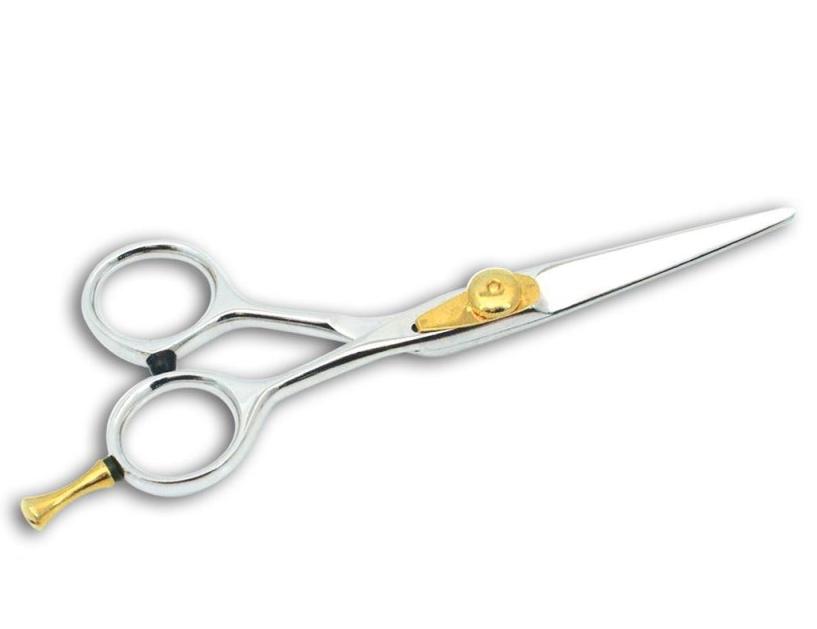
    Hammer, screwdriver, wrench, scissors, shampoo, styling product – on the outside, a career in hairdressing shares little with a career in engineering or construction, yet they’re more similar than one would think.

    Often, when thinking about careers in the trades, the first thought is to the construction, industrial, or automotive industry. In fact, many service-based careers such as chef, child and youth worker, special events coordinator, and hairdresser are also considered skilled trades. Through on-the-job training and in-class sessions, you can become a certified hairstylist.

    Similar to a construction worker, a hairdresser prepares their work area with an array of tools including scissors, razors, combs, curling iron, and other specialized apparatus to accomplish different styles and techniques. With training, this equipment can be used to meet clientele needs, whether it be a quick trim or a full make over.

    A position in hairdressing is much more than just styling and beautifying clients. A hairdresser can also be responsible for the training or supervision of other stylists and assistants. Hairdressers are often business-minded individuals; often completing administrative tasks such as record keeping, supply ordering, and salon upkeep.

    A career as a hairstylist fits into the service sector in the Ontario College of Trades, requiring those interested in becoming a hairdresser to earn a Certificate of Qualification through apprenticeship training and examination.

    With individuals always seeking to invest time into looking good and feeling good, there is always a demand for hairstylists. Hairstylists can find work in this high-demand career working for beauty salons, hotels, and hospitals, or working in an at-home salon.

    While contemplating future career options, it’s important to investigate all opportunities available. Many may skip over the skilled trades assuming there aren’t any opportunities suited to their needs; when in fact there are plenty of opportunities within the skilled trades for creative, business-minded, driven individuals seeking a rewarding, high-paying career in a secure industry.

    From construction to automotive to the beauty-inspiring, service-based industry that includes hairdressing, there’s a career in the skilled trades for you.

  • Why Do I Have to Take Social Studies?

    Why Do I Have to Take Social Studies?

    Why do cars in Canada drive on the right side of the road while cars in England drive on the left? Why does Canada have a Prime Minister while the United States has a President? Why does an ice cream at one shop in my neighbourhood cost more money than the same ice cream at another shop? All the answers to these questions can be found when you learn about social studies.

    Social studies is made up of many different topics like history, politics, geography and economics. While these courses are taught in high school and university, students learn the very important basics of social studies in elementary school.

    A “society” is a community of people who live in the same geographical area and share the same cultural customs and laws. Because a society is made up of families, students of social studies first learn about how the family works within a community.

    Families are like mini societies because they are made up of people who live in the same place and share the same traditions and rules. Family members learn to work together as a team. By sharing and caring for each other, family members can more easily achieve their goals. In the same way, members of a society must learn to cooperate and understand each other so that the society’s goals can be achieved. In a very diverse society like Canada, it is important to learn about the people who live in your community so that you can learn how to get along. Students of social studies thus learn how to appreciate diversity within their communities and around the world.

    As students learn how to cooperate with others, they also learn how to be involved in their communities. They learn about the different ways that decisions are made by community leaders and they learn about what they can do to impact these decisions. For example, in social studies, students learn about why it is important to vote. They learn about how governments work and what politicians do. They also learn how to make decisions that will help to influence society the way they think would be best.

    Topics taught in social studies show how humans can achieve more when they work together. Students who learn the subject can actually learn how they can make the world a better place.

    In that way, social studies might just be the most important subject of all!