Author: Jasmin Bollman

  • Happy New Year from JobsPeopleDo.com !

    Happy New Year from JobsPeopleDo.com !

    Another year is upon us and that means resolutions, resolutions and more resolutions! If you resolved to be more organized, to study more, to gossip less or anything else under the sun – we here at JobsPeopleDo have got you covered! You’ll find a wide array of articles this month that will help you stick to your 2013 resolutions.

    January also means a new semester of school. This brings its own set of challenges as you will need to prepare yourself for some hard work over the coming months. However, this also means that you are only a few months away from completing another year of school! If you will be heading into post-secondary education in the fall, it is time to start applying for those scholarships! Don’t leave the applications to the last minute. You will be thankful that you didn’t when you get free money!

    From all of us at JobsPeopleDo.com , we wish you a happy, healthy and wonderful 2013!

    Jasmin Bollman, Assistant Editor

    Don’t forget: Be a mentor – someone needs you!

  • January Scholarships of the Month – Apply Now!

    January Scholarships of the Month – Apply Now!

    2013 is upon us and that means it is time to start your scholarship applications for the fall (or even summer!) semester. With exams, homework, volunteering and making time for family and friends, it can feel difficult to fit in scholarship applications. Not all applications require lengthy essays and hours of your time, so ensure you prioritize and fit scholarships into your educational plan. JobsPeopleDo is here to help you find a wide array of scholarships that are a perfect fit for you. After all, free money is the best money!

    1. Brain Tumor Survivor Education Award – For students aged 16-25 across Canada who have survived brain tumors. Amount: $5000. Deadline: May 17, 2013

    2. Dr. P. Anthony Johnstone Entrance Scholarship – For Nova Scotia students who have demonstrated an interest in multiculturalism and human rights. Amount: $6000. Deadline: March 31, 2013

    3. RBC Aboriginal Student Awards Program – For Aboriginal students across Canada. Amount: $4000 per academic year. Deadline: February 28, 2013

    4. Super Powers Scholarship – Open to all Canadian students entering post-secondary education. Amount: $250. Deadline: February 1, 2013

    5. TD My Responsible Financial Group – For students across Canada that are concerned about environmental issues. Amount: $3000. Deadline: January 18, 2013

    6. CollegeWeekLive Scholarship Giveaway – For students across Canada who register with College Week Live. Amount: $1000. Deadline: January 31, 2013

    7. Dick Martin Scholarship Award – For students across Canada who are enrolled in occupational health and safety course or program at accredited college or university in Canada, leading to an occupational health and safety certificate, diploma or degree. Amount: $3000. Deadline: January 31, 2013

    8. StorageMart ScholarSmarts Scholarship – For students across Canada enrolled in post-secondary education in Canada or the US. Amount: $1000. Deadline: January 31, 2013

    9. Vale Undergraduate Scholarship – Open to women across Canada who are enrolled in an undergraduate engineering program. Amount: $10,000. Deadline: January 11, 2013

    10. Edgar Kerstan Memorial Scholarship – For students across Canada enrolled in post-secondary education. Amount: $3000. Deadline: January 31, 2013

  • Study Tips for the New Semester!

    Study Tips for the New Semester!

    Now that 2013 and a new semester are upon us, you may have resolved to be more organized or to get higher grades in your classes. We are here to help, with some handy tips on how to better prepare yourself for educational success this year!

    Take Notes on ALL Readings
    This may come as a surprise to some students, but you should be taking notes on your readings. Some people may not see the point of note taking, but it is necessary if you want to do well on your exams. If you haven’t started already, start as soon as possible. Course readings are usually on the exam. Taking notes on each reading will ensure you have a brief summary that will save you from having to read it again come exam time.

    Start Organizing Study Groups
    Starting a study group is a great way to get ready for exams. Try talking to fellow students and sending out e-mails to see who is interested in joining a study group. A study group allows you to share lecture notes, divide up the chapters and share these notes amongst yourselves, get new perspectives on the material (this can be especially beneficial if you are struggling with certain concepts), and test one another on course concepts. Meeting with the study group may also point out some important course concepts that you have neglected to include in your study notes. Consider asking your Teaching Assistant to meet with your study group and help to facilitate a course review.

    Review and Revise Your Lecture Notes
    Yes, it is early in the course, but it’s never too early to start reviewing your lecture notes. Reviewing your lecture notes ensures you have the opportunity to re-engage with course material before your exams start. You could review your notes after class, later in the week, or while you prepare for next week’s class. The more you engage with the material, the more you’ll absorb and understand. As you engage more with the material and develop a deeper understanding of course concepts, you should revise your notes and focus on concepts that are more difficult.

    Start Researching Papers Early
    As soon as your professor hands out the instructions for your first assignment, you need to start doing preliminary research on your topic. Starting early allows you to find key resources, including books, which may come in limited quantities from the library. It also allows you to approach your Teaching Assistant or Professor about your topic. Both your Teaching Assistant and Professor are there to provide guidance through the research process. They can provide you with vital information that can help you find appropriate resources, ensure you’re on the right track with your assignment, and look over early paper outlines to ensure you have a good grasp of your topic.

    Use the Library
    Many students attempt to do as much research as possible on the Internet. Although you can certainly find many quality sources online, particularly through online journal databases, this can limit the resources used for your assignment. Using the library allows you to not only access major scholarly books that are relevant to your field of study, but also allows you to discuss issues with the librarian, who can give advice on where to look for offline resources, and even suggest some materials you have yet to consider. Most university libraries also host workshops on how to research effectively and how to use the library to your advantage. Explore these workshops and use your library. It will definitely pay off when you get that final grade! Professors and Teaching Assistants like to see that you used a wide-range of resources.

  • Getting Organized

    Getting Organized

    As we face another semester, the importance of getting organized is hugely evident. Whether you’re in Grade 9 or Grade 12, you are going to want to be sure that you know at least 4 pieces of information going in to this semester:

    1. What classes are you taking this semester? This question is really important for being able to prepare mentally for what is coming. If you know that you have five intensive classes, you are going to want to be sure to organize your social and extracurricular activities so that you have enough time to do homework. If you are also going to be working, you will want to be sure that you have organized your schedule to accommodate the extra stress of the difficult classes. This works the opposite way as well – if you have a lighter school schedule, you can pack more extracurricular and volunteer activities in to your schedule.

    2. Do you have all of the school supplies that you will need for the level of classes that you will be taking?
    Depending on what your semester has in store for you, you will need to make sure that you have at least the basics when it comes to school supplies, and you can wait until the first week of school to pick up any specialty supplies that you may need for an art or math class.

    3. Do you have a study spot that will be useful to you once the semester starts?
    Clearing off the holiday clutter from your desk will help you to start getting into “school mode”. You want to be somewhat mentally prepared for going back to school after the holiday break so that when your first assignment is due, you are ready to succeed. Feng Shui is the Japanese art of meditation and stress relief that says that having a calm environment helps to create calm in one’s mind. This is a useful tip to employ for your study area; try to keep it clean and organized so that your mind is less distracted when you need to focus.

    4. What are your rewards and landmarks along the way that will help you to keep going?
    School days can be tiring, especially if you are loaded down with courses that are heavy or difficult. You are still going to need to take some time off and make sure you allow time to have fun. Maybe your family is planning a vacation for spring break, or maybe you’ll go on a weekend shopping trip with friends. Whatever it is that you are looking forward to, be sure that you have those dates firmly implanted in your mind.When you are starting to feel stressed out, you will be able to persist because you know that you have something good to look forward to. If you don’t have anything planned, then plan something now!

  • The Collapse of the Great Barrier Reef

    The Collapse of the Great Barrier Reef

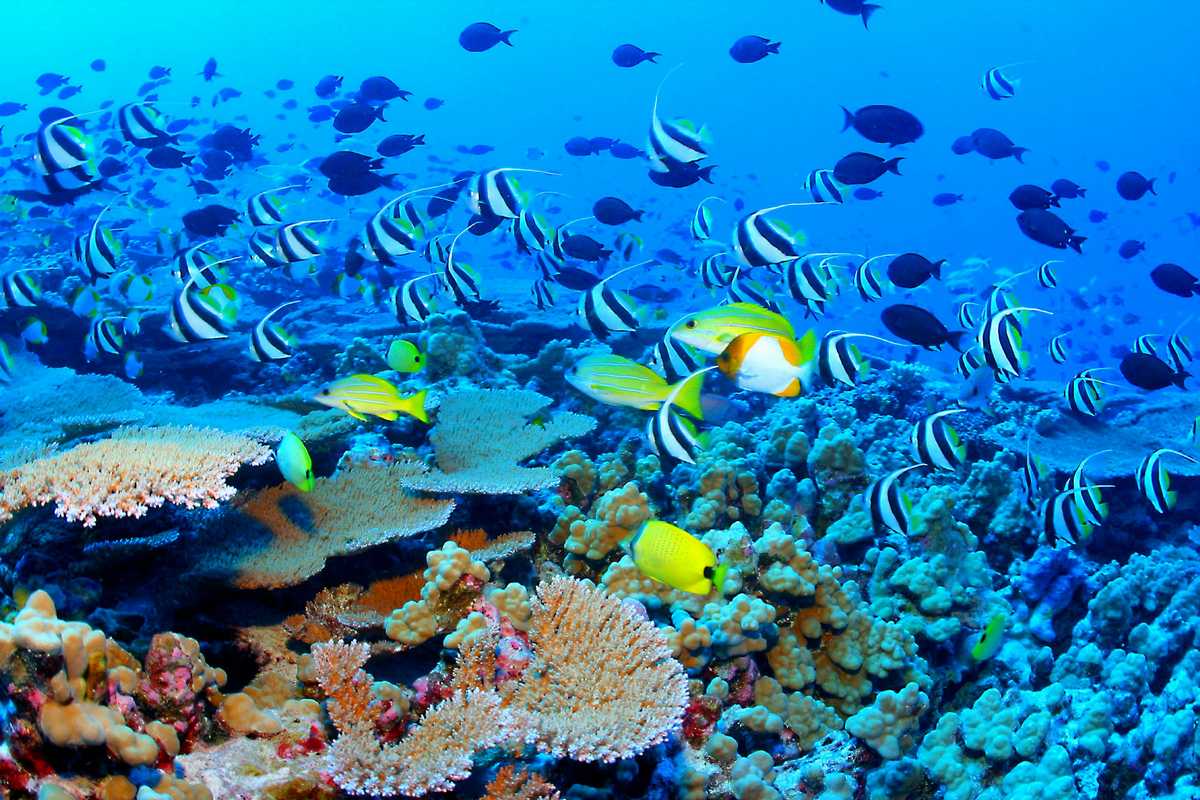
    Imagine what it would be like to look down into the ocean and see brilliantly-coloured fish darting in and out of the world’s largest area of coral. Do you know where that is? If you thought of the Great Barrier Reef off the coast of Australia, you were right. For many years, the Great Barrier Reef has been known as the biggest and best coral reef in the world, but that might not be the case for much longer. The Great Barrier Reef is collapsing, and unless something changes it might soon be gone.

    The Great Barrier Reef is a huge coral reef covering 348,000 square kilometres off the coast of Australia. Some parts are 2000 metres deep, while others are fairly shallow. Like other coral reefs, the Great Barrier Reef is actually made up of a lot of different types of plants and animals. Corals look like small trees with branches sticking out in all directions, but they’re not. The brightly-coloured tree-like shapes are the skeletons of animals, but instead of being on the inside of the body, like for people, they’re on the outside. Altogether, the Great Barrier Reef has four hundred types of coral and 1500 types of fish, as well as many other animals.

    All of that amazing life is in danger. Scientists believe that about half of the corals on the Great Barrier have died in recent years, probably because of human activity. Coral reefs have always lived on cycles. Storms or diseases would kill some of the plants and animals, but then they would recover. Recently, the recovery process has been very slow or has even stopped entirely in some areas. The long-term loss of the corals has happened mainly since people started clearing trees off the land in the late 1800’s to make room for farming and raising animals.

    Because of these activities, mud, fertilizers and other toxic substances started to wash into the lagoons and then out to the reefs. Slowly the plants and animals on the reefs started to die. Pollution from boats and other sources might also have been part of the problem.

    Why does it matter if the Great Barrier Reef disappears? The loss could mean the disappearance of some species of animals, such as the marine turtle. Six of the world’s seven species of marine turtles live in the Great Barrier Reef. The loss of the turtles might then affect another type of animal, which would then change another type, and the problem could eventually affect the food that people eat. Scientists are unsure of exactly how coral reefs affect life on land and in water, but they know that the reefs are important.

    Almost every area of the world is facing pollution problems because of human activity. Oceans, rivers, and land are dying because of chemicals and garbage that people throw away. However, you can help. Keeping your own home and school clean and trying not to pollute the environment might prevent disasters like the collapse of the Great Barrier Reef.

    If the plight of the environment and the Great Barrier Reef interests you, why not consider a career as an Environmental Scientist? An Environmental Scientist applies their knowledge of the natural world to help preserve and protect nature.

  • The Benefits of Travel and Volunteerism

    The Benefits of Travel and Volunteerism

    Having volunteer experience is an essential part of every student’s life. Now that it a requirement for high school students to acquire 40 hours of volunteer time before they graduate, many new and varied opportunities are cropping up. It is a great time to travel as a student!

    Volunteering allows for an introspective look into your values and it gives perspective and fosters a better-rounded individual. Some of life’s richest experiences come from volunteering. When you free yourself to give your time to helping fulfill the needs of another it is rewarding on many levels. One way to volunteer is to go abroad and embark on a life-changing journey. This is something students should consider while they have the time and resources. Volunteering abroad is a meaningful experience that can provide great rewards.

    So, why go abroad when there are plenty of opportunities here at home?

    1. The opportunity to travel and visit a foreign country.
    There is something very different about reading about a country and actually visiting it in person. Travel is a great way to expand your mind and gain insight into the world and how you view it. It adds to your life experiences and creates memories you can draw upon for a lifetime.

    2.Unique projects.
    Perhaps you can help save the green turtle or be an ambassador for the environment. There are things you can do abroad that you simple cannot do at home. The animals are different, the government structure is different and the ecosystems are different. Every country comes with unique settings, strange habitats and diverse food.

    3. Take in a new culture.
    What better way to learn than to jump right in? Don’t just study different cultures in books and in movies, take the opportunity to live and breathe it. Engage all your senses and create a rich memory that helps support you through daily challenges.

    4. Make new friends.
    You will create memories that build a lifelong bond. Language is only a barrier for a short while before mutual respect and affection based on shared experiences take control.

    5. Learn a new language.
    No language curriculum can match being surrounded by language and culture. It is amazing how quickly one picks up a foreign language when it is all around them. The mind is fast to pick up words from action and gestures.

    There are many organizations to choose from when considering volunteering abroad. Take time to look into various opportunities. Some may be based on community or through schools, churches, and hospitals. Take a chance and do something different.

    Don’t forget that you don’t have to travel to volunteer. Your very own community needs you, too! The best part about volunteering is the feeling of accomplishment and knowing that you have made a difference, regardless of where you do it.

  • Being Happy On a Budget

    Being Happy On a Budget

    Do you want to be rich or poor after you finish school? You might think the answer is obvious. Very few people actually choose to be poor. Being poor means constantly being careful about money and often giving up a lot of things you might want. It means living on a limited budget, but it doesn’t have to mean the end of fun.

    Most people have to live on a budget at some point in their lives. These days even highly educated people, who have traditionally earned high incomes, often have to survive on very low salaries in positions such as fast-food servers or cleaners. In difficult economic times, it can be hard to make enough money to pay the bills. In that case, how can you ever earn enough to have fun?

    Even on a tight budget, however, life doesn’t have to be bleak. With creativity and careful planning, you can still have fun even while watching your pennies. The most important thing when you design your budget is to remember what’s important to you and to plan around that. After you pay for the basics like housing, food, and clothes, you have to decide how to spend or save the money you have left.

    How you spend money depends on your situation and what you consider important. Living with your parents or with several roommates can help save a lot of rent money, or you can look after other people’s houses. If you live on your own, learning to like inexpensive foods like beans and lentils can help cut down on your grocery bills. Using coupons, looking for sales, and buying food in bulk can also help. If you find interesting recipes and know how to use spices, you can make good food without spending a lot of money. You can also allow yourself to have an occasional steak or restaurant meal to make it easier to stick to your budget.

    Entertainment can still be part of life on a budget. Instead of going to the movies on Friday evenings, you can spend time at a park or the zoo or attend a free cultural event like a concert. You can make gifts for people instead of buying them and you can turn a trip to the dollar store into a fun outing with friends. You can share your belongings with others and borrow from them, and maybe make new friends at the same time.

    Learning to live on a budget might even help you get a good job. Employers who are looking for people to manage budgets, for example, might be impressed if you know how to get the most out of a small amount of money. The leadership and cooperation skills you learn while living on a small amount of money might also be valuable. Even if that doesn’t work, you can still use the skills you’ve learned throughout the rest of your life.

    Living on a budget doesn’t have to mean the end of fun; it can be a beginning of something new and exciting. With creativity and determination, you can make a low income work for you.

  • Why Get a Bachelor of Arts Degree?

    Why Get a Bachelor of Arts Degree?

    People often wonder what the point is of getting a Bachelor of Arts degree. After all, there are no obvious career paths out there for history or anthropology majors. You don’t just graduate with a degree in philosophy and immediately become a professional philosopher, unlike a trade program where you graduate from an engineering program and immediately become an engineer. Even though you might have doubts, a BA will help you in the job market and in other ways that you may never have thought about.

    There are many jobs out there that require a university degree. I spent a year teaching in Seoul, South Korea, for example. Having a university degree was the only requirement to get an interview. My year in Seoul was one of the best experiences of my life and it led me to further teaching and travel opportunities. Other people are also able to find work in their area of interest right out of university; some psychology majors get work in labs, for example. Many other jobs don’t strictly require a university education, but like to see an applicant who has a degree. This is particularly important when there are many people competing for one position.

    There are reasons employers looks for university graduates. A Bachelor of Arts degree can get you things that are impossible to measure, such as teaching you how to think critically. Getting through a university class isn’t about knowing all the right answers – it’s about figuring out how to think for yourself and express your ideas. It can be a lot of work, but it’s work that you’re doing to improve yourself and not just to get a diploma.

    When you’re feeling tired and a deadline is coming up, writing an essay feels like a nuisance. But as you write you’re learning how to put together a solid argument. You’ll find that the more essays you write and the more advanced your courses get, the better you will become at expressing yourself. You can learn to analyze things in detail and get a clearer view of the big picture. These are skills that are useful and highly desirable to potential employers.

    Studying in university also teaches you to manage your time well and to take responsibility. You and you alone are responsible for whether or not you go to class or do your assignments and how much effort you put into them. University helps to set you on track for things you want to do. You can take those four years to learn what you love. Some people fall in love with a particular course or area and go on to get a PhD. Other people don’t have such a clear path to their dreams, but they still gain a lot of experience and knowledge.

    A university degree is a lot of work and if you think it’s not for you, that’s fine. If you want to go to a technical college and become an electrician, you should go for it. Just make sure you do what you like and you’ll find out where you want to be.

  • Discovering Marine Science in The Maritimes

    Discovering Marine Science in The Maritimes

    New Brunswick is the second largest aquaculture producing province in Canada (behind British Columbia). Each year the province earns hundreds of millions of dollars as a result of aquaculture production. There are currently over 2000 people in the province working as direct employees in various capacities in the aquaculture industry. Due to the important part the industry plays in the province, it is important the public has the opportunity to become educated and engaged in the subject.

    The Huntsman Marine Science Centre and Fundy Discovery Aquarium located in St. Andrews, New Brunswick provides a unique and educational aquaculture experience for all ages. The 20,000 square foot facility first opened in 1972, but was re-built and re-opened in September 2011. The centre has a research facility, including labs, where research is being done to find a way to sustain and develop the aquaculture industry.

    There are two harbour seals that call the centre home, Snorkel and Loki, who love to entertain the crowds of people who come by to see them. Harbour seals are found in the coastal waters of the Northern Atlantic and Pacific Oceans, as well as the Baltic and the North Seas. They are brown, tan or gray in colour with v-shaped nostrils and small ear canals. There are an estimated five to six million harbour seals worldwide. The seals at the aquarium are fed twice a day and enjoy eating fish such as menhaden, anchovy, sea bass, herring, mackerel and cod. They also know a variety of tricks, which they have learned since being in captivity.

    There are two touch tanks – one that houses a variety of interesting creatures including sea cucumbers, which are rubbery and slimy and hard to hold on to; clams, which can spit water; and starfish which are hard and prickly. There are an estimated 1800 different species of starfish worldwide. They have a central disk and five arms, though some species have many more. There is also a touch tank designated for skates. There are more than 200 different kinds of skates (and I don’t mean hockey or speed skates!). The skates found at the aquarium are similar to sting rays; they are flat and shaped like a kite and have their eyes located on top of their head. They are found in the Atlantic, Pacific and Indian oceans, and they have a row of spines on their back that can stab and tear if they feel threatened by predators.

    Other interesting sights to see at the aquarium include a large sturgeon tank, a yellow lobster named Fiona and a blue lobster named Lily. Only one out of every two million lobsters is blue, and one out of every thirty million lobsters is yellow.

    If you enjoy learning about marine life, why not consider becoming a Marine Biologist?

  • Confidence Boosting Tips

    Confidence Boosting Tips

    Imagine for a second a world where you truly believe you can do anything; where the words “I can’t” no longer exist as part of your vocabulary. A place where you are as great as you always dreamed you could be. Now imagine that as your reality. Sounds great, doesn’t it?

    As great as it sounds, many of us have a hard time when it comes to self-confidence and self-esteem. Maybe it’s because from an early age we are taught not to “toot our own horn” too much or we will seem arrogant or egotistical. Doctor Bobbe Sommers, a world-renowned psychologist, said, “Having a low opinion of yourself is not ‘modesty’. It’s self-destruction. Holding your uniqueness in high regard is not ‘egotism’. It’s a necessary precondition to happiness and success.”

    But what does that mean and how do we hold our uniqueness in high regard?

    I have compiled a list of confidence boosting tips that may help you gain the happiness and success you want from life.

    –Discover yourself: Get to know you. Listen to what you are thinking and feeling. Know what you want and why you want it. If it helps, keep a journal to help you understand yourself better.

    –Make a list every day: On the list write at least three things you really like about yourself. For instance, “I like how I can make people laugh even in uncomfortable situations” or “I like my eye colour.” It can be absolutely anything you like about yourself. This will help remind you why it’s great being you.

    –“Dress for the job you want, not the one you have”: This may be an old cliché, but it’s stuck around for a reason. One of the best ways to feel good about yourself and to boost your self-confidence is to look good. Have a shower, do your hair, brush your teeth, wear nice clean clothes and comfy shoes and head out in the world with your head held high. This will surely get you noticed and get people to take you seriously.

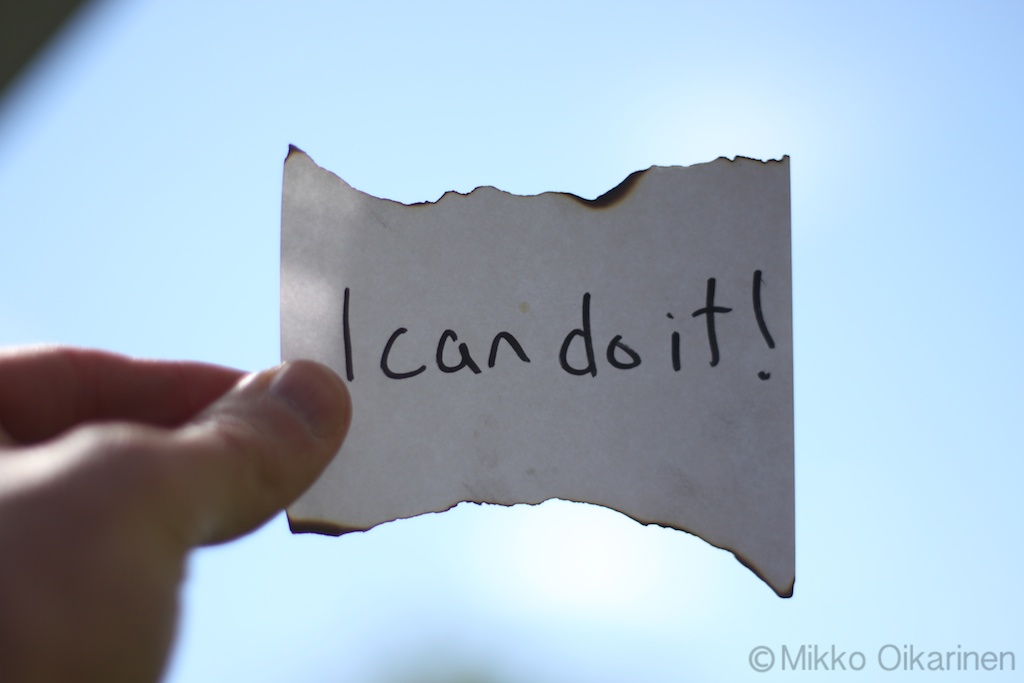
    –Remove the word can’t: Stop saying “I can’t do that” before you even try. Fear of failure is common and sadly it prevents most of us from doing things we’ve always wanted to do. To overcome this, think positively – don’t think of the worst possible scenario. Picture yourself succeeding. Some of the greatest experiences you will have in this life will come from overcoming things you thought you couldn’t do.

    –Treat others the way you want to be treated: It’s karma, baby; the idea you get back what you send out into the world. So send out the good, and always remember to treat others fairly and kindly.

    –Be prepared: One of the best ways to improve your self-confidence is by being prepared. Whether it’s a test you need to study for, a university application you need to complete or a big basketball game coming up, make sure you are ready. Stop putting stuff off and get to it already. You will feel more confident if you are ready to face what’s ahead.

    –Be grateful: Don’t dwell on what you don’t have. Be thankful for all you do have.

    –Exercise: It’s a great way to immediately boost your mood. It also helps in the long term to boost self-confidence. You will be healthier, happier and more sure of yourself.

    –Listen to your favorite song: Nothing gives me an instant boost of confidence and energy, especially in the morning, as my favorite song. It really helps me have the right attitude to face the day with.

    The most important thing to remember is to think positively. If you believe you are good enough, the world will see you that way.