Author: Gale Blaylock

  • Working As A Vet Tech

    Working As A Vet Tech

    Nature of the Work
    Pet owners, zoos and aquariums expect excellent care from their veterinarians and thus to provide the optimal services, veterinarians use veterinary technicians and technologists to assist them, much as doctors use nurses in the medical field. Job duties vary depending on the employer, but generally technicians and technologists complete similar tasks for their employers even though there are differences in the formal education and training of the two titles. Most technicians work in private veterinary practices; but because of their additional education and training, technologists can choose to work in jobs that are more advanced research related.

    Job Description of a Veterinary Technician and Technologist
    Veterinary technicians and technologists usually work under the supervision of a licensed veterinarian. They are often required to perform skills such as venipuncture, or skin scrapings to treat and diagnose health concerns of the animals as well as performing various medical tests. Tests they conduct include blood work ups, urinalysis, and taking tissue samples. They may assist in dental care and surgeries and may be required to perform and maintain anesthesia. Other duties might include taking patient histories, expose and develop X-rays and radiographs, dressing wounds, applying splints, and taking vital signs. There are a variety of diagnostic tests which the veterinarian may rely on the technician or technologist to conduct. Experienced veterinary technicians may be expected to train new personnel in the clinic or discuss a health issue with a pet’s owner. In some practices they may be required to assist in administrative tasks such as maintaining treatment records and inventory records of supplies, equipment and pharmaceuticals.

    In most clinical private practices, the technician and technologist will assist in the care of small animals such as cats and dogs, but also may perform duties with animals such as cattle, horses, sheep, birds, mice and lizards. It is rare for a technologist to work in practices that care for both small pets and large wild animals.

    Another area of work for technologists and technicians is research facilities. In these facilities veterinary technicians and technologists work under the supervision of veterinarians as well, but they may also be supervised by a physician. The job duties in this area of the field may include administering medications, and recording information about the animals such as diet, genealogy, food intake, and weight. They may be required to monitor and record signs of pain and distress in animals, sterilize surgical equipment and provide postoperative care. Veterinary technologists may be required to give an animal a vaccination or euthanize an animal.

    In some instances, veterinary technologists assist in research projects that involve other scientists in medical-related fields. They can work in biomedical research, livestock management, pharmaceutical sales or wildlife medicine. There are increasing opportunities for technologists in the biosecurity and disaster preparedness jobs.

    Job Outlook
    The job outlook for veterinary technicians and technologists is excellent as there is a need to replace those leaving the field and there are limited numbers of qualified technicians graduating The demand for the positions is not expected to be met in the period of 2008-2018 as the field is expected to grow at a much faster rate than the average.

    The biggest factor in the expected growth rate of 36 percent is the attitude of pet owners. Pets are often considered part of the family and pet owners are becoming more affluent, knowledgeable and more willing to pay for advanced veterinary services for their pets. This is expected to continue to increase the demand for veterinary services and thus the increase in veterinary clinical practices that will need assistants.

    It is expected for the number of pet owners utilizing veterinary services to grow and increase job opportunities. Advanced services such as surgical procedures or preventive dental care will provide more opportunities for those technicians and technologists who specialize in those areas. Demands for feline services and medicine are expected to rise as the number of cats as companions is steadily growing. It is expected animal shelters, humane societies, animal control facilities, boarding kennels, animal hospitals and clinics will want to replace veterinary assistants with highly skilled technicians which will further the demand for workers who are specialized in specific areas.


  • It’s Only Hard Until It’s Not

    It’s Only Hard Until It’s Not

    Walking, tying your shoes, reading, riding a bike, solving equations…they all seem hard to do at first. But suddenly, one day – it’s not.

    We generally enjoy doing things we are good at because they are easiest. But when it comes to post-secondary education, this would be the wrong mentality to have. College is not easy and requires a lot of dedication. Be sure to pick a course you’re passionate about, but don’t be discouraged if it gets hard. You’re definitely not the only one feeling that way! There IS help. Find out what services your school offers and use them. Most schools have tutors, counselors and other friendly staff who are there to help you succeed.

    Do not let the difficulty of a particular course effect you personally. Accept that it will be hard and devote yourself to getting through it. Remember – no program is made to be impossible. The best part of learning is surprising yourself about how much you can do. The more you do it, the easier it will become. Giving up is easy, but generally the easy choice is never the right one.

    Never say you can’t do anything. The ones who quit so easily without giving it their all are the ones who never really intended to stay. If you are someone with low self-confidence, try saying or writing down some daily affirmations. It may seem silly, but there’s magic in it. Say, “I am strong enough, I am smart enough, I can do it,” over and over again. Looking into the mirror is the best way to do your affirmations because you are confronting yourself. Motivational speaker Tony Robbins said, “People who fail focus on what they will have to go through; people who succeed focus on what it will feel like at the end.” This is what you should focus on, not the obstacles. Think back at other goals you have never accomplished; goals you had set for yourself a year of more ago but gave up on. Now think about what you could have accomplished had you not given up on that goal. Before you submit your application to the program of your choice, go see a counselor and talk to them about it. They know what the courses consist of and can help you make the right decision for you.

    It’s your life, it’s your time, it’s your future!

  • Projects Abroad: Offering Students Short-Term Volunteer Opportunities

    Projects Abroad: Offering Students Short-Term Volunteer Opportunities

    Projects Abroad is a youth-oriented volunteer trip association that can help you plan a volunteer trip to help shape you career, your education and your life.

    The company offers the opportunity to do two weeks to several months of volunteer trips in many of the destinations where they operate. For volunteers who don’t have the time to commit to a month or more of volunteering abroad, but would still like to contribute to the community or their project of choice, then short-term two-week volunteer placements are a great option. These trips are not available in all situations; they have hand-picked only the countries and projects where it is suitable for both the host community and the volunteer to be there for such a short time. To see where these trips are available, check out their prices page – if there is a price listed, then it is possible to go for two weeks.

    Although you will not be able to make quite the impact that our longer-term volunteers make, in your two weeks you will be working intensely within the local community and building relationships. This will impart a level of cultural insight that is not possible for tourists to achieve.

    These trips operate in the same way that normal four-week or longer projects do, with some small adjustments to help you make the most of your two weeks abroad. For instance, they ask that you arrive on the weekend so that they can give you a formal induction to the area and culture before your first day of work on Monday.

    International Volunteer Work: What you get on 2 Week Trips

    Volunteers on 2 Week Trips are given the same benefits as those who join for longer periods of time. Start dates are flexible – just pick any weekend to arrive – and you’ll begin your project quickly after your arrival to maximize the amount of work you can do in country.

    In-country staff will be available to assist you throughout your two-weeks. You will be a part of an extensive volunteer network and meet people from all around the world. In some circumstances, you may be living with a local host family, which will provide you with the opportunity to get completely immersed in the local culture during your stay. On other projects, you may live with volunteers in a community-housing situation.

    Meaningful Volunteer Work in Two Weeks: 2 Week Trips and 2 Week High School Specials

    Short Term Volunteer Opportunities with Children: whether you’re taking time off from school, work, or just need a small career-break, there is always a way for you to squeeze a two week adventure into your schedule.

    For high school students (ages 16-19), we recommend the “2 Week Specials” program. These are group projects that have a high level of structure and central planning by local staff. You will be in a group of students your own age for the entire project. Local staff are always close at-hand. It’s a great way to travel and volunteer abroad for younger people who have never done this before. Staff members are with these groups.

    For ages 20+, we recommend joining projects for a month or longer. Most volunteers go for about two months. But if you can only squeeze in two weeks,  a “2 Week Trip” is worthwhile and productive as well.

    For more information about studying abroad, contact www.projects-abroad.ca

  • Professional Associations: Editors and More

    Professional Associations: Editors and More

    What kind of job do you want after you finish your education? Do you want to work in a profession like teaching, law or editing? If so, you can already start to find out more about how you can prepare for your future job. One way of doing that is by joining a professional association. Through the association you might be able to find good contacts, learn what you need to know to work in your field, and gain many good insights into your chosen profession.

    Most jobs have some kind of group that helps to connect people with each other and to give them the information on improving their work. In some professions, membership in these associations is required before people can begin their careers. These associations help to make sure their members work at a high standard and often offer training courses to help keep each member’s knowledge is as up-to-date as possible. Doctors’ and nurses’ associations are some examples. In other professions, membership is voluntary.

    Whether membership in a professional association is voluntary or required, it can be worth the time and effort to join as soon as possible. Meeting with others and having the chance to discuss professional questions can be a very valuable experience. Editors, for example, frequently work alone and often need people in a professional association for support and information.

    Many professional associations provide courses and short workshops on topics related to the work for people to maintain their skills and to learn new techniques. The Editors’ Association of Canada and the Manitoba Editors’ Association, for example, offer a variety of seminars and workshops on writing, editing, and computer skills. Many associations also give members a chance to discuss specific questions they have regarding their work.
    Through a professional association, you can learn a lot about what it takes to work in that field. Do you think you might want to be a lawyer or an engineer someday? Before you commit to a long and expensive university program, it might be a good idea to learn as much as you can about the work. A professional association is also a good place to start to make contacts with people who might be able to help you find work in the future. In some cases, what you learn about the advantages and disadvantages of the profession might even help you decide between two different careers.

    How soon can you join a professional association? It depends on the group, but you’ll probably need to finish high school and maybe even a few years of university before you can become a member. However, you can probably still attend some of the association’s events, such as the annual general meeting, before becoming a member. Another thing to consider is the association’s membership fees. Most associations require payment for membership, but these are usually lower for students than for other members.

    Being part of a professional association might seem expensive, but the experience can be very rewarding!

  • Cash Advance Loans and Students – A Dangerous Mix

    Cash Advance Loans and Students – A Dangerous Mix

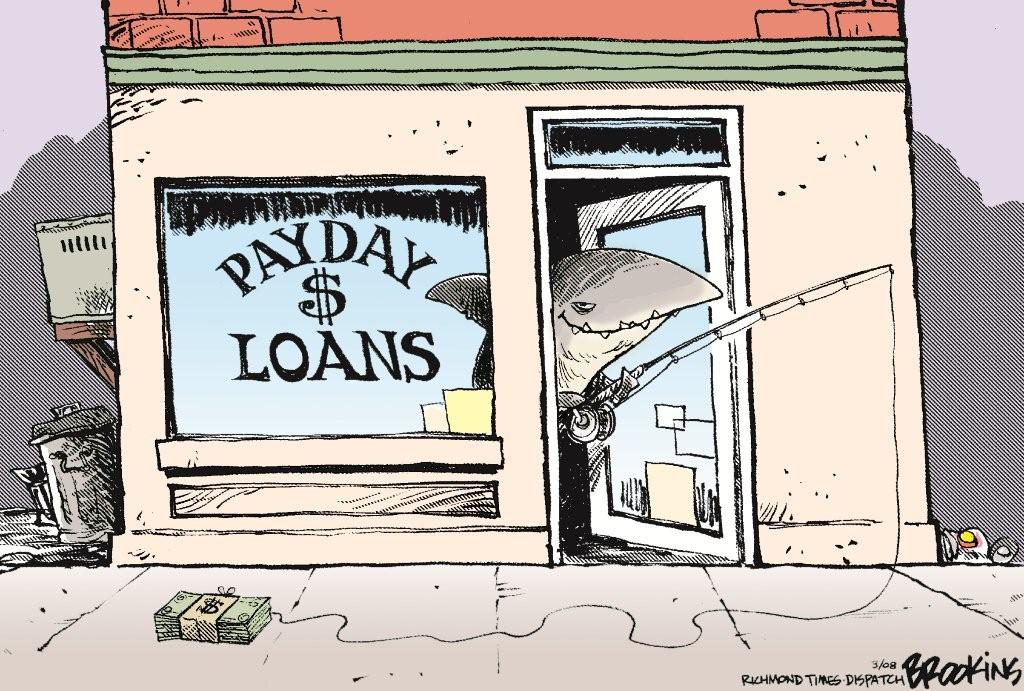
    Are you a college student wondering how online cash advance/payday loans fit into your finances? If you are a smart college student, then you will know online payday loans are only for emergencies. The payoff comes in just a few short weeks, so steady income is a must in order to pay it off without putting more damage into your finances.

    Here are five tips for college students who are looking to get their finances off on the right foot.

    1. Take your time getting new credit. For every creditor you apply with, there will be a mark left on your credit score. Hard inquiries to your credit done by potential creditors looking up your history will take a few points off your score for a year or two at a time. When your finances are just starting, this could bring you low really fast. Low credit scores will be denied. Too many creditors applying at once is also a warning sign for potential creditors that the applicant is desperate for cash. New creditors may take a different approach and offer incentives for the new debtor to spend more. A college student is an easy target for many marketing campaigns. Newcomers to finances are often attractive to reward programs which can trap the debtor into spending more than intended.

    2. Don’t spend your credit on frivolous things then leave yourself no room for emergency costs. Emergency costs do not need to be funded by online cash advance loans when you have room on your credit card to lighten the load. When you use and manage your credit account wisely, they are a great source of third party money to help you get by and build your credit at the same time. Make your payments on time and keep the balance below 30% whenever possible.

    3. If you are having trouble finding a creditor to approve you, you can fall back on being an authorized user on one of their accounts or have them be a co-signer to start you out on your own. The issue here is that your parents, or whomever you choose as your co-signer, will be responsible for any debt you accrue. They will also be privy to what you charge, when you charge it and where. This may not matter to some people but if you are one who may not be the best manager of money, it could be a sticky point in the relationship. If you are going to take this route, make it work for you so your credit will build into something helpful when you graduate.

    4. Are you coming out of college and are finding your student loan debt to be financially draining? Don’t default on these loans. The federal government is not a creditor you want to have after your money. Before you miss a payment, look into finding a way to defer the starting date if you still have not gotten full-time work. Ask about reduced payments or changing your payment dates to better fit your pay cycle. If you have multiple loans, try to consolidate them for a lower monthly payment. Managing your money by making on time payments may best be done with automatic payments. Some people are not organized enough to make on time payments even when they have the cash in the bank.

    5. Look into your options, which include deferring payments for a short amount of time, making reduced payments, or re-configuring your current payment schedule. Also consider consolidating multiple loans into one new loan. This often results in a lower monthly payment. Have the loan amount directly withdrawn from your bank account so you never pay late.

    Cash advance loan lenders offer emergency cash for those times when there is no other place to turn. College students often do not have the income needed to support an approval. A responsible lender will not want loan to someone without a certain income. College students have it tough in the beginning but will have great financial success when managed correctly.

  • Earning An Academic Scholarship

    Earning An Academic Scholarship

    With rising costs of education, the competition for academic scholarships is increasing, too. Paying for your education through a scholarship you earn is an impressive way to study. You don’t need to be a “genius” in order to secure a scholarship for your education. All you need to do is search for sources and apply at the right times to the right places. There are numerous organizations that work to ensure that the people who actually deserve a chance, get it. However, if you’ve never applied for a scholarship before there’s a chance that you do not know where to begin. This article is meant to give you some tips that should make your basics clearer.

    •There are college scholarships and grants that could be anywhere between a few hundred dollars per semester to those that cover all your education expenses. If you manage to get a complete scholarship it would cover your boarding and tuition fees and even cover the costs of your books.

    •There are a few scholarships that are only available to selected schools. Before you take up admission in an educational institution, make sure that you check out the various kinds of scholarships as well as the different kinds of expenses they cover.

    •So as to increase the probability of being selected for a scholarship in the educational institution of your choice, and in the course you prefer, apply at all the places possible.

    •Use all sources of information. It is really important to find the right information at the right time. Use all search engines available to you!

    •Make sure you read the fine print before you sign up for anything. There are various kinds of assistance, including loans:
    1.Some student scholarships are merit based and may be totally free.
    2.Some scholarships need to be repaid without any interest accumulating on the principle amount.
    3.Some companies dole out merit based scholarships which are actually contractual in nature – these imply that you will work for these companies once you have finished your education. There may be a bond period specified, after which you are free to join other companies.

    College scholarships, grants, and fellowships are available from federal, provincial and private organizations for students in undergraduate and graduate degree programs and vocational and technical schools. There are also scholarships for high school seniors available for those just entering post-secondary education. There are even scholarships and grants available to students for primary and secondary education.

    Whatever reasons you may have to apply for a scholarship, whether it is to re-enter educational studies, to advance your career, to change careers, or to re-enter the work force, you have the right to apply for a scholarship. Some funding organizations may require you or your family to have moderate to low income or for you to have achieved a certain GPA. However, not all agencies require these standards to be met. Look into all of your options and find the perfect scholarship for you!

  • Following (and Loving!) Your Path

    Following (and Loving!) Your Path

    Education, much like a career, means different things to different people. In school we each have unique study habits, subject preferences and academic goals while maintaining different ideals regarding our own career paths.

    Some prefer the humanities while others lean toward the sciences. Some are interested in the computer sciences while others advocate the visual arts. Everyone has his or her own interests and that is important. As a student, it is your responsibility to pursue and practice something that you are passionate about or follow an academic path that will allow you to best achieve the career objectives you have set out for yourself.

    This can, however, be difficult. Many of us do not have a clear idea of what we want to pursue or do with our lives, let alone what classes we want to take. As such, our education becomes something of a trial and error until we manage to find a particular subject, skill or topic that we can be confident in pursuing.

    Joining clubs, choosing classes or attending lectures based on what you are passionate about or feel naturally drawn to will prove to be your means to this end. You can’t go wrong by pursuing your interests! University and college is a place for self-discovery, personal development and academic growth. It helps you to figure out who you want to be and what you want to study.

    Try not to stress too much. The decisions you make are important, but if you follow your passions and try to keep your options open you won’t stray too far. Over the course of your degree you’ll be spending countless hours in the library, lab and lectures so you might as well enjoy what you study.
    Always choose your classes carefully, but if you navigate your options successfully you will end up do what you love. Keep your options open, listen to your heart and you will soon be on YOUR path to the perfect career for you!

  • Volunteering for Work Experience

    Volunteering for Work Experience

    Maybe you are new to the job scene, or maybe you have a very particular history of employment. Whatever your reason is for feeling that you don’t have enough experience to land you the job that you want – never fear! Employers respond positively to unpaid experiences as well. Perhaps you are looking to be a server in a bar or restaurant and your resume shows all you have is experience that relates to child care. Try searching an online job board for anything that relates to serving that is unpaid. Festivals are a great opportunity to practice serving, for example. Additionally, if you want to be a nanny but have no child care experience why not try looking around to see where you could volunteer your time to gain this experience? Often day cares will accept volunteers or perhaps your neighbour requires someone to watch their children for an hour or two each day.

    Volunteering may not immediately cover the exact work that you would like to do. You might have to do other smaller tasks like cleaning the studio or conducting phone calls at the beginning, but do not get discouraged! The more time you put in, the more responsibility you will be given. Each volunteer hour you put in provides you with more invaluable skills that can be put onto your resume.

    Become informed about what skills and certifications are required for your job of choice and go about getting those. Whether it is CPR or First Aid, a Red Cross babysitting course, a Smart Serve certification, a personal training certificate or even an NLS lifeguarding certification, it is vital to work on obtaining them. Sometimes a police record check is also required by potential employers. If you can get started volunteering in something of your choice, usually there is an option to get a police record check before you even start. Thankfully, the cost is generally covered by whatever agency you are looking to work for.

    Another possibility is to try job shadowing for an excellent opportunity to get to know the job that you would ultimately like to do. Job shadowing can be used in a subsection on your resume as well, an indication of your interest and/or passion for the job. Job shadowing could involve finding someone who is an expert in the field or simply finding someone who is knowledgeable enough to be a good leader. Whatever it is that you want to do, make sure that you start asking questions NOW. There is no better way to learn about something of interest than to get started. Even if it is not what you want to do, at least you will have some new experiences that will help to orient you to the RIGHT path for you.

  • Let’s Resolve To Make It A Real Happy New Year

    Let’s Resolve To Make It A Real Happy New Year

    Wouldn’t it be wonderful if world leaders resolved to look at life in a different light this New Year? They could follow the example of Bhutan. In 1971, the small country, nestled in the Himalayas between China and India, rejected the idea of gross domestic product as the measure of progress. Instead, leaders focused on gross national happiness.

    The idea is finally gaining traction around the world, and I’m humbled and pleased to be involved with a global initiative to promote it. World leaders took the concept seriously enough to hold a United Nations Conference on Happiness in April 2012, and Bhutan was recognized for its environmental leadership at the recent UN climate summit in Doha, Qatar.

    Life isn’t perfect in Bhutan. It’s a poor country where most homes don’t have electricity. Crime is increasing and climate change is making life difficult for the farmers who provide much of the landlocked country’s food. Still, according to the Guardian, life expectancy in Bhutan has doubled over the past 20 years, almost all children now go to primary school and the country has been improving its infrastructure.

    Bhutan has also enshrined environmental protection and intergenerational equity in its constitution. The Right to a Healthy Environment is another initiative I’m excited about. The David Suzuki Foundation and I have been working with environmental lawyer and professor David R. Boyd and Ecojustice to promote the idea in Canada. Boyd’s book, The Right to a Healthy Environment: Revitalizing Canada’s Constitution, offers a wonderful analysis of where the world’s nations now stand on the concept, as well as strong arguments for why Canada should join the more than 140 nations that have put environmental protection in their constitutions.

    Caring for the environment can help achieve gross national happiness in many ways — by giving our children a more secure future, improving human health, ensuring resources are available to meet the needs of citizens, offering recreational and spiritual connections with nature and giving people a sense of pride and respect for the natural systems that keep us alive and healthy.

    There’s more to happiness than just having a clean environment — and Bhutan has yet to get there. According to research for the UN Conference on Happiness, “The happiest countries in the world are all in Northern Europe (Denmark, Norway, Finland, Netherlands).” Although these countries are wealthy, the study points out that money isn’t the only factor, as happiness is decreasing in countries like the U.S. “Political freedom, strong social networks and an absence of corruption are together more important than income in explaining well-being differences between the top and bottom countries,” the researchers write. “At the individual level, good mental and physical health, someone to count on, job security and stable families are crucial.” Note that the happiest countries all have healthy economies and robust social programs.

    We can also look at how various countries responded to the recent economic crisis. Those that bailed out banks and reduced social spending are facing the same kinds of problems as before. Iceland approached its massive financial meltdown in a way that was pretty much the opposite of that taken by the U.S. and Europe, refusing to rescue its banks and increasing social spending, among other measures.

    Iceland still has problems, but it has recovered faster than other nations, and its social safety net remains strong. Inequality has been reduced, and the crisis spurred citizens to propose and develop a new constitution, which is being considered by parliament.

    There’s an old saw that says the definition of insanity is to keep doing the same thing over and over expecting different results. In the case of leaders who focus almost entirely on economic growth and corporate interests, it’s a recipe for disaster. As George Monbiot recently wrote in the U.K.’s Guardian, “In return for 150 years of explosive consumption, much of which does nothing to advance human welfare, we are atomising the natural world and the human systems that depend on it.”

    As light gradually returns to the north and we celebrate a season of sharing, our leaders could brighten all our lives by considering what really makes our societies strong, healthy and happy.

  • Gossip Is Bad For You

    Gossip Is Bad For You

    Gossip is something that is very prevalent in high school, generally due to all of the changes that people are going through. With any luck, gossiping will diminish as you grow up and move on with your life. It is a type of conversation that is not very productive in terms of creating positive change in communities, and in fact is often the source of a lot of unnecessary harm and pain.

    An interesting quote I read recently said: “Great minds discuss ideas, average minds discuss events, and small minds gossip about people. Life is much too short to be lived talking about people, gossiping, and stirring up trouble that has no substance. If you don’t understand someone, ask questions. If you don’t agree with them, tell them. But don’t judge them behind their back to everyone else” –Entrepreneur Secrets 2012.

    This quote draws attention to the fact that there are often conversations that you would rather avoid, because they are nothing but mean-spirited and a waste of time. I disagree with the quote because I think that there is a time and a place for gossip. Often talking about other people is a way of understanding the social world that we live in, which is just as important as understanding anything else. Sometimes not talking about other people is a mistake because you don’t have an opportunity to digest what another person is about. People are interesting, and talking about them is not always a waste of time. The linchpin is the intention that you have when talking about other people. If you are attacking someone out of mean-spiritedness and to gain power over that individual, you must be bored or looking to “stir trouble” like the quote above says.

    I agree with the above mentioned quote in how they draw attention to the fact that not understanding someone should bring you to asking more questions. This is really true, because most of the time other people are misunderstood simply for lack of information. This is not something to capitalize on with gossip, but rather an opportunity to learn more about something that you don’t understand. A popular old adage states “don’t hate what you don’t understand”.

    In school and work situations, there will always be times when people will say or do things that you don’t agree with. It is during these situations that it is healthy to vent about the outcome of a certain conversation or event. The distinction to be made, however, is between attacking someone’s character and attacking their words or behaviours. There are relevant points and there are irrelevant points when talking about other people. If you are trying to capture them as an individual with pros and cons, this is usually a better approach than trying to twist them into a character with only cons. Most people are not evil, so spreading rumors and creating a monster out of someone else is simply mean and counter-productive.

    So resolve to stop the bad gossip in 2013!