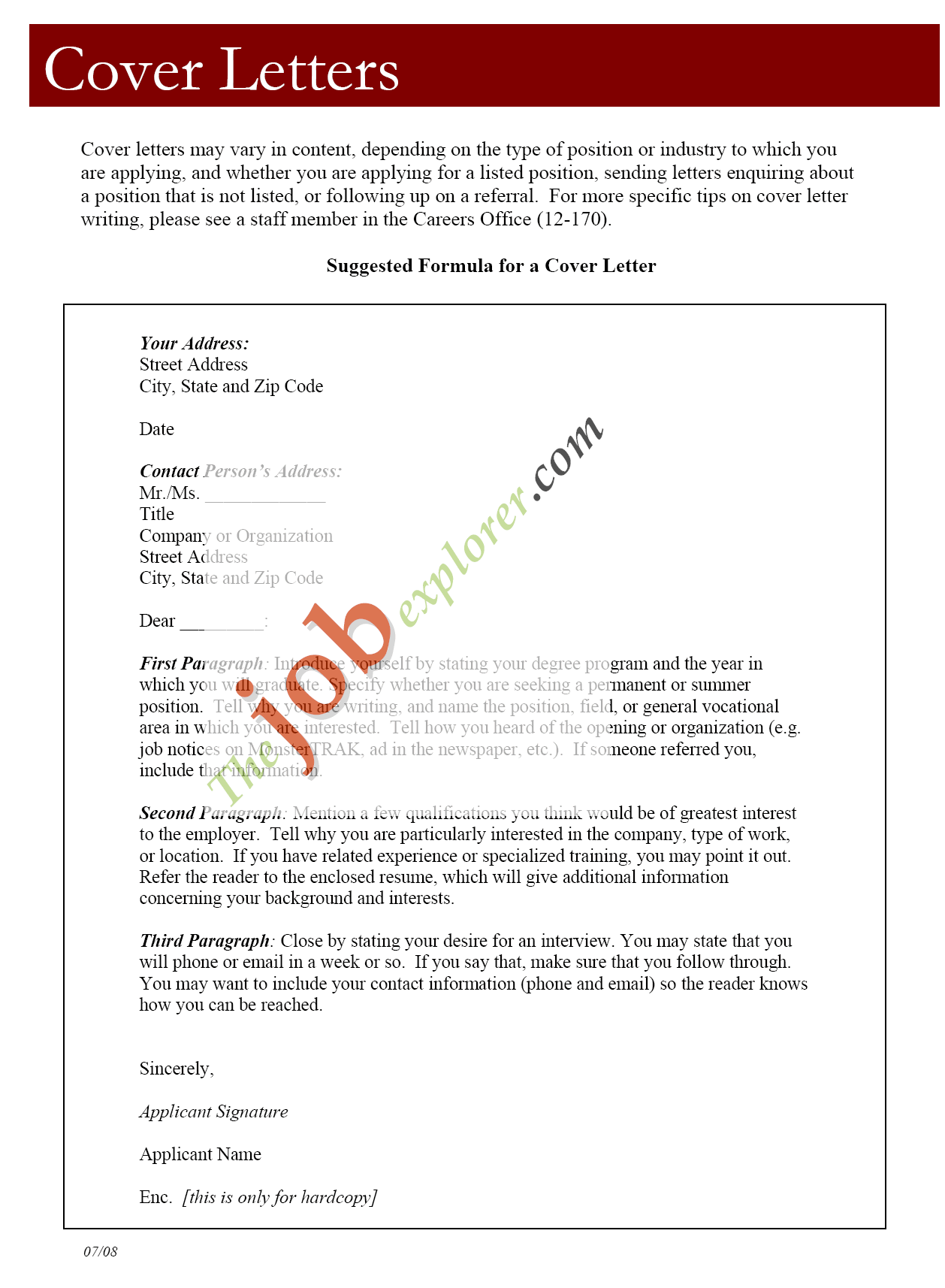
Recently I’ve been reading through dozens of letters from people who are interested in working together, and I want to share some insights regarding what makes for an effective cover letter and what doesn’t.
If you consider these tips from the employer’s perspective, I think you’ll agree that most of them can be considered common sense. However, my experience thus far suggests they aren’t commonly applied. Because most people make these avoidable mistakes, I’ve been rejecting about 80% of applicants based on their cover letters alone.
Most of the time, the mistakes people make in their cover letters are actively disqualifying them. So I don’t even need to look at their resume or CV.
While these tips are based on my recent personal experiences, I believe they’re general enough to be of value to others.
1. Avoid spelling and grammar mistakes.
Nothing says loser like a cover letter filled with spelling and/or grammatical errors.
What do such mistakes convey to a potential employer? They suggest that you do sloppy work, that you don’t pay much attention to detail, that you don’t care enough to do a good job, that you’re uneducated, or that you’re not very bright.
That one minor typo that sneaks through even after proofreading probably isn’t a big deal. Some may see it as a negative strike, but employers understand that mistakes happen and that perfection isn’t a realistic standard. However, if you have several spelling mistakes in your letter, or if your grammar sounds like you haven’t passed the 3rd grade, that’s likely to hurt your chances.
What if you’re applying for a job that isn’t in your native language? I still think you should make the effort to provide a quality cover letter and resume without spelling or grammar mistakes.
I’m used to communicating with non-native English speakers because 50% of my readers live outside the USA, and I’ve been doing business internationally since the mid-1990s. On a personal level, I’m impressed with people who can communicate in multiple languages. That said, it still makes a poor impression when you send a cover letter and resume with more grammar and spelling mistakes than most native speakers. This suggests that you may have difficulty communicating with other team members.
I’m not saying that you need perfect English skills. I’m simply saying that you shouldn’t let yourself be disqualified so easily by sending a poorly written cover letter. Don’t let your use of language betray you.
Take the time to have a native speaker proofread your cover letter and resume and correct any mistakes. This doesn’t take much extra time, but it could mean the difference between getting a follow up call vs. being disqualified as a poor communicator.
Think of it this way: If an employer has to decide between you and another equally qualified applicant, and the other person has an error-free letter while yours contains many mistakes, who has the advantage?
Speaking personally, I’d be very unlikely to follow up with someone who sent me a cover letter that showed poor English skills, even if it was obviously sent by a non-native speaker. I’m going to favor people who show can communicate well in the primary language of my company.
This is an easy mistake to avoid, so don’t be foolish or lazy here. If you simply provide an error-free cover letter and resume, that alone is probably enough to place you in the top 50% of applicants. Not doing so puts you in the bottom 50%; that’s the half that won’t get a callback.
Someone may think it’s ironic that I give such advice when my articles often contain typos. I do fix typos when people report them, but the nature of my work makes typos a lesser concern; I don’t compete with other bloggers to minimize typos. But perhaps I’d be interested in hiring people with a better eye for catching mistakes than I have. 
2. Express long-term interest.
Businesses are built by people who stick around. From an employer’s perspective, there isn’t much value in working with someone who only wants to work for a few weeks or even a few months.
Hiring someone new is expensive. It takes time to filter applicants, interview them, and find suitable people. It takes more time to train and mentor them. Initially many employees produce negative value — they drain more value out of the company than they can provide.
High turnover is a problem for many companies. If you have a turnkey business that relies on unskilled workers who get paid minium wage, then high turnover may simply be par for the course. But for many small businesses or for businesses in creative fields, having stable, long-term workers is much better.
Suppose you’re an employer. One applicant says they’re looking for a summer job before they go back to school. Another indicates that they’re looking for long-term employment in your field. Who are you going to favor, all else being equal?
I received one letter from a man who wanted to work together for just 3 weeks, during a specific window of time he’s available. It doesn’t make sense to follow up with someone like that when there are other people looking for serious long-term work.
I’m not suggesting that you lie. If you’re only available for the summer, then be up front about that, and seek out seasonal positions. But if you see some possibilities for working together with an employer long-term, it’s wise to indicate that you may stick around if things work out. If you do the opposite by suggesting you probably won’t be around long, then it’s riskier for an employer to invest much in you.
If you position yourself as a high turnover employee, you’re also likely to depress your income. High turnover jobs tend to be close to minimum wage. If a job pays well, it’s probably not a high turnover job. So if you’d like to earn more money, position yourself as someone who will likely be around for years if you like the work.
No one expects you to commit up front to years of employment with a new company. You’ll have to feel each other out first to see if you’re a good match for each other. But at least suggest the possibility that if things go well, you may stick around. This makes you seem like a better investment. It can’t hurt your chances.
This of course assumes that you truly want to build a serious career, not just find a job. If all you want is a job, then read 10 Reasons You Should Never Get a Job and then see if that’s still what you want.
3. Apply locally.
If you’re applying for work far from where you live, you’d better explain why in your cover letter. And your explanation should sound plausible.
Otherwise the employer may wonder: Why is this person looking for work so far from home? Are they unable to find work locally? They must not be very good.
Wanting to move to a new city to expand your horizons is a good enough reason. Lots of people move to New York City or San Francisco because they want the experience of living in those places. But if you’ve been living in your current city for years, and if there doesn’t seem to be a good reason for a major relocation other than the fact that you need an income, that just makes you look desperate and unworthy.
When I get applications from people in other countries for positions that would require relocation and a special work visa, I cringe a bit. Hiring someone from out of the country is riskier and more complicated than hiring a local. It doesn’t make much sense to look so far away unless I’ve already exhausted local possibilities, first within my own city and then within my own country.
Las Vegas isn’t a city for everyone. I wouldn’t want to be responsible for having people relocate here just to see if we can work well together. Naturally I’m going to start with local applicants for work that would be done locally.
The only reason to go outside my city, state, or country is if I’m looking for people to work virtually (over the Internet), or if I need people with such talents that the local workforce cannot provide. All else being equal, I’ll hire someone local to me before I give serious consideration to working with people in other cities or countries. It doesn’t make sense to go beyond local if I can find good people locally.
4. Paint a clear picture of your intended position.
Some people send me employment-related letters that are so vague I honestly can’t tell what sort of work they’re interested in doing. These letters included phrases like, “I can do pretty much anything you need done.” Their resumes show a work history that has little or nothing to do with my field.
Since these people fail to specify what they want, they put the onus on me to use my imagination.
Unfortunately for them, I simply imagined myself dropping their letters into the recycle bin. That was fairly easy to visualize.
If you don’t know what you want, you should develop a clearer picture of that first before you go around applying for work. Don’t expect potential employers to figure it out for you.
It seems that some people mistakenly assume that raw enthusiasm and a willingness to work is enough to get them in the door. It isn’t.
Even if you’re looking for an internship, specify what type of internship you’re seeking. Are you a marketing student looking for a marketing internship? A programmer seeking a programming internship? Or an unfocused drifter looking for whatever? If you’re not clear, you’re positioning yourself as the latter. There aren’t as many quality internships for unfocused drifters.
If I get a vague letter from a local applicant who seems otherwise intelligent, and it’s easy to meet with them, I may do so if I’m not too busy. Perhaps we can have a nice chat, and maybe we’ll figure something out. But for the most part, I’m just being social when I do this. The person hasn’t given me sufficient cause to seriously consider working with them, at least not yet. If we share common interests, I may meet with them just to see what comes of it and because I have that kind of flexibility. But if I’m busy or if this sort of thing comes from a non-local applicant, there’s no reason to follow up.
Contrast these types of letters with someone who suggests something very specific in terms of working together. I received some great letters from web developers who want to upgrade my website. Their portfolios show a history of making websites for small businesses. It makes sense to follow up with these people. I don’t have to stretch my imagination to figure out how we might work together. They shared something clear and concrete to consider, something I can say yes to.
You might think you’re limiting your chances by being too specific. But look at this from the employer’s perspective. If I get a few letters each week from people who are offering to do “pretty much anything,” they’re all going to blur together. None of them will stand out. This approach is generic and warrants a generic rejection.
Now suppose I get a letter from someone offering to serve as my Logistics Coordinator for live events. They give me a list of things they can do. They build a good case for why they’re qualified to do this. Their resume shows some relevant work history. This makes it easier for me to imagine how I might fit this person into the company as a whole, making it more likely that I’ll follow up. If I don’t need to hire such a person just yet, then obviously I won’t hire them. But even in that situation, I’m likely to file their letter in case I need such a person down the road or if I decide to expand capacity in this area by bringing on a new person. And I may also follow up with something like, “Check back with me in 6 months. I may have something for you then.” At the very least, I’d be more likely to follow up with this person in some fashion.
If you’re too vague in specifying what you want to do, you’ll be passed over. Employers are too busy figuring out how to hire, train, and integrate people who actually do know what they want. They don’t have as much time to help you figure out what you want. Figuring it out is your job, not theirs.
Remember that most jobs are never advertised anywhere. You have the power to design and create your own position instead of merely responding to what’s being advertised. The advertised positions are generally much more rigid than what you can design for yourself, and they’ll also attract a lot more competition. When I ran my games business, I was able to find and hire everyone I needed without advertising any of the positions. I filled every position through my network of contacts.
If you have any difficulty grasping the importance of defining your own work position, and especially if you disagree with it, read How to Order.
5. Build your case to win.
Think like an attorney building a case as to why you should be hired. Make sure your case is a strong one.
When you’re seeking a rewarding long-term career, understand and accept that lots of other people are looking for the same thing. It’s a competitive situation, so you need to play to win. Being good isn’t enough. You need to be the best among the other applicants for your position.
In a criminal trial in the USA, the mantra is “innocent until proven guilty.” This means that you’re assumed to be innocent unless the prosecutor can prove your guilt beyond a reasonable doubt.
Some people apply for work as if “employable until proven incompetent” is the mantra that applies. They provide pretty good cover letters and resumes, figuring that as long as they satisfy expectations and don’t screw something up, they have a reasonable chance of getting hired. They’re careful to avoid the obvious mistakes, and yet quite often they still lose. They lose to people who are willing to be unreasonable — unreasonably good, that is.
That’s because the mantra that applies in the world of work is closer to the standard in civil cases as opposed to criminal cases. In a civil case, the standard is “the preponderance of evidence.” This means that whichever side builds the best case wins, and the other side loses. One side may build a great case and still lose if the other side builds a slightly better case. This may not sound fair, but such are the vicissitudes of life.
Some people send me very good applications. However, a few surpassed the standard of very good. They provided something excellent — like a significantly longer letter explaining in detail how we might specifically work together. They didn’t merely offer up enthusiastic ramblings; they built a strong case for what we could accomplish together.
If you hold yourself to an unreasonable standard of going well beyond what most people do, then even if you don’t come out on top, you’re more likely to get a follow up. The employer might even add an extra position to accommodate you.
People with higher than normal standards are very valuable in the world of work. What employer would want to hire someone very good if they could hire someone outstanding?
Being too close to the average (even the good side of average) isn’t such a great idea if you want to be hired for a competitive position. You want to be at least one standard deviation beyond that. If you’re good-average, you’re still in the slush pile. It’s too easy for a more competitive candidate to knock you out of the running simply by trying harder.
If someone else could easily beat you by spending an extra half-hour on their cover letter, you’re probably going to be beaten.
If you claim certain skills, back them up with solid evidence. Explain how you developed skills that aren’t conveyed by your education and work history. Don’t claim general skills like being a hard worker or being well-organized unless you can back them up. Share a quick story to explain how you’ve applied these skills. Otherwise you’re doing what so many other people do, and someone else that includes such evidence will make you look like a second-rate applicant.
You don’t have to like the competitive aspect, but don’t ignore it either. If you’re going to compete, then compete to win; otherwise don’t bother.
6. Be professional.
Present yourself as a competent pro — or at least an amateur on the rise. Employers want to hire competent professionals with strong skills. It’s too risky to hire people who position themselves as emotionally immature and unprofessional.
I received several letters from people who:
- complained about their previous employers
- complained about their history, upbringing, current life situation, etc.
- shared what types of work they’re sick and tired of doing
- explained how under-appreciated and misunderstood they felt
- told me how fed up they are with their unfulfilling lives
This sort of thing may seem honest and open, but it’s really unprofessional. If you do anything like the above, you’re positioning yourself as an emotionally immature man-child or woman-child, not a serious professional. In my view any such applicant is an easy no, instantly disqualified.
I sympathize that you may be looking to improve your life situation, and you may have had real problems with previous employers. Let’s give you the benefit of the doubt and say those problems were beyond your control. Even so, it’s unwise to position yourself as someone who needs rescuing. This doesn’t make you look like a quality hire. It makes you look irresponsible. A new employer can’t verify that your ex-boss was an idiot.
When an employer sees the above, they’re likely to assume:
- If this person had conflicts with previous employers, they’ll probably have similar conflicts here.
- If this person is willing to complain about their previous employers, they’ll eventually complain about me.
- This person is unappreciative, ungrateful, and disloyal.
- This person has an unreasonable sense of entitlement.
- This person has a negative attitude.
- This isn’t someone I’d want on my team.
Again, I sympathize if you really are in a rough spot, but it isn’t appropriate to vent your past resentments in a professional cover letter if you’re looking for serious work.
Put yourself in the employer’s shoes. When one applicant sends a letter complaining about their “poor me” situation, while another equally qualified applicant writes positively of how much they learned from previous employers and why they moved on without burning bridges, which person would you invite to join your team?
A potential employer isn’t your therapist. Put your best foot forward if you want to be hired. Do you want sympathy, or do you want to work?
7. Inject your personality.
Cover letters and resumes are typically very bland. It’s likely that your potential employer will be looking at several other applications at the same time. I’ve be going through them in stacks of 10-15 at a time.
If your communication style is just as bland as everyone else’s, it won’t help you stand out. But if you inject some originality and personality in your cover letter and resume, this can help you.
For one, it makes you more memorable. If your letter is more memorable, you have a better shot of getting a follow up.
Some of the letters I received expressed a lot of personality, such as a quirky sense of humor. I can’t speak for all employers, but I appreciate it when people do this, as long as they’re expressing positive aspects of their personality.
You take a bit more risk when you do this, but I think it’s a reasonable risk. I respect people who do this. It gives me a more realistic sense of what it would be like to work with you. If you express your geeky side, your humorous side, or your creative side, then I can more easily visualize you as a real member of the team as opposed to a faceless applicant.
A friendly tone is generally good, but don’t be so casual that you seem unprofessionally goofy. Make sure that each paragraph of your letter contains substance and value; cut the fluff.
Another thing you can do to personalize your cover letter or resume is to include a photo. Since most people don’t do it, it’s one more easy thing you can do to make yourself stand out from the crowd. Even a grayscale photo is nice. If you’re worried about discrimination based on how you look, then feel free to decline this suggestion, but keep in mind that if you do an in-person interview, your employer will eventually see what you look like anyway. If you show an employer what you look like, it’s easier for them to visualize working with you. I think this is a risk that should generally work in your favor.
If you can express some of your skills through your cover letter and resume, do that too. Follow the mantra “Show me; don’t tell me” when possible. If you claim to have strong design skills, make sure your resume reflects it. If you claim to be highly creative, but your cover letter and resume look very bland and typical, that’s a mismatch that can work against you.
On the other hand, I don’t recommend expressing aspects of your personality that could work against you. Try not to position yourself as someone dark and creepy who’d be difficult to work with in a team environment. For instance, don’t share your interest in collecting firearms unless it’s relevant to your work.
8. Don’t play the destiny card.
If an angel came to you in a dream and said you’re going to work for this company, or if you receive several synchronicities about applying for a certain position, please don’t put that in your cover letter. It may be exciting for you, but it can come off as immature and manipulative if you convey this to a potential employer.
One problem is that when you do this, it’s not unique. It won’t impress any but the most gullible employers. Most of the people who play the destiny card aren’t going to get hired. So when you claim that your application was divinely mandated, you’re actually triggering a “don’t hire me” pattern by grouping yourself with others who weren’t hired. This is more likely to hurt you than help you.
Another problem is that from an employer’s perspective, this sort of thing can come across as manipulative and border-line desperate. I’d like to believe that I have the free will to hire or not hire you according to your skills and qualifications. If you suggest that I’m supposed to hire you or that I’d be wrong, foolish, or mistaken to do otherwise, you’re going to trigger my B.S. detector. And I’ll drop your application into the recycle bin right along with the other divinely inspired ones.
If I happen to experience a major synchronicity with respect to hiring you, then great; by itself that wouldn’t be enough for me to say yes, but it might nudge me to take a second look. But your synchronicities are yours; they mean nothing to me. If you frame our potential working relationship as something that’s fated to happen, then I’ll provide you with a lesson in free will. Perhaps you were fated to apply and get rejected, so you can learn how to avoid this mistake in the future.
We may choose to work together, but we aren’t fated to do so. Don’t try to subvert a potential employer’s ability to decide. If you seek to be the best choice, then earn it without playing the destiny card.
9. Express your greatness.
Don’t position yourself as weak, timid, desperate, or needy. Do position yourself as an excellent choice in a competitive field.
What do you excel at? Why should an employer hire you instead of someone else?
Identify one or two qualities you possess that you’ve developed to a much greater degree than most people. Emphasize those qualities. Present them as strengths, and center your application around these strengths.
For example, if you believe you’re very creative, then send an application that you’d expect to be the most creative one an employer will see this year. Otherwise you’re just blowing smoke; your creativity claim is weak.
If you claim to be an excellent video editor, then why would you send a plain text cover letter? Send a video application, and make it shine. Or at least send a letter with a link to a video.
Share that which makes you stand out from the crowd. If you’ve won some awards, share that. If you’ve published some articles in your field, share that too.
If you can’t share anything that makes you seem different and better, someone else will. They’ll get hired. You’ll get ignored.
10. Apply for work that matches your skills and experience.
Don’t apply for work for which you aren’t qualified with a “what have I got to lose?” attitude. You’re just wasting people’s time.
Apply when there’s a strong match between the position and your skills, experience, and goals. Otherwise don’t apply at all.
One thing that’s actually impressive is when you share where else you’re applying to. If you send an employer a letter that you’re applying to them as well as 5 of their top competitors, they’re more likely to take notice of you. Some employers may want to hire you partly to keep you from joining their competitors, especially if you’re well qualified. This is particularly true in technical fields.
Even if you manage to get a job for which you’re a mismatch, it’s unlikely to work out in the long run. And while you’re stuck in that mismatched job, better opportunities will pass you by because you’ll be too busy to notice them. Meanwhile, you probably won’t be very productive in a job you don’t really want to be doing.
You’re responsible for your own career development. Don’t put the onus on potential employers to figure out who you are. No one else can give you a life purpose; you must figure that out for yourself.
If someone applies to work with me, but their education and work history shows a mismatch with what I can provide, I can’t really take them seriously. I’ll hold out for a more qualified applicant. I’d rather keep a position vacant than fill it with someone who’s a mismatch.
If you know that your resume won’t seem to be a good match for a new position for which you’re applying, you’d better explain that, and your explanation had better make sense. Otherwise it seems like you’re branching out in desperation because you couldn’t find work in your intended field. It also suggests that you don’t really know what you want, and you probably won’t be sticking around for long.
Decide what kind of work you’d like to do. Build your education and skills in that direction, whether through formal university education or self-education (both are equally valid in my view). Then apply for positions that match your current skills and which will help you continue your career development