Author: Priyanka Kumar Chopra

  • Great Changes for the Great Lakes

    Great Changes for the Great Lakes

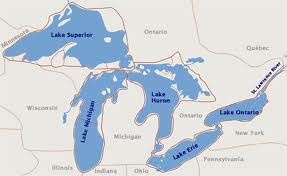
    Across the world North America is known for many things; the culture, the people and the great outdoors. Part of that great outdoors is the Great Lakes. The Great Lakes are an integral part of our North American identity; and to preserve that identity in 2005 the premiers of Ontario and Quebec and the leaders of eight American states that border the lakes came together and signed the Great Lakes Water Pact.

    The Great Lakes Water Pact is a pact that has introduced strict regulations in regards to the usage of the Great Lakes and it has sunk the tentative thoughts of shipping water to thirsty regions in the United States and Middle East. It was signed by the Canadian provinces and the American states that surround the Great Lakes; Ontario, Quebec, Ohio, New York, Pennsylvania, Michigan, Indiana, Illinois, Wisconsin and Minnesota. The agreement includes rules that make it difficult for communities surrounding the Great Lakes watershed to use the water and also aims to prohibit the commercial export of the lake water by restricting withdrawals of water to five gallon (twenty litres) containers.

    The affects this pact has on future generations are great. The Great Lakes are a natural resource that are depleting and are not renewing as fast or as much that is necessary. More than thirty five million people rely on the lakes for drinking water, and the lakes are only able to replace one percent of that per year.

    The Great Lakes Pact is important for North America’s future generation because it ensures that not all the lakes will be used up and it will be saved from disappearing. This works in the favour of future generations because it guarantees that the lakes will be there for their own usage as well just as it was there for the past generations usage. Not only does it assure fresh and natural drinking water for generations to come but it also promises that the amount of surface water in the world stays intact. The Great Lakes contains twenty percent of the world’s surface water and this pact will make sure that the surface water will remain for years to come. Without that surface water the world may dry up which in turn will not only affect people directly but also indirectly via the drying up of crops and vegetation.

    The Great Lakes Water Pact was signed in the year 2005 but its positive effects will last the world for years to come, both directly to people close to them and indirectly to people around the world. Directly through the fact that the Great Lakes are a source of fresh drinking water for people that surround them and indirectly because of the Great Lakes being a source of surface water that helps hydrate crops and vegetation, and without the lakes those crops and vegetation’s would dry up and therefore not feed communities around the world.


  • Taking notes in Post Secondary

    Taking notes in Post Secondary

    You’re writing as fast as your hand will go – the words from the screen flying onto your page in a barely legible chicken-scratch font as you race to get the entirety of the note. You begin to feel the ache of writing in your wrist and the end is in sight. Your pace quickens. You know you are going to get this one completely written. Then to your dismay, the slide changes and the third page fills the screen, despite protestations from your classmates.

    Note taking in post-secondary is not for the faint of heart. Unlike high school, and elementary to a degree, note taking is a ruthless affair that leaves many first time students frustrated and flustered.

    Unlike secondary school, the teachers in the post-arena are not always as patient with note takers as their secondary counter-parts. The professors move through topics at lightning fast speed, generally due to an overwhelming amount of content to get through in any given class.

    It is this need to get the content to the students on time that drives the fast-paced nature of the post-secondary classroom.

    However, it is not all doom and gloom, and there are many useful hints and tips that are out there that the student has at their disposal to counter the blitzkrieg speed of note taking.

    First and foremost, and this is quite prudent, you must learn to not write a note verbatim, or word for word. By trying to accommodate the style of note taking from your secondary school classrooms, you will find yourself in the proverbial dust of the post-secondary classroom. It happens to all of us the first time in, so don’t feel like you are a slacker or not up to snub for post-secondary.

    So, if you are not writing your notes verbatim, how are you going to translate what is on the screen to your pages?

    The first answer to this is simple, paraphrase. Paraphrasing can, and most likely will, become your best friend. By taking the hard learned paraphrasing skills from all those research assignments of your past and adapting it to this new challenge, you will find that the note taking process becomes a whole lot easier. You will quickly learn what is the most prudent information in any given note and that will aid your paraphrasing even more. For survival in the post-secondary school arena, this would be my first recommendation for how to jot down your notes.

    But what if paraphrasing still isn’t working for you? Then I would suggest learning, or devising, your own form of short hand so you can compound a phrase or section of a note into a symbol, as opposed to two-three words. This style of note taking is incredibly quick and convenient, but it has one major draw back. The one thing you have to watch with this style of note taking is, and this may seem silly/obvious, remembering what all those symbols mean. A lot of the time you will utilize the same, or similar, icons to represent certain aspects of a note; however, if you don’t expand those relatively soon, you will find that you may have forgotten what some of the points mean [which is not something that you really want because all of a sudden you will only have half a note!].

    A neat and efficient way of taking a note, and one I utilized the most while in college, is a combination of paraphrasing and short hand symbols. In my experience this was the most beneficial because you get the prudent information while using quick little symbols to speed the process along.

    The final, and less helpful – as there are varying factors at work – pointer for note taking may seem like a no brainer. With the inclusion of computer-based projectors in the classroom these days, notes tend to be created in Power Point. What does this mean for you? Well, with the notes being a computer file, a good portion of professors will generally end up uploading the day’s notes to your student portal for future referencing.

    Although this may seem like a way of nixing jotting notes down, I strongly advise against those thoughts. Yes, the notes will typically be online. Yes, you will be able to print them off. But, and this is such an over looked aspect of note taking, by writing your notes out by hand you are actually learning the content more than if you were to simply print and read. Printing the notes also creates an inconvenience because if there is something you don’t understand within the text, your teacher will not be on hand to clarify.

    Post-secondary note taking is a battleground, and if you learn how to adapt to the change in conditioning, you will make your way just fine through your two-to-three years of higher learning. These are just tips and pointers from my own experience, but you will soon find and develop your own method, which will work for you. Like all things, by knowing ahead of time of what you will be facing, then the better prepared you will be.

  • Need Volunteer Hours? Join a Mob

    Need Volunteer Hours? Join a Mob

    The student’s quest for 40 community service hours is not always a pretty one. Sponge-bathing senior citizens and picking up garbage are healthy for the community, but often so uninspiring to the average teenager that procrastination happens and some diploma-getting is in jeopary.

    What if you could find volunteer work that you’re passionate about, that gives you larger opportunities, that is part of a worldwide social activist movement? The Me to We (Mob)ilizers are students all across Canada, working from the ground to promote and support the charity Free The Children and facilitate real social change in the world.

    It’s all about going from thinking ‘me’, with selfish or self-centred motives and aspirations, to thinking ‘we’, with motivation to do right for all. If you are seeking to volunteer and get involved as a global citizen on a larger scale, consider joining the Me to We MOB.

    The entire enterprise began when a 12 year old Craig Kielburger read a news article about a 12 year old in South Asia who had died as a result of horrible child labour exploitation. This inspired him to make a difference. In 1995 Craig began speaking out for children’s rights in different small venues throughout Ontario. His vision caught on and late that year, he founded the Free the Children organization, with what he described as the motivation to “free the children from poverty, and free the children from the notion that they are powerless to affect change”.

    This means that while we work to end the enslavement and exploitation of children far from home, we can help children here to understand how valuable they are to the world, becoming enlightened and empowered.

    Today, Free the Children is the world’s largest network of children helping children through education, with more than one million youth in 45 countries involved in its education and development programs (like the Me to We initiatives).

    When an organization gets so large, it can become difficult to stay connected to the individual people while continuing to bring new, passionate youth into the cycle. That’s where the MOB comes in, taking Free the Children back to its grassroots and spreading the message from the ground up.

    Erica Baker is a MOB-Lead for Canada’s West Coast and a summer intern with Free the Children headquarters. When asked to describe what the MOB is Erica’s response, “Can I just say amazing?” was one of honest passion.

    “We are the masses. We are the movement. We are the MOB,” Erica said, “a vast group of students operating out of many cities across Canada, who are serious about making a mark on the social issues of our time. We organize events and fundraisers to benefit Me to We and Free the Children, and bring awesome, motivated young people together from across the country to make change.” Erica continued.

    She revealed that this year, the (Mob)ilizers are supporting one village in India, one in Ecuador, and one in Haiti, with funds going toward building houses, schools, and health clinics there. (Mob)ilizers have the option of going to one of these villages at the end of the school year to see exactly what their efforts are accomplishing.

    Applications are open until July 25th for next year’s MOB. To check out more or apply for a MOB position in your city, visithttp://www.metowe.com/movement/mobilizers/join/.

  • Old-growth forests 101

    Old-growth forests 101

    Why are old-growth forests important?

    When thinking about healthy forests, it’s not often that we think about dead, dying or diseased trees but any forest manager will tell you that they’re an essential part of a healthy forest ecosystem, and a key characteristic of old-growth.

    Dr. Bill Freedman, a professor of biology at Dalhousie University in Halifax, Nova Scotia, and Chair of the Nature Conservancy of Canada’s (NCC’s) National Board of Directors, explains that “old-growth forest contains some large and old trees, but all age classes are present.” Old-growth forests exist because they have not been subjected to a significant disturbance such as wildfire or clear-cutting for a century or more. Overall, it’s not easy to pin down an age at which a forest becomes “old,” because depending on the climate, geography and soil, a forest’s composition and lifespan will vary drastically.

    So what makes old-growth forests unique, and why are they important? The first answer is that old-growth forests contain trees in all phases of their life cycle, from saplings, to mature trees, to dead standing trees and finally, as rotting trees on the forest floor. This provides a home for many species of plants, fungi, invertebrates, salamanders and snakes, and makes old-growth forests hotspots for biodiversity and a refuge for high concentrations of species at risk.

    “Protecting old-growth forests means respecting the elders, letting them die a natural death and crash down, even if they’re diseased,” notes Mark Stabb, NCC’s Central Ontario Program Manager. Dead trees significantly change the structure and composition of the forest, but there are always saplings waiting in the shadows to take their place. “This helps us understand how they will respond to disease and natural disturbances such as fire, tornadoes or earthquakes,” says Stabb.

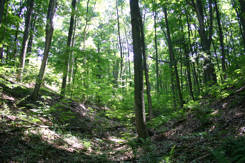
    “There aren’t many old-growth forests left compared to a couple hundred years ago,” he adds. But the 200-year-old Happy Valley Forest (HVF) Natural Area in Ontario is a good example of a forest that is growing old. Located just 35 kilometres from Toronto, this 2,851-acre (1,154-hectare) forest is an outstanding example of mature Sugar Maple and beech forests characteristic of the Oak Ridges Moraine. The HVF is critical habitat for over 110 breeding bird species, including the nationally significant Acadian Flycatcher and Cerulean Warbler and amphibians like the Jefferson Salamander.

    Dr. Henry Barnett, whose land NCC helped protect in the HVF and who has been instrumental in convincing neighbours to put their land under conservation protection, remarks, “with more than 210 acres (85 hectares) protected so far, hopefully the Happy Valley Forest will have a chance to become truly old-growth in the years ahead.”


    Provided by Nature Conservancy Canada

    www.natureconservancy.ca

  • Becoming a Registered Nurse

    Becoming a Registered Nurse


    Never, ever, ever let anyone tell you it’ll be easy…

    JUST worth it.

    Nursing, your career… your future.

    Thinking about a career? Think registered nurse! It’s more than a job, it’s a growing profession offering an astonishing range of choices and opportunities.

    You believe in a healthy lifestyle? Janet has been talking to teenagers about how to deal with sex and drugs. “These kids have their whole lives before them and I feel it’s so important to help them now when they need it. With some groups I get into fitness and diet, too. They really want the information and someone to talk to.”

    You want excitement? So does Robin, so she works in the emergency department of a city hospital. “When people burst through those doors, they need help, fast and our ER team gives it. I have to think on my feet here, make immediate decisions about what a person needs. No other job could give me the same challenge – or satisfaction.”

    Intrigued by health questions? So is Nicole, and she’s finding the answers. Nicole is the head of a research team studying the care needs of AIDS patients. “I used to give nursing care to people in their homes and then a great AIDS patient I had motivated me to move into research. I was shocked by how little knowledge and how few resources there seemed to be to care for people like Ted, so I decided to do something about it.”

    More interested in helping people over the long term? That’s what Michael wants, so he’s head nurse at a rehabilitation centre. “A lot of rehab patients start out fighting against our care; they’re depressed, angry, and worried about their future. Helping them work through that is as important as their physical therapy. It’s an incredible feeling to help a person go through the whole process back to health.”

    Michael, Janet, Robin and Nicole became registered nurses because they wanted to work with people in a career that offers challenges and the independence to make decisions. Nursing involves caring for the whole person – the physical, intellectual and social needs. Nurses also plan and deliver health programs for groups or communities.

    Nurses are the heart of care. As a registered nurse, you can make a difference in one person’s life through one-on-one, and in the health of all Canadians through research and leadership.

    Jobs, the real story

    This is an excellent time to enter nursing as there is a shortage. At some point in their life, every Canadian will require the services of a nurse. Since many nurses will soon retire, Canada needs bright young men and women to choose nursing as a career. Changes in the health care system continue to broaden the opportunities for nurses. An especially important trend is the increasing number of services that emphasize illness prevention and health promotion programs. Many of these are planned and staffed by registered nurses.

    Registered nurses earn salaries that compare with other professionals with a similar amount of education. Health care is offered 24 hours a day, so expect to work some nights and weekends, like doctors, law enforcement officers and others who provide essential services.

    As in any profession, salaries vary across the country, and people make more as they gain experience and responsibility. Graduates of degree programs usually have more opportunities for advancement, and in some provinces, make more money than graduates of diploma programs. Your provincial or territorial nurses’ association can provide current salary ranges.

    To see nursing jobs across Canada, visit NursingCareersCanada.ca, The National job board of the Canadian Nurses Association.

    Choices… lots!

    Nursing is full of opportunities to grow, to advance and to change your career direction. Whatever your interest – working with children, scientific procedures and high tech equipment, teaching and promoting healthy practices, developing your management skills – nursing has something for you. Here are just a few examples:

    In the Community

    • health clinics
    • schools
    • wellness programs in the workplace
    • doctors’ offices
    • home care
    • family planning clinics
    • poison control centres
    • prenatal and well-baby clinics
    • rehabilitation centres
    • sexually transmitted disease units
    • AIDS hospices

    IN A HOSPITAL:

    • emergency
    • intensive care
    • operating room
    • post-surgery
    • maternity
    • cardiovascular (heart)
    • oncology (cancer)
    • psychiatry
    • pediatrics (children)
    • palliative (dying people)
    • geriatrics (seniors)

    One of the most exciting opportunities for nurses in Canada is Northern nursing. Often, community health centres in Canada’s North are run completely by the nurse – independent and in charge. Many Aboriginal nurses return home to help their communities, other nurses find they enjoy learning about a different culture.

    The great thing about nursing is that your choices never end. With some years of experience and further studies you could branch out in almost any direction imaginable. After a few years in practice you might decide to become an advanced practice nurse. An expert nurse with a master’s degree, an advanced practice nurse provides direct care to clients and serves as a role model and consultant to other practising nurses. There are currently two types of ANPs in Canada, clinical nurse specialist and nurse practitioner.

    Or you might decide, like Nicole, that you want to investigate current issues in health care. On the leading edge of health care discoveries, nurse researchers design studies, collect data and analyze results. Their findings contribute to the vast body of scientific knowledge that supports and improves nursing.

    Leadership

    All nurses are teachers, helping people learn to prevent illness and manage health problems. But you might want to become a nurse educator, preparing future nurses to enter practice. You could work at a community college or a university, and research would be part of what you do.

    A nurse administrator coordinates nursing services in a hospital or community health centre. Handling large budgets, supervising staff and setting the standards for excellent care takes strength and good management skills.

    The sky is the limit

    And any of these choices could lead you still further. Nurses’ ideas and opinions are sought after by the media, politicians, and national and international groups. Imagine being a consultant to Health Canada, or the World Health Organization.

    Or you could travel. Northern Canada is a close-to-home example, but Canadian nurses are so highly regarded that other countries – both developing and developed – actively recruit them. Your skills and knowledge could take you places. The possibilities are endless!

    Degree or diploma?

    If you’re thinking about a career in nursing, you should seriously consider studying for a degree (BN or BNSc). More career opportunities and the possibility of graduate study will be open to nurses with university degrees. Most provinces already require a baccalaureate in nursing (BN or BScN) to enter the profession.

    Degree programs take four years. Besides learning social and physical sciences, and nursing, as in the diploma program, university programs generally offer additional studies in leadership, health teaching, research and other disciplines.

    Diploma programs take three years. Graduates generally work in hospitals, nursing homes or other structured settings. Many colleges now offer their diploma courses in collaboration with a university with the option of continuing on after graduation to obtain a degree. However, getting a diploma and then a degree generally takes longer, and costs more, than enrolling in a degree program from the beginning.

    Nursing students in both university and diploma schools of nursing will study psychology, child development, sociology, anatomy and physiology. The nursing courses include theory and clinical practice. You will be supervised and supported in the clinical setting to ensure the safety of patients and your own safety.

    If you are interested in continuing your education, master’s and doctoral programs in nursing are available in many places in Canada.

    Get ready

    Entrance requirements differ from one school to another. Generally, the admission requirements are high school graduation with senior level English or French, mathematics, chemistry, physics and biology. You can contact your provincial nurses’ association or individual schools for their specific requirements and information on funding.

    Caring for people, the independence to make decisions, the challenge and excitement of being on the leading edge of health care. Sound interesting? Then ask today for more information about a career as a registered nurse!

    Provincial associations

    • * Association of Registered Nurses of Newfoundland and Labrador
    • * Association of Registered Nurses of Prince Edward Island
    • * College of Registered Nurses of Nova Scotia
    • * Nurses Association of New Brunswick
    • * Ordre des infirmières et infirmiers du Québec
    • * Registered Nurses Association of Ontario
    • * College of Registered Nurses of Manitoba
    • * Saskatchewan Registered Nurses’ Association
    • * College and Association of Registered Nurses of Alberta
    • * College of Registered Nurses of British Columbia
    • * Registered Nurses Association of the Northwest Territories and Nunavut
    • * Yukon Registered Nurses Association
    • * Native Access Program to Nursing
  • A Guide to University Housing Part 1: The Downside of Dorm Life

    No parents, co-ed dorms, constant partying and food whenever you want it; living in residence sounds like a blast! And it can be, but if you’re considering spending a year in the frenzy that is residence life take the time to weigh your options.  Below is part one of a series by Jobs People Do staff exploring the ups and downs, ins and outs of different university housing options.

    Part One: Residence Life is Not One Size Fits All

    Cramped, shared spaces, roommate personality clashes, questionable facilities, and non-stop parties at full volume make up the pool of common residence experiences that students either float through or drown in.

    In my first year of university, I sunk.

    The environment was too much to handle; I simply didn’t like the general atmosphere of my residence and regretted a lot of the choices that I made in living there. The place where you will spend most of your time in your first year of university deserves a lot of thought and careful consideration. There are several reasons why residence may not be for you, and important things to think about when making these vital housing decisions.

    Many students have difficulty transitioning from life at home to life on-campus because of their newfound independence and responsibility. It’s an entire lifestyle change, with no curfews, set meal times, et cetera. Life in residence is where social and academic lives converge, and the balance can be hard to strike.

    Because of the nature of the work and the necessary adjustment into this new lifestyle, do not be surprised if your freshman grades are lower than those you got as a high school senior. MacLeans Magazine calls this high school to post-secondary grade difference a “grade drop”, claiming that there’s a 14 per cent decline in the average student’s grade at this time.

    I did not think much about housing, I just checked off the most common boxes for a double room with a randomly assigned roommate. I had only been to the school once and I had never explored the residence buildings. Come move-in day, I realized that my belongings were being smushed into an old, run-down double room with a shared washroom like a bathroom stall and a busted heater.

    To prepare yourself for life in res, visit campus beforehand if possible, in person or otherwise. Most universities in Canada are also beginning to offer virtual online tours, where you can assess the sizes of the rooms and better understand the general atmosphere. If you like privacy, opt for a single room. If you fear anti-social connotations, try for a single room in a suite of single rooms, or take extra effort in befriending your floormates. As long as you are in residence you never have to be alone, but with a single room you have the option.

    Roommate pairing is very hit-or-miss, so be wary when it comes to responding to preferences on any streamlining survey offered. Also, try to give an honest report of yourself, especially when it comes to ongoing aspects like smoking and staying up all night.

    Rooming with friends you’ve known from well before university may seem like a good plan, but friendships are more commonly lost than strengthened through room sharing. If you and your roommate foresee troubles with your cohabitation, consider writing up sleep schedules or contracts to keep you both on track.

    If there are conflicts you have difficulty handling yourselves, there will always be options available for helping you change your situation. Making friends with your resident advisor or ‘don’ is always a good idea, as they will be your first stop for information about the school or housing policies. Visit the housing office on your campus or via school website. Be prepared to take action if necessary, by understanding where to look and who to see if things go wrong.

    Life in residence isn’t all bad, but it is a very serious decision. Considering all options and honestly assessing your wants and needs will help you on your way to your best possible post-secondary experience.

  • Canada Environment – current issues and definitions

    Canada Environment – current issues and definitions

    Sourced: index mundi ( Canadian issues and definitions )

    Environment – current issues: air pollution and resulting acid rain severely affecting lakes and damaging forests; metal smelting, coal-burning utilities, and vehicle emissions impacting on agricultural and forest productivity; ocean waters becoming contaminated due to agricultural, industrial, mining, and forestry activitiesDefinitions to understand

    Acidification – the lowering of soil and water pH due to acid precipitation and deposition usually through precipitation; this process disrupts ecosystem nutrient flows and may kill freshwater fish and plants dependent on more neutral or alkaline conditions (see acid rain).

    Acid rain – characterized as containing harmful levels of sulfur dioxide or nitrogen oxide; acid rain is damaging and potentially deadly to the earth’s fragile ecosystems; acidity is measured using the pH scale where 7 is neutral, values greater than 7 are considered alkaline, and values below 5.6 are considered acid precipitation; note – a pH of 2.4 (the acidity of vinegar) has been measured in rainfall in New England.

    Aerosol – a collection of airborne particles dispersed in a gas, smoke, or fog.

    Afforestation – converting a bare or agricultural space by planting trees and plants; reforestation involves replanting trees on areas that have been cut or destroyed by fire.

    Asbestos – a naturally occurring soft fibrous mineral commonly used in fireproofing materials and considered to be highly carcinogenic in particulate form.

    Biodiversity – also biological diversity; the relative number of species, diverse in form and function, at the genetic, organism, community, and ecosystem level; loss of biodiversity reduces an ecosystem’s ability to recover from natural or man-induced disruption.

    Bio-indicators – a plant or animal species whose presence, abundance, and health reveal the general condition of its habitat.

    Biomass – the total weight or volume of living matter in a given area or volume.

    Carbon cycle – the term used to describe the exchange of carbon (in various forms, e.g., as carbon dioxide) between the atmosphere, ocean, terrestrial biosphere, and geological deposits.

    Catchments – assemblages used to capture and retain rainwater and runoff; an important water management technique in areas with limited freshwater resources, such as Gibraltar.

    DDT (dichloro-diphenyl-trichloro-ethane) – a colorless, odorless insecticide that has toxic effects on most animals; the use of DDT was banned in the US in 1972.

    Defoliants – chemicals which cause plants to lose their leaves artificially; often used in agricultural practices for weed control, and may have detrimental impacts on human and ecosystem health.

    Deforestation – the destruction of vast areas of forest (e.g., unsustainable forestry practices, agricultural and range land clearing, and the over exploitation of wood products for use as fuel) without planting new growth.

    Desertification – the spread of desert-like conditions in arid or semi-arid areas, due to overgrazing, loss of agriculturally productive soils, or climate change.

    Dredging – the practice of deepening an existing waterway; also, a technique used for collecting bottom-dwelling marine organisms (e.g., shellfish) or harvesting coral, often causing significant destruction of reef and ocean-floor ecosystems.

    Drift-net fishing – done with a net, miles in extent, that is generally anchored to a boat and left to float with the tide; often results in an over harvesting and waste of large populations of non-commercial marine species (by-catch) by its effect of “sweeping the ocean clean.”

    Ecosystems – ecological units comprised of complex communities of organisms and their specific environments.

    Effluents – waste materials, such as smoke, sewage, or industrial waste which are released into the environment, subsequently polluting it.

    Endangered species – a species that is threatened with extinction either by direct hunting or habitat destruction.

    Freshwater – water with very low soluble mineral content; sources include lakes, streams, rivers, glaciers, and underground aquifers.

    Greenhouse gas – a gas that “traps” infrared radiation in the lower atmosphere causing surface warming; water vapor, carbon dioxide, nitrous oxide, methane, hydrofluorocarbons, and ozone are the primary greenhouse gases in the Earth’s atmosphere.

    Groundwater – water sources found below the surface of the earth often in naturally occurring reservoirs in permeable rock strata; the source for wells and natural springs.

    Highlands Water Project – a series of dams constructed jointly by Lesotho and South Africa to redirect Lesotho’s abundant water supply into a rapidly growing area in South Africa; while it is the largest infrastructure project in southern Africa, it is also the most costly and controversial; objections to the project include claims that it forces people from their homes, submerges farmlands, and squanders economic resources.

    Inuit Circumpolar Conference (ICC) – represents the 145,000 Inuits of Russia, Alaska, Canada, and Greenland in international environmental issues; a General Assembly convenes every three years to determine the focus of the ICC; the most current concerns are long-range transport of pollutants, sustainable development, and climate change.

    Metallurgical plants – industries which specialize in the science, technology, and processing of metals; these plants produce highly concentrated and toxic wastes which can contribute to pollution of ground water and air when not properly disposed.

    Noxious substances – injurious, very harmful to living beings.

    Overgrazing – the grazing of animals on plant material faster than it can naturally regrow leading to the permanent loss of plant cover, a common effect of too many animals grazing limited range land.

    Ozone shield – a layer of the atmosphere composed of ozone gas (O3) that resides approximately 25 miles above the Earth’s surface and absorbs solar ultraviolet radiation that can be harmful to living organisms.

    Poaching – the illegal killing of animals or fish, a great concern with respect to endangered or threatened species.

    Pollution – the contamination of a healthy environment by man-made waste.

    Potable water – water that is drinkable, safe to be consumed.

    Salination – the process through which fresh (drinkable) water becomes salt (undrinkable) water; hence, desalination is the reverse process; also involves the accumulation of salts in topsoil caused by evaporation of excessive irrigation water, a process that can eventually render soil incapable of supporting crops.

    Siltation – occurs when water channels and reservoirs become clotted with silt and mud, a side effect of deforestation and soil erosion.

    Slash-and-burn agriculture – a rotating cultivation technique in which trees are cut down and burned in order to clear land for temporary agriculture; the land is used until its productivity declines at which point a new plot is selected and the process repeats; this practice is sustainable while population levels are low and time is permitted for regrowth of natural vegetation; conversely, where these conditions do not exist, the practice can have disastrous consequences for the environment .

    Soil degradation – damage to the land’s productive capacity because of poor agricultural practices such as the excessive use of pesticides or fertilizers, soil compaction from heavy equipment, or erosion of topsoil, eventually resulting in reduced ability to produce agricultural products.

    Soil erosion – the removal of soil by the action of water or wind, compounded by poor agricultural practices, deforestation, overgrazing, and desertification.

    Ultraviolet (UV) radiation – a portion of the electromagnetic energy emitted by the sun and naturally filtered in the upper atmosphere by the ozone layer; UV radiation can be harmful to living organisms and has been linked to increasing rates of skin cancer in humans.

    Water-born diseases – those in which bacteria survive in, and are transmitted through, water; always a serious threat in areas with an untreated water supply

  • A Guide to University Housing Part 2: Life at Home

    For some, making the move between home and campus can be a difficult decision.

    Since I am the only writer here on the JPD team that has stayed at home while studying for my degree, I feel obliged to write about the benefits of the stay-at- home life. There are plenty of reasons to enjoy your education from your old stomping grounds

    Many people don’t enjoy school because of the intimidating and abrupt change in surroundings. Being able to start your new education in a place you are already comfortable and familiar with can help make the jump to college life a bit easier.

    Living on campus can be distracting when completing work becomes a priority. Although living in residence can be fun, the constant social climate is designed t0 better suit your partying agenda more than your academic one.

    “Staying at home definitely was a wise decision to keep my marks up, I was able to stay focused and didn’t feel the external pressure of friends and floor-mates wanting me to party all the time,” Mike Manojlovich, fourth year Brock University student confesses.

    Worried living at home will starve you of social interaction? Don’t be. There are plenty of ways to get involved while living off campus. Admittedly it takes a bit more initiative on your part to stay current on campus events while living outside of residence.  But if you are committed to staying current with your school’s campus you’ll find a plethora of extracurricular and volunteer experiences that will introduce you to a world of new people.

    Another advantage to staying at home is being close to family and friends.  This group of support individuals will be around to lend a hand when needed (and it will be) during your first year of post-secondary studies.

    Asides from the personal comforts of living at home, there are also financial comforts. This may be obvious, but living at home is far cheaper than staying on campus. You will cut down on the cost of housing and food, as well as other unpredictable expenses that come with living on-campus.

    Don’t knock a great school simply because it’s close to home. Remember that, for many people, an undergraduate degree is only step 1 in a series of post-secondary programs.

    Sometimes schools near home offer your ideal program. For graduate student Sandro Rocco, this was most certainly the case. Sandro stayed at home for his degree, and commuted to Niagara College for 3 years to complete his course in photonic engineering.

    “It was the perfect program for me, and as luck turns out it was no more than 30 minutes from my house,” Sandro commented. He mentioned that not many colleges have the proper equipment to teach the course in North America, so Niagara College was an obvious choice for him.

    “They also offered me tons of great scholarships!” he added.

    When it comes down to living on or off campus, you have to seriously consider which kind of university experience is right for you. As much as you will miss the “full fresh-man experience”, a sense of freedom, and a whole new level of self-dependence, you may want to stay home as an academic, financial, and lifestyle strategy for your first year of post-secondary education.

  • Sports for Life: A Career in Physical Education is Possible

    Sports for Life: A Career in Physical Education is Possible

    With the Winter Olympics just behind us, and the FIFA World Cup still going on,2010 is becoming an exciting year for international sports. Although extra-curricular activities and education do not seem to mix on the surface, there are plenty of viable career paths that are just as healthy as the exercise you may be getting.

    If you are interested in sports and are looking at the industry, whether that be hockey, soccer, baseball, rugby etc., you have probably noticed that there are plenty of jobs in the field. The most apparent and sought after being performance.

    Vince Sasso, senior high school student, and soccer player for the Toronto Football Clubʼs (TFC) senior academy team has spent plenty of years training within the Canadian Soccer League in hopes of a scholarship and viable career opportunities.

    Vince has found his experience training with the TFC to be extremely useful.

    “I’ve gained so much development as a player and a person, I’ve increased my speed, power, and tactical awareness, and improved good old fashioned teamwork abilities” he noted.

    He has been actively honing his playing skills, but says that, “it takes more than just talent to make it, it depends on your background and experiences too”.

    Many young athletes find gaining quality experience and exposure to be the most difficult barrier in fulfilling their career goals.

    “The TFC helps us with scholarship opportunities because the coaches always look at the professional youth club teams in big tournaments like the Dallas Cup” Vince said. The young and ambitious soccer player is looking to study abroad as well, looking at American post-secondary schools such as North Carolina.

    “Itʼs a tough one, but first Iʼm going to try and get a scholarship” Vince claims.However, if you are in to sports and do not want to or canʼt get into performance not to fret! There are plenty of more prospects within this industry to satisfy your passion for the game. Remember that the sports industry does not only deal with players, there are many people behind the scenes to make the games possible.

    Taking an internship with a sports franchise is a rather common endeavor for beginners in the business and marketing field. So if this is a field of study you want to focus on you may want to do some research on what kind of companies run and manage the game. Want to still be close to the game? There are even coaching, training and referee internships available.

    If traveling is your cup of tea an internship may be right for you? According to sportscareer.com an internship can have you hitting a home run by placing you in a position for the jobs you are training for. Now that is practicality! HOWEVER , like most dream jobs, post-secondary education and and volunteer experience within the field is highly recommended.

    Is a career and education in sports viable? The answer is an obvious yes. The sports industry like any other business has its own microcosm of jobs for various people with various skills. So get in the game and start playing!

  • 10 Tips For Healthy Eating

    10 Tips For Healthy Eating

    1. Start Your Day With Breakfast

    Breakfast fills your “empty tank” to get you going after a long night without food. Eating a good breakfast can help you do better in school. Easy to prepare breakfasts include: cold cereal with fruit and low-fat milk, whole-wheat toast with peanut butter, yogurt with fruit, whole-grain waffles or even last night’s pizza.

    2. Get Moving

    It’s easy to fit physical activities into your daily routine. Walk, bike or jog to see your friends. Take a 10 minute activity break every hour while you read, do homework or watch TV. Climb stairs instead of taking an escalator or elevator. Try to do these things for a total of 30 minutes every day.

    3. Snack Smart

    Snacks are a great way to refuel. Choose snacks from different food groups – a glass of low-fat milk and a few graham crackers, an apple or celery sticks with peanut butter and raisins, or some dry cereal. If you eat smart at other meals, cookies, chips, and candy are okay for occasional snacking.
    4. Work up a sweat

    Vigorous work-outs, when you’re breathing hard and sweating, help your heart pump better, give you more energy and help you look and feel your best. Start with a warm-up that stretches your muscles. Include 20 minutes of aerobic activity, such as running, jogging or dancing. Follow-up with activities that help make you stronger such as push-ups or lifting weights. Then cool-down with more stretching and deep breathing.

    5. Balance your food choices – don’t eat too much of one thing

    You don’t have to give up foods like hamburgers, french fries, and ice cream to eat healthfully. You just have to be smart about how often and how much of them you eat. Your body needs nutrients like protein, carbohydrates, fat, and many different vitamins and minerals such as vitamins C and A, iron, and calcium from a variety of foods.

    6. Get fit with friends or family

    Being active is much more fun with friends or family. Encourage others to join
    you and plan one special physical activity event, like a bike ride or hiking, with a group each week.

    7. Eat more grains, fruits, and vegetables

    These foods give you carbohydrates for energy, plus vitamins, minerals, and fibre. Besides, they taste good! Try breads such as whole-wheat, bagels, and pita. Spaghetti and oatmeal are also in the grain group.

    8. Join in physical activities at school

    Whether you take a physical education class or do other physical activities at school, such as intramural sports, structured activities are a sure way to feel good, look good and stay physically fit.

    9. Foods aren’t good or bad

    A healthy eating style is like a puzzle with many parts. Each part, or food, is different. Some foods may have more fat, sugar or salt, while others may have more vitamins or fibre. There is a place for all these foods. What makes a diet good or bad is how foods fit together. Balancing your choices is important. Fit in a higher-fat food, like pepperoni pizza, at dinner by choosing lower-fat foods at other meals. And don’t forget about moderation. If two pieces of pizza fill you up, don’t eat a third.

    10. Make healthy eating and physical activities fun!

    Take advantage of physical activities you and your friends enjoy doing together and eat the foods you like. Be adventurous – try new sports, games, and other activities as well as new foods. You’ll grow stronger, play longer, and look and feel better! Set realistic goals – don’t try changing too much at once.