Author: Anthony Teles

  • Welcome back!

    Welcome back!

    From festivals to heatwaves, we hope you had a great summer. But it’s time to trade in swimsuits and iced coffees for long sleeves and pumpkin spice lattes. September means enjoying those last sweltering hot days while also embracing all the fun and festivities that come with the final few months of the year. Of course, it also means back to school!

    JPD welcomes all of you back to your studies, and that means we’re also back with more articles and videos to help you on your journey. Look forward to more helpful advice, reflections, and research from our intrepid student writers as they share insights on schooling, careers, and all the major issues and decisions you’re facing. Here’s to the new school year!


    Sincerely,

    Anthony Teles, Vice-President

  • A Letter To My Elementary-Aged Self

    A Letter To My Elementary-Aged Self

    Dear Tiffany,

    Right now, you’re having a lot of fun. While doing your best with academics and extracurricular activities, you also have a great group of friends who you see at school five days a week. Life is fine. Nonetheless, being you from the future and knowing what I know now, I’d like to provide some advice that I think would be useful:

    First of all, enjoy spending time with friends as much as possible. As you’ve learned, friendships don’t always last so appreciate all the good moments you get to experience with them.

    You are a very quiet, introverted girl who lacks confidence, and having these traits can make it difficult to put yourself out there. As a result, many opportunities have been missed. Not raising your hand in class when you know the answers to some questions remains an example. Also, you usually don’t speak up about things, even when you think you should. This especially refers to bullying.

    Where bullies are concerned, I want to emphasize that you don’t want to look back and wonder: “What if?” What if I had said something? What if I had spoken up? Would things have turned out differently? When you think any situation is wrong or unfair, please tell someone. At times, people might not believe you or attempt to dismiss what you have to say, but don’t give up so easily. Even if nothing comes of your efforts in the end, at least you tried.

    In order to improve this, the initial step is to work on actually feeling as though you deserve to voice your opinions and stand up for yourself. We both know you’re a tolerant person. Whether it’s continuing with certain extracurriculars you find tiresome or facing scary conflicts, you’ve developed a resilience to deal with challenging situations.

    You should be proud of being resilient but try determining the difference between situations where tolerating is justified and what simply isn’t acceptable. You can also think of this ability to distinguish between the two as setting an example for other people. What would you want them to do if they were in your shoes? Asking yourself questions like this sometimes is key as you tackle difficulties both in and outside school walls. Care as much about your feelings/well-being as much as you do others.

    To end this letter on a pleasant note and give you a glimpse into what’s in store: An amazing teacher you’ll have (and never forget) will inspire you to look at similar issues as well as many other areas of life from a refreshing perspective.

    Though you’ll definitely continue to encounter challenges while you’re a student (and afterwards), there’s also plenty of things you can look forward to. Trust me when I say that your days of textbooks and backpacks will pass by really quickly. With these notes in mind, take more chances as you go through this process. Try being more confident because you have more to offer than you realize.

    Sincerely,

    Future Tiffany

  • Transphobia in Canada: A look into the issue, and what must be done.

    Transphobia in Canada: A look into the issue, and what must be done.

    By Avreet Jagdev

    Transphobia is a term that refers to discrimination against transgender and gender-queer people. At the core, it is rooted in a rejection of transgender identity, and refusing to acknowledge or understand that being transgender, non-binary, or gender-queer is valid and real.

    Transphobia can manifest in many forms: from verbal and physical harassment and abuse, to the removal of trans rights, to the systematic exclusion of trans people. In Canada, members of the trans community say that they are seeing and experiencing signs of rising transphobia across the country.

    In the past, Canada has taken action towards protecting trans rights. Notably, the passing of Bill C-16 in 2017 amended the Canadian Human Rights Act to include gender identity and expression to the list of prohibited grounds of discrimination. Despite this act, transphobia continues to exist in Canada today. One example is the rise in opinion articles, published by news organizations including the Toronto Star and CBC, which have pushed transphobic ideas and opinions.

    It is very harmful to members of the trans community when anti-trans ideology is publicly shared online, especially when it is done from widely known and credible sources such as CBC and Toronto Star. The problem doesn’t end here, however. Even notable author J.K Rowling was criticized for transphobia, for her stance against inclusive terms such as “people who menstruate”. She believes terms such as these take away from the women’s rights movement. However, these terms are essential to the inclusion of transgender, non-binary, and gender queer people in the fight against period stigma.

    Outside of transphobia in the news and from public figures, anti-trans discrimination impacts transgender people in their personal lives, such as at work or school. This is often done through misgendering, which trans people can often experience from their peers, co-workers, or managers. Misgendering is when people refer to a transgender, nonbinary, or gender queer person using terms or pronouns related to how they identified before transitioning. This can be intentional or unintentional, but is harmful because it invalidates trans identity. This has negative consequences for the overall mental health of the misgendered person, by making them feel invalid, not understood, and stigmatized.

    Rising levels of transphobia are evident in many other Canadian news headlines. In July, a family-friendly drag show in Victoria was canceled after the cafe it was planned to be hosted at received violent and threatening calls, with one caller even threatening to “shoot up the place”. Drag story-time events in public libraries have also received criticism rooted in homophobia and transphobia. Meanwhile, Pride flags in various locations in Ontario and British Columbia have been ripped down, and a seventeen year old in Mississauga was arrested for threatening to conduct a mass shooting at Pride celebration.

    Evidently, transphobia is rampant in Canada, despite trans identities being legally protected by Bill C-16. It is important to take action against all forms of discrimination when we see it, including anti-trans and LGBTQ discrimination. You can help lessen the harmful impact of anti-trans discrimination by being a good ally to the transgender and queer people in your community, and by unconditionally respecting and celebrating their identities.

  • Strategies for Coping with Social Anxiety When You Find It Overwhelming: What You Can Do Before You Even Go Outside

    Strategies for Coping with Social Anxiety When You Find It Overwhelming: What You Can Do Before You Even Go Outside

    Having social anxiety can be difficult. Within the past three years in particular, discussions about it have increased because COVID-19 has resulted in people staying at home much more than before and being around others again is causing discomfort for many. Some may even feel overwhelmed by this anxiety at times as well as are unsure how to effectively handle it.

    If you’ve been experiencing social anxiety that’s overwhelming, here are strategies for coping and suggestions for what you can do before even going outside.

    Strategies for Coping with Overwhelming Social Anxiety

    Prepare for Your In-Person Interactions

    A main aspect of social anxiety is worrying about how your interactions will go with others. Therefore, a good way to take some pressure off of yourself in this respect includes preparing for these interactions. To provide an example, if you’re running errands that must be done in-person such as going to a bank and seeing a teller or financial advisor, plan what you’ll say. You could even carefully word your requests prior to saying them. The same goes for responses to questions you anticipate will be asked of you. This preparation might put you more at ease and even increase your confidence when speaking with others.

    Engage With Breathing Exercises

    Research breathing exercises that address social anxiety. These types of exercises won’t take up too much of your time and can easily be done just before you open the door to go outside. There’s a good chance that you’ll find some online that can help calm you down.

    Remind Yourself That Others Are Usually Not Critical of How You Act

    Often times, you are much more worried and critical of how you act than others. It’s understandable if you anticipate making a mistake or believe you’ll be awkward during your exchange with someone but try not to solely focus on this as it won’t help. Taking the example above that involves going to a bank, the teller or financial advisor probably won’t remember these details about your interaction by the end of the day as they see so many different people on a regular basis. Though challenging, remind yourself that completing the errand is what’s important and to not dwell on what you believe the other person thinks of you as there’s no need for it.

    Try Seeing a Mental Health Professional

    If you have social anxiety that’s significantly affecting various areas of your life, try seeing a mental health professional. They’ll help tackle these anxious feelings you’ve been experiencing by providing useful approaches. Also, many related services are available remotely as well as in-person. A directly related goal could even be starting off your appointments through video calls, then working towards feeling comfortable enough to leave home and see the professional in person.

    Experiencing social anxiety is particularly difficult, especially when living in a world where strong interpersonal skills are often expected of us. However, given the unique circumstances with COVID-19, society has lately been more empathetic toward those who have this anxiety. Therefore, it’s crucial to figure out how to address it, but also not be too tough on yourself in the process. If you’re prepared to try your absolute best while considering the advice above, you have the tools for successfully coping with social anxiety.

  • How To Manage and Work With Remote Teams for School/Jobs

    How To Manage and Work With Remote Teams for School/Jobs

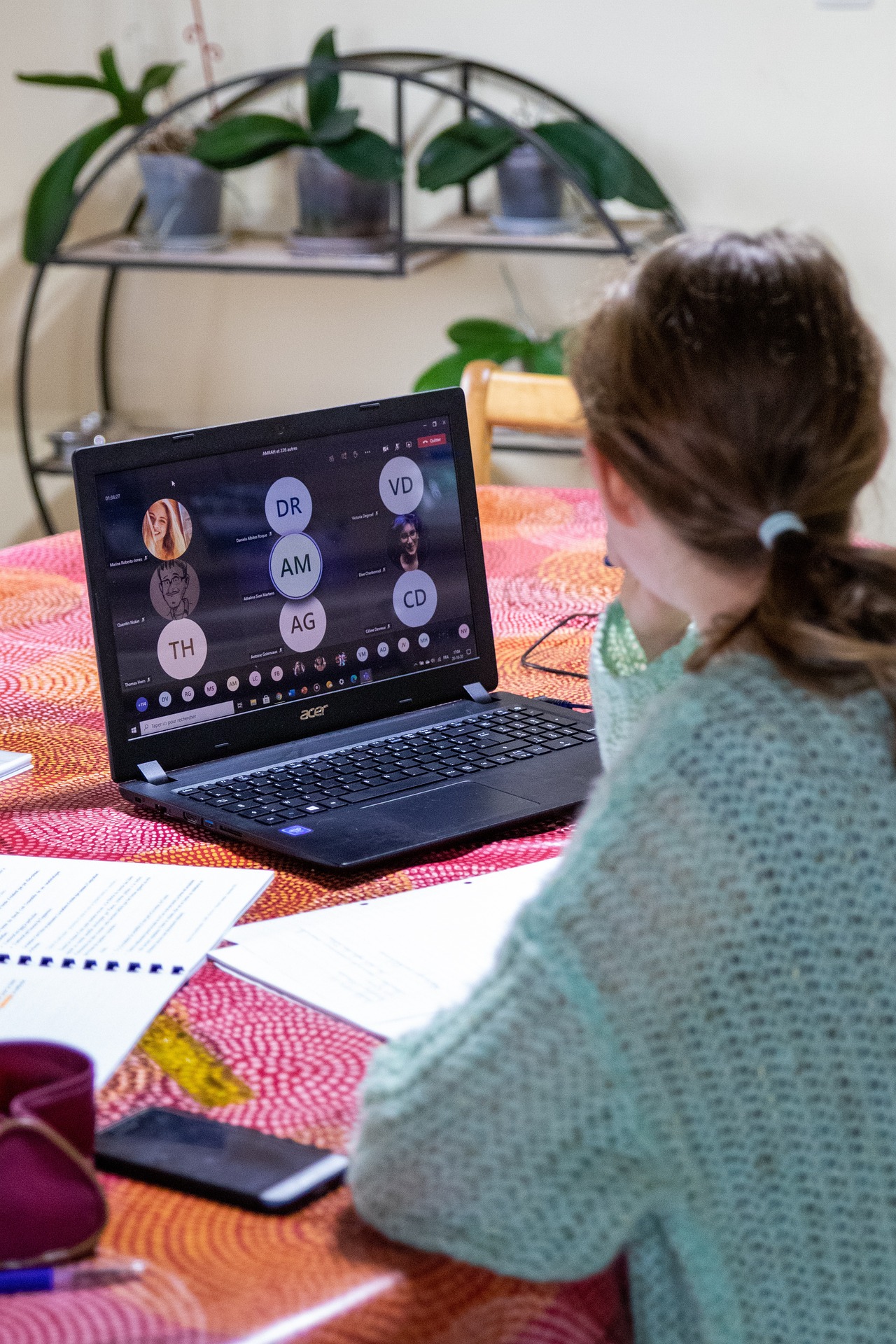
    Working from home for students and professionals became the norm when the world shut down in 2020. Of course, this involved people having to pivot accordingly via utilizing online tools. While some have done collaborations remotely before, many others had to do so having little to no experience and were unsure how to approach it.

    If you currently relate to that, here are some tips on how you can manage and work with remote teams for school/jobs:

    Determine The Best Platforms to Use For Your…

    …Schooling

    Say you’re a student doing a group project. You could communicate and stay up to date with your group members via widely used messaging platforms such as WhatsApp or Messenger.  If some exchanges are easier to carry out via a phone/video call, do so by all means.

    Regarding the project itself, utilizing Google Workspace remains a great option. It’s free, provides useful tools, and all members can work on things at the same time.

    …Job

    An effective way that could help you decide is even asking the team what useful platforms they’d like (other than your standard work e-mail). Once the platforms are chosen, go from there. Slack remains a popular example amongst professionals as teams can create multiple chats, with each one having a different purpose. A suggestion would be using Slack for quick messages and Zoom, a video conferencing tool, for meetings.

    It’s also important to gauge what’s necessary and what isn’t. To provide an example, if your schedule involves weekly meetings but believe that the information you want to convey for a certain week could just be e-mailed, then don’t hesitate to send an e-mail rather than conduct a meeting. If anyone has any questions about it, they could contact you directly. This would ultimately save everyone time and they can then put this time toward enhancing productivity.

    What To Generally Keep in Mind When Managing/Working with Remote Teams

    What’s very important when you’re managing and working with remote teams is being reliable. Since you’re unable to depend on the convenience of seeing people in-person, it’s crucial that you ask questions and/or initiate necessary discussions through your chosen platforms as soon as you can. Though this sometimes varies with factors including when your deadlines are and what you’re working on, everyone should expect prompt responses as well as updates from each other unless valid excuses are provided, e.g., family emergencies, health issues, etc.

    Also, ensure that people are respectful toward one another. Everyone can have different opinions, but these should be expressed courteously. It’s helpful to remind your team that you all share goals and ideally will have conflict-free processes in achieving them. If a conflict does arise, this can be difficult when work is solely done online as people could not only have misunderstandings, but further send harmful messages. Of course, the right approach should be immediate action to try de-escalating these situations before they worsen. Overall, firmly establishing that respect is required remains crucial.

    Though engaging in remote work with a team can be tricky, it definitely has the potential to turn out well for everyone involved. It’s beneficial to have a positive attitude when you approach these kinds of challenges as well as the determination to adapt. Whether this is for school or a job, if you stay reliable while focusing on what must be done, you’re on the right track toward successfully managing and working with a remote team.

  • Algonquin College’s Free the Tampon campaign: The importance of menstrual products being free and available on campus

    Algonquin College’s Free the Tampon campaign: The importance of menstrual products being free and available on campus

    By Avreet Jagdev

    Algonquin College launched their “Free the Tampon” campaign a couple years ago. In a video they published to YouTube, they shared that the average person spends eighteen thousand dollars on menstrual products in their lifetime, which is why “it’s time to free the tampon”. The college has made menstrual products freely available across their campus, listing ten locations where tampons and pads are freely available to anyone who might need them.

    In addition to providing an increase in access to menstrual products such as pads and tampons, the free the tampon campaign aims to spark a “campus-wide conversation to help stop period stigma”. Period stigma is a term for the discrimination faced by women, trans and genderqueer who menstruate. It not only leads to a lack of access to menstrual supplies such as pads or tampons, but also includes the verbal and systemic shaming of menstruating people, and results in a lower overall quality of life for those who are impacted by it. The impacts of period stigma are disproportionately felt by those in developing countries, and those of lower socio-economic status.

    Algonquin College’s “Free the Tampon” campaign is a great step towards combating period stigma on campus, through the increase of access and opening up a conversation surrounding menstruation. Other post-secondary institutions, including the University of Toronto and University of Victoria, have taken similar initiatives to make menstrual products free and available to its students and community members. The University of Victoria acknowledges that lack of access to menstrual products can cause students to miss classes, or other academic and extracurricular activities. Like Algonquin College, UofT also aims to address menstrual through their free menstruation products initiative.

    Sandy Welsh, UofT’s vice-provost of students explains that access to menstrual products is an issue of equity. In addition to providing convenience, free menstrual products help reduce financial barriers, and alleviate the anxiety of being in need of a menstrual product when they aren’t freely available.

    The statistics reveal shocking numbers about menstrual access in Canada: 63 per cent of people who menstruate have had concerns about not being able to access menstrual products, and 34 per cent have faced budget and affordability issues regarding menstrual products. This is why Algonquin College, and many other schools across the country, have begun taking action to increase access to pads and tampons.

    Although progress is definitely being made, period stigma and in-access to menstrual products remains a huge issue in Canada, as well as globally. Initiatives such as free tampons and pads on post-secondary campuses are an important step in the right direction. They help tackle period stigma by openly talking about the issue, instead of upholding the narrative that menstruation is a private matter that should be left undiscussed. In addition, the access to period products helps make post-secondary campuses more equitable and inclusive spaces by ensuring people who menstruate don’t have to deal with barriers to accessing the products they need.

  • Best Wishes for the Rest of the School Year!

    Best Wishes for the Rest of the School Year!

    It can be difficult to accept how much luck plays into our lives. We’re all born into certain circumstances, with genes handed down from our parents, and things happen around us out of our control. Sometimes, bad things just happen.

    But it’s also true that the harder you work, the luckier you get. I’m telling you that not just because I’ve heard it before, but also from experience. The more you learn, take care of your health, and gain new experiences, the more you open yourself up to lucky things happening. And you’ll be more ready to seize those opportunities as they arise.

    That’s something to keep in mind as you get to the end of the school year and into the summer. Make the most not only of your last couple of months in class, but also the freedom of the summer months to explore new opportunities. And like always, check out the latest articles from our fantastic writers below.

    We’ll be back later this month with more articles and video interviews. Then we’ll off for the summer and return with another issue in September. Best of luck to you for the rest of the school year and the exciting summer months ahead!

  • Advice for Making The Most Out of Your School Year with Short and Long-Term Goals

    Advice for Making The Most Out of Your School Year with Short and Long-Term Goals

    A school year usually holds many possibilities for students. Of course, these could be either negative or positive. Regardless, students can make the most out of the year through certain ways. One way is creating various goals, including both short and long-term ones.

    If you’re considering this, here are some pieces of advice for making the most out of your school year with short and long-term goals:

    What to Generally Keep in Mind When Creating Goals

    Goals are an excellent means of staying focused and productive during your time in school. Can they be ambitious? Absolutely. However, they should also be realistic. If you create ones that are unrealistically ambitious, this will not only lead to disappointment, but also defeat the purpose of having goals in the first place.

    Rewards also help. School years can be difficult to get through, and so often your motivation can understandably fluctuate. Therefore, knowing that a reward awaits if/when you achieve a goal could act as an additional motivator.

    Overall, these things are very important to keep in mind when establishing your goals.

    How to Approach Creating and Fulfilling Short-Term Goals

    Seeing what you can undertake and accomplish within a matter of weeks effectively helps determine what good short-term goals are.

    Is there an activity you’ve considered doing more of that could be a goal as well as increase your involvement with your school? For example, if you’re currently a high school student wanting to read more, some high school librarians recommend certain books to students each year. They then have a vote relatively near the year’s end for those who read them to see which one(s) people liked the most.

    If this or something similar applies to you, try reading these books. You could aim to finish each one within two weeks. Evidently, this might vary, depending on how much time you can designate for reading. The purpose would be to have these all read when voting begins but approach it with this shorter-term goal by focusing on completing the books individually so that tackling them won’t seem overwhelming.

    Other examples are volunteering for events such as talent shows, club bake sales, etc. This is an option if you’d like to be more social.

    How to Approach Creating and Fulfilling Long-Term Goals

    Creating and pursuing long-term goals would be beneficial for areas you think you could improve on. For instance, if you’d like to have a goal that pertains to your academics, a good idea is increasing a certain grade(s). Say you’re currently at a high “B” in a course and getting an “A” as a final grade remains possible. It’s a meaningful accomplishment you can work towards. Some strategies that could help are adopting better studying methods and/or being extra careful with assignments.

    The point of having goals, especially regarding school, is achieving things that are worthwhile. Be mindful when creating them and also ensure they’re realistic. Trust yourself in doing so, as you know your circumstances as well as what you’re capable of. If you consider the suggestions above and want to make the most out of your school year with short and long-term goals, you’ll be well on your way to accomplishing this.


  • How to build a LinkedIn profile that attracts connections and opportunities

    How to build a LinkedIn profile that attracts connections and opportunities

    By Avreet Jagdev

    Over the past couple of years, LinkedIn has grown immensely as a professional networking tool. It can be very useful for those hunting for jobs, internships, or other opportunities, but also for those looking to build their professional network. Networking can be immensely helpful in opening doors for you as you step into your career – in fact, surveys show that 85% of jobs are filled via networking. This is why your LinkedIn profile is incredibly important: it is your personal brand, and if you build a strong profile, you will be able to attract not only a strong network, but also life-changing opportunities. Here’s how to do it.

    1. Upload a profile picture

    Studies show that LinkedIn accounts with profile pictures are 40 per cent more likely to be clicked on, so make sure you add a picture of yourself to your page. It doesn’t need to be a formal headshot — as long as it’s professional and your face is framed well, you should be good to go! Bonus points for a smile!

    1. Upload a banner picture

    The more personalized your profile is, the better! LinkedIn gives you the option to upload a banner picture that sits behind your profile picture, so take advantage of this by using a picture that tells people more about you. You can use your city skyline, an inspirational quote, or display a hobby or personal interest.

    1. Write a catchy headline

    Your headline sits right under your profile picture and should concisely sum up who you are. Use this space to highlight your current role, or if you’re a student, what you study and where.

    1. Write your “about” section

    This is your opportunity to add a more thorough summary to your profile. You might choose to write a couple sentences about your current position, your educational background, your passions, and where you hope to take your career. You can also include an email address for connections to reach you at.

    1. Add your relevant work experience

    The key word here is relevant. LinkedIn is your personal brand, so make sure to highlight positions that you’re proud of. Avoid listing every single job you’ve worked, club you’ve been a member of, or volunteer initiative you’ve taken on. Too much information can make your profile overwhelming, and you don’t want recruiters to have to read through tons of fluff before they get to the good part of your profile.

    1. Add your education

    It’s commonplace to add your high school and post-secondary institution to your profile. Anything before that is unnecessary — recruiters don’t need to know what middle school you went to! You can also specify what you studied, and any organizations you were part of at your high school, college, or university.

    1. Include any volunteer experience you have

    LinkedIn’s volunteer experience section can be great to utilize if you have done volunteer work in the past. Again, it’s not necessary to add every single organization you’ve volunteered with. Stick to the main ones that you’re passionate about!

    1. Start building your network!

    Now that your profile is up and ready, start building your network by connecting with people you know. You can search for colleagues, peers, and friends using the search bar. You can also follow companies or organizations you’re interested in to stay up-to-date and receive notifications about job opportunities!

  • What Is Microlearning, and How Can It Benefit You?

    What Is Microlearning, and How Can It Benefit You?

    Online education  – often called remote learning, online learning, or eLearning –  has been around since the mid-1990s, and the last decade has seen significant growth in this educational method.  The pandemic forcing so many classes and workplaces to shift online for several years has caused eLearning offerings to spike, and now there are more options available than ever before.

    Many colleges and universities now provide individual courses, and in some cases entire degree programs, entirely online and remote.  Many businesses have also shifted their employee training and professional development to online courses.  But not every student is suited for fully-online education, and not every type of program or course is suited for eLearning.

    A style of online learning called “microlearning” has emerged as a practical and well-suited option for many topics.

    The key to microlearning is in the name: short, focused segments that teach a single concept or idea.  Microlearning modules are also different from traditional eLearning because they can incorporate formats other than text, video, and quizzes, such as games, interactive activities, images, and audio.  Lessons are quick to complete, usually only taking 10 or 15 minutes, and can be often be done through an app on your smartphone, as well as regular computer or browser-based access.

    In order to get the most out of microlearning opportunities, it’s important to understand both the advantages and disadvantages of this style of online education.

    Advantages of Microlearning

    1. Fast and Flexible. The short time commitment of microlearning means that it is easy to complete modules in small chunks, whenever it is convenient.  This makes microlearning ideal for people with busy schedules, limited free time, or unusual work hours.
    2. Highly Engaging. Between the flexibility and the wider options for the style of the learning content, microlearning is often more engaging for the student.  Traditional text-heavy eLearning can be difficult to focus on for the long periods of time needed to get through the material.  In contrast, microlearning’s incorporation of multimedia elements and “fun” content makes the material easier to digest, and easier to retain what you’ve learned.
    3. Our digital devices are more sophisticated than ever, which means that many microlearning opportunities can be accessed on-the-go via your smartphone or tablet, typically through an app or through a browser-based platform.  This has opened microlearning up to many people who may not own or have access to a computer.

    Disadvantages of Microlearning

    1. Low Long-Term Commitment. The thing that makes microlearning unique – short, focused lessons – can also make it difficult for some learners to stay dedicated to completing the full course.  Having many small lessons means it can be easy to fall behind if you’re not staying on top of completing them, or to procrastinate until you eventually simply never finish.
    2. Lack of Complexity and Depth. Microlearning isn’t well suited to topics that are complex or which require a deep analysis and understanding of the material, since the small and quick nature of a microlearning lesson simply does not provide enough time to explain with the necessary detail.  Instead, microlearning is best suited for presenting factual information, or reviewing fundamentals that are already familiar to the learning and only require a refresh.

    If you are assigned microlearning modules as part of workplace training, chances are they aren’t optional and you don’t get to choose them yourself.  But if you decided to explore microlearning opportunities for your own personal or professional development, keep the above pros and cons in mind as you choose which courses to take, to make sure you’ll get the most out of the educational experience.


    Sources

    https://elearningindustry.com/what-is-microlearning-benefits-best-practices

    https://elmlearning.com/blog/microlearning-pros-and-cons/