Category: Advice

  • Prepping For A New Semester

    Prepping For A New Semester

    The beginning of a new semester can be a nerve-racking time for students, particularly those that are entering college or university for the first time. If you are concerned about starting college/university, don’t be! Many of your peers are having the same feeling. This article will provide five steps you can take to get prepared for a new semester of school and help guide you through your first week of school.

    Create a Budget
    Unlike high school, there are many costs associated with going to college/university. Creating your own budget will help you effectively manage your money and take account of the costs associated with your program. Your budget should account for tuition fees, books, food, housing (if you are away from home) and utilities, transportation/travel, cell phone, personal expenses, recreation, clothing and entertainment. A well-planned budget will ensure you have enough money for the year. If you are concerned you will not have enough money for the year, consider looking into getting a part-time job on campus.

    Create a Weekly Schedule
    Time is structured much differently in college/university. Most students have five courses that consist of two to three hour lectures and a tutorial or lab. Class times vary and you may have night classes or days without class. Since most new students struggle managing their time, it is best to create a weekly schedule. Your schedule outlines the time you need to read for each course, complete assignments, study for exams and relax. Most professors suggest that you spend 2 hours for every one hour of class you have per course.

    Set Deadlines
    As soon as you get your course schedule and course outline, take note assignment deadlines and exam dates. Some of these dates may conflict with each other, or you may have deadlines that are very close together. The best solution is to set your own deadlines. Make sure you give yourself a couple of days before assignments are actually due. This allows you to look over your assignment, make changes where necessary, and have extra time if you struggled with anything.

    Meet a ‘buddy’ in each class
    Most people that are starting at a college or university do not know any other students. Make sure you talk to the people sitting beside you during the first few weeks of class. These relationships can be particularly useful for forming study groups or catching up on notes if you had to miss class.

    Make a point of meeting your TA/Professor
    On the first day of class, the course instructor will usually tell you whether you have a teaching assistant (TA). If you do, make a point of introducing yourself to your TA and set up an appointment to discuss the assignments. Your TA will be marking your assignments and exams: ask them questions. If you are writing a term paper, ask your TA to review your thesis, check your preliminary bibliography or look over a one-page outline. TA’s can provide feedback and ensure you are on the right track. If the course does not have a TA, try to establish this type of relationship with the professor.

    Good luck on your new semester!

  • Choosing A Career Path

    Choosing A Career Path

    Whether you are in grade 8 or grade 12, there is always pressure to choose a career. While the pressure increases as you get closer to graduation, it’s never a bad time to think about your future. The key to choosing a career is to follow the SMART goals formula. Always remember to set goals that are Specific, Measurable, Achievable, Realistic and Timed. This is a formula that is hugely useful when setting career goals.

    To begin, start thinking about some hobbies, interests and/or school subjects that you enjoy. Ask yourself – what am I good at? What kinds of things do I like to do? Are you a people person or a person who prefers to work with machines and technology? Especially important is to know your preferences in terms of work environment. You are trying to set a specific goal, so think about if you would like to have an office job, be on your feet, or be outdoors doing work in the field. Whatever specific subject you choose to pursue, remember that there will be variety within each of them in terms of what kind of jobs are available.

    Next, is to make the goal measurable. What time landmarks will be important to you? The first step could be choosing a subject of interest, then researching careers, then choosing a few careers of interest with similar requirements. Setting dates for each step is hugely important. Remember that your interests change, so some subjects can be ruled out very easily.

    The next question is to ask yourself if the goal is achievable, and why not hit two birds with one stone and ask yourself if the goal is realistic at the same time. In other words, is the career you are choosing something that you really think you can do and achieve? Is the career compatible with the subjects you are able to succeed at?

    The last step is to ensure that your career goal is timed, in terms of setting realistic targets for completing each required step. If you want to be a lawyer, you will have to complete high school, university and law school. This is a considerable amount of time, so breaking it down into sizable chunks is your best shot at success. Remember that your interests might change as time goes by, but it’s better to be caught with a sketch of a plan than to be caught without any plan at all!

  • The Bully, The Bullied and The Bystander

    The Bully, The Bullied and The Bystander

    There is a dangerous notion of what normal is for today’s young person, defined in part by media images, Hollywood and reality television. The rest in a cocktail definition is pieced together by those with a voice and a platform. Whether that platform is prom queen or king, fashion icon or cultural diva, it matters little for the message is clear from wherever it is preached; normal is what normal does and if you don’t fit the mold you do not fit in.

    The reality is that you either fit in or you are cast out. As long as you have a group to fit into, life should pace itself to the rhythmic meter that is everyone else’s. This is the important distinction. Friendship circles do not have to mimic each other, in actuality the only common factor they might have is the willingness to accept each other. What happens when there is no peer group that accepts you? What does a young person do when no one extends welcome and isolation creeps in? Suffer in silence? Dig deep for resilience and self-respect? Perhaps, but the number of suicides in this country has reached an all-time high. More and more teenagers are choosing to end their lives rather than fight for them.

    Why?

    The simple answer is that bullying is also on the rise, but this is an unsatisfactory conclusion. Bullies have always existed. Cruel pranks and hurtful words are nothing new. So why the percentage increase? It comes down to one thing, neither small nor easy to fix – the internet. Cyber-bullying is an emerging form of cruelty that is wreaking havoc on many a teen life and there is little to no awareness on the part of parents and teachers. Think of how fast gossip used to travel before Facebook, text and Twitter. We may live in the age of technology, but when it comes to human decency it appears we are in the dark ages. Kindness, acceptance and grace for our mistakes do not seem to exist.

    Barbara Coloroso, international speaker, author and expert on the topic of bullying, says bullying is about contempt; putting one down to build the bully up. She also asserts that bullying is a learned behaviour and that home is where children first learn how set their moral compass. Those who are bullied typically remain secretive about it. They don’t want their parents to think of them as weak and are afraid of retaliation. They endure while quietly losing themselves. The bystander is the one who watches the bullying and does nothing to prevent it. They may even contribute with laughter or taunts. Bystanders are usually afraid of bullies as well and may have low self–esteem. They worry about becoming a target themselves or go along with the bully for lack of a better option. Even if a bystander would never bully on their own, by not stepping in they are picking the side of the bully and in essence enabling them.

    It is too late to care after the fact. A suicide is not the time to ‘tsk’ the sad situation or wish something had been done about it. Kind words for those around us, a smile, inclusion and a willingness to see into the heart and soul of a person will make a difference. The greatest desire in all of our hearts is to be known.

    We all need to have a story. What do you want to do in the future? What are your goals? What would you like to get better at and how can you make that a reality? When we have a story we have focus on the horizon and all that lies ahead, which makes the daily struggles a little easier to endure.

  • Making A Great Impression: 10 Tips For Job and Scholarship Applications

    Making A Great Impression: 10 Tips For Job and Scholarship Applications

    Are you applying for a job or scholarship? The following list of pitfalls to avoid apply to ALL aspects of the process: resumes, cover letters, essays, and even your interview and thank you note. Here are 10 tips to help you distinguish yourself from the competition!

    1. Not answering the question – If an employer or committee asks a question, be sure to answer it! They ask questions in part to hear your answers and in part to make sure you can follow instructions and stay focused. The perfect essay or interview response answers the question and shows off your key strengths and accomplishments.

    2. Exceeding the word or page limit – Your application can get thrown out if you do not comply with the word and page limits. Do not take that chance! There is no point in writing a brilliant essay if it never gets read. Would you rather write 511 words that never get read or 500 words that do? If you are having trouble staying within the word and page limits provided, work with an expert to help you concisely say everything you want to say.

    3. Pointing out why you do not qualify – Why would you highlight the reasons an employer would not want to hire you, or the reasons why someone else might be a better recipient of that scholarship? Many applicants make that very mistake. You can be sure that the people reading your application or sitting across from you in an interview already know what’s missing from your application – they have seen your resume. If they are talking to you, it means they are willing to overlook some of your weak points. Showcase your strengths so that the committee trusts you to do the job even if you don’t meet every qualification on paper.

    4. Bragging – While you do not want to speak negatively about yourself, you also do not want to brag. A caveat: Many people think they are bragging and they are not – they are just stating their accomplishments. However, sometimes an essay or interview response can sound too self-congratulatory, even to someone wanting to hear about your best. The best policy is to provide facts that demonstrate something extraordinary about your accomplishments.

    5. Making grammatical and spelling errors – Employers and committees want candidates to demonstrate attention to detail and the ability to communicate effectively. Grammatical and spelling errors demonstrate the lack of these abilities. Slow down in an interview so that you sound professional. Never submit a resume, essay or application without having an someone else review it!

    6. Lack of clear organization or focus – If your writing or speaking lacks organization or focus, you are almost sure to lose your audience’s attention. In a good essay, the writer is clear about the purpose of every word and every sentence. Stay focused as to what you are writing, where you are going, and why you’re saying what you’re saying. Sometimes focus is difficult to maintain on your own; after all, you understand yourself perfectly and have infinite patience for yourself! It takes trained eyes and ears to evaluate whether you’re really getting your point across.

    7. Speaking in generalities – Here’s an example of a sentence that is too general to have its intended effect: “I am a hard working, determined individual driven by success and the love for acquiring knowledge.” Without examples of this hard work, determination and love of knowledge, this sentence doesn’t say much of anything. The applicant would be better served by giving a concrete example of even one of these attributes. By describing a challenge she faced and how she handled it, she will keep the audience’s attention and make the impression she wants.

    8. Complaining or speaking negatively about past experiences – If you say anything negative about a prior position, your reader or interviewer will expect you to be complaining about your new position in short order. There are ways to give even the most negative experiences a positive spin.

    9. Using formal or stilted language in written materials – You are writing to human beings. Write to them in conversational English. Although you do not want to get too casual with your language, you also do not want to sound awkward or pretentious. We recommend reading your writing aloud before pushing the send button. You might realize things about your language – and your punctuation – that you would never have noticed by reading silently!

    10. Including extra information or attachments – Unless expressly invited to do so on an application, do not attach outside information, attachments, videos, links to websites, PDFs, etc. as supplementary materials. If you are unsure about the guidelines, there is no shame in calling the company to ask. It’s better to be safe and to follow instructions exactly.

  • Bullying Is Everyone’s Problem

    Bullying Is Everyone’s Problem

    There is no doubt that bullying is a problem which has been around for a long time – within all forms of human interaction, there have always been those that not only feel superior to others but feel the need to demonstrate this at any cost. Where bullying was once mostly confined to the schoolyard, now more and more children are plugged in to the internet. This has made the problem significantly worse, becoming more insidious, dangerous and sometimes even fatal.

    By now, most people will have heard about the B.C. girl who, having been relentlessly bullied for a number of years online, combined with her allegedly fragile state of mental health, felt it was necessary to end her own life. Sadly, she is certainly not the first to do this and will not be the last. While it is impossible to find any shred of positivity in the current situation, the fact is that social media allows more people to become aware of the severity of the problem. Although bullying will likely never be completely eliminated, this may lead to concrete measures being taken to severely diminish it over time.

    While it is obvious that the bully and the bullied are the central players, the problem of bullying is far-reaching, affecting family, friends, entire schools and workplaces. It is no surprise that the majority of people who are aware that some form of bullying is taking place are more likely to ignore it rather than take action. However, it is a fact that by becoming involved, whether simply standing up to the bully on behalf of the victim or making friends with the victim (who are often in great need of friends), the bully will think twice about his or her actions. Of course, this is not always the case and sometimes a greater degree of intervention is needed.

    The first step for anyone being bullied, or for those that suspect it is happening to someone, is to speak up. It is widely believed, particularly among kids, that ‘telling’ is akin to ‘tattling’ which is just not the case. The fear also may be that by telling someone they may inadvertently make the problem worse by angering the bully. While this is a genuine concern, it certainly should not be a reason to remain silent. Making bullying known through Facebook or some other form of social media may not always be the best idea as this can leave the victim open to even more abuse and torment from anonymous comments made by online bullies and ‘trolls’. Even if the victim is reluctant to speak up, they can still get support through one of the many anti-bullying organizations that exist online such as www.kidshelpphone.ca, www.pinkshirtday.ca and www.antibullying.net.

    While it is obviously the victim of bullying that requires the most immediate help, one shouldn’t forget that by letting them continue their behaviour, the bully’s future can also be put in jeopardy. It is rare that a bully simply bullies for the sake of it and by getting help early on they can avoid problems later in life. According to Free From Bullies, 60% of adults aged 18-24 who once bullied end up with criminal convictions, a fact that can have an effect on society and the economy as a whole.

    There is no simple solution to the problem of bullying and it is very sad that even adults who should know better can be just as guilty as children. The problem will not be stamped out overnight, but through talking, understanding and, most importantly, taking action, we can make small steps to fight back.

  • Using a Tutor – Benefits Beyond Raising Your Grade

    Using a Tutor – Benefits Beyond Raising Your Grade

    Have you ever considered using a tutor? If your answer is no, there are a few things you should know about the benefits of a tutor that may help sway your decision. This article will explore how hiring a tutor can help students gain confidence in their own academic ability in addition to giving them a new outlook on course material. A good tutor will be willing to help their pupil become a stronger student, which will reflect in their assessments. I will also advise those hiring a tutor on what to look for when choosing a tutor to insure they are suited for your needs.

    Even those students that are satisfied with their academic achievements can obtain value from the guidance of a tutor. If you have ever studied for a test and skipped over a lesson or two because you did not fully understand it, all the while convincing yourself that one lesson would not affect your grade, you are not alone. Many students feel this way when studying for tests. What you need to consider is that one lesson in a grade 10 class may grow into an entire unit in grade 11 and you may regret not taking the time to get extra help to understand the material more fully. Tutors act as private teachers – to answer tough questions that you might not feel comfortable to ask in class and to help you understand difficult course material. By using a tutor to answer those questions, you will soon learn that no question is a “dumb” question and you will feel more comfortable speaking up in class (and trust me – there is always at least one other student wondering the same thing). Before you know it, your peers will be asking you for help!

    Understanding tough concepts is another place tutors can help. Sometimes it takes someone to explain a concept differently in order for you to understand it. Tutors can be great for this. They are there to help you understand and they can spend as long as you need – using examples until you feel comfortable with the material. For example, when being taught about optics in science class, understanding the specifics about near and farsightedness is lost on many students but few will ask for clarification. A tutor could take this concept of sight and compare it to the clarity of the words on an overhead screen as you adjust the focus to give the student a concrete example they can draw on when discussing or during tests.

    The examples above are determined by quality of tutor you hire. When hiring a tutor you should consider their education (a teacher, university student or senior high school student), their experience with the subject matter/course (they have already taken or taught the course and been extremely successful, or they have tutored this course in the past) and their philosophy on learning. I suggest meeting your potential tutor in person before hiring them and explain your needs and goals. When possible, consider tutors that have been recommended to you by family or friends. If that is not an option, try asking a teacher, professor, teaching assistant or guidance counselor for suggestions. Good luck!

  • Don’t Be What Others Want You to Be – BE YOU!

    Don’t Be What Others Want You to Be – BE YOU!

    What makes you different from others? Many people struggle to answer this question. It is the differences in each other that make us unique. We may have many things in common with each other, but there will always be one skill, one trait, one quality that sets us all apart.

    College is a good example of this. In it, there are thousands of students of different ages and from various walks of life learning something they have taken an interest in. When you are choosing programs, you are faced with a long list of career options and you may skim through a few without taking interest, knowing that this particular program is not for you. However, it may be exactly what someone else wants and it’s because of this that we are able to have a functioning society. There are so many jobs and for each job there is someone who this job is for. We have doctors and dentists, teachers and chefs, engineers and business owners, garbage collectors and police officers and we all need each other but could not do each other’s jobs. I would not want my dentist making my food or Gordon Ramsey teaching my children. We are not all supposed to be great at the same things. Though society and its media encourage us to look alike and be alike, it actually needs us to be different and, more importantly, ourselves.

    Too many people hide their true talents and skills, in fear that they will stand out too much as being “different”. They fear that they will end up unhappy, doing a job they don’t really like. We all seek acceptance in each other to the point that we lose ourselves and more or less put our true self away in a box, trying to mold ourselves to suit the desires of other people. Change or self-improvement is a good thing, IF you’re improving YOURSELF. Going to school, losing weight, building some muscle, changing your hair color, whitening your teeth – these are all fine things but they do not change the core of you. You are still you when you graduate; You are still you a few pounds lighter. These are only improvements on what you already are and it doesn’t change the true you inside.

    It is so important to discover yourself and be yourself because society needs you just as you are. Realizing this will help you bloom and excel in things you are passionate about. It is easy to have things in common with people these days thanks, to media, trends and culture. It’s okay to have fun with those things, but don’t lose yourself in it and don’t let it consume you. For everyone’s sake, do not be something you are not.

    The world doesn’t need another one of THEM. It needs just one of YOU.

  • A College Students’ Guide to Smart Foods

    A College Students’ Guide to Smart Foods

    With Halloween fast approaching, it is more tempting than ever to indulge in candy and sweets – especially when they all go on sale November 1 so stores can make room for Christmas stock! So how can you avoid these temptations and ensure you keep up your energy with healthy foods?

    I once had a math teacher who would tell us about his college days – the mistakes he made, his strange professors, and, what stood out the most, his diet. He consumed Pop Tarts and Coke every day for a whole year! Though it is a fast and delicious choice, you would not be doing yourself any favours. College is a whole new world for everyone. If you are dedicated, you will have little time and energy to make healthy meals like the ones we’d get at home. Here are a few quick and easy tips to boost your energy levels and stay healthy as a busy college student.

    1. Morning Banana: Holy benefits, Batman! Bananas are packed with nutrients and vitamins everyone can use. They are a natural mood booster, protect your eyesight (due to the combination of vitamin C and carotenoids), aid your digestion and keep your bones healthy. Smoker? Bananas can help! Bananas contain vitamins B6 and B12 as well as potassium and magnesium which help the body recover from the effects of nicotine withdrawal. In the stressful life of a college student, our body’s potassium levels will drop as the stress goes up. Bananas are a great, natural way to re-balance your potassium levels. It’s Bananas!

    2. Nut case: With monounsaturated fat, vitamin E, folic acid, magnesium, copper, protein and fiber, nuts are rich in antioxidant phytochemicals. Nuts are generally high in protein and therefore a great snack for hungry, on-the-go college students. Try almonds, walnuts and pecans (avoid the ones drenched in sugars and salt!). Choosing a cereal containing nuts is also a great way to bust hunger.

    3. Hello Blueberry! Blueberries improve memory, motor skills and reverse age-related declines in balance and coordination. Add a few brainberries, I mean blueberries, to your daily diet to keep your mind sharp and clear all year!

    4. Hot Cocoa! A study from Cornell University showed that two tablespoons of pure cocoa powder has almost two times the antioxidant power of red wine, 2-3 times the power of green tea and 4-5 times the power of black tea. The antioxidants in hot cocoa protect brain cells from “oxidative stress” that can lead to Alzheimer’s disease and other disorders. So warm up a cup of cocoa, snuggle up and STUDY!

    Stay away from greasy junk foods that drain your energy and ultimately do you no good. Try making your own meals or packing healthy snacks. If you find yourself eating in a cafeteria, try to choose something like a salad or wrap with veggies. Pizza, burritos and hot dogs are not your friends. Good luck and stay smart!

  • Languages Open Doors!

    Languages Open Doors!

    You might wonder what’s the point of learning a language that you don’t need to speak in order to get by. It’s a question worth asking and there’s more than one answer. Languages will help you in some obvious ways and some ways you might not expect, whether it’s opening doors to travel, providing job opportunities or giving you a unique perspective on the world.

    One of the obvious advantages of learning other languages is that they allow you to see places you wouldn’t otherwise see. Nearly every city that people travel to has something called the “tourist circuit.” What that means is there’s an area of the city filled with hotels, restaurants and activities like boat tours that are mostly reserved for tourists. These places are easy to visit, because everyone who works there speaks English. Sure, anyone can appreciate riding an elephant in Laos even if they don’t speak Laotian, but there’s much more to see in a country.

    If you go to Germany and speak German, you can talk to a local on the bus and find a club to see some good live music. If you go to China and speak Mandarin, you can leave the tour group and find out what “Chinese food” really is. More than that, just being able to have conversations with the locals is worth it. There’s a feeling of satisfaction from having worked at learning a language and reaching the point where it can get you more than the ability to read a menu.

    Languages also help with your career. Businesses from video game testing to restaurants to customer service often search for employees who speak a second language. If you’re in sales and you happen to speak Korean, you have a leg up in the industry when dealing with Korean customers. Businesses know that. It might seem strange to be learning Portuguese in an English-speaking country, but that means when an employer needs someone to edit documents written in Portuguese or deal with Portuguese customers, you have a rare skill that gives you a huge advantage in the job market.

    Knowing an additional language will also give you access to another culture. You get a master key to a whole set of books, music and movies that most other people can never see. Even within Canada, English news and French news will give you different points of view on the same issue. If you can read both, or if you can listen to your local Spanish radio station, you’ll know about things that other people will never have heard of and you’ll have more well-rounded knowledge about your city and environment.

    There are plenty of ways to learn a new language. Many people start learning in high school, but you can also attend private classes. Probably the most exciting way to learn is through a foreign exchange to an area that speaks the language. After all, studying a language will give you all the basics you need, but you have to actually use it if you want to understand it and to speak it smoothly.

    So if you happen to find Italian interesting, take your school’s Italian class even if you can’t see how it will help you right now. Follow your gut and you’ll end up in fascinating places.

  • The Importance of Academic References

    The Importance of Academic References

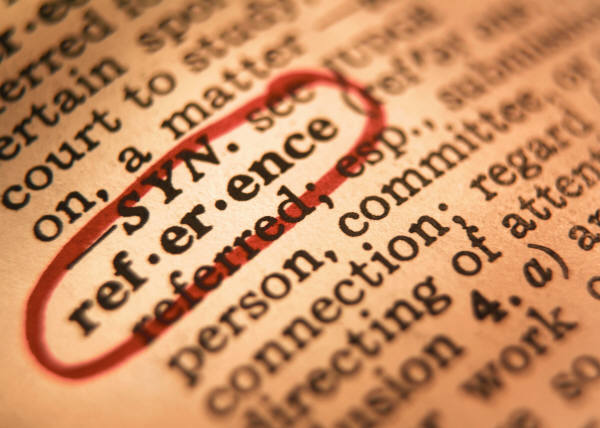
    If you are like any other teenager, I am sure you have been told to try to find and maintain strong professional references. These references usually consist of past employers or supervisors from volunteer opportunities. While professional references are very important, you also need to consider academic references.

    What is an academic reference?
    An academic reference is someone that can speak to your knowledge and research abilities in your field of study, usually a professor that has a doctorate degree and is an expert in the field. Some students may be tempted to ask a graduate student that is teaching the course or a teaching assignment for a reference, but because they do not have a PhD in the field they are not considered an appropriate academic reference.

    Who is a good candidate to be your academic reference?
    One of the most important things to consider when you are choosing an academic reference is how well the professor knows you. You want to get a professor that you have worked with closely throughout your time in university. Avoid picking professors you had in a class of 500; They should know you personally. It is best to pick your fourth year project supervisor or a professor from a seminar course that allowed for a lot of discussion and one-on-one contact. You also want to choose a professor from a course you did particularly well on – it is difficult to get a good reference if you received a poor grade.

    Start to cultivate relationships with professors as soon as you start in school. Discover who works in the field you’re most interested in and arrange to meet them prior to your last year of school. Inquire about working for this professor as a teaching or research assistant. You want a professor that knows you and that worked closely with you so that he or she can write a very personal letter. Generic reference letters look bad and do not stand out. You are much better off to get someone that knows you well and can speak to your academic achievements.

    Why is an academic reference valuable?
    Academic references can speak to your mastery of your major and your researching abilities. While most of your professional references can speak to your abilities working in a particular field and within the context of that job, an academic reference can speak to your knowledge of a subject, research abilities, potential, work ethic, oral and written communication skills and overall abilities. Not only are academic references a great asset to have when applying to jobs, they are a requirement when applying to graduate school or any type of professional degree (e.g. Law school or Teacher’s College). Most graduate programs require two to three academic references. These references are an integral part of the application process and can make a big difference in whether or not you are accepted. A glowing reference from an expert in your field can significantly improve your chances of being accepted into competitive programs.