Category: Campus Life

  • My Summer Camp Counsellor Experience

    My Summer Camp Counsellor Experience

    By Erin Rebello

    During one summer while in high school, I worked as a camp counsellor at a sports camp for boys and girls ranging in age from 5 to 13 years old. I worked with 3 other counsellors to facilitate the 6-week program through July and August.

    Why I Did It

    A lot of my friends had already landed their first jobs, and I felt as though summer would be the perfect time to start earning and saving! My parents are generally pretty strict about me getting a job, and didn’t want it to interfere with my education, so camp counselling during the summer was something that worked for my situation. It’s also a great place to start for a lot of people because it requires little to no work experience and looks great on resumes! Camp counselling also aligned with my interests, seeing as I love working with kids, and I hope to pursue a career as a pediatrician, where I would be working with kids daily. Finally, I wanted to start saving for post-secondary and make a contribution to my RESP, and this job allowed me to do just that!

    What I did

    As a camp counsellor, you really have to be versatile! Every day we had a different schedule with different activities to do with the kids, from basketball drills to dodgeball to arts and crafts. Since this was a sports-based camp, we focused on exercise and physical fitness. It was important for counsellors to have some physical stamina because kids, especially kids in a sports camp, NEVER STOP! We had to run drills with them, take a quick break, then move on to the next activity almost immediately. Though this part was difficult at first, the three other counsellors and I were soon accustomed to it. Through our position, we learned a lot about leadership, especially in terms of taking care of children.

    Pros and Cons

    Like anything, there were pros and cons to spending my summer working as a camp counsellor. One pro is that I gained a lot of work experience by doing something which I thought was a lot of fun. Another positive is that I met a lot of new people and had the opportunity to build lifelong connections with my fellow counsellors. This job also reaffirmed the belief that I want to work with kids in my future career. However, there were a few downsides. For one, I spent a large portion of my summer working as a counsellor, which left me less time to hang out with friends. As well, though the kids were usually well-behaved, at times they were not!

    My Favourite Part

    I’d have to say that my favourite thing about camp was the connections we made with the kids. Throughout my 6 weeks of working as a camp counsellor, I met so many kids with so many different goals and aspirations. One thing that I’ll cherish forever is how the older kids helped the younger kids, encouraging them to try their hardest and cheering them on when they managed to score a point. The whole experience was a lovely reminder of how wonderful children can be.

    Final Thoughts

    Overall, I loved working as a summer camp counsellor! This experience is unlike any other job because it really gives you the chance to have an impact on the lives of the kids you work with. This summer job boosted my confidence and improved my leadership skills, all while being a fun experience. Though I was able to save for my post-secondary education, I think that the greatest compensation was not the money, but the rewarding experience. I would definitely recommend this job to anyone interested in improving their skills and having fun at the same time!


  • The Pros and Cons of Starting a Business with a Friend (French version available)

    The Pros and Cons of Starting a Business with a Friend (French version available)

    Starting a business with a friend may seem like a fun and exciting idea. Although it may be a great idea, it also has its disadvantages. If you are curious about whether starting a business with a friend is a good idea or not, this article is just for you!

    Pros

    • You Know Each Other’s Strengths and Weaknesses

    If you start a business with a friend whom you have known for a long time, you probably know their strengths and weaknesses. They also probably know yours. This will help both of you decide which duties are best for each of you. There will also be fewer surprises when you are working with someone you already know.

    • You Can Spend More Time with Your Friend

    Working with your friends can make you excited to go to work each day. You get to talk about more than just business throughout the day. A large amount of your life is spent at work, so it is important to work with people you get along with.

    • You Can Freely and Comfortably Communicate

    If you’re starting a business with a friend, it’s most likely going to be with someone you can freely and comfortably speak to. When running a business, it is very important to communicate and remain on the same page as your partners. Working with a friend can help you comfortably communicate your thoughts.

    • You are Each Other’s Support System

    Starting a business is not easy, but doing it with a friend can help make it a little less overwhelming. You and your friend will be sharing this amazing experience and will go through all the highs and lows together. You could give each other the confidence and support needed to continue running the business.

    Cons

    • It May Be Difficult to Be Straightforward

    When communicating with a close friend, it may be difficult to be straightforward. This could be because you may not want to hurt your friend’s feelings. You may also be afraid of losing your friendship over a disagreement. For these reasons, you may not always be as honest as you would like to be.

    • It Can Be Difficult to Know Who Is in Charge

    If you start a business with a friend, it may be difficult to know who the boss is, especially if the business is equally divided between you both. There may be times when one of you works more than the other, making you feel like you deserve a larger part of the business. If there is a lack of communication, it can lead to bigger issues and could also lead to your business failing.

    • You Could Lose Your Friendships

    When working with a friend, you should keep in mind that there is a possibility that you could lose your friendship. You may not know what your friend is like in a business setting. You two could also have different goals, which can cause conflicts. These conflicts could potentially lead you two to part ways. This is why it is important for you and your friend to always openly communicate with each other.

    • Drama Could Get in the Way

    When doing business with a friend, drama can get in the way. It could make it difficult for you to separate your professional life from your personal life. For this reason, it is important to set boundaries when you first begin working together.

    Starting a business with a friend has many pros and cons. Whether or not one should start a business with a friend is very personal. It is something that should be carefully thought through and reflected upon.


    Resources

    Desmarais, Christina. “11 Pros and Cons of Building a Business With Friends.” Inc. https://www.inc.com/christina-desmarais/11-pros-and-cons-of-building-a-business-with-friends.html.

    Kelly, Marsha. “The Pros and Cons of Starting a Business with Your Friends.” Zen Business. https://www.zenbusiness.com/blog/pros-cons-starting-business-friends/.

    Litonjua, Eduardo. “Should you start a business with a friend? Pros, cons and key questions.” Keap. https://keap.com/business-success-blog/networking/should-you-start-a-business-with-a-friend-pros-cons-and-key-questions.

    Scribaceous. “The Pros & Cons of Starting a Business with a Friend.” https://scribaceous.com/pros-cons-of-starting-business-with-friend/.

    Susman, Aron. “The Pros and Cons of Starting a Business With Friends.” Business Collective. https://businesscollective.com/the-pros-and-cons-of-starting-a-business-with-friends/?syndicate.

  • How You Can Help the Environment Right Away

    How You Can Help the Environment Right Away

    Climate change is the biggest problem we face in the 21st century. There is a lot of news about the effect it will have on the planet in the near future, and much of it is terrifying. This is the time for everyone, you included, to take action. Some of us can take bigger steps than others, but the worst thing we can do is nothing. The sooner we take that first step, the better the next century will be. There is a lot you can do right now that will inspire yourself and others to keep working toward a better future.

    Our individual journeys start with ourselves. What comes to mind when you hear the words “environment” or “climate?” Write down everything that comes to you. This will give you an idea of what is important to you and where you can start. There are steps you can take in your day-to-day life. Try eating less meat, especially beef, as the industry adds a lot of carbon to the atmosphere. Instead of just recycling, try “precycling,” which is when you make sure there will be less garbage before you get something. Bring your own bag to the store instead of using plastic bags. Buy the smaller item or one that has less packaging.

    The next step in your journey is to look at the people and places around you. Encourage your family to think more about how their actions impact the environment. Remember that you are not judging each other but trying to help one another make the world better. Your school is a big opportunity to spread great ideas and make things happen. Talk to your friends and teachers and ask for their ideas as well. Your next classroom project or presentation could be on the environment. Parents can be encouraged to leave the car at home and walk their children to school each morning. Many schools have started tree-planting projects and gardens that help students learn more about nature and why it is important.

    If there are no nature or environmental clubs at your school, start one yourself! You can get teachers and staff to help you with school-wide activities and presentations at assemblies or community events. As a group of students, you can start campaigns that will help the environment and community through organizations such as DoSomething.org or IMatterYouth.org. As your journey continues and grows, you can set your sights on larger goals. This might include contacting government officials or starting up a larger group in your city using a community centre. What started as some ideas written down on paper can turn into something much bigger and make a grand impact.

    Threats to the environment are great and growing, and sometimes, it can be very difficult to hear the latest news on environmental destruction or climate change. This is why it is more important than ever for all of us, no matter your age, to take action. The smallest of steps can grow into the biggest of changes. One person alone is not enough to make the difference needed. But as more and more individuals take those steps, the brighter the future will be for everyone.

    Sources:

    Gienapp, Rebekah. “9 Ways Kids Can Protect the Planet, on Earth Day and Every Day.” The Barefoot Mommy. http://www.thebarefootmommy.com/2017/04/earth-day-for-kids/

    The Guardian. “How to make your school more eco-friendly.” https://www.theguardian.com/environment/2010/feb/12/carbonfootprints-carbon-emissions

    We Have Kids. “26 Ways Kids Can Protect the Environment!” https://wehavekids.com/parenting/26-ways-your-kids-can-help-protect-the-environment

  • Fostering Allyship to Indigenous Communities: Driving Change

    Fostering Allyship to Indigenous Communities: Driving Change

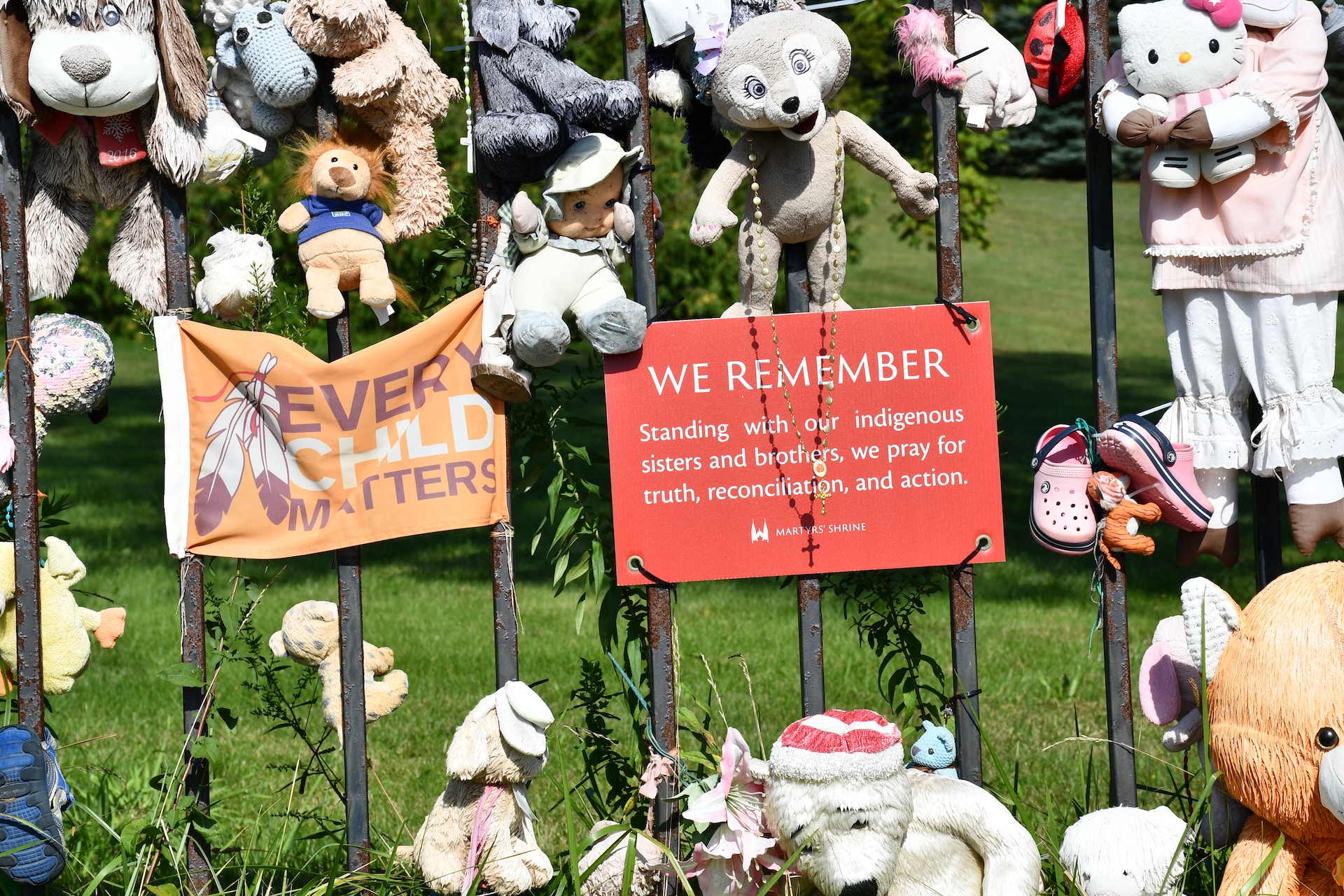
    In recent years, the tragic history regarding the horrors behind the systematic discrimination of Canada’s Indigenous communities has come to light in mainstream media. In 2021, the devastating news of over 200 remains of children in unmarked graves being discovered at Kamloops Residential School shocked the world (Dickson & Watson, 2021). And even more residential school sites are being investigated today, with 66 more potential graves found at St. Joseph’s Mission School in British Columbia (CBC News). The harrowing discoveries sparked candle vigils around Canada and even a visit from Pope Francis himself. Most notably, it also spawned Truth and Reconciliation Day (also known as Orange Shirt Day).

    Taking place every year on September 30th, the holiday is meant to acknowledge the mass devastation that has been inflicted upon Indigenous communities. It is a day in which all Canadians commit themselves to act against the discrimination that Indigenous people continue to face daily. However, this should not be limited to just one day. We should all strive to be allies to Indigenous people all around the world every day. Establishing Truth and Reconciliation Day has indeed brought more awareness towards educating people about the residential school system and the government’s role in their operation of them. That said, it has yet to bring more attention to many of the other obstacles Indigenous people are dealing with.

    For instance, the mental health and housing crises on reserves. According to Statistics Canada, the suicide rate for First Nations people in Saskatchewan is four times higher than the national average (Stefanovich, 2021). There is also the fact that despite Canada being a first-world country, most reservations do not have access to clean water. This has subjected many communities to health concerns like skin problems such as sores, rashes and eczema, birth defects, and gastrointestinal illnesses (Goldfinger, 2021).

    These are just a few of the systemic barriers they continue to grapple with every day. This is why your allyship is so important. When it comes to issues like these, they can feel far away; we can feel like nothing we do makes a difference. But this is not true; being an ally to Indigenous communities is what can raise awareness and educate people. With education and awareness comes a change for a better future.

    So, what can you do? Read below for tips!

    Learn Your History

    To be an ally to Indigenous communities, you must know what you are fighting for. Therefore, I would recommend doing some reading about the history of Indigenous people in Canada. While it is important to make sure that you read about all the systematic discrimination they have faced ever since the settlers came to Canada, don’t just read about the tragic side of things. Take some time to research the history of Indigenous culture and traditions. What were they like before the settlers came to Canada? How did everyone play a role in the community? It is important to remember that their history is not just one of tragedy; it is also one of great beauty and diversity.

    Learn about the Indigenous Communities Where You Live

    I am sure you’ve noticed the Land Acknowledgements at the beginning of morning announcements and meetings at your school. But have you ever taken the time to learn about those communities? It is important to know whose land you’re living on. There are so many different communities to learn about: the Haudenosaunee Confederacy, Moose Cree First Nation, the Attawapiskat First Nation. There is so much to learn about! I have linked a website where you can learn more about Indigenous communities and where they live in Canada.

    Diversify Your Media Intake

    The media that you consume is an avid teacher in your life. We can learn a lot from the characters and people that we watch on TV because they show us so many different perspectives. As such, what you choose to entertain yourself with can teach you a great deal. A personal recommendation of mine is Sterlin Harjo’s Reservation Dogs. The show is dominated by Indigenous actors and producers, and it addresses the mental health crisis faced by Indigenous youth.

    I also know many of us spend way too much time on our phones. Hence, I would also recommend supporting Indigenous content creators on platforms such as Instagram. There are so many out there, such as James Jones (@notoriouscree), Michelle Chubb (indigenous_baddie) and Tia Wood (tiamischik). A lot of these content creators are dedicated not only to educating people about the obstacles facing Indigenous communities but also to Indigenous culture and its traditions. I recommend supporting Indigenous music groups. A personal favorite is Young Spirit, a Cree drum group.


    Map of First Nations on Government of Canada Website:

    Map of Canada


    Follow Indigenous Content Creators:

    @notoriouscree @indigenous_baddie @tiamiscihk


    Works Cited

    CBC News. “66 more potential burial sites discovered at former B.C. residential school.” CBC News, 25 January 2023, https://www.cbc.ca/news/canada/british-columbia/williams-lake-st-josephs-residential-school-1.6724370 Accessed 25 November 2023.

    Dickson, C., & Bridgette Watson. “Remains of 215 children found buried at former B.C. residential school, First Nation says.” CBC News, 28 May 2021, https://www.cbc.ca/news/canada/british-columbia/tk-eml%C3%BAps-te-secw%C3%A9pemc-215-children-former-kamloops-indian-residential-school-1.6043778. Accessed 25 November 2023.

    Goldfinger, Daina. “‘An ongoing symbol of colonization’: How bad water affects First Nations’ health.” Global News, 30 September 2021, https://globalnews.ca/news/8199988/first-nations-water-crisis-health-effects/.  Accessed 25 November 2023.

    Myer, K., & Kaitlin Grable. “Honor With Action: 10 Ways to be an Ally to Indigenous Peoples.” GreenPeace, 8 October 2021, https://www.greenpeace.org/usa/10-ways-to-be-ally-indigenous-peoples/. Accessed 25 November 2023.

    Stefanovich, Olivia. “‘We don’t want any more tears’: First Nations urge Ottawa to boost mental health spending.” CBC News, 17 April 2021, https://www.cbc.ca/news/politics/indigenous-mental-health-resources-federal-budget-2021-1.5989070. Accessed 25 November 2023.

  • Marking the World Day for Safety and Health at Work on April 28: Why It’s All the More Important Post-Pandemic

    Marking the World Day for Safety and Health at Work on April 28: Why It’s All the More Important Post-Pandemic

    As the world gradually adjusts to the new normal post-COVD and a large number of employees are being called back to the office, there have been constant discussions on how this would influence the policies regarding workplace safety.

    Safety and health at the workplace have long been major global issues. So much so that, since 2003, the International Labour Organization (ILO) has recognized the World Day for Safety and Health at Work every April 28th. The goal has to be to advocate for accident and sickness prevention in the workplace. This issue has become even more prominent with the pandemic.

    In the beginning stages of the pandemic, offices all over the world were quick to respond and implement measures to mitigate the spread of the virus. And now that the cases have been contained, does this mean workplaces can go back to pre-COVID-19 times?

    In keeping true to the mission of the ILO to minimize the prevention of accidents and diseases at work, occupational safety and health experts suggest that efforts to have adequate safety and health measures at work still should be prioritized to contain the spread of not just COVID-19 but of any disease – and collaboration is key.

    Most employers, like the provincial governments, have signed up workplace design and safety engineers to ensure a healthy return to the office while maintaining productivity levels.

    Continuous safety measures

    An action implemented to make sure physical distancing is still observed when needed, along with capacity limits, is to do bookings of a desk, office, a meeting room in advance.

    Companies that offer shared offices aim to charge for the spaces, such as $45 to rent a boardroom for an hour.

    On the other hand, other experts suggest that workplaces should aim to improve the quality at their sites. This would prove challenging, however, for the companies situated in office buildings that have older ventilation systems, as it will most likely require an overhaul that could cost up to millions.

    More flexibility

    Companies should look into providing their staff with more flexible options with regard to the workplace, including adding more communal areas.

    Having a central hub helps in promoting social connections as well as improving productivity.

    If it’s broke, fix it.

    Some experts say that maintenance should still remain a top priority for companies. Before employees are recalled back to work, employers should call on property managers to address maintenance issues, from something minor as light bulbs not working, to something major as a malfunctioning elevator.

    Frequent cleaning measures should remain in place, as well as efforts to improve air quality. Hand sanitation stations should also be strategically placed in work environments.

    The World Day for Safety and Health at Work is just one way to advocate for these major issues. It may not be a quick road to normalcy for workplaces post-pandemic, but employers should look at the bigger picture and work on what they can do to provide a healthy and safe environment for the staff.


    Sources

    Brend, Yvette. “Design experts rethink the workspace as pandemic restrictions ease across Canada.” CBC. https://www.cbc.ca/radio/thecurrent/the-current-for-feb-25-2022-1.6364228/design-experts-rethink-the-workspace-as-pandemic-restrictions-ease-across-canada-1.6373245

    Ontario.ca. “COVID-19 and workplace health and safety.” https://www.ontario.ca/page/covid-19-workplace-health-safety?_ga=2.49343206.1327791763.1647208630-246573711.1647208630

    United Nations. “World Day for Safety and Health at Work.” https://www.un.org/en/observances/work-safety-day

  • Indigenous Student Scholarships for March 2025

    Indigenous Student Scholarships for March 2025

    ii’taa’poh’to’p Indigenous Student Access Program Award
    Scholarship Value: $2,000
    Awards Available: 20
    Award Deadline: March 20, 2025

    First Nations, Métis, Inuit, Women’s Scholarship – Women’s Program (Elementary Teachers’ Federation of Ontario)
    Scholarship Value: $1,250
    Awards Available: 4
    Award Deadline: April 30, 2025

    First Nations, Métis, Inuit, Women’s Scholarship – Women’s Program
    Scholarship Value: $12,500
    Awards Available: 2
    Award Deadline: April 30, 2025

    Kenneth R. Good Family First Nations Student Award
    Scholarship Value: $7,000
    Awards Available: 1
    Award Deadline: May 1, 2025

    Calgary Foundation First Nations, Métis (Metis) and Inuit Graduate Bursary
    Scholarship Value: $3,000
    Awards Available: 2
    Award Deadline: May 15, 2025

    First Nations, Métis and Inuit Undergraduate Bursary
    Scholarship Value: $3,000
    Awards Available: 6
    Award Deadline: May 15, 2025

    Yukon First Nations Heritage
    Scholarship Value: N/A
    Awards Available: 1
    Award Deadline: May 31, 2025

    Innovation Place Scholarships for Indigenous Students in the Sciences
    Scholarship Value: $5,000
    Awards Available: 1
    Award Deadline: June 1, 2025

    Petro-Canada Award for Indigenous High School Students
    Scholarship Value: $750
    Awards Available: 8
    Award Deadline: July 1, 2025

    Dr. & Mrs. G.B. Gowd Bursary for First Nations Women
    Scholarship Value: $1,000
    Awards Available: 1
    Award Deadline: October 15, 2025

    Western Continuing Admission Scholarship of Excellence for Indigenous Students
    Scholarship Value: $6,000
    Awards Available: 30
    Award Deadline: Ongoing

  • March 2025 Scholarships – Apply now!

    March 2025 Scholarships – Apply now!

    Kocchar & Co. Scholarship
    Scholarship Value: $1,000
    Awards Available: 1
    Award Deadline: March 31, 2025

    Jean Chretien Scholarship
    Scholarship Value: $5,000
    Awards Available: 5
    Award Deadline: March 31, 2025

    Horatio Alger Association of Canada National Entrepreneurial Scholarships
    Scholarship Value: $25,000
    Awards Available: 10
    Award Deadline: March 31, 2025

    Kezian Science Scholarship
    Scholarship Value: $1,200
    Awards Available: 1
    Award Deadline: March 31, 2025

    Optimist International Essay Contest
    Scholarship Value: $2,500
    Awards Available: 45
    Award Deadline: April 15, 2025

    Devine Family Scholarships
    Scholarship Value: $50,000
    Awards Available: 2
    Award Deadline: April 15, 2025

    Fred Hindle Bursary
    Scholarship Value: $5,000
    Awards Available: 2
    Award Deadline: April 15, 2025

    Gary Knechtel Memorial Scholarship
    Scholarship Value: $10,000
    Awards Available: 1
    Award Deadline: April 15, 2025

    Lift Parts Express Scholarship
    Scholarship Value: $500
    Awards Available: 1
    Award Deadline: April 30, 2025

    Emmett and Loretta Regan Memorial Award
    Scholarship Value: $4,500
    Awards Available: 2
    Award Deadline: April 30, 2025

    Pet Food Association of Canada Martha ‘Marty’ Wilder Honorary Scholarship
    Scholarship Value: $5,000
    Awards Available: 1
    Award Deadline: June 1, 2025

    Algonquin College Tuition Contest
    Scholarship Value: $5,000
    Awards Available: 1
    Award Deadline: June 30, 2025

    Western Continuing Admission Scholarship of Excellence for Black Students
    Scholarship Value: $6,000
    Awards Available: 30
    Award Deadline: Ongoing

    Western Continuing Admission Scholarship of Excellence for Indigenous Students
    Scholarship Value: $6,000
    Awards Available: 30
    Award Deadline: Ongoing

  • My New Normal: How My life Has Changed Since 2020 Because Of the Pandemic and Changes in Society (French version available)

    My New Normal: How My life Has Changed Since 2020 Because Of the Pandemic and Changes in Society (French version available)

    I’ll never forget the moment I found out that the whole world shut down. I was in my fourth year of university and, along with my fellow students, would have to continue classes remotely. Though things wouldn’t be the same, I (luckily) adapted quickly because this wasn’t the first time I completed courses online.

    My family and I remained as vigilant as we could. We only went out for necessities and created new habits like wiping down our groceries before putting them away. We also (like most others) got used to wearing masks when out in public as well as social distancing.

    While this was all occurring, people were noticing a spike in hate crimes towards those who are of Chinese/Asian descent. As someone who is Chinese, I felt alarmed and infuriated. Overall, this era of COVID-19 made me worry about things that I never was concerned about before.

    Through all of this, people were also discussing (and are continuing to discuss) the importance of looking after their mental health. I’ve always thought that it’s great how people are generally more open about it nowadays and was glad professionals were speaking on the significant impact these last two years have had on people in this respect. Ironically, however, I didn’t realize how much the pandemic has affected my mental health specifically until I was preparing for my graduation ceremony.

    My in-person ceremony was one of the first to take place since March 2020… and I was dreading it with every fibre of my being. I have had issues with social anxiety for several years and staying at home only made things worse. I knew that I should’ve been grateful to participate in an in-person ceremony (and I was), but the idea of being around so many people again after such a long time made me feel incredibly anxious. That night, after the ceremony happened and all the excitement was over, I couldn’t handle suppressing my feelings anymore and everything eventually spilled out.

    I guess one could say that my life has changed in a way where this situation has forced me to take inventory of what I need to do for myself. When I was much younger, I adopted an (unhealthy) habit of containing my negative emotions as a way to power through various challenges, and it also never seemed like I had a proper outlet to express how I felt. This containment has caught up to me lately, so I recognize now how it’s crucial for me to find effective ways to care for my own mental health.

    These past couple of years have forced me to take a closer look at how I deal with things emotionally. The difficult part now for me is letting go of this year’s-old habit and allowing myself to properly deal with my emotions. A hindrance is my self-esteem as I must recognize that I actually deserve to do so. I also tend to be very tough on myself, which has worked out in certain areas of my life, but I now understand that this shouldn’t be the case where long-term emotional issues are concerned.

    All in all, there are a lot of things I need to address, but major lessons I’ve learned from the pandemic are to remain more aware of how things are impacting me and ensuring I make better choices for myself. I know I’m a work-in progress, so engaging with this kind of reflection more often will help me navigate what needs to be done for my well-being.

  • Career Profile: Market Research Analysts

    Career Profile: Market Research Analysts

    Suppose that you or a friend wanted to start a business selling cookies or taking care of pets. You would want to know as much as possible about your potential customers before you started. A market research analyst could help. If you enjoy talking with people and working with numbers, this could be the right job for you.

    Market research analysts work to understand the public, especially related to what they buy and why. If a scarf manufacturer can sell blue scarves but not orange ones, for example, a market research analyst might be able to find out why. If someone wants to open a pizza restaurant in an area where similar food is already available, the analyst could help the person decide if there are enough customers to make it worth the effort.

    Making these kinds of decisions can be difficult without accurate information. Market research analysts try to get the information and compare it to other data to see if it is accurate. They call people to ask for their preferences, go from door to door to conduct surveys, check government databases for information about the people in an area, and otherwise try to find out as much as they can about the situation.

    Large amounts of information are not very useful without someone to interpret the data. Analysts use their knowledge and experience to decide on the importance of different pieces of information and then put their conclusions into a report for the client. For the pizza restaurant issue, for example, they might look at similar neighbourhoods to see how many Italian restaurants have survived there.

    Market research analysts often conduct surveys online, over the phone, or in person to find the information they need. For the pizza restaurant, they might contact people in the neighbourhood to see how often they eat out, how much they are willing to pay, and anything else that might be relevant.

    Sometimes, this stage involves walking long distances through a neighbourhood or stopping people to talk to them in malls or parks. The pandemic has reduced the amount of face-to-face contact, and now much of the work is done through the phone or online. However, market research analysts should still be prepared to go outside in bad weather. People might also be rude or too busy to answer questions, making market research difficult.

    Once the information is ready, the next step is to write a report for the client. This stage might also involve meeting with the managers to explain what the numbers really mean and how various factors affect the business. Sometimes, these managers and business owners ask for advice on the best choice to make. The market research analyst might not be very well qualified to give this type of advice, but it is helpful to have some knowledge that is useful for the client.

    Market research analysts can work with government or private businesses. Often, they work for a series of clients, but some large companies have enough money to hire a full-time analyst. A four-year bachelor’s degree in marketing or statistics from a university is usually necessary, and experience in the field is helpful. In high school, courses in English and mathematics are useful. Depending on where they work and their level of experience, market research analysts earn between $41,000 and $78,000 per year.

    A job as a market research analyst can be intense but rewarding. If you enjoy statistics and talking to people about what they like, this might be the job for you.


    Bibliography:

    Glassdoor. “Market Research Analyst Job Description.” https://www.glassdoor.ca/Job-Descriptions/Market-Research-Analyst.htm.

    Job Bank. “Analyst—Market Research in Canada.” https://www.jobbank.gc.ca/marketreport/outlook-occupation/3869/ca;jsessionid=F9A1964262A199A664BF4CA51DEE1376.jobsearch76.

    Payscale.com. “Average Market Research Analyst Salary in Canada.” https://www.payscale.com/research/CA/Job=Market_Research_Analyst/Salary.

    Princeton Review. “Market Researcher Careers.” https://www.princetonreview.com/careers/92/market-researcher.

    University of Manitoba. “Market Research Analyst.” https://umanitoba.ca/career-services/career-planning/explore-occupations/market-research-analyst.

  • St. Patrick’s Day: How a Simple Irish Tradition Turned into a Spectacle

    St. Patrick’s Day: How a Simple Irish Tradition Turned into a Spectacle

    If you’ve dropped by the dollar store a week or two after Valentine’s Day, you probably saw a whole aisle of green hats, green jewelry, accessories with green four-leaf clover designs, and shirts that say “Kiss Me, I’m Irish” on display. And if you’ve lived in Canada for some time,  you know that this signals that St. Patrick’s Day is soon to come.

    St. Patrick’s Day is marked every year on March 17, which is the death anniversary of St. Patrick, who died in the fifth century.  Since the 16th century, the Irish have observed this day as a religious holiday for over 1,000 years as it falls during the Christian season of Lent.

    In those days, Irish families would attend church service in the morning and celebrate in the afternoon. While it was common to fast and/or abstain from the consumption of meat during the Lenten season, as well as to observe solemnity, these practices were waived and people would dance, drink and feast on the traditional meal of Irish bacon and cabbage.

    White St. Patrick is highly regarded as the patron saint of Ireland, largely credited with bringing Christianity to the Irish, the celebration of his life and what he has done for Ireland translated differently outside of the country.

    The St. Patrick’s Day Parade

    While the Irish have celebrated St. Patrick’s Day by way of large feasts and lots of dancing, the first ever St. Patrick’s Day Parade didn’t take place in Ireland. Rather, it took place in a Spanish colony in what is now St. Augustine, Florida on March 17, 1601. It was organized by Irish vicar Ricardo Artur.

    The practice didn’t really take off until it was held by Irish soldiers serving in the British army – not in Ireland, but in New York City on March 17, 1762. The parade made the military members feel at home even though they were far from it. In 1848, several New York Irish Aid societies joined forces to hold one official New York City St. Patrick’s Day Parade.

    When the Great Potato Famine struck Ireland in 1845, close to one million Irish Catholics turned to the United States to survive. But because of their religious beliefs and accents that were unfamiliar to Americans at the time, the immigrants found it difficult to find jobs and ended up taking jobs that Americans didn’t really want.

    Then, when Irish Americans took to the streets on St. Patrick’s Day to celebrate their heritage, they were portrayed as a cartoonish group of people in newspapers. Shortly thereafter, the Irish Americans realized they could turn things around by embracing a political power that they could use to full advantage. So they started to form a voting bloc which will later be known as the “green machine.” It wasn’t before long when the St. Patrick’s Day parade became a source of pride for Irish Americans more than ever and even became a must-attend event for political candidates.

    Everything culminated in 1948 when then-President Harry S. Truman attended New York City‘s St. Patrick’s Day parade.

    Now, this is considered as the world‘s oldest civilian parade and the largest in the United States, with over 150,000 participants and 3 million spectators, lining up the 1.5 mile parade route, which typically takes five hours. Other cities like Boston, Chicago, Philadelphia, and Savannah hold big parades to mark St. Patrick’s Day.

    In 2020 during the early onset of COVID-19, the St. Patrick’s Day Parade in NYC was one of the first major city events to be cancelled.

    Misinterpreted Symbolisms

    Despite the massive popularity of St. Patrick’s Day, many Irish people feel that the day is full of misinterpreted symbolisms.

    For example, there is the myth that if you kiss the Blarney stone you become eloquent. This is something that the Irish don’t even do.

    Another thing is green beer, which doesn’t exist in Ireland, as do the cabbage and corned beef.

    Yet another one is the leprechauns, which is derived from the old term “leath bhrogan” which translates to shoemaker. In old Irish culture, they were a symbol of luck, thus the term “luck of the Irish.” How leprechauns became a stuff of horror movies though is anyone’s guess.

    Most of these things have stemmed to please the tourists or pop culture fans.

    Despite these, the Irish will always be proud of their heritage and will always be welcoming for others to celebrate St. Patrick’s Day with them.


    Sources

    https://www.history.com/topics/st-patricks-day/history-of-st-patricks-day

    https://www.eventbrite.com/blog/st-patricks-day-events-ds00/

    https://abcnews.go.com/US/story?id=91823&page=1