Category: Campus Life

  • Black History Month: Spotlight on 5 Historic Black Canadians

    Black History Month: Spotlight on 5 Historic Black Canadians

    By Avreet Jagdev

    February marks Black History Month, a time during which Canadians celebrate and acknowledge the history of Black Canadians and communities, many of which have transformed our very country. In honour of this year’s Black History Month, here are five Black Canadians that we are highlighting for their powerful roles in history:

    Jean Augustine

    Jean Augustine made history as the first Black Canadian woman to serve as a Member of Parliament. She immigrated to Canada in her young 20s and pursued a Bachelor’s degree at the University of Toronto. As a Member of Parliament, she served the constituency of Etobicoke-Lakeshore in the Greater Toronto Area. She won four consecutive elections until she decided to pass the torch on in 2006.

    Viola Davis Desmond

    Viola Davis Desmond was a civil rights activist and a businesswoman. She was best known for her courageous act of resistance against racial segregation. In November 1946, Desmond visited the Roseland Theatre in New Glasgow, Nova Scotia. Despite requesting a seat on the ground floor, she was given a balcony ticket.

    Upon realizing that she was refused her ticket because of her race, Desmond decided to take a seat on the ground floor anyway — an area reserved for Caucasians only. When she refused to exit her seat, the police were called. Desmond was physically dragged from her seat and jailed overnight. She refused the charges against her, and her case went to Nova Scotia’s Supreme Court. In 2018, she made history again by becoming the first Canadian woman to be regularly circulated on a $10 bill.

    Lincoln Alexander

    Lincoln Alexander is widely known for being the first Black Canadian to serve as a member of Parliament in the House of Commons, Cabinet Minister, and Lieutenant Governor. His legacy is recognized annually on the 21st of January, which in 2015 was officially made Lincoln Alexander Day. He was a recipient of honorary degrees from six universities and was honoured with several awards, including Queen Elizabeth II’s Golden and Diamond Jubilee Medals.

    Violet King

    Violet King was the first ever Black woman lawyer in Canada. Born in Calgary, she knew from a young age that she wanted to pursue law. To pay for her degree at the University of Alberta, she taught piano lessons in her free time. King accomplished many milestones: she was the first Black Canadian to graduate from law school in the province of Alberta and was the only Black woman in her graduating class. Through her accomplishments, she paved the way for other BIPOC and women to pursue law.

    Josiah Henson

    Josiah Henson was a Canadian author and spiritual leader who was born into slavery in Maryland. In 1830, he escaped to Canada. As a leader in his community, he mobilized abolitionists to create the Dawn Settlement; this was a place for survivors and refugees of enslavement to become educated and learn skills that would help them become self-sufficient.

    These five Canadians paved the way for those after them, inspiring millions of people on their way. During Black History Month, it is imperative that we take the extra step to learn their stories and recognize the accomplishments they achieved.

  • Canada’s history of slavery and segregation

    Canada’s history of slavery and segregation

    By Avreet Jagdev

    Since 1995, Canada has celebrated Black History Month. It is a time to celebrate the accomplishments and contributions of Black Canadians, but also to acknowledge the darker part of our history – the parts that are too often overlooked.

    Few people know about the history of slavery and segregation in Canada. The darker parts of our history have been continually glossed over, and in some cases, ignored entirely. In fact, many Canadians believe that our only role in slavery was as a safe haven for enslaved African Americans who escaped to Canada through the underground railroad. 

    Despite the lack of awareness surrounding it, slavery existed in Canada for almost two hundred years, between 1671 and 1834. During this time, about 4,000 enslaved African people were transported from British and French colonies to Canada. 

    Owning slaves was incredibly common across Canada. Slave ownership was not exclusive to the rich or elite either; on the contrary, people of all social and economic backgrounds took part in slave ownership.  Not only did slave labour provide profits, but it also indicated social standing. 

    There is a commonly held belief that slavery in Canada was not as cruel or violent as American slavery. This, however, is untrue: enslaved people in Canada were stripped of their basic human rights and freedoms. They were dehumanized heavily, and treated like mere commodities. Many faced violence and abuse at the hands of those who exercised ownership over them. Some were even tortured and murdered.

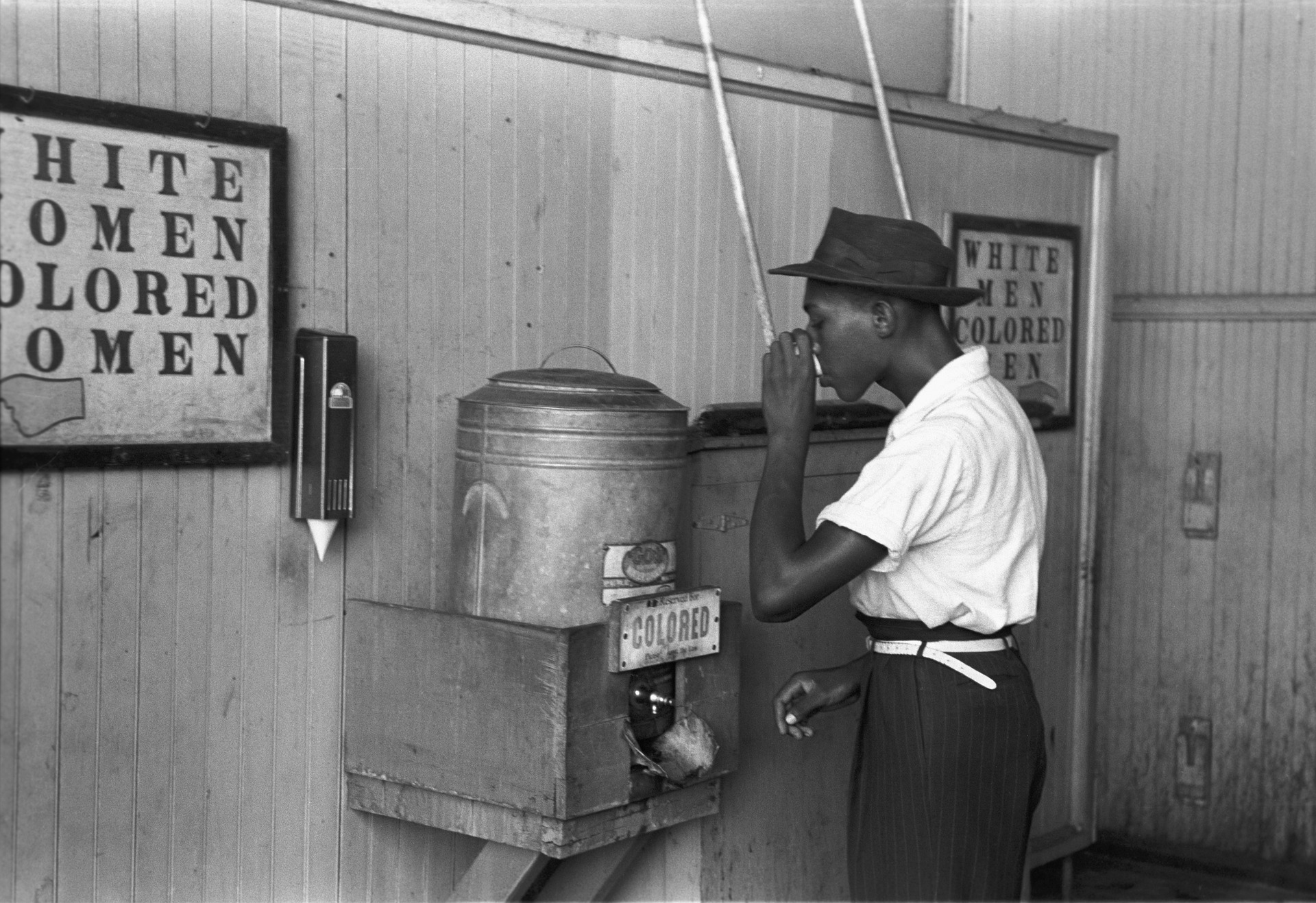
    In 1834, Britain’s Slavery Abolition Act came into effect, which abolished slavery across the British Empire, including Canada. However, the end of legal slavery did not result in the freedom of Black Canadians. The abolition of slavery was followed by systemic racial segregation across Canada. Justified through a lens of racial inferiority, Black and racialized Canadians were segregated and denied equal opportunity in many aspects of life, including healthcare, education, and jobs.

    Racially segregated schools were established in Ontario and Nova Scotia in the early 1800s, and these laws existed up until 1950. Racial segregation within education extended to post-secondary institutions as well, with many denying admission to coloured applicants.

    In addition to education, segregation based on race also affected public areas such as theatres, swimming pools, and skating rinks. 

    Some public amenities had separate seating or areas reserved for Black people, while others banned Black people entirely. For example, Edmonton City Council ruled in 1923 that Black people would be prohibited from using city swimming pools, to prevent ‘mixed bathing’ between white and coloured folk.

    Policies such as this were widespread across Canada up until the late 1970s when the Canadian Human Rights Act was passed. However, even with the legal end to slavery and racial segregation, Anti-Black discrimination and racism is ongoing. 

    Understanding the Anti-Black racism that prevails today requires a vital understanding and acknowledgement of Canada’s long-running history of Anti-Blackness. In order to truly honour Black History Month, we must go beyond convenient forms of allyship and face the entirety of our history, even the uncomfortable parts.

  • Workplace dress codes can be discriminatory against certain races. Here’s how, and what can be done about it.

    Workplace dress codes can be discriminatory against certain races. Here’s how, and what can be done about it.

    By Avreet Jagdev

    Over the years, it has become quite common for many work environments to enforce dress codes for their employees. Some workplaces simply ask that employees dress “business professional” or “business casual”, while others require specific colour schemes or entire uniforms. Sometimes, these dress codes are enforced for safety reasons, such as at a construction site or in a doctor’s office. In retail and service workspaces, uniforms are usually required so that employees can easily be recognized by customers and clients. Some aspects of workplace dress codes, however, can be discriminatory against employees from racial or religious minorities. No matter their intent, dress codes function to police and monitor bodies, all under the guise of “professionalism”. This has disproportionate impacts on those who are racialized or of visible minorities. Here are some examples.

    ‘Professional’ expectations for hair:

    It’s no secret that most employers expect their employees to be presentable and professional at all times. But what does it mean to have “professional” hair? Unfortunately, this standard too often leads to bias against curlier hair, specifically, natural Black hair. There are far too many stories of Black employees being reprimanded or even fired from their positions for wearing natural hairstyles, such as box braids, to their workplace. Recent studies have found that African American women are the most likely group of people to be discriminated against on the basis of their hair, as well as to be sent home from their workplace because of their hair. This can lead to pressure on Black people to straighten their hair or avoid ethnic hairstyles that hold great meaning to fit in with their workplace’s “professional” hairstyle expectations.

    Hats:

    Certain religions, such as Sikhism or Islam, require hijabs, turban, or other headwear. In these cases, requiring employees to wear a company hat or other type of headwear, can directly conflict with a person’s ability to practice their religion.

    Rules against facial hair:

    Some workplaces enforce dress codes that prohibit or limit facial hair, but this is discriminatory against certain religions and cultures in which people cannot shave or are required to keep facial hair.

    These are just some examples of workplace dress code policies that can be harmful to certain religious or racial groups. Everyone deserves the right to be themselves, to practice their religion, and to express themselves through their culture. When workplace dress codes infringe on these rights, it tends to disproportionately impact those who belong to visible minority groups.

    So what can be done about it?

    A very important aspect of tackling this issue is to learn and spread awareness about it. Because workplace dress codes are so common, it is quite easy to gloss over their negative impacts and implications. By intentionally educating yourself and those around you about the issue, you become part of the solution.

    And of course, it’s absolutely imperative that employers commit to more inclusive and equitable practices and policies across the workplace, including expectations around dress code.

  • Racial Bias in the Canadian Healthcare System

    Racial Bias in the Canadian Healthcare System

    When people are sick or injured, they expect that the healthcare system will work for them. Sometimes they get the care they need, but at other times, they leave without getting the necessary help, especially if they are non-white. Racial bias is often a problem in the Canadian healthcare system, but people can try to make it fair. If everyone has access to good healthcare, regardless of race, Canadians will live healthier and better lives.

    Examples of racial bias are everywhere in the Canadian healthcare system. One of the worst cases was the experience of Brian Sinclair, a wheelchair-bound Indigenous man from Winnipeg who died in September 2008. He had gone to see a doctor about a bladder problem. The doctor sent him to the emergency department of the Health Sciences Centre.

    Sinclair waited for someone to take care of him, but the doctors were busy with other patients. They failed to treat him, and he died after waiting thirty-four hours in the emergency room. A later inquiry showed that emergency room staff believed that he was drunk when instead he was very sick.

    Not every situation is as bad as the case of Brian Sinclair, but people in Canada have experienced many other examples of racial bias. For example, medical care tends to favour treatments based on tests and medications rather than traditional treatments that are a large part of the history and culture of Indigenous groups and other non-white people. Laws related to harvesting and developing on Indigenous territories mean that people do not have access to traditional medicines as they should.

    Doctors, like many other Canadians, often have biases about the people they see. They may assume that alcohol or drug use are problems for Indigenous people, and they may have biases about other races, as well. These biases can cause doctors to listen less carefully than they should and to make false assumptions about the causes of people’s illnesses. If these biases are obvious, they can also add to a patient’s stress and make recovery more difficult.

    In the COVID-19 pandemic, Indigenous, South Asian, and black people have been hospitalized more often than white people. They have also been more likely to experience long-term symptoms that can have a major effect on their lives. Although some of these people might receive good care, many of them do not.

    One reason for these differences is the difficulty in gaining access to care and to the conditions that help them recover more fully. Many non-white people, especially new immigrants, work in low-wage jobs and live in poorer housing than others do. This can affect their health in many ways. Low wages mean that they are less likely to be able to take time off work when they are sick, and minor problems can become worse.

    Low-income people face many barriers in healthcare. Even if they can take time off work to visit a doctor, they still need transportation to the hospital or doctor’s office. They might not be able to afford the medications necessary for treating the disease, even if they get a prescription. While this problem is not only a racial issue, it tends to have the greatest effect on people who are already facing other barriers.

    Racial bias in healthcare is often difficult to identify and change. However, becoming aware of the problem is the first step. If you let people know about the problem, you could be part of the solution.


    Bibliography:

    Amin, Faiza. “Racial Bias Reaches Tipping Point in Canada’s Healthcare System.” https://toronto.citynews.ca/2019/12/04/racial-bias-healthcare-system/.

    Bascaramurty, Dakshana. “Racial Bias in Canada’s Health Care System Makes Diagnosing Long COVID Even More Challenging, Experts Say.” https://www.theglobeandmail.com/canada/article-long-covid-health-care-racial-bias-diversity/.

    Gunn, Brenda L. “Ignored to Death: Systemic Racism in the Canadian Healthcare System.” https://www.ohchr.org/sites/default/files/Documents/Issues/IPeoples/EMRIP/Health/UniversityManitoba.pdf.

    Phillips-Back, Wanda. “Confronting Racism within the Canadian Healthcare System: Systemic Exclusion of First Nations from Quality and Consistent Care.” https://www.ncbi.nlm.nih.gov/pmc/articles/PMC7697016/.

  • Some Differences Between College and University

    Some Differences Between College and University

    If you’re thinking of applying to either college or university, it’s important to understand the differences between the two. In Canada, college and university are two separate pathways. However, in other countries like the United States, college and university are considered the same thing and are one pathway altogether. There are many differences between college and university, and it’s encouraged to understand each before applying to make sure it’s the correct option for you. The main differences between the two options are the degrees, the amount of time it takes to earn those degrees, learning styles, pricing and of course, content.

    Depending on the job you hope to acquire when you’re older, these pathways can determine your likelihood of getting a job based on the degree you get, and the suggested pathway for that specific field. In college, students typically spend 2-3 years earning either an associate’s degree or a bachelor’s (undergraduate) degree. In university, students typically spend anywhere between 3 and 8 years earning a PhD, doctoral, master’s or bachelor’s degree.

    It can take:

    • up to 8 years for a PhD ( doctoral degrees are 4-6 years)
    • master’s degrees are 1.5-2 years on top of the amount of time it takes to earn your bachelor’s
    • bachelor’s degrees usually take 3-4 years.

    Depending on your field of interest, you may be spending a lot of time in school, or maybe, a little amount. For example, if you want to become a doctor, either a doctoral degree or a Ph. D is required. If you want to go into one of the trades such as an electrician, an associate’s degree from college is recommended.

    Another important thing to keep in mind while choosing your pathway is the learning style; are you hands-on? Or more book-worm oriented? Colleges and universities have separate teaching styles and provide information in different ways to help students learn. In high school when selecting courses for grades 9-10, you are required to choose either applied, academic, workplace and open level courses. Applied typically leads to college, academic usually leads to university, workplace sometimes leads to community college or other pathways, and open leads to any of the above. However, if you take these courses, it doesn’t mean you can’t apply or be accepted into the other pathways, it just limits your likelihood. These types of courses also use different learning techniques. Applied uses hands-on learning while academic students are taught using books and listening to someone speak. Open level courses are often trades, arts and phys-ed courses in high school which can use any of the teaching techniques to accept all students and their learning styles. Workplace courses are courses such as Cooperative Education (CO-OP) to give students a better understanding of what it’s like to choose the workplace as their pathway after high school. Depending on your high school, these types of courses and levels may vary. After grades 9-10, many high schools switch from applied and academic to college and university so students are better able to understand and plan the courses they are choosing based on their pathway.

    Along with this, colleges and universities have a price difference. While attending both, the main costs are tuition, books, and transportation/housing if that applies to you. The price of books ranges from course to course. Transportation also depends on a variety of things; whether you have a car, are using public transportation, where you live, where your campus is, etc. Housing prices are typically the same at colleges and universities. However, the biggest price difference is tuition. The type of degree and course you choose to learn will determine the tuition price but universities are typically more expensive than colleges. For both, there are scholarships and financial aid available to students who are suited for it.

    Despite all of these differences listed above, try to avoid choosing a pathway based on economic convenience. You need to do what makes you happy and what can lead to an independent lifestyle.  Instead, choose the pathway best suited for you and the career you hope to achieve.


    References:

    https://settlement.org/downloads/didl/english/difference-college-university-en.pdf

    https://www.franklin.edu/blog/what-is-a-doctorate-degree

    https://www.geteducated.com/career-center/detail/what-is-a-bachelors-degree/

    https://www.bestmastersdegrees.com/best-masters-degrees-faq/how-long-does-it-take-to-receive-a-masters-degree

    https://www.geteducated.com/career-center/detail/what-is-an-associate-degree/

  • What Can You Do with a University English Degree?

    What Can You Do with a University English Degree?

    If you study Education, Medicine, or Law in university, you have a clear career path. With an English degree, the career path is more difficult, but finding a good job is still possible. With the skills that come through studying English literature, people can prepare themselves for a wide variety of jobs.

    A university degree in English involves studying books, essays, and other writings from many different eras. Some students concentrate on a certain time period, such as the nineteenth century, or a certain type of writing, such as poetry. Still, most students start with courses that cover many different eras and types of literature before they choose a specialty. This gives them the chance to study different types of writing and to develop their own skills.

    Some of the most important benefits that come from an English degree are the ability to read and understand difficult texts, to find their important themes, and to write about them in a way that helps others to understand. This skill can be very useful in fields like law, where people often have to read and understand many pages of documents in a short amount of time.

    English literature students might learn about politics and ambition through the works of William Shakespeare or Jonathan Swift, and they might learn about the struggle for better working conditions through the novels of Charles Dickens or Émile Zola. These insights could lead to careers in journalism or politics, where people need to know about many different issues and how they relate to people’s needs.

    Publishing and technical writing are good choices for graduates of English programs. Studying famous writers helps people to understand effective communication and how to get an idea across clearly and concisely. Some people go on from English degrees into technical writing. This branch involves writing procedures manuals and other instructional documents. For example, technical writers might work with factories to update instructions for welding cars together or with hospitals on writing procedures for taking care of surgical patients.

    Marketing and communications are other areas where English literature graduates can work. Many companies hire communications specialists to write press releases or to contact other people who want information on the company. The writing practice that people get from studying English gives them the skills they need to write clearly in newsletters and other communications for investors and others who are interested in different companies and organizations.

    Teaching is also a good option for people with English degrees, whether they teach their own subject or something related to it. English as a Second Language teaching is good for people who want to work with newcomers, and other subjects can also fit well with English studies.

    Librarianship is a good option since people with a background in English literature already know about books and how to get the best from them. Even financial jobs are possible, although working with words is quite different from dealing with numbers.

    A degree in English might not seem very useful these days, but it can give a good foundation for many different jobs. With the reading and writing skills that people gain through their English studies, they can find many possibilities open to them.


    Sources

    Stanford University. “Careers After an English Major.” https://english.stanford.edu/information-for/undergraduates/careers-after-english-major.

    Top Universities.com. “What Can You Do with an English Literature Degree?” https://www.topuniversities.com/student-info/careers-advice/what-can-you-do-english-literature-degree

    University of Toronto. “Careers by Major—English.” https://www.utm.utoronto.ca/careers/careers-by-major-english.

    University of Waterloo. “Undergraduate Programs: English.” https://uwaterloo.ca/future-students/programs/english.

  • That’s All, Folks: Advice for those going into their last semester of college/university

    That’s All, Folks: Advice for those going into their last semester of college/university

    By Tiffany Chang

    Congratulations! You’re almost there. For some students, this may be your last few months of schooling and then, after graduation, it’s out into the real world.

    As someone who recently graduated, one’s final semester can pass by quite quickly. To end this journey on a high note, here are a few tips on how you can make the most out of it:

    Make Sure This Is Your Last Semester

    Even if you’re absolutely sure you’ve calculated correctly, it doesn’t hurt to double-check with a counsellor or academic advisor that this is indeed your final semester. You have access to another pair of knowledgeable eyes whose job is to help students in these areas, so soon-to-be graduates might as well confirm the current number of completed credits as well as the credits in progress for good measure.

    Overall, asking could provide that additional reassurance.

    Connect with Alumni Who Have Graduated from Your Program

    If you haven’t done so already, many colleges/universities facilitate opportunities for students to meet people with established careers who’ve graduated from the same program as them. They often help you get a better idea of what professions are currently feasible options in your chosen field.

    Students can likely gain very valuable, updated information during these encounters that could give them the right tools to prepare them for future job searching. This is essentially networking as you can also establish professional relationships with alumni as well.

    Take Some Time to Enjoy the Rest of Your Academic Journey

    Do anything the school has to offer for students that you think you might like, whether it be joining a club, a volunteering/work opportunity, or attending/getting involved with various events. During COVID-19, this may be tricky to navigate, but I encourage you to try your best to find something enjoyable while, of course, also keeping yourself safe and following safety protocols.

    Another option might even be taking a course(s) you’re interested in. For instance, those attending university and getting their bachelor’s degree who have finished their program’s specific requirements could enrol in a course(s) that isn’t necessarily related to their major. They will learn information they’ll likely enjoy engaging with while completing their remaining credits.

    These are all great ways to create memories you’ll be able to look back on fondly long after graduation.

    Finally, Give Yourself a Pat on the Back!

    Pursuing a college/university program is difficult and encompasses countless stressful moments. Oftentimes, people are so focused on their heavy workloads that they feel as though they don’t have time to take in how much they’ve actually accomplished throughout the entire process.

    Just pause for a moment to reflect, then say: “I can see the finish line and I’m proud of myself for making it this far.”

    All in all, appreciate the time you have left as a student and try doing what’s stated above while you still can. You’ve worked incredibly hard to finish your schooling. Continue being productive and seek opportunities for enjoyment as you complete your last semester.

  • Addressing Food Insecurity Among College and University Students

    Addressing Food Insecurity Among College and University Students

    By Rabia Khan

    Students who travel abroad for higher education know the pain of living separately from their parents and family. They are forced to leave a very comfortable and privileged life behind to pursue their dream in a foreign land. But many fail to foresee the consequences and challenges that come along the way when you are on your own. While this self-efficient journey can surely become life-changing, some face the hurdles with a high head!

    Food is the source of human life; when you’re unable to receive sufficient food, things can become overwhelming. Thousands of post-secondary students experience food insecurity in day-to-day life. Here are some ways you can fight food insecurity as an international or domestic university or college student!

    Food banks

    It is not a shame to rely on additional resources like food banks; some people feel overwhelmed by utilizing services provided by public organizations. Food banks are one of the most effective options to fight food insecurity. Many of them provided monthly packages or weekly groceries without any cost. Food banks majorly benefit students as they don’t get enough time to cook their meals and are most likely out of funds.

    Food pantry (university/colleges)

    There are some universities and colleges that run a weekly food pantry benefitting all students who are in need. They provide a wide variety of options for students and believe in the idea of food sustainability. Besides, the food pantry provides fresh stock for free.

    Community centers for youth

    As an international or domestic student, times can get rough. It is important to know that you are not alone; you can have full access to community centres especially run for youth and reap benefits from them. They not only provide help with low-cost/free housing but also assist with free groceries and free meals!

    Free meal programmes

    A student struggling with food insecurity can welcome a lot of stress in life. It is very essential to rely upon useful resources and receive early assistance as soon as possible. Some Non-profit organizations endlessly work to better the lives of vulnerable people and those who are affected by food scarcity. That is when free meal programmes come into place, and students in need can access these NGOs without feeling ashamed.

    Cheap grocery by referral/Coupons

    Some universities provide coupons and referrals within the community to students who are in need. They can benefit from cheap groceries which are sustainable at the same time. Besides, it can save a lot of money and prevent students from shopping from big retail stores that promise discounted prices.


    Final Word

    Don’t be shy to seek help and ask for support. It is important that as students, early assistance is placed to avoid or prevent unforeseen circumstances as the life of a student is very uncertain. Besides, mental and physical well-being will set you up for a successful career.

  • A Student’s Guide to Surviving Winter

    A Student’s Guide to Surviving Winter

    The chill is coming! Colder, whiter days are ahead. We all have to deal with the torment of winter, but there are a few ways to make it easier for all students in high school and college.

    What do we hate about winter most? The cold, right? It’s only half Mother Nature’s fault, the other half is our own. Many of us want to look fashionable in winter, but at the expense of our own warmth and comfort. We’ve all seen guys walking around in the dead of winter with no coat on or only wearing a hoodie, and girls still wearing skirts and small jackets. Don’t be one of those people! Bundle up! Shop around for good quality winter apparel that will keep you warm! Protect your ears, neck and feet. This should go without saying, because if you don’t you’ll end up getting sick and that leads us to…

    Feeling terrible! This will not help you in school. So what can you do when you do get sick? Friendly Dr. Kylie (that’s me!) says that drinking lots of fluids and hot showers usually does the trick for me. Rest is required, but try going to bed earlier rather than taking full days out of school. I have always missed important information on my sick days. We all know that being sick is all too good of an excuse to over exaggerate our need to take a sick day when really a box of Kleenex and some Buckley’s would be all you need. Additionally, in the winter our bodies require extra vitamins because it has to work harder. Taking a vitamin C pill, for example, will decrease your chances of getting sick significantly.

    So you’ve protected yourself, but this doesn’t mean everyone else did, too. Wash your hands as much as possible when using public facilities. You can also try alternatives to using your hands to touch things; whether you’re using your sleeve or shoulder to open a door or grabbing a piece of paper towel before touching the faucets in the bathroom, it all makes a difference. You can also equip yourself with travel size antibacterial gel. If can’t stand the smell of regular antibacterial gels, many companies now make fruit scented ones to counteract the alcohol smell.

    Finally, if you’re like me and are always cold, here’s something I found helped me in my daily commuting. Carry a thermal mug with you and keep it full of whatever delicious hot beverage you like! Whether it be coffee, tea or even hot chocolate, this will not only keep you warm but it will postpone and lessen your hunger resulting in fewer pounds gained during the less active season! You can also make an effort to eat heartier meals with lots of nutrition rather than greasier meals that will only encourage seasonal depression.

    Following the tips above should help you stay warm, cozy and happy throughout the long Canadian winters!

  • Maintaining a Healthier Lifestyle in the New Year

    Maintaining a Healthier Lifestyle in the New Year

    The New Year is always an opportunity to start fresh. Every year brings about new interests, hobbies, friends, and happiness. However, it can also bring on some new challenges and obstacles for you. These challenges aren’t always bad, sometimes our biggest struggles help us to become the best versions of ourselves, but we do not always see it.  Sometimes it feels like life is moving incredibly fast, so fast that you can’t keep up. There’s a lot to worry about in life, especially when you’re still figuring out what you want to do with your life. Sometimes life gets especially challenging. Some years may feel like they were full of growth and satisfaction, and others may feel like the worst of your life. You may end up feeling proud of the person you became over the years, but you also may not. You’ve got to remember that there is always a chance for you to start over. Since it is now 2025, our decade is halfway done. This is the perfect time for us to be able to help ourselves nurture and grow into who we want to be. Sometimes all we need is a little self-care. When things like school, work or your own personal problems become the source of your stress and anxiety, you often brush your own physical and mental needs to the side. Those should be the priority, take care of yourself before anything else. All aspects of your lifestyle tie into your mental and physical state. Therefore, it is important to maintain a healthy and efficient lifestyle. Below, I have included a few tips for you to consider trying and live a stronger, positive life.

    Try a Healthier Diet: Your physical and mental health are extremely important. Changing things up in your lifestyle is a good start to trying to live a more positive life. Trying a healthier diet can help improve your physical health.  This can help you manage your weight, reduce your blood pressure, improve your cholesterol levels and control your blood sugar. Eating healthier food does not just help with your physical health, but your mental health too. The brain is almost like an electronic device, perhaps a phone. A phone needs to be charged occasionally to keep functioning properly, a brain is the same. The fuel which the brain runs on is food. Studies have shown that the food you eat affects its structure and how your brain operates. Foods like fish can be helpful to replace red meat.  Of course, there are your vegetables and greens such as kale, spinach and broccoli that are helpful too. Eat whole grains, and fruits or try switching to low-fat dairy. Limit your junk food intake. These methods and foods are known to be nourishing for your physical and mental health.

    Find your passion: Everyone has something that they are good at, or that they like to do. You don’t always have to be good at something to love doing it. As long as it makes you happy, you are successful.  Finding that one hobby that you love to do and that will distract you from all the negativity and happiness is essential to living a more positive lifestyle. Personally, I love to read and write to take my mind off things. Occasionally I love to draw because it can help me unwind and focus on something other than my hardships. Try doing different activities like sports or art and see what you like doing the best.

    Limit Yourself: Do not work yourself too hard and stress yourself out. Admittedly, I am a workaholic and do not know when to stop. I only stop when I am dead tired and extremely stressed out. Do not do this! You must take time to yourself, especially if you are a student in high school or post-secondary. When you are given an assignment, never leave it to the last minute so that you can spread out the workload. When you’ve got a test to study for, start studying as soon as possible because other things will come up that can disrupt your studies; spread it out. Overworking yourself is the worst thing you can do to yourself because you end up stressed and anxious mess in the end. Work very hard, but always know your limits. Take breaks when doing your work if you must, if you are feeling very overwhelmed maybe you should take this as a sign to pack up and relax. Winding down is important, when you clear your head, you can perform properly.

    Self-care is the best care. Everyone is always one choice away from changing their lives. Every choice that you make matters.  In the end, the thing that should matter the most is yourself. Take good care of yourself. Your body and mind are like a garden. Your garden needs water and nutrients to prosper and grow, without it, it’ll wither away.

    Websites used:

    https://www.health.harvard.edu/blog/nutritional-psychiatry-your-brain-on-food-201511168626

    https://www.healthline.com/health/best-diets-for-mental-health