
Category: Campus Life

  • Health and Wellbeing in Alberta (French version available)

    Health and Wellbeing in Alberta (French version available)

    Suppose that you need expensive dental work or medication. Your family might have health benefits or insurance to cover these costs. Restaurant workers have normally not received these types of benefits, but now some employers are trying to change that. If the idea becomes common, it could help to make many people’s lives better.

    Restaurant employees, also known as food service workers, often have low wages with few benefits like sick pay or dental care. A survey of 5414 restaurants in Alberta showed that forty-nine percent of full-time staff and sixty-five percent of higher-level workers receive benefits. Health and dental benefits for restaurant workers are rare in Canada because of the high costs in providing them.

    Balancing prices and costs in restaurants can be difficult. Restaurant owners have often reduced their costs by paying their staff minimum wage with few extra benefits. Good tips from diners can help, but not enough to make up for the low wages. During the pandemic, the many restaurant closures and illness among workers showed the need for health benefits.

    Health benefits are designed to help workers financially when they get sick or need dental care so that they can take time to recover or go to appointments. During the pandemic, many people could have avoided spreading COVID-19 by staying at home when they were sick, but they had no way of paying for food and other necessities without their wages. In restaurants and other workplaces, the risks of infecting other people are high, and being able to stay home but still get some money is important.

    During the pandemic, many workers resigned from their jobs, or they lost their jobs when businesses had to close. Once businesses were able to open again, they needed employees, but the previous employees did not always want to come back, or they had moved on to other activities.

    Because of the factors like these, many employers are still looking for employees. To attract good workers, employers have had to offer benefits, especially sick pay and other health-related benefits. That way, workers could miss work if they felt ill without losing their wages for the time they were away. Normally, employers and employees pay a small amount of money every month that gets put into benefits. Then when the worker needs the money, it is available.

    Dental benefits are also important, and many employers are beginning to offer them to workers. Some companies are also raising wages, helping employees with education costs, and even offering counselling for employees and their families who are suffering from emotional or mental health issues. Many employers are also offering higher wages to attract employees.

    In places like Montreal and Toronto, employers are using similar ideas to draw in good workers and bring restaurant diners back. They realize the importance of being healthy and having enough money for what they need. The idea might soon become common to many employers. These changes could help in the very competitive world of restaurants while also making life easier for people who work low-paid jobs.


    Bibliography:

    Alsharif, Ghada. “’Workers Have Choice’: Restaurants Offering Health Benefits Find It a Lot Easier to Hire Staff.’” https://www.thestar.com/business/2022/11/02/restaurants-offering-health-dental-benefits-in-bid-to-attract-workers-amid-labour-shortage.html.

    Duhatschek, Paula. “For Many Restaurant Workers, Health Benefits Are Rare. Amid an ‘Existential’ Labour Shortage, That’s Changing.” https://www.cbc.ca/news/canada/calgary/restaurant-industry-health-benefits-1.6630367.

    Hamilton, Janella. “Worker Shortage Leaves B.C.’s Restaurant Industry Hungry for Employees.” https://www.cbc.ca/news/canada/british-columbia/worker-shortage-leaves-b-c-s-restaurant-industry-hungry-for-employees-1.6458931.

    HR Reporter. “More Than Half of Employers Boost Wages Amid Staff Shortage.”  https://www.hrreporter.com/focus-areas/compensation-and-benefits/more-than-half-of-employers-boost-wages-amid-labour-shortage/368002
  • Career Profile: Atmospheric and Space Scientist

    Career Profile: Atmospheric and Space Scientist

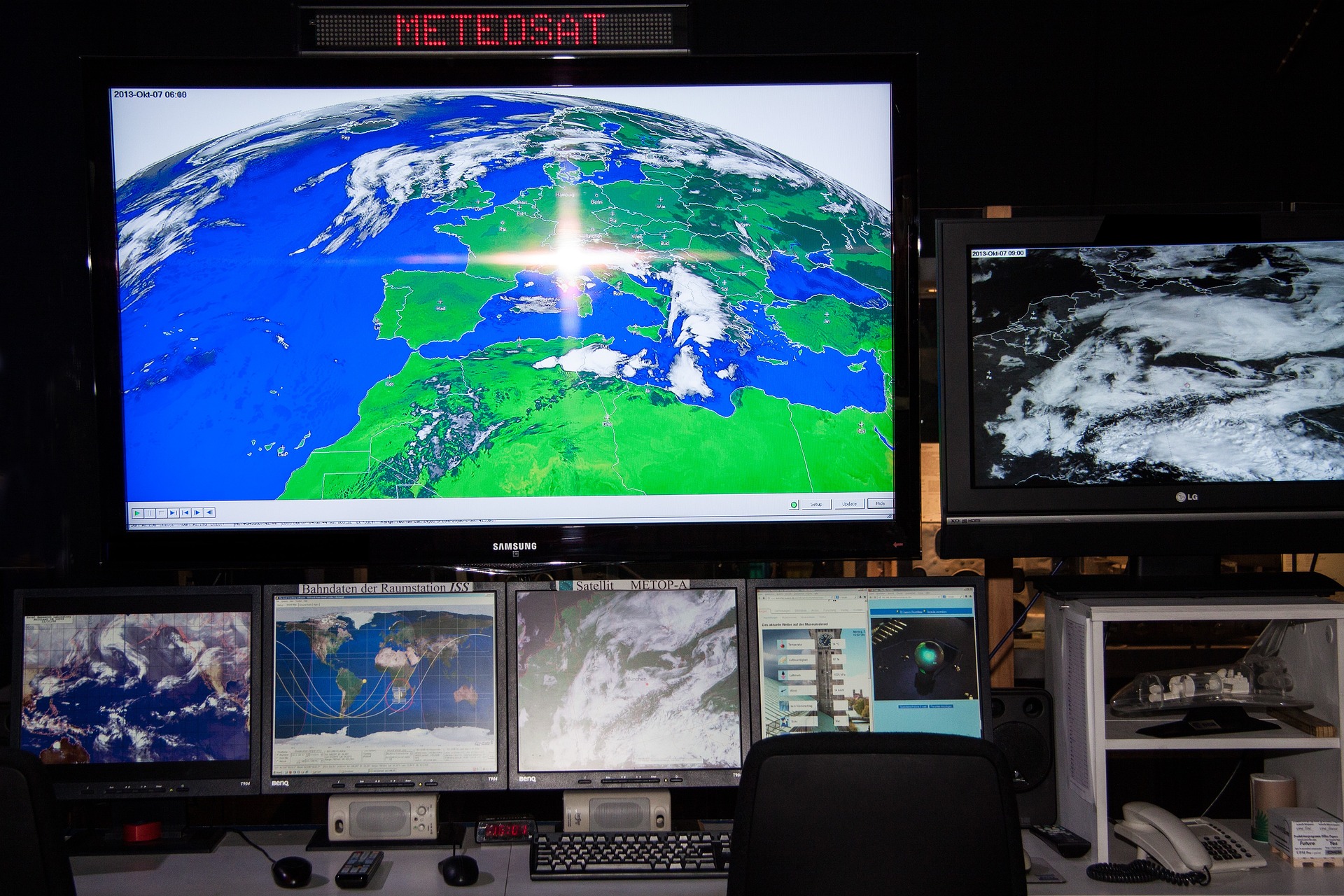
    The weather isn’t just a topic for small talk these days; extreme weather events and climate change are all over the news.  But understanding the Earth’s weather and climate takes more than just stepping outside to see whether it’s raining or sunny.  Every global climate report or daily local weather forecast relies on dedicated scientific research and weather data to provide accurate analysis and predictions.  Atmospheric and Space Scientists are the ones responsible for engaging in this research and providing weather data to those who need it.

    Atmospheric and space science focuses on the study of Earth’s atmosphere, and how it interacts with the planet as well as how it interacts with outer space.  This field includes several inter-related sub-disciplines:

    • Meteorology, the study of Earth’s weather, including local and large-scale weather forecasting.
    • Climatology, the study of the long-term and short-term atmospheric conditions that affect Earth’s climate.
    • Aereology, the study of Earth’s upper atmosphere near and at the boundary with outer space.

    At minimum, atmospheric and space scientists require a bachelor’s degree in a program such as climate science, meteorology, atmospheric physics, atmospheric chemistry, or similar.  Depending on the job or the type of research you want to do, a master’s degree or Ph.D. may be required, particularly for research-intensive positions.  Regardless of the specific program or degree earned, atmospheric and space scientists need a strong understanding of physics, chemistry, and mathematics.

    Whether additional specialties or training are required will vary depending on the job; for example, Environment Canada provides specific formal training for meteorologists who are employed by the federal government.

    Practical, hands-on fieldwork and lab work skills are also a necessity, and involve tasks such as collecting samples of air or precipitation, studying data from satellites, radar, and weather stations, performing data analysis, using the scientific method to design and perform experiments, and developing and testing theories and models of weather or climate behaviour.  Strong written and oral communication skills are also a must-have, both for writing reports, articles, and presentations, and for working closely with other scientists or in public-facing roles communicating weather and climate information to others such as the general public, or to the marine, agriculture, and aviation industries.

    This is a great career path for those interested in working with computers and conducting research. It means helping people nearby know the weather forecast, and those around the world with fighting climate change. But it is also challenging, data-heavy work, and because weather conditions change so quickly, it can mean an irregular work schedule.

    Atmospheric and space scientists can work for the government, military, or space agencies, as well as companies that focus on environmental science and climate change.  They can also work with weather forecasting organizations, including local and national weather agencies that provide weather data to news sources including television, radio, and online weather reports. As a highly technical and specialized field of work, atmospheric and space scientists have annual salaries averaging around $62,000 to $97,000.


    Sources

    CareerOneStop. “Atmospheric and Space Scientists.” https://www.careeronestop.org/Toolkit/Careers/Occupations/occupation-profile.aspx?keyword=Atmospheric%20and%20Space%20Scientists&location=UNITED%20STATES&onetcode=19202100

    Glassdoor. “Atmospheric and Space Scientist Salaries in Canada.” https://www.glassdoor.ca/Salaries/atmospheric-and-space-scientist-salary-SRCH_KO0,31.htm

    Job Bank. “Meteorologist.” https://www.jobbank.gc.ca/marketreport/wages-occupation/2589/22437

    MyMajors. “Atmospheric and Space Scientists.” https://www.mymajors.com/career/atmospheric-and-space-scientists/

    StudentScholarships.org. “What do Atmospheric and Space Scientists Do?” https://studentscholarships.org/salary/534/atmospheric_and_space_scientists.php

  • How to Decrease Your Carbon Footprint

    How to Decrease Your Carbon Footprint

    As many people know, global warming is a serious issue, and we all need to contribute to cleaning up our Earth. On social media, I constantly hear teens and young adults say, “I’m just one person, how can I save the planet?” But you can! There are many small things in your everyday life on campus that you can change to contribute to helping our planet. One way people have begun to do this is by decreasing their carbon footprint.

    In case you didn’t know, a carbon footprint is the trail of carbon dioxide you leave behind in your everyday lives. To figure out your carbon footprint, all you have to do is look up a quiz. Unfortunately, the average carbon footprint is 20 metric tons. However, there are some simple ways to reduce this and lead a healthier, greener life – even if you live on a campus!

    Transportation. Let’s talk about transportation for a minute. It’s very common for people to own cars, even at a young age. However, consider your other options. Consider switching to public transit, carpooling, walking or biking! There are many bus routes that take you straight from GO stations to your campus! This can be a great way to save traffic time, money, and gas emissions.

    Diet. Many people already know this, but reducing your dairy and meat intake can greatly reduce your carbon footprint. Cows produce mass amounts of methane gas, which is terrible for the environment. By purchasing and consuming dairy and meat from cows, we are encouraging these companies to keep harming animals and our environment. The best way to decrease your carbon footprint would be to go vegetarian or vegan, but we understand this can be very difficult, especially for campus life since you don’t have a lot of time to prepare your meals. Vegetarianism or veganism can often be a complete lifestyle change, not just a diet change.

    Technology. One of the simplest solutions, and one many of you might already be doing without awareness, is by switching your desktop computer to a laptop. According to onetreeplanted.org, “laptops use up to 90% less energy than desktop computers”. As a college or university student, computers are constantly being used, and therefore using more energy. By using a laptop rather than a desktop computer, you can be efficient at your work while decreasing your carbon footprint.

    If none of these appeal to you, try simple tasks in your everyday life such as turning off lights when you don’t need them, turn your tap off while you’re brushing your teeth, do research on companies that you buy products from and consider not buying products from them if they harm animals or produce large amounts of gas or energy while they make their products.

    Keep in mind that global warming is a serious issue that affects us all. You can make a difference. You can contribute to helping our earth, even by making simple changes in your life to decrease your carbon footprint.

    Sources:

    1. https://onetreeplanted.org/blogs/stories/reducing-carbon-footprint-college
    2. https://www.theguardian.com/environment/2018/dec/21/lifestyle-change-eat-less-meat-climate-change
    3. https://blogs.ei.columbia.edu/2018/12/27/35-ways-reduce-carbon-footprint/
  • March 2026 Scholarships – Apply now!

    March 2026 Scholarships – Apply now!

    BEGIN Program
    Scholarship Value: $30,000
    Awards Available: 3
    Award Deadline: March 31, 2026

    Automotive Aftermarket Scholarships
    Scholarship Value: $5,000
    Awards Available: 125
    Award Deadline: March 31, 2026

    Jean Chretien Scholarship
    Scholarship Value: $5,000
    Awards Available: 5
    Award Deadline: March 31, 2026

    Manulife Life Lessons Scholarship Program
    Scholarship Value: $10,000
    Awards Available: N/A
    Award Deadline: March 31, 2026

    Brock Leaders Citizenship Award
    Scholarship Value: $8,000
    Awards Available: 15
    Award Deadline: April 15, 2026

    Clara E. Elliott Entrance Scholarship
    Scholarship Value: $10,000
    Awards Available: 2
    Award Deadline: April 15, 2026

    Easter Seals Scholarships
    Scholarship Value: $5,000
    Awards Available: 7
    Award Deadline: April 17, 2026

    Presidential Scholarship
    Scholarship Value: $40,000
    Awards Available: 2
    Award Deadline: April 25, 2026

    CABEF Scholarships
    Scholarship Value: $2,500
    Awards Available: 7
    Award Deadline: April 30, 2026

    Emmett and Loretta Regan Memorial Award
    Scholarship Value: $4,500
    Awards Available: 2
    Award Deadline: April 30, 2026

    Torquil H. Burns Scholarship
    Scholarship Value: $450
    Awards Available: 2
    Award Deadline: April 30, 2026

    Bill Eansor Award
    Scholarship Value: $10,000
    Awards Available: 1
    Award Deadline: April 30, 2026

    Air Base Property Corporation Entrance Award
    Scholarship Value: N/A
    Awards Available: 1
    Award Deadline: May 31, 2026

    Grant and Jack Burton Entrance Bursary
    Scholarship Value: $300
    Awards Available: 1
    Award Deadline: May 31, 2026

    University of New Brunswick: Win Free Tuition up to $10,400
    Scholarship Value: $10,400
    Awards Available: 1
    Award Deadline: June 1, 2026

    Algonquin College Tuition Contest
    Scholarship Value: $5,000
    Awards Available: 1
    Award Deadline: July 31, 2026

    Western Continuing Admission Scholarship of Excellence for Black Students
    Scholarship Value: $6,000
    Awards Available: 30
    Award Deadline: Ongoing

    Western Continuing Admission Scholarship of Excellence for Indigenous Students
    Scholarship Value: $6,000
    Awards Available: 30
    Award Deadline: Ongoing

  • Indigenous Student Scholarships for March 2026

    Indigenous Student Scholarships for March 2026

    National Indigenous Scholarship Program
    Scholarship Value: $50,000
    Awards Available: 5
    Award Deadline: March 14, 2026

    Norah and Calvin Banks Science Scholarship
    Scholarship Value: $1,000
    Awards Available: 1
    Award Deadline: March 15, 2026

    Kathleen Blinkhorn Aboriginal Student Scholarship
    Scholarship Value: $2,000
    Awards Available: 5
    Award Deadline: May 1, 2026

    Western Continuing Admission Scholarship of Excellence for Indigenous Students
    Scholarship Value: $6,000
    Awards Available: 30
    Award Deadline: Ongoing

  • It’s A Job Hunt Life: How To Stay Positive and Productive During the Job Search (French version available)

    It’s A Job Hunt Life: How To Stay Positive and Productive During the Job Search (French version available)

    Job searching can be exhausting, especially if you’ve never done it before. It can be tedious to scroll through job listings, tinker with your resume, and fill out application forms – only to never hear back from the hiring manager. Everyone has felt discouraged, anxious, or frustrated with the process at some point, but there are steps you can take to ensure that your experience is productive and positive. Use this article as a guide to a more active, results-oriented job search that will help you expand your professional network, secure more interviews, and feel more confident as a job candidate.

    Create a Professional Online Presence

    Many teenagers use social media to chat with friends and share pictures, stories, and personal updates. But did you know that 70 percent of hiring managers use social media to screen job applicants? That means that for every ten companies you apply to, 7 of them will review your social media and assess whether you’re right for the role based on what you post.

    During your job search, spend some time cleaning up your social media profiles. Imagine yourself sitting in a job interview with a hiring manager scrolling through your Instagram, TikTok or Twitter accounts. What would they think about you? How would you explain the decision-making that went into each post? Be sure to use professional profile pictures and avoid potentially offensive language. And remember that once something is on the internet, it’s out in the world forever.

    You may also want to create a LinkedIn page. LinkedIn is a professional platform that can help you meet people in a field or academic program of interest, review personalized job listings, and highlight your skills to potential employers. Include a link to your profile on your resume and cover letter to allow hiring managers to find you more quickly. Use the platform to connect with people you know and send personalized requests to people you want to know. You never know who could present you with a great job lead.

    Build Your Resume

    The more experience you have, the easier it is to land your dream job. This situation can seem frustratingly paradoxical; it’s like you need to have a job already, just to get a better one. But paid work isn’t the only way to build your resume. Volunteer work, extra-curricular activities, unpaid internships, and training courses can help you stand out from other job seekers. In addition, you can use volunteer opportunities to experiment with different industries, fields, and job roles before fully committing to paid work.

    In short, whether you’re in high school or just starting university, it’s a good idea to get involved by joining clubs, participating in school events, and volunteering on campus.

    Start Networking

    Only 20 percent of jobs are advertised through official job listings. The remaining 80 percent are promoted by word-of-mouth within personal and professional networks. If you want to expand your job search opportunities, you need to build your network.

    As previously mentioned, social media and LinkedIn can be invaluable networking tools. You can use status updates to show that you’re actively looking for work and apply directly to companies and hiring departments from your phone or computer. In addition, you can reach out to previous employers or volunteer supervisors to ask for a reference.

    The concept of networking may seem intimidating, but it’s just a matter of talking to people. Who do you know? What do they do for a living? What resources can they provide? Let people know that you’re looking for work and ask whether they have any advice for you. You’d be surprised at how willing people are to share insights, give recommendations, and facilitate meetings with other professional contacts. Show interest in their careers, and they’ll likely return the favour by helping you out.

    It’s a Long-Term Process

    Although job searching can be stressful, it’s a skill that will serve you throughout your life. Finding the right opportunity – that is, one that meets your goals, matches your skillset, and brings you happiness – is often a long journey. But these steps can help you feel confident and productive while you figure things out. To recap:

    • Present yourself as someone that you would want to hire.
    • Get involved and learn new things.
    • Talk to people, and don’t be afraid to ask for help.


    References

    Demers, J. 10 Things You Should Do While You’re Looking for Work. Inc. https://www.inc.com/jayson-demers/10-things-you-should-do-while-you-re-looking-for-work.html.

    Faires, L. Do Potential Employers Look at Your Social Media Accounts Before Hiring? Liberty Staffing Services. https://www.libertystaffing.ca/blog/do-potential-employers-look-at-your-social-media-accounts-before-hiring#:~:text=According%20to%20a%20recent%20study,job%20candidates%20before%20hiring%20them.

  • The Dangers of Always Being on Social Media and How to Beat the Addiction (French version available)

    The Dangers of Always Being on Social Media and How to Beat the Addiction (French version available)

    There’s no doubt that social media is addictive. From seeing what friends or celebrities/influencers are doing to watching the “likes” increase on your latest post, these without a doubt can be enjoyable pastimes. Generally speaking, checking social media isn’t necessarily unhealthy (depending on everyone’s individual situation), as many use it for multiple purposes that could be beneficial, e.g. keeping in touch with loved ones living far away. However, it’s still important that you’re aware of its other implications.

    Consider the following questions: Have you ever found yourself continuously scrolling through your social media feed(s) without realizing hours have passed? Throughout the day, do you constantly have the urge to reach for your device and see if anything new has been posted?

    If you’re concerned about the dangers of excessive social media usage, here’s some information about them and ways you can beat the addiction:

    What Are The Dangers?

    It Could Negatively Impact Your Mental Health

    One of the most glaring issues surrounding this topic is how it can affect people’s mental health. Oftentimes, seeing others putting their best moments on social media may spark feelings of insecurity and the need to compare their lives to our own. But also, seeing the negative posted as well as the positive could seriously dampen a person’s mood, especially if they’re consuming it on a regular basis.

    Although many networking sites, such as Facebook, have put some measures in place to hinder anyone from publishing harmful content online, they aren’t perfect and can’t remove every single post nor closely monitor an organization’s or individual’s activity all the time. Plus, the fact that these platforms make it so simple to do so doesn’t help. This situation essentially shows that it’s inevitable for users to be exposed to negativity.

    Many Attribute Sleep Deprivation to Using Social Media

    The depressing thoughts we have could follow us into the night, likely disrupting our sleeping habits and leading to a lack of crucial energy.

    Overall, checking mobile devices just before going to sleep is not a healthy routine either. It’s not just how much time is spent on social media, but also at what time of day you consume the content. Think of the circumstances this way: Why are we stimulating our minds during these hours when we should be relaxing and winding down to get some rest? Everyone needs sleep in order to function properly throughout the day.

    How Does One Beat the Addiction?

    Take a Good Look at Your Social Media Consumption Habits

    The initial step to solving any issue is acknowledging the issue. Social media has become such a normal part of our day-to-day existence that sometimes, there doesn’t appear to be anything inherently wrong. This is where exercising awareness comes into play. We must hold ourselves accountable and ensure social media won’t permeate our lives in a way that diminishes the quality of how we engage with everyday activities or interactions that occur offline.

    Keep Track of the Time You Spend on It

    Going on social media via their apps is extremely popular as it is the most convenient method of access. There are plenty of apps available for downloading that can track how long you spend on social media. Each app will have its own helpful features. Try different ones and see which works best for you.

    You Could Delete Your Social Media Apps from Your Device(s)

    Temporarily deleting the apps from your phone, tablet, etc. is a good option to prevent the temptation of checking, as you’ll know the apps won’t be there.

    In Extreme Cases, Deleting Your Account(s) Might Be the Best Option

    In cases where the suggestions stated above don’t work, deleting some of your accounts might even be the best way to beat the addiction. Think of it as starting fresh. Removing social media from your life could give you the push you need to effectively address the addiction.


    References

    health essentials. “Put the Phone Away! 3 Reasons Why Looking At It Before Bed Is A Bad Habit.” 3 Reasons Screen Time Before Bed is Harmful – Cleveland Clinic.

    Schimmele, Christopher, et al. “Canadians’ assessments of social media in their lives.” Canadians’ assessments of social media in their lives (statcan.gc.ca).

  • How to Start Thinking About Your Future Career (French version available)

    How to Start Thinking About Your Future Career (French version available)

    “What do you want to be when you grow up?”  This is a question nearly every young person has been asked at some point by family, friends, or teachers.  For many teens and young adults, this is a question to which they don’t yet have an answer.  That’s okay!

    It can be hard to decide so early in your life what you want to do for your career.  Many students reach high school, and even college or university, without knowing what they want their career to be in the long term.

    But you can’t simply ignore the question and hope for the best.  It is important to give your future career some thought because that way, you will have a goal to work towards when it comes to other parts of your life, particularly your education.

    Assess Your Skills and Interests

    The first step is taking a look at your existing skills and interests.  There are lots of self-assessment quizzes available online or through your school’s guidance office. Most feature a series of questions to answer, which will help to illuminate your strongest interests and skills and show how these align with possible jobs and career paths.

    You can also simply spend time thinking through on your own.  Do you prefer writing assignments or solving math problems?  Are you energetic and physically active, or do you prefer quiet, relaxed activities?  Do you like being in large groups of people, or do you work better in small groups or solo?  What are your favourite hobbies or extracurricular activities?  What are the things you’re most interested in: nature, sports, books, video games, dancing, building things, or perhaps outer space?

    Figuring out what grabs your attention and imagination and won’t let go is a good starting place to determine your future career.

    Speak with Your School Guidance Office

    High schools, colleges, and universities all have guidance offices for exactly this reason. They offer counsellors to speak to, as well as tons of reference materials about different careers, industries, and the educational and skill requirements to work in specific jobs.  They may also be able to direct you to local career and hiring fairs, where you can speak with people from many different businesses and industries to learn about jobs in those fields.

    Talk to People

    Often, students are only exposed to the careers of people in their immediate circle, including family members and school staff.  Try to find people whom you can ask about their career – these can be friends of your relatives, your friends’ parents, or adults you know through places you spend time in, such as libraries, sports, and extracurricular activities.  You can also find co-op placements through your school that will give you the opportunity to experience different types of jobs, so you can get a feel for what you might enjoy.

    Visit Your Local Library

    Public libraries have an entire section dedicated to career planning, and will almost certainly have books targeted at teens and young adults that tackle the future career question.  You can also explore fiction and nonfiction books featuring characters in different careers, to get a sense of what those careers might be like.

    Picture Your Future Lifestyle

    Deciding what you want your life to look like can also help you narrow down possible careers.  Do you want to live in a town or a city?  What about another country?  Would you like a large house or condo, or somewhere cozy?  Do you want a new car every few years, or would you be happy with the same vehicle for a decade?  Would you travel regularly, or stay local?

    Your answers to these questions will help guide you to careers that will support the lifestyle you want, whether you want something high-earning, middle-class, or a career that lets you travel the world.  Just remember not to get too caught up in the money side of things, as finding a career that you enjoy is still the ideal goal.

    Don’t Be Afraid to Take Your Time Deciding

    It may seem like you have to make a decision right away, but you don’t!  Take as much time as you need to investigate possible careers and find the path that’s right for you.  Just be sure to make good use of your time by researching careers, developing a variety of strong skills, and seeking out as many exciting experiences as you can.


    Sources:

    CollegeBoard. “5 Ways to Find Career Ideas.” https://bigfuture.collegeboard.org/get-started/know-yourself/5-ways-to-find-career-ideas.

    Indeed. “Career Exploration Activities: How to Help Your Students Find Jobs They’ll Love.” https://www.indeed.com/career-advice/finding-a-job/career-exploration-activities.

    Stockwell, Carly. “How to Choose a Career.” College Factual. https://students.collegefactual.com/choosing-a-career.

    Weishaar, Christina. “5 Ways to Help High School Students Pick a Career.” Connections Academy. https://www.connectionsacademy.com/support/resources/article/5-ways-help-high-school-students-pick-careers.

  • What is the 15-Minute City Concept? (French version available)

    What is the 15-Minute City Concept? (French version available)

    What is a 15-Minute City?

    The 15-minute city concept allows citizens to access their essential needs within a 15-minute walk. Many Canadian cities, including Ottawa, Edmonton, and Victoria, have implemented this concept into city development plans.

    In 2021, Ottawa identified nine important necessities:

    • Bus stops
    • Childcare facilities
    • Grocery stores
    • Health services
    • LRT stations (light rail transit, such as subways)
    • Parks
    • Recreation facilities (such as community centres)
    • Retail stores
    • Schools

    These are all places planned to be accessible within a 15-minute walk.

    However, Ottawa also recognizes that these nine resources will not be evenly distributed across the region. High-access areas will ideally have seven to nine resources from that list, while low-access areas will unfortunately have one to three.

    A 2022 study from Simon Fraser University in British Columbia also echoed this fact: 79% of Vancouver’s population has a grocery store within a 15-minute walking radius, but far fewer areas across the region would meet this requirement.

    Like any concept, there are pros and cons. A 15-minute city sounds great on the surface, but it all depends on the plan’s execution by governments. City planners need to weigh the concept’s benefits against its potential negative consequences.

    15-Minute City as a Positive Force

    A 15-minute city’s opposite counterpart is urban sprawl. Where a 15-minute city seeks to make communities and resources closer, urban sprawl widens the distance between them.

    Urban sprawl expands cities, meaning that as cities get larger, people need to travel longer distances. This also means that urban sprawl is a large contributor to climate change: it is the largest factor behind greenhouse gas emissions in Ottawa.

    The largest benefit of a 15-minute city is its potential to lessen the impacts of climate change.

    Fifteen-minute cities combat climate change by lessening dependency on electricity and gas. By reducing the amount of time and distance needed to reach essentials, more environmentally friendly transit options can be considered.

    The key is to reduce the need for cars: car rides are usually seen as an option for longer, more inaccessible trips. By providing most of the people’s everyday needs within a short distance, fewer people may want to use their cars for this purpose.

    15-Minute City as a Negative Force

    While the resistance against climate change impacts makes 15-minute cities attractive, the idea fails to consider many other important points. The core concept was modelled after European cities: many of these cities were built before the car was invented.

    City planners cannot simply include solutions everywhere in cities without investing in neighbourhoods.

    Many cities have inequality built into their original plans – think of many of Canada’s Chinatowns, for example. The communities were built up by Chinese labourers, a group who were largely excluded by Canadian society.

    The 15-minute city concept cannot accommodate all regions in its current state. City planners need to find ways to include underserved areas without further worsening inequalities.

    The 15-minute city concept presents itself as a great combatant against climate change, but it should be discussed with caution. 15-minute cities should not be implemented without considering the potential impacts on minority groups and how current city structures need to be overhauled.


    Sources:

    Gomez, Michelle. “Vancouver Close to Achieving ‘15-Minute City’ Status, SFU Study Finds.” CBC News, 23 May 2022, https://www.cbc.ca/news/canada/british-columbia/vancouver-15-minute-city-1.6463022.

    Mannie, Kathryn. “The Rise and Fall of Chinatown: The Hidden History of Displacement You Were Never Told.” Global News, 26 May 2022, https://globalnews.ca/news/8793341/chinatown-history-toronto-vancouver-montreal-canada/.

    O’Sullivan, Feargus. “Where the ‘15-Minute City’ Falls Short.” Bloomberg, 2 Mar. 2021, https://www.bloomberg.com/news/articles/2021-03-02/the-downsides-of-a-15-minute-city.

  • Should I Take Courses Over the Summers to Finish My Degree Sooner? A Look at Pros and Cons (French version available)

    Should I Take Courses Over the Summers to Finish My Degree Sooner? A Look at Pros and Cons (French version available)

    Summer is a season that’s usually associated with taking a break and having fun. For university students, this could be the case, but it could also mean having a job or a volunteer position. Some also continue taking courses to finish their degree sooner.

    If you’re considering going back to the classroom over the summer, here’s a look at the pros and cons of doing so:

    Pros

    Campuses Will Be Less Crowded

    As one would expect, not as many students take classes over the summer, so your campus will most likely be much quieter than usual. This is beneficial if you prefer to work on assignments or study on campus rather than at home.

    Many Students Tend to Take Fewer Classes During the Summer

    Many students don’t take as many courses during the summer as they do in other semesters. Though it depends on how much is required of you for each course, if you take only one or two as opposed to the usual three or four, this means you might be able to relax more and solely focus on assignments. As a result, you may achieve a higher grade in the class(es) than if you were to take it another time.

    However, by all means, pursue a full course-load if you feel as though you’re ready for it.

    Cons

    You Could Feel Burnt Out During the Summer

    Even though there’s a good chance that you’ll have a lighter academic workload over the summer, this could also lead to burnout (or even more of a burnout) if you endured a very stressful school year. Taking classes might not allow you to receive the rest you need. Though it’s tempting to take courses to finish your degree sooner, it’s also critical that you don’t pressure yourself to do so if you know exhaustion/feeling overwhelmed remains an inevitable outcome. Often, people neglect their health to maintain a certain amount of productivity, which is highly discouraged.

    It Would Take Time Away from Things You’re Pursuing in Your Personal Life

    If there’s anything that you’re actively working on in your personal life, whether it be a project, relationships with others and/or your overall well-being, taking summer courses could interfere. Everyone’s situation is different, and maybe you’re able to juggle school with these other endeavours, but sometimes it’s best to just use the season for enjoyment.

    Remember, you should take your health into account and what you can handle if you’re seriously considering taking summer courses. Some questions you could ask yourself are:

    • “How important is it to me that I finish my degree sooner?”
    • “Would it be better if I took my time to consider other options while I’m still a student, like pursuing work experience opportunities offered through school?” (if you haven’t done so already)
    • “Would it do me some good if I took the semester off?

    Overall, if you continue to be honest with yourself and reflect on what’s stated above, you’ll be on the right track to making the best choice for what you’ll be doing during the summer.