Category: Campus Life

  • Is it Normal to Change Careers? Questions and Tips that will Help You Figure it Out

    Is it Normal to Change Careers? Questions and Tips that will Help You Figure it Out

    It’s perfectly normal to change careers in some cases. But at what point is it valid to pursue the risk? Here are some ways you can tell it’s time to change your career path:

    You’re frequently feeling tired, exhausted and unhealthy.
    If you’re experiencing work hours to be exhausting and long, you might want to look into what is causing the problem. Is it your workplace? Most of us spend more time at work and with our co-workers than our loved ones so it’s important to love the place you work and people you work with. Overly stressful workplaces do not necessarily mean it is healthy competition or a good challenge for you. Listen to your body when it tells you this job is taking a toll on your health and move on.

    Your values and skills do not align with those required of you.
    Sometimes it isn’t your lack of skill but rather a mismatch of values. You might be very good at what you’re doing right now but it doesn’t mean it aligns with your personal values or what you want to get out of your job. The thing is, if you don’t care about your job you won’t be able to give it your best. Caring about what you do is giving your time value. So value your life.

    The money you’re making doesn’t make up for the lost time.
    At some point the salary you’re taking home won’t make up for the time you feel like you’re wasting while going to work every day. There are people you will meet in life that used to make way more than they do now…the difference is they are happier making less. Isn’t that the ultimate goal of life? To be happy? If you aren’t in a financial strain, you can shop around for a job after resigning. If money is a problem, consider finding a new job before you leave your current one.

    You feel like you could make a better impact elsewhere.
    If you know you’re fit for better things than moping away at your desk job then don’t waste any more time than you already have. While it isn’t necessary to obtain a job that is related to what you studied in school, you also don’t have to settle for jobs that are of no relevance to your interests. It’s about time you took charge and changed your career. These days, it’s normal to change careers several times until you find the right fit.

    Sources:
    http://www.careershifters.org/expert-advice/how-to-change-career-when-you-have-no-idea-what-youre-doing
    http://www.quintcareers.com/career-change/
    http://career-advice.monster.com/career-development/changing-careers/10-worst-career-change-mistakes/article.aspx


  • Inspirational Leaders: Elon Musk

    Inspirational Leaders: Elon Musk

    South African born Canadian-American entrepreneur, engineer, businessman and inventor Elon Musk is the perfect example of a limitless man. World-renowned billionaire and innovative mind in the spheres of the Internet, renewable energy and outer space technology; Musk’s resume is far too long to list. Musk was born June 28, 1971 to a Canadian mother and South-African father. Early on, he taught himself computer programming and then at age twelve, he sold his first code for a video game to PC and Office Technology magazine for $500. Multi-talented and passionate, Musk overcame a bully-filled childhood to become one of the wealthiest people in the U.S; his net-worth currently sits at 12.4 billion U.S.

    “Failure is an option here. If things are not failing, you are not innovating enough” [Business Insider].

    Musk attended Queen’s University in Ontario for two years and then transferred to the University of Pennsylvania where he completed a Bachelor of Science degree in physics. He began to pursue a PhD in applied physics at Stanford University, but left quickly to pursue goals in his many fields of interest.

    “If something is important enough, even if the odds are against you, you should still do it” [finance.yahoo].

    In 1999 Musk co-founded the online financial services and payment company X.com, which led to the creation of PayPal the very next year. Now Musk is the CEO and CTO of SpaceX—an aerospace manufacturer and space transport services company—and CEO and product architect and cofounder of Tesla Motors, an automotive and energy storage company. In 2013 Musk proposed the concept for “Hyperloop”—a commuting invention between major cities that would cut travel time significantly. As with a lot of his work, “Hyperloop” would be powered by renewable energy; reaching more than 700 mph in speed, the invention would push travelers in pods through a network of low-pressure tubes. Musk stated that his brainchild would take seven to ten years to be built and would cost approximately $6 billion, which is a very thrifty price in comparison to other American transit systems. The idea is still in the design phase, but prototype tests will be held in June 2016 at the SpaceX facility.

    As someone who grew up reading science fiction novels and imagining what it would be like to actually live in space, Musk is living the dream of every kid like him. He owns famous and fast European cars, is married to a beautiful British actress and his company SpaceX launched a rocket that sent the first commercial vehicle to the International Space Station. He has spoken many times about colonizing to Mars, and this science fiction fan might just do that. It’s so easy to dream, and so hard to make those dreams a reality. Musk proves that it is possible to transfer ideas from simple musings into real physical things. And even though he is immensely talented and smart, Musk says that personality is just as important when creating innovative products: “[My biggest mistake is probably] weighing too much on someone’s talent and not someone’s personality. I think it matters whether someone has a good heart” [Business Insider].

    Sources:

    www.teslamotors.com
    www.spacex.com
    www.gawker.com/230076/an-alternate-history-according-to-elon-musk
    www.mercurynews.com/business/ci_15138666
    www.biography.com/people/elon-musk
    www.businessinsider.in/11-Elon-Musk-Quotes-That-Show-His-Genius

  • If I Knew Then…

    If I Knew Then…

    Advice on careers, finance, and life from Harvard Business School’s Class of 1963
    Each month, JobsPeopleDo will be featuring a special quote from a graduate of the Harvard Business School Class of 1963. The following quotes are insightful and can be used to inspire and encourage the right career path for you…


    “To greatly enhance the odds of enjoying a career which is both fulfilling and successful, one must find an endeavor, a subject, métier, process, environment for which one has a passion. This could be aviation, geology, medical science, investing, writing fiction, etc. In my case, it was a love of markets and investing that my father inculcated in me very early on. This passion has led me to often declare, “I have never worked a day in my life.”

    ~ Charles Hale ~

    “Look for something you are good at, where accomplishment will be rewarded, which pays well (at least at the higher levels) and gives you the opportunity to work with smart people who will stimulate you and challenge you to grow.”

    ~ Robin Smith ~


    Via http://hbs1963.com

  • Getting Your 40 Hours of Community Service

    Getting Your 40 Hours of Community Service

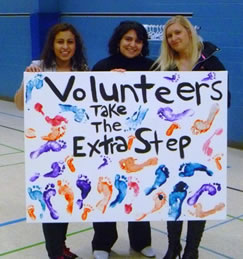
    As you know, all high school students need to have 40 hours of community service in order to graduate. Use this information to discover where your 40 hours can best be used.

    Volunteer Centres work in local communities to strengthen volunteering and citizen engagement. With more than 200 in Canada, each volunteer centre’s name, size, structure and services reflect the unique characteristics of their community.

    To find a volunteer centre in your area, click here.

    Many volunteer centres are independent non-profit organizations, while others are part of a United Way, Social Planning Council, Community Information and Referral Centre or municipal services. Though diverse in many ways, they share the following common functions:

    • Promote volunteering
    • Build the capacity of organizations to engage volunteers
    • Facilitate connections between people with volunteer opportunities
    • Provide leadership on issues related to volunteering and citizen engagement

    If you want to volunteer, your local volunteer centre is there to connect you to opportunities in your community. It may have a database of volunteer opportunities or can connect you directly to opportunities within its member organizations.

  • How to Step Away from the Crowd & Build Your Own Life

    How to Step Away from the Crowd & Build Your Own Life

    Next time you are sitting in a lecture hall, take a quick look around. You are sitting in a room alongside dozens of students. You are all studying the same subject, at the same school, and are all focusing your attention on the individual at the front. You may feel less like an individual and more like a sheep amongst the flock. The same feeling can come up when crammed on a subway train, or when walking through a crowd to get to work. It is as though you are making the same choices as everyone else, and living the same life as everyone else.

    Many people pick their degree or career based on what is expected as opposed to doing what they want. It is important to remember that, now more than ever, we live in a time of many choices. Post-secondary education can mean many different things, thanks to the vast number of majors and programs there are to choose from. If you feel you chose yours due to societal pressure or reasons other than what you truly want, it is not too late to change it. Credits can be transferred and you have many years ahead of you. A fifth year of high school was fully eliminated in Ontario back in 2003, meaning you started university or college a full year sooner than generations before you in that province. Do not be afraid to take more than four years to finish your education!

    The fast-paced nature of modern life finds people changing jobs more often and workplace competition growing more intense. This is not a race, but a journey that you are undertaking. People throw around the word success, and you may feel that you have to follow the crowd to successfully get an impressive job or purchase a home. These are parameters set by others. Think of success and happiness as one in the same. If those things make you happy, then you are not following the crowd in pursuing them but rather are following your own emotions. If a simpler life is what you desire, you are not defying people’s expectations but instead building your own.

    You do not have to trudge through a job just for the sake of having a job while waiting for retirement to live your ideal life. Half of building your own story in life is determining what you want. The other important half to consider is determining what negatives you are able to endure. If your ideal career does not pay well, are you able to give up certain things to afford the lower income? If you want to focus on family, are you willing to find work and a place to live that will allow for that? It may sound pessimistic, but thinking about those negatives will allow you to fully shape the life you want. With patience and a rounded perspective, you can build your own life and not just follow the crowd.

    Sources:

    Eisen, Michael. Creating Your Own Life Path. http://www.positivelypositive.com/2012/04/25/creating-your-own-life-path/

  • Building Social Skills on Campus

    Building Social Skills on Campus

    Attending post-secondary can sometimes be an isolating experience —especially if you are a student at a large institution. As a student at the University of Toronto, I can certainly relate. The St. George campus is so large that, for much of my first year, I felt as if I knew no one on campus. It was difficult for me to reach out to others due to the stressful atmosphere, as well as the sheer size of my classes. Because I was commuting to school, furthermore, I also did not benefit from making friends in my residence.

    Now, a year later, I find that—although the odd bit of loneliness plagues me from time to time—I do not find the experience quite so isolating. Every post-secondary experience takes time to get adjusted to, and hopefully with practice, you will learn how to meet people and reach out to others on campus. Below are some of the experiences and strategies that I found useful for building social skills on campus.

    Join clubs or extra-curriculars to meet people with interests in common. I cannot stress enough how important it is to get involved outside the classroom: not only is it a great way to pursue your interests and de-stress, but it can help you broaden your social networks. Though individuals are usually united by a common interest, they come from all sorts of backgrounds and programs of study. You may find you have a lot in common with your peers, and you may learn a lot from them as well.
    Tip: Choose a club that involves a lot of face-to-face interaction, such as regular meetings or events.

    It can be intimidating sometimes to try to meet others on your own. If you have one or two willing friends on campus, however, try to go to events together, with the intention of meeting others as well. For example, you can go to a networking event with a friend, but make a point to branch out and talk to others throughout the night on your own as well. This may help you strike up the courage you need to take that first step.
    Tip: You and your friend can support one another—but don’t use one another as crutches. The whole point of the exercise is so that you can talk to others!

    Finally, socialization can happen anywhere—try to make going to class a social experience. Before or after class, strike up a conversation with your fellow students. You can also use study groups as a way to meet others in your class, while getting some productive work done. This also has the added benefit of having a support system within the classroom if you need it. It is invaluable to have a note-taker when you are home sick, or to have a partner to study with for the final.
    Tip: You don’t always have to talk about the course material: get to know your classmates as people as well as students.

  • If I Knew Then…

    If I Knew Then…

    Advice on careers, finance, and life from Harvard Business School’s Class of 1963

    Each month, JobsPeopleDo will be featuring a special quote from a graduate of the Harvard Business School Class of 1963. The following quotes are insightful and can be used to inspire and encourage the right career path for you…

    “No surprise: Succeeding in business is the polar opposite of winning the lottery (pure luck, no effort). Blood, sweat, tears early on and consistently throughout. Become very knowledgeable about your product, service, or industry, and cultivate lasting relationships with people. Be completely honest in all dealings — even if it’s painful.”
    ~ Carol Nicholson Fryeberger ~

    “While still a teenager, make a list of all the things you like doing, and those you don’t like. Then find a job or study that maximizes the activities you like and minimizes the others. A happy and fulfilling job should feel like indulging in a hobby. Success is a result of true enjoyment and effort.”
    ~ Eyk Van Otterloo ~

    Via http://hbs1963.com/wisdom/careers/

  • Getting Your 40 Hours of Community Service

    Getting Your 40 Hours of Community Service

    As you know, all high school students need to have 40 hours of community service in order to graduate. Use this information to discover where your 40 hours can best be used.

    Volunteer Centres work in local communities to strengthen volunteering and citizen engagement. With more than 200 in Canada, each volunteer centre’s name, size, structure and services reflect the unique characteristics of their community.

    To find a volunteer centre in your area, click here.

    Many volunteer centres are independent non-profit organizations, while others are part of a United Way, Social Planning Council, Community Information and Referral Centre or municipal services. Though diverse in many ways, they share the following common functions:

    • Promote volunteering
    • Build the capacity of organizations to engage volunteers
    • Facilitate connections between people with volunteer opportunities
    • Provide leadership on issues related to volunteering and citizen engagement

    If you want to volunteer, your local volunteer centre is there to connect you to opportunities in your community. It may have a database of volunteer opportunities or can connect you directly to opportunities within its member organizations.

  • The Media Tedium: How can I stay focused when the world news is so horrible?

    The Media Tedium: How can I stay focused when the world news is so horrible?

    When you are up all night finishing that essay at the last minute, you probably spend most of the seconds of that minute checking Facebook posts and news updates. We catch up on the news daily, but do not always realize the effect it might be having on us. The biggest effect is that it convinces us the world is an awful place.

    We seem to live in troubling times. It is too late to stop the damage of the Earth’s raising temperatures. Terrorist attacks and mass shootings show up on our news feeds on a daily basis. How can that essay possibly get done when the world is falling to pieces?

    It is important to remember that the threat of doomsday is nothing new. From talk of the Rapture in Ancient Rome, to the threat of December 21, 2012 in recent times, the end of the world seems to be upon us again and again. It is almost like we enjoy it. For religious people, there is a sense of relief from knowing that God will take care of problems that seem beyond our control. For many, the idea of knowing when the world will end and getting prepared gives us a sense of comfort and satisfaction. It makes sense that the news would want to populate its stories with ideas that make us feel good. Yet these stories lead to the other problem: They convince us that individuals are powerless.

    There is a great sense of despondency when watching war after war, or political battle after battle. Yet if we narrow our scope, we tend to see the world in a positive way. People generally see their neighbours as friendly, and we feel like we have a great impact on the lives of our family and friends. Even their negative behavior can be analyzed and we can understand why they might do hurtful things.

    When that scope is widened, we get the horrors of war and the suffering of poorer countries. We do not see the impact of individuals. The behavior of people becomes generalized and not analyzed. Yet the grand scale of things is really just a giant group of individuals like you and me. It is a giant group of friendly neighbours and individual impacts that all add up. Without those seemingly tiny things, there would be no grand scale.

    Ultimately, the news might try to be objective, but it is important to remember that everything is objective. There is no way around it. We are viewing life from our own perspective, filled with all our little biases. The news is not some magical entity outside of that truth. The news is a business, and we are the customers. That does not mean it is all a lie, but sensationalism is good for business.

    News can be good and bad. The good news is that the world is not going to end. The bad news is you still have to finish that essay.

    Sources:

    Pappas, Stephanie. The Draw of Doomsday: Why People Look Forward to the End.
    http://www.livescience.com/14179-doomsday-psychology-21-judgment-day-apocalypse.html

    Singal, Jesse. What All This Bad News Is Doing to Us.
    http://nymag.com/scienceofus/2014/08/what-all-this-bad-news-is-doing-to-us.html

  • Fat Shaming in School

    Fat Shaming in School

    As young people we are more perceptible to the impact of other people’s opinions. It takes years to develop resilience against hurtful comments as well as a sense of self worth. When it comes to obesity, there can be many contributing factors to that particular condition; some of which may be medication, addiction, anxiety or depression. Somehow through out the years, society has launched an attack on body image. But the fact remains…everyone has his or her own story, and that story is none of your business.

    Body shaming is such a social illness and affects all shapes and sizes. It’s so difficult to love ourselves, yet so easy to judge others—because sometimes when we put other people down, it makes us feel better about ourselves. This cycle is perpetuated by media and peer pressure, and can some times feel impossible to escape. As members of a student body, we are thrown into a tank of other young, highly impressionable people. And with healthy lifestyles being constantly promoted in the educational world, young passionate people often feel the need to take it upon themselves to “spread the gospel”—so to speak. Body shaming leads directly to fat shaming—a phrase some use to describe encouraging those who are obese to lose weight or a phrase that can be described as straight out bullying.

    In September 2015, YouTube star Nicole Arbour’s video titled “Dear Fat People” went viral. It featured Arbour spewing out hurtful comments against people that battle obesity. Despite going on The View recently to claim that the video was not meant to be taken seriously and was actually just satire, her hateful comments depict what is wrong with our society and—sadly—what is widely believed to be true. Arbour flat out claims in her video that fatness is associated with laziness, gluttony and bad decisions—a narrow-minded opinion that no doubt many obese people have heard all their lives. Obese individuals often have to deal with workplace discrimination and unwanted comments from those who feel that they have the right to expose their prejudice masked by ‘health concern’.

    “Fat shaming is not a thing; fat people made that up. That’s a race card, with no race,” said Arbour. “If we offend you so much that you lose weight, then I’m okay with that.” The comments for her video were disabled, which is definitely not surprising considering the media storm it created. And hopefully her cruelty has opened up a dialogue about so-called fat shaming.

    First of all, why do you care?

    Why does someone else’s body concern you? How does it concern YOUR path? YOUR health? If you are concerned about the person, it has been clinically proven that telling them that their weight is out of control may damage them emotionally and possibly even physically. Negative emotions can lead to negative physical implications.

    Fat shaming DOES NOT WORK

    There is a socially acceptable size, and if you are not within those size boundaries you have most likely been bullied about it at school. While peers get kinder between elementary school and university, the media grows harsher. According to www.secureteen.com, the University of Michigan C.S. Mott Children’s Hospital conducted a study, which revealed that 34% of all obese children are bullied in their schools. The study also found that mothers of over-weight children remarked that 45% of those children had been bullied. Furthermore, 25% of the obese children claimed that they have been put through fat shaming in school. Instead of causing someone to lose weight in a healthy way, fat shaming can lead to eating disorders like bulimia or anorexia. And even if weight is lost in the proper physical way—through diet and exercise—fat shaming can leave long lasting mental health and insecurity dangers.

    Things to remember:

    • Beauty and being fat are NOT mutually exclusive. Being overweight does not make one less intelligent. Physicality is a personal thing. We are not responsible for other people’s bodies. Only our own. Poking your head where you should not could really hurt someone.
    • Body autonomy is hard to have when our prejudiced society deems your body to be unacceptable. Self-love and acceptance leads to a desire to take care of yourself. Know your body—what it needs and what it reacts to.