Category: Campus Life

  • Fitness in University

    Fitness in University

    Working out in university is almost as believable as the Loch Ness Monster to some people, and with good reason. You spend the majority of the day in a chair or napping in the library because whoever says they prefer hopping on the treadmill over a nap is lying. But there are those moments you’re running late to class and turn into Usain Bolt to get there on time. Aside from that, there’s not a lot of movement happening.

    However, it’s not impossible to get moving. Among the homework and studying there is time to squeeze in exercises here and there in addition to eating healthier.

    Apps are going to be a close friend of yours during university. Ones like MyFitnessPal and N+TC Nike Training App would be the places to start. MyFitnessPal takes your measurements and goals and breaks down the day for you. You plug in what you’re eating into their search engine – and finding what you’re looking for won’t be difficult because they have millions of options – and the app gives you a breakdown of calories, sodium, fat, and other nutrients. It’s a good kick in the butt to keep your food on track so you can have your intake right in front of you.

    Also, if you’re someone who can burn water (like me), the app has constant posts about at- quick recipes, which is something you can use to your advantage. Let’s face it. No one wants to constantly stock up on Pizza Pizza or Starbucks cookies.

    Nike on the other hand will actually kick your butt. Even if it’s only for 15 minutes the app offers training from some world class athletes and celebrities like Alex Hipwell, Kirsty Godso, Marie Purvis, and Christen Press. It’s hard not to make time for these things when some of these workouts are literally six minutes.

    The app offers other incredible features as well, including different workouts depending on the kind of athlete you identify as. It shows you how to do the workouts in little sample videos, offering you a chance to set up a schedule and stick to it for maximum results. It also tells you the amount of calories you’ll burn and gives you Nike Fuel and trophies the more you work out.

    Studentrecipes.com is another great tool. This blog provides recipes for those of us still in school and includes ratings next to them so you can pick and choose which ones you like. There are also categories for what you’d like to cook with that you can scroll through.

    One of the biggest things I want to tell you, is to not put yourself down.. Don’t start to make yourself feel bad by swearing off things you love. You’re doing this to be healthy and feel better, not to make yourself feel like garbage along the way. Having a piece of cake isn’t going to kill you and neither will a 15 minute workout with some great athletes- get busy!
  • Discrimination on Campus

    Discrimination on Campus

    As with anywhere, there is discrimination that happens on campus, as much as we would like to hope there is not. According to the Ontario Human Rights Commission, discrimination includes elements of “not individually assessing the unique merits, capacities and circumstances of a person, instead, making stereotypical assumptions based on a person’s presumed traits, having the impact of excluding persons, denying benefits or imposing burdens”. Discrimination happens on the basis of race, class, gender, sexual identity and/or orientation, social status or ability. Your campus will likely have a student union that will provide an array of services that will cater to persons who are discriminated against, which could be a good starting point for learning more about those who are discriminated against. Everyone has come across some kind of discrimination over their life time- whether it was based on gender, race, class or orientation. The services provided by your school will also allow you to better understand why people discriminate against others. The people who bully and discriminate others often have many underlying problems and stresses that drive them to act the way they do. If you feel you are experiencing discrimination, whether in the classroom or on your own time, make sure you talk to your friends, family and people who will be able to help you like your student services or counsellors. College and university is a time to learn and grow personally and professionally and discrimination has no place on campus, anytime.

  • Social Disorders and You

    Social Disorders and You

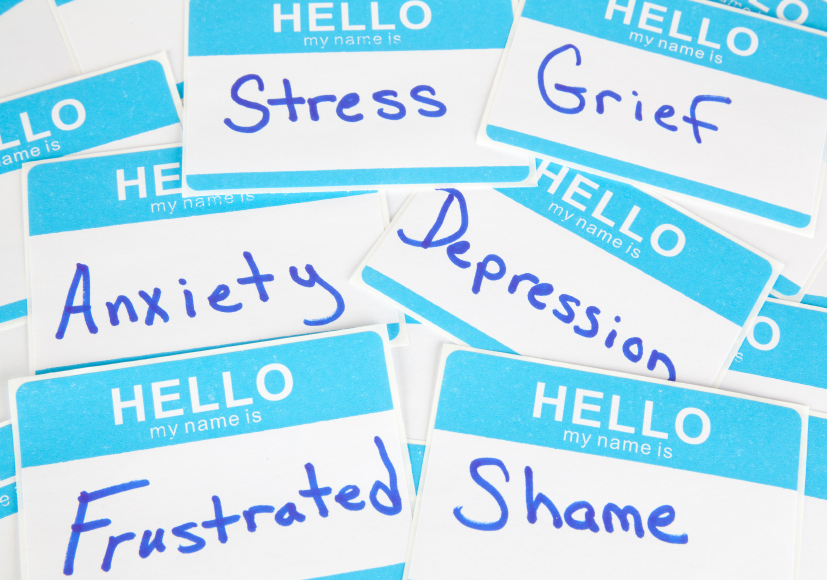
    Our world in a lot of ways is shaped by the people we know and interact with. We are partially a product of the environment that inhabits us. A major portion of our identity is formed through connections with family, friends, mentors and, peer groups. Therefore any situation or issue that impedes these social bonds may be detrimental to one’s self development. Such is the case with Social Disorders, the term used to describe a wide range of psychological/behavioral phobias seen in a social context. Social Disorders span a spectrum, and can range in intensity; from the slight worries about speaking in front of large crowds, to the deliberating anxiety of a person fearing the outside world.

    Over time Social Anxiety disorder has become a highly studied phobia. With an estimated 15 million people in the United States alone suffering from this disorder[1]. Symptoms can begin in adolescences, and may take a toll on many high school, college and university students. So at this point you may be asking yourself, doesn’t everyone have anxiety? A large portion of the population at some point will endure some level of anxiety- we are human and experience an array of complex emotions, naturally. You may feel anxiety in job interviews, public speaking and even while on blind dates. However, for a person with social anxiety, such situations can become overwhelming and in some rare cases lead to panic attacks. They are unable move on from the event, and becomes it a source of anguish, sadness, and frustration. Moreover, it goes beyond shyness, as teenagers and children we all experience a tendencies of shyness, as it’s a natural part of growing up. In contrast, Social Disorders are all encompassing, affecting various aspects of a person’s life. Such avoidant behavior includes: missing school or work, reduced or no interaction with others, lack of personal connections, fear of entering large classrooms and attending social events[2].

    So far we covered the sweeping generalities of social disorders. Within this lie many subsets, which have their own symptoms and behavior traits. A few that come to mind are Social Phobias; Social Communication Disorder (primarily found in children), and Avoidant Personality Disorder. Looking for solutions, there are now multiple techniques used to treat the symptoms and the related mental thoughts associated with social disorders. Treatments include Cognitive Behavior Therapy-challenging the anxiety provoking thoughts and attempting to reduce the follow through behavior. Exposure Therapy can also be useful for less pronounced social disorders, and lastly medications ranging from Selective Serotonin reuptake inhibitor (SSRI) to Beta Blockers can be beneficial[3]. However, taking medication isn’t always a cure for the problem. Help and support can be found at your local campus health-centers, through your guidance counselors and/or a trusted mentor. There is always a way for you to seek help and overcome a social disorder, to lift the veil of silence and reach for your better self- it’s in there!

    Sources:

    [1] Social Anxiety Disorder | Anxiety and Depression Association of America, ADAA. (n.d.). Retrieved July 11, 2015.

    [2]Mayoclinicorg. (2015). Mayoclinicorg. Retrieved 12 July, 2015, from http://www.mayoclinic.org/diseases-conditions/social-anxiety-disorder/basics/symptoms/con-20032524

    [3] Helpguideorg. (2015). Helpguideorg. Retrieved 14 July, 2015, from http://www.helpguide.org/articles/anxiety/social-anxiety-disorder-and-social-phobia.htm

  • Lending a Helping Hand: Learning Disabilities

    Lending a Helping Hand: Learning Disabilities

    A learning disability is a general term used to identify a variety of learning problems. Many students are affected by learning disabilities, and this can have a great impact on their educational experiences.

    Having a learning disability does not at all mean that a student is unintelligent or lazy. Instead, it is likely that the student just perceives things differently, or the way that they learn and acquire information is different from others. There is nothing wrong with this—it is to do with a difference in brain activity and it is not a question of some students being “worth” more than others.

    There are many different types of learning disabilities that can affect any part of the educational process. For example, a common condition, dyslexia, causes difficulties for students when reading. Dyslexic students may have difficulty with clearly distinguishing between letters or words, understanding ideas in written passages, or gathering a complex vocabulary.

    Similarly, dyscalculia is a learning disability that has to do with numbers, sequences, and mathematical concepts. Students with dyscalculia may have trouble with memorizing number sequences, distinguishing between operations, or organizing calculations in a logical way. Other conditions that could cause difficulties for students include ADD/ADHD and visual or auditory impairments.

    These are just two examples of learning disabilities—in fact, there are many more conditions that can affect a student’s learning process. Knowing this, it is important to provide students with learning disabilities with resources and support so that they can reach their full potential when learning. It is crucial that all students have the opportunity to learn at their own pace, on their own terms, and in a way that suits their individual needs. In this way, no student is left behind.

    There are resources available to students with learning disabilities within the educational network. Guidance counselors, social workers, and youth psychologists are professionals to contact in order to determine the solution that works best for the student in question. An open line of communication between the teacher and the family is also crucial: it is important that the teacher knows about the student’s learning disability and takes steps to be inclusive and engaging.

    There are also many organizations and online resources that are dedicated to helping individuals with learning disabilities. The Learning Disabilities Association of Canada (http://www.ldac-acta.ca/) has excellent information on their website, and they provide a variety of services across Canada, in person (with offices in 10 provinces and 1 territory), as well as online. Furthermore, LD OnLine (http://www.ldonline.org/index.php), as the leading website on learning disabilities, disorders, and differences, provides extensive information and resources for all types of conditions that could affect a student’s educational progress.

    Finally, as an individual, it is important to be compassionate, understanding, and accommodating towards these students. Whether or not you are affected by a disability yourself, you must recognize the importance of treating others with respect, and ensuring that everyone has a fair opportunity to succeed, and feels part of the community.

    Sources:

    http://www.helpguide.org/articles/learning-disabilities/learning-disabilities-and-disorders.htm

    http://www.ldac-acta.ca/

    http://www.ldonline.org/index.php

  • College & University: Where to Live and What to Bring

    College & University: Where to Live and What to Bring

    Deciding to attend college or university can lead to an endless stream of decision making. Starting with which schools to apply to, getting more complex from there. What will you study? How will you pay? Will you work? Play sports? Get involved in student politics? Where will you live; on campus in a dorm, or off campus in an apartment?

    There are benefits and draw backs to both. Dorms are close to school and can be quite convenient. They are secure, social, there are planned activities and people around to help you with school work, or comfort you if you are feeling down. The downside is they can be loud. There are rules, and there’s little privacy.

    Apartments can be quieter and provide more privacy. It’s much easier to control who’s coming and going. But it can be a longer commute to campus (you may need to budget for transportation expenses). Apartments can be less secure and expensive if you have to pay for rent, utilities, phone, cable, internet, apartment insurance, groceries, laundry, parking, etc. Often a lot of additional expenses will be included in your dorm fee, like a meal card and internet for example. Having an apartment will most likely come with you having to sign a 1 year minimum lease (however, sometimes you can get out of it if needed).

    The other challenge is pinning down what to bring once you decide where to live. Most colleges provide a list of basic necessities in their orientation package. However, these lists might not be detailed, especially for apartment living. You can use the internet to find detailed lists.

    Here are a few links that may help:

    http://www.dormsmart.com/Dorm-Room-Checklist.html

    http://www.hercampus.com/life/campus-life/what-bring-college-best-college-packing-list-ever

    http://www.fastweb.com/student-life/articles/college-apartment-packing-checklist

    http://www.bedbathandbeyond.com/store/registry/apartmentchecklist

    These sites can help you narrow down what to pack and what to leave behind. You can also use apps like Pinterest, which has packing lists, decorating tips and storage ideas for living in small spaces. There are other apps available at the Google Play Store you can download for free. These apps provide checklists, so you can keep track of what you’ve already purchased and packed, tips on each item, and the ability to add or remove items. You don’t want to over pack. Often times an item seems like a necessity, but will end up unused, taking up space.

    Whether you move into an apartment or dorm make sure you know the rules before you start packing. Know what is and isn’t allowed. If you are moving in with a roommate, check with them so you don’t have two of everything.

    Here’s a list of items you might not think of for Dorms and Apartments:

    Dorms:

    • Shower shoes (like flip flops with good treads so you don’t slip)
    • Dish liquid, washer and dryers
    • Microwavable dishes and storage containers
    • Mini fridge
    • Bed risers
    • Noise cancelling headphones
    • Extra blankets and pillows (for guests, cool nights or extra seating)

    Apartment:

    • Plunger
    • Cleaning supplies (including broom, dust pan, mop, vacuum, toilet brush etc.)
    • Shower curtain
    • Garbage cans
    • Shovel (if you live where it snows)
    • Condiments , spices and olive oil for cooking
    • Tin foil, parchment paper, plastic wrap and storage bags
  • Environmental Groups Across Canada

    Environmental Groups Across Canada

    Do you want to get involved with environmentalism in your community? There is a good chance that there is an organization in your town, city, or region where you can learn about environmentalism, attend events and fundraisers, or volunteer your own time and effort. Below is a sample of some of the options available for both independent organizations, and regional or provincial eco-networks that can help you locate smaller groups in your area.

    West Coast

    • Living Oceans Society

    British Columbia

    They strive to protect Canada’s oceans through sustainability management of sea life and coastal communities.

    https://www.facebook.com/livingoceans?fref=nf

    •  Ancient Forest Alliance

    British Columbia

    This group aims to protect Canada’s old growth forest, while making sure that employment in the forestry industry remains sustainable.

    http://www.ancientforestalliance.org/

    Prairies

    •  Nature Alberta

    Alberta

    A network of groups and clubs dedicated to enjoying, studying, and preserving Alberta’s wildlife.

    http://naturealberta.ca/

    •  Friends of Banff National Park Fellowship

    Alberta

    The Fellowship offers educational opportunities, and appreciation of Banff’s natural and cultural heritage.

    http://www.friendsofbanff.com/

    •  Green Action Centre

    Manitoba

    Through home, work, school, and city education programs, they promote sustainable green living through resource conservation, and help develop and advocate environmental policy.

    https://www.facebook.com/GreenActionCentre

    •  The Manitoba Eco-Network

    Manitoba

    An affiliate of the Canadian Environmental Network, they link more than fifty smaller environmental groups throughout the province.

    http://mbeconetwork.org/

    Central Canada

    •  Toronto Environmental Alliance

    Ontario

    An activist group engaged in supporting environmental issues in Toronto and the surrounding area.

    http://www.torontoenvironment.org/

    •  Ontario Parks Association

    Ontario

    Dedicated to enhancing, protecting, and educating about parks and other outdoor spaces.

    http://www.ontarioparksassociation.memberlodge.com/

    •  Les Cercles des jeunes naturalists (CJN)

    Quebec

    CJN is a group who aim to inspire youth to increase interest in nature and the natural sciences.

    •  Four Green Steps

    Quebec

    Operating online, they offer educational information and curriculum materials on green living, corporate responsibility, and sustainability.

    •  The Rivers Foundation/Fondation Rivières

    Quebec

    Dedicated to raising public awareness about preserving rivers and waterways against pollution, privatization, and electric dam projects.

    East Coast

    •  Petitcodiac Riverkeeper

    New Brunswick

    Leading efforts to restore, protect, and promote the watershed regions in New Brunswick and the Bay of Fundy.

    http://petitcodiac.org/welcome/

    •  East Coast Trail Association

    Newfoundland

    Dedicated to the development, operation, and maintenance of the East Coast Trail.

    http://www.eastcoasttrail.ca/association/

    • The Clean Nova Scotia Foundation

    Nova Scotia

    Encouraging communities to foster consideration, respect, and protection of the environment.

    The New Brunswick Environmental Network

    Newfoundland and Labrador Environmental Network

    Networks linking together multiple smaller organizations, to aid their communication and cooperation.

    Far North

    •  Yukon Conservation Society

    They perform research, advocacy, and educational tasks about environmental issues facing the Yukon.

    •  Nunavut Wildlife Management Board

    Their mission is to respect and preserve Inuit hunting and harvesting rights and priorities, while conserving wildlife and wild habitats of the far north.

    Across Canada

    • The David Suzuki Foundation

    Operating across Canada, they are an environmental science-based organization dedicated to protecting and balancing the needs of humans with the diversity of the natural world.

    • The Canadian Youth Climate Coalition

    Made up of a variety of youth environmental and other advocacy groups across the country, they aim to present and educate climate change as an issue facing society both locally, and globally.

    Sources:

    Canadian Universities and Colleges Higher Education and Employment in Canada

    http://www.canadian-universities.net/Volunteer/

    Environmental Organizations Based In Canada

    https://en.wikipedia.org/wiki/Category:Environmental_organizations_based_in_Canada

  • Changing Majors in School

    Changing Majors in School

    When starting college or university, you might feel confident that you chose the right subject to study, but as you learn more, and are exposed to different ideas, you may decide that your current major isn’t quite right for you.

    Before jumping into a new major, research everything you can about the program in which you are interested. Learn any academic requirements, such as grades and prerequisites, as well as any non-academic requirements such as interviews and auditions, extra-curricular activities, or portfolios of work. Learn your new program’s fulfillment requirements, and if any of your completed credits can transfer to your new major. The best way to ensure you are fully informed is to meet with your program’s academic counsellor, who can give you all the specifics.

    One point to consider is where you are in your degree program. Though hopefully you will determine before your third or fourth year whether you want to pursue a career in your program, sometimes it’s only when you reach the higher and more specialized level of studies that you will realize things are not a good fit. If you are close to completing your degree, you might want to consider finishing your current course of study, before pursuing another degree or diploma in your new field. After all, education is never wasted, and you will always have any credentials you earn. It is very common for university grads to enter into a college program for a different subject later on in life, or even directly after they finish their BA.

    Alternately, look at what you have already completed to see if you meet or are close to meeting the requirements for a minor through your institution. Often a minor in most fields of study will not require courses past the second or third level. This way you can still get credit for the work you have already put into your degree, even if you are no longer pursuing the full major.

    If you still decide to change programs, time and money are the other two primary concerns. Make sure you know how much additional time it will take to complete a new degree. Depending on how different your programs are, and how many of your credits are transferrable, it can be an additional one, two, or even four years. Whatever the case may be, have a plan to pay for the additional years of schooling. There are a variety of grants, scholarships and loans available to students, but grants and scholarships can be difficult to attain. Student loan debt can build up with additional years of school, and require significant effort to pay off in the future. If necessary, consider taking a year off between programs in order to work and save up.

    Deciding to switch majors partway through your studies is a difficult decision, with many factors to consider, but in the end if you are not satisfied with your current major, then a change is the best solution. Just remember, don’t decide to change to a new major just because it is considered “more popular” or “more employable”; rather, make sure you choose something you enjoy and are deeply interested in, and which will help you achieve your future dreams.

  • Academic Probation in College and University

    Academic Probation in College and University

    Some of us may know what academic probation is, others may not. It is a term most often used in college and university to describe a formal warning issued to students whose grade point average(GPA) does not meet the minimum requirements, and are required to improve their GPA if they wish to continue study their courses. Students are usually given a semester to demonstrate progress and are normally asked to write a letter outlining their academic goals for the future.[1]

    Universities and colleges usually offer support to struggling students to help them improve their GPA and continue their studies. Brock University’s BOOST program assists students by allowing them to take noncredit courses and achieve a grade of 60% or more with each course taken. Ryerson on the other hand uses the course grade point average CGPA to determine if the student will be put on academic probation. It is multiplied by the grade points for the grade achieved by the course weight.[2][3]

    Additionally, programs that give students financial assistance for post-secondary education such as the Ontario Student Assistance Plan (OSAP) also have restrictions related to academic probation. Students, who do not meet OSAP’s academic requirements, will not be able to apply for financial assistance until the following year.[4] This can be challenging for students trying their best to achieve a better grade.

    To avoid academic probation, it is best to attend all lectures and laboratories. However, just attending classes is not enough to get by. If you have entered into a school with high GPA requirements, you need to pick up your socks and study hard. University and college can be a shock to the old’ high school you, but it can be extremely rewarding once you realize what you need to do in order to achieve good grades and a fulfilling degree. If necessary, seek extra help from programs within your college. They are there to help you succeed and meet your goals- don’t be afraid to voice your fears and concerns.

    Footnotes:

    [1] https://www.utsc.utoronto.ca/~registrar/current_students/probation

    [2] http://www.ryerson.ca/content/dam/adminsupport/pdfs/CGPA_TGPA_PGPA.pdf

    http://www.ryerson.ca/calendar/2011-2012/pg2254.html

    [3] https://www.brocku.ca/registrar/advising/academic-sanctions

    [4] http://www.ocadu.ca/Assets/documents/ocadu-osap-academic-probation-$!26-restriction-review.pdf

  • Put Down Your Device; Taking a Break from Your Phone

    Put Down Your Device; Taking a Break from Your Phone

    I received my first cell phone when I was 10 years old. It was an old-fashioned flip phone with a traditional number pad (the kind you have to press repeatedly to switch letters around if you want to text). It was to be used to contact my parents and let them know where I was, or otherwise, in emergencies… not that I really had anyone else to call, anyway. At the time, few kids my age had—or really needed—their own phone. I faithfully carried the device around in my backpack, but seldom took it out of its pocket.

    Years later, I have upgraded to more modern smartphone technology. My device allows me to organize meetings, set schedules and due dates, and synchronize and back up data with my other devices. With my phone, I can get in touch with anyone I want at any time, whether by calling, texting, or using social media. I have incorporated this device so seamlessly into my daily routines that when something goes wrong—lack of battery power, signal loss, etc.—I am left completely disoriented. Truth be told, it is now very difficult to imagine life without my phone.

    “Unplugging”, or taking a break from your device, might seem like more of a burden than a blessing; however, powering down offers its fair share of benefits. Spending hours playing games on your device (and likely avoiding other more important tasks) is not a very productive use of time. Furthermore, texting or scrolling down newsfeeds can actually be an extremely impersonal way to communicate with another person. You might find that you enjoy someone else’s company much more without your device to distract your attention all the time.

    There is nothing wrong with using a cell phone, but consider turning it off or leaving it at home every once in a while. Here are some suggestions for avoiding cell phone dependency:

    Set your limits. Decide how long you want to go off the grid. If a whole day without checking your phone seems daunting, start with an hour (which shouldn’t be too hard!).

    Have alternatives ready. Your phone is supposed to make certain things easier for you, but there’s no reason you can’t find ways to do these things on your own too. For instance, you might not necessarily need to add a couple things to your electronic shopping list—try to remember what you need or just jot it down instead.

    Make it fun. Ever heard of the dinner-table game that makes the first person to check their phone pay the cheque? You can turn powering off into a fun activity or competition. This is also a great way to involve your friends (and let them know you aren’t just ignoring their texts).


  • Are You A Solo Studier, or a Group Studier?

    Are You A Solo Studier, or a Group Studier?

    Effective study skills are essential to learning from your class readings, homework, and lectures. To get the greatest benefit from your study time, it is useful to know which type of studier you are, and how you learn best: solo studying, or group studying.

    You might prefer studying alone if you work best somewhere quiet with minimal distractions or interruptions, so that you can give your full and undivided attention to the topics you are reviewing. You may also learn the material best by thinking things through yourself, and independently researching when you are not sure of the answer.

    If you are a group studier, you likely prefer being able to discuss difficult material, ask questions when you get stumped, and explain things to others, in order feel that you have properly mastered the material at hand. You may also like quizzing each other on material, and being able to take a mental break with occasional moments of non-study socializing.

    Regardless of your methods, your top consideration should always be to study the way you feel you get the best understanding of the material. Whichever way you prefer to study, however, there are benefits to occasionally using the alternate method- mix it up.

    If you find your group study sessions become more about socializing than completing your work, or that everyone in your group wants to focus on material that you have already mastered, some solo study time might be a good idea. One solution is to have everyone in the group get through their own most-required material separately, then rejoin for a group review. This way you can focus independently on what you need to learn, and then later participate in a general review in the more social group setting.

    Conversely, if while studying solo you feel you’re not fully understanding the material, that you have trouble finding the correct answer or method on your own, or if the workload is extremely heavy and starts to feel overwhelming, it may be time for some group study. You can benefit from being able to talk through the difficult material with others, or you can take the opportunity to divide a heavy workload and note-taking tasks with a few trusted friends, then have regular review and note exchange sessions.

    Good study habits in school become good work habits, so learning early on what way you study and learn best will carry forward into any future career.