Category: Campus Life

  • What Is An Epidemiologist?

    What Is An Epidemiologist?

    Every year, millions of people become sick with all kinds of diseases. Sometimes the diseases are isolated, affecting only a few people at a time. When one person breaks a leg or has appendicitis, for example, the illness will not spread to other people in the area. An orthopedic surgeon can take care of the leg, and general surgeon can look after the appendix. However, what happens if an epidemic breaks out? That’s when an epidemiologist can help.

    Most people get food poisoning or the flu at some point in their lives. In many cases, they recover within a week or two, often with only limited medical help. However, when a large number of people in a community suddenly get sick with the same disease, it becomes an epidemic.

    When this happens, the epidemiologists start to investigate the causes of the outbreak to see if there are any ways to treat the disease and to prevent future occurrences, whether the illness is very dangerous or not. Epidemiologists study the source of illness so that they can let people know what they need to do to stay healthy.

    Epidemiologists work closely with doctors and nurses, but their training is different. Having a medical background is very helpful, but not always necessary, depending on many factors, such as geographical location and the extent of other supports. An epidemiologist working in an African village, for example, might be required to have qualifications that are not necessary for someone working in a bigger city. Normally, a degree in epidemiology or public health is the basic requirement for people working in this field.

    Besides knowing about diseases, epidemiologists need to have mathematical and statistical skills. They need to be able to follow the progress of a disease and to make charts and graphs that will help other people understand the information. Epidemiologists might have to give presentations to the public or to government officials and to conduct research on various diseases. They sometimes advise the nurses and doctors who work with those kinds of illnesses.

    Some epidemiologists work mainly in hospitals and laboratories, but most of them spend a lot of their time working with the public. Some of them travel to schools to give immunizations for diseases like measles and others go to seniors’ homes to help the residents deal with diseases there.

    Working in remote areas or in other countries with little hospital care is also a good option for epidemiologists. If you have watched the news recently, you know about how much trouble the Ebola outbreak has caused in Africa. Epidemiologists have been hard at work over there, trying to find an answer.

    Depending on where they work, epidemiologists might make between about $49,000 and $86,000 per year. Although the salary increases slightly with experience, it generally does not rise rapidly. However, with the number of diseases in the world, epidemiologists will never be out of work. If you decide to become an epidemiologist, you can expect to have an interesting and rewarding career.


  • Making a Living in Poetry

    Making a Living in Poetry

    If you read about the lives of famous poets like John Milton and William Shakespeare, you might notice something they had in common. They wrote great poetry which is still popular hundreds of years later, but they also had other jobs. William Shakespeare made only eight pounds for writing each of his plays and even less for his sonnets. He had to work as an actor to make a living. John Milton wrote political pamphlets to help pay his bills. Marianne Moore, a twentieth-century poet, worked as a librarian. Making a living as a poet has never been easy, but is it possible?

    Working as any kind of writer can be difficult. Novelists often have to go through many rejections before they can get their books published. Even then, making a living through writing can be hard to make much money. It can be even harder for poets. Their work is often less popular than novels and other types of writing, and they are often unable to sell many copies of their work. Often, they must teach classes or find some other way to make a living while writing poetry on the side. The Manitoba poet Sarah Klassen, for example, taught English for many years while she was writing and publishing.

    Being flexible and inventive can help poets make money through their writing. The traditional method of publishing books of poetry is likely to be difficult, but poets can make money in other ways. Magazines in print or online often include a few poems, and literary contests can also be good places for new poets to get their work published. In some cases, poets can even get fulltime work in advertising, producing greeting cards, or other fields where the skills of a poet are useful.

    Being able to communicate is an important part of being a poet. Some poets are good at telling stories and others are better at showing emotions. However, all poets learn to use language in new ways. Poetry is a very brief and sparse way of communicating. Often, a few words have to communicate complete thoughts in poetry, and poets have to choose their words carefully.  Even in narrative poems that tell stories, using the fewest words possible can be the most effective. Developing good writing skills is an essential part of becoming a poet. The first step is often to read a lot, learning from poets of the past and present. Courses in English literature or in writing techniques can help new writers develop their skills.

    Poets also need to develop their own styles. Some poets like to use complete sentences in their work. Others like to use as few words as possible to say what they mean. Another important factor is what publishers and readers want. Different styles of poetry appeal to different types of people, and publishers’ guidelines can give you a good idea of what works best in each situation. Learning to adapt your writing style will help you become successful as a poet.

  • Career Profile: Dietitian

    Career Profile: Dietitian

    Cooking a good, balanced meal can be complicated. Some types of food taste good, but they have too much fat or sugar to be healthy, or they contain something else that is bad for people. Planning a nutritious meal can be complicated even more by all of the choices that are available to people. How can anyone know what they should eat? Dietitians can help.

    Most people know the basics of nutrition and can plan a reasonably healthy meal. They know, for example, that vegetables are healthy but that ice cream is not. However, what happens when people have trouble eating or need a special diet? Dietitians can help people like that to know what they can eat without harming themselves.

    Suppose that a patient in a hospital needed to lose weight before having surgery. A dietitian could help the patient find out what and how much to eat. Dietitians often work in hospitals, clinics, nursing homes and doctors’ offices. They might also work in schools, daycare centres and other places where people need help in finding the right food to eat.

    Working as a dietician usually involves working with other people, although parts of the job are solitary. If you work in a hospital, for example, you might start by talking with the patients, their families and the doctors to learn as much as you can before starting on research.

    You need to know about allergies, food preferences and restrictions, and anything else that might affect the patients’ ability to follow the diet. Patients who dislike oranges, for example, are unlikely to stay with a diet long if it includes a lot of the fruit. In that case, the dietitian will have to find creative ways of giving patients the nutrition they need.

    Besides all of the other knowledge that dietitians need to have, they should also know a lot about how to cook. They might never actually have to prepare meals for the people they are helping, but they should have an idea of what kinds of food work together and how to use foods in unexpected ways. They might need to teach people about how to cook healthy meals, and they should know as much as possible about the best techniques for making food taste good while still keeping as much of the nutrition as possible.

    Working with so many different people and diets usually requires knowledge of foods and their benefits. Most dietitians require at least a bachelor’s degree in an area related to food systems management or dietetics. Normally, that takes about four years at a university or college. In many areas of Canada, dietitians also need official government certification to be able to work.

    Job prospects for dietitians are limited, but they are likely to improve in the next few years. Depending on where they work, dietitians might earn about $55,000 per year, but that can change with experience and other factors. If you love food and enjoy helping people, the job of dietitian might be right for you.

  • Is An Arts Degree Worth the Money?

    Is An Arts Degree Worth the Money?

    Pursuing an arts degree offers you a wide range of opportunities to study in different areas, including languages, visual arts, theatrical arts, Canadian studies, film studies, aboriginal studies, English, environmental studies, geography, history, music and philosophy, among many others. Arts degrees are chosen by students who range from having solid career plans once they graduate to students who go to university to explore an area of interest and see where it leads them. While arts degrees are often criticized as not leading to any job in particular, they are not a waste of money. Arts degrees help to develop critical thinking skills, can lead to a myriad of different careers and provide a solid foundation for further studies.

    My personal experience with getting an arts degree has been fairly rewarding. During my time at the University of Ottawa I took advantage of opportunities outside of my homework, an aspect of getting a university degree that is just as important as doing the school work itself. I was provided with many opportunities for networking with others in my field and I took on a leadership position as committee leader and also started a subgroup within sustainability in the university residences.

    If you are concerned about money when you are heading off to university, be sure that you are choosing a degree that makes sense to you. Try making a pros and cons list to elucidate your reasons for going. Look over your list with people who matter to you including your family, supportive friends and any other relevant people like teachers and career counselors. The more you assert your reasons for spending the money, the more you will come to believe in yourself and the first step in your career.

    I recommend connecting your area of interest to companies and organizations that will be of use to you while pursuing your studies. For example, if you are going to study music, what organizations are available for you to get in touch with in order to stay current with job opportunities? Looking into the job market to find out what can be done with an arts degree is something that is not explored by enough students, but it’s the perfect way to ensure you are making the right decision for yourself. Good luck!

  • What Is A Cruciverbalist?

    What Is A Cruciverbalist?

    One across is a six-letter word for a job or occupation. One down is a fourteen-letter word for someone who creates or solves crossword puzzles. Together, they make one of the most unusual ways of earning a living: having a career as a cruciverbalist. It might sound like an unlikely way to earn money, but for people who love words and puzzles, working as a cruciverbalist can be a good career move.

    Crossword puzzles come in all shapes, sizes and levels of difficulty. They can be very general and cover all kinds of information or stick to one theme, such as gardening or television shows. If you went to Britain and tried to do a crossword puzzle, you would find that the style was very different from the North American variety.

    However, all crossword puzzles have certain things in common. They all have a set of squares going up and down with space for people to write in the answers to a series of questions. Writing these questions and answers is a cruciverbalist’s job. North American-style crosswords cover trivia on all kinds of topics, including history, sports, literature and anything else people might know.

    You might wonder why people still compile crossword puzzles when computer programs can do the same thing. Many cruciverbalists use computer software to create the pattern of grids and to supply possible answers for their puzzles, but people often still prefer the personal quality of a puzzle designed by a person rather than a machine.

    Compiling crossword puzzles is normally not a full-time job. Cruciverbalists are often paid $40 or $50 per puzzle, and they might be able to sell only a few per year. Almost anyone can create crossword puzzles. Cruciverbalists might be writers, teachers or carpenters who love playing with words and who want to earn a bit of extra money.

    Almost anyone can solve crossword puzzles as well. Many of the questions require knowledge of history or literature, but the puzzles also have a scientific side which can appeal to people in areas such as mathematics or computers. However, anyone can enjoy compiling or solving the puzzles.

    What does it take to become a cruciverbalist? There is no special training for the job, but knowledge of how crossword puzzles work is helpful. An interest in trivia and an ability to find information on many different topics can also help make the job easier. However, the best way to prepare for a job as a cruciverbalist is to practice. Doing crossword puzzles every day will help you understand how they work and how to develop your own style. You can also learn what makes a crossword puzzle easy or difficult and how to sell your puzzles to newspapers or magazines.

    It’s never too early start developing a career as a cruciverbalist. You might never be able to make a living by making crossword puzzles, but you can earn extra money by using a love of words to provide entertainment for people in your home or across the country.

  • It Feels Good to Volunteer!

    It Feels Good to Volunteer!

    Volunteering is an opportunity to grow personally and professionally, and to contribute to your community. When volunteering, you are provided with a repertoire of experiences that can help you to better understand how the world works. The more knowledge you gain, the more able you are to face the challenges that life presents you. Some people do not learn from being in a classroom; they prefer to learn in hands-on ways. Volunteering can also put you in touch with different people who you may not otherwise meet. Meeting new people and gaining new experiences is a great way to grow personally.

    When you are volunteering, you can choose to volunteer in an area that is related to your area of interest for a future career. Doing the volunteer work helps you to gain experience working in your field; this not only looks good on your resume, but also will give you some skills that may be useful to you in the future. Doing some exploration of your field of interest is equally useful as you may discover things about working in that field that you like or that you do not like. Gaining some insight into what tasks you enjoy doing and what tasks you find tedious will help you to identify some of your strengths and weaknesses as a worker – information that is invaluable when conducting interviews for a similar paid position.

    Contributing to your community is another benefit of volunteering, and it is something that is particularly important once you have put in significant studies in a particular area. There is a time for learning and there is a time for giving back, and volunteering provides a great outlet for helping others and reflecting on all that you are grateful for. When volunteering in your own community you may be able to help people who have previously helped you, or to help within an organization that has helped you in the past.

    Choose an organization that you believe in and within which you think your skills and abilities will be valued. Good luck!

  • How to Write an Effective, Powerful Resume

    An effective, powerful resume is an advertisement for you. It tells the employer what you can do for them and proves you’re the best person for the job. If your resume is strong, it will get you interviews and put you on the fast track to the job you want.

    An employer decides in less than a minute whether to read your resume or put it aside. You can be one of over 100 applicants, so your resume must be short (no more than two pages), sweet and to the point. It must make a powerful impact immediately, otherwise you’ll be knocked out by the competition.

    An employer has many questions on their mind: Who are you? Can you do the job? Will you get along with my staff? Can I trust you? Your resume must answer these questions.

    Contact Information. The header of your resume includes your name, phone number (home and/or cell), email and social network address like LinkedIn or Twitter.

    Objective. Some experts say you don’t need an objective; however, it can be useful if you just finished school because it tells the employer exactly what you want. Your objective can be one or two lines and can say something like, “Seeking a challenging opportunity where I can use my skills to contribute to the organization’s success.”

    Professional Profile. Here is where you really get to sell yourself and show off all your key strengths, but be careful not to come across as arrogant. You tell the employer what makes you different to anyone else – known in the world of advertising as your Unique Selling Proposition, or USP. It explains why you’re the best person for the job using adjectives like “reliable”, “punctual” and “positive”.

    Skills. An employer must know if you can do the job. List your skills as nouns and organize them in groups like Technical, Administrative or Research. Mention any foreign languages you speak since that is an asset in today’s workplace.

    Work Experience. Start with your most recent job first then work backward. Include the employer’s name, city and province, job title and employment dates. Use short bulleted points to explain what you did, beginning with powerful action verbs such as “organized”, “planned” and “developed”. Rather than listing only job duties, explain how you benefitted your last employer so the potential employer can understand how you would help them. For example, instead of saying “Handled phone inquiries”, it’s better to say “Handled telephone inquiries in a professional, friendly manner to ensure customers were highly satisfied.”

    Education. List your most recent education first then work backward. Include your degree, school name and graduation year. Include your GPA only if it’s 3.0 or higher. If you have less than three years of work experience, your education is your strongest point so list it before your work experience. Include your high school if you haven’t yet started university or college.

    Personal Interests. You can include hobbies but don’t mention partying or socializing because this will send a negative message to the employer.

    References. Some experts say you don’t need this section. If you need to fill empty space on the last page, say “References available upon request.”

    If you remember these simple points, you’ll write an effective, powerful resume and get the job you want.

  • Getting Your 40 Volunteer Hours

    Getting Your 40 Volunteer Hours

    As you know, all high school students need to have 40 hours of community service in order to graduate. Use this information to discover where your 40 hours can best be used.

    Volunteer Centres work in local communities to strengthen volunteering and citizen engagement. With more than 200 in Canada, each volunteer centre’s name, size, structure and services reflect the unique characteristics of their community.

    To find a volunteer centre in your area, click here.

    Many volunteer centres are independent non-profit organizations, while others are part of a United Way, Social Planning Council, Community Information and Referral Centre or municipal services. Though diverse in many ways, they share the following common functions:

    – Promote volunteering

    – Build the capacity of organizations to engage volunteers

    – Facilitate connections between people with volunteer opportunities

    – Provide leadership on issues related to volunteering and citizen engagement

    If you want to volunteer, your local volunteer centre is there to connect you to opportunities in your community. It may have a database of volunteer opportunities or can connect you directly to opportunities within its member organizations.

  • Organization for Dummies

    Organization for Dummies

    We all lose things from time to time. It’s understandable, and oftentimes it’s forgivable. Yet it’s when disorganization starts to become a pattern that it can actually start interfering with your life.

    Consider making some organizational improvements to your lifestyle. It takes work, but you’ll be thanking yourself the next time you find yourself in a jam (and the next time you can’t find anything else). Here are some tips to help you stay organized.

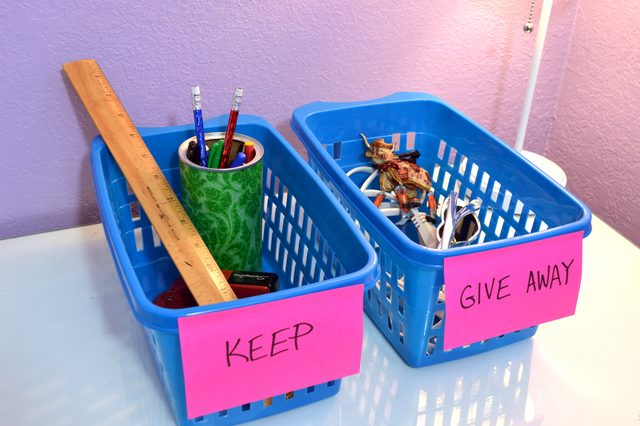
    De-clutter. Having to weed your way through clothes and piled-up dishes every time you want to enter your bedroom gets old pretty fast. To maintain a tidy living or work space, clear off surfaces, recycle/throw out what you don’t need anymore, and use cupboards or drawers to put away things that don’t belong. The best way to keep your space organized is to make de-cluttering a habit: take half an hour out of your week to clear up the accumulated mess, and you’ll notice a difference in no time.

    Label. Make sure you know where everything belongs by labeling file folders, drawers, and cabinets. That way, instead of rummaging through a massive pile of miscellaneous stuff, you’ll know where to look for something the next time it gets lost. This is also a good strategy for students who want to stay academically organized (for example, write the date and course code on every note you take, so you can file it away in the correct—and maybe colour-coded—folder at the end of the day).

    Trace your steps. Cell phones, bobby pins, house keys… If there are certain things you put down and just seem to never be able to find again, make it a point to put them in the same place each time. You can keep a list of “drop zones” (typical spots where you tend to leave things) so you know where to look the next time you absentmindedly put something down.

    Keep a “junk” drawer. This may seem counterintuitive, but when you’re in a rush, what can you do? There’s nothing wrong with tucking things away momentarily, to be revisited later—as long as you have one distinct place where you know you can find them again. The flip side to that, though, is that you have to clean out that junk drawer every once in a while. Once you get home and you have some time, make sure everything’s back in its proper place.

    Plan ahead. Before you go to bed, be proactive or “pre-organized”: try to get a jump-start on your morning routine. If you know you’re going to be up early the next morning, for example, you can prepare a lunch, pack your bag in advance, and set out the important things you’ll need (like your bus pass) in plain view, ready for you to grab on your way out the door. A little planning can save you a lot of scrambling!

  • The Importance of Being Early: Punctuality and You

    The Importance of Being Early: Punctuality and You

    Coming from a person who is predictably early, lateness can be incredibly unprofessional. I’m not just talking job interviews—this applies to meeting friends for coffee, extra-curricular meetings, and pretty much anything you sign up for. If you make a habit of being on time, it shows that you respect the commitments you’re making. In turn, people are going to respect you.

    Lateness can also have repercussions, especially in a professional environment. Showing up late to meetings or handing in projects days past the deadline sends the message that you don’t care about your job. When it comes time for a promotion or bonus, that reputation isn’t going to play well with your boss. Moreover, there are some things you just can’t hand in late—projects that meet urgent deadlines, or collaborative projects in which co-workers depend on one another to do their jobs. If you can’t fulfill those kinds of expectations, expect reprimand. Unfortunately, in fact, you might lose that job altogether.

    That’s why it’s so important to be early. The benefits of punctuality (developing a good reputation and avoiding some serious repercussions) far outweigh the drawbacks (getting up a little earlier in the morning). That being said, some people have trouble with punctuality, so it’s important to develop strategies that can help you be on time. If you get an early start on those habits—ha!—it will save you a lot of trouble in the long run.

    If you need help being on time, here are some general tips.

    1)      Do the math. Figure out how long it takes you to get ready in the morning, how long your bus ride is, etc. As a general rule, you should add 10-15 minutes of extra time for external variables, like traffic. According to that formula, set your alarm.

    2)      Have a game plan. If you can take 5 minutes the night before to lay out exactly where you have to be (and when), your routine will run more smoothly in the morning. You can also “cheat” by doing some things the night before, like laying out your outfit or packing your lunch.

    3)      Call ahead. If something does happen to hold you up, make sure you give as much notice as possible. That way, the person you’re meeting—a friend, a coworker, an employer—can be prepared for a 10- or 20-minute delay, and adjust their schedule accordingly.

    4)      Trick yourself (for a good cause). The classic strategy is setting your watch 10 minutes early: even if you plan your day perfectly and everything goes right, you’ll have some wiggle room. Another way to do this is overestimate how long it’s going to take you to do things. It’s better to have extra time than no time at all.