Category: Campus Life

  • MBTI Preferences

    MBTI Preferences

    When embarking on the journey to self-discovery in relation to your ideal career, it can be useful to get tested on your MBTI Preferences. MBTI stands for Myers-Briggs Type Indicator and is a test created for identifying four dimensions to your personality. These four dimensions, if understood and integrated into your sense of self, can help you to make more sound decisions in relation to your career path. When we can answer the question “why” about career choice, we feel more certain and rooted in our choice. The four dimensions are:

    1) Where do you get your energy? a) Extroversion, or b) Introversion

    2) How do you prefer to take in information? a) Sensing, or b) Intuition

    3) How do you make decisions? a) Thinking, or b) Feeling

    4) How do you deal with the outer world? a) Judging, or b) Perceiving

    The first dimension, relating to where you get your energy, involves questioning if you tend to reach outwards (extroversion) or reach inwards (introversion) to replenish yourself. A good way to pose this question to yourself is to ask: “Do I prefer interacting with people and taking action or do I prefer reflecting on thoughts, memories and experiences?”  You may find that this is a tricky question to answer for lack of context and that your behavior varies in different situations, so it is hard to come to one conclusion. If so, it is useful to look at a list of characteristics of extroverts and introverts and identify which category you relate with more. Once you’ve identified your type, you will be able to understand yourself and your social relationships better and eventually identify which career would provide you with the best opportunity to work with your strengths.

    The second dimension of the MBTI preferences tool relates to how you prefer to take in information in your environment. “Sensing” is the term used to identify people who think in terms of facts, with a tendency towards learn theory through practical application. “Intuition” is the term used to identify people who think in imaginative terms, with a tendency towards learning through understanding of ideas and theories before practical application. Knowing which side of this dimension you fall on would be highly useful to those deciding on whether to attend college or university, as “sensing” types would definitely prefer college, and “intuition” types would prefer university.

    The third dimension of the MBTI preferences tool helps you identify how you make decisions. People who tend to be “thinking” types are people who are guided by logic and standard operating procedures; they are oriented around the “typical case” and are they are analytical in situations. These people can be tough-minded and are always reasonable. The “feeling” types, oppositely, are people who are guided by personal values and assessing impacts of decisions on people, treating people as individuals and being empathetic in situations. This MBTI dimension would be extremely useful to help with identifying what type of work environment you would thrive in and what types of managers/coworkers you would collaborate with best.

    The final dimension of the MBTI preferences tool helps you to understand how you deal with the outer world. People who use “judging” to understand the outer world prefer to live in a planned, orderly way with a schedule and everything organized. This category of people tend to prefer to have things decided; to use methodical and systematic procedures in their work and personal lives. People who prefer “perceiving” to understand the outer world prefer to live in a spontaneous, flexible way, with an open-ended schedule and everything open to change. Knowing which side of this dichotomy you fall to will help you to nail down the type of environment where you will thrive. If you are someone who prefers rigid structure, you may do well in an office environment. If you are someone who prefers flexibility and spontaneity, you may prefer a job working in the field such as a police officer or an on-call doctor.


  • Put Your English to Work – Write for Money

    Put Your English to Work – Write for Money

    As a student it can be difficult to find work. Whether you are in high school, university, taking a year off or somewhere else altogether, finding a job can sometimes be difficult, let alone one that allows you to practice (and show off) the skills that you have been developing as a student.

    What about writing part-time? With the recent explosion of digital media, countless writing jobs have begun to appear as professional blogs, magazines, news agencies and webpages are craving more and more content to satisfy their growing traffic and audiences.

    Blogging, whether for personal or professional purposes, can be a good way to get your foot in the door. You can write about a specific topic, whether it be music, fashion or
    movies and start building a following and portfolio to help get those paying jobs in the future. Do you have audio-visual skills? Even better! Make a photo-blog; you can look at it as a chance to showcase your skills and prowess as a writer or photographer.

    With a bit of searching and maybe a little luck you’ll be able to find work with professional blogs that will pay for you to write on a variety of topics, often of your choice. Or maybe you want to give freelancing a try? There are a number of websites dedicated to aggregating freelance opportunities for young professionals. Ever want to write product descriptions for a furniture website? Now might be your chance.

    Regardless, writing part-time provides you with the opportunity to build your portfolio, network with other writing professionals and showcase your different skills, all the while making some spare cash on the side. It will also give you the opportunity to work with and write on topics that you never would have thought possible. Comparing different kinds of peppers? Check.

    It isn’t always the most prosperous work, but the experience and flexibility will prove to be invaluable. With a little patience you’ll slowly start to find yourself getting those higher profile and better paying positions that look oh-so-good on a resume or portfolio. It is hard enough finding work that puts your skills to work and accommodates a busy schedule, but give writing a try. The ability to choose – or at least shape – your own topics and your own hours will ensure a fun, constructive and unique work experience.

    So try writing part-time. You’ll enjoy it!

  • Career Profile: Chemical Engineer

    Career Profile: Chemical Engineer

    Suppose that one day you write on a piece of paper, use hand lotion on your dry skin, take some medication for your cold, put on a nylon jacket, and sit on a chair with metal legs. Do you know what all of those activities have in common? In all of them, you used products developed by chemical engineers. These scientists help turn raw materials like wood or flowers into products that people use every day. If you enjoy math, chemistry and other sciences and have the ability to solve problems, the job of chemical engineer might be right for you.

    Chemical engineers are involved in making many of the products that people use every day. Normally, their work is in developing processes for other workers to use in making products for customers to buy. For example, chemical engineers might experiment to find the right combination of plants and chemicals to produce a certain colour for dying cloth. Some chemical engineers work to make products better for the environment and some have even found a way to turn used chewing gum into other substances like plastic. That way, they turn what is normally garbage into something useful.

    Inventing ways to solve problems or to help make life easier for people is what chemical engineers do. Normally, a Bachelor’s degree in engineering with an emphasis on chemical engineering is the minimum requirement for working in this field. About twenty universities in Canada offer this kind of training. High school courses in mathematics, physics, and chemistry are good preparation for studies in chemical engineering, and reading magazines about the profession is also a good idea.

    In many cases, a Master’s or a Ph.D. degree is required for finding work as a chemical engineer, although a Bachelor’s degree is enough in some cases. Bachelor’s degrees normally take three or four years and Master’s degrees take another year or two after that. Getting a Ph.D. usually involves writing a book-length paper called a dissertation, which can also take a few years to finish. If you decide to become a chemical engineer, you will need to spend some time at a university.

    People with degrees in chemical engineering work wherever their knowledge is needed. They might help deal with problems in processing plants or do experiments in university laboratories. Some of them might work for cosmetic companies or help produce medications. Depending on their level of experience and where they work, chemical engineers make between about $50,000 and $70,000 per year in Canada, although salaries can also be higher. Job prospects in Canada are fairly good, but declining work in areas like construction has changed employment for engineers. However, jobs should still be available for new graduates.

    Do you enjoy combining different substances together to see what happens?  Why don’t you see if chemical engineering is right for you?

  • Writing Effective Cover Letters

    Writing Effective Cover Letters

    A cover letter is a formal letter used to introduce yourself to a potential employer and to convince him or her that you are the best candidate for the job.  Its purpose is to highlight the skills you have that are relevant to the job you want to apply for.  Employers are very busy people who usually receive hundreds of applications for any particular job.  That means an effective cover letter has to immediately grab their attention and tell the employer why he or she should spend time learning about you.  Keep your cover letter on topic and try to use succinct sentences that are relevant to the job.

    To write an effective cover letter, you must include three important elements.  First, introduce yourself, identify the position you are applying for and explain how you found out about the position.  This can be done in a single, introductory paragraph.  Next, in the body paragraph, explain why you are qualified for the position by describing your skills and how you demonstrated those skills in past jobs, volunteer positions or at school.  You probably have lots of skills that could apply to a range of different jobs.  However, it is best to discuss in your cover letter only the skills that will be most useful for the job and keep discussion of all of your other strengths for the interview that will come later.  But how do you figure out which skills are the most important to include in the letter?  You can figure out which skills to discuss in the cover letter by closely reading the job application and trying to get a clear sense of what the job will entail.  Finally, in the third and last paragraph of the cover letter, ask the employer to set up an interview and thank them for considering your application.  Always make sure to include your contact information so they will know how to get in touch.

    Here are a few more tips to keep in mind when writing an effective cover letter:

    1. Do your homework:  Learn as much as you can about the company you are applying to so you can show, in your cover letter, that you will be a good addition to the organization.
    2. Follow instructions:  Be sure to clearly answer everything that is asked in the job posting in your cover letter.
    3. Be brief:  Your cover letter should usually be made up of three paragraphs and never be more than one page long.
    4. Personalize your letter:  If possible, address the cover letter to a specific person by using their name and title.  Do not misspell the name.
    5. Don’t just restate your resume:  Usually employers read the cover letter first, so catch their attention in a way that persuades them to continue reading your resume.
  • Study What You Love

    Study What You Love

    At any level of education, it is important for students to take courses that are interesting and enjoyable. This is especially true in the first year or two of college. Many students enter college with no idea what they want to do after they receive their diploma, and that’s okay! The purpose of going to college is of course to achieve a degree, but also to explore your identity and discover what your passions are. General education courses in college are designed to allow students to dip their feet into different subjects in order to test the waters. Taking these basic courses could turn interests into passions, or help students to discover passions they never even knew they had.

    As an example, if you excelled in English and writing in high school, but are unsure on how to apply those skills in college, a basic creative writing course could be beneficial. You may find you have a knack for fiction writing or poetry. Sometimes required general education courses are seen as a nuisance, but you just might find that random course on your schedule to be your new favorite subject. If you have never studied psychology before, and find yourself fascinated by the way the mind works, that random class could lead to a rewarding career path.

    Colleges that require a variety of general education courses, or introductory courses, produce graduates with a broad spectrum of knowledge. These days, employers are looking for well-rounded employees who can adapt to different situations and challenges. Graduates are more likely to succeed in the real world if they have been introduced to several different subjects in college. Adding diversity to your schedule will allow you to meet different people and learn new things. It may also lead to interest in on-campus organizations, and allow you to be more involved at your school, which always looks good on a resume. Not only will taking enjoyable classes lead to career discovery and success, but you will be happier too. You will look forward to going to class, and you will be more eager to learn new material.

    If nothing else, taking interesting and enjoyable courses is important to finding the correct career path for you. For a student, the best possible outcome of graduating with a degree is to find themselves with not only a job but a career they love. College is a lot of work, so the reward of a good career is well deserved. There is nothing worse than rolling out of bed in the morning and groaning at the thought of going to work. If you study what you love and pursue your passions, you will end up with a fulfilling career and a happy life.

  • The Importance of a Good Reference

    The Importance of a Good Reference

    When you apply for a job, a volunteer position, scholarship or even graduate program, you are often asked to provide reference(s).  A reference is a person who knows you well and who can vouch for who you are. They can be your high school teacher, college or university professor, former boss or even former colleague.

    Ideally, you want to choose a reference that likes you and will speak highly of you, whether personally or professionally. You want that person to highlight your strengths and not your weaknesses. You want them to convince the person requesting the reference that you are in fact who you say you are –  and more! A good reference can make the difference between you getting a position or not. It can even be more influential than a transcript, resume or cover letter put together. This is why it is so important that you choose a reference who not only knows you well, but who speaks well of you and can increase your chances of being chosen for a particular job, volunteer position, scholarship or graduate program.

    It is a good idea to ask the person whether they can provide a reference for you before putting them down as your reference. This way, your reference is not caught off guard when someone calls them asking about you. It is also a good idea to give your reference a heads up that someone may contact them to ask them about you. This way your reference is prepared and knows what to say when that email or phone call comes in.

    Sometimes references are also required to provide letters of recommendation, as is the case for graduate school and scholarship programs. In these instances, you should ask your reference well ahead of time if they would be willing to write a letter of recommendation for you. Beware that often times these letters of recommendations are required to be sent directly from your reference to the school or scholarship program. This is done to ensure that the letter has not been tampered with or altered by you in any way. In situations like these, it is imperative that you pick a good reference that you trust will put in a good word for you, because you might not be able to see what they wrote about you.

    Remember, references are not supposed to lie about your credentials or who you are. Rather, they are meant to support and enhance the person you have claimed to be. If you have chosen good references that know you well, like you, and can verify the kind of person you are, then you are already on the right track for success.

  • Time Management: Making the Best of What You Have

    Time Management: Making the Best of What You Have

    Do you ever feel that you have too much to do and too little time to do it? Besides going to school every day, you might have swimming or music lessons, sports team practices, chores at home, and much more. How can you get everything done without wearing yourself out? For people of any age, the best way to deal with a busy schedule is through good time management.

    As the name says, time management is about learning to organize and manage activities throughout the day. The first step is to separate the very important activities from the less important ones and the things that you can change from the things that you can’t. Going to school or work, for example, is something that people usually can’t change. They might be able to find an easier job or a school that gives less homework, but they can’t normally eliminate it entirely. Sleep is another unchangeable part of life; whether people sleep for five hours a night or ten hours, everyone needs to rest.

    What are the parts of your life that you can’t change? You might be surprised to find that the list of necessary activities is quite short. After you separate the necessary activities from the optional ones, you can find ways to manage your time better. You can try to cut down on activities like being in clubs or watching television if they make your life too full. Working better and more efficiently can also help a lot.

    The most important part of time management is to decide what level of activity you enjoy. Some people can manage to fit a lot of activities into the day, but the danger is that they might do too much. Other people need a much slower pace, and they easily become overwhelmed by any pressure. Both kinds of people can be perfectionists who think that they have to get everything exactly right. Trying to do everything well can be good, but can also put a lot of pressure on people to accomplish more than they are able to do. Often, a heavy schedule and high expectations cause mental breakdowns in very busy people.

    Knowing yourself and how you use your time can make time management easier. The best place to begin is to record everything you do on an average day, or even a week, and to see how you organize yourself and your work. You might find a lot of short periods of time, such as between school and supper, when you can quickly finish a project. Writing out a schedule can help you to find much more time than you might have realized you had. Creating lists of things that need to be done and knowing why they’re important can help you with your priorities, and learning to say “no” to people’s requests can be useful. Whether you love to be busy or not, good time management can help you get through each day.

  • I Dropped Out – But I Want to Go to College!

    I Dropped Out – But I Want to Go to College!

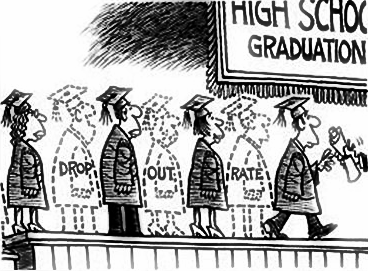
    For whatever reason, you didn’t make it through high school. That doesn’t mean that higher education is out of reach. There are a variety of options still available to you. You may not be able to get into every program at every school, but everyone has a shot at getting into a post-secondary program with any academic background, with or without a high school diploma.

    Getting Your GED

    GED stands for General Educational Development, and refers to the set of tests taken to obtain a high school equivalency certificate. In order to take the tests, you must be at least 18 years of age, have not graduated from high school, and must have been out of high school for at least a year.

    The tests provide a means for those who did not complete a formal high school program to show high school-level knowledge and skills. They cover reading, writing, mathematics, social studies and science.

    A GED is typically used to provide evidence of a high school-level education, and is commonly accepted in the work force as equivalent to a high school diploma. It’s not always accepted by universities as an academic assessment for university-level studies, however.

    Apply to an Open University

    Open universities are universities which do not require a high school diploma or GED as a prerequisite for enrolling in courses. Anyone can apply at any time.

    After a year’s worth of courses from an open university, a student is considered to be a transfer student and can then transfer to a conventional university on the basis of these marks as opposed to high school grades.

    Apply as a Mature Student

    Each college or university has their own standards on what qualifies one as a mature student, but typically a mature student is one who has reached a certain age, which might be anywhere between 19 and 21; who has been out of school for a certain amount of time, generally 1-2 years; and who does not possess the academic prerequisites expected of recent high school graduates, meaning a mature student may or may not have a high school diploma or GED.

    Mature students may be admitted on the basis of life or work experience, regardless of past academic performance. Some programs will require entrance tests to place the student at the right level, others will admit mature students on a trial basis, and others can forge ahead at full speed.

    Remember  that learning is more important than schooling. It may be that completing a degree or diploma program isn’t the right fit right now. Also consider certificate programs which are often shorter, and carry immediate, real-world applications.

    It’s never too late

    Once you know what programs you’re interested in, pick up the phone and call the admissions office. Speak to someone who can walk you through the process, as specific requirements are going to be different for each school. Make an appointment to speak with someone one-on-one to sort out your options.

    You may have to jump through a few hoops, but that determination can pay off. Remember, most university admissions are governed by a general policy, not law. Rules can be bent or broken if you’re able to show why you should be there.

    Good luck!

  • Why Students Should Join Professional Associations

    Why Students Should Join Professional Associations

    Once you’ve entered university and have started on your path towards your chosen career, you can look at joining professional associations. Students who join the associations in their related field do well for several reasons:

    1)      They are well connected with people who share a common interest. Having a social network of people who you can talk to about stresses and successes in your program is a huge coping resource. If you have any complaints about professors or courses, or are looking for information about textbooks or course notes, you have an easy access group of people at your disposal. There are also opportunities to share your opinion which is often a useful outlet as you undergo the stresses of university or college life.

    2)      Having a strong sense of belonging within a group will allow you to fulfill one of your most basic needs in a really easy and accessible way. This is super important because you will be busy in university or in college, so making time for social activities may present a problem for you. Having a group that you belong to will help to reassure you and let you focus on more important things, like your studies.

    3)      It looks good on a resume. Being a part of your chosen professional organization will help you to bulk up your resume. Employers and academics will be impressed with any work that you did within this organization because it shows that you have a strong work ethic and are able to work well on a team. It also shows that you are engaged in your academic life in a way that exceeds the minimum expectations. Whenever possible, you want to gain experience that goes above and beyond to put yourself ahead of others who will be competing for the same jobs as you.

    4)      It provides you with networking tools. When you are a part of an organization, you can more easily get in touch with people who can get you jobs or volunteer positions.  You want to have these connections so that your life is made easier when it comes time to finding a job. This may not seem important since you are in school and may not want a job immediately, but if you plan on being employed sometime in the future, then you will need to have connections.

    5)      There are more opportunities when you are a part of something then when you aren’t. When you are a part of your professional organization, you have opportunities for social gatherings and charity drives and other such events that you otherwise may not know about. Taking part keeps you in the loop.

    Overall, the most important reason to join a professional organization is to have the beginning of a social network.  When you start university or college there are often competing demands on your time. This means that you may not have time to do the social networking that you should be doing. This aspect should not, however, be neglected, and by joining a professional organization you are immediately put in touch with people with common interests and have access to opportunities that are likely of interest to you and that will look great on your resume. Also, any way to make networking with employers easier should be acted upon because, as the common adage says, having connections is your most useful tool for getting employed, no matter how spectacular your experience is.

  • What Are C.O.W.S.?

    What Are C.O.W.S.?

    Today’s world is filled with fast and convenient foods which fit in to our busy lifestyles. How many of you have given any thought to how the foods you eat make you feel and their affect our long-term health or appearance?

    At age15, my parents bought a convenience store and suddenly I had access to all of this junk food.

    I was in heaven for a while. Until my pants started getting tight and I felt terrible.

    I made the connection between what I ate and how I felt and looked. Small changes I made way back in high school paved the way for a healthy life.

    Together, let’s explore what today’s experts are saying we should eat to live a long and healthy life. The earlier in life we start, the better. In ‘The PH Miracle’ written by Dr. Robert O. Young and Shelley Redford Young, they talk about an acronym we should all remember COWS.

    C is for chlorophyll.

    “Vegetables are your new best friends,” especially the green ones. Chlorophyll helps the blood cells deliver oxygen, reduces the binding of carcinogens to DNA in our organs and help to neutralize dietary acids in the blood and tissues. They are nutrient dense and rich in antioxidants.

    O is for Oils.

    Know the good from the bad. Saturated fats found primarily in animal protein, partially hydrogenated oils found in processed foods are to be avoided. Good fats contain essential fatty acids. EFAs strengthen immune cells, lubricate joints, insulate the body against heat loss, provide energy, protect us from heart disease, stroke and high blood pressure. It improves asthma, PMS, allergies, skin conditions, some behavioral disorders and brain function. Good sources of oils include fish, seeds, avocados, olives and flax.

    W is for Water.

    In the earliest stages, dehydration can lead to muddled thinking, short-term memory problems, trouble with math and expressing yourself verbally, difficulty focusing on a printed page, cold hands or feet, anxiety, irritability, depression, sugar cravings and cramps too. Water neutralizes acids and literally washes them (and all toxins) out of the body via urine and sweat and the bowels. When you don’t get enough water you will feel tired and weak. About two liters of water a day is generally recommended.

    S is for Salt.

    Salt is as essential as water or air. You cannot consume too much natural, unrefined salt. Processed foods are laden with the bad salts. The salt test: mix a teaspoon of the salt you use in a glass of water and let it sit overnight. If the water is clear in the morning, it’s a natural salt. If you can see salt in the bottom of the glass it’s processed salt. Salt that does not dissolve in a glass of water will not dissolve in your body and will collect in your body organs and tissues. This can lead to heart disease, arthritis, hardening of the arteries and calcium deposits in joints.

    Following COWS is an easy first step to a healthy life.