Category: Campus Life

  • Preparing for Exams and Mid-Terms

    Preparing for Exams and Mid-Terms

    Stress – that’s often the first word that comes to mind when students think about studying for finals, but it doesn’t have to be. There are a number of steps you can take to cut back on the stress and anxiety you inevitably feel at test time. Try some of the suggestions below. They should help you feel more prepared and confident going into the exam.

    1. Accept the fact that you have to study. There is no easy way out. Sleeping with a text book under your head will not make you magically absorb all of the information in the book you never read. You just need to realize you HAVE to do some work.

    2. Don’t wait until the last minute to start studying. Cramming will make you more stressed and you won’t be able to remember as much info.

    3. If you are an overly organized person, put your skills to good use. Create a chart to document when, where and for how long you will study each subject. For example: Monday, 6-8 p.m., campus library, History. This will ensure you have enough time to adequately prepare.

    4. If you are a less rigid kind of person make flashcards and recite them while doing household chores, brushing your teeth, riding the bus to and from school, and between commercials while you’re watching the latest episode of The Voice.

    5. Don’t plan to study somewhere super comfy like in bed, wrapped up in a warm furry blanket, surrounded by twenty fluffy pillows. Chances are you will end up doing more napping then studying. Do however find a comfortable chair and work space large enough for all your text books (and snacks) with good lighting. It’ll make life a whole lot easier.

    6. Turn your phone off or, at the very least, set it to vibrate and only check it every 45 minutes (and then only stay on it for 10 minutes). Phones, tablets, iPods, etc. are great, but are very distracting. Contrary to popular belief, being a Candy Crush savant will not help you when it comes to school work.

    7. Before you start studying, write down everything you know about the subject. That way you’ll have a better grip on what you still need to know and what you don’t need to focus as much time on.

    8. Study with friends – but actually study. Don’t just sit around and chat. Your friends can be a great resource. If they were in the same class as you chances are they may remember stuff you don’t.

    9. Read through all your class notes. If you don’t understand a definition or a particular theory, try looking it up online. If you have time, ask your teacher for help.

    10. Take breaks, get exercise, sleep well and eat well. It’s not just studying the material that’s important. Your body needs proper exercise, sleep and nourishment to function at its peak.

    11. Know the material in your own words. This will ensure you actually understand it and haven’t just memorized a text book. It will also increase your confidence and your ability to answer any question thrown at you about the subject.

    12. Make sure you know where and when the exam is and how long it will take you to get there. Try to arrive about 30 minutes early, but don’t do any more studying for about 15 minutes before the exam. This will give you time to calm yourself and get acclimated with your surroundings. Scope out a good seat; get out all your necessary supplies (water, pens, pencils, calculators, scrap paper, etc.). If you have a favorite song that calms or relaxes you, listen to it on your iPod. Music often has a calming and soothing affect and can help put you in just the right mind set before you begin writing the exam.

    The important thing in avoiding exam stress is to be prepared. You may still be a little nervous, but you will have the knowledge and confidence to succeed.


  • Finding Your Niche

    Finding Your Niche

    After high school you then have to move onto post-secondary education – and that’s when you no longer have to take courses that make you think, “Why would I ever have to use this in the future?” We have all been there and thought about it. However, when you get to post-secondary, it all becomes very specific. You have to figure out what you are into and what you really wish to study.

    From experience, it is much easier to take a program that you are genuinely interested in rather than pursuing something you know you won’t like. After I changed my courses to something I enjoyed, I absorbed the information so quickly and in such great detail that I was able to retain a lot of information with little effort. When you are genuinely thrilled to learn the information you are provided, it’s a lot easier to stay focused and to achieve the best grades and goals!

    At this point, you need to focus on really finding your niche; your specialty. Find out what you are good at! Some of the lucky students have already figured it all out. My friend wanted to be a veterinarian since she was six years old, for example. If you’re like me, though, you had a lot of different plans and options throughout your life. When I found my niche, I found what I really enjoyed and knew a lot about. For example, if you are a very strong persuader and can effectively communicate your ideas to a wide audience and create outstanding rapport with your peers, you can pursue Public Relations positions.

    Finding your niche is all about exploration, and volunteering helps with taking a chance on many different fields; Extracurriculars and electives will also help with this.

    Always take a chance and find out what you enjoy and pursue your talents!

  • Networking: Your Tool to Success

    Networking: Your Tool to Success

    There is a saying that you will become very familiar with in life as you enter university and eventually into the workforce. The saying goes: it’s not WHAT you know, but WHO you know that matters.

    This may not make sense to you at first glance. I’ll be the first to admit that it didn’t make sense to me at first either. After all, I had spent years trying to learn as much as I could about my specific course of study. I figured that the more knowledge I had under my belt the better my chances were at getting into a great graduate program or getting a job in my desired field. But I soon discovered that this was not the case. Don’t get me wrong, either. Knowledge is important – very important! But so is your network.

    So, what is a network? A network is a person (or group of people) you interact with and exchange information with. Put simply, it consists of anyone you know and have developed a relationship with. Your network can include your family, friends, past and current colleagues, former high school teachers, past and current university professors, past and current bosses (assuming you have a good relationship with them), etc. Your network can even include people you met at the gym, coffee shop or church! The possibilities of who make up your network (and how large your network is) is only limited by the number of people you know. And I bet there are a lot of people you know in your life!

    Not everyone in your network needs to know each other. What’s important, though, is that the people in your network know you and like you. It wouldn’t be a good idea to have someone in your network who speaks poorly about you. This is because a network consists of people who help (not hinder) you in your career. Let’s consider the numerous advantages of having a network. For instance, when trying to find a job, a network can:

    • Provide you with internal job postings leads that may not be advertised to the general public
    • Provide you with contact names (people whom you may not be able to access on your own)
    • Put in a good word for you. Word-of-mouth referrals always have influence!
    • Provide you with advice during your job search process
    • Provide ongoing mentorship throughout your career

    Often, these things are more powerful and influential than WHAT you know. Again, this is not to suggest that knowledge and expertise aren’t important – they are! But when knowledge and expertise are coupled together with a lead on an internal job posting, a word-of-mouth referral and a contact name, your chances of getting that job go up tenfold, compared to another candidate who just has the knowledge and expertise.

    Remember that relationships are important, and this is no different in your personal life than it is in your professional life. So build your network and be part of someone else’s network. The benefits you reap from it are endless, especially since we live in a world where it’s not WHAT you know, but WHO you know that matters!

  • How to Prepare for an Interview

    How to Prepare for an Interview

    You’ve found a company you think you’d like to work for, you’ve sent in your resume and they’ve called back, excited to interview you. You’ve got an interview set up in a week or a few days. What do you do until then?

    If you’re serious about the job, and you want to land it, there are a few things you can do to prepare leading up to the big day.

    Research the company

    You already know you want to work there. Maybe it’s cool or they pay more than other places for similar work, but if you want to get in, it helps to have an edge.

    Check out the company’s website. Find out what the company prides itself in and who they see as their customers. The more you know about a company and the position you’re applying for, the better you can respond to their needs and show why you’re the best fit for the job.

    Showing that you’re familiar with the company demonstrates that you’re serious about wanting the position and that this isn’t just a random job application (even if it may have started out that way).

    Practice

    It may sound hokey, but if you haven’t interviewed much before, preparing practice questions with a friend or family member can help you get over your nervousness and ensure you have smart, relatable answers at the ready.

    Prepare concrete examples

    Interviewers want to see that you can think on your feet and they’ll often ask, “Tell me a time when…” questions. Things like, “Tell me a time when you weren’t able to meet a deadline.” Saying you’ve never had trouble with this will sound disingenuous – everyone’s handed in an assignment late at some point.

    Be honest and talk about how you let your boss or teacher know as soon as you knew you were in trouble, and how you negotiated an extension or workaround. Interviewers want to know that you know how to act professionally, even if this is your first job.

    Prepare your wardrobe

    Plan your clothes the night before and remember that it’s better to dress smart rather than casual. Even if the job is a jeans and t-shirt kind of place, it’s a sign of respect to dress well for an interview.

    Ensure anything that needs ironing has been ironed and that you have everything at the ready. You don’t want to make yourself late searching for your dress shoes  five minutes before you’re supposed to be there.

    Plan your route

    Use Google Maps to plan how long it will take you to get to the interview and aim to be at least fifteen minutes early. Plan for traffic and check road closures.

    Be calm

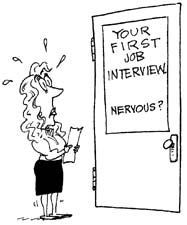
    It’s easy to get nervous before an interview, especially if you haven’t interviewed much. Take a few deep breaths before going in and smile. It really will relax you. Just be yourself.

    Remember that each interview is practice for your next one, whether you get this job or go on to something else. It gets easier each time.

    Good luck!

  • Dealing with Stress

    Dealing with Stress

    At any age, stress can take a toll on your mind and body. For most, stress is caused by an event or situation that is considered dangerous, difficult, or unpleasant. If it is not dealt with properly, long term stress can cause physical and mental damage. Coping mechanisms, if taught early, can be a helpful ally in battling stress and conquering stressful situations.

    For teens and young adults, stressful situations can be present in everyday life. Some common things that can cause stress are demanding school schedules, drama with friends, low self-esteem, changing bodies, high expectations, and family problems. Most young people encounter one or several of these situations on a daily basis. After a while the weight can start to take an affect and they can become overloaded with stress.

    Fortunately, stress is manageable, especially if the proper coping techniques are taught early. One way to help manage stress is to exercise and eat healthy. Exercise reduces the stress hormone levels in the body and causes the release of endorphins, which are the body’s natural mood lifters. In fact, exercise actually helps you relax. Doing some sort of moderate physical activity every day can ease stress or even prevent it. Healthy eating goes hand and hand with exercise. The healthier you eat, the better you feel. Keeping the body well-nourished and balanced is especially important during stressful times.

    Another way to cope with stress, especially with school, is to prioritize. If you have a heavy work load, do the biggest most difficult projects, or the projects that are due sooner, first. This way, you will have peace of mind knowing that they are completed. The smaller and easier tasks will be a piece of cake after the more difficult tasks are off your plate. Also, if a project or assignment seems overwhelming, break it into smaller pieces. For example, if you have a large paper to write, give yourself the time and take it paragraph by paragraph. Treat each paragraph like it’s a separate assignment. This way, the thought of writing large paper won’t seem so daunting.

    Last but certainly not least, the best way to deal with stress is to talk to someone. Stress is common and many people can relate and sympathize. Talk to a person who is close to you, someone who you can open up to and be honest with, like a parent, a teacher, or even a best friend. Voicing your stresses and frustrations can help you get them off your chest. Sometimes a long chat with your closest friend can do wonders for your mood and stress level. Situations that are seemingly stressful might not be so bad once you know you have support and you’re not alone.

    Stress can be dangerous, especially for teens and young adults who are not sure how to manage it. It’s important to recognize when a situation is beginning to weigh on you and make it a priority to do something about it.

  • Writing Effective Cover Letters

    Writing Effective Cover Letters

    A cover letter is the first thing a potential employer sees, even before they look at your resume. Without a strong cover letter, they may not even get that far.

    Cover letters are more often sent by email these days, with your resume sent as an attachment. But, whether print or paper, the anatomy of a cover letter is essentially the same. You open with a greeting, state the position you’re applying for, outline your qualifications, and sign off.

    It may sound like a lot, but your cover letter should only be about one page long.

    Greeting
    Start it as you would a letter, “Dear So-and-So.” Using “Hi” or “Hello” in place of “Dear” may come across as too casual.

    If possible, your letter should be addressed to the specific person doing the hiring, and lead “Dear First Name Surname.” You can find this out from the ad, through a contact who already works there, or by calling up the human resources department and asking. But if not, “Dear Hiring Manager” works in a pinch. However, going the extra step will help your cover letter stand out.

    In the past, you’d preface the name with Ms or Mr, but these days it seems a little fussy and can quickly become confusing for gender neutral names.

    Position You’re Applying For
    Following the greeting should be a short statement about the position you’re applying for – “Please consider my application for [position title] at [company].” You may want to include a note about how you heard about the position. If a friend or family member who already works for the company recommended that you apply, the hiring manager will take a closer look at what you have to offer.

    Your Qualifications
    This is the most important part. It’s what gets them to flip to your resume and call to arrange an interview. Depending on your level of experience, this section may be one to three paragraphs long.

    The focus should be on showing how your skills meet the employer’s needs. Highlight the work, volunteer, or personal experience you have that demonstrates you’re a perfect fit for the position. Don’t just give a bald work history – they can read that in your resume. Instead list your professional skills, soft skills or interests, how you won employee of the month, or had the highest sales during the holidays. If you’ve taken any certified courses relevant to the position, be sure to include them here.

    Closing Remarks
    Close with something courteous like, “Thank you for your time and consideration. I look forward to hearing from you.” On another line, your valediction, “Sincerely,” or “Regards,” another line break, your name, phone number, and email address.

    Look It Over
    Once it’s finished, look it over and make sure it flows. Don’t solely rely on spell check to catch spelling and grammar errors. “Deer” may be spelled correctly, but if you write “Deer Jane Smith,” you’re going to look pretty silly – and even sillier if it’s actually “Jayne Smyth.” Triple check the spelling – there’s nothing more embarrassing than getting someone’s name wrong.

    It’s a good idea to have another pair of eyes go over it. Have a friend or family member who may be able to offer suggestions or catch any typos or omitted words you might have missed.

    Good luck!

  • Astronauts and Chris Hadfield

    Astronauts and Chris Hadfield

    Retirement is a good time for people for look back at what they have done over their lives and in their work. Some people’s careers never go beyond their own town or city. For other people, however, a job can take them far away, even beyond the earth. When Chris Hadfield retired from his career as an astronaut on July 3rd, 2013, he had a chance to look back on a long career in space. His most famous success was being the leader of the International Space Station. The education he received and the work he did in his early years all helped him to do well in his career as an astronaut.

    Chris Hadfield grew up on a farm in Ontario. He became interested in flying and joined the Air Cadets at a young age. During this time, he learned to operate first gliders and then regular powered airplanes. By the time he retired, he had flown over seventy different types of planes and other aircraft.

    After he finished his basic schooling, Chris Hadfield went to study at the Royal Military College in Kingston, Ontario. He completed a degree in mechanical engineering there before going on to do research at the University of Waterloo. Next, he studied at the University of Tennessee and received a Master of Science. Early in his career, he became a fighter pilot in the Canadian Armed Forces. In 1983, he received an award for best pilot in the Basic Jet Training in Moose Jaw, Saskatchewan.

    In 1992, Chris Hadfield became one of four astronauts working at the Johnson Space Center in Houston, Texas. He traveled into space several times and even helped to install a tool called the Canadarm onto the International Space Station. He worked with the Russian space program between 2001 and 2003 and later used his research skills to test the possibilities of underwater life at a station near the coast of Florida.

    In 2012, Chris Hadfield was chosen to work as the head of the International Space Station. He worked there for five months, conducting scientific experiments in areas such as gravity’s effects on humans. All the way through, he used social media sites like Twitter to tell people on earth what he was doing. He returned to earth in May 2013 and announced his retirement a month later. His official retirement began on July 3rd, 2013.

    Not all astronauts train in the same way as Chris Hadfield did, and some might never actually work in space. However, an education in one of the sciences or engineering, and also work experience, is necessary for most jobs in this field. Some knowledge of medicine is necessary since astronauts have no access to hospitals in space. Astronauts need to be in fairly good health and to be able to move to different locations for work. The pay is good, and astronauts can often have extremely varied careers. Not too mention that you get to go where few other people have ever gone before!

  • What to Do With a Gap Year

    What to Do With a Gap Year

    A gap year is an idea that many may brush off, may overlook, or may not take seriously. Gap years are often thought of as a ‘fallback’ or an alternative if your initial plans fall through. But it can be so much more than that.

    Taking a year off can let you revitalize and focus you. It allows an opportunity for you to grow outside of the school environment and provide a fresh outlook on what you want to do, what is important to you and how you want to continue your studies.

    You won’t be bored, I promise you. There are countless options for how to spend your year. Some may be more practical than others, but they all will (hopefully) help influence your upcoming decisions concerning what it is you want to do.

    Taking more classes is a common option. Working for those extra credits can give you the opportunity to explore those courses you never had the time for before. Maybe you’ve always had a passion for literature? You could try some offbeat English courses. Film? How about a “History of Western Filmmaking”? Taking additional courses allows the opportunity to boost your average and explore some alternative new fields.

    Then again, education is expensive. Working could be a good idea. You could work full-time or part-time either working as a barista or something totally unique. Your choice. Regardless, experiencing the workforce can be a positive and eye-opening experience and a little extra cash never hurt anyone.

    Maybe you want to see the world before heading back to the library? Traveling is an unforgettable experience. It is one that can broaden your mind, allow you to grow as an individual all while putting a good dent in the money you saved up working for the better part of your year off.

    Each can of course be inclusive of the others and each offers the opportunity to learn new skills, learn about yourself, network and hopefully help you decide which path you want to take or any changes you may want (or not want) to make to the one you’re already on.

    Your education is not a race. It’s your life. The decisions you make and route you choose will make a huge impact on your future so be sure to take your time and make the right decisions. Some people dismiss the idea of a gap year as a ‘wasted‘ or ‘lost‘ year but if you do it right and make the most of it taking a year off can be an extremely rewarding and eye-opening experience. You won’t regret it!

  • Your Credit Rating Begins Now

    Your Credit Rating Begins Now

    You begin to establish credit the day you get your first credit card, apply for a student loan, or sign a contractual cell phone plan. How you handle the credit afforded to you has a direct impact on the products and rates offered to you for years to come.

    What is a credit rating?
    Your credit rating is a measure of responsibility. It demonstrates to banks and other lending institutions that you’re consistently able to pay your minimum balance on time. Your credit score represents a track record, and where you’re at now.

    The strength of your credit history is what determines if you qualify a credit card, a loan, or a mortgage, and can affect the interest rate you’re offered. If your credit rating is low, you will be deemed high risk, and the interest rate will be much higher, if you’re even offered credit.

    How do I establish credit?
    For new or young borrowers, this can be challenging, if you don’t have any credit history.

    Some lenders will allow someone with an established credit history, such as a parent or guardian, to co-sign a credit application with you. Though remember, this means that both parties are responsible for timely repayment. If your mother co-signs your credit card application, and you fail to pay, this will negatively impact both credit scores.

    Most credit cards are unsecured, meaning you haven’t put down a deposit or secured it against property. However, if you don’t have any credit history, you can look into getting a secure another option is to apply for a secured credit card, where you have collateral backing up the line of credit. Often this is a deposit, which will be returned to you when you cancel the card. Some secured cards carry higher interest rates and have fees associated with them.

    What affects your credit rating?
    Consistently paying down credit on time, at least the minimum balance or more, builds or maintains your credit rating. Each late, missed, or incomplete payment negatively affects your score. Regularly miss or make late or incomplete payments, and this could negatively affect your credit score for years.

    Your credit score is also based on the length of time you’ve maintained a credit account with a lender, and how long that account has been in good standing.

    Credit reports only track funds that you’ve borrowed. They don’t include information about whether you pay your bills or rent on time.

    How do I maintain good credit?
    Always pay your minimum monthly balance on time. Better still, pay more than your minimum balance, and pay it early, as it can take a few days for transactions to clear.

    Each time you apply for credit, it shows up on your credit history. Requesting too much credit in a short period of time can lower your score.

    Request a credit history from Equifax or TransUnion annually, and review the report. If you find incorrect information, contact Equifax or TransUnion immediately so they can begin the dispute resolution process.

  • I Think I’m In Love! Handling a Crush

    I Think I’m In Love! Handling a Crush

    Like their first kiss and their first love, most people can remember any number of details about their first real “crush.” The butterflies in their stomachs, the dry mouths, the sweaty palms, the racing hearts – it may all sound gross, but these symptoms are exhilarating when you get to pair up with your crush for a science experiment, sit next to your crush on the bus or manage to eat a whole lunch by your crush’s side. Unfortunately, the title “crush” is apt as it is very easy to be crushed if you find out that (s)he does not return your affections. Don’t be crushed by a crush! Instead, follow these tips for moving on and moving up to someone who deserves your special attention.

    Defining a Crush
    A crush, unlike a relationship, is not a two-way street. Often you’ll realize that you feel a strong attraction to someone you barely know, for reasons you barely understand, and that this, in all of its glory, is a crush.

    Signs of a Killer Crush
    Even if you know better, falling hard for a crush can be unavoidable. Signs of a killer crush include:
    • Wanting to be near him/her, even if you don’t know his/her name, and (s)he wouldn’t know yours.
    • Wanting to find out as much as you can about your crush and searching for clues to “prove” your compatibility.
    • Changing your habits or schedules to coincide with theirs.
    • Feeling embarrassed or flustered when your crush pays attention to you.
    • Reacting nervously when you are physically close .
    • Obsessing for hours about a hypothetical future with him/her.

    Coping with a Crush
    Living with a crush isn’t easy – in fact, it’s hard work. Having a crush makes it hard to concentrate, it makes it hard to eat and it especially makes it hard to sleep, even if you are hoping to meet up  somewhere in your dreams. To make sure that the rest of your life doesn’t fall apart for the duration of your crush:
    • Confess your crush to your friends and ask them to distract you.
    • Throw yourself into schoolwork to make sure you don’t fall behind (and who knows, maybe by standing out you’ll catch your crush’s attention).
    • Take up a hobby that will get you out of the house and get you moving.
    • Give yourself enough time alone to fantasize , but don’t let it interfere with your real life.

    Living with a crush can be a wonderful, magical, painful, torturous time. Allow yourself to enjoy the frivolity of a crush, but don’t let your feelings override your common sense. Don’t risk your safety, or your reputation, in order to get your crush’s attention. In other words, don’t irrevocably change your life for a crush that will likely disappear as quickly as it began.