Category: Campus Life

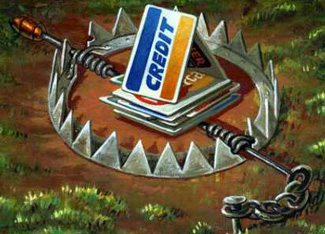
  • Beware of Credit Cards

    Beware of Credit Cards

    Get your free stuff!

    Free CD’s, T-shirts, mugs, hats; They’re all yours and they’re all free if you sign up for a credit card.

    Sounds great, doesn’t it?

    Free swag and your very own credit card. So what should you buy first? Maybe some jeans to go with your new t-shirt, or how about a stereo to play your new CD? On second thought, why don’t you buy it all? After all, you can pay for it later, right?

    Wrong.

    Each year young adults across Canada fall into the credit card trap. It’s easy to operate under the “buy now, pay later” mentality, but a few impulse purchases now can lead to costly mistakes over time.

    According to a 2008 study by the Financial Consumer Agency of Canada, 6 in 10 Canadians between the ages of 18 and 29 had some credit card debt, and at least half of those reported their debt load to be “more than they can handle”.

    72% of young Canadians have credit cards. However, most of them are unaware of the problems they can face if they don’t monitor their usage.

    Credit card companies can raise your credit limit without your consent. So you should always be aware of how much you spend. Don’t assume if you have a $500 limit you’ll be declined if you reach it. The company may have raised your limit to $3000 causing you to spend more than you intended.

    You also need to be aware of interest rates, as they can add up quickly if you don’t pay your monthly balance in full.

    For example, let’s say you owe $1000 and you only make the minimum monthly payments. At an interest rate of 18%, it would take you 12 years to pay off your bill.

    Don’t let flashy cards with your school crest or the logo of your favorite sports team and free stuff be your financial downfall.

    Remember, what you do today affects tomorrow. Careless use of credit cards now can seriously damage your credit rating in the future. This will make it very difficult to buy a car, rent an apartment, start a business, start a family or buy your first house.

    Spend smart!

  • Self-Improvement 101

    Self-Improvement 101

    As we face September and the coming of a whole new school year, we are often faced with the same questions: Am I good enough? What can I do to make myself a better person, the person I truly want to be?

    I recently read an article that focused on improving one’s relationships by remembering six negative qualities of past relationships. Instead of dwelling on them, take those negative aspects and turn them into positive aspects to seek and ask for. For example, instead of looking at a past bad relationship in terms of, “I never want to go out with someone who cheats”, think, “I am looking for someone who will be true to me”. This type of thinking trains your brain to ask for what you do want as opposed to what you don’t want. It is a great way of turning negative points in your life into positive points and helping you to further your personal growth. So, for this effort in self-improvement, I suggest elaborating on the example of negative relationships. However, this time we will be using it to improve our relationship with ourselves.

    Pick six aspects about yourself that you find negative or that you would like to change. Here are my examples, and remember to replace “I don’t want” with “I do want”:
    – “I do want to be fit, athletic and healthy inside and out”
    – “I do want to be practical, smart and well-adapted to my world”
    – “I do want a job that will provide me with a source of steady income”
    – “I do want to live independently”
    – “I do want to have routines that keep me healthy and organized”
    – “I do want to have social relationships that nourish and energize me”

    Once you’ve nailed down some good goals or positive statements about what you want in your life, post these somewhere you can see them every day. Choose to look at this list whenever you have a negative or a self-destructive thought. Remind yourself of what you want: “I want to be fit, athletic and healthy inside and out”, and then move to setting and reaching a goal that will get you there. This way of changing negative cognitions into positive self-statements is a great way of improving your self-esteem and self-image. The way that we look at ourselves is in our control, and when you believe you can succeed, you can do anything!

    The important aspect to keep in mind is repetition. Be prepared to tell yourself positive statements over and over again. Be prepared for setbacks; You will have moments and days when it seems like you will not be able to convince yourself of your worth. It is those moments when you will have to be strong and hold on, feeding yourself positive thoughts to replace your negative thoughts. Eventually, with repetition, this will become a habit, an ingrained tendency, that will make your life that much easier! Good luck!

  • Teachers Are People Too

    Teachers Are People Too

    Contrary to popular belief teachers can be useful outside of the classroom by assisting you with everything from career advice, to acting as a source of reference for the next step in your education.

    Teachers are  one of the biggest influences during your education. They spark interest and provide knowledge on subjects that will help you narrow future academic and career paths; pay attention to them!

    Like guidance councilors, teachers can be used as a resource source when planning for your future.

    It is important to keep in contact with past teachers during your first year of post-secondary education. Don’t be afraid to go back to high school to discuss questions and concerns you have about your new academic institution. They will be more than happy to help.

    Teachers have been through a lot of work to complete their education and secure themselves jobs. Don’t think twice about asking them about the steps they took when entering post-secondary education and what decisions they had to make in their career to get where they are now. It is okay to be curious. They may have encountered similar issues that they can help you with and can also assist in avoiding the problems that they have seen during their own educational experience.

    Teachers can not only give you good advice about their past educational endeavors, they are also a useful resource during your undertaking of post-secondary education and beyond. To apply to the majority of colleges, universities require you to have a letter of recommendation, or other referential documents in order to be accepted into their facilities.

    Teachers can be one of the most reliable and reputable references to acquire during such applications. So if you are short on references, don’t stress, you’ve had one all along.

    A reference from a teacher may also help you land a part or full-time job as well! Once again, don’t be afraid to ask them for their assistance.

    If your career path is geared towards becoming an educator your first stop should be a discussion with your past teachers.

    Many teacher colleges highly recommend their applicants to have a certain amount of teaching or “observation” hours in order for you to be accepted. In fact, up to 200 hours (which is split into 100 hours in two different teachable subjects) of teaching experience is a standard requirement for teacher college applicants.

    A past teacher may be able to give you these observation hours so you can get a better understanding of the job. Doing these hours not only allows you to profit from gaining valuable knowledge required for the educational field, but also provides an eye- opening encounter to what teaching is like on the educator’s side of the desk. Completing these hours could possibly let you discover if the career is right for you, so doing them as early as possible should be considered.

    Remember, your teachers are people too, and have most likely went through a similar path into college/university that you are about to partake in. It just goes to show, even when you finish high school, you are not finished learning from your teachers just yet.

  • Taking Time to Make Time

    Taking Time to Make Time

    School will be back in session in a few short weeks and will bring with it homework, exams, sports, and fun with friends. For many of you, summer vacation will be over and it is going to get busy!

    When life gets busy, it is really easy to procrastinate. Going out with friends or playing sports is more fun than writing that biology report. I was the student who socialized during spare, cheered on the sidelines at sports games, went out for pizza and then stayed up until 2:00 am to finish that report on time. This was a really fun way to spend my high school days but led to alot of stress because it seemed like there wasn’t enough time in the day to fit it all in!

    The reality was that I had zero time-management skills and very little discipline. Discipline? Management?  Those are scary words. However it is those same two words that will hopefully allow you to spend more time with your friends, more time sleeping and less time worrying.

    For example, time-management in high school can be as easy as dedicating one hour after school or during your spare to finish your homework. For instance, that five-paragraph essay that is assigned the second day of classes and is not due until three weeks later? Instead of leaving it until the night before, try and tackle one paragraph a day. Work hard on each paragraph ,and stop when you have completed it then move on to your next task or relax and know that you have done a good job. Five days later ,you will have five paragraphs and plenty of time to edit with two weeks to spare and there won’t be an eight-hour marathon session the night before the paper is due. You will get more sleep, not to mention you will have plenty of stress-free time to hang out with friends, play sports, practice music, or do whatever you find fun.

    It will take discipline to stick to this routine. Discipline, in this sense, is not really about restriction, but more about applying yourself so that you have freedom. There will be times when you want to come home and sleep, watch television or go on Facebook. There will also be times when the routine you have established gets messed up. It will take discipline not to procrastinate, but that same discipline will allow you to have more time to do the things you love. Plus, the time you spend after finishing your task will be guilt-free because you know that you have worked hard and accomplished what needed to be done. Another bonus is that Mom and Dad won’t be on your case all the time to finish your homework either!

    If you are a perpetual procrastinator like I was, try this strategy out; it takes practice and there will still be times when things get left to the last minute. After all, life is not perfect. That said, with practice, it does get easier, and the benefit of living a balanced lifestyle and implementing these habits of time-management and discipline now will really benefit you in the long run.

  • What to Bring to a Dorm

    What to Bring to a Dorm

    The summer break is coming to an end, and with it the coming of a new school year. For some, moving is an ample excuse for acquiring those “moving away jitters”, and for others, well, they probably can not wait to get out of their parents house and on to life in residence. Either way, youʼre going to have to pack some essential items for your stay. Here are some tips that will hopefully make that new house into a home.

    I donʼt know about you, but the first thing I think of when I get home is getting comfortable! Especially for those long days you just want to sleep in. Make sure you bring your most leisurely clothing and sleeping gear for your room. This includes pajamas, pillows, and blankets.

    If you are one of those “home bodies” that has to move away, bring something from your old room that reminds you of home. Getting homesick is quite common in the beginning weeks of school, so bringing a keepsake (as corny as that sounds) from your old house may help if you through that sometimes tough moving in phase.

    Personalizing your room should be your next priority. Make sure your room is a statement about yourself, even if that statement is an understatement. Dress it up using posters of your favourite movies, books, bands, and art. Bring your favourite books and records to share with your peers. Even display your own art! The point is, itʼs your room, feel free to express yourself in any way! Create a personal statement when your peers walk into that room.

    Have a hobby? One thing you will want to do while you are in your dorm is try and get your mind off that school pressure that grinds the best of our spirits down.

    Brining a small hobby to your room may be a healthy distraction for yourself. For example, playing an instrument like the guitar, or even something as obscure as knitting. As long as it is easy to bring along on the move up, donʼt think twice about bringing it.

    With the internet being an essential part of life now, bringing a laptop or personal computer is quite an obvious candidate for this list. In fact a laptop would be highly recommend over a computer tower. You can not only get work done in the comfort of your own room but also the portability of a laptop will allow you to take notes in lecture, and do work in your campusʼ library.

    If you are as paranoid and protective as I am, you may want to bring some kind of small lock or safe to keep important things in. Sometimes the life in residence can be rather open concept, (people walking in and out of your room when you are not there etc.) so knowing that things important to you are stowed away somewhere is just one more thing to do to put your mind at ease.

    The next and final two things you will need are essential: proper hygiene and manners. If you donʼt bring these two things to the table you may be in for a dismal residential experience. Make sure to keep not only yourself neat, but the place you live in too. Work with your roommates to keep your spot on campus neat and hospitable.


  • How to dress for success

    How to dress for success

    You probably don’t need to be told that it’s important to reflect the most professional and appropriate image towards potential employers at a job interview. But if you have no clue what is considered “professional” or “appropriate”, read on.

    Studies show that it takes on average about 2 years to eliminate a negative first impression, and your physical presentation can affect the impression you make.

    “You might be surprised at how many young people have no idea what is considered appropriate to wear for interviews” said Jovana Ubiparip, hiring manager at one of Vancouver’s busiest downtown restaurants.

    “Your look must be impeccable and put-together regardless of the position you’re interviewing for” explained Ubiparip who interviews about 5 – 10 people a month, mostly youth, for a myriad of positions.

    Although it takes more in-depth coaching to achieve a confident presence, it is easier to control how you look. By dressing well and taking good care of your physical appearance, you will impress the interviewer from the get-go and with that out of the way you will be able to focus more on your interview skills.

    Here are a few rules to follow to make sure you are dressed appropriately for your first job interview:

    1: First, do some research on the industry and the organization to determine their “style” and culture. Always dress “one up” from what you see. Remember, it’s always better to be over-dressed than under-dressed! Don’t be afraid to show your personality, but keep your look classy at all times.

    2: Long sleeves are essential to a “take-me-serious” look. A tailored jacket or blazer is a must, but if it’s not available, make sure that at least you’re wearing a long-sleeve shirt.

    “There is nothing worse than showing up in a tank-top with visible bra straps” noted Ubiparip.

    3: Stay away from shorts, t-shirts, jeans, mini-skirts, pants that are too low-rise or too tight, blouses that are too tight, too low-cut or too short to make sure you’re not showing any cleavage or belly. Shorts and t-shirts are too informal, while shorter skirts tend not to leave much to the imagination.

    4: For girls, wearing socks or hosiery is non-negotiable. Having bare legs screams unprofessional and adding that extra layer ensures a more polished and complete look.

    5: For business wear, shoe styles must be closed-toe and closed-heel and they must be in mint condition. For girls, consider a pump with 1’’ – 2’’ heel for the added lift but no higher.

    Girls and guys should avoid platforms, strappy sandals, sneakers or flip-flops no matter the time of year. Nicked heels, scruffy toes, or unpolished footwear make you seem careless and unkempt. Same goes for your clothing: check your outfit for holes, tears, stains, scuffs and wrinkles.

    6: In our society, well-applied makeup conveys high self-esteem and confidence. Keep it light with natural foundation and blush, mascara and neutral eyes and lips.

    7: Carry a briefcase or simple folder to hold important papers. Don’t wear a backpack, fanny pack or any other non-professional gear carriers.

    8: If you are wearing a new suit, try it out beforehand. There is nothing worse than baggy, overly tight or dragging pant legs.

    9: Eliminate distracting fashion statements such as overlong, ornate fingernails, exotic hair-dos, overly trendy or flashy clothing including too much colour, too bright, too shiny, distracting glitter and too many accessories or flashy jewelery. Always remember to tone down the perfume or body spray.

    10: A stylish and neat haircut is essential to a professional image. A great hair cut saves you time because it’s far easier to style. Always remember to wash and care for your hair in preparation of the big day.

    By following these simple rules, anyone can be seen as attractive and professional and you’ll be sure to land the job.

  • See it, Think it, Have it !

    See it, Think it, Have it !

    Creative visualization is the process of generating images in your mind, and is often used as a tool for self-improvement and stress relief. Athletes, celebrities and successful people from all walks of life have touted visualization as an effective way to improve performance, enhance skills and boost confidence. (more…)

  • Planning ahead

    Planning ahead

    College will work itself out, right? You’ll get there, get a room and everything will fall into place.

    Well, that may not be the case. Here is some advice from people who have successfully entered the college world.

    Knowing my senior year would be chaotic, I started to plan for college in my junior year. I made the best grades I have ever made to raise my GPA so I could apply to the University of Toronto. It was the best thing I could have ever done.

    Having a good GPA will show colleges or universities how dedicated to your schoolwork you are. Yes, they do like to see community service and other school activities, but those can only go so far. With a good GPA, you show that you are not only a good student, but also a hardworking and dedicated person. That is why the time to start worrying about high school grades is the moment you enter high school. If you start good studying habits then, and get your GPA up as high as you can get it, you will more than likely get into the post secondary institution  of your choice.

    Some study mechanisms or methods used in high school may work after high school, and some may not. I did not truly learn how to study until my junior year of college, and then it was easy. If your old methods fail, try new ones until you find ones that work. The earlier you achieve this, the better.

    I believe that everyone should volunteer, even if it’s as simple as tutoring a friend. Colleges and Universities are looking for well-rounded people to enroll in their institutions.

    Pick your school based on your own needs. Ten years from now, it probably won’t matter what your boyfriend thought or where your friends all went to school. Extract yourself from your current social situation and think about what would be best for you.

    I believe the most important way you can plan and prepare for post secondary  is by researching, visiting and communicating with the college or university that you plan to attend. Once you have been accepted , you must obtain as much knowledge about the school before you decide to attend. After all, wherever you decide will be your home for the next four to five years, and that is a big commitment.

    Get to know professors. This is very important. You might want a recommendation letter later that could help you get a job. Get to know them, and make sure they get to know you.”


  • Don’t Stress about what to take in College

    Don’t Stress about what to take in College

    Choosing a college major can be as easy as deciding how you want to spend your weekend. While you have plenty of options to choose from, you should end up picking what you enjoy most.

    The question you have to ask yourself is, what is right for me right now?

    Seems too simple, right? Yet, if you consider that declaring a college major doesn’t have to be the same as selecting a career, the choice becomes a little less intimidating. It then becomes a decision of finding out what interests you most, rather than determining what you’re going to do for the rest of your life.

    If you take a look around and ask professionals what they studied in school, you’ll find many of them are not doing what they  thought they wanted to do when they came out of college or university.

    What you major in as an undergrad leads you to your first job only. if that.

    Students have a common misconception that their major will determine their career. The best advice is to do whatever interests you, because that’s what’s going to get you somewhere.  Doing what you enjoy doing makes work fun. How great it is to go to work each day enjoying the day.  You can major in something you love and still get a great job. Here’s the secret: Know what is right for you by following your interests! Interests are the best predictor of career satisfaction.

    Don’t know your interests? Then explore! Go to the bookstore and pull out books on possible majors, doing this, you’ll  find  what interests you .  You’ll just feel the attraction to the books.  Choose what you’re good at.  Study something you’re excited about, because you’re going to get better grades when you do that.

    Get out of the classroom!

    Take your nose out of the books and get your hands dirty;  it will increase your chances of securing a job. According to a 2010 survey by the National Association of Colleges and Employers, post-graduates with related internship experience are more likely to find a job than those without any. Employers need more than what you learn in school, they look for experience.

    Find a passion project.

    Once you find what you enjoy doing, make a connection in that field and intern or volunteer for free. You may find it your passion.

    Learn what’s out there. Exposure is important, because there are majors you don’t even know exist yet.

    If after reading this you’re still worried about choosing a major, consider that people often change their major about three or four times. There is more than one route you can travel to get you to your destination.

    Undergraduate studies are really just an exploration of the self and your interests,. It’s just a stepping stone, so do whatever you enjoy.


  • Great Food to Fight Depression

    Great Food to Fight Depression

    We’ve all done it, drowned our sorrows in a family size bag of Doritos or a pint of cookie dough ice cream, but does it really help make us feel any better?

    Well recent research suggests food really does alter our body chemistry and as a result influences our moods. Therefore, everything we put into our body affects us in one way or another. Putting food in your body is like putting gas in your car; it makes it operate. Keep in mind people are a little more complex than automobiles. It is normal to feel sad or depressed when a loved one dies, or you go through a tough brake-up, or someone does something to hurt you, unlike cars we have feelings and emotions that can’t be fixed with some type of “magic food.”

    However, if you are feeling down and there doesn’t seem to be any major reason for it, than perhaps a change in body chemistry could help.

    Sleep is one way to deal with depression. So it’s important to avoid foods that may interfere with your sleep. Some people find that caffeine keeps them awake. Others have a hard time sleeping after eating spicy foods. Knowing what affects your sleep habits will make it easier for you to avoid them. Anything, you think may impact your ability to get a good night sleep should not be consumed within four hours of going to bed.

    So, what food should you consume to help alleviate your depression? Well, most experts agree fresh fruit is the best option. It contains natural sugar, and is full of essential vitamins and minerals. Fats from fish oils are also excellent to help cope with depression, as well as omega three fatty acids. Below is a list of some great foods that may help ward off mild depression or alleviate it from becoming too severe.

    – Beets- they’re high in folate, and a lack of folate can lead to depression, mental fatigue and insomnia.

    – nuts such as walnuts, almonds, pecans and brazil nuts

    – fish such as salmon, tuna or herring

    – turkey, which contains folic acid and niacin that can help relieve depression, anxiety and panic attacks

    – dark chocolate

    – brown rice, which not only has vitamins B1, B3 and folic acid, it’s also a low-glycemic food. Low glycemic foods release glucose into the blood stream slowly, preventing sugar lows and mood swings.

    – Whole grain oats also help regulate your blood sugar.

    – Have a glass of naturally sweetened orange or lemon juice, or even better squeeze the juice from a fresh lemon, lime or orange into a glass of water

    – As stated above try to eat as much fresh fruit as possible (at least 5 servings a day) try different varieties such as: papaya, bananas, strawberries, mangos, pineapple, grapefruit, peaches and apples.

    – High Vitamin D foods such as: liver, salmon, whole milk, tuna, sardines and egg yolks

    – And energy boosting foods like: spinach, blueberries, broccoli and oatmeal.

    Although some foods can help us deal with mild depression it is equally important to remember what foods don’t. So, the next time you’re feeling a little down remember this list before you reach for that bag of chips, container of ice cream, caffeinated beverage, microwaved dinner or bottle of alcohol.

    Remember although food can help with mild depression, it is not a magical cure all. If you suffer from severe depression or anxiety you should contact a health care professional a.s.a.p. don’t be scared to ask for help. A lot of people go through times when they can benefit from the help of a trained professional.