Category: Campus Life

  • Be aware of abusive relationships !

    Be aware of abusive relationships !

    Sometimes relationships aren’t as good for us as we think. With infatuation, it is easy to ignore someone’s flaws. It is also easy to tell yourself an incident ‘only happened once’ or that things will get better. And while it’s good to maintain a positive attitude, the reality is that some situations are unhealthy.

    Just because your significant other doesn’t hit you, doesn’t mean your relationship isn’t abusive. Emotional abuse is serious and can be just as damaging. Here are a few signs of trouble to look out for.

    1. He/she puts you down verbally

    It is natural for your self-esteem to be related to how others see you. It feels good when someone compliments you, so it is important to remember to compliment your boyfriend or girlfriend often to assure him or her that your feelings have not changed. You should always treat your significant other with respect and accept them for who they are, and vice versa. If this is not happening, it is a red flag. It may be subtle and you may not even realize that it is happening. Words can hurt, even if they are said ‘jokingly.’ A good way to try to resolve this is to tell your partner that their behaviour upsets you by starting a sentence with, “I feel upset when you….” If they don’t make an effort to change, they do not truly care about you.

    2. He/she compares you to other people

    If you are the object of someone’s affection, you should feel special and cared for rather than inferior to someone else. Whether compared to a friend or celebrity, it hurts for anyone to think they may not be all their partner wants or needs. In order to avoid this, you should focus on and verbalize how unique your partner is and all the things you like about him or her specifically. Sometimes people are blind as to what they have in front of them. If this is the case, you may have to make them learn the hard way by walking away.

    3. He/she is jealous of your accomplishments

    One of you may be successful in ways the other is not. Examples are being on the honour role, the school basketball team, or popular among peers. It is perfectly normal to admire people’s strengths, but an emotionally abusive partner tends to be resentful because of insecurities. In a healthy relationship, both people support each other’s talents, goals, and dreams, and want to see the other person do well and be happy.

    You can try to improve this kind of relationship by appreciating your partner on a regular basis and helping them reach their own goals, but the situation may not improve since not all insecurities can be overcome.

    4. He/she keeps you from friends/family

    Manipulation is a common denominator in emotionally abusive relationships. Your partner may get upset if you make plans to see a friend or are busy with your family. While this may be interpreted as the person simply wanting to spend more time with you, space is an important factor in all healthy relationships. You should not sacrifice a great deal of time with other people for your boyfriend or girlfriend, but rather work towards a balance so that you maintain a life outside the relationship. If they are encouraging you to cut out the people you are closest with, it might be time to cut them out instead.




  • Not prepared for the Interview ?

    Not prepared for the Interview ?

    We’ve all been there. Sitting in front of that ominous symbol of discontent and emotional reckoning in the form of a man(or woman) who staring at us from across that hardwood mahogany table assaults us with a barrage of nerve wrecking questions, determined to make us give in so that victory shall his alone

    Still haven’t guessed what I’m hinting at? Well, folks I’m talking about that very memorable first part time job interview and I’m about to give you a rundown of my very first job interview as an international student here in Canada.

    Okay so where I come from, people between the ages of 15-22 don’t normally work at all .So when I heard that there was an upcoming career fair in my neighbourhood I wasn’t the most excited of people. Nevertheless I still had to give it a shot since I needed a job.

    The day started out pretty well. I had spent the night before reading up internet articles on “how to appear confident during your first interview”” “ten interviewer-interview questions for first timers” and “JerseyShore-news, video and gossip”.Don‘t judge me.

    Anyways I had just about one more piece of information that I had to go through to fully prepare myself for the interview and that was the companies background information (anyone who’s applied for a job before know that the employer expects you to know the details about where you’re applying to).Unfortunately I was running out of time (I’m a slow eater), so I just printed a copy of that and tagged it into my jacket pocket. Next I opened the door to my house, only to be welcomed by the cold hard embrace of a snowstorm! Here’s the funny part…it was supposed to be a non white-early spring in Ottawa up until today that is. I sucked it up however and stepped into the great white terrain. On the bus I realized that somewhere along the way I had dropped that important piece of paper I was supposed to review. With that in mind I decided to go with what I already knew.

    I got to the building where I was supposed to have my interview. The guy at the front desk handed me an application form and asked me to fill it up. Halfway through that I put my hand in my pants pocket in order to retrieve my cell phone so I could get an ex-employers reference number from it. Only to realize that it wasn’t there. I had lost it somewhere along the way! At that point I was pretty much just about to give up and run off. I however once again managed to not do that (since the snowstorm outside wasn’t clearly going anywhere). After finishing the application made my way towards my interviewee who happened to be nice old lady, aged 40 or so by the looks of her. I was pretty sure I would do badly since my mind was still worrying about my lost phone was. But as I sat down and started talking I couldn’t help but not think about it. Suffice to say my interview went better than I expected apart from a couple of verbal bumps here and there. I also got a good “thumbs up” from the woman who judging from her constant bursts of laughter found me pretty entertaining.

    At the end of the day I managed to turn a potential bad day into a good one. And I think I have a solid of getting a call-back..now if only I had given them my home number instead


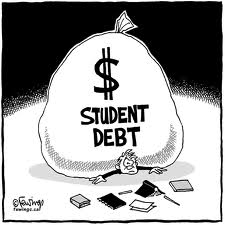
  • Student Loans – The Basics

    Student Loans – The Basics


    As an Ontario resident, you have two different types of student loans you can apply for. The first is federally mandated (Canada Student Loan) and the second is from the provincial government itself (Ontario Student Assistance Program – OSAP). You can also apply for both at the same time using the Canada-Ontario Integrated Student Loan program, which is accessed via the National Student Loans Service Centre.

    Sounds good – but where do I go to apply?

    The best way to apply is online via the OSAP website. You will need to register to use the site by providing some personal information, including your social insurance number.

     https://osap.gov.on.ca/OSAPSecurityWeb/public/login.xhtml?lang=en

     I’ve registered – now what?

    Gather information about your financial situation. You will be asked to provide an overview of your expenses for the school year (rent, utilities, food, etc.). The more information you can provide the better. You will be asked to print out and sign a declaration indicating that the information you have provided is true and accurate. If a parent or guardian will be helping you out financially during the school year, this information needs to be included on your application and they will need to sign their own separate declaration form.

    How much money will I get?

    The amount you get will depend on your unique financial situation. This is why it is important to provide as much information as possible during the application process. The maximum amount you can receive per week is $210 from the Canada student loan portion and $150 per week for the Ontario portion. It is important to note that you will not be given money weekly – it will be paid out to you in a lump sum at the beginning of your semester. This means budgeting is extremely important!

    When can I apply?

    If you are going to be attending school in September 2012, you can apply as early as May 2012. The latest you can apply is 90 days before the end of your study period. It is recommend to apply as soon as you are able to prevent any delays in receiving your funding.

    My application was accepted – when do I get my loan?

    Shortly before the academic year commences, you will be either sent a cheque or a funding certificate. Most students will receive a funding certificate. This certificate is a legal form that authorizes the release of a loan to the student via the National Student Loans Service Centre. This certificate must be taken to a designated Canada Post outlet to be converted into your student loan (you can find a designated outlet by visiting the following link: http://www.canlearn.ca/eng/onlinetools/canadapost/cp_clf/on.shtml)

    You will need to provide a void cheque with your funding certificate so the funds can be electronically deposited into your bank account. You can arrange to have a cheque mailed to you if you prefer.

    Your student loan will then be dispersed to you twice – the first at the beginning of your studies in September (generally, 60% of your total loan amount) and the second at the beginning of January.

    You can always get help and more information by visiting the OSAP website directly. The following link will help you get the answers to the majority of your questions:

    https://osap.gov.on.ca/OSAPPortal/en/PostsecondaryEducation/OSAP/GettingOSAP/HowtoApply/OSAP004031.html

    Good luck and happy studying!


  • Picking Courses

    Picking Courses

    When it’s time to pick your high school courses, it can be a stressful and difficult time for some students. There are so many options to choose from and it can be hard to pick the courses that are right for you. To make this process easier, you should consider multiple things before making your final decision.

    The first thing you should think about doing is to pick courses that sound like they will appeal to you or that you think will interest you. If you pick something you aren’t interested in, you will get bored and lose interest fast which can cause your mark to drop very quickly. Don’t pick something because it’s a course your friends are picking. Your friends will still be there after the class or the school day is over, and you will most likely make more new friends in a class that will make you happy to be in and that you will be more likely to enjoy attending. You will be happy you did this in the future.

    If you have an idea of what you’d like to do for a career in the future, you should consider what courses you may need to be eligible to continue on into post-secondary education with, or for the job you want. Someone with this occupation, who is proceeding to get this occupation or your guidance counselor, may be able to help you and give you the information you need.

    For some courses, there are different skill levels available. You should pick the level that you will be the most comfortable with, even if it’s a lower level. There isn’t any point in picking a higher level class if you will be failing it or a lower level if it is too easy for you. Try to compare the advantages and disadvantages of the courses you are having difficulty choosing between. Asking your teachers or guidance counselor what they recommend for you can help you with this if you aren’t sure which level would be appropriate for you to take.

    The best thing you can do when picking courses is to relax, stay calm and don’t stress over it. Take some time away from everything else and really think about it. If you feel like you need out of the course you picked, your school will most likely allow you to change it within the first few days of the new semester. Discuss the things above with your parents, teachers, guidance counselor or anybody who is there to help you to see what they think about what you have chosen, if you have any questions, or if you are having trouble deciding on anything. I hope this helped some of you a little bit, good luck and I hope you choose what’s right for you!


  • Ontario home to most of Canada’s international students

    Ontario home to most of Canada’s international students


    International students favour Ontario’s post-secondary school system over other provinces, according to Statistics Canada’s 2011 census results.

    Since 2007, there has been a 26.5 per cent increase of foreign student permits in Canada.

    Ontario has seen a 48 per cent growth in student permits since 2007. This is 15 per cent higher than British Columbia, the province with the second largest amount of foreign students.

    In recent years, provinces such as Nova Scotia and British Columbia have also intensified their international recruitment efforts.

  • Prof studies math dyslexia

    Prof studies math dyslexia

    Students who dreaded their math homework may find an explanation in new research by a Western professor. It might have been math dyslexia.

    Daniel Ansari, a psychology professor, is studying the condition known as developmental dyscalculia. The neurological disorder is like dyslexia with numbers, making it difficult to process numerical values and acquire basic math skills.

    The disorder affects five per cent of the population and can hinder the development of fundamental math skills in children. According to Ansari, unattended cases of dyscalculia can drive students away from math-related subjects and potentially limit their future careers and education options.

    “A consequence of being bad at math is you develop math anxiety,” Ansari said.

    “People learn to avoid math because math leads to negative experiences – it leads to the experience of failure. You start to avoid math and you may exclude yourself from certain career paths that involve math because they feel they won’t be able to pass the math components of their degree program,” he continued.

    Since 2007, Ansari has been working with graduate student Stephanie Bugden to examine how young students perform in mathematics.

    Starting with first and second grade students, Bugden gave behavioural tests to examine their comparison and math skills. A year later, she gave the test to the same children again along with brain imaging. In the spring she’ll invite them back for another round of tests and an MRI scan to examine changes over time.

    Ansari noted his research intends to help diagnose children with dyscalculia early on, in order to properly teach them fundamental math skills.

    The development of basic math skills can have long-term effects on a child’s personal growth, according to math specialist Immaculate Namukasa from the faculty of education at Western.

    “Many students who are weak at a subject would need much encouragement and support not to shy away from it. For younger children, especially where they get messages that mathematics is difficult, and it is OK to be bad at math, they increasingly lose interest and spend less time doing mathematics,” Namukasa said.

    “There is a math poster that says, ‘Mathematics multiplies your chances.’ Unfortunately for many whose math anxiety is not altered before the end of elementary school, this multiplication might be by an amount less than one — a fraction, negative number or decimal,” she said.

    “Many students that fear mathematics usually do not take mathematics courses before Grade 10 and you can see how that means a reduction in choices at colleges and universities.”

    Ansari also pointed out that dyscalculia and math-related disorders are given far less attention than dyslexia and other reading disorders and further research in this field will significantly improve the ability for future youth to excel in math.

    “We know so much more about reading than math and the existence of a disorder called dyscalculia is unknown to many people. That’s a reflection of how little awareness there is and one of the key goals is to raise awareness, to avoid this notion that people who are bad at math aren’t very bright,” Ansari commented.

  • What’s A Degree Worth?

    What’s A Degree Worth?

    University’s enrolment rates are staggering. This year campuses are teeming with more undergraduate students than ever before. Last year,  full-time undergraduates paid more than $100 million in tuition per institution. The question is — what are students getting in return?

    Politicians and policy-makers are starting to consider how rising enrolment rates are affecting the quality of education and the value of an undergraduate degree in a workforce saturated with university-educated workers.

    “The greater number of students who have an undergrad degree, the more competitive its going to be to get an entry level job, and an entry level job with the kind of pay a student is expecting,” says Meaghan Coker, vice-president university affairs for the University Students’ Council at the University of Western Ontario.

    “We’ve come to an understanding that a bachelor’s degree isn’t enough and that you must have a second degree to complement yourself and succeed in life.”

    In 2005, the Ontario government pledged to invest $6.2 billion by 2009 to boost enrolment rates and improve the quality of post-secondary education in the province. Western increased its enrolment by over a thousand full-time students in the last five years. Now the government projects another 50,000 undergraduate spaces will be introduced to Ontario universities by 2015.

    Students, meanwhile, are stuck in the middle, vying to become competitive in the workforce while staying out of debt.

    The value of an undergraduate degree depends on what students are looking to gain from it, says Philip Oreopoulos, a professor from Harvard University specializing in the economics of education. Oreopoulous argues that while the material students learn during their undergrad might be useless to a career, the education still distinguishes a graduate from someone without a degree.

    “Post-secondary education merely differentiates between those who have it and those who don’t. If obtaining [a degree] is the only difference, it enables employers to consider degrees as equal. Even if the schooling hasn’t done anything to enrich you, it allows employers to distinguish you from those who didn’t attend university, and that is advantageous.” Oreopoulos says.

    While an undergraduate degree will differentiate a candidate from their non-degree holding counterparts, Oreopoulos questioned what skills are really being learned in today’s university classes.

    “There’s a lack of motivation and intellectual curiosity among students. University is what students make it out to be and there are plenty of opportunities that I see less and less students taking advantage of. It’s hard to say if they’re learning anything,” he says, noting if students put in minimal effort they could reap great academic rewards.

    As enrolment levels at universities continue to mushroom, the curriculum needs to be restructured, according to Coker, to better teach a growing and changing student body.

    “Although there’s been challenges in understanding what students leave [university] with, it’s clear that we need to teach students in innovative learning environments. There needs to be an investment into changing the way we teach at universities,” Coker says.

    While the value of the degree is under scrutiny, its necessity is not. According to David Molenhuis, chairperson of the Canadian Federation of Students, a rapidly changing economy makes an undergraduate degree essential to a person’s future prosperity.

    “Post-World War II, the economy had changed where more and more individuals required high school as mandatory minimum education for participating in the economy and job market,” Molenhuis notes, adding that 70 per cent of current jobs require some form of post-secondary education.

    “We’re seeing history repeating itself. The undergraduate degree is becoming the new high school diploma,” he continues.

    In an era where post-secondary education is vital to success to most careers, it’s even more imperative for graduates to differentiate themselves and find value in their degree.

    For some, added competitiveness may come from more education after their undergrad, such as a master’s degree.

    “If everyone had a master’s it would be the same problem at a different degree,” Coker says.

    Coker suggests using extracurriculars and out-of-class experiences to differentiate yourself and add value to your bachelor’s degree.

    “Ultimately it’s beyond the classroom learning. And there is a lot of focus on classroom learning and the paper you walk away with, but students who are involved in extracurriculars know that those experiences are what really bring value to your degree,” Coker says.

    “Those experiences are invaluable towards the type of skills in leadership that you can develop, so in addition to the classroom we need to put emphasis on expanding involvement opportunities, internships, co-ops, and service learning – those types of experiences are valuable in this growing undergraduate economy.”

    While it may be difficult to judge the value of a bachelor’s degree, it is evident that an educated population has a positive effect on Canadian society and economy.

    “Individuals with a post-secondary education are in a higher tax bracket. They’re not putting as much pressure on public spending programs like public safety because they tend to commit fewer crimes. They don’t use the employment systems because their generally employable and working, and they’re generally healthier so they don’t put as much pressure on the healthcare system,” Molenhuis notes.

    That being said, perhaps the value of your bachelor’s degree lies in its ability to do greater good for society.  In terms of personal value, it seems to be what you make of it.

    “We are pushing for you to get your money’s worth at university so that you feel when you’ve walked out that door you haven’t just got a piece of paper. That you’ve walked out with something that’s changed you, something that’s engaged you and something that’s set you on a path to fulfilling what you want to do,” Coker said.


  • Top 10 brain foods !

    Top 10 brain foods !

    Want to keep your mind sharp and nourished? Here are 10 highly effective brain foods that improve memory, mood, concentration, and overall clarity.

    Eat up.

    1. Blueberries—Blueberries serve a wide range of functions for improving mental function. Most notably, regular blueberry consumption has been shown to improve memory function. Furthermore, blueberries are rich in antioxidants, helping to prevent free radical damage. Still not convinced? Research has found that blueberries can also reverse age related declines in motor function, balance, and coordination.

    2. Salmon—Rich in Omega-3 fatty acids, salmon helps your brain develop tissue for increasing your brain power. Furthermore, salmon also plays a key role in fighting Alzheimer’s and other age-related cognitive disorders.

     3. Flax seeds—Flax seeds are crammed with ALA- a healthy fat that aids the cerebral cortex in functioning better. This is the portion of the brain responsible for processing sensory information. Keeping it sharp is vital.

    4. Coffee—Regular coffee drinking has been shown to reduce the risk of Alzheimer’s, Dementia, and other mental disorders. That’s because caffeine is good for the brain (in moderation), and it contains antioxidants. The important thing to note is you shouldn’t add in all the other junk to your coffee (the ridiculous Starbucks drinks crammed with sweeteners and fatty products).

    5. Mixed nuts—Peanuts, walnuts, pecans, and other nuts contain properties that help with everything from fighting insomnia to promoting mental clarity and strong memory. Walnuts are rich in Omega-3 fatty acids while almonds contain natural mood-enhancing neurotransmitters.

    6. Avocados—Don’t let the avocado’s fat content fool you. It’s a healthy fat that promotes blood flow, keeping your mind functioning at its peak. That’s not all: Avocados have also been shown to reduce blood pressure.

    7. Eggs—Egg yolks are rich in choline, an essential nutrient to improving memory function.

    8. Whole grains—From oatmeal to whole grain bread, whole grains are excellent brain foods as they improve circulation and contain essential fibers, vitamins, and even some Omega-3. Just make your sandwiches from whole grain breads to enjoy the benefits.

    9. Chocolate—For me, this is the yummiest brain food of all. Dark chocolate is antioxidant-rich, and it also improves focus and concentration. Milk chocolate, on the other hand, improves memory and reaction time.

    10. Broccoli—Broccoli has been shown to improve memory function as well as slow the aging process. This means a broccoli-rich diet will keep you young and sharp.

  • Tips on Student Finance

    Tips on Student Finance

    1. Start planning your finances early. Figure out how much money you’ll need as soon as possible (tuition, ancillary fees, books and supplies, living expenses) so you’ll know how much financial support you’ll need. Include a realistic monthly budget for transportation, laundry, groceries, toiletries, entertainment, rent, etc.

    2. Use free money first if you have access to it (money from parents, money saved for your education including RESPs, scholarships and bursaries, etc.). If you need to borrow money, use low interest or no-interest options first, with OSAP being the best example. If you need to borrow money on top of that, try and get a cheap student loan. Stay away from credit cards if you can.

    3. Check out the OSAP Access Window at http://osap.gov.on.ca. The OSAP Access Window was developed by the Ontario government to help students make informed decisions when planning for their post-secondary education. It provides approximate costs by post-secondary institution, OSAP funding estimators, repayment tools and lots of other useful information.

    4. Explore early the scholarships, awards and bursaries offered by the university. There may be some program-specific or special interest awards that you may be eligible for. Many scholarships, awards and bursaries have deadlines and require applications.

    5. Don’t miss an application deadline. Include deadlines for financial support applications in your calendar and make sure you apply in time to be considered.

    6. Investigate getting a job as a source of income. If you need to work, work as much as possible in the summer period, rather than during the school year. If you need to work during the school year, try to avoid working a great deal in your first semester or in any semester that you expect to be particularly challenging. If you expect to be pressed for cash, consider postponing your studies for a year and saving some money, or consider reducing your course load from five or six courses to three or four courses per semester.

    7. Look into various means of saving money:
    • Brown bag it. Packing your own lunch is cheaper and healthier.
    • Buy new to you. Whether it’s used books, secondhand clothing or garage sale furniture, you can find what you need at a fraction of the cost.
    • Shop online to browse, create budgets, compare prices and take advantage of online savings.
    • Take advantage of student discounts. Be sure to flash your student ID at entertainment venues, on public transportation and anywhere else that will take it. Check out special deals through your student union.
    • Pick up the free weeklies to see what entertainment is going on in the city for free. Also check out free events hosted by the university.
    •Maximize public and active transportation (walking, cycling) to keep commuting costs down.
    • Avoid the latte effect and buy a coffeemaker or a kettle to make your own.

    8. Resist the temptation to sign up for a student credit card. If you end up falling into the “this-is-my-only-credit-card” crowd, make sure you get one with a low interest rate and ask them to fix the credit level at $500. Then be sure to use it only for emergencies. When credit cards are the only accepted methods of payment, as in online transactions, save the money you will need before you make the purchase. Then pay off your credit card immediately after charging it.

    9. A line of credit typically has a much lower interest rate than credit cards. A line of credit can be a cost-effective, convenient way to borrow money for a short period of time. Most financial institutions have a student line of credit that offers a lower interest rate, no annual fee and fairly lenient terms and conditions.

    10. Monitor your expenses. Keep all your receipts and track your expenses. This will force you to write down how much you’re spending, prompting you to think about whether you really need to spend that money or not. This will also definitely let you know if you need to change your spending habits and/or increase your income before it’s too late.

    11. If you find you’re running into financial difficulties, immediately speak to a student financial assistance advisor on campus or at your bank. They will look at your budget and give you some good advice before you get in over your head.

  • Students, are you stressed?

    Students, are you stressed?

    Some people are more susceptible than others to stress; for some, even ordinary daily decisions seem overwhelming.

    Stress is the way our bodies and minds respond to something which upsets our normal equilibrium in life; an example of stress is the response we feel when we are startled or in jeopardy. During stressful events our adrenal glands release adrenaline, a hormone  which activates our body’s defense mechanisms causing our hearts to pound, blood pressure to rise, muscles to tense and the pupils of our eyes to dilate.

    A main warning of increased stress is an increase in your pulse rate; however, a normal pulse rate doesn’t necessarily mean you are not stressed. Continuous aches and pains, palpitations, anxiety, chronic fatigue, crying, over or under-eating, frequent infections, and a decrease in your sexual desire are signs you may notice which indicate you may be under stress.

    Some people are more susceptible than others to stress; for some even ordinary daily decisions seem over-whelming. There are also those, who seem to flourish under stress by becoming highly productive being driven by the force of pressure.

    However stress and worry on the job can be detrimental! They cause physical and emotional problems that may damage both your health and your performance. Furthermore stress grows! Extreme worry is a chief building block in the vicious chain of tension: the physical vibrations of stress-tense muscles, headaches, insomnia and so forth-lead to disastrous stress building thoughts, which in turn exaggerate horrible physical feelings. Soon , just the thought of preparing an assignment or  meeting a deadline triggers all the symptoms of stress, along with an overwhelming wish to avoid tasks.

    When you are under stress, what messages are you sending yourself? Are they alarming or reassuring? you can  decrease your stress by using self talk to reassure yourself. This is what “stress-busting”  is about – getting your thoughts back on a supportive track.

    Fighting negative thoughts and replacing them with positive ones takes practice, but the results are worth it . When you are stressed; first take a couple of deep breathes.

    Then review the facts. What is your proof that this is a stressful situation? Ask yourself; What is the worst thing that could happen? Then ask what is the best thing that can happen?

    Focus on the best thing that can happen. Always keep your thoughts focused on what you want and avoid thinking about what you don’t want . Improved mental discipline is sure to be a useful skill regardless of your current model of reality. Try it for a week or so and you will be surprised.

    Remember what Marcus Aurelius said. ” If you’re stressed by anything external, the pain is not due to the thing itself, but to your estimate of it; and this you have the power to revoke at any moment.