Category: Community

  • Federation Spotlight: Inclusion Alberta

    What is Inclusion Alberta?

    “Inclusion Alberta (formerly Alberta Association for Community Living) is a family based, non-profit federation that advocates on behalf of children and adults with developmental disabilities and their families. Together, we share a dream of meaningful family life and community inclusion for individuals with developmental disabilities. As an advocacy organization we support families and individuals in their desire to be fully included in community life.”

    Upcoming Inclusion Alberta Events:

    Mark your calendar! Attend Inclusion Alberta’s upcoming Changing Lives Changing Communities Fundraising Breakfasts 2016 and hear from other families that have benefitted from Inclusion Alberta resources and initiatives.

    Time:

    Edmonton :: Tuesday, November 8, 2016  at the Westin Edmonton (10135 100 St) from 7:30am – 8:30am.

    Calgary :: Thursday, November 17, 2016 at the Westin Calgary ( 320 4th Ave) from 7:30am – 8:30am.

    To register for a breakfast or to become a Table Captain, contact Wendy McDonald at wmcdonald@inclusionalberta.org or by phone at 780-451-3055 ext. 410.

    Inclusion Alberta Information Sessions:

    Inclusion Alberta holds information sessions each month for families interested in learning more about the organization and what it can do for them. Sessions are held in Edmonton, Calgary and Lloydminster, and include a free lunch.

    Click on this link to see upcoming session dates: http://inclusionalberta.org/events/

    To learn more about Inclusion Alberta, visit their website at http://inclusionalberta.org/  !

    Source:

    http://inclusionalberta.org/

  • NEADS Events: October 2016

    NEADS Events: October 2016

    Organizer: Carleton University

    Title: Thrive Week – Carleton University

    Category: Education

    Location: Ottawa, Ontario

    Date: October 3, 2016 – October 7, 2016

    Web site: https://carleton.ca/thrive/

    Description: Thrive Week – Carleton University

    Thrive is a week-long, October 3-7, is a series of events focused on building positive mental health for Carleton University students, faculty and staff

    Thrive is also a mindset. We all have mental health, and we can each strengthen our mental health by learning about it, thinking about it, talking about it, and discovering new skills and resources to help us Thrive all year long.

    Join us for Thrive Week 2016: October 3 – 7!


    Organizer: Canadian Council on Rehabilitation and Work (CCRW)

    Title: WESP Workshop

    Category: Employment

    Location: Toronto, Ontario

    Date: October 3, 2016 – October 21, 2016

    Telephone: 416-260-3060 ext. 232

    E-mail: cmacdiarmid@ccrw.org

    Web site: http://www.ccrw.org/wesp

    Description: CCRW’s WESP workshops are specifically for job seekers with disabilities and teach skills that will make job seekers more effective in their job search.


    Organizer: Students for Barrier Free Access (SBA) Uniiversity of Toronto

    Title: Disabled Students’ Orientation – University of Toronto

    Category: Education

    Location: Toronto, Ontario

    Date: October 6, 2016

    Web site: http://www.neads.ca/en/about/events/index.php?id=1619

    Description: Disabled Students Orientation, University of Toronto – SAVE THE DATE

    Join Students for Barrier-free Access (SBA) for a student-run orientation for disabled students and allies. Whether you are full-time or part-time, new or returning, an international or transfer student, this orientation is for you!

    Date: Wednesday October 5, 2016

    Time: 4:30 p.m. -6:30 p.m.

    Location: 246 Bloor Street West, room 720, 7th floor (Factor-Interwash a Faculty of Social Work), Toronto, Ontario.


    Organizer: Canadian Education Association

    Title: First Nations Schools First!

    Category: Education

    Location: Vancouver, British Columbia

    Date: October 6, 2016 – October 7, 2016

    Telephone: 14165916300237

    E-mail: glatour@cea-ace.ca

    Web site: http://www.cea-ace.ca/events/first-nations-schools-first

    Description: With educators across Canada currently challenged to embed Indigenous knowledge, perspectives and Worldview learning into their classrooms, First Nations Schools First! is a timely event that will convene both on-reserve and off-reserve educators committed to integrating effective First Nations’ teaching practices into Canadian K-12 classrooms.


    Organizer: Government of Canada

    Title: Consulting With Canadians With Disabilities on Planned Accessibility Legislation: Thunder Bay

    Category: Accessibility

    Location: Thunder Bay, Ontario

    Date: October 11, 2016

    Web site: http://www.neads.ca/en/about/events/index.php?id=1613

    Description: Government of Canada consulting with Canadians on planned accessibility legislation

    Consultation objective: Canadians, communities and workplaces benefit when everyone can participate equally in everyday life. There has been much progress in making our society more inclusive, but we can do better.

    For more information click on this link: http://neads.ca/en/about/events/index.php?id=1613


    Organizer: Canadian Association for Research on Work and Health

    Title: CARWH 2016: Advancing Research to Improve Work and Health – Toronto

    Category: Employment

    Location: Toronto, Ontario

    Date: October 16, 2016 – October 18, 2016

    Web site: https://www.eventsforce.net/iwh/frontend/reg/tOtherPage.csp?pageID=1126&eventID=4&traceRedir=2&eventID=4

    Description: Canadian Association for Research on Work and Health (CARWH) 2016: Advancing Research to Improve Work and Health

    Sunday, October 16, 2016 to Tuesday, October 18, 2016

    CARWH 2016, the 9th Canadian Association for Research on Work and Health Conference, is taking place on October 16-19, 2015 in Toronto, Canada

    Co-hosted by the Occupational Cancer Research Centre (OCRC) and the Institute for Work & Health (IWH), CARWH 2016 will offer a stimulating and diverse program of keynote presentations, parallel and poster sessions, and symposia. With the theme, Advancing Research to Improve Work and Health, the program will reflect the excellence of work and health research across the country.

    For more info click on this link: http://neads.ca/en/about/events/index.php?id=1626


    Organizer: Third Annual srADDegies for Success Expo

    Title: Third Annual srADDegies for Success Expo – Dartmouth, Nova Scotia

    Category: Education

    Location: Dartmouth, Nova Scotia

    Date: October 19, 2016

    Web site: https://www.eventbrite.ca/e/straddegies-for-success-expo-tickets-27198634849

    Description: Third Annual srADDegies for Success Expo – Dartmouth, Nova Scotia

    October recognizes a lot of great causes: ADHD Awareness Month, Mental Health Awareness Week and Small Business Awareness Week, just to name a few!

    Join us for the Third Annual strADDegies for Success Expo (previously called the Nova Scotia ADHD Awareness Expo) on Wednesday, October 19th from 1-7pm at Alderney Landing!

    You can expect to find all kinds of resources that will help youth and adults with cross-disABILITIES lead a successful life both, in and out of school.


    Organizer: Students For Barrier-Free Access – University of Toronto

    Title: Disabled Students Orientation: Students For Barrier-Free Access – University of Toronto

    Category: Education

    Location: Toronto, Ontario

    Date: October 21, 2016

    Web site: http://www.neads.ca/en/about/events/index.php?id=1629

    Description: Disabled Students Orientation: Students For Barrier-Free Access – University of Toronto

    Join Students for Barrier-free Access (SBA) for a student-run orientation for disabled students and student advocates. Whether you are an undergraduate or graduate student, full-time or part-time, new or returning, an international or transfer student, this orientation is for you!

    Topics covered at the orientation will include:

    – Know Your Rights as a disabled student

    – self-advocacy and navigating academic accommodations

    – available campus resources and services

    – an introduction to Students for Barrier-Free Access resources and services.

    Come meet other disabled students, as well as SBA board members, staff and volunteers.

    Date: Friday October 21, 2016

    Time: 1pm – 3pm

    Location: 252 Bloor Street West (OISE) room 5240, 5th floor

  • Survey on Work Accommodation Needs of Young Adults Living with a Disability

    Survey on Work Accommodation Needs of Young Adults Living with a Disability

    Via www.neads.ca

    Moving from school or training into the workforce is a challenge for any young person, let alone for a young adult with a disability. Help us understand the types of job accommodations and benefits you need to find and maintain employment. A study is being conducted on the work accommodation needs of young adults living with a disability by the Institute for Work and Health.

    We would like to learn more about your needs in the workplace including your requirement for job accommodations, modifications and supports. We would like to hear from young adults with a disability or health condition who are either:

    • Currently in school, education or a training program OR
    • Have finished their education or training in the past five years, including those who are employed and those who are not working.

    This online survey takes about 15-20 minutes to complete. This survey can also be completed over the phone or by mail. To thank you for your time, all participants will be entered into a draw for an Apple iPad.

    SURVEY LINK: https://iwhca.co1.qualtrics.com/jfe/form/SV_0p3zB6vo00wZY1v

    The survey is co-led by the Institute for Work & Health and McMaster University, with the collaboration of the National Educational Association of Disabled Students (NEADS). The research team is attempting to understand the types of supports that young people with disabilities need to successfully move from school to work. Our findings will be shared with policy-makers, employers, and community-based organizations. Information about your work experiences that we collect will be kept separate from any information that might identify you.

    Please contact the study coordinator if you have any questions or require assistance completing the survey:

    Julie Bowring

    416-927-2027 ext 2105 jbowring@iwh.on.ca

    Institute for Work & Health

    Phone: 416-927-2027 Fax: 416-927-4167 General email: info@iwh.on.ca http://www.iwh.on.ca/

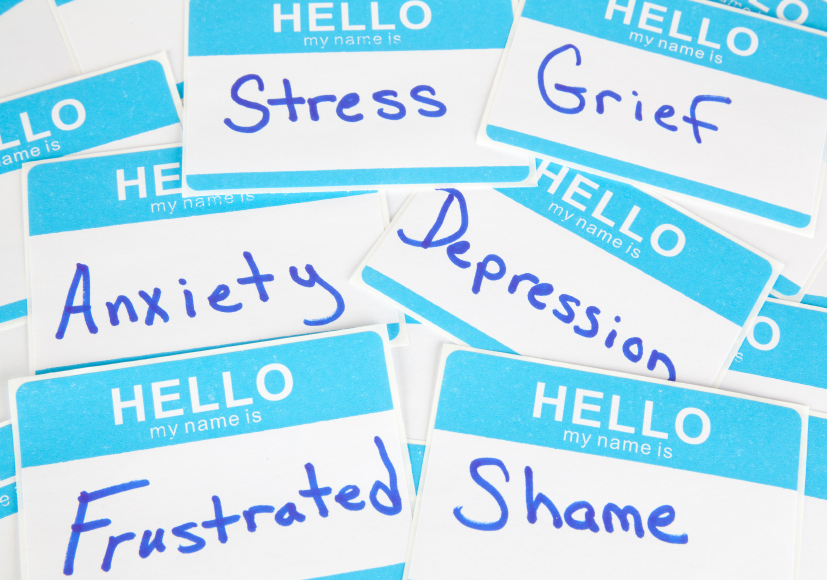
  • My friend isn’t depressed…are they? Key signs to lookout for and how you can help.

    My friend isn’t depressed…are they? Key signs to lookout for and how you can help.

    Your best friend skips out on Friday night’s party…again. The weekend before that, they ditched going to the school football game because they “couldn’t get out of bed.” What is up with them lately? They used to love doing those things! But now it  seems like they always have some excuse for their constant distance, and when you do hang out, it just doesn’t feel like the same fun-loving person you’ve always known. Could they be depressed?

    What if I told you 3.2 million people in Canada are at risk for developing depression? Now, what if I told you that number only covers the amount of Canadian teens between ages 12-19?  It’s a scary thought, but it’s true. Depression affects more and more teens each year, and the crazy part is there may be someone in your life suffering from depression and you might not even realize it.

     How am I supposed to know if someone is depressed? 

    Depression affects everyone differently, but these are some major red flags you should be looking out for:

    • You’ve noticed they’ve been feeling blue more often. .
    • Their grades went downhill.
    • They’ve been awol lately. They don’t want to hang around you/their other friends as much anymore, or not at all.
    • Their favorite activities no longer seem to be of interest.
    • . They seem angry and irritable.
    • They never have any energy.
    • They say  things like, “No one would miss me if I was gone,” or other mentions of suicide.

    Okay…that sounds like someone I know; what does this mean?

    Depression is serious and scary for many reasons. One of the most frightening reasons being that where there’s depression, thoughts of suicide are often lurking around the corner. It’s important to be there for someone you feel may be suffering, however understand it’s not something you can cure on your own and not something you should try to fix.

    So what can I do?

    • Let them know you’re there. No one likes feeling alone, especially when facing a challenge like depression.
    • Welcome them to open up. A great way to start the conversation is, “I’ve noticed you’ve been feeling pretty down lately, so I wanted to check in with you.”
    • Give them your support and fill them with hope.
    • Encourage them to seek help. Depression is not something you can combat on your own.
    • Stay away from judgment. Remember, it was probably hard for them to open up.
    • If you think someone may be contemplating suicide, find help immediately.

    Depression is not something that should be kept a secret. Let’s end the stigma of mental health issues. The more we talk, the more we can help.

    Resources:

    http://www.cmha.ca/media/fast-facts-about-mental-illness/#.V85NnmWMDq0

     http://www.helpguide.org/articles/depression/teen-depression-signs-help.htm

    http://www.helpguide.org/articles/depression/helping-a-depressed-person.htm

    By Mariann Roberts

  • Dealing with Mental Health Issues and Your Next Career Move

    Dealing with Mental Health Issues and Your Next Career Move

    For so long you have focused on passing and/or excelling in your classes. Perhaps you dealt with mental health issues in college, but you comforted yourself by saying that school was a means to an end; anxiety and sadness comes with the pressures and prices of university. So now you are on your own without a job in the field of your choice, and you are depressed. This is normal–of course–but not everyone deals with it in the same way. School is the tip of the iceberg as far as anxiety goes; once graduation is over, you will face hard times. Whether you are dealing with mental health issues with or without the help of medication, here are some tips to help you with the difficult post-grad growing pains:

    Value YOU.

    It is imperative to value what you think and feel. Accept that you feel weak in the moment and make steps to become stronger. While doing this, also accept that failure is a necessary means to further personal growth and knowledge. In order to be strong, healthy and cheerful to both yourself and others you need to accept that you are a work in progress. The idea that being well needs to happen immediately is damaging and unattainable. Be aware of your human limitations and your self-worth will rise. Value your reactions and emotions and be at peace with those mental processes. But also, evaluate and articulate your strength; when you feel strong, reward yourself.

    Get help.

    Talking with someone is ALWAYS a good idea. Now that you are not in university you may feel that counselling is not a possibility due to finances. But the truth is that every community has free therapy options and mental health hotlines that are very helpful. As soon as you start to feel too trapped in your head, pick up the phone and make an appointment. For those with prescriptions, it is imperative that you see someone on a regular basis in order to stay on top of your medications and their effects.

    Normalize the stress you feel and plan, plan, plan!

    Do not let stress overrun you. The ultimate secret is to be organized. BE THE MOST ORGANIZED. Do not put more on your plate then you know you can handle (a common side-effect of those with major highs and major lows) and make a habit of writing everything down. Document your thoughts, your plans, important dates, goals and locations. Seeing everything in a physical format helps people to realistically understand what they can and cannot handle as well as visualize an attainable future. Also, while this may seem like a chaotic time, you will still look back on this time as one that shaped who you became.  You can also keep track of your progress by writing diary entries or poems.

    Do not compare yourself to others.

    Of course this can be nearly impossible with Facebook and everyone around you entering different phases of their lives at different times. A sure-fire way to tear your spirit down is to put yourself up against others. Learn from the strengths of others, but fight jealousy and insecurity at all costs. In the end your life is what you make it and it is only you that can change and make things better.

  • Students with Disabilities in the Workforce: A Report

    Students with Disabilities in the Workforce: A Report

    It’s no surprise that finding a job is becoming harder than ever amid constant competition from other applicants, an already full roster of employees, or not having the experience needed for the position you applied for. According to tradingecomonics.com, the Canadian youth unemployment rate sits at 13.3% as of July 2016; it’s even harder to find work if you identify as someone with a mental illness or physical disability.

    Stats Canada reported in 2011 that 47% of those aged 15 – 64 with disabilities were employed. In comparison, those without disabilities in the same age group had a 74% employment rate. In 2013, CBC also reported stats and facts on what it’s like to have a disability while trying to find work. They reported that, according to a survey from BMO Financial Group, only three in 10 small businesses were hiring people who were disabled.

    When it comes to hiring those with disabilities, I understand how hard it can be- especially because I consider myself to have the kind of disability that goes “unseen” for many. I was recently given the status of “permanent disability” though admitting that to employers can be rough sometimes.

    However, when it comes to finding successful students who work with their disabilities and go on to succeed; I don’t need to look farther than my own newsroom. I was recently given the title of editor-in-chief at my campus paper. It might be strange for some to see that a young woman battling anxiety and OCD can overcome these challenges and actually lead a successful life, but here I am. And I’m not the only one who’s accomplished something despite her disabilities.

    In 2014, the University of Toronto Mississauga’s initiative UTMental was among the top ten finalists in the Council of Ontario Universities Mental Health 2.0 Campaign. The initiative involves students with mental illnesses vlogging about their experiences to shed the stigma associated with mental illness.

    Sparsh Shah, a 13-year-old singer was born with Osteogenesis Imperfecta. According to thebetterindia.com, Shah was born with nearly 40 fractures. The site also reported that he went on to compete in a singing competition in April 2015 where he not only won but was named the “Youth Ambassador” for St. Jude’s Children’s Research Hospital.

    The Humans of Bombay Facebook page also featured a story in 2015 of a young woman named Manasi Joshi, who lost her leg after a truck crashed into her vehicle. She pursued her dream regardless and won “silver medal in the Para Badminton World Championship held in England this year but she also has trained for five hours a day, while juggling her job as a software engineer.”

    It’s hard to find students and young people out there with disabilities who get the spotlight shone on their successes. But, that doesn’t mean that they’re not out there as guides and inspirations for the rest of us- you could be one too!

    References:

    http://www.tradingeconomics.com/canada/youth-unemployment-rate

    http://www.statcan.gc.ca/pub/75-006-x/2014001/article/14115-eng.htm

    http://www.cbc.ca/strombo/news/by-the-numbers-international-day-of-persons-with-disabilities

    http://www.thebetterindia.com/47907/sparsh-shah-purhythm-child-prodigy/

    http://www.firstpost.com/living/a-tale-of-resilience-the-inspiring-story-of-para-athlete-manasi-joshi-2540484.html

  • NEADS Event Calendar: September 2016

    NEADS Event Calendar: September 2016

    Organizer: Canadian Council on Rehabilitation and Work (CCRW)

    Title: WESP Employment Preparation Workshops

    Category: Employment

    Location: Toronto, Ontario

    Date: September 12, 2016 – September 16, 2016

    Telephone: 416-260-3060 ext. 232

    E-mail: cmacdiarmid@ccrw.org

    Web site: http://www.ccrw.org/wesp

    Description: CCRW’s WESP program prepares job seekers with disabilities with pre-employment skills to make them more effective in their job search. These skills are taught in the WESP workshops.


    Organizer: Toronto Disability Pride

    Title: 6th Annual Toronto Disability Pride March

    Category: Accessibility

    Location: Toronto, Ontario

    Date: September 24, 2016

    E-mail: torontodisabilitypride@gmail.com

    Web site: http://tdpm.org

    Description: The 6th Annual Toronto Disability Pride March

    Saturday, September 24, 2016

    Starting at Queens Park (111 Wellesley Street West) and marching to the School of Disability Studies at Ryerson (99 Gerrard Street East) from 1:00 PM to 4:00 PM

    Why we’re Marching:

    To bring recognition of the struggles and value of people with disabilities as we fight against ableism and other forms of oppression.

    To be visible and show that we have a voice in our community and a right to be heard by taking to the streets.

    To celebrate and take pride in ourselves as a community of people with disabilities.


    Organizer: Canadian Mental Health Association

    Title: Mental Health for All Conference 2016 – Toronto

    Category: Education

    Location: Toronto, Ontario

    Date: September 28, 2016 – September 30, 2016

    Telephone: 1-866-655-8548

    Web site: http://conference.cmha.ca/news/cmha-is-now-accepting-abstracts-for-national-conference/#.Vrz6UbQrJkh

    Description: Mental Health for All Conference 2016

    Together by Design

    Sept 28 – 30 2016

    Toronto, Ontario, Canada

  • Post-Secondary Students with Disabilities: Social Media Use and Needs Survey

    Post-Secondary Students with Disabilities: Social Media Use and Needs Survey

    Dear Students,

    We are excited to be sharing with you that we are conducting a study to learn how university and college students with disabilities use online communities and what their needs are related to these tools.

    The purpose of the study is to assess post-secondary education (PSE) students with disabilities’ uses and needs related to online communities (e.g., social networking tools such as Twitter and Facebook) and electronic mentoring (e-mentoring) opportunities. This study will help us to gain a better understanding of how PSE students with disabilities use online communities and what they need to support their success while attending university or college. It will also inform the development of an online network for PSE students with disabilities. This network will provide opportunities for learning, online community building, and e-mentoring. Benefits to participation include the opportunity to share your thoughts and perceptions about the development of such an online network for PSE students with disabilities.

    This research is being conducted by investigators from George Brown College and the University of Ontario Institute of Technology with the assistance of the National Educational Association of Disabled Students (NEADS). This study has received research ethics approval from the Research Ethics Board at George Brown College (REB file # 6004178) on 15/11/2015. If you have any questions about the study or your rights as a participant, complaints or adverse events, please contact the principal investigator, Charles Anyinam at 416-415-5000 ext. 6038 or canyinam@georgebrown.ca OR Barbara Godfrey, Chair, REB at 416-415-5000 ext 3667 or bgodfrey@georgebrown.ca. This study has been approved by the UOIT Research Ethics Board REB (Protocol 15-088) on 21/03/2016. Any questions regarding your rights as a participant, complaints or adverse events may be addressed to Research Ethics Board through the Ethics and Compliance Officer – compliance@uoit.ca or 905.721.8668 x. 3693.

    We invite you to participate and provide your feedback about online communities and e-mentoring by completing the questionnaire. The questions will be available to you through a secure, accessible online survey tool called Survey Monkey. We anticipate it will take about 5-10 minutes to complete the questionnaire. The questionnaire is completely anonymous and your participation in the study is voluntary. You can choose to not participate by not responding to this email or not submitting your responses if you start the questionnaire.

    If you would like to participate in this study or find out more about it, please go to the following internet link: https://www.surveymonkey.com/r/W56CWCH

    Thank you for considering this invitation,

    The Research Team

    Via www.neads.ca

  • What are my rights to post-secondary education as a person with a disability?

    All educational institutions have a legal obligation to provide reasonable accommodation, up to the point of ‘undue hardship,’ in order to ensure equity for students with disabilities. The Canadian Charter of Rights and Freedoms and the various provincial charters prohibit discrimination on the basis of disability, and post-secondary institutions have been mindful of the obligation to create an accessible environment dictated by these charters. Canadian colleges and universities are now beginning to articulate the rights of disabled students as they develop educational equity policy statements. It is recommended that disabled students contact their disability services office for more information:  http://www.neads.ca/en/norc/edlink/ 

    Other organizations that can help clarify the legal aspects of disability accommodations include: ARCH Disability Law Centre, Council of Canadians With Disabilities and Reach Canada. ARCH is “a non-profit community legal clinic which defends and promotes the equality rights of people with disabilities through litigation, law and policy reform, and legal education.” You can contact ARCH at its Toronto office:

    Advocacy Resource Centre for the Handicapped (ARCH)

    425 Bloor Street East, Suite 110

    Toronto, Ontario, M4W 3R5

    Telephone: (416) 482-8255

    TTY: (416) 482-1254

    E-mail: archlib@lao.on.ca

    Web site: http://www.archdisabilitylaw.ca/

    Reach Canada is “an Ottawa-based voluntary organization that empowers people with disabilities to remove barriers in education, work and the general community.” Contact Reach at:

    Reach

    400 Coventry Road

    Ottawa, Ontario, K1K 2C7

    Telephone: (613) 236-6636

    TTY: (613) 236-9478

    Fax: (613) 236-6605

    Toll-free: (800) 465-8898

    E-mail: reach@reach.ca

    Web site: http://www.reach.ca

  • Electronic Organizational Tools for Students

    Electronic Organizational Tools for Students

    How many times have you completely forgotten a due date or that you were supposed to meet with a fellow student on a group project? Are you having a hard time compartmentalizing large projects and tasks? What about that social life you would like to have with all those coffee dates and happy birthdays to wish? Luckily we live in a time of endless electronic resources for your every organizational need. That being said, sometimes it can be difficult to narrow down what to use. So here is a list of five apps/programs to use besides your phone’s built-in calendar. Let’s get organized!

    Trello

    This project management app features “boards” which contain “lists” for tasks. The “cards” contained in the lists correspond to the particular tasks. This is perfect for breaking down assignments and large projects, particularly for groups and organizations. If you are a teacher, teacher’s assistant or tutor this app is absolutely perfect for lesson planning. Very recently Microsoft launched a Trello-like component called Microsoft Planner. Microsoft users can compare and contrast Trello with this new app to decide which they like best.

    www.trello.com

    Excel

    One of the most popular tools for students and really anyone is Excel. This program is so popular because it features many spreadsheet templates to sort through for your specific organizing needs. From to-do lists to budget worksheets, Excel is an all in one. It lacks the simplistic construct of some of these other apps, but numerous how-to videos can be found on the web to improve your understanding and ability to use Excel to its full extent.

    Deadline

    Completely simple in format and therefore more than easy to use, this calendar app helps you to set up reminders and organize meetings, deadlines, tests and appointments. It can be used for both work and school setting, although it does lend itself particularly well to the busy individual who does it all and doesn’t have time to remember every little thing themselves.

    www.deadlineapp.com

    TrackClass

    Strictly for schoolwork, TrackClass features a calendar application that keeps an eye on your progress and schedule. You will be reminded when you have a midterm or final coming up—right down to the last fifteen minutes—and labs and tutorials will be formatted in a simple and comprehensive way. You can even take notes on the program that will ensure that you never lose them. The website features a tour, so take it to see if TrackClass is right for you.

    www.trackclass.com

    Soshiku

    Very similar to TrackClass, Soshiku helps students organize their work in a practical way. This is ideal for high school and college assignments and projects, and the app will email you reminders on due dates. The basic version of this program is free, but going pro only costs $5. Some handy features of Soshiku are that assignments can be searched for in the tool bar, courses can be organized and labeled, you can share messages and attachments and tasks with friends, and assignments and reminders can be added right from your own phone.