Category: Community

  • The Importance of Asking for Help

    The Importance of Asking for Help

    By Erin Rebello

    Whether it’s a tight deadline, a stressful week, or bad news, our lives can seem to trap us in positions with the feeling of no escape. We’ve all been there, and it’s normal, but for some people it can be difficult to open up to others and ask for help. Receiving help from family, friends, teachers, and peers is important to one’s mental health and well being. By asking for and receiving help, you are able to overcome life’s difficulties with the support of your loved ones. If you feel like you need more help than your family and friends can give, you can always seek the advice of the medical community.

    There are many reasons that people might not ask for help, even when they desperately need it. For one, they might feel like they are bothering their friends or family with their problems and see themselves as a “burden”. Know that you are not a burden and that your friends and family are there to support you. Another issue that some people may have with opening up is their fear that their loved ones will judge them or think of them as weak. It’s easy to let insecurities like these prevent you from getting help, but let me ask a simple question: have you ever judged a friend for their problems? Have you thought of them as weak? Did you think that they were a burden for sharing their problems with you? Chances are that you said no to all of those questions. If that’s the case, your friends probably feel the same way; they care about you and your health and won’t judge you or think you’re weak, because you are not.

    Another big reason why someone might avoid asking for help is the idea that nothing will be able to change their situation. This is especially true for emotional problems which deal with internal conflict rather than external issues. While it may be true that some things cannot change, it’s important to realize that they don’t have to change in order for you to heal. Although talking with your friends and family may not bring back a loved one, it certainly helps with managing the pain and moving forward. Opening up to other people may help us to change our outlook on certain situations and allows us to draw strength from our challenges.

    If you still don’t feel comfortable about asking your peers or family members for help, that’s valid and okay. Depending on your situation, telling those around may put you in an unsafe position. If this is the case, or if you simply do not want to share your struggles with your loved ones, there’s always the option of receiving help and support anonymously. National helplines like the Kids Help Phone (1-800-668-6868) offer 24/7 call and text support for all youth who require assistance. There are also more specialized lines such as the First Nations and Inuit Hope for Wellness Helpline (1-855-242-3310) for Indigenous youth, and the LGBT Youthline (1-800-268-9688) for youth who identify with the LGBTQ+ community and require support. By utilizing these helplines, you can talk or text anonymously with trained counsellors and support workers who care about helping you. For a full list of national crisis helplines, refer to the list at the end of the article.

    In conclusion, asking for help is part of human nature; we are a communal species that requires assistance to overcome certain obstacles in our lives. Some people may feel like there’s no one to hear them, but friends, family, and peers are usually there to listen and help you get better. If you don’t feel like you can reach out to the people closest to you, there’s always the option to call or text anonymous helplines to receive the assistance and support that you require. And remember: there is nothing weak or bad or wrong about asking for help. By admitting that we need help and reaching out to others for assistance, you are proving your strength and resilience in the face of adversity.

    National Crisis Helplines

    Kids Help Phone   1-800-668-6868

    988.ca  9-8-8

    First Nations and Inuit Hope for Wellness Help Line  1‑855‑242-3310

    Canada Drug Rehab Addiction Services Directory  1-877-746-1963

    National Eating Disorder Information Centre  1-866-633-4220

    LGBT Youthline  Call: 1-800-268-9688   Text: 647-694-4275

  • Inclusivity is a Necessity for Modern Businesses

    Inclusivity is a Necessity for Modern Businesses

    Inclusivity is not diversity. For years, there has been emphasis on creating diverse workplaces. But discussions on diversity are limited to the different individuals brought into a company, and can often turn into a numbers game of meeting quotas. Inclusiveness, on the other hand, focuses on how these people that are brought in are involved and made important. This is a crucial distinction. Companies that embrace inclusivity are more likely to succeed and help build a more equal society.

    Even from the selfish viewpoint of avarice and profits, inclusiveness makes sense. A study by Deloitte LLP concluded that an inclusive company is eight times likelier to achieve better business outcomes, twice as likely to meet or exceed financial goals, and six times likelier to be innovative. Diversity Council Australia has an Inclusion@Work Index that illustrates that inclusiveness leads to 10 times greater productivity. A study by Korn Ferry from March 2019 states that about two-thirds of executives found that inclusion programs aid employee retention. Research clearly shows that diversity and inclusivity lead to improved chances of success.

    This approach also leads to happier and healthier workers. According to the Inclusion@Work Index, people in an inclusive work environment were less likely to be harassed, more likely to be satisfied with their job, and nine times likelier to innovate. It is no surprise that corporations are striving to ensure employees are treated fairly, have purpose, and have opportunities to contribute. For example, Australia Post has a public action plan in which they outline their commitment to the people in the company and how this will positively affect the community. Important steps in becoming more inclusive include determining and reducing leaders’ biases, nurturing a listening environment, and building a strong employee resource group. Companies that do not take these steps risk losing their people to organizations that do.

    It is becoming increasingly difficult for corporations to ignore all of this. Inclusivity is highly valued amongst youth, and young professionals are expected to make up a huge majority of the workforce in the coming years. Part of the reason it is so important for them is because of the broader impacts. Inclusive companies lead to more satisfied people and better connections between us, which ultimately leads to greater social and economic growth. By working with Indigenous businesses, Australia Post is aligned with the country’s Sustainable Development Goals that help reduce inequality. Improving a company through a focus on inclusiveness improves the communities and world around it.

    Diversity is important. Yet reaching certain numbers of groups of people achieves little unless there is a plan to ensure they are valued. Companies that embrace inclusivity are more likely to succeed, change the world around them for the better, and are better prepared for the future. The mindset of the up and coming generation already places much-deserved importance on inclusiveness. This is an important step towards equality in an increasingly unequal civilization. It can turn the tide of rampant economic and social inequality. Companies cannot afford to ignore inclusivity, and neither can the world.

    Sources:

    Johnson, Julie. “Why inclusion is good for business, and how it differs from diversity.” Orlando Business Journal. https://www.bizjournals.com/orlando/news/2019/04/16/why-inclusion-is-good-for-business-and-how-it.html

    Vlemmiks, Fiona. “Why diversity and inclusion should be a top priority for all businesses.” BusinessLive. https://www.business-live.co.uk/enterprise/diversity-inclusion-should-top-priority-16900338

  • Why Workplace Openness About Mental Illness and Disability is Important

    Why Workplace Openness About Mental Illness and Disability is Important

    There is nothing more important for people struggling with mental illness or disabilities than a comfortable balance between work and daily life. Unfortunately, society as a whole has not entirely moved past the stigma often associated with these health obstacles—but we need to continue to take steps to ensure that that does not last forever.

    The most important thing that we can do to make conditions for those with mental illness and disabilities more comfortable is to not be afraid to talk about them. So much of our population is affected by mental illness, and many of these people do not feel secure enough to talk about it. They worry that maybe coworkers might think their disability could affect their work performance; or maybe if people knew, they wouldn’t want to be friends. Secrecy promotes anxiety, which directly opposes self-confidence; these factors discourage a healthy lifestyle and can in fact worsen mental health conditions. Stress can irritate your mental state, and therefore be dangerous to those battling these kinds of personal obstacles.

    According to the Canadian Mental Health Association and Statistics Canada, employees who found the majority of their time at work to be excessively stressful were more than three times more likely to experience major depression. This was in comparison to those who claimed low levels of stress in the workplace. But the fact is that many people with disabilities or mental illness are too scared to talk about it at work. That’s why we have to make openness about these subjects in the workplace the norm.

    Create a dialogue.

    A dialogue about your needs can help to lighten the stress. You do not have to disclose your mental illness, but if your experience is too stressful, it might be in your best interest to explain a little bit about your illness to your boss. For instance, if you are on medication, mornings might be a little difficult. Being open with management might mean later shifts or options that have you doing tasks that work better for you. Certain mental illnesses may cause mood swings or anxious behaviour. These may confuse coworkers and managers if they are not aware of your situation, leading them to question your character. If people are made to feel comfortable disclosing their struggles in the workplace, they will perform better.

    Be a trailblazer.

    Whether you work with someone who has a disability or a mental illness or vice versa, create an environment of honesty. Whether it is you or someone else who suffers from these obstacles, there needs to be more understanding on the subject. Having empathy, also, can be the key to a more comfortable workplace. When you put yourself in someone else’s shoes, you start to realize things from their perspective.

  • Fighting Social Anxiety with Exposure

    Fighting Social Anxiety with Exposure

    Are you staring at your screen to avoid socializing? You are far from alone. Though this is often perceived as anti-social behaviour, those with social anxiety know that it is a far different ordeal. They want to reach out and want to speak with others, but feelings of anxiety impede them. It can manifest itself in a variety of ways. You may exhibit shyness; you may not. However you experience it, the condition is debilitating. So much of what we do in our lives revolves around and depends upon social interaction.

    Whether it be school, work, or dating, conversations are inevitable. This form of anxiety, like all others, can hold you back from meaningful relationships, excelling in group projects, and finding success in the workplace. If you believe you are suffering from social anxiety, it is best to think of it like any physical ailment. Seek help through therapy, open up to family and trusted friends, and above all, do not suffer in silence. A challenging but effective solution is one recommended by therapists and an immeasurable aide for my own struggles with social anxiety. Create and master an exposure hierarchy.

    An exposure hierarchy is a simple yet daunting concept. First, brainstorm a list of social situations that scare you. Do not put excessive thought into this; simply write down as many situations as you can. Try to include day-to-day situations, such as asking a stranger for directions, and less common ones, such as giving a presentation to a huge crowd. Be sure to mix in smaller scares with bigger frights. When you cannot think of any more items for the list, take a break.

    Later, create a table that starts at 0 and goes up in increments to 100. This will be your exposure hierarchy. Divide the hierarchy into ten steps (0, 10, 20, etc.) or twenty (0, 5, 10, etc.) up to 100. Now, go back to your list and select situations for each number. Rank the experiences from the least anxiety-inducing at 0 to the most nerve-wracking at 100. This does not have to be an exact science and do not worry about using all of the items from your brainstorm. Focus on arranging the list so that the anxiety escalates but it is entirely achievable.

    Your mission is to accomplish all the items on the list, starting from the bottom and working your way up. Set the pace at your own comfort level, but ensure you are attempting at least one item a week but not more than one a day. You need to push yourself, but not to the point of a breakdown. Remember, the goal is to simply expose yourself to situations. You only need to ask for directions, or strike up a conversation with a stranger, or ask your attractive classmate on a date. Even if that classmate says no, even if you get laughed in your face, you have accomplished your goal. The only failure comes in not making the attempt.

    Sources:
    Tartakovsky, Margarita. 6 Ways to Overcome Social Anxiety. http://psychcentral.com/lib/6-ways-to-overcome-social-anxiety/

  • Cultural Festivals in Toronto: Celebrating Diversity in 2024

    Cultural Festivals in Toronto: Celebrating Diversity in 2024

    Every year, many people in Canada like to go to concerts and other events in the cities or towns nearby or far away. In Toronto, many cultural festivals are available for people who want to learn more about their neighbours and what made Canada what it is.

    When people think of Canada, one of the items that might come to mind is maple syrup, which the people of Toronto celebrate with Sugar Shack TO. Although the celebration is over for 2024, it is a good event to remember for next March. The event includes live entertainment, a demonstration of how people get maple sugar out of a tree, and interactive activities where people can participate in learning more about the tradition of making maple syrup in Canada. Events are free and take place at Sugar Beach.

    Luminati Festival, running from June 5-16, shows the work of Canadian and international art and artists. The festival includes visual arts like painting and sculpture, performance art, Indigenous art, and the art of different parts of the world. Events will take place in various parts of the city. For people who like the Arts or who want to learn more about Toronto’s creativity, the Luminati Festival is a good choice.

    In August, people who enjoy Caribbean food, culture, music, and art will want to set time aside for the TD Jerk Festival. Toronto has a large Caribbean community that will help to run the festival, and many people from their own and other communities are likely to join in the celebrations. The Toronto Caribbean Carnival running from the end of July to August 1st and the Afro-Carib Fest going from August 24-25 are two other chances to celebrate Caribbean culture.

    Ontario Culture Days will take place from September 20 to October 13, 2024. This free festival allows participants to visit theatres, art studios, and other locations connected with culture. Artists, dancers, writers, and others who portray culture will have a chance to show people what they do and to encourage members of the public to develop their artistic abilities.

    The Toronto International Film Festival (TIFF) is another cultural event that many people attend every year. The festival will include Canadian cinema, special guests, and conversations with celebrities over the eleven days of the festival. Canadian film is not as well known as American movies and television programs, but it is an important part of this country’s heritage.

    In 2023, the Toronto Diversity Festival happened over two days in August in Nathan Phillips Square. Activities included ethnic food, music, art, and crafts. Workshops, panel discussions, demonstrations, and other activities gave people the chance to learn about each other’s cultures.

    For people interested in Ukraine, the Toronto Ukrainian Festival running from September 13th to 15th will feature food, music, and other entertainment. With so many Ukrainians coming to Canada, the festival should be a good chance for people to learn about their new neighbours.

    These are only a few of Toronto’s cultural festivals happening in 2024. If you plan to be in the Toronto area in the summer months, you might want to check out these and other events.


    Bibliography

    Curiocity. “22 of the Biggest Events to Look Forward to in 2024.” https://curiocity.com/biggest-events-to-look-forward-toronto-2024/#google_vignette.

    Festivals Toronto. “Toronto Diversity Festival.” https://festivalstoronto.com/events/toronto-diversity-festival/#google_vignette.

    Luminato. “Luminato Festival Toronto.” https://www.luminatofestival.com.

    Ontario Culture Days. “Toronto Theatre Days.” https://onculturedays.ca.

    Presse Canadienne. “Timeline: Major Moments in Cirque du Soleil’s History.” https://montrealgazette.com/news/local-news/timeline-major-moments-in-cirque-du-soleils-history.

    Curiocity. 22 of the biggest events to look forward to in Toronto in 2024. Sokic, Nicholas. “10 Music Festivals Coming to Toronto.” https://dailyhive.com/toronto/10-music-festivals-coming-to-toronto-in-2024.

    To Do Toronto. “The Biggest Events Happening in Toronto in 2024.” https://www.todotoronto.com/posts/the-biggest-events-happening-in-toronto-in-2024

    Toronto Dance. “Afro-Carib Fest: A Spectacle of Diversity and Celebration in Toronto.” https://www.torontodance.com/afro-carib-fest-a-spectacle-of-diversity-and-celebration-in-toronto/#google_vignette.

  • Indigenous Perspectives on AI Ethics

    Indigenous Perspectives on AI Ethics

    Have you been keeping up with all the crazy advancements in Artificial Intelligence (AI)? It’s cool stuff, like a super-powered brain learning and doing all sorts of things. But with all this new tech, there are questions about how to use it right, especially for folks with different backgrounds and traditions.

    That’s where Indigenous communities come in. They’ve been around for a long time, connected to the land and each other in deep ways. Their knowledge can teach us a lot about developing AI ethically.

    Think about it — if an AI system is helping with healthcare or even how our communities are run, wouldn’t it be awesome if it worked for everyone, not just some? Including Indigenous voices in these discussions is key to making sure AI reflects a range of experiences and values.

    Here’s the thing: Indigenous perspectives on AI ethics are unique. They focus on a few key areas:

    1. Respecting Your Space: Imagine having full control of your photos or what people know about you online. That’s what autonomy is all about. Indigenous communities emphasize this, and in the world of AI, it means making sure these systems don’t take over our choices.
    2. Community First: Remember that big family gathering you loved? That’s the kind of community spirit many Indigenous cultures have. AI shouldn’t break that up, right? Instead, it should help people connect and make things stronger, not widen any gaps.
    3. Honouring the Land: The land isn’t just dirt for Indigenous communities, it’s like a wise old friend and a source of knowledge and identity. AI shouldn’t push people away from their land, but instead help us take care of it for generations to come.
    4. Thinking Long Term: Imagine looking out for your grandkids, making sure they have a good world to grow up in. That’s intergenerational equity. When building AI, we need to think about how it will affect people way down the line.
    5. Fairness Matters: Imagine helping someone out and getting a thank you in return. That’s reciprocity. Just as Indigenous communities emphasize giving back to the water, plants, soil, and animals that provide life, if their knowledge helps develop AI, it’s only fair they get something back, not taken advantage of.

    Here’s the kicker: talking to Indigenous communities about AI ethics isn’t enough. We need to work together, share ideas, and build this AI thing right from the start. This way, AI becomes something that works for everyone, not just a select few.

    Sure, there might be some bumps along the road when putting ancient wisdom together with fancy new tech. But there’s also a huge chance to use AI for good: protecting languages, keeping traditions alive, and building tools that address specific needs in Indigenous communities.

    By embracing these perspectives, we can create AI that’s not just smart, but also respectful and fair. Pretty cool, right? That’s how we build a digital future where everyone has a seat at the table.

  • Everyone Belongs: Making Schools Safe and Inclusive for LGBTQ+ Students

    Everyone Belongs: Making Schools Safe and Inclusive for LGBTQ+ Students

    Schools are places where everyone should feel welcome and respected, no matter who they are or who they love. That’s what LGBTQ+ inclusion is all about – creating a safe space for all students to learn and thrive. But how do we get there? Let’s explore some ideas!

    Building a Support Network

    Every student needs someone they can trust. Schools can create a network of support by having designated safe contact teachers who are trained to be friendly faces for students questioning their sexuality or gender identity. These teachers can be a safe space for students to ask questions and feel heard.

    Making Classrooms Inclusive

    School isn’t just about textbooks, it’s about learning about the world around us. That includes understanding different experiences, like those of LGBTQ+ people. Textbooks and lessons can be updated to reflect LGBTQ+ history and achievements. This should include topics about sexual orientation, gender identity, and expression. This way, everyone sees themselves represented in what they learn. But it’s not just about history – using inclusive language and respecting everyone’s pronouns shows students they matter.

    Facing Challenges Together

    Sometimes, people might not understand or even oppose LGBTQ+ inclusion. Open communication and clear policies from the school can address these concerns. Teachers can also get extra training to help them overcome any biases they might have and learn how to create a truly inclusive classroom.

    The Power of Understanding

    If we don’t address these topics, it can contribute to a climate of exclusion and increase the chances of bullying and discrimination. But we can overcome all that, and that’s what happens when we learn about different experiences. By including LGBTQ+ topics in the curriculum, we can all learn more about each other, break down stereotypes, and create a more respectful environment for everyone.

    More Than Just Textbooks

    Inclusion isn’t a one-time thing. It’s about creating a culture of acceptance. Student-led groups like Gay-Straight Alliances (GSAs) are a great way to achieve this. These clubs provide a safe space for LGBTQ+ students and allies to hang out, support each other, and advocate for inclusivity within the school.

    Learning Never Stops

    Teachers are amazing, but everyone can learn more! Offering professional development training can equip educators with the tools they need to address any questions or challenges related to LGBTQ+ students. This training can also help them create effective strategies to deal with bullying and discrimination.

    Working Together for Change

    Schools don’t exist in a bubble. Talking to parents and the wider community is key to building a truly inclusive environment. By starting conversations, we can break down myths and build a support network that extends beyond the classroom walls.

    Supporting Every Student

    Schools need to provide resources and support services that are welcoming to LGBTQ+ students, no matter where they are on their journey of self-discovery. This can make a huge difference in their well-being and overall school experience.

    By working together – educators, students, parents, and the community – we can create schools where everyone feels valued, respected, and supported. That’s how we make sure all students, LGBTQ+ and allies alike, can reach their full potential!

  • The Many Roles of Support Dogs

    The Many Roles of Support Dogs

    For many people, support dogs are an essential help in their daily lives. While dogs are man’s best friend, support dogs aid individuals in more ways than just through their fuzzy, friendly companionship. Support dogs help people navigate disabilities, difficult situations and/or emotions. There are three types of support dogs:

    • Service dogs
    • Therapy dogs
    • Emotional support dogs

    Service Dogs

    Service dogs are specifically trained to help a single person with their disability. Types of service dogs include seeing-eye dogs for the vision-impaired, hearing service dogs for the hard-of-hearing, and mobility service dogs for those with limited mobility. Service dogs work closely with their handlers, helping them with specific tasks.

    For example, former Albertan MLA Heather Forsyth received help from her hearing service dog Quill, who first accompanied her into the Alberta legislature in 2013. Quill was trained to alert his owner to certain sounds by performing specific actions. He would alert her if someone said her name by placing his paw on her leg or alert her of a fire alarm by spinning.

    Therapy Dogs

    Therapy dogs provide comfort to people at all times. They don’t need to learn specific tasks like service dogs, but they need to stay calm during all situations. Their role brings positivity to institutions such as care homes and hospitals. They serve to provide comfort to many people, not just one single owner. 

    Service dogs and therapy dogs often wear vests or harnesses that indicate their supportive role. It helps people identify that they are not simply pets and are primarily there to help others. If a support dog is not wearing a vest or harness, sometimes documentation shown by their handler will be enough. In Ontario, showing documentation for service dogs works in place of a harness/vest.  

    Emotional Support Dogs

    Emotional support dogs provide mental stability for their owners. Like service dogs, they lack specific training for tasks, but their strength comes from their presence. For example, having a dog provides benefits for many elderly people and/or many people with mental illnesses. 

    Interacting with Support Dogs 

    Support animals should be treated with respect, as should all animal companions. However, some support dogs, such as service dogs, are classified as working animals and should not be distracted from their tasks. This includes not petting service dogs without their handlers’ permission or giving service dogs other commands. 

    Rights of Support Animals in Canada 

    Rights of support animals vary across Canada depending on the type of support dog a person has and the province that they live in. In general, service dogs tend to hold the most rights in Canada due to their working status.

    Some provinces have specific laws for only service dogs, while other provinces’ disability acts and/or human rights acts may cover support animals already. As each province’s rules differ, it’s always best to check. For example, the Saskatchewan Human Rights Commission explicitly says therapy dogs and emotional support dogs do not receive the same rights as service dogs. 

  • Missing and Murdered Indigenous Women: Addressing the Crisis

    Missing and Murdered Indigenous Women: Addressing the Crisis

    By Avreet Jagdev

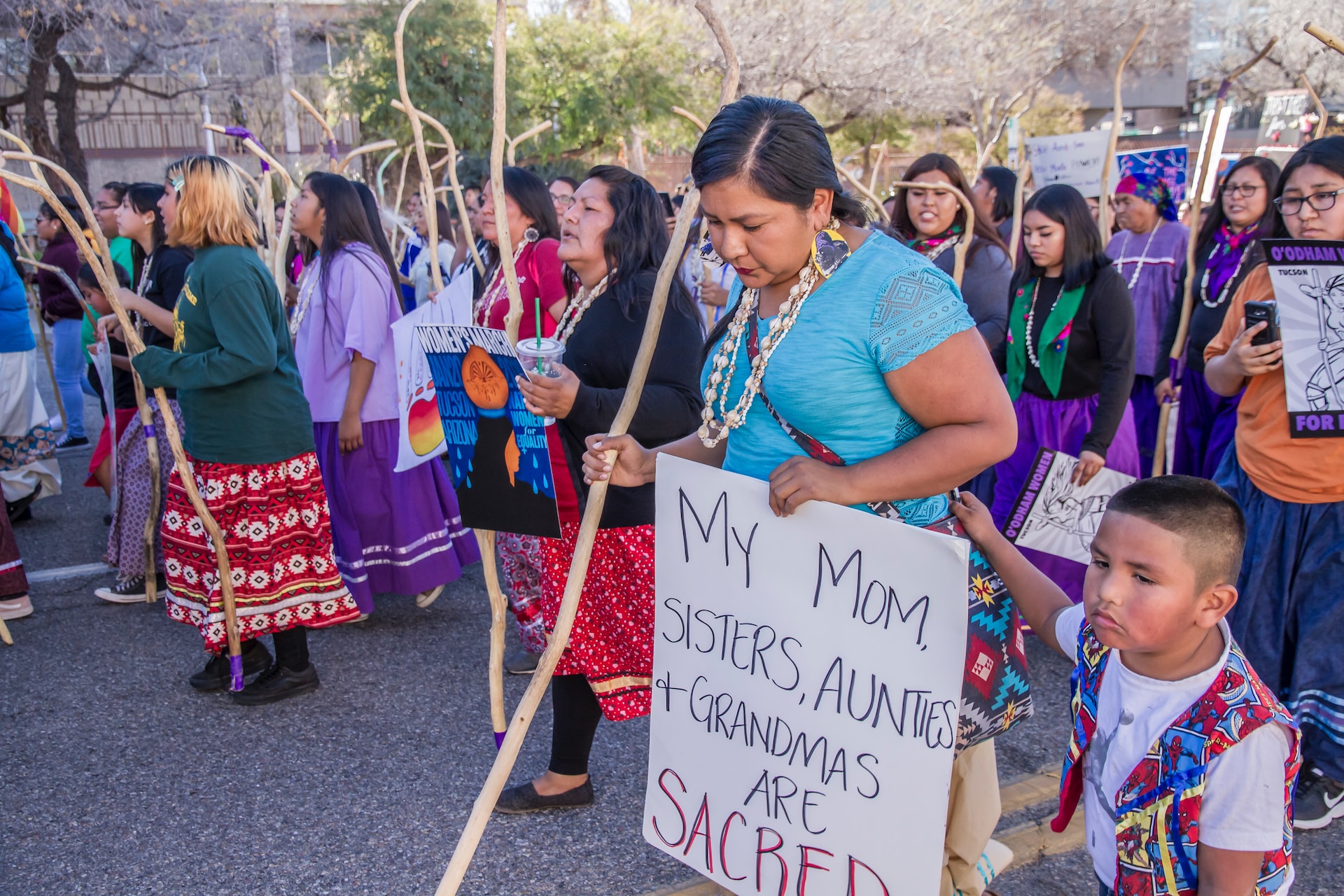
    Across Canada, Indigenous communities continue to face many ongoing injustices, including overrepresentation in the criminal justice system, higher rates of unemployment, and poorer health conditions. One issue that impacts Indigenous women, girls, and LGBTQI+ people in particular is experiencing a disproportionate rate of violence, including kidnapping and homicide. This is such a large issue that the term MMIWG2S (Missing and Murdered Indigenous Women, Girls, and Two-Spirit People) has been coined to refer to it.

    As the Assembly of First Nations reports, Indigenous women are four times more likely to be victims of violence than women who are not Indigenous. Although they only make up 4.3% of the Canadian population, they represent 16% of all female murder victims and 11% of missing women. Indigenous women are also more likely to experience physical and sexual assault, compared to non-Indigenous women. Despite these shocking statistics, the Canadian Government has failed to adequately address the issue. In 2016, a national inquiry into the issue was put in place. It resulted in 231 calls to justice directed at the government, institutions, social services, and Canadian individuals, which tackled areas requiring reform including education, justice, and health. As of June 2023, only two of these 231 calls to justice were complete. In 2014, Prime Minister Stephen Harper even stated that MMIWG2s was not “high on their radar”.

    These examples showcase that the MMIWG2S crisis is not just an issue about the violence that Indigenous women and girls experience, but government and institutional inaction regarding the violence.

    The MMIWG2S crisis is rooted in the longstanding oppression of Indigenous people in Canada. The high level of violence faced by Indigenous women, girls, and 2-spirit people is due to their identity as both Indigenous and as gendered, so MMIWG2S is an Indigenous and Gender justice issue.

    Amnesty International Canada has declared this violence against Indigenous women an issue of human rights and launched a campaign called “No More Stolen Sisters” in response to the issue of MMIWG2S. They cite a number of factors which contribute to the ongoing crisis, including racist and sexist stereotypes towards Indigenous women, which causes perpetrators to believe that their acts of violence against Indigenous women will not be met with justice. Additionally, the ongoing legacies of colonialism of Indigenous communities lead to the risk of Indigenous women experiencing violence, due to impoverishment, the lasting harm of residential schools, lack of access to resources, and disempowerment within their very communities. Lastly, a key factor is the decades of inaction by governments and law enforcement, which has allowed the violence against Indigenous women, girls, and two-spirit people to continue.

    There are several things that young people across the country can do to help address the crisis. The most important step is to be educated about MMIWG2S, as well as other ongoing injustices that Indigenous communities face. Here are a few places to learn more:

    Lakota People’s Law Project: MMIW Resource Guide

    We R Native: What is the MMIW Movement?

    Additionally, it is important to use your voice to amplify the issue. You can do this by talking about it with your friends, doing a project on the issue in school, or circulating information on social media.

  • Loneliness in the Age of the Internet

    Loneliness in the Age of the Internet

    By Bhargavi Venkataraman

    With access to millions of people’s thoughts, likes, dislikes, interests, and lives at your fingertips, it seems like this age of humanity should give rise to the most connected population since the beginning of mankind. However, research and conversations around loneliness with social media tell a very different story.

    Since its invention in the 1900s, the Internet has played a crucial role in education, work, and leisure. While it has had numerous beneficial effects such as improving efficiency and communication across professions, in the 1990s it sparked debate on whether Internet use harms participation in community life and social relationships and increases loneliness. Loneliness can be defined as an unpleasant sensation arising from lack of adequate social contact and relationships. It can have detrimental effects on health by elevating stress levels, causing mental health disorders and contributing to physical health issues as a result.

    Studies have shown that greater internet use is associated with lowered communication with family, a reduction in the size of social circles, and depression and loneliness. This may be due to people investing too much time online and as a result, too little time with their real life relationships or contrarily, lonely people find themself online more as they are seeking connectedness, companionship, and community membership. This is a phenomenon that has been exacerbated with the onset of the COVID-19 pandemic, to the extent that loneliness was considered as a major public health issue during this time.

    My personal experience with social media is that it has the potential to both be a boon and a curse. I am grateful for it in times like when long distance from friends and family or when connecting with communities you would never otherwise have a chance to meet. However, the problems arise when it starts inciting feelings of FOMO and loneliness after prolonged use and when it preoccupies me to the point that I start losing contact with my real-life connections. At times like this, it seems like my only choice is to completely rid myself of the issue and get off social media.

    To begin, I only really use 3 forms of social media: Facebook, Instagram and TikTok. Of these, I find that I predominantly use Facebook for its messaging capabilities, Instagram to stay updated with friends and TikTok for entertainment. As such, the first platform that I shut off is TikTok. I thoroughly enjoy scrolling on TikTok and have found so many accounts that connect me to things I am not always able to access in real life such as videos of my homeland. However, when I notice that I’m spending too much time online, I think I could afford to lose those connections and replace them with conversations with my family. Next, I shut off Instagram. I find that this is especially necessary to limit FOMO from seeing everyone’s stories and posts. While it does restrict my interactions with friends, sometimes it is necessary to ask them to message me on a dedicated messages app like through iMessage. I only close Facebook when I am doing a full social media cleanse as I don’t find that it creates many negative feelings in me. It mostly acts as a tool to connect with friends. However, during a cleanse, it might be beneficial to delete it just to prevent any temptations.

    Considering all this information, an important question that arises is, what can you do about this issue? The most obvious solution is limiting use of social media, much as I had done previously. While the extent of the limitation might differ according to individual preferences and capabilities, research evidence backs up the fact that cutting back on social media use can have a positive impact on wellbeing. One study looked at cutting back on Facebook use for a month in 3,000 regular Facebook users. The results showed that people missed the online interaction on the platform but observed benefits such as lowered online activity (including in other social media platforms) and increased offline activities such as spending time with loved ones or watching TV alone.

    Overall, deactivating Facebook seemed to improve subjective well-being by about 25-40% as much as regular psychological interventions. Another study was done in the University of Pennsylvania with 143 undergraduate students who were asked to follow their regular social media use for 3 weeks or limit Facebook, Instagram, and Snapchat use to 10 minutes each per day. Results showed that the group with limited use had reductions in loneliness and depression compared to the control group and that both groups experienced less FOMO and anxiety than their baseline.

    As such, in this age of technology and social media, loneliness is an unfortunate side effect of extensive online activity. While it may not be realistic for everyone to do a complete social media cleanse, I highly recommend giving moderated social media use a try. You can do this through self-monitoring, try it out with a friend to keep you accountable or download apps like AppBlock, Flipd, Focus, etc. to help you stay on track. No matter the method, it is sure to have some benefits to your wellbeing!