Category: Elementary

  • Chores – How They prepare You for the World, Jobs or Careers

    Chores – How They prepare You for the World, Jobs or Careers

    Ah, your parents/guardians are at it again? Why haven’t you taken out the garbage? Cleaned the dishes? Fed your pets? Done the laundry?  Cleaned the cat’s litter box? Taken the dog for a walk?

    Chores sound like an evil word, but they aren’t. They are a necessary part of life, even for adults. They contribute to a cleaner environment and a healthier you, but also prepare you for the job market. It’s just a matter of perspective.

    When it comes to household duties like taking out the garbage, raking the leaves or shovelling snow: you are assessing risk. You have carefully examined the yard and see that it needs to be cleaned before it becomes a risk to someone else. Things can be hidden in leaves, or someone could slip on the patch of ice near your car. You are being proactive regarding your safety and the safety of others, which is very important in the workforce, especially when knowing the best equipment or strategy for the job.  In addition to that, you are helping promote a clean and safe work environment, also made that way by cleaning the dishes. The more the “mess” is added or not treated to, the more dangerous it becomes – hiding dangers, expanding fall risks, or creating possible health issues.

    Feeding the pets is a little different as you are learning to be caregiver. This applies to looking after yourself, as you need to ensure you are getting the calories and vitamins you need in order to promote a healthy lifestyle. Even if your pet is placed on a diet or has special conditions from the vet, you are learning to adapt to the conditions of your work environment, and therefore are learning time management skills and the importance of how a chore isn’t seen as a chore to your pet, they need to be fed.  You also learn how not to overdo things; you can feed an animal (and yourself) too much.

    Chores are repetitive. They are nearly identical tasks, performed day after day, week after week, month after month. And they’re important. This helps immensely in workplaces dealing with respective tasks, particularly if you choose a job that involves scanning documents, answering phone calls or managing spreadsheets. They may seem boring and unimportant, but they matter a lot to managers who need  documents, people inquiring about  business, or the numbers on the spreadsheets for the folks in Accounting.

    To work effectively, chores should be simple, such as opening the doors to the business if you’re the key holder to ensure that it’s safe and nothing has been damaged overnight. You are ensuring the daily task of filling the coffee pot is completed for your co-workers, and that everything is kept up-to-date such as timesheets or spreadsheets, and it is little patterns like these that help contribute to a optimal working environment.

    Doing chores can be a bother, but everyone has to do them. You may not realize that they are doing you any good now, but understanding that they contribute to a greater, more organized life, can benefit you for years to come! So, don’t be afraid to pick up that broom next time- just get it done!

  • Teaching Empathy and Kindness Through Children’s Literature

    Teaching Empathy and Kindness Through Children’s Literature

    In school, students learn mathematics, science, and all kinds of other subjects through their classes. Learning qualities like empathy and kindness is more difficult, but reading children’s literature can help.

    Empathy and kindness can help people live among others without fighting or harming each other. Kindness is a quality of helping people and treating them well. People who are kind tend to be friendly and gentle, and they try not to hurt others if they can avoid it.

    Like kindness, empathy helps people to treat others well. Empathy is the ability to imagine what others feel and to understand their point of view. For example, suppose that a dog ran away. A kind person might help to look for it or help in another way. Someone with empathy would understand the dog owner’s feelings and know the reason for those emotions.

    Learning through stories takes thought and work. Some types of writing are straightforward with an obvious meaning. A user manual for a machine, for example, needs to be clear and easy to understand. It can also be very easy to forget. However, literature is different. Some stories are just for entertainment, but many of them have a deeper meaning. Finding that meaning helps readers to learn something that they can remember for years or even their whole lives.

    That principle is true of stories that teach qualities like kindness and empathy. Some people naturally have more of these qualities than others have. However, people can learn these qualities if they try. One of the best ways is through literature. Good stories can be powerful tools to teach the kinds of qualities that help people learn the important lessons that they need to know.

    Some books teach empathy and kindness quite directly. Stand in My Shoes: Kids Learning About Empathy by Bob Sornson teaches the importance of these qualities. I Am Human: A Book of Empathy by Susan Verde is another book on that topic.

    Other stories teach important qualities less directly. We Don’t Eat Our Classmates by Ryan T. Higgins features a dinosaur that must learn not to eat people. It Will Be OK by Liza Katzenberger tells the story of a zebra and a giraffe that learn the importance of empathy. The Story of Ferdinand by Munro Leaf tells of a gentle bull who likes to smell flowers instead of fighting. When people need to learn through example, stories like these ones can help to make the benefits of empathy and kindness real to readers.

    Longer books for older readers can also teach principles like empathy and kindness. Websites such as Book Riot and Imagination Soup give suggestions of chapter books that help students understand more about life. For example, Bridge to Terabithia by Katherine Paterson helps readers to understand friendship and loss. Inside Out and Back Again by Thanhhà Lai is about a refugee from the Vietnam War who struggles with loneliness and bullying as she tries to settle into life in the United States.

    Almost any well-written novel or picture book can help teach empathy and kindness. In the Chronicles of Narnia, C.S. Lewis created a vast array of deep characters who are either good or bad examples of kindness and empathy. Other novels can help students understand these qualities better.

    Stories can be memorable an instructive for people who look beyond the surface to see the meaning in the characters’ actions. For teaching qualities like empathy and kindness, children’s literature is ideal.


    Bibliography

    Bologna, Caroline. “35 Children’s Books That Teach Empathy and Kindness.” https://www.huffpost.com/entry/childrens-books-empathy-kindness_l_5d52e7b1e4b0c63bcbee2699.

    Harvard Graduate School of Education. “How to Use Stories to Help Kids Develop Empathy.” https://mcc.gse.harvard.edu/resources-for-families/develop-empathy.

    Reynolds, Emily. “Why Teach Empathy?” https://www.britishcouncil.org/voices-magazine/why-teach-empathy.

    Teaching Expertise. “40 Impactful Children’s Books about Empathy.” https://www.teachingexpertise.com/classroom-ideas/childrens-books-about-empathy/.

  • Discussing Mental Health in High School Classrooms

    Discussing Mental Health in High School Classrooms

    Students can encounter many ups and downs while in high school. Therefore, being aware of mental health as well as having meaningful discussions about it during this time remain crucial. A productive place to do so is in the classroom because participating in these discussions when amongst others going through the same/a similar journey may not only help them navigate their challenges, but also just be a valuable facet of students’ overall at-school experience. For high school teachers/personnel who are planning on engaging in this with their students and looking to find some tips, here is what can be done and how to go about discussing mental health in the classroom:

    Mental Health Should Be Brought Up More Often

    It’s common for high schools to have discussions/presentations about bullying, usually for grade 8 students. While these are helpful and directly relate to mental health, the same should be applied to mental health in general as well as be discussed more often amongst all grades. Grade 12 students in particular are likely experiencing stress as they prepare for the next phase of their lives.

    Establish That The Classroom Is A Safe Space

    A good initial step is reminding students how classrooms remain safe spaces to talk about mental health. Having everyone, students included, involved partake in this reinforcement would be beneficial. Overall, requiring a collective responsibility is the best way to approach creating comfortable settings for these kinds of discussions.

    Exchange Ideas and Thoughts On The Subject

    A good place to start would be talking about what has been affecting their mental health as well as possible coping strategies. Some questions that could guide the discussions are:

    • Have you been feeling overwhelmed lately due to academics or other roles you’ve taken on at or outside of school?
    • If you are feeling down, is there anything you can do on a regular basis that might make you feel better?
    • Can you name some activities that are typically associated with self-care?
    • Have you been seeking ways to improve your mental health but are experiencing difficulties with it?
    • Do you think seeing a counselor or any other mental health professional would help?

    For most if not all, knowing that they’re not alone can make a significant difference. It’s especially reassuring when people receive support from peers and/or others their own age. Also, while students (of course) shouldn’t feel pressured to talk about what they’re exactly going through if they’re not 100% comfortable, consistently providing them with encouragement to open up to anyone they trust if need be or even to just express how they’ve been doing can contribute to an increased comfortability.

    On the whole, mental health is an important subject to discuss during high school and should be brought up on a more frequent basis. Facilitating these discussions and giving students an opportunity to talk about it would have a positive impact on classroom culture and key factors that play into this is having a safe space so that they feel supported as well as comfortable speaking up. If the ideas above are taken into consideration by high school teachers/personnel, everyone involved is on the right path to meaningfully discussing mental health in the classroom.

  • Cultivating Emotional Intelligence in Early Childhood

    Cultivating Emotional Intelligence in Early Childhood

    By Rabia Khan

    The time when children is when so much growing and learning kicks in. It is during the days of early childhood, that children experience a myriad of opportunities to receive early support and learn how to regulate their emotions. Now, it is essential to prioritize this because children will not grow up to become problematic adults and prevent them from acting irresponsibly. There are many benefits to cultivating emotional intelligence in early childhood.

    Maturity

    Adults who received care and attention in their early childhood days tend to have higher maturity levels than those who had emotionally unavailable parents. Gaining maturity makes young people feel more independent as they transition into a much later stage in life.

    Social life

    For some, socializing in large gatherings could be challenging but those who grew up in a supportive environment tend to be a social butterfly and are flexible in adjusting to large social gatherings. They don’t feel shy being a total extrovert and blend well with everyone.

    Academics

    It is no science that excelling at academics often becomes a goal for those people who have cultivated emotional intelligence in early childhood as opposed to those who did not. These are the people who are willing to excel in academics and extracurricular activities alike. Besides, they are highly competitive and carry high self-esteem levels.

    Relationships

    Cultivating emotional intelligence in early childhood welcomes so many benefits when one starts adulting, relationships seem easier to navigate when one is emotionally aligned. Relationships are delicate as they are, and possessing good emotional intelligence can strongly impact the bond between two people.

    Recognize emotions

    People who cultivate emotional intelligence in early childhood grow up to live the most fulfilling lives and the best part is that they can easily recognize their own emotions.

    Understanding

    Adults with high emotional intelligence can understand others better and foster healthier relationships. One can assess and understand how other people feel which is excellent for overall human development in the long run.

    Challenges

    Days during early childhood are pretty much a game-changer and get you ready for real-life challenges. When one has their emotional health tied in green light, that’s when they can face any challenge as they grow up to become adults.

    Personal growth

    Fostering personal growth is essential to success in life and that is only possible when one has their mental needs in check. Learning how to regulate your emotions is the greatest gift to mankind and everyone deserves to make their life worth living.

    Family/community bond

    When people have high emotional intelligence, they’re driven to make a good bond with the members of their family. Likewise, they also strive to do better in the community.

    Opportunities

    It’s important to feel your best to welcome opportunities in life, whether career, making connections, finding a partner or getting a well-paying job, there’s always a door to more opportunities when you have a high emotional intelligence.

  • Exploring Diverse Family Structures: An Inclusive Approach

    Exploring Diverse Family Structures: An Inclusive Approach

    By Rabia Khan

    Everyone is raised differently and that’s what makes them unique. You often grow up to be how effectively your childhood shaped you. Parents are our direct and first leaders, they inspire us and strive us to become our individual selves later in life. Growing up in inclusive households makes a big difference in this world to live in. There are many reasons why our renowned world leaders are calling for inclusivity since there are only visible benefits to it. This is the only proven and effective way to eliminate biases against others around us. Inclusivity begins from the four walls of our homes.

    Family is a union of oneness and togetherness. Without the support from the family, we cannot lead a successful life. It is within our households, that we can strive in whatever to do best we can. An inclusive approach to livelihood creates an excellent family structure in the long run.

    The head of the family sets the base for their children and after they become adults, the foundation set in early childhood becomes their living reality. Cultivating a diverse family structure at a young age opens doors to many opportunities. You’re lucky to learn and explore a whole new world ahead of you.

    Getting familiar with a wide range of cultures can foster a safe environment for young adults as well as for those who just stepped into the real world. Exploring diversity brings a lot of meaningful experiences in life, at the same time it makes sure that you enjoy all the benefits when it comes to intertwining various cultural backgrounds and races.

    Those who become acquainted with different cultures can excel academically and at work. They possess high emotional intelligence because of the exposure, They also tend to respect communities from different socio-econimic backgrounds which makes their personality highly admirable.

    Spreading awareness about diverse cultural and religious aspects can make your children better human beings and Increase their tolerance levels in the most complex environment settings.

    After growing up in an inclusive household, you surely learn to respect people from all communities, races, religions and genders. Facing challenging situations with patience becomes a key part of your development and progress. There is plenty of opportunity to become more welcoming of opposing ideas and support others along the way.

    To thrive in today’s society, living your life beyond the definition of inclusivity adds value and what’s better to add that value to your children’s lives when they are in their primitive years? Exposing your children to a healthy and inclusive enviornemt will definitely eases up their fears and anxiety of worldly affairs when they turn adults.

    Diverse family structure fosters beliefs of equality and healthy bonds among young people and meet their emotional needs when it comes to interaction between various communities.

  • Language Learning Opportunities in Ontario High Schools

    Language Learning Opportunities in Ontario High Schools

    Learning a language takes time, energy, and the right opportunities. In Ontario, students have many chances to learn languages of all kinds, depending on what they want to speak.

    Like other areas of Canada, schools in Ontario offer high school courses in languages such as French and German. French is useful for getting jobs in many government departments, tourism, and other types of work. German can also be useful in certain communities, and languages like Italian or Spanish can be good for maintaining ties with family or friends living in other countries.

    Besides many of these spoken languages, Ontario has opportunities to learn American Sign Language (ASL) and Langue des signes quebecoise (LSQ). These languages have their own grammar and can be difficult for students to learn, but they can be very useful for speaking with deaf classmates or relatives. Many high schools in Toronto and other cities have opportunities to learn these sign languages.

    During the pandemic, two teenagers from Richmond Hill, Ontario decided to help people who are deaf communicate with those who hear. Jin Schofield and Sarvnaz Ale Mohammad invented a device called the ConchShell bracelet, which translates American Sign Language into speech. That way, people who are deaf can more easily communicate with others. For people who like solving problems, working on translation devices could be useful for helping to overcome communication barriers.

    Students in Ontario come from many different countries and speak over one hundred different languages. Learning English is a priority for them because they must know the language for school and tasks such as asking for directions or helping with shopping, filling out forms, and anything else their family and friends need. English as a Second Language classes help to get students to the point where they can function at school and elsewhere.

    Learning a second or third language can be very useful. English is very useful in most areas of Canada, and French is useful in Quebec, as well as other areas of the country. Besides government departments, social agencies or other organizations often prefer to hire people who know at least two languages. Sometimes, even jobs in libraries or schools can be easier to find for people who can use both French and English.

    In some situations, knowing other languages can be equally important. Since Ukrainians started arriving in Canada in large numbers, for example, their language has become a very useful one to learn. Before that, Arabic was important for helping refugees from Syria. Meanwhile, many other languages have been good for working with refugees and other immigrants as they begin their own language learning.

    Sometimes, people need extra help. For in-person classes outside high school, Berlitz courses are available in Ottawa, Toronto, and Vaughan. Berlitz is a worldwide language-teaching agency with courses at a variety of levels. Although many of the classes are intended for adults, the school also has classes for children and teenagers.

    Learning a language takes time and effort. Regular practice is important, both in reading and speaking. Finding a study group or a few friends to practice the language with is important.

    Ontario has many opportunities for language learning in high schools. If you want to start learning, you can check with your teachers for the best way to begin.


    Bibliography:

    Berlitz. “Language School in Ottawa.” https://www.berlitz.com/en-ca/language-schools/ontario/ottawa

    CBC Kids. “Profile—These 2 Teens Built a Sign Language Translator During the Pandemic.” https://www.cbc.ca/kidsnews/post/profile-these-2-teens-built-a-sign-language-translator-during-the-pandemic.

    The Ontario Curriculum Grades 9 to 12. “Classical Studies and International Languages.” https://www.edu.gov.on.ca/eng/curriculum/secondary/classiclang912curr.pdf.

    The Ontario Curriculum Grades 9 to 12. “English as a Second Language and English Literacy Development.” https://www.edu.gov.on.ca/eng/curriculum/secondary/esl912currb.pdf.

    Ontario Newsroom. “Ontario Offers New Sign Language Courses to Secondary Students.” https://news.ontario.ca/en/release/60652/ontario-offers-new-sign-language-courses-to-secondary-students.

    Toronto District School Board. “High School.” https://www.tdsb.on.ca/High-School.

  • The Role of School Libraries in Fostering Reading in Ontario

    The Role of School Libraries in Fostering Reading in Ontario

    Most people read, whether for school assignments, work, or recreation. School libraries can have an important role in fostering, or encouraging, reading in Ontario.

    Reading is everywhere, from learning how to make a recipe to finding information about animals, countries, people, or all kinds of subjects. Even mathematics problems require the ability to read, since students must know what to add, subtract, multiply, or divide before solving the problem. Every course involves at least some reading, besides the classes such as language arts that depend entirely on reading.

    Improving your reading is very important for whatever you choose to do in the future. At some point, you will probably need books or other resources that are not available at your home. Often, libraries have the money and space to get materials that might be too expensive for families to buy, such as the most recent edition of an encyclopedia or a dictionary. For students, school libraries are the best places to look for these types of materials.

    School libraries have several advantages over public libraries. One of the most important benefits is that school libraries usually have a teacher librarian in charge. Teacher librarians are people who have training in both education and librarianship. That helps them to understand how to help students find the information they need for their projects and assignments.

    Research has shown a connection between school libraries with professional staff and how well students learn and complete their work. School libraries can be very useful even without professional staff, but it helps to have people who know both the teaching and librarianship sides of the work.

    Suppose that a student came into the library and asked for information on France or Spain. A teacher librarian might know the exact topics that the student is studying and be able to find the right materials. A student in a cooking class might need French or Spanish recipes, but another one might want language learning materials or history books. A teacher librarian is also likely to know the student’s level of reading and to be able to find materials that are challenging but not too difficult.

    Another advantage of school libraries is that they are convenient for students. If you and your friends want to meet there to work on a project, you can do that more easily than at a library across the city. That way, you are more likely to use it more often than if you must travel far to get to the library.

    Most school libraries have a mixture of fiction and nonfiction materials. Fiction is good for practicing your reading skills, but it can also be useful for teaching you about people and the world. Even joke books can be good for teaching students about the hidden meanings of words or just for relaxation. Other forms of information or entertainment can also be helpful for building vocabulary or for encouraging people to learn how to analyze language, to see hidden meanings, and to understand others better.

    School libraries might seem old-fashioned in the age of the Internet, but they have useful resources and can be helpful for students of all ages. If you haven’t already gone to your school’s library, you should visit it soon.


    Bibliography:

    Ameline, Judy; Judy Chyung; and Emily Thompson. “Structured Literacy and the Science of Reading.” https://journal.canadianschoollibraries.ca/structured-literacy-and-the-science-of-reading/

    People for Libraries. “Libraries.” https://peopleforeducation.ca/wp-content/uploads/2017/06/P4E-libraries-2016.pdf.

    Ontario Library Association. “Exemplary School Libraries in Ontario.” https://accessola.com/wp-content/uploads/2020/08/2006-Exemplary-School-Libraries-in-Ontario.pdf.

    Ontario Library Association. “School Library Advocacy.” https://accessola.com/school-library-issues/.

  • Back-to-School Supplies: What’s Necessary And What Isn’t

    Back-to-School Supplies: What’s Necessary And What Isn’t

    When September nears, families with students are typically preparing for an upcoming school year. This may involve reverting back to an old routine, thinking about different lunch ideas, or even setting new, related goals.

    For elementary school students in particular, another important preparation is getting necessary back-to-school supplies, and most are provided with a list of specific ones to get. However, some of these supplies are known to be unnecessary. People often find themselves feeling anxious about getting every item included on the list only to have certain items end up unused and sitting on a shelf at home. If this is what you’re currently dealing with or want to avoid, here’s what’s necessary and what isn’t:

    What’s Necessary

    Have extra pencils, erasers, and twelve-inch rulers as these will definitely be used on a regular basis. Five pencils or more as well as two erasers and one ruler are sufficient amounts for starting off the year. If you prefer mechanical pencils, make sure to buy extra lead. Also, having both types of pencils is beneficial. In case you have no more lead, you could always switch to a wooden pencil temporarily. All in all, it’s good to have both.

    Regarding homework/handout storage, use different coloured duo tangs for each subject. Red could represent math, yellow for social studies, etc. Duo tangs make differentiating easier when taking the materials out of your desk. Binders can be used to store lined paper as well as for when your duo tangs get too full, and you could put older papers/assignments into the binder to create more space in the duo tangs. Get dividers for your binder to separate subjects from each other.

    What Isn’t Necessary

    One item often included on the list of supplies is 8.5” X 11” hole-punched white paper. While this paper comes in packs of hundreds, only one or two sheets at most will likely be used. These are usually for small art assignment(s) such as designing a title page for a subject. If you’re in an upper elementary school grade, you probably have some paper left from previous years. Therefore, if you’re asked for it again, don’t purchase more, just bring a few sheets from what you already have.

    Pens are not frequently used. At most, you’ll use one red pen and another of a darker colour on occasion starting from grade 4. The red for marking if your teacher has the class mark each other’s work and maybe the darker coloured pen for more formal assignments such as essays. Be prepared with these pens, but don’t expect to use them that much.

    Wax crayons are seldom used as well. They can break more easily, create a bigger mess, and don’t provide as much coverage in comparison to other colouring tools like pencil crayons or felt pens. (Pencil crayons are normally coloured with the most.) The same reasons apply when comparing liquid glue and glue sticks. When glue is needed at school, teachers will ask for students to have their glue sticks ready more often than liquid glue.

    This can depend on what your teacher asks of you and what certain assignments entail. Of course, you’ll bring something if they specifically request it. It’s additionally important to not worry about buying supplies from specific brand names. Your supply-list may include them because they’re popular and/or known for quality, but rest assured, these are more so recommendations than requirements. You’ll be fine as long as you get the item itself.

    Also, keep in mind that you likely won’t begin using every item right away and in the worst-case scenario, have the option of making last-minute purchases. While it’s ideal to have everything ready initially, don’t worry too much if you realize that there are still a couple of supplies you need to buy. Overall though, if you approach gathering these supplies with the advice above in mind, you’ll be well-prepared.

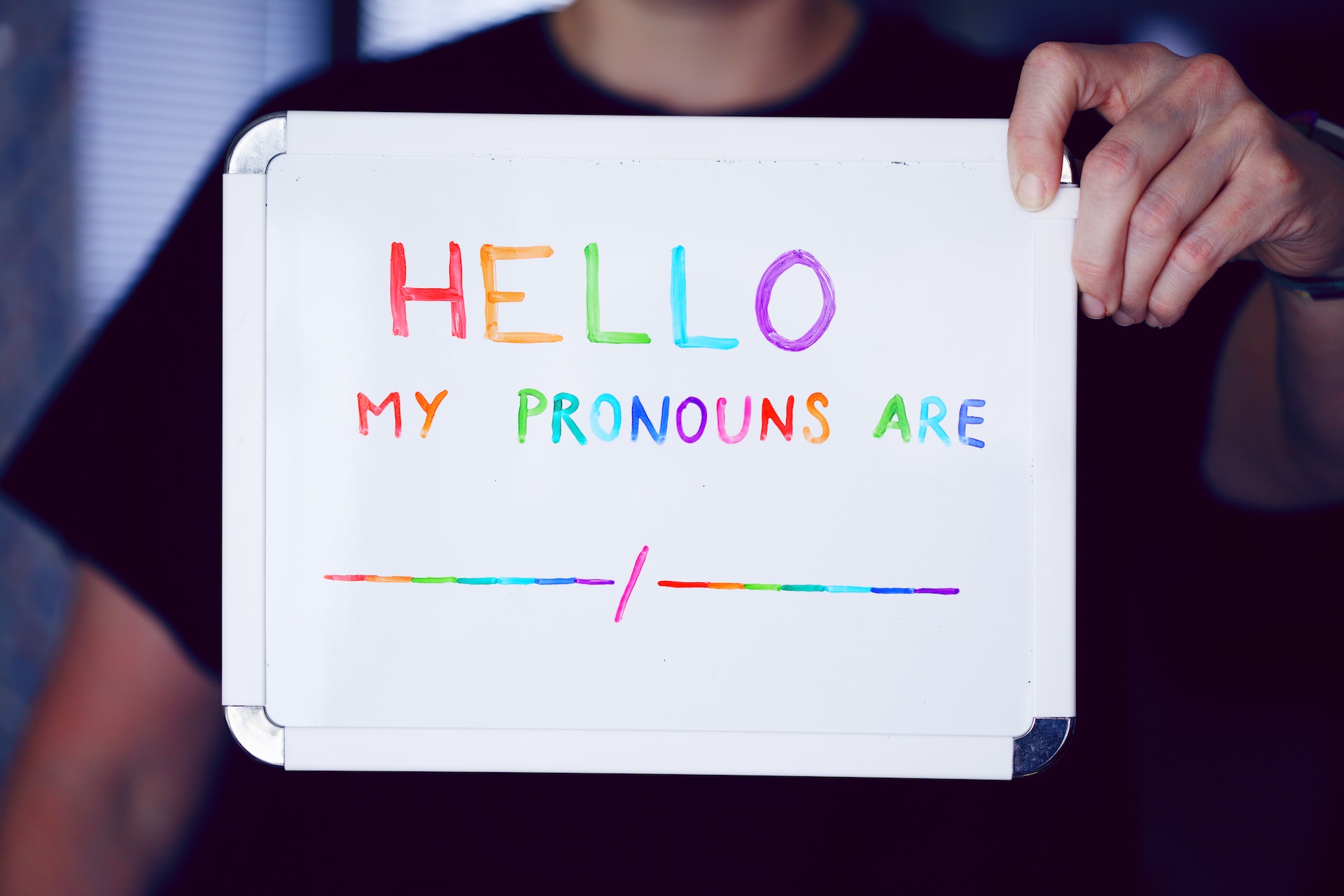
  • The Importance of Personal Pronouns in Inclusive Language

    The Importance of Personal Pronouns in Inclusive Language

    By Avreet Jagdev

    Everyone has pronouns, and we use them all the time. But unfortunately, they have become a source of tension, arguments, and even discrimination towards certain groups of people. Before being able to appreciate why pronouns are so important and how they play a large factor in being inclusive, we need to first understand what exactly they are.

    Put simply, a pronoun is a word that stands in for a noun, usually to avoid over-repetition of that noun. For example, if you are describing a tree, you can refer to the tree as “it” to avoid saying the word “tree” over and over again. Replacing “tree” with a pronoun helps make your sentence flow easier and sound more natural. Other examples of pronouns are “he”, “she”, “they”, “you”, “us,” “this”, and “that”. If you stop and think about it, you’ll realize that pronouns are a huge part of the English language — we use them in almost every single sentence!

    When people speak about pronouns and their importance in inclusivity, they are usually referring to personal pronouns. These are pronouns used in substitute of a person’s name or title. “He”, “she”, and “they” are all examples of personal pronouns. While many women might use the pronouns “she” and “her”, and many men might use the pronouns “he” and “him”, there are varying sets of pronouns that people use, such as “they/them”, or even a combination of pronouns, such as “she/they” or “he/she”. Some people use any and all pronouns!

    It is important to always respect the pronouns that someone has. If you are unsure of what pronouns someone uses, it is always okay to ask and clarify! If you accidentally use the incorrect pronouns for a person, it is important to apologize and make a mental note of what pronouns they use so that you refer to them correctly in the future.

    A lot of times, people assume someone’s gender and what pronouns they use based on their outward appearance, but these assumptions are not always correct and can be harmful. We cannot tell someone’s gender by what they look like, or what clothes, jewelry, makeup, or hairstyles they choose to wear or not wear. This is because a certain type of clothing, makeup, jewelry or hair does not exclusively exist for a specific gender. For example, characteristics or clothing choices that are traditionally associated with women (such as the colour pink, long hair, or painted nails) can be displayed by anyone, regardless of their gender! This might include men, non-binary, or other gender-queer people as well.

    Everyone has personal pronouns, but transgender, non-binary, and gender-queer people often have to share their pronouns clearly so that they are not assumed to be a gender they are not (we call this misgendering). An easy but important step we can take to be more inclusive of trans, non-binary, and gender-queer people is to normalize the sharing of personal pronouns. Sharing your pronouns even if you are not trans, non-binary, or gender-queer helps destigmatize the use of personal pronouns, and reduces confusion, misunderstanding, and discrimination related to pronouns.

  • Interview Prep 101: Do’s and Don’ts

    Interview Prep 101: Do’s and Don’ts

    Applying for a job is the first step in starting an amazing career. Step 2 is to nail your interview. Sometimes, interviews can be a place of stress and the unknown of what they may ask can intensify the worry. The best way to cope with this stress is by learning what they may ask or discuss during an interview. In this article, I will run through some of the do’s and don’ts of being interviewed.

    Do:

    • Before coming to your interview, do some research about the company you might work with. What may some of your responsibilities be? What is their dress code?
    • Dress the part! After your research, show up to your interview dressed in their dress code. There’s a saying of “dress for the job you want, not the one you have.” So if you’re applying for an office position, wear business-casual clothing. If you’re applying to be a server, all black or neutrals could be a good option.
    • Prepare! There are some questions asked in almost every interview that you can prepare for. Plan some points for the following questions: Why do you want to work here? What are your strengths? What are your weaknesses? If you prepare, it will ease your stress.
    • Bring a hard copy of your resume. It is always good to bring in a second copy of your resume to ensure they have it on file and can look over it with you. Bringing in a hard copy will also help you seem prepared.
    • Be aware of your body language. Sitting upright with squared shoulders will project a feeling of confidence. Keep your arms uncrossed to appear open, and nod your head to show you are listening intently.
    • Listen! Pay attention to what the interviewer is asking you.
    • Ask questions. If you are confused about something, or just want further clarification, do not be afraid to ask questions! Asking questions will show that you are taking a sincere interest in the position and company.
    • Conduct yourself with respect. Showing respect for the surrounding people can make or break an interview. Be kind to the person who greets you, your interviewer, and whomever else you might meet along the way.

    Don’t:

    • Go in unprepared. Trying to “wing it” may seem like a good idea, but it works against you to be unprepared. You may appear irresponsible to the employer.
    • Dress down. Most people make a judgement based on your appearance. So if you show up to an office interview in sweatpants, the interviewer may make the assumption you are lazy or unprofessional.
    • Slouch, cross your arms, or scowl. Body language shows your authentic emotions. So slouching might make you come across as bored. Scowling will show that you are uninterested and maybe frustrated.
    • Be distracted. If you don’t pay attention in your interview, you might miss important information or an important question.
    • Lying during an interview also works against you. On your resume you provided references, so your interviewer can easily make a phone call and discover the truth behind why your last job ended.
    • Conduct yourself with disrespect. Being rude to the person offering you a job is a great way to be unemployed. Especially if you’re applying for a position where you’ll work with the public. This may make the employer think you cannot interact with customers in a friendly way.

    Hopefully, this list of do’s and don’ts helps you feel more prepared for your upcoming interview!

    Take a deep breath and go in with your head held high. Good luck, you’ve got this!


    Sources

    20 Crucial Job Interviews Do’s and Don’ts. LiveCareer. (2023) https://careersidekick.com/job-interview-dos-donts/