Category: Featured Articles

  • Career Profile: Atmospheric and Space Scientist

    Career Profile: Atmospheric and Space Scientist

    The weather isn’t just a topic for small talk these days; extreme weather events and climate change are all over the news.  But understanding the Earth’s weather and climate takes more than just stepping outside to see whether it’s raining or sunny.  Every global climate report or daily local weather forecast relies on dedicated scientific research and weather data to provide accurate analysis and predictions.  Atmospheric and Space Scientists are the ones responsible for engaging in this research and providing weather data to those who need it.

    Atmospheric and space science focuses on the study of Earth’s atmosphere, and how it interacts with the planet as well as how it interacts with outer space.  This field includes several inter-related sub-disciplines:

    • Meteorology, the study of Earth’s weather, including local and large-scale weather forecasting.
    • Climatology, the study of the long-term and short-term atmospheric conditions that affect Earth’s climate.
    • Aereology, the study of Earth’s upper atmosphere near and at the boundary with outer space.

    At minimum, atmospheric and space scientists require a bachelor’s degree in a program such as climate science, meteorology, atmospheric physics, atmospheric chemistry, or similar.  Depending on the job or the type of research you want to do, a master’s degree or Ph.D. may be required, particularly for research-intensive positions.  Regardless of the specific program or degree earned, atmospheric and space scientists need a strong understanding of physics, chemistry, and mathematics.

    Whether additional specialties or training are required will vary depending on the job; for example, Environment Canada provides specific formal training for meteorologists who are employed by the federal government.

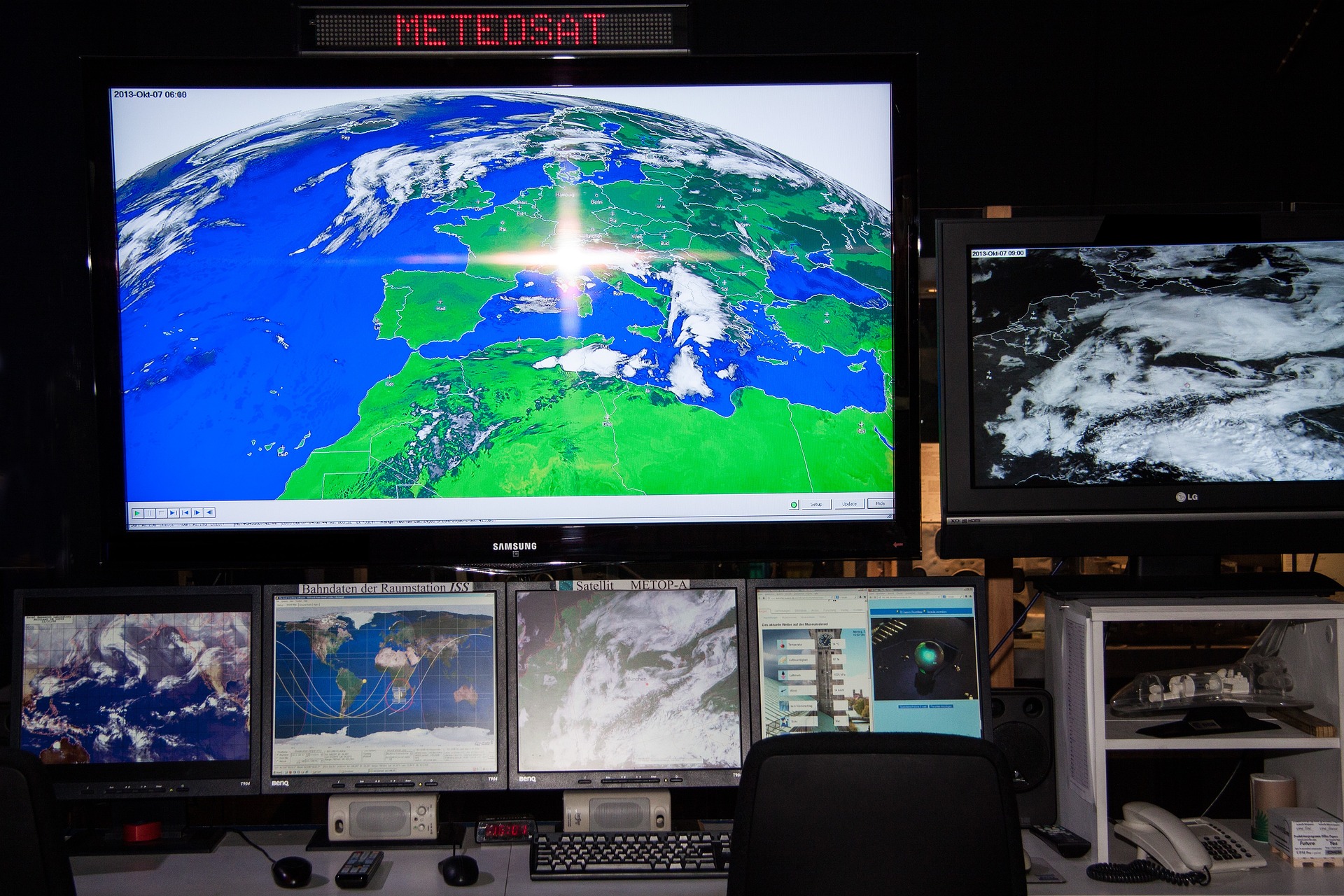
    Practical, hands-on fieldwork and lab work skills are also a necessity, and involve tasks such as collecting samples of air or precipitation, studying data from satellites, radar, and weather stations, performing data analysis, using the scientific method to design and perform experiments, and developing and testing theories and models of weather or climate behaviour.  Strong written and oral communication skills are also a must-have, both for writing reports, articles, and presentations, and for working closely with other scientists or in public-facing roles communicating weather and climate information to others such as the general public, or to the marine, agriculture, and aviation industries.

    This is a great career path for those interested in working with computers and conducting research. It means helping people nearby know the weather forecast, and those around the world with fighting climate change. But it is also challenging, data-heavy work, and because weather conditions change so quickly, it can mean an irregular work schedule.

    Atmospheric and space scientists can work for the government, military, or space agencies, as well as companies that focus on environmental science and climate change.  They can also work with weather forecasting organizations, including local and national weather agencies that provide weather data to news sources including television, radio, and online weather reports. As a highly technical and specialized field of work, atmospheric and space scientists have annual salaries averaging around $62,000 to $97,000.


    Sources

    CareerOneStop. “Atmospheric and Space Scientists.” https://www.careeronestop.org/Toolkit/Careers/Occupations/occupation-profile.aspx?keyword=Atmospheric%20and%20Space%20Scientists&location=UNITED%20STATES&onetcode=19202100

    Glassdoor. “Atmospheric and Space Scientist Salaries in Canada.” https://www.glassdoor.ca/Salaries/atmospheric-and-space-scientist-salary-SRCH_KO0,31.htm

    Job Bank. “Meteorologist.” https://www.jobbank.gc.ca/marketreport/wages-occupation/2589/22437

    MyMajors. “Atmospheric and Space Scientists.” https://www.mymajors.com/career/atmospheric-and-space-scientists/

    StudentScholarships.org. “What do Atmospheric and Space Scientists Do?” https://studentscholarships.org/salary/534/atmospheric_and_space_scientists.php

  • Fighting for the Future a Plant at a Time: An Arborist Career Profile

    Fighting for the Future a Plant at a Time: An Arborist Career Profile

    Our world continues to grow increasingly industrialized and urbanized. It is more important now than at any point in our history to take care of the trees and plants still rooted in our planet’s fragile ecosystem. Does that important role intrigue you? Then consider a career as an arborist. Your work would focus on maintaining, trimming, and planting trees to ensure their health and longevity. It is a way to remain connected to nature in an increasingly technological world.

    Arborists work within a specific area to trim, prune, hedge, remove, and plant trees. This is done via hand tools or heavy machinery. The area could be as small as a backyard or garden, or as large as a public park or golf course. Arborists strive to keep plants and trees healthy and active. The work can also entail landscaping, evaluation of trees for diseases, managing nutrients and water, and more. Be prepared to spend much of your time in the field, working on your client’s property and ready to respond to emergency calls. You will also need to complete paperwork in offices and sample processing in labs. Arborists get to spend plenty of time outdoors and work in a variety of locations. It is physically demanding work with constant pressure applied to maintain the health of the greenery in your client’s area.

    The average hourly rate for arborists in Canada is $22.72. This can range from about $18 hourly to approximately $30. The annual wage depends on years of experience, with an average of $37,000 for those with fewer than five years of work. After a decade or more, arborists can expect to make $74,000 annually. Canada’s vast land, filled with large regions of greenery, allows for many job opportunities. Those looking for better prospects and higher salaries will find preferable wages further west in Canada, particularly in Calgary, Alberta and Vancouver, British Columbia. Pay is comparably lower in Toronto, Ontario.

    Those looking to pursue a career in this field should have educational or volunteer experience in fields such as physical education, chemistry, and biology. Apart from a high school diploma, you will need to obtain a minimum of a technical diploma in programs such as botany, forestry, ecology, environmental studies, and horticulture. You can also become a member of certified bodies, such as the International Society of Arboriculture. As you gain experience, you can progress into other related careers ranging from agriculture specialist, botanist, crop and livestock producer, soil scientist, wetland biologist, ecologist, and beyond.

    It is arduous and demanding work to protect nature. Many of our day-to-day activities do plenty of harm via pollution and waste. People such as arborists, who dedicate their professional lives to protecting our natural world, are playing a vital role in our present and future. No matter how urbanized or technologically advanced, humanity is still dependent on the Earth’s delicate ecosystem. When you choose a career as an arborist, you are playing an important part in ensuring that gardens are healthy, parks stay beautiful, and life remains sustainable.

    Sources:

    ECO Canada. “Arborist.” https://www.eco.ca/career-profiles/arborist/

    PayScale. “Average Arborist Hourly Pay.” https://www.payscale.com/research/CA/Job=Arborist/Hourly_Rate

  • How to Decrease Your Carbon Footprint

    How to Decrease Your Carbon Footprint

    As many people know, global warming is a serious issue, and we all need to contribute to cleaning up our Earth. On social media, I constantly hear teens and young adults say, “I’m just one person, how can I save the planet?” But you can! There are many small things in your everyday life on campus that you can change to contribute to helping our planet. One way people have begun to do this is by decreasing their carbon footprint.

    In case you didn’t know, a carbon footprint is the trail of carbon dioxide you leave behind in your everyday lives. To figure out your carbon footprint, all you have to do is look up a quiz. Unfortunately, the average carbon footprint is 20 metric tons. However, there are some simple ways to reduce this and lead a healthier, greener life – even if you live on a campus!

    Transportation. Let’s talk about transportation for a minute. It’s very common for people to own cars, even at a young age. However, consider your other options. Consider switching to public transit, carpooling, walking or biking! There are many bus routes that take you straight from GO stations to your campus! This can be a great way to save traffic time, money, and gas emissions.

    Diet. Many people already know this, but reducing your dairy and meat intake can greatly reduce your carbon footprint. Cows produce mass amounts of methane gas, which is terrible for the environment. By purchasing and consuming dairy and meat from cows, we are encouraging these companies to keep harming animals and our environment. The best way to decrease your carbon footprint would be to go vegetarian or vegan, but we understand this can be very difficult, especially for campus life since you don’t have a lot of time to prepare your meals. Vegetarianism or veganism can often be a complete lifestyle change, not just a diet change.

    Technology. One of the simplest solutions, and one many of you might already be doing without awareness, is by switching your desktop computer to a laptop. According to onetreeplanted.org, “laptops use up to 90% less energy than desktop computers”. As a college or university student, computers are constantly being used, and therefore using more energy. By using a laptop rather than a desktop computer, you can be efficient at your work while decreasing your carbon footprint.

    If none of these appeal to you, try simple tasks in your everyday life such as turning off lights when you don’t need them, turn your tap off while you’re brushing your teeth, do research on companies that you buy products from and consider not buying products from them if they harm animals or produce large amounts of gas or energy while they make their products.

    Keep in mind that global warming is a serious issue that affects us all. You can make a difference. You can contribute to helping our earth, even by making simple changes in your life to decrease your carbon footprint.

    Sources:

    1. https://onetreeplanted.org/blogs/stories/reducing-carbon-footprint-college
    2. https://www.theguardian.com/environment/2018/dec/21/lifestyle-change-eat-less-meat-climate-change
    3. https://blogs.ei.columbia.edu/2018/12/27/35-ways-reduce-carbon-footprint/
  • Career Profile: Soil Scientist

    Career Profile: Soil Scientist

    When many people look at a handful of earth, they might notice a few characteristics, such as the colour of the dirt, the number of worms, or how many roots of plants are in it. For soil scientists, however, a handful of dirt tells much more than that. Soil scientists study the ground to determine its health and to make recommendations that can help farmers, government officials, miners, and many other people to make good decisions about how to work at improving the health of the environment, as well as the people, animals, and plants in it.

    Soil scientists spend a lot of time gathering and analyzing information about the soil. Usually, they work at a site to answer specific questions about it. For example, a soil scientist working for a conservation agency might study the soil to see whether fertilizers have changed the quality of soil over the years. A soil scientist working for an oil and gas company might analyze the soil to see if it is stable enough for an oil well. People in this field can work for governments, universities, industries, environmental firms, and other places. Sometimes, they work as consultants, completing soil surveys for many different organizations.

    Some soil scientists spend their days indoors, analyzing samples that others have brought to them. Others go out to the sites and collect the samples themselves, often in bad weather. Once they have the information, they need to analyze it and come to some conclusions about it. This usually includes analysis of information that might seem contradictory at times. Often, soil scientists write reports for their employers and may also speak at conferences or other meetings. Generally, soil scientists earn between $52,000 and $92,000 per year.

    Educational requirements for soil scientists vary, but a bachelor’s degree in a scientific area such as agrology, biology, or chemistry is usually the minimum. For many jobs, a master’s degree or PhD is required. This means that students will need at least three or four years of university education, and possibly eight or ten years. In some areas of the country, jobs are relatively easy to find, but it depends on the person’s specialty and willingness to move. For someone wanting to work in agriculture, for example, learning about the soil in the Prairie Provinces is a good choice.

    Knowing how to use scientific instruments and methods is important. Much of the analysis involves using microscopes, test tubes, and other equipment. Students can already prepare for that part of the work by taking courses in biology, chemistry, and physics. Those courses will also help with learning the basics of how scientific analysis works.

    Some aspects of soil science require physical fitness, but much of the work involves sitting and analyzing samples. As people age, they might find that they can no longer see or handle the samples properly. At that point, an option is to get into administration or teaching. For many people, soil science can be a lifelong career. If you enjoy the sciences and are interested in how the soil works, it could be the right job for you.


    Bibliography:

    AG Careers. “Soil Scientists.” https://www.agcareers.com/career-profiles/soil-scientist.cfm

    Payscale Canada. “Soil Scientists Salary.” https://www.payscale.com/research/CA/Job=Soil_Scientist/Salary

    Skilled Immigrant Info Centre. “Soil Scientists.” https://pwp.vpl.ca/siic/guides/soil-scientists/

  • A Profile on Greta Thunberg and Why Her Work Matters

    A Profile on Greta Thunberg and Why Her Work Matters

    By Rabia Khan

    If your social media feeds were ever roaring with a powerful young environmentalist, then you surely know who Greta Thunberg is. Swedish-based Greta is an activist who passionately campaigns to help the Earth’s environment. She pushes world leaders to do the same because they hold more clout and power.

    It all began in her own home when she persuaded her parents to adopt healthier lifestyles to reduce their carbon footprint. With her little family, Greta is known to have roamed the world, and as her fame grew, booking trips across the continent is her favourite thing on her to-do list.

    At the tender age of fifteen, when she was just beginning her life as a teenager, she started campaigning outside the Swedish Parliament, calling for action on climate change. She was noticeably aggressive and blunt in her speech while holding up a placard that read ‘School Strike for Climate’.

    So, other children her age joined in the effort to bring attention to global warming. Students joined her protests worldwide. She became more active when she attended the 2019 UN climate action summit, where she sailed a yacht to North America to avoid carbon-intensive flying.

    Greta has made some of the most popular speeches and powerful statements regarding the climate crisis. She declared this statement at the United Nations Climate Action Summit, which occurred in 2019:

    “You are failing us. But the young people are starting to understand your betrayal. The eyes of all future generations are upon you. And if you choose to fail us, I say: We will never forgive you. We will not let you get away with this. Right here, right now is where we draw the line. The world is waking up. And change is coming, whether you like it or not.”

    19-year-old Greta has become the world’s influencer for her principles and ethics, and the press often describes her influence as the “Greta Effect”. Hopefully, world leaders will sit up and notice her actions and take much-needed action to protect the planet against the climate crisis.

    She has given speeches at the World Economic Forum in Davos, Switzerland, and at the European Parliament, as well as at the legislatures of Italy, France, the United Kingdom, and the United States.

    Not many are aware that Thunberg has Asperger’s Syndrome. She acknowledges it by saying that it actually helps her in her work worldwide because it lets her be different. She calls being different a superpower.

    Greta Thunberg was nominated ‘Person of the Year’ in 2019 by Time magazine.  She symbolizes the hope and aspirations of the youth who look forward to a beautiful future and a healthy environment on a livable planet.

    She is the daughter of a leading Swedish opera singer. Her father is a renowned actor who is distantly related to Nobel prize-winning chemist Svante Arrhenius, who studied how carbon dioxide in the atmosphere increases the temperature on the Earth’s surface.

    Thunberg is mature way beyond her years, which has helped her get her priorities in order. Greta’s work has been inspiring young minds to join a revolutionary movement against climate disaster. The kids are on the streets, voicing their opinions loud and clear, so what’s stopping you?

  • The Importance of Environmental Education in High School

    The Importance of Environmental Education in High School

    In your classes, you likely learn about ideas like sustainability. You know about the importance of recycling and other practices that help to preserve the natural world. An environmental education is very important in high school to help students develop the skills they need for the future.

    Many people think of education in terms of the specific topics they learn about, such as mathematics or grammar. However, learning is about much more than that, especially when it encourages people to consider issues beyond their everyday lives. Environmental education can help high school students develop skills that they need for their future.

    The most obvious benefit of environmental education is learning about issues such as pollution, sustainability, and the effects of fossil fuels such as oil and gas. However, studying these topics can also help people to think critically. This skill is the ability to analyze what people say or write to try to decide whether they are correct or have made a mistake, or even if they are lying. Without critical thinking, people often believe false things.

    Environmental education can help with communication and problem-solving skills. As students consider how to help deal with the climate crisis, they also learn to communicate with each other and with outsiders. Students can learn to talk with politicians and the public and to write effective letters. They might even write articles for the local newspaper or a school publication. Being able to write and communicate can be helpful in many fields, such as education, psychology, and more.

    With an environmental education, students learn to think about the long-term impact of various solutions. For example, people generally consider hydropower to be better than other forms of power. However, even this type of electricity can also be harmful to the environment, such as when the dams that help produce the power also cause flooding and destroy communities rather than helping them. With an environmental education, people can learn to balance the benefits and drawbacks of various projects.

    Another important benefit can come from an environmental education. People can become very discouraged by all the bad news that they hear about the environment. However, learning more about the issues can help prevent people from imagining something worse. With greater information, people can decide what they need to do and help other people with their own decisions. For example, people who are concerned about government policies can learn what to say to officials so that they will act.

    With an education in environmental issues, high school students can also make good decisions about living sustainably. Although high school students might not be able to make major decisions like moving to a more energy-efficient home, they can still influence other choices, including a change to local rather than imported foods or other decisions that can make a difference for the environment.

    High school is a good time to learn about environmental issues. Whether your school has official courses dealing with these questions or takes a more informal approach, you can learn important concepts that can help you in the future.


    Bibliography

    Cambridge University Press. “Australian Journal of Environmental Education.” https://www.cambridge.org/core/journals/australian-journal-of-environmental-education/article/abs/environmental-education-in-canada-contemporary-issues-future-possibilities/730AF86451E7E5EF96F3FCF34D082D71.

    Fletcher, Charlie. “The Importance of Environmental Education for a Sustainable Future.” https://earth.org/environmental-education/.

    North American Association for Environmental Education. “The Benefits of Environmental Education for K–12 Students.” https://naaee.org/programs/eeworks/benefits-k12-students.

  • March 2026 Scholarships – Apply now!

    March 2026 Scholarships – Apply now!

    BEGIN Program
    Scholarship Value: $30,000
    Awards Available: 3
    Award Deadline: March 31, 2026

    Automotive Aftermarket Scholarships
    Scholarship Value: $5,000
    Awards Available: 125
    Award Deadline: March 31, 2026

    Jean Chretien Scholarship
    Scholarship Value: $5,000
    Awards Available: 5
    Award Deadline: March 31, 2026

    Manulife Life Lessons Scholarship Program
    Scholarship Value: $10,000
    Awards Available: N/A
    Award Deadline: March 31, 2026

    Brock Leaders Citizenship Award
    Scholarship Value: $8,000
    Awards Available: 15
    Award Deadline: April 15, 2026

    Clara E. Elliott Entrance Scholarship
    Scholarship Value: $10,000
    Awards Available: 2
    Award Deadline: April 15, 2026

    Easter Seals Scholarships
    Scholarship Value: $5,000
    Awards Available: 7
    Award Deadline: April 17, 2026

    Presidential Scholarship
    Scholarship Value: $40,000
    Awards Available: 2
    Award Deadline: April 25, 2026

    CABEF Scholarships
    Scholarship Value: $2,500
    Awards Available: 7
    Award Deadline: April 30, 2026

    Emmett and Loretta Regan Memorial Award
    Scholarship Value: $4,500
    Awards Available: 2
    Award Deadline: April 30, 2026

    Torquil H. Burns Scholarship
    Scholarship Value: $450
    Awards Available: 2
    Award Deadline: April 30, 2026

    Bill Eansor Award
    Scholarship Value: $10,000
    Awards Available: 1
    Award Deadline: April 30, 2026

    Air Base Property Corporation Entrance Award
    Scholarship Value: N/A
    Awards Available: 1
    Award Deadline: May 31, 2026

    Grant and Jack Burton Entrance Bursary
    Scholarship Value: $300
    Awards Available: 1
    Award Deadline: May 31, 2026

    University of New Brunswick: Win Free Tuition up to $10,400
    Scholarship Value: $10,400
    Awards Available: 1
    Award Deadline: June 1, 2026

    Algonquin College Tuition Contest
    Scholarship Value: $5,000
    Awards Available: 1
    Award Deadline: July 31, 2026

    Western Continuing Admission Scholarship of Excellence for Black Students
    Scholarship Value: $6,000
    Awards Available: 30
    Award Deadline: Ongoing

    Western Continuing Admission Scholarship of Excellence for Indigenous Students
    Scholarship Value: $6,000
    Awards Available: 30
    Award Deadline: Ongoing

  • Indigenous Student Scholarships for March 2026

    Indigenous Student Scholarships for March 2026

    National Indigenous Scholarship Program
    Scholarship Value: $50,000
    Awards Available: 5
    Award Deadline: March 14, 2026

    Norah and Calvin Banks Science Scholarship
    Scholarship Value: $1,000
    Awards Available: 1
    Award Deadline: March 15, 2026

    Kathleen Blinkhorn Aboriginal Student Scholarship
    Scholarship Value: $2,000
    Awards Available: 5
    Award Deadline: May 1, 2026

    Western Continuing Admission Scholarship of Excellence for Indigenous Students
    Scholarship Value: $6,000
    Awards Available: 30
    Award Deadline: Ongoing

  • Energy-Boosting Foods Every Student Must Know

    Energy-Boosting Foods Every Student Must Know

    Being a student can take its toll on anyone. All the late nights studying for exams, all the stress in dealing with pop quizzes, and all the pressure to maintain good grades are no easy feat. It’s only normal to feel run-down by the third class of the day if you have a lot on your plate.

    The secret may just be in these energy-boosting foods. Take a look:

    Bananas

    Bananas are so common in our daily life that they seem to be an unlikely suspect when it comes to foods for energy. However, it turns out that they might be one of the best options if you need some battery recharging. For one, they are an excellent source for carbohydrates, potassium, and vitamin B6, all of which can enhance your energy levels.

    Brown Rice

    If you like rice meals, it’s ideal to go for the brown option rather than the white one. For one, brown rice is a healthier alternative as it’s less processed than white rice, which means it sustains more of its nutritional values. One cup of brown rice contains 3.5 grams of fibre and can give you the 88% required manganese, which is an enzyme that helps break down carbohydrates and proteins for energy. In addition, rely on brown rice to maintain your sugar levels so that you can avoid a “sugar crash.”

    Sweet Potatoes

    Sweet potatoes may not be as popular as their potato counterpart, but they offer far more in nutritional benefits. For one, they contain fibre as well as vitamin A, which can help boost energy levels. More and more food shops are recognizing these benefits, so that’s good news for you. This means that instead of having unhealthy French fries, you can have sweet potato fries as an alternative.

    Apples

    We’ve all heard the saying “An apple a day keeps the doctor away,” and to some extent, it really is true. Apples are a good source of carbohydrates and fibres, as well as natural sugars, all of which can provide a more reliable energy release.

    Dark Chocolate

    If you have a sweet tooth, avoiding chocolate can be torture. It’s okay to indulge in chocolates once in a while, but if you must do it often, go for the healthier version, which is dark chocolate. These have a higher cocoa content than regular or milk chocolate and therefore offer more benefits. The cocoa aids in increasing blood flow and promotes antioxidants, which in turn reduce mental fatigue and even boost moods.

    Avocados

    Avocados are considered to be the Superman of all the fruits because it seems to have all the significant health benefits that we all need – no other fruit can match up to what they can offer. For one, they are rich in healthy fats, which enhance optimal blood fat levels and promote absorption of nutrients. Another thing that makes them super is that they’re rich in fiber which means they can help sustain your energy levels.

    Nuts

    Nuts have always been thought of as a go-to food when you have hunger pangs, something to fill your tummy, but nothing sweet like a chocolate bar or salty like potato chips. Reach for nuts all you want because they offer great benefits for your health. They are high in Omega-3 and Omega-6 fatty acids and antioxidants, which can raise energy levels. Your best options are almonds, walnuts, and cashews.

    When you have a lot to juggle, it’s normal to feel energy deep from time to time. Good thing you can get an energy spike with the above-mentioned foods! Go ahead and indulge yourself.

    SOURCES:

    https://www.businessinsider.com/10-foods-to-boost-energy-2013-9

    https://www.healthline.com/nutrition/energy-boosting-foods

    https://www.health.harvard.edu/healthbeat/eating-to-boost-energy

  • It’s A Job Hunt Life: How To Stay Positive and Productive During the Job Search (French version available)

    It’s A Job Hunt Life: How To Stay Positive and Productive During the Job Search (French version available)

    Job searching can be exhausting, especially if you’ve never done it before. It can be tedious to scroll through job listings, tinker with your resume, and fill out application forms – only to never hear back from the hiring manager. Everyone has felt discouraged, anxious, or frustrated with the process at some point, but there are steps you can take to ensure that your experience is productive and positive. Use this article as a guide to a more active, results-oriented job search that will help you expand your professional network, secure more interviews, and feel more confident as a job candidate.

    Create a Professional Online Presence

    Many teenagers use social media to chat with friends and share pictures, stories, and personal updates. But did you know that 70 percent of hiring managers use social media to screen job applicants? That means that for every ten companies you apply to, 7 of them will review your social media and assess whether you’re right for the role based on what you post.

    During your job search, spend some time cleaning up your social media profiles. Imagine yourself sitting in a job interview with a hiring manager scrolling through your Instagram, TikTok or Twitter accounts. What would they think about you? How would you explain the decision-making that went into each post? Be sure to use professional profile pictures and avoid potentially offensive language. And remember that once something is on the internet, it’s out in the world forever.

    You may also want to create a LinkedIn page. LinkedIn is a professional platform that can help you meet people in a field or academic program of interest, review personalized job listings, and highlight your skills to potential employers. Include a link to your profile on your resume and cover letter to allow hiring managers to find you more quickly. Use the platform to connect with people you know and send personalized requests to people you want to know. You never know who could present you with a great job lead.

    Build Your Resume

    The more experience you have, the easier it is to land your dream job. This situation can seem frustratingly paradoxical; it’s like you need to have a job already, just to get a better one. But paid work isn’t the only way to build your resume. Volunteer work, extra-curricular activities, unpaid internships, and training courses can help you stand out from other job seekers. In addition, you can use volunteer opportunities to experiment with different industries, fields, and job roles before fully committing to paid work.

    In short, whether you’re in high school or just starting university, it’s a good idea to get involved by joining clubs, participating in school events, and volunteering on campus.

    Start Networking

    Only 20 percent of jobs are advertised through official job listings. The remaining 80 percent are promoted by word-of-mouth within personal and professional networks. If you want to expand your job search opportunities, you need to build your network.

    As previously mentioned, social media and LinkedIn can be invaluable networking tools. You can use status updates to show that you’re actively looking for work and apply directly to companies and hiring departments from your phone or computer. In addition, you can reach out to previous employers or volunteer supervisors to ask for a reference.

    The concept of networking may seem intimidating, but it’s just a matter of talking to people. Who do you know? What do they do for a living? What resources can they provide? Let people know that you’re looking for work and ask whether they have any advice for you. You’d be surprised at how willing people are to share insights, give recommendations, and facilitate meetings with other professional contacts. Show interest in their careers, and they’ll likely return the favour by helping you out.

    It’s a Long-Term Process

    Although job searching can be stressful, it’s a skill that will serve you throughout your life. Finding the right opportunity – that is, one that meets your goals, matches your skillset, and brings you happiness – is often a long journey. But these steps can help you feel confident and productive while you figure things out. To recap:

    • Present yourself as someone that you would want to hire.
    • Get involved and learn new things.
    • Talk to people, and don’t be afraid to ask for help.


    References

    Demers, J. 10 Things You Should Do While You’re Looking for Work. Inc. https://www.inc.com/jayson-demers/10-things-you-should-do-while-you-re-looking-for-work.html.

    Faires, L. Do Potential Employers Look at Your Social Media Accounts Before Hiring? Liberty Staffing Services. https://www.libertystaffing.ca/blog/do-potential-employers-look-at-your-social-media-accounts-before-hiring#:~:text=According%20to%20a%20recent%20study,job%20candidates%20before%20hiring%20them.