Category: Featured Articles

  • February 2024 Scholarships – Apply now!

    February 2024 Scholarships – Apply now!

    President’s Entrance Scholarship for Black Students
    Scholarship Value: $50,000
    Awards Available: 5
    Award Deadline: February 14, 2024

    Eaton – Indigenous Clean Energy Scholarship: Spring 2024
    Scholarship Value: $5,000
    Awards Available: 1
    Award Deadline: February 29, 2024


    National Indigenous Scholarship Program
    Scholarship Value: $50,000
    Awards Available: 5
    Award Deadline: April 20, 2024


    Canada’s Luckiest Student 2024
    Scholarship Value: $50,000
    Awards Available: 1
    Award Deadline: May 31, 2024


    Schulich Scholarship
    Scholarship Value: $7,500
    Awards Available: N/A
    Award Deadline: May 1, 2024


    University of New Brunswick: Win Free Tuition for 2024
    Scholarship Value: $10,400
    Awards Available: 1
    Award Deadline: June 1, 2024


    Algonquin College Tuition Contest
    Scholarship Value: $5,000
    Awards Available: 1
    Award Deadline: July 30, 2024


    DCCI Scholarship for Canadian Students with Disabilities
    Scholarship Value: $1,000
    Awards Available: 1
    Award Deadline: July 31, 2024


    Western Continuing Admission Scholarship of Excellence for Black Students
    Scholarship Value: $6,000
    Awards Available: 30
    Award Deadline: Ongoing


    Western Continuing Admission Scholarship of Excellence for Indigenous Students
    Scholarship Value: $6,000
    Awards Available: 30
    Award Deadline: Ongoing

  • Career Profile: Agricultural Engineer

    Career Profile: Agricultural Engineer

    Everyone needs help at some point. For people working to provide food for others, agricultural engineers can be very helpful in solving problems or dealing with crises that occur. If you want to help provide a very essential service for people, you might want to consider becoming an agricultural engineer.

    When food comes to your table at home, you might not think about the people who grow the fruits, vegetables, and grains or who raise the animals that provide meat or wool. Producing all these things can be very complicated, but agricultural engineers can help to make the job easier.

    Agricultural engineers normally work for private companies, government agencies, or consulting firms. Salaries start at about $49,000 per year and can rise to more than $60,000, although most salaries are in the higher range. Much of the work is in offices, but people in this profession sometimes go to the fields and orchards to see for themselves what needs to be done.

    Each day, agricultural engineers try to make farms and ranches run more effectively and efficiently. They check to see what kind of equipment the farmers or ranchers are using, identify inefficient areas, and try to find ways to increase yields of grain, eggs, fruits, and vegetables. Reducing waste and finding the best environmental techniques can be a large part of the job.

    Since every farm or ranch is different, agricultural engineers need to be as familiar as possible with the variety of soil types, seeds, and animals in the region. They might help design new buildings for livestock such as cattle or sheep, recommend new irrigation systems that make better use of water, or find ways of treating the soil, especially in very dry or very wet years. Writing reports can also be part of the job, as well as checking back with farmers and ranchers to make sure that they are doing everything right.

    Working as an agricultural engineer requires a very broad knowledge of many different subjects, including civil, mechanical, chemical, and electrical engineering. Normally, a four-year engineering degree is the minimum requirement for this job. In high school, courses in English, mathematics, and geology are helpful, and a good knowledge of nutrition is also useful. Many agricultural engineers design equipment as well as gather and analyze information, and courses in mechanics can also be very useful.

    Because the work relates to farming, most jobs for agricultural engineers happen near areas where farming is common. However, much of the research can take place in universities and other facilities, and people in this profession need not always live in farming communities.

    Currently, jobs are most likely to be available in the Prairie Provinces of Alberta, Saskatchewan, and Manitoba, where most of the farming happens, or in Ontario and British Columbia, where most of the fruit comes from. Quebec currently has good opportunities, and even Prince Edward Island and Nova Scotia have many career options.

    Helping other people succeed can be very satisfying, especially when it involves something as basic as food. Agricultural engineers have an important role in supporting farmers and ranchers and thus supplying food for everyone else. If you are thorough and like to solve problems, this job could be right for you.


    Bibliography

    Eco Canada. “Agriculture Engineer.” https://eco.ca/career-profiles/agriculture-engineer/.

    Indeed.com. “What Do Agricultural Engineers Do? (With Duties and Skills).” https://ca.indeed.com/career-advice/finding-a-job/agricultural-engineers.

    Job Bank. “Agricultural Engineer in Canada.” https://www.jobbank.gc.ca/marketreport/outlook-occupation/5413/ca.

    Job Bank. “Agricultural Engineer in Canada: Employment Requirements.” https://www.jobbank.gc.ca/marketreport/requirements/5413/ca.

    Payscale Canada. “Agriculture Engineer.” https://www.payscale.com/research/CA/Job=Agricultural_Engineer/Salary.

  • Career Profile: Earth Drillers, Except Oil and Gas

    Career Profile: Earth Drillers, Except Oil and Gas

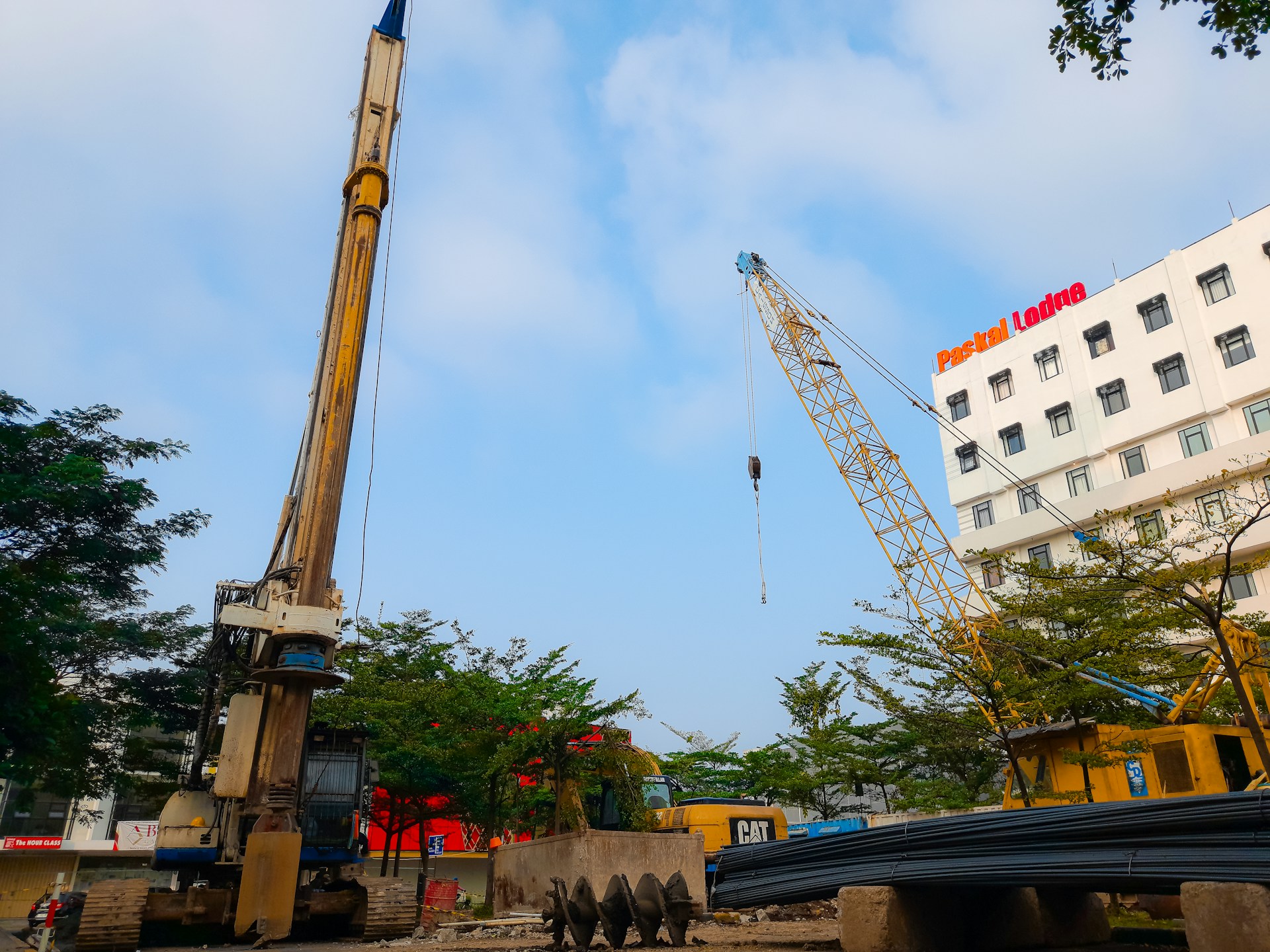
    Many people, whether children or adults, enjoy digging in the earth to see what they can find. For some people, digging holes into the ground can be a career. Earth drillers can help to support many other jobs that make life easier and better for people.

    In some parts of Canada, earth drillers work mainly with oil and gas companies to make these resources available. However, this job can support many other trades and help to make their work possible. Mining is one example where earth drillers are important. These tradespeople drill the shafts that miners need to find nickel, silver, gold, and many other metals. People in this field can also work for geologists or other scientific researchers, governments, and construction companies.

    A high school education or the equivalent is normally the minimum requirement for earth drillers. Taking courses in geology or geography in high school can help, and courses in mathematics and English are useful for making calculations and for reading and understanding instructions. Apprenticeships and technical college courses after high school are good ways of learning the specific techniques of the job.

    Some earth drillers do specialized work, such as handling or storing hazardous materials or working with earthquake detection machines, called seismographs. An ability in accounting can be very useful, especially for self-employed earth drillers or people working in small companies. Having a variety of skills can be helpful to ensure that people in this trade can continue working, even in difficult economic times.

    Like in many other trades, earth drilling is often a seasonal job, with the bulk of the work taking place between late spring and early fall. However, some earth drilling still needs to happen even in winter, such as repairing broken water pipes. Jobs are easier to find in cities than in towns, although mines, where people search for gold and metals, are also good places to find work. Prospects vary according to the state of the economy. Depending on their location and experience, earth drillers can earn between $20 and $47 per hour, or $44,000 and $105,000 per year.

    Operating heavy machinery for earth drilling does not necessarily require much strength, but it requires endurance to work for hours, often in the heat or the cold. Understanding different kinds of soil and rock is useful, and it is important to know the possible dangers of building in various areas. For example, areas near cliffs or riverbanks can be too unstable for many buildings or underground pipes.

    Collaborating with others is an important part of this kind of work. In construction projects, earth drillers need to know what kind of structure is planned for the site or what size of pipe is supposed to go under the ground. Normally, builders and engineers do most of the planning, but earth drillers can also contribute their knowledge to help avoid potential problems.

    One example where an earth driller’s knowledge could be useful is in understanding how earth settles after it has been dug up. Unless builders take that factor into account, they can sometimes encounter problems with the ground under the building settling unevenly. The most famous example of this issue is the Leaning Tower of Pisa in Italy, which started to tilt soon after it was built in 1173. Earth drillers can help prevent that kind of issue.

    Working as an earth driller might not seem very exciting, but it is important for people who work with Canada’s buildings and underground pipes. The job could be right for you.


    Bibliography

    College Grads. “Earth Drillers (Except Oil and Gas); and Explosives Workers, Ordnance Handling Experts, and Blasters.” https://collegegrad.ca/careers/earth-drillers.

    Government of Canada. “Minerals Sector Employment.” https://natural-resources.canada.ca/science-data/science-research/earth-sciences/earth-sciences-resources/earth-sciences-federal-programs/minerals-sector-employment/16739.

    Indeed.com. “Earth Drilling Jobs.” https://ca.indeed.com/q-earth-drilling-jobs.html?vjk=fc9175bbc9f2b305.

    Pathways to Jobs. “Earth Driller (Except Oil and Gas).” https://pathwaystojobs.ca/career/162/Earth_Driller__Except_Oil_and_Gas.

    Payscale Canada. “Average Driller Hourly Pay in Canada.” https://www.payscale.com/research/CA/Job=Driller/Hourly_Rate.

    Pruitt, Sara. “Why Does the Leaning Tower of Pisa Lean?” https://www.history.com/news/why-does-the-leaning-tower-of-pisa-lean.

  • Combining Work and Study: Is It Sustainable?

    Combining Work and Study: Is It Sustainable?

    By: Avreet Jagdev

    At a certain point in their educational career, often in high school or post-secondary, many students find themselves facing a tough decision: is it possible for them to work and study at the same time? How can you do both sustainably? What are important things to know and consider? Let’s break it down.

    Working is not always just an option.

    For many students, working during school is not just an option, but is necessary. Whether it’s to cover tuition, rent, or other living expenses, many students find themselves having no option but to balance both work and school – and it is important to recognize that not everyone has the privilege of making a choice.

    Choosing what to prioritize

    Before you begin to work while in school, reflect on which of the two is more important to you as an individual. Some students may see school as their top priority, but others may see working as more important. Some may see the two as equally important. Understanding what your priorities are is key, as it will allow you to make the decisions that are right for you. For example, if you prioritize work, you may choose to take a lighter course load, or if you prioritize studying, you may set a maximum number of hours for you to work a week.

    The right job makes a difference.

    Working during school can be more sustainable depending on the job you choose. Some jobs may be more demanding, both physically and time-wise. If possible, look for job opportunities that are flexible and accommodating of students. Examples include working as a front desk receptionist, freelance tutor, or library assistant. These jobs are often geared towards students, and you may even have some downtime while on the clock, allowing you to study while you are at work!

    Appeal to your skill set

    In general, the best jobs are the ones that align with you and your skills. Think about what you bring to the table, and what your unique skills and talents may be. If you can find a job that aligns with these skills and talents, it can make it easier to balance school at the same time, in addition to making your work more enjoyable.

    Jobs meant for students.

    Many jobs are meant specifically for students, especially on-campus positions such as assistants for a specific department, building, or library. These roles are often accommodating of student schedules and understand that school is a priority for many. They may also be closer in proximity, if you are someone who is on campus a lot, reducing the time spent commuting to work.

    Mastering Time Management

    Time management is an important skill for students in general, but especially for those who balance both work and school. If you are working, you will naturally have less time to commit to school, so it is important to use the time you have wisely. There are many time management strategies to choose from, but it is important to do what is more effective for you and your lifestyle. You may choose to use a planner, or an app on your phone to stay organized, for example. Other helpful strategies include time blocking, to-do lists, and the Pomodoro method.

  • The Importance of Co-op Programs in Ontario High Schools

    The Importance of Co-op Programs in Ontario High Schools

    No one has their future all figured out while they’re in their teens.  You’re still learning new things about yourself, and still growing your knowledge and skills.  Yet it sometimes may seem as though your high school expects you to decide your whole career path before graduation.  It’s a daunting prospect.

    While some students might know exactly what they want to do for higher education and eventually their career, that’s not the case for everyone.  So, what’s an uncertain student to do?

    This is where a co-op program can come into play.

    What is a Co-op Program?

    Cooperative education programs are courses offered by high schools that enable students to explore options for their future careers while also earning credits toward their diploma.  Students taking a co-op program have the opportunity to learn about a job or workplace by engaging with it directly through a work placement.  This is combined with classroom learning or online learning, all of it overseen by a co-op teacher or guidance counsellor at your school.

    Co-op placements are arranged by the school or school board connecting with local businesses in many different industries – such as many different trades, as well as healthcare, computer technology, performing or visual arts, education, hospitality, and many more.  Potential workplaces are vetted to ensure they will offer students a safe and accepting work environment, and must also adhere to policies and guidelines from the Ministry of Education.

    Why You Should Consider a Co-op Program

    Taking a credit or two of co-op during high school offers plenty of benefits to students.  First and foremost, a co-op placement lets you “try before you buy” in a sense, allowing students to engage with a specific potential career to learn whether or not it’s something they would like to do in the future.  It can be hard to know whether you’ll enjoy certain types of work unless you have the chance to try it out, and finding out you hate it after being hired for a job isn’t ideal.  In this way, co-op programs can help students make decisions about their future career path.

    With a co-op program, students have the chance to learn about daily work tasks, and the workplace environment, and have the opportunity to speak with lots of people who work in the same job or industry.  It’s also an opportunity to apply your classroom learning in real-life situations, which helps students better understand and retain the information they’ve learned.  While the are some exceptions, most co-op programs prefer students to be in grade 11 or 12 before registering.  You can also complete co-op programs after completing the requirements for graduation, but before moving on to post-secondary education or the workforce.

    Co-op programs are available for students in any study track – essential, college, or university level – and with any post-graduation direction, whether that’s more school or into the workplace.  For students who are pretty sure they don’t want to go the full academic route through university and would rather go into the trades, a co-op during school can potentially lead to an apprenticeship after graduation.  In some cases, your co-op can work in conjunction with the Ontario Youth Apprenticeship Program. Because a co-op program is part of your high school curriculum, the hours will be scheduled during your regular school day, which ensures there are no conflicts for students who don’t have the time for a part-time job (for example, due to family commitments) or who do have an after-school job already.

    Co-op placements help students build the important skills they will need in their future careers, whether or not they end up in the same field.  One of the hardest parts of job hunting as a young adult is building work experience when you may not have had a full-time or part-time job before.  But a co-op placement provides the opportunity to develop good workplace etiquette, and soft skills such as communication and decision-making, and gives you some solid real-life work experience to put on your resume.

    If you’re interested in a co-op program, talk to your teachers and guidance counsellor, who can share the details of how your school’s program works and what you’ll need to do to get started.


    Sources

    https://schoolweb.tdsb.on.ca/rci_test/Departments/CO-OP

    https://www.ontario.ca/page/skilled-trades-ontario-schools

  • Trades Careers in the Entertainment Industry

    Trades Careers in the Entertainment Industry

    Lights, Camera, Action!  If the thought of hearing these iconic words every day – of being part of the magic that makes them happen – then maybe a career in the entertainment industry is just the right fit for you.  While people may often think “working in TV and movies” only means “being an actor or producer” there are actually tons of unique and interesting jobs within the entertainment industry, many of which fall under the banner of the trades.

    The Canadian film and TV industry employs thousands of people, in careers covering a wide variety of skills.  The only real requirement is enthusiasm for working in film, television, and theatre.  Tradespeople working in entertainment are the ones making the magic happen – sometimes literally.  From camera operators to set builders, makeup to costuming, and much more, most of what we see on screen in our favourite show or the latest blockbuster goes through the hands of a tradesperson at some point in the creation process.

    If you think the entertainment industry is where you want to build your career, there are lots of options to consider.

    Camera Operators use and manage the camera equipment of a film or television production, and are responsible for filming the action according to the composition, framing, and movement desired by the Director of Photography.  They are familiar with all the camera equipment available on a production, including stationary cameras, Steadicams, and drone cameras, and know how to choose the right camera and settings to capture exactly what they want.

    Carpenters and Electricians are responsible for building and maintaining physical sets and set pieces for a production.  Carpenters will build realistic-looking sets for homes, businesses, castles, and much more including props made out of wooden materials.  They will also repair, and eventually dismantle set pieces.  Electricians are responsible for all the electrical equipment on a production site, including the lighting for both on-site and studio settings. They can also work on electrical props or powered set pieces.

    Catering and Craft Services are people responsible for providing meals and snacks to the actors, production technicians, and other crew members on a movie or TV production site.  On smaller productions, the food is often pre-prepared, but on larger productions catering full meals or hot meals may also be involved.  A background in culinary or restaurant work isn’t required but can be an asset, though food handling safety certifications are necessary.

    Costuming and Wardrobe roles include costume design and creation, as well as on-set wardrobe management and assisting performers with costume changes.  Costume designers will design the look for all the performers in a production, and will create or buy all the necessary clothes and accessories.  Costume or Wardrobe Supervisors oversee and manage all the costumes for a production, typically with help from junior Costume Assistants who will assist with research, sourcing, and purchasing costume pieces.  These assistants often also help the Designer with fittings, adjustments, and cleaning costumes.

    Hair & Makeup Artists create the look and feel of characters on stage and screen through makeup and hairstyles.  Make-up artists will design both normal styles and more special-effects styles depending on the character and type of production, and can work with many materials outside of make-up to achieve the desired look – for example, fake blook and injuries, or putty and tape to change the shape of a face.  Hair Stylists are in charge of creating hairstyles for performers, maintaining a specific look throughout different scenes.  They will also style and care for any wigs being used.   Professional Hair and Make-up artists typically need to complete a beauty school certificate and need to have a strong portfolio showcasing their prior work.

    Sound & Lighting Technicians set up, move, and operate all the sound recording and lighting equipment on a production.  Sound techs can hold boom mics and other sound recording equipment to capture the sound within a scene, as well as move and maintain sound equipment on-set.  Lighting techs will set up, align, move, and maintain lighting equipment.  Both roles are vital to creating the exact mood and atmosphere of the finished production.

    Transportation & Drivers in the entertainment industry are responsible for operating cars, trucks, vans, and trailers to transport cast, crew, equipment, props, costumes, or even vehicles that will appear on screen – basically, anything and anyone that needs to go from point A to point B during a production.  A driver’s license is the primary requirement, and some provinces may need additional licenses for driving larger trucks/vans or trailers.

    These are only some of the unique and interesting career paths within the entertainment industry – there are also lots of niche jobs such as stunt work, fight choreography, animal wrangling, subtitling, descriptive video transcription, and much more.


    Sources

    https://www.toronto.ca/wp-content/uploads/2021/12/950b-screen-industry-pathways-career-guide.pdf

    https://reelcanada.ca/reel-opportunities/careers-in-film/

  • The A-Z’s of LGBTQ+: What Does “LGBTQ+” Mean?

    The A-Z’s of LGBTQ+: What Does “LGBTQ+” Mean?

    Pride Month may be June, but the concept of pride extends to a person’s whole life. Pride Month dedicates June to supporting LGBTQ+ people and their experiences.

    When it comes to discussing the acronym “LGBTQ+,” it can be hard to understand what each letter and the plus sign mean. “LGBTQ+” is one way to spell it, but other ways of writing the acronym include: GLBT, LGBTQ2+, LGBTQIA2+, and many more.

    L (Lesbian)

    The “L” in LGBTQ+ stands for “lesbian.” A lesbian is someone who identifies as a woman and feels attraction towards other women.

    G (Gay)

    The “G” in LGBTQ+ stands for “gay.” This usually refers to a person who identifies as a man and feels attraction towards other men.

    Other people who have different identities under the LGBTQ+ spectrum may also call themselves gay. For example, lesbians may call themselves gay women.

    B (Bisexual)

    The “B” in LGBTQ+ stands for “bisexual.” Someone who is bisexual considers themselves attracted to men and women, and/or attracted to other genders.

    People who are bisexual can like one gender more than the other but are still attracted to multiple. For example, a bisexual boy can prefer to have a male partner, but they are still attracted to women.

    T (Transgender)

    The “T” in LGBTQ+ stands for “transgender.” When people are born, they are labelled a boy or a girl, which is an assigned sex at birth.

    People whose gender matches their assigned sex at birth are cisgender. People whose gender does not match their assigned sex at birth are transgender.

    The transgender label also includes non-binary people: those who do not identify as either a boy or a girl.

    “Transgender” relates to gender, not sexuality. Transgender people can be straight (attracted to the opposite gender), gay, bisexual, or any other orientation.

    Q (Queer)

    The “Q” in LGBTQ+ stands for “queer.” In the context of LGBTQ+, “queer” is a broad term that can be applied to anyone who identifies within the community.

    “Queer” originated as a harmful term that was used to label people as strange. Not everyone is okay with using “queer,” or hearing people use the term. The term is a reclaimed term, meaning that the community turned its horrible meaning into something that they are proud of.

    What is the “+”?

    Like “queer,” the “+” symbol describes any other orientations within the community.   

    This includes identities such as Intersex, Asexual and/or Aromantic, Agender, and Two-Spirit.

    Intersex 

    Someone who is intersex was born with a reproductive system that does not match society’s assumed definitions of male and female.

    Asexual and Aromantic

    Someone who is asexual does not feel sexual attraction towards others. Some asexual people still feel romantic attraction towards others, like having crushes on them or wanting to date them. Asexual people can be any romantic orientation, including straight, gay, bi, or aromantic.

    Someone who does not feel romantic attraction towards others is called aromantic.

    Agender

    Someone who is agender does not identify with any gender. They do not have a gender.

    Two-Spirit

    Two-Spirit is an identity unique to Indigenous peoples. Someone who is not Indigenous cannot claim the Two-Spirit identity.

    While not all LGBTQ+ Indigenous people identify as Two-Spirit, only Indigenous people can explain what “Two-Spirit” means to them. The Two-Spirit identity can have different meanings to whoever has it: it can relate to sexuality, gender, or both.

    Which Acronym Should Be Used?

    To make it simple: there is no one “correct” acronym. Keep in mind that the LGBTQ+ acronym has changed over the years.

    It used to be “GLBT,” then “LGBT,” then “LGBTQ” before becoming “LGBTQ+.” These changes happened over the 1980’s, 1990’s, and 2000’s.

    Some people may not use “LGBTQ+” at all. The acronym “GRSM” also exists and shares the same meaning. GRSM stands for Gender Romantic Sexual Minority.

    Keeping all identities under a simple acronym becomes tough when new labels are created at any time. GRSM is one alternative to easily keep all the labels into one acronym, without needing to add or drop any letters.


    Sources:

    “General Definitions.” LGBT Resource Center, University of California San Francisco, https://lgbt.ucsf.edu/glossary-terms. Accessed 11 May 2022.

    “GLAAD Media Reference Guide – LGBTQ Terms.” GLAAD, 24 Feb. 2022, https://www.glaad.org/reference/terms. Accessed 8 May 2022.

    “Meet the Methods Series: ‘What and Who Is Two-Spirit?’ In Health Research.” Canadian Institutes of Health Research, Government of Canada, 29 Oct. 2020, https://cihr-irsc.gc.ca/e/52214.html. Accessed 9 May 2022.

    “PFLAG National Glossary of Terms.” PFLAG, Jan. 2021, https://pflag.org/glossary. Accessed 9 May 2022.

    Steinmetz, Katy. “Why ‘LGBTQ’ Will Replace ‘LGBT.’” Time, 26 Oct. 2016, https://time.com/4544704/why-lgbtq-will-replace-lgbt/. Accessed 8 May 2022.

    “What is Intersex?” Intersex Society of North America. https://isna.org/faq/what_is_intersex/. Accessed 8 May 2022.

  • Our Home and Native Land: A Small History of a Huge Country

    Our Home and Native Land: A Small History of a Huge Country

    Canada is quite the country, eh? With ten provinces, three territories, and over 36 million people, it is huge. That also means huge in size – Canada is the second largest country in the world. Russia is the only country bigger in physical size. Our nation has had a long history that you will continue to learn about in school. But with so many years to go through, it can be hard to cover everything. Let us take a look at some interesting facts from the long journey that our home and native land has taken.

    As an official country, Canada is 156 years old. Its “birthday” is July 1, 1867, the day of Confederation when Canada, Nova Scotia, and New Brunswick, all British colonies, came together as one. But Canada the country is a baby when we compare it to the history of the land. Scientists believe early humans crossed a bridge of ice from Russia into Alaska and British Columbia around 12,000 years ago. These natives have descendants who we call the Indigenous people – and they are living here to this day. It is also believed that fishermen from Japan sometimes came across the Pacific Ocean and lived with the natives. On the other side of the country, the Vikings came across the Atlantic Ocean to live in Newfoundland for a short time over 1,000 years ago. About 500 years after that, Europeans went across that same ocean and set food on this land.

    The Indigenous people of Canada are grouped into at least eight groups divided by language families. The biggest group is Algonquin. Starting in the late 1400s, they were joined by people from England, Portugal, Spain, France, Russia, Scotland, and more. These explorers traded with the natives. One of the companies involved in trading was started in 1670. This was the Hudson’s Bay Company, a name you might recognize. It is the same company that runs stores across Canada to this day. Meanwhile, Europeans also came to the land below us that would become the United States of America. In the early 1800s, Americans invaded parts of Southern Ontario during the War of 1812. American soldiers attacked the area of Port Dover in Ontario. In return, soldiers from the British colonies that would become Canada went to Washington and helped burn down the White House.

    The 1800s was a very eventful time. Canada became an official country in 1867. In 1871, it was agreed to connect British Columbia to Ontario. Starting in 1881, a huge railway was built between those two provinces that stretches about 22,531 kilometers. Meanwhile, the arts became a bigger part of culture as well. Our first author to sell a million copies of a book was Marshall Saunders, who published her novel Beautiful Joe in 1894. The movies came to Canada just a couple of years later in 1896, when the Lumiere brothers of France brought their cinematograph, an early type of video camera, to our country.

    Canada continued to grow during the 1900s as the planet went through two World Wars and big changes in technology. This land has seen a long history of different people, events, and technologies. You might not have been around for any of that amazing history. But technology is changing faster than ever and the entire world is transforming like never before. You will get to see all the big events that will happen during the 2000s that the Canadians of the future will look back on.

    Sources:

    Carletti, Fabiola. “150 facts about Canada… in 150 seconds?!” CBC. https://www.cbc.ca/2017/150-facts-150-seconds-1.3878984

    Oxford Univeristy Press Canada. “A History of Canadian Culture.” http://www.oupcanada.com/History_of_Canadian_Culture/facts.html

    Stooke, Anna. “Four Facts about Canadian History than You Should Know.” VGC International College. https://vgc.ca/blog/2014/03/19/four-facts-about-canadian-history-that-you-should-know/

  • Social injustices happening in Canada and worldwide, and what you can do about it

    Social injustices happening in Canada and worldwide, and what you can do about it

    By Avreet Jagdev

    The World Day of Social Justice takes place annually on February 20th. It is a day observed internationally, recognizing the importance of social justice – which includes the promotion of human rights and equity, specifically targeting issues such as racial and gender inequality, LGBTQIA+ rights, access to housing, education, and healthcare.

    In light of this day, here is a look at some social injustices happening in Canada as well as worldwide — and how you can help make a difference.

    1. Grassy Narrows

    Grassy Narrows is an Indigenous community situated in the province of Ontario. The Grassy Narrows community has and continues to go through a number of traumas. In addition to the historical horrors of residential schools and the Indian Act, Grassy Narrows is ongoingly fighting for their rights and facing injustices. Their water has been contaminated by mercury, and their land has been used for logging and mining without their permission. This unceded exploitation of their land is a grave injustice.

    To support the community of Grassy Narrows, you can visit their take action page.

    1. Violence against Indigenous Women, Girls, and Two-Spirit People

    Four out of five Indigenous women in Canada experience some form of violence in their lifetime, and Indigenous women are murdered more than 10 times the national average. What’s more is that violence against Indigenous women, girls, and Two-Spirit people is too often faced with little to no media attention or government action, making it easier for perpetrators to continue committing their gender and race based violence.

    To take action in regards to MMIWG2S (Missing and Murdered Indigenous Women, Girls and Two-Spirit People), you can visit the Coalition to Stop Violence Against Native Women’s call to action.

    1. The Overturning of Roe V. Wade – which takes away millions of Americans’ right to abortion

    Roe V. Wade was a landmark decision in the United States that ruled that it was every American’s right to access abortion. In June 2022, this ruling was overturned – meaning that reproductive rights were peddled back, and it was now up to the states to decide whether abortion would stay legal. Since the reversal of Roe V. Wade, millions of Americans have had their access to reproductive healthcare taken away – and this ruling disproportionately affects women of colour.

    You can take action on the reversal of Roe V. Wade by visiting Amnesty International’s page on the issue.

    1. Police Brutality

    The term police brutality refers to the excessive use of violence and force by police officials. This is a worldwide issue that disproportionately impacts people of colour, because many incidents are fuelled by racism. Many studies and statistics point to this, such as the fact that in the US, Black men are 2.5 times more likely to be killed by the police than white men. Police violence has taken away too many lives, and an important first step in taking action is recognizing those who have been affected by police brutality. This resource highlights some cases of police brutality that have resulted in the death of Black Americans.

    You can make a difference by researching how much funding is allocated for police in your city. If you believe that money could be better used somewhere else (housing, food banks, community programs), write to your mayor or call your city councilor about your concerns. You can also sign petitions to ensure those who commit police violence are held accountable.

    For any issue of social justice, the most important way you can be a part of the solution is by staying informed. It’s this knowledge that is key to taking action towards justice.

  • Indigenous Communities and Climate Change

    Indigenous Communities and Climate Change

    By Maryam Sheikh

    It is no secret that climate change is increasingly having wide-reaching, damaging effects on wildlife, natural resources, and communities. While there are many efforts to mitigate the damages on behalf of environmental organizations and advocacy groups, there is a lack of governmental action. Discussions around climate change also are missing key stakeholders – specifically, Indigenous leaders and communities.

    We have a lot to learn from Indigenous communities; many elders and community members possess a wealth of generational knowledge around the environment. In Indigenous culture, there is a heavy emphasis on respecting the Earth.

    Climate change is an issue that heavily impacts Indigenous communities precisely because they rely on nature for many aspects of living. For example, they rely on the Amazon rain season for fishing and nourishment. However, recently, floods have become so strong that crops have had difficulty growing. Consequently, food insecurity has surged.

    Another example of how Indigenous lives are affected relates to rapidly changing conditions of local wildlife. Communities traditionally create calendars based on local wildlife that track hunting and agricultural seasons. With much of wildlife diminishing due to climate change and habitat loss, Indigenous peoples lose this insight and are prevented from passing their traditions down to future generations.

    During the COVID-19 pandemic, Indigenous lands have been used to contribute to climate change. Not only have oil and mining companies been extracting natural resources, company workers have also unwittingly spread the virus to Indigenous communities. This means that Indigenous people have become highly vulnerable to environmental destruction as well as the virus.

    Ultimately, we must address the racial inequality that leads to power imbalances, discrimination, and environmental destruction. Since there are few formal laws governing Indigenous lands, governments can impede on the rights of Indigenous communities. There must be a shift in how Indigenous communities are viewed – instead of being seen as beneficiaries of conservation projects and minor players in environmental efforts, they should be respected and treated as partners. Indigenous leaders are needed in power because they are familiar with the needs of their communities and thus, should set their own goals for their communities. This is also key in rebuilding trust, for historically Indigenous peoples have been undermined and violated.

    Conservation International provides a few examples of how different Indigenous communities are currently using traditional practices to practice conservation. In order to continue this, environmental leaders and advocacy groups should invite Indigenous leaders to join discussions and spearhead projects. You can read more about the specifics of Indigenous sustainable living practices at: “Notes from the field: Indigenous peoples protecting nature through tradition.”

    Overall, the issue of climate change is a multifaceted one. However, it is clear that Indigenous communities provide immense value to conversations about conservation and climate change. Their rich traditions can be used in current contexts; moreover, their traditions of focusing on community are important in a collective, global battle against climate change. More importantly, Indigenous communities heavily rely on environmental resources, and systemic oppression has already resulted in their exploitation. It is integral to prioritize their insights moving forward for they are the ones who often minimally contribute to environmental destruction yet are subject to its harsh consequences. It is incredibly important to listen to and learn from underrepresented voices, not only in the discussions around the environment, but in many other contexts as well.


    References

    Price, Kiley. “Indigenous leaders: To tackle climate change, ‘we must first address racial inequality’.” Conservation International. https://www.conservation.org/blog/indigenous-leaders-to-tackle-climate-change-we-must-first-address-racial-inequality.

    Nature Canada. “5 Reasons Indigenous Communities are Imperative to the Climate Change Conversation.” https://naturecanada.ca/news/blog/5-reasons-indigenous-communities-are-imperative-to-the-climate-change-conversation/.

    Price, Kiley. “Notes from the field: Indigenous peoples protecting nature through tradition.” Conservation International. https://www.conservation.org/blog/notes-from-the-field-indigenous-peoples-protecting-nature-through-tradition.