Category: Featured Articles

  • 3 Unique Outdoor, Year-Round Trades Careers

    3 Unique Outdoor, Year-Round Trades Careers

    Do you enjoy spending time outdoors, getting lots of fresh air and sunshine? For those who aren’t interested in working indoors all the time, a career in a primarily outdoor trade could be a great fit!

    When deciding to pursue a trades career where you will mostly work outdoors, there are a few things you can ask yourself to figure out if this is the right path for you.

    Do you:

    • Prefer being active, rather than sitting for long period of time?
    • Enjoy being outside in nature during the different seasons?
    • Like to do physical work to stay healthy?
    • Want to experience lots of different environments and activities?

    If your answers to these questions are “Yes,” then you should consider a career in an outdoor trade! There are lots of options, including some that you might not realize are skilled trades careers.

    Arborist

    If you love being around trees, then a career as an arborist might be ideal.  Arborists are tradespeople who are responsible for cultivating, managing, conserving and studying trees and shrubs. They work to improve the health of trees, will assess damage and trim or cut down trees if required, and pursue conservation efforts.

    The job of an arborist can involve using harness systems to climb trees in order to inspect them, operating power tools such as hand saws, chain saws, and drills to trim branches or take samples, and assess trees on public or private property for safety and health.  Arborists can be employed by the government, such as the Ministry of Natural Resources, or by landscaping companies, parks, schools, greenhouses, farms and nature conservatories.

    Most of the arborist’s job takes place outdoors, but there are some indoor tasks including writing reports on assessments, maintaining project records, calling clients to arrange service visits or consulting with clients on the safety and wellbeing of their trees.

    Heavy Equipment Operator

    This is a great trades career as you can choose the industry to match the amount of time you wish to spend working outdoors.  These tradespeople operate the heavy equipment used in many industries, including mining, forestry, construction, oil and gas, and civil infrastructure.  Depending on certifications and training, these heavy equipment operators can operate cranes, bulldozers, backhoes, forklifts, excavators, tractors, skidders, dump trucks, steamrollers and many other large machines.

    Many of these machines are common to more than one industry, which means you can choose whether you want to be outdoors all year, or only part of the year, depending on the seasonal schedule of the work.  Where you live in Canada will also have an effect, as some industries will not operate in the winter in certain parts of the country.

    For example, in Toronto or Vancouver the winters are often mild with limited snow, meaning construction projects are active all year round. In contrast, some mining or forestry operations in the far north parts of Canada will shut down or significantly reduce their activity through the winter.

    Horse Groom

    While there are parts of the country where this would be an uncommon profession, horse grooms are needed wherever horses are kept.  These tradespeople work closely with the horses themselves, maintaining their health, nutrition, grooming, exercise and training.  They will also oversee the care and maintenance of stables, stalls, and riding and grooming equipment.

    This career is ideal for those who both love working with horses, and want to work outside a significant amount of their time.  Grooms are employed by racing tracks, farms, recreational riding stables, and private horse owners.

    Most training in this trade comes through apprenticeships and work experience in a variety of stables or farms, though college or trade school courses in animal handling, animal grooming, and veterinary medicine can be required for specific employers.

    SOURCES:

    https://en.wikipedia.org/wiki/Arborist

    https://en.wikipedia.org/wiki/Heavy_equipment_operator

    https://www.jobbank.gc.ca (Job Market Report by Occupation)

    http://www.learnhowtobecome.org/career-resource-center/outdoor-careers/

    http://talentegg.ca/incubator/2016/03/07/10-jobs-didnt-skilled-trades/

  • Look It Up: Careers in Research

    Look It Up: Careers in Research

    In a day and age where anyone can look up anything from their phone at any time, research has become a commonplace activity. But the world is filled with seemingly infinite amounts of information. What is true, and what cannot be trusted? How can you tell? How can said information be utilized? With so much data and so many ideas surrounding us daily, thorough and objective research and analysis is critical.

    There are many different potential fields to consider as a researcher. In the medical world, experiments are conducted to develop treatments and medicines that save lives. Investigation into their effects may involve animals or humans as volunteers. Animals and plants are a major part of the life or biological sciences, in which research is done regarding life cycles and how they are impacted by things such as viruses. Another type of environmental research is in agriculture, and may involve food, animals, and insects. For these jobs, you can expect to be in environments such as hospitals, government agencies, colleges, and universities.

    If you are looking for a different realm of science with your research, you can consider psychology, or stay clear of science altogether through film and television programs. The former looks at the functions of the mind. Jobs in the field can be found in government, health, and educational sectors. On the other hand, film and television can cover a vast array of topics. Research is needed to put together interviews and verify facts for productions such as documentaries. For those more interested in theory, mathematics and the physical sciences involve greater theoretical concepts regarding the world and our universe. There are many opportunities for jobs in industrial, academic, and laboratorial settings.

    Depending on your area of interest, try to make connections with people in that field. Talk to teachers or professors who instruct the subject. For maths and sciences, you can also tutor to gain experience and comfort in the topic. Researchers often require post-graduate education, such as a master’s degree. Be prepared for years of academic study and the possibility of part-time or full-time work to support your education.

    Upon graduating, you can find work as a research assistant at many different organizations, including universities, colleges, laboratories, marketing companies, and more. By building your network early, you can meet the right people to get a research assistant job while studying as an undergraduate student. As you progress in your career, you will go from assisting with data collection and analysis to conducting your own experiments and acquiring grants for your own projects.

    There are a myriad of fields that need researchers. The skill is far more than just Googling on your phone, but rather being able to collect the right data from a large set of information, synthesize it, and draw conclusions that will benefit your industry. By determining what type of research you want to pursue, you can begin meeting people and gaining experience that will help you build your career.

    Resources

    Durr, Julie. Types of Researcher Jobs. eHow. http://www.ehow.com/list_6725310_types-researcher-jobs.html

    How to Become a Research Assistant: Career Path Guide. Academic Invest. http://www.academicinvest.com/arts-careers/philosophy-careers/how-to-become-a-research-assistant

  • Careers In Biology

    Careers In Biology

    Biology is the study of life and living organisms. An organism is a living thing that has one cell or more than one cell. Bacteria is an example of an organism with one cell. Examples of organisms that have more than one cell include humans, animals, plants, and fungi.

    There are several categories that different careers in biology fall under. These categories include:

    • Research
    • Healthcare
    • Environmental conservation
    • Education
    • Biotechnology
    • Forensic science
    • Government and policy
    • Business and industry
    • Economics
    • Science publishing and communication

    The following are a few careers in biology, along with a brief description of each career:

    Biochemist

    Biochemists play an important role in finding new medication to fight diseases. They work in laboratories and use their research skills and knowledge to develop and carry out their new findings. The study of biology helps them understand the impact of mediation on the body.

    Botanist

    Botanists study plant life, including the interaction between plants and their environments. They conduct their research in laboratories and outdoors. Botanists could work in agricultural/food industries, research and development environmental companies, and other companies that work with environmental ecosystems. They could also work for governments and universities.

    Forensic Science Technician

    Forensic science technicians work with criminal investigators. Their role is to analyze any evidence collected at crime scenes and later analyze the collected evidence in forensic labs. They often have to travel to crime scenes, along with the investigators, to collect and analyze the evidence.

    Health Educator

    Health educators teach people many practices and behaviours that lead to wellness. They must have a great understanding of human biology in order to educate others about public health concerns. When needed, health educators write about scientific topics like nutrition, substance abuse, and ways to reduce stress. Health educators can work in many places like hospitals, nonprofit organizations, government companies, doctors’ offices, private businesses, and colleges.

    Marine Biologist

    Marine biologists study and research the ecosystems and biology, along with the interactions of plants and animals in saltwater environments. These environments include oceans, coastal lands, wetlands and marshes. Understanding the impact humans have on these environments is also studied. Marine biologists often work with universities, aquariums, governments, private organizations, and more.

    Microbiologist

    Microbiologists study microorganisms to understand the impact they have on humans and how they could be used. By studying and understanding microorganisms (microbes), microbiologists work on ways to solve any issues involving human health, the environment, diagnosis of infections and disease, climate change, as well as keeping food safe. Microbiologists can work in hospitals, universities, medical schools, government laboratories, and several different industries.

    Nurse

    Nurses help out in communicating between patients and doctors, caring for patients, giving medication, and supervising nurses’ aides. There are many types of nursing positions. Nurses can be Licensed Practical Nurses, Registered Nurses, Nurse Practitioners, and more. The longer a nurse studies in university, the more responsibilities they have. Nurses can work in hospitals, physicians’ offices, home healthcare services, schools, nursing homes, as well as in the military.

    Pharmacologist

    Pharmacologists work to understand how medication and other drugs work in order for them to be used safely and efficiently. They can also research to try to discover and develop new medications. There is more than one type of pharmacologist. They can specialize in cardiovascular pharmacology, neuropharmacology, psychopharmacology, and veterinary pharmacology. Pharmacologists can choose to work in different areas such as business development, medical writing, medical sales and marketing, and government and medical charities.

    Physician

    Physicians are trained healthcare professionals work with patients under the supervision of a doctor. They perform similar tasks as doctors such as patient examination, diagnosis and treatment. Physicians can work in hospitals, healthcare organizations, and for the government.

    Soil Scientist

    Soil scientists analyze soil and its relationship to plants. They use their findings to solve problems including agricultural production, biodiversity, climate change, and human health. Working in soil science gives you the opportunity to be part of the research and development of sustaining food production, supporting plant and animal life, and having a positive impact on the environment.

    Resources:

    https://www.thebalancecareers.com/top-jobs-for-biology-majors-2059884

    https://jobs.lovetoknow.com/career-fields/list-biology-careers

    https://www.topuniversities.com/student-info/careers-advice/what-can-you-do-biology-degree

    https://www.prospects.ac.uk/careers-advice/what-can-i-do-with-my-degree/biology#job-options

    https://www.ntnu.edu/biology/about-us/what-is-biology

  • Chores – How They prepare You for the World, Jobs or Careers

    Chores – How They prepare You for the World, Jobs or Careers

    Ah, your parents/guardians are at it again? Why haven’t you taken out the garbage? Cleaned the dishes? Fed your pets? Done the laundry?  Cleaned the cat’s litter box? Taken the dog for a walk?

    Chores sound like an evil word, but they aren’t. They are a necessary part of life, even for adults. They contribute to a cleaner environment and a healthier you, but also prepare you for the job market. It’s just a matter of perspective.

    When it comes to household duties like taking out the garbage, raking the leaves or shovelling snow: you are assessing risk. You have carefully examined the yard and see that it needs to be cleaned before it becomes a risk to someone else. Things can be hidden in leaves, or someone could slip on the patch of ice near your car. You are being proactive regarding your safety and the safety of others, which is very important in the workforce, especially when knowing the best equipment or strategy for the job.  In addition to that, you are helping promote a clean and safe work environment, also made that way by cleaning the dishes. The more the “mess” is added or not treated to, the more dangerous it becomes – hiding dangers, expanding fall risks, or creating possible health issues.

    Feeding the pets is a little different as you are learning to be caregiver. This applies to looking after yourself, as you need to ensure you are getting the calories and vitamins you need in order to promote a healthy lifestyle. Even if your pet is placed on a diet or has special conditions from the vet, you are learning to adapt to the conditions of your work environment, and therefore are learning time management skills and the importance of how a chore isn’t seen as a chore to your pet, they need to be fed.  You also learn how not to overdo things; you can feed an animal (and yourself) too much.

    Chores are repetitive. They are nearly identical tasks, performed day after day, week after week, month after month. And they’re important. This helps immensely in workplaces dealing with respective tasks, particularly if you choose a job that involves scanning documents, answering phone calls or managing spreadsheets. They may seem boring and unimportant, but they matter a lot to managers who need  documents, people inquiring about  business, or the numbers on the spreadsheets for the folks in Accounting.

    To work effectively, chores should be simple, such as opening the doors to the business if you’re the key holder to ensure that it’s safe and nothing has been damaged overnight. You are ensuring the daily task of filling the coffee pot is completed for your co-workers, and that everything is kept up-to-date such as timesheets or spreadsheets, and it is little patterns like these that help contribute to a optimal working environment.

    Doing chores can be a bother, but everyone has to do them. You may not realize that they are doing you any good now, but understanding that they contribute to a greater, more organized life, can benefit you for years to come! So, don’t be afraid to pick up that broom next time- just get it done!

  • Emerging Green Trades in BC: The Career of the Future

    Emerging Green Trades in BC: The Career of the Future

    If you listen to people talking about the state of the world, you know that the environment is often an important concern for them. In British Columbia, as in many other parts of Canada, jobs that are “green,” or not harmful to the environment, are careers of the future.

    For many years, people used resources like water and minerals without much thought about what they were doing to the environment. Now, however, becoming involved in green jobs can help preserve the environment for the future.

    British Columbia has various options for working in a green trade. The first involves locally grown food. Although this work involves farmers more than tradespeople, every farmer needs machines such as tractors, as well as electricity to light barns and greenhouses. Water pipes and hoses are also necessary. Working in many different trades can help support agricultural work for locally grown food.

    Green building and design is a second area where the green trades are growing. Sustainable materials and better construction methods are key parts of this work. For example, some builders might look for ways to use sunlight or wind power instead of traditional electricity and heating fuels.

    Green transportation is one of British Columbia’s major projects. Electric vehicles have been in the province for at least ten years, and the first electric airplane in BC flew in 2019. Tradespeople who can work with electric vehicles are likely to have good job prospects for many years.

    Sustainability services and education are also important. Although tradespeople might not be directly involved in this work, they can provide the information that educators and others need. They need to be organized and clear about what people need to know so that others can give the public the right information. Tradespeople might even have a chance to help directly with some of the services and facts that people need.

    Land and water management and environmental consulting can also be part of a tradesperson’s job. Other people are likely to do most of the work, but tradespeople can help support the initiatives with suggestions to help preserve the environment. Finding better ways of digging wells, for example, could help preserve the environment.

    People in the trades can get involved in materials management and recycling. Repairing and upgrading old machines so that they run efficiently can help keep usable machines from being thrown out and help to make people aware of the possibilities of reusing even the most worn-out objects.

    The area where tradespeople can have perhaps the biggest impact is in clean technology, alternative energy, and green building products. Working together with scientists and engineers, tradespeople can identify areas that require better resources and make suggestions for areas to develop, such as environmentally friendly building materials or glues. They can set up wind turbines or other forms of clean energy production where possible and help to support clean technology in whatever they do.

    In the future, green trades are likely to become increasingly important. For anyone getting into one of these fields, being aware of the options is very important. If you want to work in British Columbia, you can already start to consider how you can get involved.


    Bibliography

    Natural Resources Canada. “Green Jobs in Natural Resources.” https://natural-resources.canada.ca/climate-change/canadas-green-future/green-jobs/87.

    Province of British Columbia. “BC’s Green Transportation Innovations.” https://www.britishcolumbia.ca/news-stories/bcs-green-transportation-innovations/.

    Skilled Immigrant Info Centre. “Fastest Growing Industries: Green Economy.” https://www.vpl.ca/sites/default/files/Fastest_Growing_Industries_Green_Economy.pdf.

    Work BC. “Green Economy.” https://www.workbc.ca/research-labour-market/bcs-economy/green-economy.

  • Teaching Empathy and Kindness Through Children’s Literature

    Teaching Empathy and Kindness Through Children’s Literature

    In school, students learn mathematics, science, and all kinds of other subjects through their classes. Learning qualities like empathy and kindness is more difficult, but reading children’s literature can help.

    Empathy and kindness can help people live among others without fighting or harming each other. Kindness is a quality of helping people and treating them well. People who are kind tend to be friendly and gentle, and they try not to hurt others if they can avoid it.

    Like kindness, empathy helps people to treat others well. Empathy is the ability to imagine what others feel and to understand their point of view. For example, suppose that a dog ran away. A kind person might help to look for it or help in another way. Someone with empathy would understand the dog owner’s feelings and know the reason for those emotions.

    Learning through stories takes thought and work. Some types of writing are straightforward with an obvious meaning. A user manual for a machine, for example, needs to be clear and easy to understand. It can also be very easy to forget. However, literature is different. Some stories are just for entertainment, but many of them have a deeper meaning. Finding that meaning helps readers to learn something that they can remember for years or even their whole lives.

    That principle is true of stories that teach qualities like kindness and empathy. Some people naturally have more of these qualities than others have. However, people can learn these qualities if they try. One of the best ways is through literature. Good stories can be powerful tools to teach the kinds of qualities that help people learn the important lessons that they need to know.

    Some books teach empathy and kindness quite directly. Stand in My Shoes: Kids Learning About Empathy by Bob Sornson teaches the importance of these qualities. I Am Human: A Book of Empathy by Susan Verde is another book on that topic.

    Other stories teach important qualities less directly. We Don’t Eat Our Classmates by Ryan T. Higgins features a dinosaur that must learn not to eat people. It Will Be OK by Liza Katzenberger tells the story of a zebra and a giraffe that learn the importance of empathy. The Story of Ferdinand by Munro Leaf tells of a gentle bull who likes to smell flowers instead of fighting. When people need to learn through example, stories like these ones can help to make the benefits of empathy and kindness real to readers.

    Longer books for older readers can also teach principles like empathy and kindness. Websites such as Book Riot and Imagination Soup give suggestions of chapter books that help students understand more about life. For example, Bridge to Terabithia by Katherine Paterson helps readers to understand friendship and loss. Inside Out and Back Again by Thanhhà Lai is about a refugee from the Vietnam War who struggles with loneliness and bullying as she tries to settle into life in the United States.

    Almost any well-written novel or picture book can help teach empathy and kindness. In the Chronicles of Narnia, C.S. Lewis created a vast array of deep characters who are either good or bad examples of kindness and empathy. Other novels can help students understand these qualities better.

    Stories can be memorable an instructive for people who look beyond the surface to see the meaning in the characters’ actions. For teaching qualities like empathy and kindness, children’s literature is ideal.


    Bibliography

    Bologna, Caroline. “35 Children’s Books That Teach Empathy and Kindness.” https://www.huffpost.com/entry/childrens-books-empathy-kindness_l_5d52e7b1e4b0c63bcbee2699.

    Harvard Graduate School of Education. “How to Use Stories to Help Kids Develop Empathy.” https://mcc.gse.harvard.edu/resources-for-families/develop-empathy.

    Reynolds, Emily. “Why Teach Empathy?” https://www.britishcouncil.org/voices-magazine/why-teach-empathy.

    Teaching Expertise. “40 Impactful Children’s Books about Empathy.” https://www.teachingexpertise.com/classroom-ideas/childrens-books-about-empathy/.

  • A Prime Minister’s Problematic Legacy: Sir John A. MacDonald and a Long History of Racism

    A Prime Minister’s Problematic Legacy: Sir John A. MacDonald and a Long History of Racism

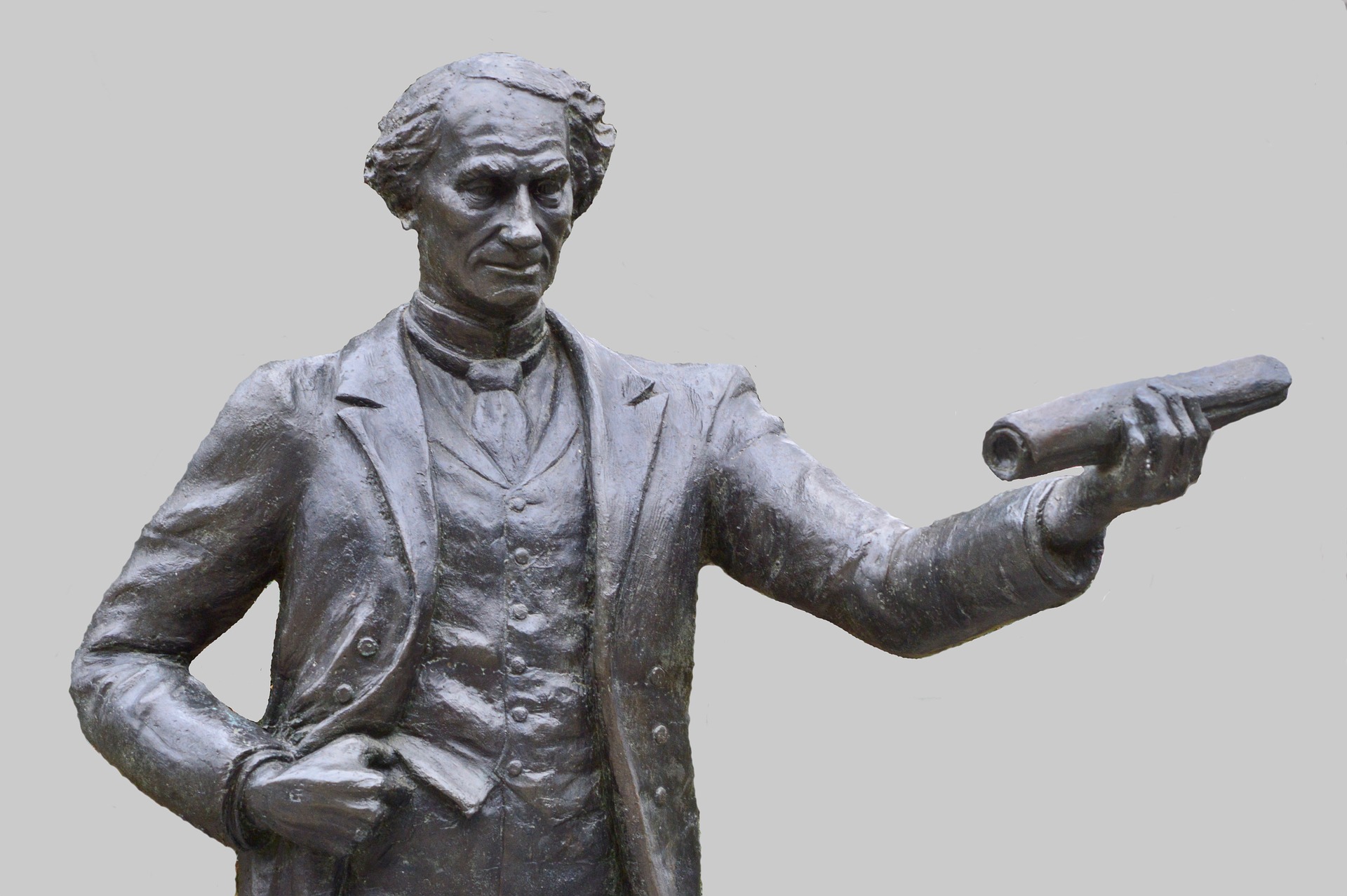
    You probably learnt all about Sir John A. MacDonald as Canada’s first Prime Minister, as well as his many achievements in your history classes: how he built Canada’s government, aided in the completion of the Canadian Pacific Railway, and successfully expanded the new Dominion of Canada, building it into the country we know today (Britannica). That said, underlying each of these achievements is a very dark history of violent genocide and racism.

    With the rising knowledge of cultural genocide and the legacy of colonialism in Canada; many people have become aware of the large part in which Prime Minister MacDonald played in all this. Sure, he did a lot for Canada, but this was often at the expense of others. Especially the Indigenous people. According to Robert Alexander Innes, an Indigenous Studies Professor, when the Canadian Pacific Railway was built, MacDonald withheld food and resources from an estimated 5,000 First Nations people until they agreed to move from the construction site and onto designated reservations, even if this was their land (2021). As one of the leading legislators of the Indian Act, he oversaw the creation of the residential school system, stating it was necessary to “kill the Indian in the child” (McCarten 2021). According to the National Centre for Truth and Reconciliation, about 4,118 children died in the residential schools, some of which may never be recovered (Deer 2021). With this knowledge becoming more prominent within the wider public sphere, monuments and statues dedicated to MacDonald have since been defaced, some even being beheaded, and he is no longer on the ten dollar bill like he used to be.

    This has raised the question: If MacDonald has such a problematic legacy, does he deserve to be studied and acknowledged as part of Canadian history? Even if his legacy is indeed very violent and difficult to come to terms with, Sir MacDonald still has his defenders. For instance, in his article, “Why should Sir John A. take all the blame for Canada’s injustices to Indigenous peoples?” Canadian journalist John Ibbitson argues that many politicians throughout history have been found guilty of genocide and racism, and he did not act alone. However, MacDonald has likely been held to higher standards because as Prime Minister, he was the one who had the most power to change things. Many have also argued that, in some ways, Sir MacDonald was actually a bit more progressive than many of his counterparts. In a letter to Peter Jones, an Ojibwe chief, Sir MacDonald wrote, “I hope to see some day the Indian race represented by one of themselves on the floor of the House of Commons.” (Hopper 2018).

    There is also the argument that many other prime ministers failed to do anything about the residential school system, even if they were fully operational around the 1830s all the way to 1996. Yet, none of them did anything. Everyone needs to be held accountable for their actions, but especially Sir MacDonald because he is largely responsible for beginning all of this in Canada. It should not be a secret that he was a white supremacist and a racist; this is something that must also be fundamentally acknowledged as part of Canada’s history.

    When it comes to history, it is easy to pick and choose which parts we want to acknowledge and actively include. But if you do not learn from the actions of those who came before you, then you are doomed to repeat the same actions. This is not a question of whether John A. MacDonald can be erased from Canadian history; he’s part of it no matter the type of man that he was. The question, and where we should start to act is learning about all sides of Canadian history: the good, the bad, and the ugly. Perhaps we can utilize history to create a different kind of legacy for Canada (Nurse 2021).


    Bibliography

    Britannica, The Editors of Encyclopaedia. “Sir John Macdonald.”  Encyclopedia Britannica, 7 Jan. 2023, https://www.britannica.com/biography/John-Alexander-Macdonald.  Accessed 18 March 2023.

    Deer, Ka’nhehsí:io. “Why it’s difficult to put a number on how many children died at residential schools.” CBC News, 29 Sept. 2021, https://www.cbc.ca/news/indigenous/residential-school-children-deaths-numbers-1.6182456. Accessed 14 March 2023.

    Ejeckam, Chuka. “Canadian media justifies Canada’s genocidal foundations.” rabble, 1 Feb. 2023, https://rabble.ca/columnists/canadian-media-justifies-canadas-genocidal-foundations/. Accessed 14 March 2023.

    Hopper, Tristan. “Here is what Sir John A. Macdonald did to Indigenous people.” NationalPost, 28 Aug. 2018, https://nationalpost.com/news/canada/here-is-what-sir-john-a-macdonald-did-to-indigenous-people.  Accessed 14 March 2023.

    Ibbitson, John. “Why should Sir John A. take all the blame for Canada’s injustices to Indigenous peoples?” The Globe and Mail, 24 Jan. 2023, https://www.theglobeandmail.com/politics/article-why-should-sir-john-a-take-all-the-blame-for-canadas-injustices-to/. Accessed 14 March 2023.

    McCarten, James. “Canada’s tragic residential-school reckoning could be grim harbinger for U.S.” LethbridgeNewsSnow, 27, June. 2021. https://lethbridgenewsnow.com/2021/06/27/canadas-tragic-residential-school-reckoning-could-be-grim-harbinger-for-u-s/#:~:text=%E2%80%9CIts%20founder%20coined%20the%20phrase,prime%20minister%2C%20Sir%20John%20A. Accessed 14 March 2023.

    Nurse, Andrew. “The Problem of Legacy: John A. Macdonald and the Politics of History.” WordPress, 1 Feb. 2021, https://earlycanadianhistory.ca/2021/02/01/the-problem-of-legacy-john-a-macdonald-and-the-politics-of-history/.  Accessed 14 March 2023.

    Rodriguez, Jeremiah. “John A. Macdonald defenders fear admitting Canada is ‘linked to white supremacy,’ scholars say.” CTV News, 14 Jan. 2021, https://www.ctvnews.ca/canada/john-a-macdonald-defenders-fear-admitting-canada-is-linked-to-white-supremacy-scholars-say-1.5266977?cache=tjcjnjuh. Accessed 14 March 2023.

  • Marco Landaverde – Restoration Worker

    Marco Landaverde – Restoration Worker

    Susan Huebert interviews Marco Landaverde, a restoration worker.

  • Alison Sawatzy – Teacher

    Alison Sawatzy – Teacher

    Susan Huebert interviews Alison Sawatzy, a teacher.

  • Kirsten Bass – Independent Filmmaker

    Kirsten Bass – Independent Filmmaker

    Avreet Jagdev talks with Kirsten Bass, an independent filmmaker.