Category: Featured Articles

  • Career Profile: Fire Investigator/Inspector

    Career Profile: Fire Investigator/Inspector

    Imagine a fire flickering and sparking as the logs burn and settle down. Would you enjoy watching it? Many people find fires calming and fascinating to watch, at least ones that stay controlled. However, a fire nicely contained in a fireplace at home or the cooking area of a campsite is not like a fire that burns down a house. Dealing with the fires that happen in buildings and cause destruction are the work of fire inspectors, who try to prevent
    fires, and fire investigators, who try to find out why fires happen. Together, they try to reduce the damage that fire causes to property and people.

    Fire inspectors and investigators work on different parts of the same problem. Fire inspectors check buildings to make sure that the rules about fire safety are being followed. They check to make sure that buildings have enough working fire extinguishers. They might check for proper storage of dangerous substances like gasoline. In some cases, they might check the electric wiring in a building to make sure that everything is working and that there are no frayed wires that might cause a spark. When they can, fire inspectors also teach people about how to keep fires from starting, and they work with insurance companies to try to maintain high safety standards. If they do their job well, they can help prevent many accidental fires from ever starting.

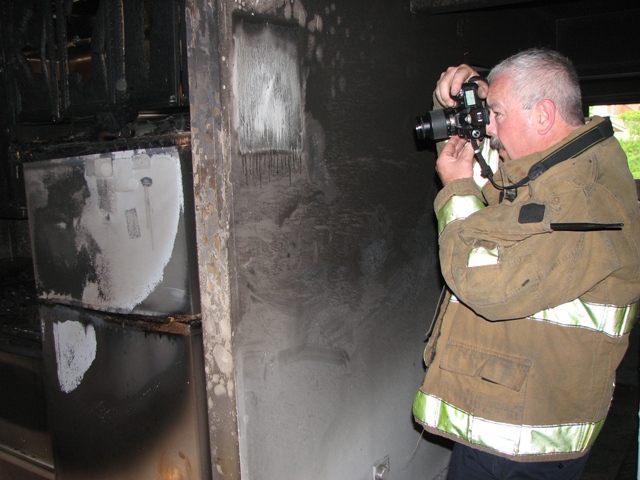
    Fire investigators work from a somewhat different angle, but they deal with many of the same things. Like fire inspectors, they check buildings for dangerous substances and faulty wiring. They might check to make sure that the fire extinguishers are working. However, fire investigators do their work after a fire instead of before. When a building has burned, even partially, fire investigators go in to find out what happened. They work with the police and insurance companies to find out what started each fire. What they find helps them decide what started a fire and if it was accidental or set on purpose.

    Becoming a fire inspector takes a basic education, such as a high school diploma, but a lot of experience. Most people who get into this work start as firefighters, learning the principles of safety and detection on the job. Taking several courses on fire prevention is usually enough to qualify experienced firefighters for the work of fire inspector. Many fire investigators have a bachelor’s degree or more. Salaries for fire inspectors and investigators can vary widely, depending on the person’s experience, the size of the fire department, and other factors. Generally, however, fire inspectors’ salaries start at over $50,000.00 and investigators’ pay starts even higher. Many investigators receive $80,000 per year or more.

    Fire inspectors and investigators generally have fairly good working conditions and face few dangers in the job, although looking through a burned-out building can be unpleasant. They job has a high level of responsibility, but it can be both challenging and rewarding. Does the job of fire inspector or investigator appeal to you?

  • The Wonders of Thrift Shopping

    The Wonders of Thrift Shopping

    Ever since Macklemore came out with that catchy song (you know, the one that plays on the radio every 30 seconds), thrift shopping has topped the list of Cool Things To Do. Even celebrities like Janelle Monae and One Republic’s Ryan Tedder have jumped in on the craze. If you’re a fashion junkie such as myself, you’ll agree with me when I say that second hand clothing stores are glorious.

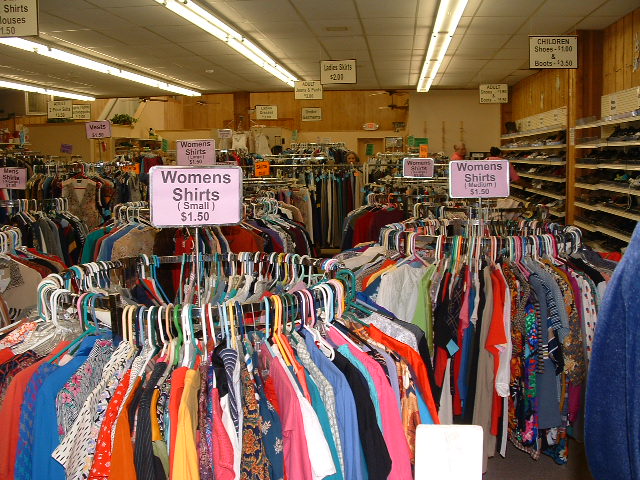
    For those suffering from a lack of variety in their closet, thrifting is the way to go. The clothing at thrift stores are always rich with an odd assortment of colors, fabrics, and prints. It’s the best way to diversify your outfits without spending a fortune. Shopaholics in particular can benefit from taking a trip down to the nearest Goodwill. Buying second-hand clothing is a great way to satisfy your cravings without feeling incredibly guilty afterwards.

    A lot of students go the extra mile (or pay the extra mile) to ensure that they have clothes no one else is rocking. However, the easiest and most economically-friendly way to do this is to go thrifting! Second-hand stores are bursting with things that you can’t find anywhere else. There is literally something for everyone, no matter what style you’re currently into. Vintage-lovers, especially, may find themselves salivating at all the cool, old-school articles they have lying around.

    There are legions of people who are skeptical about purchasing used-clothing but I urge you to break away from that mindset for the sake of your wardrobe. Who cares if those high-waisted jeans have been worn before? Are you afraid that the previous owner of your gorgeous, tweed blazer is going to bump into you on the street and demand their stuff back?

    If you’re still a bit self-conscious, no one has to know that you bought your items second hand. However, you should embrace the fact that you scored an awesome new wardrobe with a handful of change. You’re fabulous and resourceful; learn to love it.

    For those who are still a bit unsure about the wonders of thrifting, take a look at what I managed to snag last week at a second-hand store for only $40:

    • 4 Blazers
    • 2 Winter Cardigans
    • 2 Vests
    • 2 Tunic Sweaters
    • A navy blue dress shirt
    • A cute belt
    • A floral skirt

    I’m still congratulating myself on such a great haul.

    With winter coming, this is the perfect time to take your first trip to the local second-hand store. For all the sweater lovers out there, you should know that almost every thrift store you go to will have a ton of lovely grandpa-sweaters in all sorts of colors and patterns. You can pair them with your favourite pair of skinny jeans or neutral tights and some killer combat boots. The possibilities are nearly endless.

    So when in doubt, just remember that thrift rhymes with gift. Thrifting is a gift from the higher powers so take advantage of it! Just grab a twenty-dollar bill and prepare yourself for the biggest shopping-high you’ll ever experience.

  • Nutrition for High School Athletes

    Nutrition for High School Athletes

    Do you get up at 6 a.m. to go to hockey practice, go for a 5 KM run before school starts or swim 20 laps once the school day is complete? If so you are probably serious about athletic training.

    But did you also know that practice and training are just one aspect of excelling at your chosen sport?

    One of the most important aspects, and one of the most often over looked by young athletes, is nutrition. In order for your body to function at its maximum potential you need to ensure it’s getting all of the necessary nutrients it needs to perform.

    Think of your body as a car. Cars need certain fluids to run properly: gas, oil, transmission fluid, brake fluid, power steering fluid, coolant, and wind shield washer fluid. All of these are essential to the car’s maintenance and operation. Your body works in much the same way.

    Hydration is one of the most important things to pay attention to. Water affects physical and mental health and athletic performance. A person’s hydration level depends on the amount of water they take in versus the amount of water they put out. The body gets water from liquids, food, and water it produces itself called metabolic water. Water is lost through urination, sweating and breathing. Ensuring you don’t get dehydrated is key in maintaining performance levels.

    Jason Hadland, Bsc.Kin, CFC, PLFC, and Fitness Co-coordinator at the Canada Games Aquatic Centre in Saint John, New Brunswick says, “the rule of thumb for young athletes is to drink 20 oz. two to three hours before the activity and another 10 oz. 20 minutes before. Then drink 20- 24 oz. post exercise.”

    “Eating three meals daily and two to three snacks are recommended to keep your body properly energized. Proper eating and snacking before or after athletic events can help reduce injury and speed up recovery time,” according to Hadland. A balanced diet is one that consists of protein, carbs (aka carbohydrates), fats, vitamins and minerals. Avoiding processed foods is also a good idea, as they tend to be less nutritious and full of sugars, bad fats, salt and preservatives.

    Carbohydrates provide the body with its main source of energy. The body stores carbs in the form of glycogen and then burns this glycogen during exercise. Once the body has drained its supply you become extremely tired. Foods high in carbs are good for athletes as they help ensure your body doesn’t run out of fuel. Examples of good carbs are those found in fruits and vegetables, brown rice, wild rice, whole rye bread, 100% whole wheat pastas and bread, and whole grain cereals. “Fruits, vegetables and grains should make up three quarters of every meal. You should aim for at least 5 servings a day,” says Hadland.

    Protein is also important as it helps your body build muscle and replenishes your body’s supply of iron. Good protein is found in turkey, chicken, fish, nuts, eggs, beans and tofu. Hadland says dairy foods like milk, cheese and yogurt should be consumed 3 to 4 times a day. These foods offer protein, calcium, vitamin D and some carbs.

    When training for any sport it is important to remember a well-balanced diet is key. One of the simplest ways to ensure you are getting the appropriate amount of servings of fruits, veggies, dairy, grains and meat is to follow Canada’s Food Guide. Though if you are a competitive athlete you need to remember you need approximately 500 more calories a day then the average person.

    A link to Canada’s Food Guide can be found at: http://www.hc-sc.gc.ca/fn-an/food-guide-aliment/index-eng.php

  • Interviewing Without Ego

    Interviewing Without Ego

    You’ve worked on your resume, sent it out, maybe gone to a few job fairs, and lined up a few interviews. You know your stuff, and what you don’t know you can learn. You’re young, eager, and smart – this should be a snap, right? Maybe, but remember…

    It’s not about you
    So, you need money. You’re looking for a job, preferably one that suits who you are, has flexible hours, and great people to work with. Bonus points if it’s fun and pays reasonably well.

    You may want all these things, and you may find some or all of them, but your best chance of actually landing the job is in demonstrating to the interviewer that you’re familiar with the company’s needs.

    Don’t tell the interviewer how great you are, show them.

    It’s about them
    Employers are looking for people to do a job, whether it’s sales, service, or working in an office. They don’t care that you need the money; employers care whether you can do the job, and fit into the culture of their specific work place.

    Do your homework
    Get as much background information as you can. Check the company’s website. Or, if you have friends or family who work for the company, ask them what they do, and what you can expect from your interviewer.

    You’re great, and you know that, but confidence can only take you so far. Simply telling the interviewer that you’re the best person for the job isn’t going to win points. It’s just going to make you look full of yourself.

    Find out about the company you’re interviewing for and what they pride themselves in. You can use this information to tailor your responses to the interviewer’s questions. If service is important to them, let the interviewer know about that summer you helped out at the retirement home. Or if sales is a focus, let them know about the spring you sold the most Girl Scout cookies in your troop.

    Prepare to ask at least three questions about the company and the job you’re applying for. This shows initiative, that you took the time to learn about their needs, and how you can help. Remember – interviews go both ways. If you demonstrate interest in the company, it shows that you really care. And, if you don’t care, why would you want to work there?

    Be polite
    Show up early. The interviewer has set aside time in their day to interview, and they may have a host of other candidates before and after you. If you’re late or squeeze in at the last minute, you could delay others down the line, and it very well may hurt your chances of getting the job.

    Wear clean dress clothes as a sign of respect, even if it’s common to wear jeans and t-shirts while actually on the job.

    Remember to always thank the interviewer for their time. However awkward or amazing the interview was, it’s nice to leave on a positive and respectful note.

    Wait a full week, and if you haven’t heard back, follow up with the interviewer. Call or send an email thanking them again for their time and the opportunity to interview with them.

    Good luck!

  • Career Profile: Travel Agent

    Career Profile: Travel Agent

    Imagine being able to travel around the most interesting tourist spots in the world and getting paid for doing it. Finding a job like that might be difficult, but becoming a travel agent can be the next best thing. Although travel agents work mainly to plan other people’s trips, their work can often include many other benefits such as the chance to see and explore travel destinations. It can be a busy and sometimes frustrating job, but for anyone who is organized and likes to work with people, it can be a fun and fulfilling career.

    Have you ever helped make arrangements for a trip that you went on with your family or friends? If so, you probably used the Internet to search for information on the places you wanted to see. You might have reserved your flights and hotels online and maybe even booked tickets for trains or other local transportation. In the past, only travel agents had access to the kind of information that people can now find for themselves. Many travelers now prefer to take care of many of their own arrangements. However, well-qualified travel agents can still have an important role in making sure that people have the best possible experiences on their trips.

    The most important requirement for travel agents is knowledge of various destinations and the needs of travelers. Travel agents can help them learn about what kinds of sights and activities are available. They have experience in working with tour guides and hotel managers. This gives them an advantage in dealing with different situations that the tourists might encounter. They can advise travelers on what to take, what they need to do to avoid getting sick, and anything else that they might need to know.

    Becoming a travel agent normally requires no specific training or education beyond a high school diploma. However, some people find that getting a certificate in travel and hospitality or even a degree from a university is helpful for their work. Most of all, travel agents need the ability to use computers to find information and to work well with people. Travel agents should be friendly and efficient, able to find information easily. Good organizational skills are essential, and some knowledge of a second or third language is helpful. Salaries are generally between about $23,000 and $47,000, depending on experience.

    Some travel agents work alone, but others work in travel offices. Many travel agents never need to leave their home cities to do the job, but personal experience with travel is helpful. Some travel agents might even be asked to stay at some of the overseas hotels so that they can really know the good and bad points of the places where they send people. If you like working with people and would like to see the world, the job of travel agent could be a good choice for you.

  • What Your Marks Really Mean

    What Your Marks Really Mean

    For many students, grades can be a very stressful part of going to school. Report card time can be difficult, especially for anyone who is close to failing a course. It can also be hard for students at the higher end of the grade range, wondering if they can keep up their high scores to help them succeed in the future. With high marks, they think, they will have good opportunities and a bright future. Grades have traditionally been used to show how well students have learned their material, but how much do they actually mean? Should you be concerned about the marks you get?

    Depending on what you want to do with the rest of your life, your high school marks could be quite important. Many universities and colleges use marks to help them decide which students they should accept. For some programs an average mark is enough, but for other programs a high mark is necessary. Often, a small difference in marks could mean that one student gets into the program while another has to wait for another year or go somewhere else. This is especially true in areas like medicine and dentistry, where schools accept only a limited number of students and academic expectations are high. In fields such as education or sociology the emphasis on grades is usually much less obvious, although expectations of students are often still high.

    High marks are good for getting into university programs, but are they really useful for anything else? Probably not, except in a very general way. In your school you have probably noticed that different teachers have very different standards, with some giving high marks and others low ones. Schools all have their own ideas of what makes a good student, and there is very little consistency among them.

    One of the problems with marks is deciding how to measure achievement. Until 1967, each province required students in Grade 12 to pass a standard exam which showed that they all had the same knowledge of areas such as writing, mathematics, science, and literature. Since then, however, schools have been able to set their own standards, and the result has been very uneven levels of education.

    Another problem is known as grade inflation. Since about the middle of the 1980’s, the grades that students have received in high school and university have slowly risen, so that more people now are receiving a grade of A or B in their classes than ever before. That could mean that students are actually better than they were in previous years, but many educators are not sure. Factors that are raising the marks could be increased competition for university programs or job insecurity among teachers who want to keep parents and students happy.

    If marks are such uncertain measures of learning, what do they mean for you? If you want to go to university, you’ll still need good grades. Otherwise, you might want to think about whether marks really reflect your learning. After all, learning is what really counts.

  • Just Say No: Drinking and Driving

    Just Say No: Drinking and Driving

    You’ve heard it a thousand times: don’t drink and drive. You’ve seen all the ads sponsored by MADD – “Mother’s Against Drunk Drivers” – but you still get the temptation to pick up your keys after you’ve had a couple. Two reasons for drinking and driving are peer pressure and “feeling okay”. Knowing the ways that you can avoid drinking and driving will help you to be prepared next time.

    Sometimes we may feel pressured to drink and drive if we are responsible for getting a carload of people home. You may feel guilty that everyone has to spend money on a cab or to take the bus, or you may simply want to be helpful for your friends that night. Whatever your reason, you’ll want to be careful of what kinds of things your friends may throw at you. If they have been drinking, they may want to add to your existing feelings of guilt by telling you that you are a great driver, that you know what you are doing, that you always get them home safe, etc. If you have a history of drinking and driving and have decided to turn over a new leaf, you will probably be pressured even more so than others.

    Another reason you may find yourself drinking and driving is that you have convinced yourself that you are not “that drunk”. Your feelings when you are under the influence of alcohol are never an accurate appraisal of your ability to conduct coordinated behaviors like driving. We have all seen it – there is the guy at the party who thinks that he is just fine and then ten minutes later is passed out on the couch. This illustrates that how you feel and what you say are often not accurate or true. The best way to determine if you are okay to drive is to think about how much you’ve drank. Having two drinks is the limit if you have your G licence, otherwise you are not allowed to consume any alcohol and then drive. This means two 6 oz. glasses of wine, two 1.5 oz shots, or 2 bottles of beer.

    Strategies for escaping drinking and driving should include leaving your car at home if you know that you will be overly tempted to drive or getting a ride with a designated driver – someone who you know is very responsible and trustworthy. Another good approach is to take the bus or a cab. If all else fails and you have to drive, stick to non-alcoholic beverages, like pop and water.

    Having the ability to drive is a privilege and one that must not be taken lightly. Be responsible – your family and friends want to see you tomorrow!

  • Don’t Be THAT Girl

    Don’t Be THAT Girl

    “Your hair is so ugly!”

    “Did you gain weight?”

    Have you heard some of these or other worse things uttered in the hallways? Were you the one who said some of those nasty things? A recent article from the New Zealand Herald found that 85 per cent of teenage girls have experience some sort of bullying. The most shocking thing is that, when it comes to girls, some of this bullying is coming directly from their friends.

    If you’re the victim of a friend’s torment you may be blaming yourself first and bringing unnecessary doubt and confusion to yourself. Rachel Simmon, author of Odd Girl Out, found that “one of the chief symptoms of a girl’s loss of self-esteem is the sense of being crazy, of not being able to trust one’s own interpretation of people’s actions or events.” If you don’t understand why your BFF is turning on you, it may be her problem – not yours.

    Now, if you’re on the other side of the equation and are part of bullying, please think about your actions. It’s a false position of power to be the bully. Girls may form cliques and have their own way of dressing, talking or sharing of a secret. Leora Tanenbaum states it simply in her book Catfight – “the ironic thing about being included is that it necessarily entails exclusion.”  Bullies need to ask themselves why they are excluding others. There isn’t a guarantee that you’ll stay in the exclusive clique forever; you may just end up being the outcast.

    Some would tend to think that bullying would involve violence, but this isn’t always the case. Getting a group of friends to ostracize, say hurtful things and spread rumours about you are all forms of bullying, too.

    The one thing someone being bullied should do is also the thing they will most likely avoid: to talk to your parents about what you’re experiencing. If you’re too scared to do that, you should talk to an adult you trust. Sometimes it’s beyond your own control when it comes to bullying. It’s important to let someone in a position of authority know what’s going on. High school should be a place that will give you four years of great memories, not something you should dread.

  • Preparing for High School

    Preparing for High School

    Starting high school can be an exciting time for many people. If you’re nearing that point in your life, you probably feel a combination of fear and anticipation. It’s the beginning of the end of childhood, a time when people can start to make their own decisions and influence their own lives. At the same time, it can also be stressful and sometimes overwhelming with all of new pressures people face. By thinking ahead and planning for the future, however, you can make the transition to high school much easier than it might otherwise be.

    For most students, the biggest change is the sudden increase in both freedom and responsibility. You can choose to go to an academic high school and take university-entrance courses or choose a vocational school and learn a trade like carpentry or plumbing. You can take courses in the sciences or in areas like history and English literature. In many cases, these kinds of choices can affect people’s lives and careers for years, and sometimes for the rest of their lives. Taking on such a big responsibility can sometimes be overwhelming for students.

    Freedom and responsibility come in many different areas as well. Depending on the school, you might or might not be required to be in class every day, and teachers are less likely to remind you to get your assignments done. Students become responsible to get their work done so that they can pass to the next grade. Most high schools work on a credit system in which each student must have a certain number of credits to graduate. It’s up to the students to take enough courses each year and to pass them in order to go on to the next grade.

    In high school, the structure and content of classes can also change a lot. Normally, students receive more homework than before and have more difficult assignments, such as writing long research essays. Classes might take on more of a lecture format than in earlier grades, and marks might become important for people going on to university. For many people, there are also the pressures of going to a new school and making friends in a strange setting.

    How can you prepare for high school? One way is by going to a high school orientation session, where teachers and school administrators take students and their parents on tours around the school. Another is by attending a transition program run by the high school or a community centre. Some of the activities a transition program might include are social events for parents and students, where new and returning students can meet each other, and mentorship programs, where younger and older students are paired together to provide information and support for the newcomers.

    If you’re getting ready to begin high school, you know that it can be an exciting and frightening time. However, if you work hard to prepare yourself beforehand, you can help to make the transition as easy as possible.

  • Career Profile: Journalist

    Career Profile: Journalist

    Journalists can have a specialty.  In large organizations, the journalists may specialize in only one task. In small organizations, each journalist may have to do many different tasks. Here are some of the jobs journalists do:

    Reporters gather information and present it in a written or spoken form in news stories, feature articles or documentaries. Reporters may work on the staff of news organizations, but may also work freelance, writing stories for whoever pays them.

    General reporters cover all sorts of news stories, but some journalists specialize in certain areas such as reporting sport, politics or agriculture.

    Sub-editors take reporter written stories and put them into a form which suits the special needs of their particular newspaper, magazine, bulletin or web page. Sub-editors don’t usually gather information themselves. Their job is to concentrate on how the story can best be presented to their audience. They are often called subs. The person in charge of them is called the chief sub-editor, usually shortened to chief sub.

    Photojournalists use photographs to tell the new. They ether cover events with a reporter, taking photographs to illustrate the written story, or attend news events on their own, presenting both the pictures and a story or caption.

    The editor is usually the person who makes the final decision about what is included in the newspaper, magazine or news bulletins. He or she is responsible for all the content and all the journalists. Editors may have deputies and assistants to help them.

    The news editor is the person in charge of the news journalists. In small organizations, the news editor may make all the decisions about what stories to cover and who will do the work. In larger organizations, the news editor may have a deputy, often called the chief of staff, whose special job is to assign reporters to the stories selected.

    Feature writers work for newspapers and magazines, writing longer stories which usually give background to the news. In small organizations the reporters themselves will write feature articles. The person in charge of features is usually called the features editor. Larger radio or television stations may have specialist staff producing current affairs programs – the broadcasting equivalent of the feature article. The person in charge of producing a particular current affairs program is usually called the producer and the person in charge of all the programs in that series is called the executive producer or EP.

    There are many other jobs which can be done by journalists. It is a career with many opportunities.