Category: Fun

  • Style Tips for a Fashionable Winter

    Style Tips for a Fashionable Winter

    As you head out to brave the cold this winter, keep in mind that you don’t have to sacrifice style for warmth. There are several tricks you can use to keep yourself looking chic, even with temperatures plunging downwards.

    1. Invest in a Statement Coat

    Even if you find yourself stuck with boring sweats, you can still give your outfit a bit of life with an awesome coat. You can play around with pops of colors instead of resorting to the neutral tones that are often worn during the winter. The material of your coat can also give your outfit a bit of spice. Materials like faux fur and leather can take your otherwise bland outfit to the next level with a bit of mixing and matching.

    2. Play it up with Your Bottoms

    Consider using your bottom pieces to make a splash this season. There’s no need to stuff yourself in a pair of bland jeans everyday. You can turn heads with a funky pair of patterned leggings or your favourite bright trousers. The trick is to use unconventional colors, patterns, and materials to give your audience something to look at. Even if the rest of your outfit is plain, your statement bottom piece will provide a bit of flavour.

    3. Layer it up

    One of the easiest ways to add complexity to your winter attire is to mix and match some of your pieces and layer them on top of one another. Besides keeping you warm, this technique allows you to create unique combinations that are unlikely to be seen on anyone else. The key to layering is to use contrasting colors and materials that still complement one another. It may be difficult to get a working combination at first so it’s important to keep blending until you find something that works well. As a general rule of thumb, you should try to avoid mixing more than 3 colors and 3 materials. Although a variety is nice, you don’t want something that’s too chaotic.

    Bonus Tip: If it’s not too cold out, consider wearing your coat open or unzipped so that you can see the complexity of the layers beneath. You can throw on a scarf and a funky hat in case there’s a bit of a cool breeze.

    4. Strap on Some Funky Boots

    With winter boots being offered in hundreds of colors, shapes and styles, you can easily make a splash this winter with eye-catching boots.  Your feet are almost always visible so even if you’re bundled up from head to toe, you can still indulge your style cravings with something that demands appreciation. Don’t be afraid to try experimenting with something on the wilder side. If this is the one place you decide to make a statement, make it loud! 

  • Getting Your required 40 Hours of Volunteering.

    Getting Your required 40 Hours of Volunteering.

    When it comes to the mandatory hours of community service or volunteer service you will be asked to complete as a high school student, here are some things to consider.

    Go beyond the minimum
    To encourage students to volunteer and give back to their communities, schools tend to have a minimum number of service hours students must complete by graduation day. Usually, this number will stay around 40 hours to mimic the total hours in a full time work week, giving students the option of completing all of the hours in one week over the holidays. These students will also gain the benefit of experiencing what a full time work week will feel like.

    If you start early, you’ll find the minimum number of hours can be completed in no time, which is why it’s a good idea to consider going beyond the bare minimum. Volunteering is an opportunity to give back to your community while learning more about it. It’s also a time to sample different areas of the workforce and build contacts. Extensive volunteer work won’t go amiss on a resume either.

    Volunteering in the long term versus the short term
    There are pros and cons to each, but the benefits of one can significantly outweigh the benefits of the other. Short term volunteer positions are usually coveted by students for two main reasons: they are short in duration allowing students to get the work done and over without any expectations of prolonged commitment. They also enable students to sample a variety of opportunities in a shorter amount of time.

    Opting for shorter terms might be tempting, but there are a few downsides that might have you considering longer termed positions. Say, for instance, you can choose to either volunteer for an organization every day over the course of a week or a few hours every week over the course of a few months. Choosing the second option speaks volumes about a student’s work ethic and his or her ability to stay committed and dedicated to a single project. It may seem trivial, but future employers, admission’s officers and the people in your community are going to take notice. Even if you still only meet the minimum number of community hours, you will be demonstrating your reliability and your ability to stay consistent for longer. Staying committed to one organization for longer will also help you build stronger ties within that community and potentially lead to summer job opportunities.

    If you can find the time, consider volunteering at a few different places instead of just one or two. You have four years to complete those hours, giving you plenty of time to seek out opportunities at more than a couple of places. Try approaching organizations that do work you are completely unfamiliar with. Community service is a learning experience as much as it is a time to give back.

  • Decorate Your Dorm Room for Comfort and Function

    Decorate Your Dorm Room for Comfort and Function

    It’s true that a lot of dorm rooms have a bit of an institutional feel – cinderblock walls, plain white paint, unexciting carpet.  And you’re going to be spending a lot of time in your room studying, even though overall it’s only a temporary living space each year.

    So, if you want your new home-away-from-home to feel like home, then it’s time to figure out what you need to set up and decorate your room to be both comfortable and functional.

    There are four main points to consider when deciding how to arrange and decorate your dorm: room style, lighting, workspace, and storage.

    Room Style

    The type of dorm room you have will affect what you can do, and how much space you have to work with.

    To start with, if it’s possible to move furniture around, try out a couple different arrangements to see what works best in the space.  If your room is a single, you will have a bit more flexibility than if you’re sharing a double room with another student.

    Next, what kind of walls do you have – cinderblock, plaster or drywall?  This will affect what you can hang or attach to the walls, such as posters or shelving.  There’s also a good chance you won’t be allowed to paint or install anything using nails or screws, so sticky hooks and freestanding shelves will be your best friend.

    Most dorms will have a bed, desk, shelf and dresser, but in some cases only a bed is provided and students have to bring any other furnishings they need.  This information should be readily available from your school upon making residence arrangements, so be sure to ask!

    Lighting Needs

    Obviously, your dorm room will have at least one window, but depending on the size and the arrangement of the room, this may not provide enough light during the daytime, and you will need light at night.  If the ceiling light in your dorm isn’t enough for you, assess the space you have to find a lamp that will fit and still provide enough light for studying at your desk or reading in bed.

    Work Space

    If a desk comes with your dorm, take some time to arrange it to ensure you can work comfortably.  If you need to provide your own work space furniture, get something that suits the way you prefer to work, such as a comfy chair if you like to curl up and work on your lap, or a cafe table and chair for a coffee-shop feel.

    Storage

    What you need will depend on the furniture your dorm already has.  Many dorms come with a closet and built in shelves; others may provide dressers.  Baskets and boxes that can fit beneath beds and desks, or on closet shelves, will help keep you organized.

    Think about what you own, and plan your storage needs around that.  Lots of books? Maybe get an extra shelf.  Lots of shoes? Hanging pockets or shoe racks can maximize closet space.

    Lastly, don’t be afraid to get creative!  Have fun with setting up your space and decorating: try out some funky curtains, colourful storage boxes, and fun or unusual artwork and posters, to make the dorm room your own.

    SOURCES:

    https://www.newswise.com/articles/making-the-most-of-home-away-from-home-the-dorm-room

    http://www.hgtv.com/design/decorating/design-101/20-chic-and-functional-dorm-room-decorating-ideas-pictures

  • Is Travelling While You Are Young All It’s Cracked Up to Be?

    Is Travelling While You Are Young All It’s Cracked Up to Be?

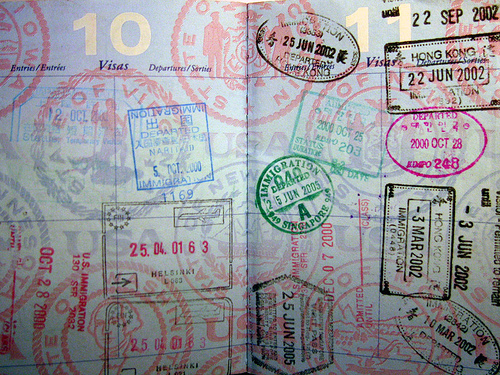
    You’ve heard it all before; travel while you’re young! It seems as though people are constantly telling you now is the time to travel. Why is that? Wouldn’t it make more sense to travel when you’re older? Wouldn’t you have more money saved up, your schooling would be completed and you will have more experience under your belt, right? While these are good points, it doesn’t necessarily mean it’s better to wait until you’re older to travel. Let’s talk about why this is.

    Money:

    There is no doubt you have more of an opportunity to be more financially secure later in life than while you’re young. However, with more money tends to mean more responsibility. As we grow older and have more financial stability, many people begin to make large life-investments. These may include things such as a house, a new car, wedding expenses and supporting children. So, while you may have more money, you may very well have more debt to pay as well, taking away from your travel funds. While saving up to travel while you’re young may seem challenging, it is possible, and it’s important.

    Tips on how to make it happen?

    Take a little bit of money out of each paycheck and put it in a travel fund. Before you know it, your travel account will have grown before your eyes!  Another tip is to cut unnecessary costs. While eating out and splurging on shopping sprees may be fun while you’re young, it all adds up. Try cooking at home and only buying essential items. Put your extra money away into your travel account, and soon you’ll be able to just sit back, relax, and book your trip! Another reason? The exclusive deals! Some travel companies offer deals to younger travellers. So, save more and travel sooner rather than later! Check out these travel companies for more info.

    Free and Easy Traveler: https://www.freeandeasytraveler.com

    Contiki: https://www.contiki.com/ca/en

    Life Before Work: https://lbwtravel.com

    Your priorities may shift:

    Remember those wedding and family costs we just talked about? Well it isn’t just the financial part that may keep you in your hometown. As we get older and our own family grows, our moral responsibilities grow, too. This means the time for living strictly for yourself is coming to an end, as it’s time to focus your time and attention on someone else; your children. While this is an incredible and unique part of life, it usually means backpacking across Europe for six months is a no-go. Your youth is essentially the only time available when you can live your life strictly for you. On top of that, your priorities may shift. Meaning, while learning about new cultures may have been important to you while you were young, it may be swept off your priority list as you get older. So, optimize this opportunity and explore the world! Besides, sharing stories about the places you’ve been is way more interesting than talking about the places you wish you visited.

    It’s perfect life experience:

    Learning about and interacting with other cultures is an incredible way to learn about the world around you, and how to understand and accept cultural differences. The life-experience you will take home with you will be worth more than you can possibly imagine, and will give you a completely new perspective. Travelling while you’re young allows you to learn incredible life-skills you may have never thought possible that will shape and develop the person you are for the rest of your life. After all, the best way to understand something different is to experience it for yourself.  So, do your future self a favour! Learn about different ways of life, experience new cultures, and allow this life experience to strengthen your future. So, what should you do now? Research, save up, and travel!

  • Connecting with Others through Music

    Connecting with Others through Music

    Everyone loves music—it is fun to listen to and dance to and, for some, even make. But not only is it a pleasurable thing in our day-to-day lives, it’s actually quite an important part of society. At school, there are so many ways to connect with your peers: sports, studies, clubs, books…but music is a way to not only learn more about each other but also grow our creative talents. For you, it may start with a recorder in class or a piano lesson after school. But no matter what you choose, an instrument has unlimited power when it comes to connecting with others.

    Music can mirror your thoughts

    Lyrics and melodies have always had a wonderful way of communicating messages and your emotional state. Music is around to speak the words that we cannot express. Maybe you feel too anxious and worried to talk about how you feel and what is bothering you—whether it be at home or in school. Putting these feelings into song will help you with that. If you feel that communication is not strong for you and you tend to veer more towards the creative side of things, pick up an instrument and start exploring what is going on in your head. What do you want to say but can’t? Mr. Guitar can do that for you!

    Teamwork

    Performing music means coordinating your efforts; when we try to synch up with others musically (think harmonizing or being on the same beat), we are working as a team to create something all parties can enjoy. In school, teamwork is essential for building friendships, trust and for growing your people skills. Working on writing a song with someone else or learning the chords to that new hit you both love means creating something that both of you will remember the other for. Creating something new is the ultimate bonding experience.

    Getting some culture

    Music is the universal language (cheesy, I know, but so true!) It is a way we can share our traditions, beliefs and political interests. In your school there are many kids from different cultural backgrounds and chances are they all have music they know that helps to share what their background is like. Music influences how we think about others, how we get along and how we accept others. Never underestimate the power of a song. As mentioned above, sometimes there’s more meaning in a song than in regular words.

  • Culinary Explorations of Culture

    Culinary Explorations of Culture

    My grandparents immigrated to Canada from Italy and Portugal. I noticed many similarities between the two cultures growing up. They were both in stark contrast to the Indian neighbourhood I was raised in as a child. In particular, the foods prepared by my friends’ parents were noticeably different from mine, and I took great pleasure in exploring those culinary differences. As an adult, I wound up marrying an Indian woman – more specifically, her family is from South India. I discovered even more differences in culture between them and the North Indian friends I grew up with. Throughout it all, food was a primary component of all of these cultures.

    Due to food’s importance, it is an invaluable way to explore a culture. Have dinner at the home of a friend whose family is from a certain country. This is a much better method to learn about their culture compared to going to a restaurant that serves their cuisine. Ask about specific dishes and the ingredients in them. This opens the gateways to stories about how those foods were developed and their significance.

    Jennifer Berg, New York University’s director of graduate food studies, has noted the importance of food when a family emigrates from a country and the new generation comes along on different soil. Other aspects of their family’s culture are likely to disappear soon after arrival. The most visible facets of the homeland are often first to be dropped, such as clothing, in order to blend in with the mainstream way of life in the new country. Eating is a significant pastime because it typically occurs three times a day, and therefore serves ample opportunities for family and friends to engage in conversation in a comfortable setting.

    The recipes and preparations of meals are very distinct in different parts of the world, and not just by country. A single nation can have dozens of different regions, each with its own culinary traditions. In the Washington area of the United States, the owners of the Dolan Uyghur (pronounced WEE-grr) restaurant are putting that idea on full display. Uyghurs are an ethnic group from central Asia and Western China. Having ventured from Xinjiang via the Silk Road, the culture’s food reflects the distinctions of these areas.

    Nowadays, it is mostly the elderly in China who eat what many of us might imagine Chinese food to be. They are the generation shopping at traditional markets, whereas those born after the Cultural Revolution have focused more on education and careers than culinary skills. Many of the Chinese who ventured to America cooked to earn a living. Popular Chinese items such as chop suey, General Tso’s chicken, and fortune cookies are all inventions that happened in America.

    From the food alone, we can discover more about the history, travels, and careers of Chinese cultures. I have similarly discovered that South Indians use coconut and coconut oil in many of their dishes because of the abundance of the drupe’s trees in their area. The southern region also prefers rice over naan bread, and tends to offer more vegetarian options. This reflects the geography of southern states, such as my wife’s home state of Kerala, as well as the culture’s adherence to certain diets.

    Similar case studies can be done for countries and cultures across the globe. The first steps may involve speaking with people you already know from a particular region. From there, looking into their family history and the ingredients of their homemade dishes can provide further insight. You can learn everything from what life has been like for them and their ancestors, including the type of careers they have pursued and the simple day-to-day habits encompassing their lives. There are many stories and experiences that have led to the meal on your plate.

    Sources:

    Choi, Amy S. “What Americans can learn from other food cultures.” TED. http://ideas.ted.com/what-americans-can-learn-from-other-food-cultures/

    Judkis, Maura. “Is their crossroads cuisine ‘the next big thing’? Uyghurs hope so.” The Washington Post. https://www.washingtonpost.com/lifestyle/food/theyre-chinese-and-muslim-and-they-want-you-to-try-their-crossroads-cuisine/2017/03/03/906638bc-f91e-11e6-bf01-d47f8cf9b643_story.html?utm_term=.6320a36c97f4

  • How to Learn About Other Cultures Through Food

    How to Learn About Other Cultures Through Food

    Going to a friend’s house for supper can be fun, especially when you get to try something new. If you have friends from other cultures than your own, you might sometimes try food that you have never eaten before. You might not like everything that you eat, but you can still learn a lot about different cultures by eating their food.

    What do you think of as typical Canadian food? Is it pizza or lasagna? How about tacos or burritos? We might think of these foods as Canadian, but they originally came from other countries and cultures before people in North America used the ideas to make food that suited their tastes. If you went to the places where the foods originally came from, they might be quite different from what you know.

    One of the things that influences people’s traditional foods is what they could easily get before the days of fast transportation. For example, food from areas like the Middle East and India is often much spicier than European food because the spices and hot peppers grow there. Areas that grow potatoes or wheat tend to have a lot of dishes that include those kinds of foods.

    In many areas of the world, people still shop every day for food, but their cultures also often include ways to keep food from going rotten without refrigerators. For example, cabbage and other vegetables are easy to grow in many parts of the world, but they become rotten very easily. Many cultures have developed ways of dealing with that, such as making pickles or foods like sauerkraut, which can keep for a long time.

    Often the differences between types of food are important for understanding cultures. For example, kimchi is a kind of pickled cabbage that is much spicier than most other types. Also, a lot of Chinese food combines sweet and sour flavours that people in the Middle East are unlikely to eat. People from some cultures eat rice every day, and others eat spaghetti or potatoes. Each one has a different staple, or basic food.

    The way people cook and eat their food can show a lot about their culture, as well. In North America, many people buy food for the whole week and store it in their refrigerators or freezers. In many other countries, people shop for food every day and make fresh meals. People in some cultures eat a lot of meat, and others eat only a little. Some people eat from separate plates and others eat from common dishes. They might use their fingers, chopsticks, or knives and forks when they eat.

    Cultures are complicated, and it can take a long time to learn about them. Since everyone eats, comparing the foods from different regions can be a good place to start.

    Bibliography:

    Choi, Amy S. “What Americans Can Learn from Other Food Cultures.”  http://ideas.ted.com/what-americans-can-learn-from-other-food-cultures/.

    Columbia University Press. “Food is Culture.” https://cup.columbia.edu/book/food-is-culture/9780231137904.

    EUFIC.org. “The Determinants of Food Choice.” http://www.eufic.org/en/healthy-living/article/the-determinants-of-food-choice.

    EurekAlert. “The Human Food Connection: A New Study Reveals More About Our Relationship to Food.” https://www.eurekalert.org/pub_releases/2014-04/ajob-thf041514.php.

  • Handling the Heat: Learning to Bake

    Handling the Heat: Learning to Bake

    For many, the kitchen is a foreign environment. The utensils, ingredients, and appliances loom over you in all their complexity. Yet food is a necessity. School teaches formulas and formats, but often does not delve nearly enough into fundamental life skills. Baking is a great way to venture into the kitchen and gain comfort in that strange new world. Whereas cooking is an intricate art, baking is a science.

    Experienced cooks are comfortable improvising, swapping ingredients, and trying new things. Baking can incorporate these ideas as well, but it is very important to follow recipes closely in order to get the right reactions from the right ingredients mixed together in just the right amounts. Do a search for a simple recipe, such as for cookies. Websites typically tell you the length of time it will take and the level of difficulty. Before you even enter the kitchen, take plenty of time to read and reread the list of ingredients and instructions.

    When you locate the ideal simple recipe, look for YouTube videos that take you through the process of making that particular dish. As you watch, take notes and physically gather all the ingredients you are going to need. This might require a trip to the grocery store, but it is also useful to learn the many substitutions you can make for common ingredients. No butter? Try applesauce. Out of sugar? Use some honey.

    Ingredients from the fridge typically need to sit on the counter for a while for a while to warm up. This gives you plenty of time to reread the recipe once again. When you are starting out, you will want to follow the instructions to the letter. It may feel tedious, but adopting this strategy will aid you in learning the ins and outs of working with different ingredients and utensils. For example, after figuring out the perfect touch for cracking an egg, move on to techniques for separating the egg yolk. Some people do this by hand, with a spoon, or by moving the yolk back and forth in a cracked shell.

    Try your hand at a variety of simple variations of different baked goods. There are seemingly limitless varieties of cookies, cakes, muffins, and breads at a many difficulty levels. But make sure to also repeat the ones you have already done. Some will turn out better than others – in fact, some of your attempts will not turn out very good at all. This happens to everyone in the kitchen, and it is especially important to take notes in these instances on what exactly went wrong. Just like essay drafts, it takes multiple attempts to get it right.

    As you gain comfort in the kitchen, consider investing in additional equipment. A sifter is great for removing clumps from the dry ingredients. Having multiple and different-sized bowls makes it much easier to prepare things separately and carefully add items into one large bowl. Separate measuring cups for wet and dry foodstuff allow the recipe to come together better. Tupperware containers and freezer bags are great for storing your creations for sharing, and mean you are always ready to make more.

    The scientific nature of baking, in which specific amounts of wet and dry ingredients come together in the oven for the desired result, make it an ideal way to study and analyze the art of making food. From there, you can try your hand at other meals and cooking styles. School offers many valuable lessons, but as you grow up and head out on your own into the world, you will be extremely grateful for the ability to feed yourself.

    Sources:

    Clift, Cortney. “25 Essential Baking Tips and Tricks for Beginner Bakers.” Brit+Co. http://www.brit.co/new-bakers/

    Roberts, Anna Monette. “Baking Basics: 10 Tips For Beginner Bakers.” Popsugar. http://www.popsugar.com/food/Tips-Beginner-Bakers-24477467#photo-24477467

  • Toronto Highlights: July 2015

    Toronto Highlights: July 2015

    It’s finally summer, and weather permitting, you probably can’t wait to get out and have some fun. Toronto in particular has a ton to offer this month, including festivals, sporting events, and other exciting activities.

    If you’re in Toronto this July, be sure to take advantage of some of the following opportunities. What are you waiting for?

    Pan Am Games
    July 10-26
    You’ve probably seen the advertisements on the TTC—Toronto is very proud to host the 2015 Pan Am Games. Featuring nearly 7000 athletes from across North America, South America, Latin America, and the Caribbean, races, courses, and matches are being held all over the GTA. In Toronto, you can watch sports including basketball, swimming, and gymnastics (the full schedule can be found here: http://www.toronto2015.org/schedule). Don’t forget to keep an eye out for the opening ceremonies on July 10, as well as the Parapan Am games, happening August 7-15.

    Shakespeare in High Park
    July 2 – September 6
    If you’re a theatre buff, what better way to celebrate history’s greatest playwright? Every year, two Shakespeare plays are performed by a talented theatre troupe in High Park. This July, you can attend the Roman tragedy Julius Caesar (Tuesdays, Thursdays, and Saturdays) or the entertaining Comedy of Errors (Wednesdays, Fridays, and Sundays). After enjoying the talent on stage, take a stroll through the park grounds on your way out! Plays are “pay what you can”, with a recommended donation of $20.

    Summerlicious
    July 3-26
    Toronto restaurants—especially those of high calibre—aren’t always the most affordable. Luckily, the Summerlicious food festival in July ensures that some of the city’s best cuisine is accessible and affordable for eager diners. Almost 200 restaurants are offering lunches and dinners and reduced rates, prix fixe. You can find a list of participating establishments and their mouthwatering menus on Summerlicious’s Facebook or Twitter accounts. Hungry yet?

    Beaches International Jazz Festival
    July 10-26
    This music festival is a free event for jazz enthusiasts and experts alike. The Beaches International Jazz Festival offers performances by artists, combos, and bands from around the world, in a lovely lakeshore setting. By popular demand, StreetFest is also returning from July 23-25, when performers will be found making music on street corners and rooftops on Queen East between Woodbine and Beech Avenues. Performances include exciting acts by Chris Thomas King, Kirby Sewell Band, and Bustamento. Come for the music, stay for the food—a variety of gourmet trucks will be parked nearby.

    Sources:</
    http://www.toronto.com/events/pan-am-games/
    http://www.toronto2015.org/schedule
    http://www.toronto.com/events/shakespeare-in-high-park/
    http://www.toronto.com/events/summerlicious/
    http://www1.toronto.ca/wps/portal/contentonly?vgnextoid=4cc95f5923be1410VgnVCM10000071d60f89RCRD&WT.rd_id=summerilcious
    http://www.seetorontonow.com/annual-events/beaches-international-jazz-festival/

  • Fun Activities for Summer!

    Fun Activities for Summer!

    You’ve been waiting patiently all year for June… for school to finally be over.

    Sure, for the first week or so it is was nice to relax; unwind; sleep in; lie around; enjoy not having anything you “had” to do. But after a few days, the novelty of doing “nothing” tends to wear off, and you get BORED!

    Really bored. You start whinny to your parents, care givers, friends and relatives…

    “There’s nothing to do!”

    “I’m so bored!”

    “No one’s around!”

    “There’s nothing fun going on!”

    Before these words slip out of your mouth this summer, stop and think of all the great things you can do, now that you have the time to do them.

    Here is a list of fun ideas to get you started:

    • Set up a mini golf course in your backyard.
    • Raise money for charity by having a car wash, BBQ or yard sale.
    • Go camping, even if it’s in your backyard. You can roast marshmallows, sing camp songs and tell ghost stories.
    • If you go on a family vacation be sure to take lots of pics. When you get back you can make a cool memory album for each member of your family.
    • Check out your local thrift store and adopt a new look to rock when you go back to school this Fall (don’t forget to donate your old clothes to charity).
    • Get a summer job, or do odd jobs like yard work, painting, babysitting or dog walking. You can gain job experience and save up some cash to buy something you really wanted.
    • Have a movie marathon sleep over with your friends, or binge watch your favorite TV show on DVD.
    • Organize a fun tournament for you and your friends. You could play volleyball, basketball, ultimate Frisbee, or washer toss.
    • Learn to cook. Or if you already know how to cook try out some new recipes. You could even invent a new kind of pizza.
    • Make playlists for different activates like parties, cleaning, exercising, relaxing etc.
    • Start a book club with your friends.
    • Have an old school board game night. Don’t forget to make a trophy to compete for.

    There are a ton of things to do no matter where you live- sometimes your imagination will be your best tool to discovering new and exciting activities.

    A famous comedian named Louis C.K. once said:

    “I’m bored’ is a useless thing to say. I mean you live in a great, big, vast world that you’ve seen none percent of. Even the inside of your own mind is endless; it goes on forever, inwardly, do you understand? “