Category: Fun

  • Dream Jobs: Ballerina

    Dream Jobs: Ballerina

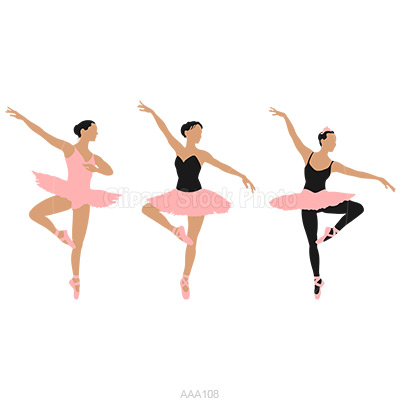
    Brooke Nagy is an 18 year old on a fast-track to becoming Canada’s next prima ballerina. Becoming a professional ballet dancer was not a decision Brooke made on a whim. It has taken a lifetime of preparation and focus. Since age three she has been classically trained in Ceccetti ballet, and has developed an advanced knowledge of both classical ballet and modern dance.

    Brooke has had the opportunity to dance professionally at many points throughout her career, but decided that it was important for her to complete her high school education before devoting herself entirely to the art. “I’ve already trained with the CanadianNational Ballet School and the Quinte Ballet School,” Brooke explains.

    “For two summers I was accepted to study as a part of the Canadian National Ballet School’s ballet-intensive summer school program, which led to the opportunity to be a part of their full-time program. I’ve also been accepted to (and attended) the Quinte Ballet School’s Summer School Program, which led to an acceptance into their full-time program” she continued.

    Ballet may well be in her blood, as her mother is a classical ballet teacher and former professional ballerina for the Miami Cityballet. Brooke intends to one day take over her mother’s dance studio, after travelling and performing as much as possible. She applied to the National Ballet of Canada’s Teacher Training program, New York’s Adelphi College and Suny Purchase College’s Conservatories of Dance and George Brown College’s prestigious dance program, garnering preliminary acceptance to all, but choosing to accept George Brown’s offer.

    The Toronto-based program will prepare her for an intensive Bachelor of Fine Arts transfer after earning her two year diploma, and set her up for work with Canada’s Ballet Jörgen, a renowned Canadian classical ballet company that selects dancers from George Brown program alumnus.

    Among the highlights of Brooke’s auditioning process was when famed Canadian dancer Frank Augustyn called her out from a class of second and third year Adelphi ballet students she was placed with, praising her grace and skill above those of professional dancers with many more years of training. She was then offered a ten thousand dollar dance scholarship for Adelphi, a tempting offer that she may return to later in her career.

    For Brooke, the choice of dance over other more job-stable programs was quite simple. “I want to be a dancer over everything else. I know that the field of dance is where I excel and where I belong.” Whether it be the National Ballet School or Frank Augustyn himself, the ballet world agrees.


  • What Is A Cruciverbalist?

    What Is A Cruciverbalist?

    One across is a six-letter word for a job or occupation. One down is a fourteen-letter word for someone who creates or solves crossword puzzles. Together, they make one of the most unusual ways of earning a living: having a career as a cruciverbalist. It might sound like an unlikely way to earn money, but for people who love words and puzzles, working as a cruciverbalist can be a good career move.

    Crossword puzzles come in all shapes, sizes and levels of difficulty. They can be very general and cover all kinds of information or stick to one theme, such as gardening or television shows. If you went to Britain and tried to do a crossword puzzle, you would find that the style was very different from the North American variety.

    However, all crossword puzzles have certain things in common. They all have a set of squares going up and down with space for people to write in the answers to a series of questions. Writing these questions and answers is a cruciverbalist’s job. North American-style crosswords cover trivia on all kinds of topics, including history, sports, literature and anything else people might know.

    You might wonder why people still compile crossword puzzles when computer programs can do the same thing. Many cruciverbalists use computer software to create the pattern of grids and to supply possible answers for their puzzles, but people often still prefer the personal quality of a puzzle designed by a person rather than a machine.

    Compiling crossword puzzles is normally not a full-time job. Cruciverbalists are often paid $40 or $50 per puzzle, and they might be able to sell only a few per year. Almost anyone can create crossword puzzles. Cruciverbalists might be writers, teachers or carpenters who love playing with words and who want to earn a bit of extra money.

    Almost anyone can solve crossword puzzles as well. Many of the questions require knowledge of history or literature, but the puzzles also have a scientific side which can appeal to people in areas such as mathematics or computers. However, anyone can enjoy compiling or solving the puzzles.

    What does it take to become a cruciverbalist? There is no special training for the job, but knowledge of how crossword puzzles work is helpful. An interest in trivia and an ability to find information on many different topics can also help make the job easier. However, the best way to prepare for a job as a cruciverbalist is to practice. Doing crossword puzzles every day will help you understand how they work and how to develop your own style. You can also learn what makes a crossword puzzle easy or difficult and how to sell your puzzles to newspapers or magazines.

    It’s never too early start developing a career as a cruciverbalist. You might never be able to make a living by making crossword puzzles, but you can earn extra money by using a love of words to provide entertainment for people in your home or across the country.

  • Keeping a Journal

    Keeping a Journal

    Keeping a journal is a great way to find clarity in your thoughts and to express yourself. Maybe there are issues you are going through in your personal life such as family problems,  issues with your friends or maybe the passing of a loved one.

    Writing daily or weekly in a journal/diary is a great way to let your emotions and feelings out. It can prove to be very therapeutic.

    Getting started is very simple. Grab a notebook or diary from the dollar store, write the date and just start writing. It would be helpful to write alone in your room or outside in quiet area that you may find peaceful. Write about anything that comes to mind and don’t over think it. There’s no right or wrong. Write about what you did that day. Where did you go? Who did you see? What did you accomplish? What do you feel during that moment? Are you sad about something? Are you happy? Are you stressed?

    You can even write about your short-term or long-term goals. What steps do you need to take to get there? Write them down. By writing down your dreams and goals, you are making more of a concrete commitment to them instead of just thinking about them. By writing them down and seeing them, you are more likely to act upon them later.

    Keeping a journal is not about just writing in it. It’s a great way to reflect as well by reading past entries. Maybe as the days go on and you read what you wrote before, you’ll realize that life isn’t so bad after all. You may feel better about a particular issue you were having before or maybe you changed something in your life for the better. You will see progress in your life. Maybe you accomplished some of your goals. Knowing that you achieved something that you wrote down from before is a great feeling in itself.

    As you get older, you will be glad that you kept a journal to see how your life was like in your younger days and how your life is different now. It’s a great way to keep track of memories and important moments in your life that you may forget otherwise if you didn’t write them down.

    Overall, keeping a journal is a great tool that serves many purposes. Happy writing!

  • I Want to Be A Robot!

    I Want to Be A Robot!

    Miss Inglis’ kindergarten class at Parliament Oak elementary school had to answer a special question this week. The question: what do you want to be when you grow up?

    The study of childhood occupation aspirations has been going on for decades and approached from many different angles. From the psychological transition of fantasy to realistic choices, to gendered influences on the traditional roles children choose.

    In a 1952 Ginzberg study, it was noted that children go through three stages in choosing occupations: “fantasy choices (before age 11); tentative choices (ages 11 to 17); and realistic choices (ages 17 to young adulthood).”

    Parliament Oak kindergartener Jack wants to be a robot. Maddie wants to be a rock star and James wants to be a spy.

    These children’s choices are fantastical. But as the workforce in Canada shifts towards the service industry and technological occupations, even a mail carrier may soon be considered a fantasy career choice.

    However, some career choices will stand the test of time. For example, kindergartener Ciaran wants to be an animal scientist, and Alexander wants to be a doctor. Career choices in science are likely to continue to be in high demand despite rapid changes in technology.

    Gender influences noted by scientists Levy, Sadovsky, Troseth, and Stroeher determined that early in life, especially from ages four to seven, young boys and girls are likely to choose traditionally male or female careers.

    This was a very common theme in Mrs. Inglis’ class; Oskar wanted to be a soccer player, Brian a policeman, Sophie a hair stylist, and Katherine a bride. However, social psychologists Garrett and Tremaine reported, “as children get older, they tend to be more flexible in choosing non-stereotyped careers”.

    An interesting aspect of these studies done in the 1970s is that boys reported to have double the amount of fantastical career choices than young girls. Garrett and Tremaine’s research noted, “girls learn early on that few adult vocations are open to them.”

    Today, we are living in the crossover effect of male/female college enrolment rates. According to the Population Reference Bureau organization, it officially occurred in 1993 and now leaves males seven percentage points behind females when it comes to college populations.  This change improves the likelihood of female success in the workplace and increases their vocational opportunities.

    Mrs. Inglis’ class did not reflect that change, with boys and girls averaging at very similar amounts of choices. The students are set to graduate this week, and it will be neat to see what they will become, and who will find success in the workforce of the future. My money is on the robot kid, but only time will tell.

  • What’s a Living Statue?

    What’s a Living Statue?

    Suppose that you could make a good living just by standing still. If you are physically fit, have good self-discipline, and enjoy acting, you could become a special kind of performer called a living statue. Ever since circus performers first started acting as living statues, this form of mime has become extremely popular, especially in Europe. People like Petronella Carter of London, England have made the art of being a living statue into a career.

    The name “living statue” describes what the job involves. Basically, living statues pretend to be real statues of various people, such as famous authors, painters, or characters from books or movies. They might join with other living statues to create a scene from history or everyday life or they might work alone.

    Every year, living statues in Europe hold competitions in the Netherlands to see who is best in various categories. Children, amateurs and professionals compete to see who has the best costume, best act, and most interesting entertainment. Each person portrays a certain character, such as a girl selling flowers or a man carrying luggage. These competitions bring a large audience to watch both the stillness and the movements of living statues.

    Being a living statue involves working on many different aspects of character, costume, and movement, according to Petronella Carter. She has been working as a living statue since the 1990s. During these years, she has learned a lot about the art and her own skills in portraying various characters.

    Many living statues work at street festivals and other outdoor events, but Petronella works mainly indoors, where she has a greater range of costumes and characters to use. Sometimes, she has to spend an hour and a half putting makeup all over any part of her body that is not covered by clothes. This makeup helps her to look like a statue made of bronze or other metals.

    Through her work, Petronella has developed ways of dealing with the challenges of being a living statue. She limits the amount of time she stands in one spot and has learned to control her breathing. Petronella can ease the pain of sore limbs with small, slow movements that no one is likely to notice. However, she also knows that standing still is not enough.

    Movement is what makes the difference between a living statue and a stone or metal one. Most living statues make an occasional small movement or even a large action. They might wink an eye or give out flowers to people going by to show that they are alive.

    Becoming a living statue does not require any special education, but it involves a lot of self-discipline and training. If you want to join this profession, you could start by learning to be a mime and by slowly increasing your ability to stand motionless.

  • Workspace “Feng-Shui”

    Workspace “Feng-Shui”

    Ever wonder why you can’t get any work done? It’s possible that your environment is contributing to your lack of productivity. Everyone has different preferences for their ideal study space. If you’ve got a big test or paper coming up, it’s best if you adjust your surroundings to help your brain function at its optimal level.

    Here are some things to consider if you’re looking to “feng-shui” your workspace.

    Space yourself.

    A lot of projects require a large amount of space. Plus, sometimes it helps to have your work laid out all around you (like when you’re doing research). To prepare for this, make sure to keep your desk clear and clutter-free. If you constantly find yourself buried in piles of books and random papers—all of which have nothing to do with your work—you’re going to find it harder to focus. If you live in a small area or can’t spare the space, relocate to the library or a café with large tables when you need to spread out.

    Sound (or silence) it out.

    Some people need absolute silence to focus, while others thrive in the midst of noise. You can save appropriate soundscapes on your computer or phone to help you focus. Create a study playlist of “working songs” (depending on the person, that could feature hard rock, dubstep, classical piano sonatas, etc.). If music isn’t your thing, check out ambient or white noise generators, which create background noise to fit your preferences (like rainfall or “coffeeshop” sounds). And if you really like your silence… A pair of earplugs is your best friend!

    Eliminate distractions.

    Next time you’re finding it hard to concentrate, try and figure out what exactly is stopping you from getting your work done—and get rid of it. If Facebook updates or texts are constantly distracting you, disable those features on your devices (or put them away altogether). If you’re in a spot where people won’t stop talking, pack up your things and grab an individual study room. If you’re working near a window and can’t stop people-watching, close the curtains. It’s for your own good!

    Make it your own.

    The image of a cramped gray cubicle in a dimly lit office strikes panic in many of our hearts. Your workspace doesn’t have to be synonymous with a jail cell. You can actually form positive associations with your work if you personalize your environment a little. This can take on many forms: an inspiring desktop background, a mug of your favourite tea, a scented candle, a cat on your lap, etc. When work gets stressful, having familiar and comforting objects around can help you calm down.

  • Real Jobs: Hot Dog Vendor

    Real Jobs: Hot Dog Vendor

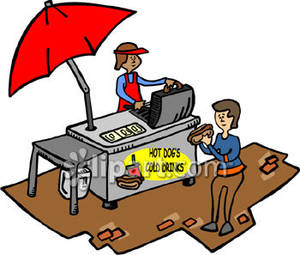
    Some jobs seem like they can’t be real – just think of being a hot dog vendor.  Everyone loves hot dogs, and it seems like a dream that you could even work with them. Work in this field can be very good for independent people who enjoy being with people and dealing with food.

    You and your family might sometimes eat food from street vendors. You go to a food cart and ask the person for a hot dog with mustard or ketchup, and then the vendor puts the food together and gives it to you. Hot dog vendors spend much of their time selling food to people on the street or in office buildings.

    The first step in becoming a hot dog vendor is to learn about how to handle the food. Wieners are easy to cook, but they have to be stored properly. Buns also have to be fresh, and the condiments (like ketchup and mustard) also require care. Before they start to work, hot dog vendors need to know about handling food safely and about cooking meat properly.

    Some hot dog vendors learn all that they need to know by working with others on the job. Others, however, might decide to take classes at a college or cooking school. A small percentage of hot dog vendors might even get a degree in a subject related to food or even something completely different. Education has little effect on a hot dog vendor’s salary, but it can help to provide background information that can be useful for the work.

    Besides learning about how to handle food, hot dog vendors need to learn about their equipment. They have to use fuel tanks, cooking utensils, and anything else that they need to run the business.

    Do you love food and being with people? Why not consider working as a hot dog vendor?

  • School vs. Life

    School vs. Life

    When you  make the move to junior high and high school, everyone seems to think that there is no way to balance both having a social life and excelling in you academics. However, there is always a way – as long as there is a will!

    The way I see it, you need to earn your breaks, vacations and time off; That is what used to drive me to finish up my last essays and my final projects. I would look at the calendar and mutter to myself, “It’s almost March Break – I got to work hard now so that I can fully enjoy my time off school”. Then I would put all of my effort into my work until the very last class and forget about (almost) everything! Essentially, you want to be able to relax during your breaks and long weekends, so you just have to think of this as a “crunch time”.  Even now, in university, I do this to myself – I work and study hard and once I finish the exam, I shop! Sounds odd to some people, but I call it a “Celebratory Spree Day”, the day when I get to relax after pushing myself to study so hard for my exam period.

    One can also practice time management by planning when you will study and setting aside a few hours for fun with friends, too. For example, give yourself some hours to hang out with your friends before heading home to finish assignments and study.  It’s possible to have great academic standing and a social life, you just need to have the determination and the planning.

    Always remember to enjoy life!

  • Study Help: The Best Websites for English Literature

    Study Help: The Best Websites for English Literature

    Studying English literature might seem like a very easy thing, with nothing complicated about it. You just pick up a book and read it, right? Reading is a large part of the work, but it can often be more complicated than it seems. Students often need help with understanding what the texts really mean and sometimes even with just finding the texts. A library is always a good source of information in this area, but sometimes students want the convenience of looking online. But how do you find the best and most helpful websites?

    When you study English literature, the first thing to do is to read the texts. You might read modern books by authors like Margaret Atwood or you might read ancient texts by authors like the Greek writer Sophocles. Most of the modern books are easy to find in bookstores and libraries, but the older ones might be a bit more difficult to find. You also might not want to spend a lot of money on buying books that you expect to read only for your classes. In many cases, you can solve this problem by finding the books online. If the book was written over seventy-five years ago, you can likely find the full text on websites like Project Gutenberg (http://www.gutenberg.org/), the Literature Network (http://www.literature.org/) or Adelaide e-books (http://ebooks.adelaide.edu.au/meta/titles/A.html).

    Why are only older books available on websites like these ones? It’s because as long as the authors are alive, they or their relatives own the copyright to the work. No one is allowed to reprint it without the author’s or publisher’s permission for at least fifty or seventy-five years after the author’s death. After that, however, the literary works are normally in the public domain, which means that they can be freely republished anywhere, including on the Internet.

    Finding places to read literature is the first step, but students sometimes need a bit more help. The Literature Network (http://www.online-literature.com) gives the full texts of many books and poems, but it also includes biographical and historical information. Do you need to know what Renaissance or Victorian literature was like? You can find out about these eras on the Literature Network. The site also includes quotations and many different kinds of information that can help people understand how literature reflects the history and culture of each time period.

    Understanding the background to literature is essential to understanding what it is about, but sometimes readers need an even more basic level of help. Writers from previous centuries often used a vocabulary and writing style that modern readers might find difficult to understand. Sometimes, the meanings of words change from one century to another. At other times, writers from different eras wrote very complicated works with advanced vocabulary. However, there is help for people reading difficult texts. The Visual Thesaurus VocabGrabber (http://www.visualthesaurus.com/vocabgrabber) can help translate sections of text into something more manageable for modern readers.

    If studying English literature is difficult for you, you might want to check some of these websites for information that can help you.

  • Dream Job: Ice Cream Taster

    Dream Job: Ice Cream Taster

    Imagine a job where you could get paid to eat your favourite food all day. Could anything like that be real? Working as an ice cream taster, for example, sounds like an imaginary job, but it really does exist. A man named John Harrison samples many different flavours of ice cream every day as part of his job for Edy’s Grand Ice Cream. Becoming an ice cream taster like John Harrison involves education, constant learning and daily care of the taste buds.

    People who want to work as ice cream tasters might start by getting a job in an ice cream shop and learning about different flavours, as well as finding out what people like to eat. Knowing how to preserve ice cream and to make it look and feel right is also very important. After high school, the next step is normally to get a university degree in an area such as food sciences.

    A food sciences education will help the ice cream taster learn more about different flavours and how they interact with each other. Courses in this program are also helpful for learning about proper food handling procedures and other things that ice cream tasters need to know. Working as an apprentice in an ice cream manufacturing company is another way of learning the skills necessary for the job.

    For John Harrison and other ice cream tasters, taking care of the taste buds is very important. Do you know how your taste buds stop working properly when you burn your tongue with a hot drink? Anything that affects the taste buds can influence an ice cream taster’s work. Before John Harrison goes to work, all he has for breakfast is some oatmeal with tea to drink. He has about sixty types of ice cream to try every day, and he has to make sure that his breakfast has no effect on his taste buds.

    Ice cream tasters have to develop methods of having only one taste in their mouths at a time. Normally, they roll the ice cream around in their mouths and then spit it out. John Harrison starts his day with lighter flavours like vanilla and then works up to stronger flavours like chocolate. Between flavours, he eats a plain cracker to get rid of the previous taste. Sometimes, he has to sample flavours that he does not like, but he has to think about what others might enjoy.

    Do you love to try new ice cream flavours? Do you have very sensitive taste buds? If so, you might want to consider becoming an ice cream taster.