Category: Fun

  • Nature Watch: Exploring Our Solar System – Events To Watch In 2015

    Nature Watch: Exploring Our Solar System – Events To Watch In 2015

    Our solar system is our neighbourhood, with many questions remaining about our planets, moons, comets, and asteroids. If you are interested in space and planetary exploration, the search for water on other planets, and uncovering the secrets of our solar system, these are three events to keep an eye on this summer.

    Rosetta Mission – Comet 67P/Churyumov-Gerasimenko

    (European Space Agency)

    The Milestone: Rosetta is performing the first long-term close observation of a comet, and the Philae lander is the first scientific lander on a surface other than a planet or moon.

    The Mission: Launched in March 2004, Rosetta’s main objective was to catch up to and orbit comet 67P/Churyumov-Gerasimenko, and deploy the Philae lander to the surface. Both events succeeded in November 2014. In 2015, Rosetta continues to observe 67P as it nears its closest approach to the Sun, examining gas and dust interactions that create a comet’s characteristic “tail”. Both Rosetta and Philae have sent back stunning photographs of the comet from orbit.

     Events This Summer: 67P’s perihelion (closest approach to the Sun) will occur around August 13, 2015. The data gathered will show what happens to comets as they pass close to the Sun.

    More Information: http://sci.esa.int/rosetta

    http://blogs.esa.int/rosetta


    Dawn Mission – Protoplanet Vesta and Dwarf Planet Ceres

    (NASA and JPL)

    The Milestone: Using a specially designed ion propulsion system, Dawn achieved a remarkable feat: visiting two separate planetary bodies in the asteroid belt, and performing orbital observations around both. This also marks the first visit to a dwarf planet by any spacecraft.

    The Mission: Launched in September 2006, Dawn travelled through the solar system to encounter and orbit the proto-planet Vesta from July 2011-September 2012. After mapping and science observations, Dawn broke orbit from Vesta and travelled another two years to rendezvous with dwarf planet Ceres in March 2015. By studying these planetary bodies, we hope to learn about the early formation of the solar system.

    Events This Summer: August 2015 and December 2015 will see Dawn perform the two lowest mapping orbits, providing detailed surface photographs and scientific measurements, and hopefully solving the mystery of the “bright spots” on Ceres’ surface.

    More Information: http://dawn.jpl.nasa.gov


    New Horizons Mission – Pluto System Flyby

    (NASA)

    The Milestone: The first ever flyby of the dwarf planet Pluto and its moon system, the most distant and still unexamined member of our solar system.

    The Mission: New Horizons launched in 2006, and will perform a flyby observation of the Pluto system, then continue on an extended mission into the distant Kuiper Belt to visit the small, icy bodies orbiting the outer edges of our solar system. This mission will provide detailed photographs, surface maps, and valuable scientific data about Pluto, and help us learn about the outskirts and formation of our solar system.

    Events This Summer: New Horizons closest approach to Pluto is scheduled for July 14, 2015. Currently in approach phase, new pictures with increasing detail are regularly transmitted back to Earth and made available to the public.

    More Information: http://nasa.gov/mission_pages/newhorizons

     

  • Career Profile: AV Technician

    Career Profile: AV Technician

    Do you like being on the scene? Enjoy figuring out how things work, and finding new ways to make them work? Maybe a career as an audio visual technician is for you.

    Audio visual technicians are the ones that work behind the scenes at theatres, concerts, fashion shows, and anywhere else you need amplified sound, lighting or video. There are many college courses that you can take to begin your journey in this career. There are also many opportunities to begin work without any experience i.e. learn as you go. There is no set path in this career choice and most work comes in the form of “gigs”. As you develop relationships with production companies they may offer you a full time position, but most work in this trade is on a freelance basis.

    In Canada, the most lucrative sector of the event production industry is in corporate events (conferences, meetings, product releases, etc.). A corporate events AV tech can expect to make $25-45 per hour based on the event and the competence level that particular technician brings to the production team. One can be simply an AV tech for their entire career, working on smaller live productions but most will pick a special discipline; audio, video, or lighting, and work on larger productions with larger teams. Some productions can have hundreds of techs working the many aspects of the show!

    Being an AV tech has its’ challenges. The hours worked can be very long and at odd times of the day. When it is very busy, the hours can be very long; I once worked for 40 hours straight (not recommended!) When it is slow, usually from Christmas until spring, there is no income; when it is busy a good tech keeps this in mind. All people that work as freelancers understand this. Being an AV tech also carries many privileges. If you enjoy concerts, or any type of show, you will see a lot! If you enjoy travel this career can take you around the world.

    An audio visual technician must be able to work well under very high pressure situations with many people watching. They must work long hours at any time of the day. They have a certain pride that is hard to explain after running a show to completion, without any technical errors, that most people will never know. Working in this field is hard work, but it is unlike any other.

  • L’importance du jeu

    Lorsque nous étions enfants, chaque jour à l’école, nous avons joui d’une période de récréation durant laquelle nous avons joué à des sports, au jeu de tag, et grimpé le jeu d’escalade. Nous avons tous passé des moments inoubliables entre amis, que nous chérissons encore à ce jour. Toutefois, au fur et à mesure que nous vieillissons, un côté plus sérieux commence à s’installer en nous et nous oublions les simples plaisirs du jeu. Ceci est encore plus vrai lorsqu’on commence l’université ou tout autre niveau d’études supérieures. Les pressions associées aux résultats scolaires, aux examens, aux tests en laboratoire et à planifier pour son avenir peuvent créer un environnement qui n’est pas propice pour le jeu. Aux yeux de nombreuses personnes, une fois rendu à l’université ou au collège, la notion de passer son temps libre à jouer peut sembler frivole. Bien que cela puisse paraître vrai à première vue, les chercheurs et psychologues, par contre, soulignent les avantages du jeu à l’âge adulte.

    Il est juste de dire que le jeu libre est aussi important pour notre bien-être en tant qu’adulte, qu’il l’était quand nous étions plus jeunes. Des études menées par des chercheurs révèlent que les bénéfices associés au jeu incluent la réduction du stress, la stimulation du cerveau, le développent de meilleurs amitiés et des niveaux d’énergies plus élevés.[1] Ceux-ci ne sont que quelques-uns des exemples illustrant pourquoi un jeune étudiant au baccalauréat devrait consacrer du temps au jeu et encourager ses amis à faire pareil. Ne perdez jamais votre goût pour l’aventure. Pour les enfants d’aujourd’hui, le stress fait son apparition plus tôt qu’auparavant. Avec tout ce qui se passe à l’école, à la maison et après l’école, votre cerveau commence à s’épuiser et à se sentir vidé.

    Participez à des activités de jeu libre peut aider les étudiants de niveau universitaire à détourner leur attention des rigueurs des études scolaires. Si vous êtes plus jeune, le jeu libre joue un rôle très important puisque vos compétences nécessaires à la vie quotidienne sont encore en développement. Ces moments de jeu libre donneront à votre cerveau une pause bien nécessaire de votre routine quotidienne. Alors, pourquoi pas prendre une pause et passez le football, jouez au basket ou faites des ricochets sur l’eau avec des amis. Cela vous rappellera votre enfance, et pourrait même vous aider à obtenir la bonne note pour laquelle vous avez travaillé si fort.

    [1]

    Robinson, L., & Smith, M. (n.d.). The Benefits of Play for Adults. Retrieved May 14, 2015, from http://www.helpguide.org/articles/emotional-health/benefits-of-play-for-adults.htm


  • The Importance of Play

    The Importance of Play

    As children, all of us had recess in school where we played sports, tag and bounced around the jungle gym. There were some great moments with friends that we still cherish to this day. However, as we grow older a sense of seriousness starts to settle in and we forget the joys of just playing around. This is even truer when entering University or any higher level of studies. The pressures of grades, tests, labs and planning for the future can create an environment not beneficial to play. The notion of spending free time in University or College playing around may appear frivolous to many. It does come across that way upon initial observation, but researchers and psychologist stress the benefits of play in adult life.

    It can be said that engaging in play as an adult is as important to our well-being today, as it was when we were younger. Studies by researchers show advantages to play including stress reduction, brain stimulation, the improvement of friendships and higher energy levels. [1] These are just some of the many reasons why a young undergrad student should take up play and encourage their friends to join in as well. You should never lose your sense of adventure. As a kid today, stress creeps in a lot earlier than usual. With so much going on at school, home and after school, your brain starts to wear out and get run down.

    Involving yourself in play can help students in University take their mind of the rigors of class work. If you are younger than that, play is very important. You are still developing those essential life skills. Those moments give the brain a much needed break from the daily routine of life. So why not take a break and throw the pigskin around, shoot some hoops or skip rocks with friends. It will make you feel young again, and may also help get the A you were looking for in class.

    [1]

    Robinson, L., & Smith, M. (n.d.). The Benefits of Play for Adults. Retrieved May 14, 2015, from http://www.helpguide.org/articles/emotional-health/benefits-of-play-for-adults.htm


  • Career Profile: Team Mascot

    Career Profile: Team Mascot

    If you enjoy sports, you probably know the names of many of the players on your favourite team. You might know some of the coaches, and possibly the cheerleaders. How much do you know about the team’s mascot? Even if you know nothing about the person’s name, you probably know how good the mascot can make you and other fans feel.

    Helping people enjoy a sports event is what team mascots do- they lift your spirits high and encourage team support. They lead people in cheers, do special tricks, or otherwise try to get people excited about the game. Most professional teams in sports like basketball, football, and basketball have official mascots. Some amateur teams might have them, as well as special teams and clubs. Canada also has an Olympic mascot named Komak the Moose.

    If you want to work as a team mascot, you can already start to look for openings. You can check with sports teams to find out about the possibilities for work. Talent agencies can be useful since they often have e-mail lists with job openings.

    No special education is required for becoming a team mascot, but training is helpful. Team mascots might have to dance, jump through burning hoops, or perform all kinds of other athletic tricks. Learning how to do these tricks safely can help keep people from getting hurt. If you have a positive attitude, love sports culture and fun, this is a fun job. Whether the team wins or loses, the mascot’s job is the same.

    Staying healthy and in good shape is extremely important. Mascots might have to spend many hours each week running, lifting weights, and doing other physical training.

    Professional sports teams travel a lot to compete with teams from other regions. Normally, team mascots go along with the teams. For some mascots, this might mean that they are away from home for several months every year. Since most sports are seasonal, they might have a few months of frequent travel, followed by months of no work at all. The salary for mascots can also vary widely. Some mascots receive only about $25,000 per year, but others can be paid $100,000 or even more. In some cases, it can be a part time or fulltime job.

    Creating your mascot trademark is important. Most mascots wear costumes that can be heavy and hot to wear, but they still have to be able to move around and to do whatever will make people notice them. Some mascots might develop special techniques, such as doing somersaults or back flips. Others might use funny gestures or find other ways to draw people into the game. Over time, mascots can also change and develop their style, with the direction of the team’s marketing department.

    Creativity and special skills are important for team mascots. Being able to sew and to alter costumes can be valuable, and other special skills are also useful.


  • Summer; and What to Do with It…

    Summer; and What to Do with It…

    Summer. For some students this means vacation, relaxation, hot weather and no school. This is what summer is all about. Unfortunately, with this comes summer learning loss.[1] This is the loss of basic math and literacy skills created by the two month summer break students receive. It is important that students stay involved mentally and physically throughout the summer. With all of the beautiful weather, students have many opportunities to work, volunteer and study, thus keeping their minds active.

    Summer holds many employment opportunities; outdoor jobs such as landscaping and public parks patrol, to indoor jobs such as lifeguarding and clerical work. Ontario Parks offer seasonal jobs to students. Students can expect to network and meet new people, developing new skills for the future. They can also earn professional certifications such as a CPR and WHIMIS training.[2] Deafblind Ontario is another interesting and helpful organization that hires students. This organization is devoted to assisting individuals who are hard of hearing and visually impaired. Aside from working, students can also volunteer both for experience and to accrue the required community services hours needed for a high school diploma. A fun way to volunteer is to help coach organized sports.[4] The YMCA of Canada also offers many volunteer opportunities. Students can greatly expand their knowledge of a chosen field by volunteering and potentially gain full-time employment upon graduation.

    While summer vacation can be relaxing, students tend to forget what they learned in the previous school year. It is important that students continue their studies and keep their mind and body both mentally and physically active. Playing sports is great way to stay fit. Reading is also an excellent way to stay informed and mentally alert. It is essential that students continue their academic and personal growth over the summer.  By working and volunteering, students can meet new people, develop and improve their skills and discover new things about themselves. So, my advice is to make the most of your summer by mixing together work, play and volunteer; you cannot loose!

    [1] http://www.canada.com/life/curb+summer+learning+loss/1731823/story.html

    [2] http://www.ontarioparks.com/careers

    [3] http://www.deafblindontario.com/summer-students

    [4] www.peelschools.org/students/40hours/volunteerjobboard/Documents/Dixie%20Soccer%20Club.pdf

  • All Work and No Play? How to Balance Work with Fun

    All Work and No Play? How to Balance Work with Fun

    Student life can be super stressful, and don’t worry, we hear you. What, with the constant tests, study group sessions, and seemingly endless stream of readings and homework, it can be understandably difficult to find time for yourself.

    It’s important to do well in school, but it’s also important to take a little time off every once in a while. Doing something that you enjoy is a good way for your brain to relax in-between all the hard work it’s doing. If you go easier on yourself every once in a while, you can reduce your heightened stress levels (a clear consequence of working at maximum capacity all the time). Plus, a break from school is a nice reward for a job well done.

    Of course, just as school shouldn’t eliminate the possibility of fun from your life, constant fun shouldn’t replace the time you’re putting into your academics. Achieving a balance between work and play is a key part of being a good student.

    Here are some suggestions for how you can balance your academics with the time you should be taking for yourself.

    Book it. In the same way that you plan out your school assignments and due dates (at least, if you’re conscientious enough to do so), you can plan fun things for yourself, too. On your calendar, make a note of the things you’re going to do in-between your study sessions. You can take relatively short breaks to watch a movie, go out for a coffee, or read a few more chapters of that book you were working on. Stay true to your schedule and you won’t be wondering where your “me” time went.

    Make it work. If you’re cooped up with your books all day, figure out a way to at least make your studying more enjoyable. (Yes, it’s possible!) Working on an assignment you like will probably make you happier than studying something you couldn’t care less about—which is a good point to note for the future as well. If all else fails, make small changes to your work environment, like putting on a playlist of your favourite songs or studying (productively) in a group instead of on your own.

    Treat yourself. Of course it can be difficult to think about taking time for yourself when you’re cramming for a big test. A good strategy is to focus on your schoolwork first—get it all done and out of the way—but have something to look forward to after it’s done. Make sure to do something for yourself right after the test date, as a reward for all the hard work you did. That way, you can relax with the completed work off your shoulders.

  • Campus Politics: Getting Involved with Student Government

    Campus Politics: Getting Involved with Student Government

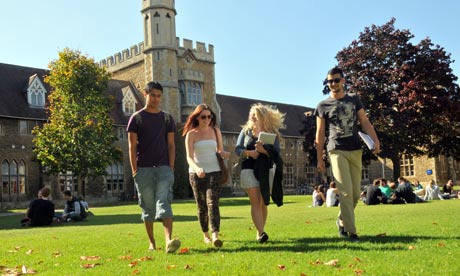
    If you’re an avid politics fan, like to connect and communicate with others, and appreciate the work that goes into a good campaign, student government is the thing for you. Here’s some information about my personal experience as a student representative, and why I think you should consider running, too.

    First of all, I want to clarify that I am speaking from my own experience. I was in student council in high school, and I will be a director on student government in my second year of university (which begins in the fall). I don’t know what schools you all go to or the way they handle student representation, so the advice I give you may not necessarily apply in your case.

    That being said, in my opinion, student government (council, advisory, etc.) is a valuable experience. You get to collaborate with like-minded peers, as well as represent the interests of your fellow students. You will likely take on a lot of responsibility, whether it is to plan events, fill out paperwork, or communicate with upper-years, teachers, or administration representatives. It can be stressful and it’s certainly a lot of work. But overall, I found it to be a greatly rewarding experience.

    The eligibility for a student government seat varies depending on the institution, and your respective guidance office or registrar can provide you with more information. However, seats are almost always elected, which means you have to be voted in by your fellow peers. There is typically a campaigning period, during which you can put up posters, distribute campaign materials, make speeches, and so on, in order to convince your constituents that you are the right person for the job.

    If you are thinking of running for a position, you have to be prepared to commit. Not only does campaigning take a lot of effort (you’ve never known true exhaustion if you haven’t stayed up all night cutting out flyers), but the job itself is also very demanding. Of course, your responsibilities depend on your position, but it goes without saying that you’ll have to work hard in order to do your job properly.

    The thing is, though, in my personal experience, it was all worth it. Regardless of how hard I had to work, the effect my efforts had on the student body was evident. As a representative, you are responsible for ensuring that the needs of your peers are met. Even if the scope of your powers seems limited, you actually have the opportunity to make student life better in some way. For me, that was the most rewarding part of the experience, and I am sure that I will get to do the same kind of work next year as well.

    If you’re looking to make a change, no matter how small it may seem, this is one of the ways you can do it. Consider running this year and put your hard work to good use.

  • Career Profile: Special Effects Technician

    Career Profile: Special Effects Technician

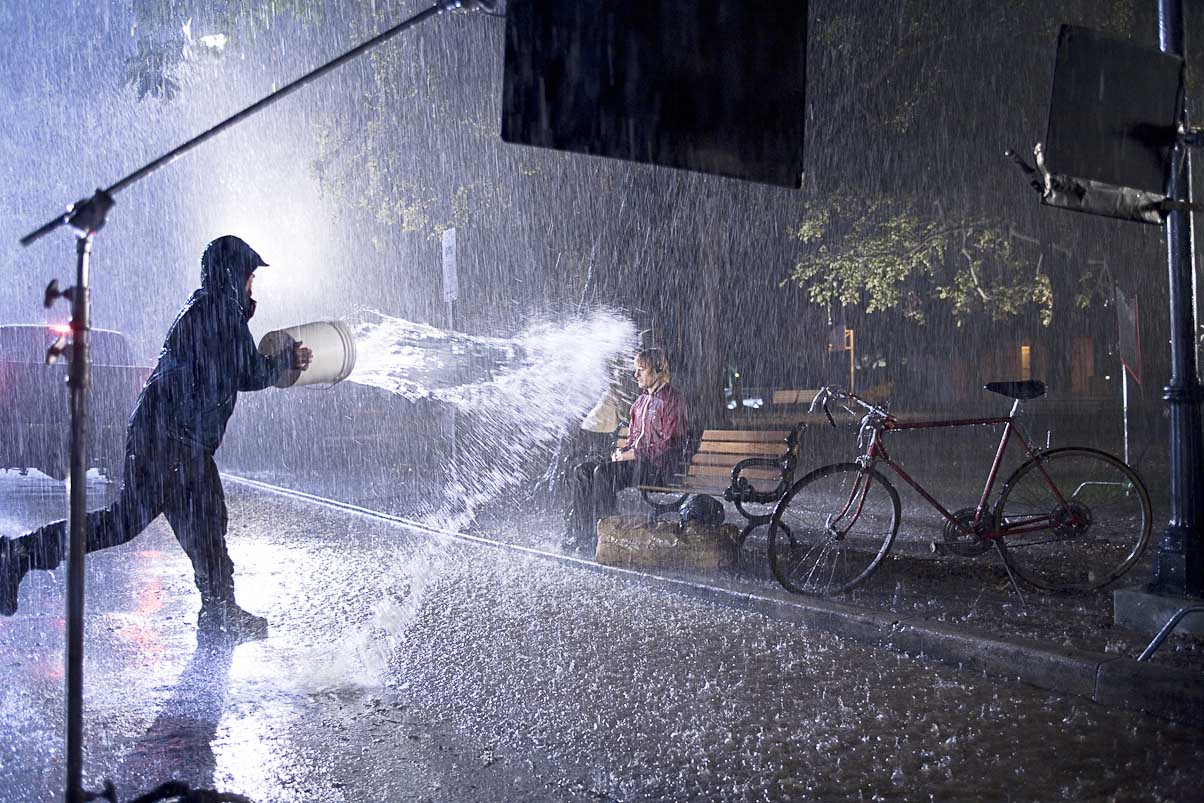
    Think of a movie or television program that has good special effects. They might be fires, explosions, or something less dramatic like breaking a table apart or creating a scar on someone’s face. Special effects technicians help to make these kinds of effects look real and help make movies and television programs better.

    Special effects technicians work with almost every stage of a production. They begin by looking at the script of a show, which says what the actors do and what they say. For each part of the show, they decide what special effects are needed and how to create them.

    Some special effects technicians work in companies that specialize in that kind of thing. Others work in television and film companies, but most work as freelancers. The work depends mainly on the location of the movie and television industry, although some people work in small theatres. Most special effects technicians in North America work in Vancouver, Toronto, New York, Chicago, and San Francisco.

    Becoming a special effects technician generally does not require any special education. However, taking courses in welding, lighting and other techniques can help special effects technicians to advance in their work.

    Special effects technicians can become specialists in working with fire or with other types of materials. Technicians also have to know about safety and how to keep people from being injured. When something goes wrong with the special effects, technicians also need to check all of the equipment and anything else that might have gone wrong.

    Keeping detailed records is important for special effects technicians. They write down what works and what they need to change the next time. These records can also be very valuable for other special effects technicians, who can learn new techniques for making everything work together.

    One of the benefits of working as a special effects technician is being able to think creatively and to solve problems as they work. Suppose that you had to find a way to make it look like a character flies through the air. How would you do that? If you can find ways to make something like that look real and natural, you might have the skills to be a special effects technician.

    Computers have helped to change the way that special effects technicians work. In the past, all special effects had to be done manually. Designing the effects and making them work could be a very complicated and time-consuming. With computers, however, special effects technicians can do many things that were impossible in the early years of the profession.

    Working as a special effects technician can involve long days during times of filming. Some technicians work regular hours and can earn over $21.00 per hour. Others work only when they can find short-term jobs, but often they can earn more money during those periods than others can earn at a full-time job.

    If you have a creative mind and enjoy movies and television, the job of special effects technician might be right for you.

  • Making a Living in Poetry

    Making a Living in Poetry

    If you read about the lives of famous poets like John Milton and William Shakespeare, you might notice something they had in common. They wrote great poetry which is still popular hundreds of years later, but they also had other jobs. William Shakespeare made only eight pounds for writing each of his plays and even less for his sonnets. He had to work as an actor to make a living. John Milton wrote political pamphlets to help pay his bills. Marianne Moore, a twentieth-century poet, worked as a librarian. Making a living as a poet has never been easy, but is it possible?

    Working as any kind of writer can be difficult. Novelists often have to go through many rejections before they can get their books published. Even then, making a living through writing can be hard to make much money. It can be even harder for poets. Their work is often less popular than novels and other types of writing, and they are often unable to sell many copies of their work. Often, they must teach classes or find some other way to make a living while writing poetry on the side. The Manitoba poet Sarah Klassen, for example, taught English for many years while she was writing and publishing.

    Being flexible and inventive can help poets make money through their writing. The traditional method of publishing books of poetry is likely to be difficult, but poets can make money in other ways. Magazines in print or online often include a few poems, and literary contests can also be good places for new poets to get their work published. In some cases, poets can even get fulltime work in advertising, producing greeting cards, or other fields where the skills of a poet are useful.

    Being able to communicate is an important part of being a poet. Some poets are good at telling stories and others are better at showing emotions. However, all poets learn to use language in new ways. Poetry is a very brief and sparse way of communicating. Often, a few words have to communicate complete thoughts in poetry, and poets have to choose their words carefully.  Even in narrative poems that tell stories, using the fewest words possible can be the most effective. Developing good writing skills is an essential part of becoming a poet. The first step is often to read a lot, learning from poets of the past and present. Courses in English literature or in writing techniques can help new writers develop their skills.

    Poets also need to develop their own styles. Some poets like to use complete sentences in their work. Others like to use as few words as possible to say what they mean. Another important factor is what publishers and readers want. Different styles of poetry appeal to different types of people, and publishers’ guidelines can give you a good idea of what works best in each situation. Learning to adapt your writing style will help you become successful as a poet.