Category: Fun

  • Fashion at Second-Hand Shops

    Fashion at Second-Hand Shops

    When people meet each other on the street or at school, they notice different things about each other. They might notice the other person’s hair or their face, but they often notice the clothes. What people wear can say a lot about who they are, what they value and even how creative they are. Clothes can be expensive, but you can still look good without spending a lot of money. Finding fashion at second-hand shops can be challenging, but it’s possible to look good on a very small budget.

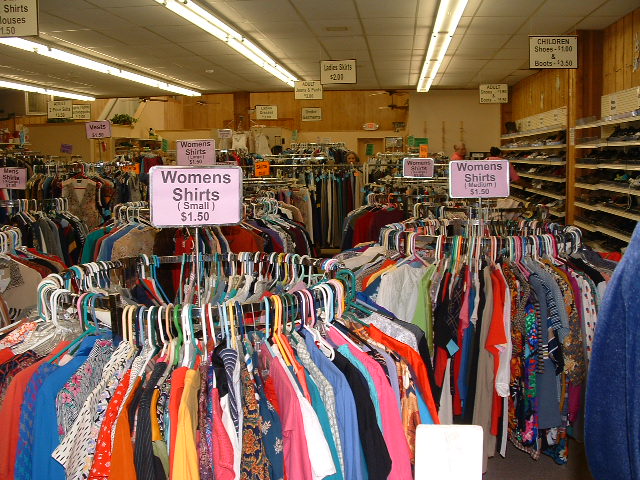
    Most cities have different types of second-hand clothing stores. Consignment shops are places where the previous owners of the clothes or other items get money back for whatever the store staff can sell. If no one buys an item, it eventually goes back to the owner. Much of the time, however, people donate used clothing or other items to organizations that use the money to help some kind of program, such as income support for the poor. Thrift stores that cater to the poor are some of the most common of these types of shops.

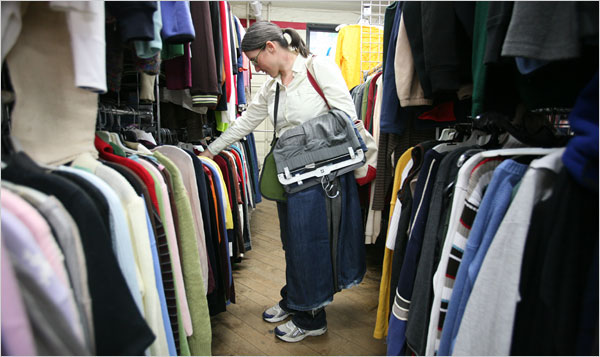
    Shopping for second-hand clothes can be rewarding but time-consuming. It can be hard to find nice outfits in the jumble of used clothes, with limited choices of size or colour. However, patience, persistence, and a sense of fashion can help. For people who know how to sew, shopping at second-hand stores can present many options for altering clothing to fit new styles. The final result can often be worth the extra time spent in shopping.

    If shopping at second-hand stores is so time-consuming, why does anyone do it? Money is probably the biggest reason. New clothes can be very expensive, especially for anyone on a low income. Buying used clothes allows them to have a variety of outfits without spending more than they can afford. For some people, shopping for used clothes might also be an exciting challenge that allows them to create their own style. If they choose clothes that fit well with different outfits, they can have a lot of variety without having a closet full of clothes.

    For many second-hand shoppers, buying used clothes is a social or environmental choice. Most of the clothes people buy in North America are made far away in countries like Bangladesh or China, where many workers experience low pay and unsafe conditions. Buying these clothes makes customers feel that they support the exploitation of workers. Another reason for buying second-hand clothing is that transporting the finished clothes from the factories to the North American stores uses a lot of fuel and pollutes the environment. Meanwhile, unwanted clothes often end up in the landfills here in Canada, contributing to the mountains of garbage people produce. Buying second-hand clothes means that people are trying to get the greatest possible use out of the world’s resources.

    For all of these reasons and more, second-hand clothing shopping is growing in North America at shops, flea markets, garage sales. Will you join the trend?


  • “Sine” Me Up: Why Math is Your Friend

    “Sine” Me Up: Why Math is Your Friend

    Mathematics is the pariah of school subjects—dismissed as mind-numbing, tedious and often impossible to grasp, it is frequently looked down upon in schools, in pop culture and among the general public. It’s unfortunate that math has such a miserable reputation, because it may actually end up being one of the most useful things you are ever going to learn. Math has a multitude of practical applications, whether you’re looking to make your day-to-day life a little easier or are considering it for a future career. So if you’re stuck on permutations or about to lose your marbles over that logarithmic function, don’t give up hope just yet. Math might be the thing that saves you.

    A lot of the negative hype behind math is due to the sheer amount of material—the formulae and variables and properties—and it’s increasing difficulty is enough to give anyone a migraine if not taken in stride. Math is one of those things that you just can’t get the hang of without practice. And while it may take a bit of grunt work at first, there is a certain satisfaction in finally getting the right answer. This sense of accomplishment may come as a pleasant surprise. Not only is it rewarding to see the progress of your hard work, but you can actually start to have fun with it once you get into the swing of things.

    If you’re good at math, there are many career paths that may suit your fancy. Aside from strictly “mathematics” jobs (teaching positions, research, etc.), other fascinating fields like medicine, architecture, business and engineering are excellent ways to put your skills to good use. Careers in math-related fields are great for developing problem solving and logical reasoning skills, not to mention they are often both professionally and financially rewarding. If you’re committed to your talents and willing to work, a mathematics career is definitely a valuable option to consider.

    Of course, not everyone is going to be skilled at math and that is perfectly alright. However, just because you don’t work in a math-related field doesn’t mean it isn’t a useful (and necessary) tool to have under your belt. Restaurant bills, mortgage payments, student loans, the lottery—the power of math is woven through everyday life. Oftentimes, it is the glue that holds our society together. No matter what you end up doing in the future, somewhere along the way you’ll undoubtedly need math to get you out of a jam. That’s why it is so important to keep working on your math skills: you never know when they’ll come in handy.

    From multiplication to measures of central tendency, mathematics and its multitude of concepts are true treasures to possess. You may be surprised at the many doors it opens for you in today’s world. In summation, math will contribute to your progress. Keep working on developing those skills—and embrace mathematics as a crucial tool in the smooth functioning of your everyday life.

  • Club Counselling: How Extracurriculars Can Help You Succeed

    Club Counselling: How Extracurriculars Can Help You Succeed

    I’ve always been someone who is eager to get involved. Academics are extremely important to me, but upon entering high school I started to realize the value in expanding my learning beyond the classroom. Over the years I’ve tried my hand at concert band, orchestra, choir, yearbook, newspaper, model UN, peer tutoring and more. Through this process, I found the things that really worked for me. There are so many ways you can participate in your school community. From my personal experience, taking part in these extra-curricular endeavours will be one of the most rewarding parts of your educational career.

    Extracurriculars are a fun way to connect with people who share your interests. Whether you’re running laps around the quad or bonding over molecular compounds, not only are you learning, expressing yourself and having fun—you’re doing it with like-minded and motivated peers. You might find that it’s quite easy to make friends when you have so much in common with the people around you. Oftentimes you click so well with these people that your friendships continue long after the club comes to a close.

    It is always important to focus on academics, but if you’re looking to get a balanced and entertaining experience out of your education, it is a must to make room for extracurriculars in your schedule. An academic club is a great way to expand your knowledge and learn from the people around you. And even if it’s not directly related to what you’re studying in school, any club serves as an excellent outlet for relieving stress—not to mention it can teach you other invaluable skills, like how to think creatively or be a team player.

    Aside from the skills you acquire along the way, clubs also give you the chance to put yourself out there for the people in charge, whether they are teachers or upper-year students. This is why it’s crucial to get involved in extracurriculars right off the bat: if you stick around long enough, you’ll start to make your way up the ranks. Leadership positions are hard to earn, but totally worth it. If you work at it, the payoff could be more rewarding than you ever imagined, including a wonderful sense of responsibility, the respect of your fellow peers and often an impressive title on your resume. As you can see, a mere dabble in the extra-curricular of your choice could turn into a real-world asset.

    I’m off to university next year, where I definitely plan to make extracurriculars one of my priorities. I know for a fact that the skills I’ve obtained through my involvement will come in handy in the future and working my way up to leadership positions in these fields has given me the confidence I need to succeed. Take initiative: check out what’s going on in your school community and put yourself out there. Get involved in what you’re interested in and I guarantee it will be worth it.


  • Allow Yourself to Dream

    Allow Yourself to Dream

    Life can be hard. Sometimes things can go so wrong that it seems like they’ll never be right again. It is in those moments that we may lose hope, that we may cease looking at the glass as half full and silently wonder to ourselves how long it will take before it is completely empty. It is in those moments that many of us stop dreaming, we lose momentum and stop looking forward to the things that make life worth living. Losing sight of our hopes and dreams is akin to losing parts of ourselves.

    When we were kids we all wanted to grow up to be something that we thought was great. We dreamed big, did what we wanted and spoke loudly and no one could tell us that our crazy dreams and plans to execute them didn’t make any sense. You know why; because those dreams belonged to us, they defined us, molded us into the kids that we were, the teenagers we became and oftentimes into the young adults that we are now. Whatever dreams we chose to believe in, became our reality. It was the driving force of our existence and nothing could have made us happier, well, except for a lot of chocolate and candy. For most of us, as we became teenagers we lost that carefree dreaming; responsibilities become a thing of reality that imposed itself upon our world – school, siblings, parents, part-time jobs, relationships; for many of us things became overwhelming.

    When our lives starts to spin out of our control that is when our dreams take on a crucial role. The act of dreaming or, as I like to call it, “envisioning a positive change”, becomes a tool for metamorphosis. All great feats in live began with a dream. Professional coaches know a thing or two about the power of dreaming, in fact, many coaches tell their players to envision their win. A player who continuously dreams about success is more likely obtain it. This method of dreaming success into reality can apply to all aspects of our lives. Getting that grade, job, apartment, acceptance into that school are all possible when we allow ourselves to dream and put in the necessary work towards making that dream a reality.

    Aside from being able to accomplish our goals, the act of dreaming can have a positive and immediate effect on a person both physically and mentally. Good dreams can cause the body to relax, oftentimes increasing our ability to think more clearly. Our levels of stress can be reduced resulting in peace of mind. Short term patterns of dreams and success can lead to increased confidence and risk taking which propels long term patterns of dreams and success leading us to happier and oftentimes healthier lives.

    So the next life throws you a curve ball and you feel like your dreams are a waste of time, remember that all great feats began with one.

  • Frugally Fashionable

    Frugally Fashionable

    One of the hardest parts about being a student – especially a fashionable one – is budgeting. Some students are not always privy to the deals and steals of the trade. Just because it’s an expensive article of clothing doesn’t mean that  you automatically have style. The key to being stylish and keeping some pocket money is to pay attention to what is around you. Look at fashion and style news and look through “look books” of your favourite stores online. You will see that there are some things you can recreate for a lot less.

    For example, I took a look at my favourite fashion bloggers – yes, they wear Chanel, Yves Saint Laurent and Dolce & Gabbana – all things that I certainly cannot afford. However, I also took note of a lot of the pieces I liked the most – then went on a thrift shop day!  The biggest trend I have been noticing this winter season is over-sized wool and cashmere coats, and on my outing to Salvation Army I found the most beautiful, Italian-made, cashmere and wool coat in my size for only $7.99!

    Not stopping there, I also left with a wonderful oversized winter coat (durable, water resistant, fleece removable insulation) for $19.99 and a blue knitted sweater (originally from H&M) for $7.99. To top it off, the cashier also notified me that every Friday is half-off everything in the entire store – imagine all the savings!

    It is not hard to find frugal ways to stay fashionable, as long as you are able to recreate what you like from the runways and what suits you best. You can even find DIY fashion blogs that help you add some kick to an old thrift shop garment. You will be surprised of the results you get!

    Remember – the best way to be fashionable is to be true to yourself. No matter what you wear, you will look stylish because you are uniquely you!

  • Get Outside and Exercise!

    Get Outside and Exercise!

    We’ve all been there – you wake up to start your day and immediately start thinking of how you can’t wait to get home to go back to bed later. You feel run down and yawn throughout your classes. Your head feels foggy and you have trouble concentrating. All of these signs point to a lack of energy and balance, which can be easily rectified by exercising regularly.

    Maybe you have a full schedule of classes, you work a part-time job and still need time to study on top of that. Don’t worry – you can fit in exercise each day in simple ways! Try walking to and from school each day, if possible. Speed up your normal walking pace slightly to get your heart pumping. You can also jog/run home from school each day to increase the cardiovascular benefits.

    If you have a little more time on your hands, even on weekends, try going to a community centre in your area. Community centres often have exercise equipment you can use for a much lower fee than a regular gym would. Treadmills and elliptical machines are great ways to get in a cardio workout without having to worry about poor weather.

    Many of us feel uncomfortable working out in front of others, so you can even do exercises at home while watching TV or a movie. Try some simple yoga moves, sit-ups or even jumping jacks. There are many great (and free!) websites that offer tips on different at-home workouts you can do that do not require any equipment. You may also want to purchase a workout DVD that combines your interests with exercise. For example, there are DVD’s that involve dance, ballet and even Bollywood moves.

    Another easy option is to play Wii or X-Box Kinect. Many of us own these systems already, so playing a game that involves movement instead of sitting will add up. Many Wii systems come with sports games inside the box, so there is no extra expense incurred. These games will even track your progress and tell you your “exercise age”, which are great motivators.

    Exercising regularly will ensure that you have energy when you need it most. Exercise has also been proven to lower stress and help with anxiety and depression. When you exercise, your body releases endorphins which essentially help you to feel better and calmer. You should aim to exercise for 30 consecutive minutes each day for the maximum benefits. It is also important to not exercise just before you go to bed, as the increased endorphins can prevent you from falling asleep right away. However, exercising regularly does help you to get a deeper sleep more often.

    So make time for yourself each day and get in some exercise. Motivating yourself can be difficult sometimes, so be sure to tell a friend or family member about your goals and they can help to get you moving. Remember – short term pain, long term gain!

  • Need Volunteer Hours? Join a Mob!

    Need Volunteer Hours? Join a Mob!

    The student’s quest for 40 community service hours is not always a pretty one. Sponge-bathing senior citizens and picking up garbage are healthy for the community, but often so uninspiring to the average teenager that procrastination happens and some diploma-getting is in jeopardy.

    What if you could find volunteer work that you’re passionate about, that gives you larger opportunities, that is part of a worldwide social activist movement? The Me to We (Mob)ilizers are students all across Canada, working from the ground to promote and support the charity Free The Children and facilitate real social change in the world.

    It’s all about going from thinking ‘me’, with selfish or self-centred motives and aspirations, to thinking ‘we’, with motivation to do right for all. If you are seeking to volunteer and get involved as a global citizen on a larger scale, consider joining the Me to We MOB.

    The entire enterprise began when a 12 year old Craig Kielburger read a news article about a 12 year old in South Asia who had died as a result of horrible child labour exploitation. This inspired him to make a difference. In 1995 Craig began speaking out for children’s rights in different small venues throughout Ontario. His vision caught on and late that year, he founded the Free the Children organization, with what he described as the motivation to “free the children from poverty, and free the children from the notion that they are powerless to affect change”.

    This means that while we work to end the enslavement and exploitation of children far from home, we can help children here to understand how valuable they are to the world, becoming enlightened and empowered.

    Today, Free the Children is the world’s largest network of children helping children through education, with more than one million youth in 45 countries involved in its education and development programs (like the Me to We initiatives).

    When an organization gets so large, it can become difficult to stay connected to the individual people while continuing to bring new, passionate youth into the cycle. That’s where the MOB comes in, taking Free the Children back to its grassroots and spreading the message from the ground up.

    Erica Baker is a MOB-Lead for Canada’s West Coast and a summer intern with Free the Children headquarters. When asked to describe what the MOB is Erica’s response, “Can I just say amazing?” was one of honest passion.

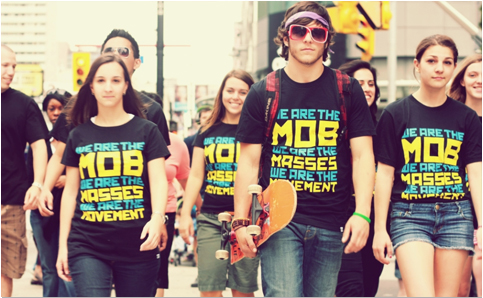
    “We are the masses. We are the movement. We are the MOB,” Erica said, “a vast group of students operating out of many cities across Canada, who are serious about making a mark on the social issues of our time. We organize events and fundraisers to benefit Me to We and Free the Children, and bring awesome, motivated young people together from across the country to make change,” Erica continued.

    She revealed that this year, the (Mob)ilizers are supporting one village in India, one in Ecuador, and one in Haiti, with funds going toward building houses, schools, and health clinics there. (Mob)ilizers have the option of going to one of these villages at the end of the school year to see exactly what their efforts are accomplishing.

    Applications are open until July 25th for next year’s MOB. To check out more or apply for a MOB position in your city, visit http://www.metowe.com/movement/mobilizers/join/.

  • Outdoor Therapy

    Outdoor Therapy

    The benefits of outdoor activity are well known. Whether you’re hiking, biking, swimming, or running, these activities are all great ways to get your heart rate up and stay healthy. However, less physically demanding outdoor activities (such as gardening or washing a car) are also good for your health. Mental health, that is. Sometimes just being outdoors makes you feel good, and it’s no wonder. Fresh air, open space, sunshine, greenery…who doesn’t love these things? Especially after being cooped up in an office or classroom for hours on end every day, being outdoors is a sure-fire way to boost your mood and make you feel more relaxed.

    The positive influence of the outdoors is so great that it is even being recommended as a form of therapy in and of itself.1 Instead of relying on pharmacological intervention, some therapists recommend “outdoor therapy” as an alternative way to help people with affective disorders (such as depression).2 In general, it has been found that people who try outdoor therapy experience “improvements in self-concept, self-acceptance and more realistic self-perceptions, and reduced conflict, depression, and anxiety.”3 These effects have been shown with a variety of individuals of all ages, genders, races, personality types, and mental health statuses.4 Of course anyone can benefit from outdoor therapy, even if you’re simply having a bad day or are feeling a little under-the-weather.

    There’s no one particular activity which is recommended above others as the best form of outdoor therapy; however, it has been noted that a short camping trip (even a mock-camping trip in one’s own backyard!) can be a remarkably effective way to reduce stress, anxiety, or bad mood.5 This may be due to the fact that camping is meant to take you away from the hustle and bustle of everyday life where most of one’s stress originates. When you’re camping you don’t have to worry about studying for an upcoming midterm or fret about that long list of things “to do.” In fact, when you’re camping the only things you really need to worry about are what you’re going to cook for your next meal and keeping ample wood on the fire. I wouldn’t necessarily classify these things under “worries,” however. Even though it may just be for a couple days, camping allows you to relax and rejuvenate, leaving you feeling refreshed and ready to once again tackle all life’s challenges. Granted, not everyone considers giving up all connections to civilization for a weekend foray into the depths of the wilderness to be a relaxing experience. If you don’t like camping, then it probably won’t help to ease your stress or anxiety. Conversely, it will probably increase your bad mood, which would be counter-productive. That’s why outdoor therapy can be tailored to individual preferences. If you’re an athletic person, then maybe going for a run or hiking with some friends will boost your mood. On the other hand, if you just need some time to yourself and prefer something a little more low-key, then just grab a book and head to the local park for a quiet afternoon.

    So next time you’re in a bad mood, feeling stressed out, lonely, overwhelmed, frustrated, or you simply want some alone time- head outside and try some outdoor therapy. Whether you decide to go for a five kilometer run or grab a coffee and read a good book, you’ll be amazed at how much better you feel after stepping outside to clear your mind.

  • Joining Extracurricular Activities

    Joining Extracurricular Activities

    Whether you’re in middle school, high school, university, or college, getting involved with extracurricular activities is a great way to engage yourself outside of the classroom. It also serves as a great way to network, makes some new friends, and explore any interests you may have. On top of all of this, extracurriculars often make for some great resume and application material. If you’re overwhelmed with all of the choices offered at your school, check out some of the tips listed below:

    •If you’re unsure about where to start, why not try an interest-based club? This could be something fun, religious, artistic, or perhaps something you’ve always been curious about exploring. These types of clubs and organizations serve as great stress-relievers when work starts to pile-up.

    •Career-based extracurricular are those that relate to whatever field of work you intend to purse in the future. It could be anything from the Pre-Medicine Students’ Society to the Model UN. Joining these types of clubs is a great way to network with like-minded students and access helpful resources that the club-coordinators may have. There are often many upper year students involved in these career-based clubs and they’re usually willing to offer up advice on how to succeed in your classes, which courses to take, and those that should be avoided at all costs. These extracurriculars definitely have their academic merits but they can also help you rediscover your passion for the career path that you’ve chosen.

    •Joining clubs that have humanitarian agendas is a great way to make use of your spare time. These clubs may be part of a larger, global organization or they may be focused on community outreach. Simple choose an issue that you`re passionate about out (i.e. poverty, homophobia, human trafficking) and find a club that works closely with that issue. If it just so happens that you`re passionate about various issues, don’t be afraid to join more than one!

    There are likely to be dozens of clubs operating at your school so be sure to have a look at all of them. However, it’s important to pay attention to how much time you’re devoting to these extracurriculars. Before you officially join anything, be sure to ask about the time commitment. Find out how long meeting usually run and how often you meet. Depending on the nature of the club, you may also want to ask if you’ll be required to do anything that will add to your work load. This is especially crucial if you intend to join several clubs.

    Keep in mind that you’re not limited to the clubs offered at your school. There are dozens of youth organizations within your city that may serve your interests. Stepping outside of your school is an excellent way to get involved with your community and perhaps gain some leadership experience in the process. If you still can’t find anything that suits your interest, don’t be afraid to start your own club! The process might be tedious but it’ll definitely be worth it when you’re doing what you love with people that share your passion.

  • The Wonders of Thrift Shopping

    The Wonders of Thrift Shopping

    Ever since Macklemore came out with that catchy song (you know, the one that plays on the radio every 30 seconds), thrift shopping has topped the list of Cool Things To Do. Even celebrities like Janelle Monae and One Republic’s Ryan Tedder have jumped in on the craze. If you’re a fashion junkie such as myself, you’ll agree with me when I say that second hand clothing stores are glorious.

    For those suffering from a lack of variety in their closet, thrifting is the way to go. The clothing at thrift stores are always rich with an odd assortment of colors, fabrics, and prints. It’s the best way to diversify your outfits without spending a fortune. Shopaholics in particular can benefit from taking a trip down to the nearest Goodwill. Buying second-hand clothing is a great way to satisfy your cravings without feeling incredibly guilty afterwards.

    A lot of students go the extra mile (or pay the extra mile) to ensure that they have clothes no one else is rocking. However, the easiest and most economically-friendly way to do this is to go thrifting! Second-hand stores are bursting with things that you can’t find anywhere else. There is literally something for everyone, no matter what style you’re currently into. Vintage-lovers, especially, may find themselves salivating at all the cool, old-school articles they have lying around.

    There are legions of people who are skeptical about purchasing used-clothing but I urge you to break away from that mindset for the sake of your wardrobe. Who cares if those high-waisted jeans have been worn before? Are you afraid that the previous owner of your gorgeous, tweed blazer is going to bump into you on the street and demand their stuff back?

    If you’re still a bit self-conscious, no one has to know that you bought your items second hand. However, you should embrace the fact that you scored an awesome new wardrobe with a handful of change. You’re fabulous and resourceful; learn to love it.

    For those who are still a bit unsure about the wonders of thrifting, take a look at what I managed to snag last week at a second-hand store for only $40:

    • 4 Blazers
    • 2 Winter Cardigans
    • 2 Vests
    • 2 Tunic Sweaters
    • A navy blue dress shirt
    • A cute belt
    • A floral skirt

    I’m still congratulating myself on such a great haul.

    With winter coming, this is the perfect time to take your first trip to the local second-hand store. For all the sweater lovers out there, you should know that almost every thrift store you go to will have a ton of lovely grandpa-sweaters in all sorts of colors and patterns. You can pair them with your favourite pair of skinny jeans or neutral tights and some killer combat boots. The possibilities are nearly endless.

    So when in doubt, just remember that thrift rhymes with gift. Thrifting is a gift from the higher powers so take advantage of it! Just grab a twenty-dollar bill and prepare yourself for the biggest shopping-high you’ll ever experience.