Category: Jobs and Apprenticeships

  • Microlearning in Career Education: Adapting to the Needs of Modern Learners

    Microlearning in Career Education: Adapting to the Needs of Modern Learners

    Imagine learning a new skill in just the time it takes to finish your morning coffee. That’s the power of microlearning—a modern educational approach that fits perfectly into the fast-paced, swipe-right world we live in. Career colleges are catching on, using microlearning to help students quickly gain the skills they need to jumpstart their careers.

    Microlearning breaks down complex information into short, focused segments that can be consumed in just a few minutes. Think of it like the educational version of your favourite TikTok videos—quick, to the point, and engaging. This method is not just a trend; it’s a response to our decreasing attention spans and the need for flexible learning options.

    Across Ontario and BC, career colleges are integrating microlearning into their curricula to provide more flexible and efficient learning experiences. From coding boot camps to courses in digital marketing, these bite-sized lessons allow students to learn on the go and apply new knowledge quickly, enhancing both learning speed and engagement.

    Why is microlearning becoming so popular? First off, it’s super engaging. Using videos, interactive quizzes, and games, microlearning makes education fun and accessible. It also allows students to learn at their own pace, on their schedule, which is perfect for anyone juggling school with work or other responsibilities. Plus, the focused nature of microlearning helps you remember what you learn—no more cramming the night before a test!

    However, microlearning isn’t a one-size-fits-all solution. It’s great for learning specific skills or facts but might not cover more complex subjects that need deep understanding or context. Educators need to design microlearning courses thoughtfully to ensure they don’t sacrifice depth for brevity.

    Take the example of a cybersecurity microcredential offered by Seneca Polytechnic. In this course, students tackle one small piece of the cybersecurity puzzle each week, building up a comprehensive skill set in just a few months​​. Or consider how microlearning platforms like Arist help people learn new languages or professional skills in daily five-minute lessons, proving that a little learning can go a long way​​.

    Looking ahead, microlearning is set to revolutionize education, especially in career-oriented training. It’s adaptable, cost-effective, and, most importantly, it meets learners where they are—on their phones, tablets, and laptops. As technology advances, expect to see even more innovative uses of microlearning in education.

    Microlearning is more than just a quick fix; it’s a significant shift in the way we learn, making education more accessible and engaging for everyone. Whether you’re planning to start college, learn a new trade, or simply expand your skills, microlearning offers a practical and enjoyable way to reach your goals. So, why not take a few minutes to learn something new today?

    This approach to learning is not only efficient but also incredibly relevant in today’s digital age, where knowledge is just a few taps away. Career colleges that adopt this innovative way of teaching are not only keeping up with educational trends but are also preparing their students for success in a rapidly changing world.


  • Role of Counsellors in BC High Schools

    Role of Counsellors in BC High Schools

    Suppose that you needed help with planning your future career or with an issue at school. You might decide to go talk to the school counsellor. People in this profession are trained to help students deal with the various problems they encounter. In British Columbia, as elsewhere, school counsellors are important for students’ welfare.

    A good school can help students learn the skills they need for the future, whether with learning to read and write, make calculations, or help preserve the environment. However, these skills are only part of what people need to do well in life. School counsellors help students with social and emotional development, mental health concerns, and anything else that they might need.

    In addition, school counsellors help older students explore career options and choose jobs that suit them. Often, they suggest courses for students to take so that they can get into the right training after high school. For example, a student who wants to become a doctor or a dentist should take science courses such as chemistry or physics in high school, but someone who wants to become a writer should concentrate on courses like English or history. A good school counsellor can make recommendations and guide students to the best courses for them.

    Providing high-quality school counselling requires education and experience. In British Columbia, school counsellors must have a professional teaching certificate, as well as a master’s degree in a field such as counselling psychology. They should also have some experience in teaching or working in other roles in schools so that they know how the system works and the kinds of issues students normally have.

    Many factors affect student’s needs, including family income, community support, and health. Issues such as depression, divorce of parents, loneliness, lack of self-esteem, stress, and substance abuse are some of the most common problems that students face. In many schools, bullying is a major issue, and some students are even driven to suicide. A good school counsellor can help students work through their problems before they become very severe.

    Often, school counsellors work with individual students to help them deal with whatever situations they are facing. Sometimes, however, they might work with groups of students or even teach classes on various issues. If anxiety about the future is a problem for many students, for example, a school counsellor might teach a class on job search skills or environmental protection. Classes on understanding emotional or mental health can also help students understand what they are experiencing.

    Being a good listener is an important skill for school counsellors. They need to listen to the words that students are saying but also to understand that much more could be behind the words. Counsellors need to ask the right questions so that they can learn as much as possible about the problem. For example, a normally good student who is failing tests and not handing in assignments might be having trouble studying at home and might need a quiet study space. Another might be dealing with the death of a relative. Working to understand the deeper issues is important for school counsellors.

    In BC, as elsewhere, school counsellors have an important role in helping students deal with issues in their lives and in assisting with career planning. With their help, school can be a valuable and productive time for all students.


    Bibliography

    British Columbia School Counsellors’ Association. “Comprehensive School Counselling Model.” https://supportforlearning.sd61.bc.ca/wp-content/uploads/sites/153/2022/11/BCSCA-Comprehensive-School-Counselling-Model.pdf.

    Graham-Migel, Janice and Lisa Cheyne-Zanic. “School Counselling in Canada: An Examination of the School Counselling Profession in Canadian Provinces and Territories.” https://www.ccpa-accp.ca/wp-content/uploads/2019/05/School-Counselling-in-Canada-Presentation-CCPA-Conference-14-May-2019.pdf.

    Vancouver School Board. “High School Counsellors.” https://www.vsb.bc.ca/page/5131/high-school-counsellors.

    Wikipedia.org. “School Counselor.” https://en.wikipedia.org/wiki/School_counselor.

  • The Benefits of Adopting a Four-Day Workweek in Canada

    The Benefits of Adopting a Four-Day Workweek in Canada

    Ever dream of having an extra day off every week? Well, Canada, along with plenty of other countries, is buzzing with the idea of a four-day workweek! From construction sites to office towers, businesses are exploring the possibilities – but is it actually feasible? Let’s dive in and see what Canadian experts are saying.

    Feasibility Across Different Sectors

    The feasibility of implementing a four-day workweek varies by sector. In goods-producing sectors like construction and manufacturing, higher overtime rates suggest that reducing work hours might require additional staffing to maintain productivity. In contrast, service-oriented sectors, such as professional and technical services, might find it easier to adopt flexible work arrangements due to lower physical output dependency.

    Economic and Business Implications

    The four-day workweek can lead to cost savings for businesses, particularly in reducing employee burnout, sick days, and related absences. The David Suzuki Foundation, for instance, found that shorter working hours improved employee well-being and productivity, which in turn could reduce office-related expenses and environmental impacts. However, small businesses might face administrative challenges, and the shift could have implications for wages, vacation pay, and employee benefits.

     Employee Wellbeing and Productivity

    Trials of the four-day workweek have shown promising results in enhancing employee well-being, reducing stress and burnout, and improving work-life balance. Additionally, productivity levels in participating companies either remained stable or improved, demonstrating that fewer working hours do not necessarily equate to reduced output.

     Legal and Organizational Considerations

    Employers considering the transition to a four-day workweek need to carefully plan and communicate changes to scheduling, benefits, and payroll. Involving employees in the decision-making process and clearly outlining the new policies are crucial steps to ensure a smooth transition.

     A Life-Changing Shift

    A significant trial involving 61 companies showed that a four-day workweek could substantially reduce employee stress and burnout, with a majority of the participating companies choosing to continue with the shortened workweek. The trial underscored the importance of rethinking work processes and eliminating inefficiencies to support the new work model.

    While the adoption of a four-day workweek in Canada presents several benefits, particularly in terms of employee well-being and potential cost savings, it requires careful consideration of various factors, including sector-specific challenges, economic implications, and legal requirements.

    So, the four-day workweek in Canada? It’s not just a dream anymore. While there are challenges to consider depending on the industry, the potential benefits for both employees and businesses are undeniable. JobsPeopleDo will continue to track what happens with these changes as time goes by – Canada’s work landscape might be in for a major shift!

  • The Importance of Safety Training in the Skilled Trades

    The Importance of Safety Training in the Skilled Trades

    While every workplace requires safety training for its employees, this is particularly important for those who work in the skilled trades.  Every workplace comes with some risks, whether you work in an office or out in the field.  But the prevalence of heavy labour, machinery and equipment, and occasionally harsh conditions in many trades jobs means an increased chance of having an accident leading to injury or worse — and therefore a greater need for stringent, in-depth safety training.

    Safety training is required for all employees, from workers and contractors to supervisors, and should be supplied by the employer in accordance with requirements under the Occupational Health and Safety Act (OHSA) and Workplace Safety and Insurance Board (WSIB).  Some safety training can be taught by a qualified internal person, but other high-risk or more in-depth training can be arranged through external third-party training and certification providers.  Types of safety training include both general workplace safety training (e.g., WHMIS, workplace violence and harassment training, or fire safety) and site-specific or project/role-specific hazards training (e.g., forklift safety, scaffolding safety, excavation safety).  Safety training will also ensure you know what safety equipment is required for the job, and how to wear it safely and effectively.

    Comprehensive safety training in the trades has many important aspects.  First, it ensures that you know what risks are inherent in the job, how common they are, and how to avoid or mitigate those risks.  Safety training will teach you what to watch for in your work environment, how to perform a task correctly and safely or operate a piece of equipment (e.g., operate a forklift), and most importantly will teach you what NOT to do to stay safe on the job site.

    Safety training is intended to prevent unsafe behaviour in the workplace. This includes teaching you how to identify an unsafe action or environment, how to act safely yourself, and how to report an unsafe situation to a superior.  You will also have the tools to recognize unsafe behaviour by others.  The goal is to reduce accidents and injuries on the job site, and ideally eliminate them.

    It is also important to remember that all workers have the right to refuse to do work that they believe to be unsafe. In this situation, you should immediately report your concerns to a supervisor.

    Lastly, safety training includes information on how to communicate about workplace safety – whether that is discussing risks and safety requirements with your coworkers, or reporting safety concerns to your supervisor, WSIB, or an OHSA representative.

    Remember, regardless of which trade you work in — whether you’re a carpenter, electrician, hairstylist, or another trade — you have the right to a safe workplace and to insist on receiving the correct health and safety training for your role.


    Sources

    https://www.thesafetymag.com/ca/topics/technology/5-reasons-why-safety-training-is-important-in-construction/408703

    https://www.ihsa.ca/pdfs/products/W001-Training-Requirements-Chart.pdf

    https://www.labourly.ca/recruiter-guide-to-skilled-trades-health-and-safety/

  • Optimizing Your Home Workspace for Productivity and Health

    Optimizing Your Home Workspace for Productivity and Health

    What’s great about having a home workspace is that you have the control to make it as ideal as it can be for you. When it’s ideal, it can not only benefit how you work but also provide a healthier situation. Unfortunately, many home workspaces aren’t reaching this potential because busy schedules or other areas of life take priority. As a result, plans for any sort of refashioning often get put on hold. Nonetheless, when there is time for making these changes, it’s difficult to know where to start since there’s typically a lot to address. If this is what you’ve been thinking about and you’re interested in optimizing your home workspace for productivity and health, here are some tips:

    Clear Out What You No Longer Need

    Health-wise, being in a cluttered environment could induce discomfort/anxiety, which would not help, particularly during times when work is stressful. Therefore, it’s a good idea to clear out notes, paperwork and/or supplies you don’t need anymore. It can also be very satisfying knowing you’re getting rid of everything that has been unnecessarily taking up space.

    It’s additionally a good opportunity to reorganize if the way things are placed does not function well for you. For instance, you could replace multiple binders with one or two accordion file holders (though this depends on how much paper each one has inside). Another suggestion is to categorize your shelves so what’s on them is easier to look for.

    Consider Rearranging the Furniture For A Better Flow And To Add Other Pieces

    Do you think that the flow of your workspace could be better? If so, consider rearranging the furniture in it. Not only would taking this on make the workspace easier to move around in, but it may also create more space for other useful pieces that you might’ve been thinking of incorporating. Has having a vision board to organize your thoughts, ideas, and goals ever crossed your mind?  Is your desk in a spot against a wall where you’d like to put a vision board?

    Change/Improve The Aesthetic

    Updating the space’s aesthetic to match your current tastes could improve your mood when you’re in it and therefore could boost productivity. Is your workspace in need of additions such as plants or some artwork? How about nice photos that feature family and friends? It’s always beneficial when you’re able to increase the amount of enjoyment you experience when entering a space and updating the look will likely help achieve this. You can also research interior design-related videos on home workspaces online for inspiration. There’s a good chance that you’ll find good do-it-yourself options.

    When your designated space for working at home serves you well, it can positively affect your productivity and health. If this is currently not the case or it can be even better, you’re able to adopt pragmatic, helpful measures. Tidying up, rearranging furniture, and changing the aesthetic are ways of meeting your needs in that respect. Overall, if you consider the suggestions above, you’re on track to successfully becoming a more productive and health-conscious worker in your revitalized home workspace.

  • Career Profile: Agricultural Engineer

    Career Profile: Agricultural Engineer

    Everyone needs help at some point. For people working to provide food for others, agricultural engineers can be very helpful in solving problems or dealing with crises that occur. If you want to help provide a very essential service for people, you might want to consider becoming an agricultural engineer.

    When food comes to your table at home, you might not think about the people who grow the fruits, vegetables, and grains or who raise the animals that provide meat or wool. Producing all these things can be very complicated, but agricultural engineers can help to make the job easier.

    Agricultural engineers normally work for private companies, government agencies, or consulting firms. Salaries start at about $49,000 per year and can rise to more than $60,000, although most salaries are in the higher range. Much of the work is in offices, but people in this profession sometimes go to the fields and orchards to see for themselves what needs to be done.

    Each day, agricultural engineers try to make farms and ranches run more effectively and efficiently. They check to see what kind of equipment the farmers or ranchers are using, identify inefficient areas, and try to find ways to increase yields of grain, eggs, fruits, and vegetables. Reducing waste and finding the best environmental techniques can be a large part of the job.

    Since every farm or ranch is different, agricultural engineers need to be as familiar as possible with the variety of soil types, seeds, and animals in the region. They might help design new buildings for livestock such as cattle or sheep, recommend new irrigation systems that make better use of water, or find ways of treating the soil, especially in very dry or very wet years. Writing reports can also be part of the job, as well as checking back with farmers and ranchers to make sure that they are doing everything right.

    Working as an agricultural engineer requires a very broad knowledge of many different subjects, including civil, mechanical, chemical, and electrical engineering. Normally, a four-year engineering degree is the minimum requirement for this job. In high school, courses in English, mathematics, and geology are helpful, and a good knowledge of nutrition is also useful. Many agricultural engineers design equipment as well as gather and analyze information, and courses in mechanics can also be very useful.

    Because the work relates to farming, most jobs for agricultural engineers happen near areas where farming is common. However, much of the research can take place in universities and other facilities, and people in this profession need not always live in farming communities.

    Currently, jobs are most likely to be available in the Prairie Provinces of Alberta, Saskatchewan, and Manitoba, where most of the farming happens, or in Ontario and British Columbia, where most of the fruit comes from. Quebec currently has good opportunities, and even Prince Edward Island and Nova Scotia have many career options.

    Helping other people succeed can be very satisfying, especially when it involves something as basic as food. Agricultural engineers have an important role in supporting farmers and ranchers and thus supplying food for everyone else. If you are thorough and like to solve problems, this job could be right for you.


    Bibliography

    Eco Canada. “Agriculture Engineer.” https://eco.ca/career-profiles/agriculture-engineer/.

    Indeed.com. “What Do Agricultural Engineers Do? (With Duties and Skills).” https://ca.indeed.com/career-advice/finding-a-job/agricultural-engineers.

    Job Bank. “Agricultural Engineer in Canada.” https://www.jobbank.gc.ca/marketreport/outlook-occupation/5413/ca.

    Job Bank. “Agricultural Engineer in Canada: Employment Requirements.” https://www.jobbank.gc.ca/marketreport/requirements/5413/ca.

    Payscale Canada. “Agriculture Engineer.” https://www.payscale.com/research/CA/Job=Agricultural_Engineer/Salary.

  • Career Profile: Earth Drillers, Except Oil and Gas

    Career Profile: Earth Drillers, Except Oil and Gas

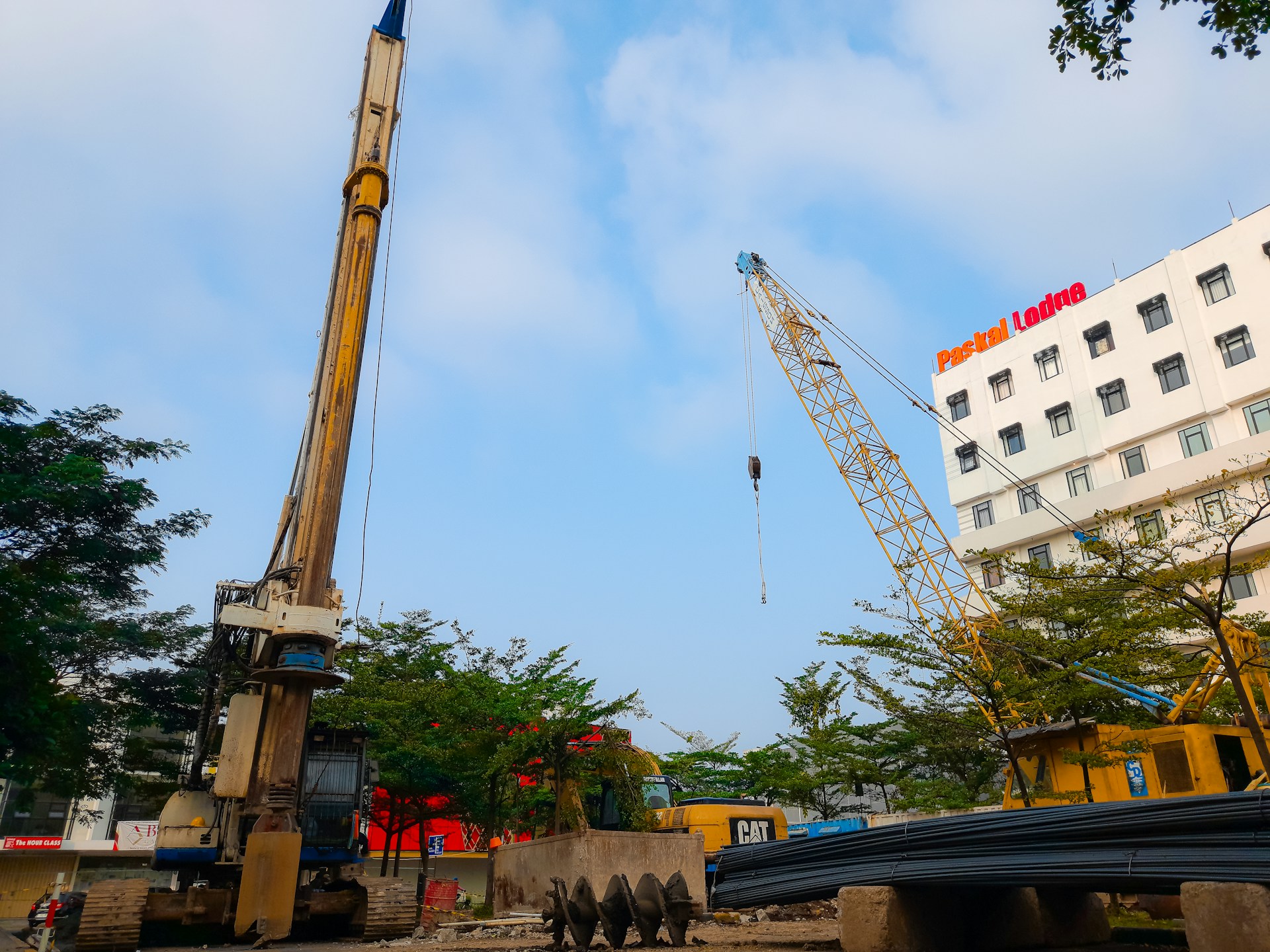
    Many people, whether children or adults, enjoy digging in the earth to see what they can find. For some people, digging holes into the ground can be a career. Earth drillers can help to support many other jobs that make life easier and better for people.

    In some parts of Canada, earth drillers work mainly with oil and gas companies to make these resources available. However, this job can support many other trades and help to make their work possible. Mining is one example where earth drillers are important. These tradespeople drill the shafts that miners need to find nickel, silver, gold, and many other metals. People in this field can also work for geologists or other scientific researchers, governments, and construction companies.

    A high school education or the equivalent is normally the minimum requirement for earth drillers. Taking courses in geology or geography in high school can help, and courses in mathematics and English are useful for making calculations and for reading and understanding instructions. Apprenticeships and technical college courses after high school are good ways of learning the specific techniques of the job.

    Some earth drillers do specialized work, such as handling or storing hazardous materials or working with earthquake detection machines, called seismographs. An ability in accounting can be very useful, especially for self-employed earth drillers or people working in small companies. Having a variety of skills can be helpful to ensure that people in this trade can continue working, even in difficult economic times.

    Like in many other trades, earth drilling is often a seasonal job, with the bulk of the work taking place between late spring and early fall. However, some earth drilling still needs to happen even in winter, such as repairing broken water pipes. Jobs are easier to find in cities than in towns, although mines, where people search for gold and metals, are also good places to find work. Prospects vary according to the state of the economy. Depending on their location and experience, earth drillers can earn between $20 and $47 per hour, or $44,000 and $105,000 per year.

    Operating heavy machinery for earth drilling does not necessarily require much strength, but it requires endurance to work for hours, often in the heat or the cold. Understanding different kinds of soil and rock is useful, and it is important to know the possible dangers of building in various areas. For example, areas near cliffs or riverbanks can be too unstable for many buildings or underground pipes.

    Collaborating with others is an important part of this kind of work. In construction projects, earth drillers need to know what kind of structure is planned for the site or what size of pipe is supposed to go under the ground. Normally, builders and engineers do most of the planning, but earth drillers can also contribute their knowledge to help avoid potential problems.

    One example where an earth driller’s knowledge could be useful is in understanding how earth settles after it has been dug up. Unless builders take that factor into account, they can sometimes encounter problems with the ground under the building settling unevenly. The most famous example of this issue is the Leaning Tower of Pisa in Italy, which started to tilt soon after it was built in 1173. Earth drillers can help prevent that kind of issue.

    Working as an earth driller might not seem very exciting, but it is important for people who work with Canada’s buildings and underground pipes. The job could be right for you.


    Bibliography

    College Grads. “Earth Drillers (Except Oil and Gas); and Explosives Workers, Ordnance Handling Experts, and Blasters.” https://collegegrad.ca/careers/earth-drillers.

    Government of Canada. “Minerals Sector Employment.” https://natural-resources.canada.ca/science-data/science-research/earth-sciences/earth-sciences-resources/earth-sciences-federal-programs/minerals-sector-employment/16739.

    Indeed.com. “Earth Drilling Jobs.” https://ca.indeed.com/q-earth-drilling-jobs.html?vjk=fc9175bbc9f2b305.

    Pathways to Jobs. “Earth Driller (Except Oil and Gas).” https://pathwaystojobs.ca/career/162/Earth_Driller__Except_Oil_and_Gas.

    Payscale Canada. “Average Driller Hourly Pay in Canada.” https://www.payscale.com/research/CA/Job=Driller/Hourly_Rate.

    Pruitt, Sara. “Why Does the Leaning Tower of Pisa Lean?” https://www.history.com/news/why-does-the-leaning-tower-of-pisa-lean.

  • Combining Work and Study: Is It Sustainable?

    Combining Work and Study: Is It Sustainable?

    By: Avreet Jagdev

    At a certain point in their educational career, often in high school or post-secondary, many students find themselves facing a tough decision: is it possible for them to work and study at the same time? How can you do both sustainably? What are important things to know and consider? Let’s break it down.

    Working is not always just an option.

    For many students, working during school is not just an option, but is necessary. Whether it’s to cover tuition, rent, or other living expenses, many students find themselves having no option but to balance both work and school – and it is important to recognize that not everyone has the privilege of making a choice.

    Choosing what to prioritize

    Before you begin to work while in school, reflect on which of the two is more important to you as an individual. Some students may see school as their top priority, but others may see working as more important. Some may see the two as equally important. Understanding what your priorities are is key, as it will allow you to make the decisions that are right for you. For example, if you prioritize work, you may choose to take a lighter course load, or if you prioritize studying, you may set a maximum number of hours for you to work a week.

    The right job makes a difference.

    Working during school can be more sustainable depending on the job you choose. Some jobs may be more demanding, both physically and time-wise. If possible, look for job opportunities that are flexible and accommodating of students. Examples include working as a front desk receptionist, freelance tutor, or library assistant. These jobs are often geared towards students, and you may even have some downtime while on the clock, allowing you to study while you are at work!

    Appeal to your skill set

    In general, the best jobs are the ones that align with you and your skills. Think about what you bring to the table, and what your unique skills and talents may be. If you can find a job that aligns with these skills and talents, it can make it easier to balance school at the same time, in addition to making your work more enjoyable.

    Jobs meant for students.

    Many jobs are meant specifically for students, especially on-campus positions such as assistants for a specific department, building, or library. These roles are often accommodating of student schedules and understand that school is a priority for many. They may also be closer in proximity, if you are someone who is on campus a lot, reducing the time spent commuting to work.

    Mastering Time Management

    Time management is an important skill for students in general, but especially for those who balance both work and school. If you are working, you will naturally have less time to commit to school, so it is important to use the time you have wisely. There are many time management strategies to choose from, but it is important to do what is more effective for you and your lifestyle. You may choose to use a planner, or an app on your phone to stay organized, for example. Other helpful strategies include time blocking, to-do lists, and the Pomodoro method.

  • The Importance of Co-op Programs in Ontario High Schools

    The Importance of Co-op Programs in Ontario High Schools

    No one has their future all figured out while they’re in their teens.  You’re still learning new things about yourself, and still growing your knowledge and skills.  Yet it sometimes may seem as though your high school expects you to decide your whole career path before graduation.  It’s a daunting prospect.

    While some students might know exactly what they want to do for higher education and eventually their career, that’s not the case for everyone.  So, what’s an uncertain student to do?

    This is where a co-op program can come into play.

    What is a Co-op Program?

    Cooperative education programs are courses offered by high schools that enable students to explore options for their future careers while also earning credits toward their diploma.  Students taking a co-op program have the opportunity to learn about a job or workplace by engaging with it directly through a work placement.  This is combined with classroom learning or online learning, all of it overseen by a co-op teacher or guidance counsellor at your school.

    Co-op placements are arranged by the school or school board connecting with local businesses in many different industries – such as many different trades, as well as healthcare, computer technology, performing or visual arts, education, hospitality, and many more.  Potential workplaces are vetted to ensure they will offer students a safe and accepting work environment, and must also adhere to policies and guidelines from the Ministry of Education.

    Why You Should Consider a Co-op Program

    Taking a credit or two of co-op during high school offers plenty of benefits to students.  First and foremost, a co-op placement lets you “try before you buy” in a sense, allowing students to engage with a specific potential career to learn whether or not it’s something they would like to do in the future.  It can be hard to know whether you’ll enjoy certain types of work unless you have the chance to try it out, and finding out you hate it after being hired for a job isn’t ideal.  In this way, co-op programs can help students make decisions about their future career path.

    With a co-op program, students have the chance to learn about daily work tasks, and the workplace environment, and have the opportunity to speak with lots of people who work in the same job or industry.  It’s also an opportunity to apply your classroom learning in real-life situations, which helps students better understand and retain the information they’ve learned.  While the are some exceptions, most co-op programs prefer students to be in grade 11 or 12 before registering.  You can also complete co-op programs after completing the requirements for graduation, but before moving on to post-secondary education or the workforce.

    Co-op programs are available for students in any study track – essential, college, or university level – and with any post-graduation direction, whether that’s more school or into the workplace.  For students who are pretty sure they don’t want to go the full academic route through university and would rather go into the trades, a co-op during school can potentially lead to an apprenticeship after graduation.  In some cases, your co-op can work in conjunction with the Ontario Youth Apprenticeship Program. Because a co-op program is part of your high school curriculum, the hours will be scheduled during your regular school day, which ensures there are no conflicts for students who don’t have the time for a part-time job (for example, due to family commitments) or who do have an after-school job already.

    Co-op placements help students build the important skills they will need in their future careers, whether or not they end up in the same field.  One of the hardest parts of job hunting as a young adult is building work experience when you may not have had a full-time or part-time job before.  But a co-op placement provides the opportunity to develop good workplace etiquette, and soft skills such as communication and decision-making, and gives you some solid real-life work experience to put on your resume.

    If you’re interested in a co-op program, talk to your teachers and guidance counsellor, who can share the details of how your school’s program works and what you’ll need to do to get started.


    Sources

    https://schoolweb.tdsb.on.ca/rci_test/Departments/CO-OP

    https://www.ontario.ca/page/skilled-trades-ontario-schools

  • Trades Careers in the Entertainment Industry

    Trades Careers in the Entertainment Industry

    Lights, Camera, Action!  If the thought of hearing these iconic words every day – of being part of the magic that makes them happen – then maybe a career in the entertainment industry is just the right fit for you.  While people may often think “working in TV and movies” only means “being an actor or producer” there are actually tons of unique and interesting jobs within the entertainment industry, many of which fall under the banner of the trades.

    The Canadian film and TV industry employs thousands of people, in careers covering a wide variety of skills.  The only real requirement is enthusiasm for working in film, television, and theatre.  Tradespeople working in entertainment are the ones making the magic happen – sometimes literally.  From camera operators to set builders, makeup to costuming, and much more, most of what we see on screen in our favourite show or the latest blockbuster goes through the hands of a tradesperson at some point in the creation process.

    If you think the entertainment industry is where you want to build your career, there are lots of options to consider.

    Camera Operators use and manage the camera equipment of a film or television production, and are responsible for filming the action according to the composition, framing, and movement desired by the Director of Photography.  They are familiar with all the camera equipment available on a production, including stationary cameras, Steadicams, and drone cameras, and know how to choose the right camera and settings to capture exactly what they want.

    Carpenters and Electricians are responsible for building and maintaining physical sets and set pieces for a production.  Carpenters will build realistic-looking sets for homes, businesses, castles, and much more including props made out of wooden materials.  They will also repair, and eventually dismantle set pieces.  Electricians are responsible for all the electrical equipment on a production site, including the lighting for both on-site and studio settings. They can also work on electrical props or powered set pieces.

    Catering and Craft Services are people responsible for providing meals and snacks to the actors, production technicians, and other crew members on a movie or TV production site.  On smaller productions, the food is often pre-prepared, but on larger productions catering full meals or hot meals may also be involved.  A background in culinary or restaurant work isn’t required but can be an asset, though food handling safety certifications are necessary.

    Costuming and Wardrobe roles include costume design and creation, as well as on-set wardrobe management and assisting performers with costume changes.  Costume designers will design the look for all the performers in a production, and will create or buy all the necessary clothes and accessories.  Costume or Wardrobe Supervisors oversee and manage all the costumes for a production, typically with help from junior Costume Assistants who will assist with research, sourcing, and purchasing costume pieces.  These assistants often also help the Designer with fittings, adjustments, and cleaning costumes.

    Hair & Makeup Artists create the look and feel of characters on stage and screen through makeup and hairstyles.  Make-up artists will design both normal styles and more special-effects styles depending on the character and type of production, and can work with many materials outside of make-up to achieve the desired look – for example, fake blook and injuries, or putty and tape to change the shape of a face.  Hair Stylists are in charge of creating hairstyles for performers, maintaining a specific look throughout different scenes.  They will also style and care for any wigs being used.   Professional Hair and Make-up artists typically need to complete a beauty school certificate and need to have a strong portfolio showcasing their prior work.

    Sound & Lighting Technicians set up, move, and operate all the sound recording and lighting equipment on a production.  Sound techs can hold boom mics and other sound recording equipment to capture the sound within a scene, as well as move and maintain sound equipment on-set.  Lighting techs will set up, align, move, and maintain lighting equipment.  Both roles are vital to creating the exact mood and atmosphere of the finished production.

    Transportation & Drivers in the entertainment industry are responsible for operating cars, trucks, vans, and trailers to transport cast, crew, equipment, props, costumes, or even vehicles that will appear on screen – basically, anything and anyone that needs to go from point A to point B during a production.  A driver’s license is the primary requirement, and some provinces may need additional licenses for driving larger trucks/vans or trailers.

    These are only some of the unique and interesting career paths within the entertainment industry – there are also lots of niche jobs such as stunt work, fight choreography, animal wrangling, subtitling, descriptive video transcription, and much more.


    Sources

    https://www.toronto.ca/wp-content/uploads/2021/12/950b-screen-industry-pathways-career-guide.pdf

    https://reelcanada.ca/reel-opportunities/careers-in-film/