Category: Jobs and Apprenticeships

  • How and Why Do Apprenticeships Work?

    How and Why Do Apprenticeships Work?

    An apprenticeship is a period of study under a journeyman or master tradesperson in which the apprentice assists the master in their job. In return the master or journeyman will teach and pay the apprentice, readying them for a job in the in-demand field of trades.

    An apprenticeship can last anywhere from a few months to five years, depending on the type of trade you’ve chosen to learn and the availability of work in that field. All tradespeople, with the exception of welders, currently have to pass a Red Seal test before they are approved as a journeyman tradesperson and can begin working independently. Laws are changing, however, and it will soon be necessary to have a Red Seal to practice within any trade in Canada, including welding.

    There is a great deal of variety between trades, apprenticeships and tradespeople. There are plumbers, electricians, pipe fitters, auto mechanics and a large number of other careers. The trades, and tradespeople, are becoming more and more in demand, thus taking a job in the trades can be very financially lucrative. The average entry-level tradesperson makes about $16-$18 an hour in their first year as an apprentice. Master tradespeople easily make salaries that go into the six-digit range.

    Currently, there is a lack of skilled tradespeople in the Canadian economy, making someone who is Red Seal-certified as skilled in their trade of choice greatly in demand. This applies to nearly every trade; going into an apprenticeship can be a very wise choice if you’re interested in making a lot of money.

    The trades are very varied and it takes a separate set of skills to master each one, which is why so much hands-on and on the job experience is key to the success of an aspiring tradesperson. They all involve a degree of math and a lot of work with your hands. They can be dangerous, but also lucrative, and if you’re looking for a stable career tradespeople are almost always in demand.

  • Career Profile:  Farmer

    Career Profile: Farmer

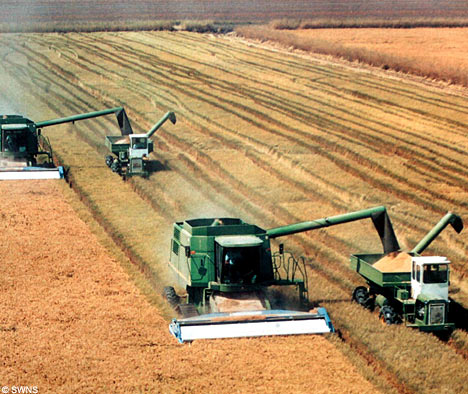
    Every day, people cook and eat food that has come from farms. Bread comes from grain that grows on farms, and fruits and vegetables also often come from there. Milk, cheese and eggs come from animals that live on farms, and also much of the meat that people eat. Farmers grow the food and take care of the animals so that people in the cities and around the country can eat. Working as a farmer can be a difficult and dangerous job, but it is an essential part of every society.

    Farming is a very old occupation which is found in almost every part of the world. People living in North America have grown crops like corn and beans for hundreds of years. However, when settlers came from Europe they brought many other crops with them. Farmers found that British Columbia, with its warm winters and wet climate, is good for growing many types of fruit like peaches and apricots. They discovered that they could grow grains like wheat and barley in places like Manitoba and Saskatchewan, with long, cold winters and short, hot summers.

    Flexibility is an important part of being a farmer. In the past and even now in many countries, farms were small and farmers would be involved in many different types of work. Besides growing grain, vegetables and fruit, they might raise chickens for eggs and for meat, keep bees for honey and possibly even raise fish or other animals. However, in countries like Canada, many farmers concentrate on growing one type of food, such as grain or fruit. They learn how to prepare the soil, fertilize the plants and care for everything the plants need to grow and thrive. Farmers who work mainly with animals learn how to deal with medications, diseases and injuries and to help the animals with finding food and other needs.

    Farming can be a tough job. Grain, fruit and vegetable farming tend to be very busy in spring, when farmers plant their fields, and in fall when they harvest the crops. Animals require a lot of care throughout the year, and many farmers wake up early every morning to milk the cows or to take the animals from the barn to the fields. When diseases hit the crops or animals, farmers can lose a lot of their earnings. Their income depends on the weather, the soil, the health of their animals and many other factors. Farming can also be a very dangerous occupation with all of the accidents that can happen.

    Despite the difficulties of farm life, many people enjoy it. Sometimes, people who grow up on farms decide to take over when their parents retire, but others start out on their own. A degree in agriculture is helpful but is not necessary, since farmers learn a lot from other people and from experience. Farming can be a very good life for people who love to work with their hands and to be outdoors. You might want to consider this ancient occupation.

  • What is an Internship?

    What is an Internship?

    An internship is a generally unpaid position with a company or other organization in which the student, or intern, learns the skills they need for their chosen profession while working hands-on in a real work environment related to their field.

    For example, if you’re becoming a journalist, educator or doctor, your program will most likely include an internship during or near the end of your time of study. In some cases an internship position will be provided for you, but in other programs you may need to go out and find an internship yourself. It really varies depending on what you intend to study, but internships are generally for high school, university or college students, whereas those in the trades would be finding apprenticeships.

    Intern work involves hands-on, on the job experience that is invaluable in your future career. For example, a medical intern would spend time at a hospital working with real doctors, nurses and patients in an actual hospital environment. A journalism intern would have to find a paper, magazine or website to intern for. This could involve whatever your company needs of you, from fact checking or setting up equipment, to going to events with professional journalists. It all depends on what you’re studying and where you get an internship.

    Try not to worry about how to get your internship – most companies are overjoyed to have students working for them and your faculty members will be able to help you out. The internet also has plenty of resources to help you find the right internship for you in your field of study. Don’t be stressed; an internship period is an excellent time to work for and learn from professionals to see what the job is like before deciding whether or not it is for you. An internship is a time to make mistakes and learn from them. Think of it as almost like a fitting room for your career; it lets you check it out and see what the job is really like.

    As well as providing valuable hands-on experience, internships look very good on resumes and are often part of the requirements to graduate from many college and university programs. Sometimes, if you impress your temporary ‘employer’ enough, an internship could very easily turn into a career. Companies are always looking for bright and driven young students to add to their staff.

    Hopefully this has given you some insight as to what an internship is and how to get one. They aren’t a part of every program, but internships are a valuable learning experience and are a perfect opportunity to get some real, hands-on experience in our field.

  • Career Profile:  Archaeologist

    Career Profile: Archaeologist

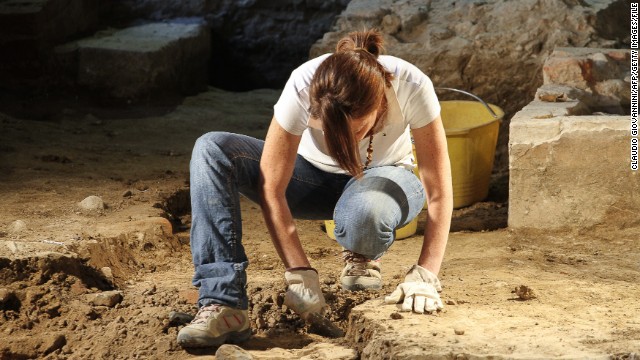
    When you go to museums, you learn a lot about the past. Some museums have information about the relatively recent past, but others give information about people who lived many centuries ago in countries around the world. How do people in the twenty-first century know about the ancient Romans or even the settlers who came to North America two hundred years ago? Much of what people know about the past comes through the work of archaeologists who try to understand other cultures and people through what they left behind.

    Suppose that you wanted to find out about your great-grandmother’s life. You might ask your parents and grandparents for information, and you might also look at old diaries and maybe some of the things she owned. Archaeology is a lot like that kind of search. The main difference is that archaeologists are usually searching for information on whole communities and cultures instead of just one person. They often work far away from home, trying to learn about ancient people and to understand how they lived.

    Part of what archaeologists do is to look for objects that show what life was like in the era they are studying. Some objects might be made of gold or silver, but archaeologists can still learn a lot from even the tiniest beads or other things that the people used. Archaeologists also look for whatever written records they can find, whether they are written on paper, stone, or anything else. Digging for ancient objects, or artifacts, can be slow and difficult work, but it can be very rewarding.

    Before archaeologists get to the point of digging for artifacts, they need to study and learn about what other archaeologists have discovered. They need to learn about ancient civilizations and practice the skills they need for recognizing and preserving artifacts. This process usually involves getting at least a Master’s degree and sometimes a Ph.D. in archaeology at a university. Through this type of program, students learn about fossils, ancient art, museums, and many other topics. They might learn to read Latin and other ancient languages like Egyptian hieroglyphics and find out what people in the past used for medicine and what they ate. A wide range of knowledge can help archaeologists know how to look for artifacts.

    Being able to analyze and interpret what they find is also important for archaeologists. Only a part of their work is digging for artifacts. They also have to analyze and organize what they find, research the history and the objects, and then write about what they discover. For all of this work, they might receive between $55,000 and $60,000 per year, working for a private company, a university, or possibly the government. Working hours can be long when they are out digging, but otherwise, archaeologists usually keep regular office hours. Jobs in the area are limited, but flexibility and a wide range of knowledge can help.

    Do you love history and learning about the past? Why not consider working as an archaeologist?

  • Renewable Energy – A Trade for the Future

    Renewable Energy – A Trade for the Future

    Are you seeking a future-centric career? Looking to make a difference in the world? Want to join an industry destined to flourish significantly within your lifetime?

    With a growing awareness of the negative impacts humans have had on the environment, the increasing concern of environmental problems such as global warming, and the fight to preserve and find alternative ways to sustain the environment and human life, the renewable energy sector provides many opportunities for a rewarding career.

    As more alternative energy options are unveiled, more positions within the renewable energy sector are becoming available. Perhaps you’ll be the person responsible for energy audits, a technician working on solar panels, a designer of wind farms, or working to promote more sustainable building practices. The opportunities are endless and will continue to grow thanks to government initiatives to improve energy practices.

    In 2009, Ontario introduced a Green Energy Act, which was committed to promoting and supporting green energy projects and supporting energy efficiency province-wide, joining in a worldwide initiative to move toward renewable practices.

    The Ministry of Energy has also introduced many incentive programs, including tax rebates, to encourage Canadians to make energy updated to their homes. This could include installing solar panels or wind turbines, geothermal heating or cooling, and more.

    As the renewable energy sector grows, more programs are being offered at post secondary institutions throughout the province and country. Programs are for energy technicians, renewable energy technicians, sustainable building construction, sustainable agriculture, wind turbine technicians and more.

    If you’re looking to explore a rewarding career with opportunities for further growth, development and innovation, then a renewable energy career is perfect for you.

    Depending on the type of renewable energy career you’re interested in pursuing, there are apprenticeship, diploma, and degree opportunities available to suit your wants and needs. The opportunities are endless.

  • Youth Apprenticeship Programs Across Canada

    Youth Apprenticeship Programs Across Canada

    Youth apprenticeship programs are available in most provinces and territories. Check out the programs available in your area.

    Alberta
    The Registered Apprenticeship Program (RAP) allows high school students to participate in an apprenticeship program while they are still attending school. RAP apprentices earn income as well as hours of on-the-job training and work experience as credit towards their apprenticeship program, and their high school diploma. Scholarships are also available for RAP students.

    British Columbia
    The Secondary School Apprenticeship (SSA) is a career program that provides students with the opportunity to begin an apprenticeship while still in high school, and to earn high school credits for doing so. It provides a smoother road from school to work, and a head start to an apprenticeship.

    ACE IT is an industry training program for high school students, with trade classes offered at colleges and sometimes at a high school. ACE IT programs involve a partnership of schools, employers and industry and provides funding for the first level of schooling. Local employers get involved in the development of ACE IT programs, leading to a higher employment rate following completion of the program.

    Manitoba
    The High School Apprenticeship Program (HSAP) combines regular high school instruction with paid, part-time, on-the-job training. Students can earn up to 8 supplemental academic credits for graduation based on 110 working/practical hours per credit.

    Youth Build is a job training and pre-apprenticeship program whereby young people are working under the supervision of a journeyperson to renovate homes and develop building skills. Young people can attend the Youth Build Program full time, as an alternative to school. In Manitoba, there is a 30 hour per week paid vocational component and a 10 hour per week unpaid academic component.

    New Brunswick
    The Career Connections Program (CCP) offers students experience, hands-on paid work experience, and expands their essential employability skills.

    Newfoundland and Labrador
    Youth apprenticeship courses are available for high school students through Skilled Trades Jump Start Your Life.

    Northwest Territories
    The Schools North Apprenticeship Program (SNAP) is an opportunity for high school students to earn credit and pursue a career in the trades.

    Nova Scotia
    The Workit Youth Apprenticeship Initiative is open to youth between the ages of 16 and 19.

    Options and Opportunities (O2) offers students more hands-on learning experiences with a career focus. It’s designed to prepare students for successful transitions from high school to work, a career path, or a post-secondary program.

    Ontario
    The Ontario Youth Apprenticeship Program (OYAP) is a School to Work program that opens the door for students to explore and work in apprenticeship occupations starting in Grade 11 or Grade 12 through the Cooperative Education program.

    Prince Edward Island
    Youth Apprenticeship or Accelerated Secondary Youth Apprenticeship Program (ASAP)Youth Apprenticeship is for students wanting to explore their trade career options and gain a head-start on the post-secondary apprenticeship training program while working toward their Grade 12 diploma.

    Québec
    Québec offers vocational and technical education programs under the apprenticeship system, which are run jointly by Emploi-Québec and the Ministère de l’Éducation, du Loisir et du Sport .

    Saskatchewan
    Saskatchewan Youth Apprenticeship (SYA) raises awareness of apprenticeship in Saskatchewan schools by helping young people discover what rewards come with being a Youth Apprentice and working in the skilled trades.

    Yukon
    The Yukon Secondary School Apprenticeship Training program is open to Yukon secondary school students who would like to explore a skilled trade and complete high school at the same time.

  • Career Profile: Landscaping Technician

    Career Profile: Landscaping Technician

    Type of Work
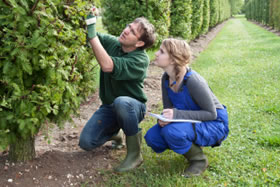
    This unit group includes those who survey and assess landscapes; draw sketches and build models of landscape designs; construct and maintain gardens, parks, golf courses and other landscaped environments; advise clients on issues related to horticulture; breed, cultivate and study plants; and treat injured and diseased trees and plants.

    Outlook
    Over the past few years, the number of landscape and horticultural technicians and specialists increased sharply. This increase is mainly attributable to the growth in demand for landscaping and horticultural products and services. Trends are very positive in landscaping and more mixed in horticulture. Since the landscaping industry accounts for the largest number of workers in this occupational group by far, it is expected that the number of landscape and horticultural technicians and specialists will rise sharply over the next few years.

    Demand for Landscaping (non-construction)
    Landscape technicians and specialists work on projects involving public spaces such as urban and regional parks, public squares, highways, recreation areas, parking lots and nature conservation sites, private and public gardens, recreational and sports areas, pedestrian zones and bicycle paths, golf courses, cemeteries, residential, institutional, commercial and industrial sites, and so forth. The good outlook for tourism infrastructure development and increased public pressure for the creation of green spaces in urban environments should provide jobs for landscape technicians and specialists over the next few years. In fact, niches are developing and moving away from projects related directly to construction. Although the protection of cultural heritage sites and environmental conservation will continue to exert a positive influence on jobs in this occupation, landscape development will be added to this trend in a context of increasing competition in the tourism sector, and as a major element in municipal strategies to retain and attract citizens and companies to the area. Added to this are the needs to redevelop contaminated industrial sites and to preserve and restore cultural and historic sites.

    Requirements
    To work in this occupation, candidates must have relevant landscape or horticulture experience, and enjoy working outdoors. They also need to be in good physical condition and have good manual dexterity. Team spirit, autonomy, initiative, attention to detail and reliability are other qualifications sought by employers.

    Education and Training
    Depending on the position, specific training is not necessarily required to enter this occupation. Although a number of employers require that candidates hold a high school diploma (DES), extensive experience in landscaping or horticulture is sufficient in many cases. That being said, more and more employers primarily recruit graduates of the many training programs leading to this occupation. Whether required or not, landscaping and horticulture diplomas are always assets for those seeking to work in this occupation.

    These are the main programs leading to this occupation:
    – Diploma of Vocational Studies (DEP) inArboriculture-élagage ([arboriculture and pruning] offered in French), Ornamental Horticulture or Landscaping Operations.
    – Attestation of Vocational Specialty (ASP) inSpécialités en horticulture ([horticulture specialties] offered in French).
    – Diploma of Collegial Studies (DEC) in Horticulture and Environmental Technology and Paysage or Ornamental Horticulture Landscaping and Marketing.

    Other programs also lead to this occupation, including Attestations of Collegial Studies (AECs) in landscaping and ornamental horticulture. Community organizations also offer school-to-work transition programs in these fields.

  • Your Non-Red Seal Trade Options

    Your Non-Red Seal Trade Options

    There is more to the trades than you think – here are other jobs that are part of the trade industry. See if one feels right for you! Click through to see more information on select trades from Service Canada, and check back each month as we feature profiles of some of these exciting careers right here on Jobs People Do.

    Construction Sector
    –Cement (concrete) Finisher
    -Concrete Pump Operator
    –Construction Millwright
    –Electrician (Domestic and Rural)
    -Exterior Insulated Finishing Systems Mechanic
    -Hazardous Materials Worker
    –Heat and Frost Insulator
    – Heavy Equipment Operator
    – Dozer Operator
    – Excavator Operator
    – Tractor Loader, Backhoe Operator
    -Native Residential Construction Worker
    –Painter and Decorator: Industrial
    -Precast Concrete Erector
    –Precast Concrete Finisher
    –Refractory Mason
    –Residential Air Conditioning Systems Mechanic
    –Residential (low rise) Sheet Metal Installer
    -Restoration Mason

    Industrial Sector
    -Bearings Mechanic
    –Blacksmith
    -CNC Programmer
    -Composite Structures Technician
    –Die Designer
    –Draftsperson (Mechanical, Plastic Mould Design, Tool and Die Design)
    -Electrical Control (Machine) Builder
    -Electrician – Signal Maintenance (TTC)
    -Elevating Devices Mechanic
    -Entertainment Industry Power Technician
    -Facilities Mechanic
    -Facilities Technician
    –Fitter-Assembler(Motor Assembly)
    –Gas Technician
    -Hydraulic/Pneumatic Mechanic
    -Light Rail Overhead Contact System Lineperson (TTC)
    -Locksmith
    -Machine Tool Builder and Integrator
    -Mould Designer
    -Mould Or Die Finisher
    -Mould Maker
    -Optics Technician (Lens and Prism Maker)
    –Packaging Machine Mechanic
    –Pattern Maker
    -Precision Metal Fabricator
    -Pressure Systems Welder
    -Process Operator (Food Manufacturing; Power; Refinery, Chemical and Liquid Process; Wood Products)
    -Pump Systems Installer/Mechanic
    –Railway Car Technician
    -Relay and Instrumentation Technician
    -Roll Grinder/Turner
    -Saw Filer/Fitter
    -Ski Lift Mechanic
    –Surface Blaster
    –Surface Mount Assembler
    -Thin Film Technician
    –Tool And Cutter Grinder
    -Tool And Gauge Inspector
    –Tool/Tooling Maker
    –Tractor Trailer Commercial Driver
    –Water Well Driller

    Motive Power Sector
    –Alignment and Brakes Technician
    –Auto Body Repairer – Br.2
    -Automotive Electronic Accessory Technician
    –Automotive Glass Technician
    –Marine Engine Mechanic
    -Motive Power Machinist
    -Powered Lift Truck Technician
    –Small Engine Technician
    -Tire, Wheel and Rim Mechanic
    –Transmission Technician
    -Turf Equipment Technician

    Service Sector
    -Aboriginal Child Development Practitioner
    –Agriculture – Dairy Herdsperson
    –Agriculture – Fruit Grower
    –Agriculture – Swine Herdsperson
    –Arborist
    –Baker
    -Bicycle Mechanic
    –Chef
    –Child and Youth Worker
    -Child Development Practitioner
    –Cook – Assistant Br. 1
    –Developmental Services Worker
    –Educational Assistant
    –Electronic Service Technician
    -Gem Setter/Goldsmith
    -Hardware, Lumber and Building Materials Retailer
    –Service Sector Horse Groomer
    -Horse Harness Maker
    –Information Technology (Hardware Technician,  Network Technician)
    –Institutional Cook
    -IT Contact Centre (Customer Care Agent, Sales Agent, Technical Support Agent)
    -Micro-Electronics Manufacturer
    -Native Clothing and Crafts Artisan
    -Network Cabling Specialist
    –Pool and Hot Tub/Spa Installer
    –Pool and Hot Tub/Spa Service Technician
    –Retail Meat Cutter
    -Saddlery
    –Special Events Coordinator
    -Utility Arborist
    -Wooden Boat Rebuilder/Repairer

  • Students and Summer Jobs

    Students and Summer Jobs

    Summer is coming soon, and you might be thinking about family trips, days at the beach and long shopping trips to the mall. For some people, summer is a time to relax and to spend time with family and friends. For others, however, it can be a time to find a job and to earn money for university or for special trips or other projects. After school ends for the year, thousands of students go out looking for work at the many places that offer summer jobs. Have you started job-hunting yet?

    If you are like many other students, you might already have had a paying job. Maybe you have delivered flyers or mowed someone’s lawn to earn a bit of money for yourself. However, working at a summer job is a bit different. Many summer jobs become available in offices, stores and restaurants when the regular employees go on holidays. Sometimes employers might also take the opportunity to hire students to complete special projects that take too much time for the regular employees to finish. In other cases, the work might also be something that happens only in spring or summer, such as gardening or selling plants. All kinds of jobs become available when the weather warms up.

    Working for pay in a summer job is very different from doing chores at home. Most provinces have rules about the minimum age that people have to reach before they can get most types of jobs. New workers also need to get a social insurance number (SIN), which is a government number that allows people to work in Canada. Whenever workers start new jobs, they have to give this number to their employers. Once you have your SIN, you can start the process of looking for work.

    When you actually start looking for a job, the first place to go might be a local student employment office. Online job banks for student are also useful. However, many jobs are never officially listed in any job centre or database. Instead, many employers fill jobs through personal contacts. By talking to people about your need for work, you might be able to get access to this hidden job market.

    Finding a job that suits you is another factor in looking for a summer job. It doesn’t need to be something that you want to do for the rest of your life or even the next few years. However, it should be work that you are able to do, even if you need to learn a lot on the job. If you find a job that you can do well, you have a good chance of being hired again the next year.  You might also learn some skills that you will need to know for the future.

    Looking for a summer job is an important step in the process of becoming an adult. It’s never too early to start thinking about what you want to learn from the experience of earning money during the holidays.

  • Career Profile: Print Journalism

    Career Profile: Print Journalism

    The field of print journalism is an exciting and challenging career path. Journalists have been an important part of society for hundreds of years, writing in newspapers, periodicals, magazines and now, with the widespread use of the Internet, websites.

    A print journalist working in 2014 has to master skills that journalists in former years didn’t have to consider. It’s a fast-paced and ever-evolving field, requiring the ability to think quickly and work under deadlines. For those who are dedicated, journalism can be a very rewarding field.

    Aspiring journalists learn how to write a variety of articles, from straightforward news pieces to music, sports, fashion and culture articles. Journalists learn to be proficient in photography, newspaper and magazine layouts and stay up-to-date with computer programs. Journalists need to know how to conduct proper interviews, ethics behind good journalism, the history of journalism and current issues in the media. Nowadays, Twitter, Facebook and Tumblr have been added into the journalist’s tool belt, as they have to keep up-to-date with current events at all times.

    Journalists are expected to find their own story ideas, especially as the jobs move from steady positions at newspapers such as Metroland and The Toronto Star to contract positions for freelance writers. A good journalist is always on the lookout for potential stories and has a sharp eye for detail.

    Reporters can find jobs doing a variety of things aside from writing. They can work at newspapers, magazines and trade publications, writing about subjects such as fashion, sports, crime, science, medicine, fitness, travel and more. Aside from reporting, other jobs in the field include editing, doing layout, drawing cartoons or copyediting. The editor and copyeditors make sure that the stories reporters submit are verified and true, as well as removing or altering sections. In addition, copyeditors have the important job of checking and correcting the grammar, style and spelling of articles. A poorly written article reflects badly on the publication.

    A journalist’s wage varies depending on the size of publication, seniority, what stories they cover and whom they interview. The average starting wage is $19,000 but it can go up into the six figures for the best and most experienced reporters. Some journalists become famous for their writings and exploits. Tom Wolfe, known for his famous non-fiction New Journalism book The Electric Kool-Aid Acid Test, was one of the first celebrity journalists. Others include the famed novelist Ernest Hemingway, music critic Lester Bangs (who was portrayed in the film Almost Famous) and Rolling Stone reporter Hunter S. Thompson, known for pioneering Gonzo journalism and writing Fear and Loathing in Las Vegas and The Rum Diaries, both of which were adapted into major Hollywood movies starring Johnny Depp.

    Print journalism is an exciting, fast-paced and challenging career path that would be rewarding for those who like to do something different every day and don’t want to work in an office.