
Category: Nature Watch

  • Why Do We Want to Protect the Environment?

    Why Do We Want to Protect the Environment?

    Protecting the environment, natural resources and wildlife is something that is not only supported by people who are environmentalists. Everyone can take part in helping to improve the health of the planet.

    When you walk outside, you may not realize it, but you are depending on fresh air to survive. In Canada, we are fairly lucky as our levels of air pollution are not nearly as high as those in more heavily populated countries like China or India. The health effects of bad air quality have been researched and it is proven to cause a number of diseases and illnesses. Improving the quality of the air is something that can be accomplished via grassroots efforts; That is, through individual efforts to emit less carbon into the atmosphere. Reducing carbon emissions can also be accomplished through the efforts of large companies and corporations, who emit the most carbon of all.

    The quality of the water is also something that is important to consider since we all depend on clean water to survive. Maintaining clean water is something that can be accomplished through individual efforts like not flushing hazardous chemicals down the drain or toilet and trying to conserve water to reduce the demand on the water treatment facilities – an operation that requires a lot of water to conduct. Big businesses could also pitch in to conserve water by investing in water saving initiatives and partaking in water conservation efforts.

    Wildlife also needs our protection. With more and more urbanization, spaces where wildlife are safe is decreasing at alarming rates. Deer, moose, cougars and bears are all often reported in the news as having caused car accidents due to the decline in their natural habitat and their subsequent wandering out onto developed land transformed into highways or suburban neighborhoods. In order to protect wildlife, we must invest in protecting Canada’s natural spaces.

    If you support clean air, water and having a wide range of wildlife in Canada, see if there is a way you can get involved in your community. Help to clean up your local park or visit a wildlife sanctuary to see how they take care of animals.

  • Working with Nature: Park Rangers

    Working with Nature: Park Rangers

    Every year, people across Canada go to visit national or provincial parks. They go hiking or camping, and they spend time walking in the forests or swimming in the lakes. Have you ever thought of the people who help keep those parks going? Someday, you might be able to look after the animals and people in these places if you decide to become a park ranger – also called a warden.

    Park rangers or wardens are people who help to keep parks running smoothly, helping both the animals that live there and the people who come to visit. If you love the outdoors and want to help preserve it for the future, working as a park ranger might be the job for you.

    Many different activities can be part of a park ranger’s job. Rangers have to know how to deal with both large and small animals and to be able to work with them safely. They have to know about the different types of animals in the area and to be able to help them when they are sick or injured. This work can often be dangerous. Moving animals from one place to another spot inside or outside the park is also a dangerous but important part of the job.

    Knowing about the plants in the area is also important for park rangers. If they know the locations of poison ivy, for example, they can tell people what areas to avoid and where they need to be careful. They can take people on nature tours to teach them all about the animals and plants they might see.

    Learning all about the plants and animals in the park takes a mixture of education and experience. Normally, park rangers have four-year degrees in areas such as wildlife biology or botany (the study of plants). Having a general knowledge is important, but park rangers can also become specialists in one or two areas, like bears or insects.

    In some cases, the work of park rangers is close to law enforcement, especially when they work with people who come to visit the park. Park rangers help to enforce the rules, such as the regulations about when people can build fires or what they can do in campgrounds. They might also have to search for people who are lost or help anyone who has been injured or is feeling sick. Park rangers have to know basic first aid and to be able to deal with whatever happens.

    If you decide to become a park ranger, you should be prepared to live in a small community instead of a city so that you can be close to your work. You should be comfortable with working alone but also be able to work with people and to talk with the public. If this kind of job sounds good to you, maybe you should consider becoming a park ranger.

  • Career Profile: Horticulturist

    Career Profile: Horticulturist

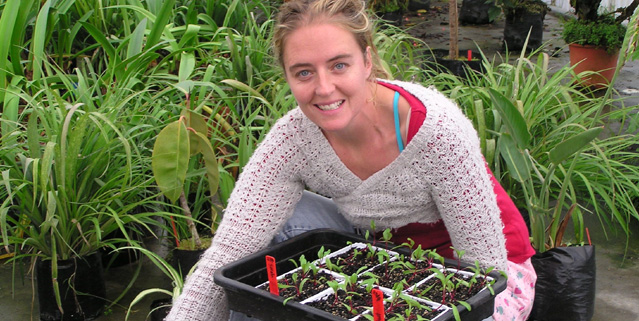
    Many people like to grow flowers and vegetables in their houses and yards. They take care of the grass on their lawns, water their plants in dry weather, and pull weeds from among the plants. Sometimes, they put special fertilizer on the plants to help them grow better. When they take care of plants in this way, they do some of the work of a horticulturalist.

    The work of a horticulturalist can take many different forms. Some horticulturalists do very basic labour, such as digging up the soil in gardens to prepare them for planting or mowing and trimming lawns. They also prune trees by cutting off extra branches and prune smaller plants by removing dead leaves and flowers.

    These horticulturalists need only a basic education, such as a high school diploma. They do all of the basic jobs that keep the plants healthy and growing. Horticulturalists at this level are normally not paid very well, and usually they work only in the growing season from late spring until early fall. However, this kind of job can be good for students or for people who prefer not to spend years studying.

    Some horticultural work requires much more knowledge than a basic labourer needs. People working at this level often have degrees in agriculture, botany, or related fields. They research new plant species for different climates or try to find ways of making plants stronger and easier to care for. Some horticulturalists at this level also help design gardens or advise people on the best methods of plant care. Others become crop inspectors for large farms or work with small, local groups. Still others become professors and teachers in colleges and universities. These horticulturalists are generally fairly well paid, although the salary can vary according to what kind of work is available.

    Either of the two levels of horticultural work could be good choices for anyone who enjoys working with plants. They can work in edible horticulture, growing plants for food. Employment in this area is generally quite secure since people always need food. However, the low pay and seasonal work for some horticultural workers are disadvantages, as well as exposure to dangerous chemicals. Some of the work, such as digging up flower beds, can also be physically difficult. Another option is to work in ornamental horticulture, growing plants like flowers or shrubs for show rather than for food. Work in this area is often less physically difficult, although dealing with chemicals is still a problem.

    Do you love to work with plants and to see them grow? If so, maybe a career as a horticulturalist is right for you.

  • A Job in Nature: Deep Sea Diver

    A Job in Nature: Deep Sea Diver

    For thousands of years, people have wanted to dive deep under the water, either for fun or for a special purpose. Over two thousand years ago, during the time of Alexander the Great, people were already inventing ways to help them breathe underwater. By 1538, Greek divers were able to sink all the way to the bottom of the ocean and come back to the surface without getting wet. However, the diving bells that they had were heavy and difficult to use. People could spend only a fairly short time under the water, and they found it hard to move around.

    That all changed in 1949. A diver named Jacques-Yves Cousteau and an engineer named Emile Gagnan designed a device called the Aqua-Lung. It had two hoses attached to a tank of air and allowed divers to breathe for long periods of time underwater. Later, this kind of equipment for breathing underwater became known as scuba gear. This equipment has made it possible for people to work as deep sea divers, working under the water.

    The most famous deep sea diver was Jacques Cousteau. Besides inventing the Aqua-Lung, Cousteau worked as a deep sea diver for the military during the Second World War. After the war, he became a scientist. He explored the bottom of the world’s seas and oceans to find out about the fish and other animals living there and to record the information for the future. Throughout his life, he tried to help people understand the oceans better and to try to protect the animals living in them.

    Scientific research is a big part of what many deep sea divers do. Other divers work for the military, taking care of equipment or cleaning the bottoms of boats. Still other divers do similar kinds of work in cleaning and maintenance, but for commercial businesses such as shipping companies. Almost any job that involves going under the water can be part of a deep sea diver’s work.

    How can you have a career as a deep sea diver? Training requirements depend on the specific job that the diver has to do. A scientific researcher, for example, normally has to study in areas like biology or oceanography. However, basic requirements for work as a deep sea diver are a high school diploma and diving training. The diver’s safety can depend on this type of training, and it is normally very thorough.

    The work that deep sea divers do is very important. Salaries can vary, depending on where people work and what they do.  Generally, however, they make over $50,000, and they might even make more. Diving can be very tiring work, and it is also difficult or even impossible in bad weather. Because of these factors, divers generally work underwater for less than half of the year. They might spend the rest of the year writing or teaching about what they discovered underwater or getting themselves in shape for the next round of dives. Does this sound like a good job for you?

  • The Value of Volunteering

    The Value of Volunteering

    Volunteering has almost become a dirty word in some circles, and it’s not hard to see why: when you’re looking for a job, giving away your labour for free can seem counter-productive at first. In spite of this, statistics show that some 12 million Canadians take part in volunteer activities each year—that’s nearly half the population . Let’s take a closer look at what you gain when you decide to volunteer.

    First and foremost, volunteering is a great opportunity to learn about yourself and what you enjoy doing. No matter where your interests lie, chances are there is a volunteer opportunity out there for you. Do you love animals? Volunteer at your local animal shelter. Are you passionate about the arts? Volunteer at a music festival. Think you might want to become a doctor? Volunteer at a hospital. You might love it and decide you want to pursue a career in that field—or you might discover that a particular job just isn’t for you.  Either way, you’re gaining valuable self-learning and awareness. Volunteering is the ultimate tool for exploring your interests and experimenting with different kinds of work.

    Not only can volunteering give you a chance to indulge your hobbies and find your passion, it looks great on a resume. Whether you spend a year doing it or just a weekend, volunteer experience can signal to employers that you’re the kind of person who has varied interests, takes initiative and isn’t afraid to try new thing. Given the number of resumes most employers go through, it never hurts to have something that sets you apart from the crowd.

    Another area where volunteering can be invaluable is networking. If you’re having a hard time finding work in a particular field, volunteering is a great way to break into the industry and get your name known. The contacts you meet through volunteering could serve you as references in the future, or they might be able to let you in on trade secrets or even job opportunities that aren’t available to the general public. Most organizations are extremely grateful for the work volunteers do and are more than willing to help you out if they can, so don’t be afraid to ask.

    The final reason to try out volunteering is the simplest: it feels good to give back. Volunteers are the lifeblood of many charitable organizations; without them, the good work these places do would never be possible. Keep in mind that volunteering is best experienced when it’s something that you find personally meaningful. Luckily, given the wealth of volunteer opportunities out there, finding one that matches your passion (and fits your schedule) shouldn’t be too difficult.

    This article has covered a few of the main benefits of volunteering, but don’t take our word for it. Get out there and discover the value of volunteering for yourself!

  • Get Outside and Exercise!

    Get Outside and Exercise!

    We’ve all been there – you wake up to start your day and immediately start thinking of how you can’t wait to get home to go back to bed later. You feel run down and yawn throughout your classes. Your head feels foggy and you have trouble concentrating. All of these signs point to a lack of energy and balance, which can be easily rectified by exercising regularly.

    Maybe you have a full schedule of classes, you work a part-time job and still need time to study on top of that. Don’t worry – you can fit in exercise each day in simple ways! Try walking to and from school each day, if possible. Speed up your normal walking pace slightly to get your heart pumping. You can also jog/run home from school each day to increase the cardiovascular benefits.

    If you have a little more time on your hands, even on weekends, try going to a community centre in your area. Community centres often have exercise equipment you can use for a much lower fee than a regular gym would. Treadmills and elliptical machines are great ways to get in a cardio workout without having to worry about poor weather.

    Many of us feel uncomfortable working out in front of others, so you can even do exercises at home while watching TV or a movie. Try some simple yoga moves, sit-ups or even jumping jacks. There are many great (and free!) websites that offer tips on different at-home workouts you can do that do not require any equipment. You may also want to purchase a workout DVD that combines your interests with exercise. For example, there are DVD’s that involve dance, ballet and even Bollywood moves.

    Another easy option is to play Wii or X-Box Kinect. Many of us own these systems already, so playing a game that involves movement instead of sitting will add up. Many Wii systems come with sports games inside the box, so there is no extra expense incurred. These games will even track your progress and tell you your “exercise age”, which are great motivators.

    Exercising regularly will ensure that you have energy when you need it most. Exercise has also been proven to lower stress and help with anxiety and depression. When you exercise, your body releases endorphins which essentially help you to feel better and calmer. You should aim to exercise for 30 consecutive minutes each day for the maximum benefits. It is also important to not exercise just before you go to bed, as the increased endorphins can prevent you from falling asleep right away. However, exercising regularly does help you to get a deeper sleep more often.

    So make time for yourself each day and get in some exercise. Motivating yourself can be difficult sometimes, so be sure to tell a friend or family member about your goals and they can help to get you moving. Remember – short term pain, long term gain!

  • Health Tips: Handling Stress

    Health Tips: Handling Stress

    Everyone gets stressed out once and a while. Situations that are out of our control, people who cause us grief, and pressures that we feel we cannot handle happen to all of once at some point. Whatever the cause of your stress, even if it is just a generalized sort of anxiety, talking to someone about it will help to relieve the pressure you are feeling. When we remember that everyone undergoes stress at some point in their lives, we remember that we are not alone. Sharing our stories can only help to strengthen and improve ourselves and our lives.

    By sharing your story you are helping yourself out by re-framing your life and seeing yourself more objectively. By identifying the causes of your stress, you can see the problems you are facing and can then take action to provide solutions to those problems.

    Talking to someone can involve chatting in person, over the phone or even in writing. Whatever method of communication you choose, make sure that you are empathetic with yourself and the situations you are facing. Try to picture yourself as someone you don’t know, and think about the story you are living. What are the pressures that you are going through, what are your challenges, what are your goals? Identifying these aspects will move you from being the victim of your life’s circumstances to being in the driver’s seat, being in control and being ready to find solutions to your problems.

    Use your friends, your family, counselors and other resources to help you to see yourself from a different perspective. When you can see that you are just another human being living a human existence, you will discover that you are in control of your destiny. If  you are fighting with your siblings often, for example, you may want to talk with a counselor to see what coping strategies you could use to improve that relationship.

    Whatever your situation may be, gaining control, setting goals and developing coping strategies is your way forward. By talking with someone about what it is that you are going through, you are allowing yourself to see your problems clearly. This is the key for developing successful coping strategies and setting goals for dealing with the situations that you are facing. Remember that you are in control – unless you don’t let yourself speak out. You don’t deserve to suffer, so free yourself from the burden of your problems and let it out today.

  • Getting Your 40 Volunteer Hours

    Getting Your 40 Volunteer Hours

    As you know, all high school students need to have 40 hours of community service in order to graduate. Use this information to discover where your 40 hours can best be used.

    Volunteer Centres work in local communities to strengthen volunteering and citizen engagement. With more than 200 in Canada, each volunteer centre’s name, size, structure and services reflect the unique characteristics of their community.

    To find a volunteer centre in your area, click here.

    Many volunteer centres are independent non-profit organizations, while others are part of a United Way, Social Planning Council, Community Information and Referral Centre or municipal services. Though diverse in many ways, they share the following common functions:

    – Promote volunteering

    – Build the capacity of organizations to engage volunteers

    – Facilitate connections between people with volunteer opportunities

    – Provide leadership on issues related to volunteering and citizen engagement

    If you want to volunteer, your local volunteer centre is there to connect you to opportunities in your community. It may have a database of volunteer opportunities or can connect you directly to opportunities within its member organizations.

  • Why Should I Volunteer?

    Why Should I Volunteer?

    People volunteer their time for lots of different reasons. You can pick your own reasons, but here’s our top ten:

    1. You have to!

      You have to complete 40 hours of volunteer work to graduate high school in Ontario

    2. Forty hours! Sound like a long time? Over four years, you probably spend way more time than that watching TV, standing in front of the mirror or riding the bus.So, the fact you have to do 40 hours of volunteer work to graduate high school in Ontario really shouldn’t be such a big deal.Your school calls this requirement ‘community involvement’. The Ministry of Education has some rules about it, like:
      • You can’t be paid for your volunteer work.
      • You can’t skip class! You can volunteer during the summer, after school, weekends or even on your lunch or during your spare.
      • Chores you already do around the house don’t count. Unfortunately, cleaning your room isn’t volunteer work!

      Your school board has a list of pre-approved volunteer activities. Ask a teacher or guidance counsellor for the list and for the full set of rules. If what you want to do isn’t on the list, make sure you talk to your teacher first to see if your school principal will agree to it.

    3. Pump up your resume.

      When you’re looking for a job, volunteer experience helps. It shows you’re responsible and gives you references who can prove you do good work.

    4. It feels good to help people.

      Try helping somebody and see how you feel – you just might become addicted!

    5. Make the world a better place.

      Making the world better, safer, happier, healthier or cleaner starts with small projects so get in there and get your hands dirty.

    6. Learn something about yourself.

      You might be a great leader or more outgoing than you ever thought – only one way to find out – try new things!

    7. Figure out what kind of career you want.

      Thinking about becoming a doctor? Volunteer at a hospital!

    8. Activism is hot!

      If you’re passionate about causes like the environment or human rights, there are lots of charities and groups you can join.

    9. Meet new people.

      Your best friends might be the coolest, but volunteering is a chance to meet a whole new circle of people.

    10. It’s fun.

      If you volunteer doing something you love and are interested in, the work you do won’t feel like work at all.

    11. Prove adults wrong.

      If you think adults don’t give teens any respect, here’s your chance to prove you care about your community and are ready to lend a hand.

  • Need Volunteer Hours? Join a Mob!

    Need Volunteer Hours? Join a Mob!

    The student’s quest for 40 community service hours is not always a pretty one. Sponge-bathing senior citizens and picking up garbage are healthy for the community, but often so uninspiring to the average teenager that procrastination happens and some diploma-getting is in jeopardy.

    What if you could find volunteer work that you’re passionate about, that gives you larger opportunities, that is part of a worldwide social activist movement? The Me to We (Mob)ilizers are students all across Canada, working from the ground to promote and support the charity Free The Children and facilitate real social change in the world.

    It’s all about going from thinking ‘me’, with selfish or self-centred motives and aspirations, to thinking ‘we’, with motivation to do right for all. If you are seeking to volunteer and get involved as a global citizen on a larger scale, consider joining the Me to We MOB.

    The entire enterprise began when a 12 year old Craig Kielburger read a news article about a 12 year old in South Asia who had died as a result of horrible child labour exploitation. This inspired him to make a difference. In 1995 Craig began speaking out for children’s rights in different small venues throughout Ontario. His vision caught on and late that year, he founded the Free the Children organization, with what he described as the motivation to “free the children from poverty, and free the children from the notion that they are powerless to affect change”.

    This means that while we work to end the enslavement and exploitation of children far from home, we can help children here to understand how valuable they are to the world, becoming enlightened and empowered.

    Today, Free the Children is the world’s largest network of children helping children through education, with more than one million youth in 45 countries involved in its education and development programs (like the Me to We initiatives).

    When an organization gets so large, it can become difficult to stay connected to the individual people while continuing to bring new, passionate youth into the cycle. That’s where the MOB comes in, taking Free the Children back to its grassroots and spreading the message from the ground up.

    Erica Baker is a MOB-Lead for Canada’s West Coast and a summer intern with Free the Children headquarters. When asked to describe what the MOB is Erica’s response, “Can I just say amazing?” was one of honest passion.

    “We are the masses. We are the movement. We are the MOB,” Erica said, “a vast group of students operating out of many cities across Canada, who are serious about making a mark on the social issues of our time. We organize events and fundraisers to benefit Me to We and Free the Children, and bring awesome, motivated young people together from across the country to make change,” Erica continued.

    She revealed that this year, the (Mob)ilizers are supporting one village in India, one in Ecuador, and one in Haiti, with funds going toward building houses, schools, and health clinics there. (Mob)ilizers have the option of going to one of these villages at the end of the school year to see exactly what their efforts are accomplishing.

    Applications are open until July 25th for next year’s MOB. To check out more or apply for a MOB position in your city, visit http://www.metowe.com/movement/mobilizers/join/.