Category: Trades

  • What Is Technical Writing?

    What Is Technical Writing?

    Imagine getting a new phone or computer device for your birthday. Would you already know how to use it or would you need to look at the instructions? When you were younger, did you ever have toys that needed to be put together before you could play with them? If so, you or your parents probably read a technical document—the instructions. Compiling instructions for toys or electronics is only one of the many jobs available to people known as technical writers. People working in this field can write instruction manuals, research papers, advertisements, catalogues, and anything else that requires their special skills.

    Basically, technical writing is about explaining something to another person, but the work can take different forms. One kind of technical writing is about explaining products to the people who buy and use them. It could be the instructions that come with toys, electronics, or kitchen appliances like mixers or dishwashers. It could even be the instructions on packages of instant soup or microwave dinners.

    A second kind of technical writing is about explaining and recording procedures for people working in many different areas, such as engineering and manufacturing. It could include research papers, repair manuals, or procedures for completing certain tasks, such as engineering instructions on what measurements to use for certain types of building projects. This type of technical writing could also include detailed job descriptions for people working in all kinds of areas such as librarianship or accounting. The name for this writing style is technical documentation.

    A third type of technical writing is in the area of marketing or selling things. Technical writers work with advertisements, catalogues, brochures, and other documents that companies use to tell customers about their products and to convince them to buy something. A lot of the advertising you see might come from the work of technical writers.

    Becoming a technical writer involves more than just knowing how to put sentences and paragraphs together. Technical writers need to be able to gather information quickly and to be able to explain it clearly. They have to know the audience (the people who will read the finished documents) and know what kinds of information readers will need. An instruction manual for using a computer game, for example, is very different from a guide to drilling oil wells. Technical writers have to be flexible workers and quick learners, comfortable with working in print or online.

    Almost everyone works as a technical writer at some point. The best way to become a professional technical writer, however, is to get a diploma or certificate in technical communications at a community college. The demand for good writers is increasing, although it can be hard to find a full-time job. Most technical writers work on projects and then move on to other jobs when they are finished. The pay, however, is usually quite good, which helps to make up for times when there is no work. If you love to write, why not become a technical writer?


  • Apprenticeships Develop Enthusiasm Among Young People

    Apprenticeships Develop Enthusiasm Among Young People

    The literal meaning of the term Apprenticeships is the work which is done under some master craftsman while completing theory studies at an accredited trade college. To explain it better, we can say that there are many courses which are offered by colleges that are different from degree programs. These courses are termed as trade courses as they are related to trades such as plumbers, electricians, hairdressers, carpenters, cooks and more.

    While completing these courses, you start working in a professional environment and gain work experience in a job referred to as trade job. In the concept of trade jobs the employer would hire you for a particular job and in return they teach you the practical aspects of the trade. This can be viewed like a barter system in which both the parties gain benefit. Training for trade jobs is conducted on site and for a particular time period (it can start from few months and last up to few years). Students gain a lot while doing these jobs. When we work under a qualified person who has extensive experience in that trade, it becomes easy for us to gain more knowledge than we could have acquired if we read only from textbooks.

    These apprenticeships provide the basic training for future tradespeople. These courses are offered by many colleges that have well qualified staff – the staff members have a lot of knowledge about the trade they are teaching. They provide all the information which is required for each type of trade. Once the course is over, students would be provided with a certificate to indicate that their apprenticeship and training has been completed and they are now qualified to work in their designated field.

    Apprenticeships help you in building a secure future.

  • STEM Jobs of the Future

    STEM Jobs of the Future

    Most of you probably know who Albert Einstein and Thomas Edison were, but you might not have heard of the famous mathematicians, John Nash or the ancient Greek scholar, Archimedes. Do you know what these people have in common? They were all part of a field of work often known as STEM, which includes science, technology, engineering, and mathematics. Work in these fields has always been important, and they are a good choice for anyone with a creative but disciplined mind and the ability to see how far their work can go.

    People like Albert Einstein and Thomas Edison are famous for a very good reason. They knew a lot of theory, but they also helped to change people’s everyday lives. Long winter evenings would be very different without Edison’s light bulb, for example. The value of work that mathematicians do is less obvious, but their discoveries make all kinds of other work possible. Without mathematics, for example, engineering would be impossible. Without engineers, we would have no bridges or tall buildings. Their calculations make it possible to build many of the towers and other structures we now have.

    Training for work in STEM jobs normally involves a high level of education. A minimum of a bachelor’s degree is normally necessary for work in these fields, and usually a master’s degree or PhD is required. The most specialized training is in engineering, where students learn to apply their education to building bridges and other structures. Other STEM fields of study lead to work in areas such as computer sciences, statistics, and agriculture. For many people, this involves further studies beyond a basic bachelor’s degree. With this training, they can become qualified to work in many different areas of society.

    Workplaces for people in STEM jobs can be in offices, universities, and laboratories. They might work with test tubes inside a building or travel around the country, collecting samples of soil or testing the water for anything that might harm the environment. Many people with training in STEM fields also become teachers or university professors, where they pass on their knowledge to others.

    STEM training can help in many areas of life. In biology and biomedical sciences, for example, research results can affect how doctors treat illnesses. Studies in mathematics can lead to work in gathering and analyzing statistical information, which can help people in government and many other fields to plan for the future. With so much variety in workplaces, salaries also vary. Low-level STEM jobs start at about $36,000 per year, but high-paid jobs can reach over $120,000 per year.

    What kinds of people work in STEM jobs? In the past, men tended to take most of the jobs in this field, and that can still often be the case. However, women are starting to become more involved in the work, and many of them are becoming well known in their fields.  Do these kinds of jobs appeal to you? Working towards a career in STEM fields can be a good choice for the future.

  • What’s An Apprenticeship?

    What’s An Apprenticeship?

    Apprenticeship is a form of post-secondary training that teaches the skills and competencies necessary to perform tasks to an industry standard. Apprenticeship training provides the opportunity for hands-on learning under the direction of a certified journeyperson, with the ability to earn while you learn. The training combines alternating periods of on-the-job (80 to 85%) and technical training (15 to 20%). Technical training can occur at a college, a union training centre, a private trainer or online. Once the apprentice has completed the required hours and/or modules for the trade, the apprentice can write a certification exam. Apprenticeship is regulated by the provinces and territories, creating 13 unique systems geared to the labour market needs and conditions in each region of Canada.

    Canada also has a standard of excellence known as the Interprovincial Standards Red Seal Program. It is offered in 55 trades. Through the Program, tradespersons obtain an endorsement on their provincial/territorial certificates by successfully completing an interprovincial exam, making it easier for them to move between provinces or territories, and employers.

    How long does it take to complete an apprenticeship program and become a certified tradesperson?

    The length of the training varies depending on the trade, but generally takes between 2 and 5 years. Most of the training is provided in the workplace. Normally, an apprentice works for 40 to 44 weeks a year and goes to school for a six-to-eight week “block” of training.

    How much does it cost to complete an apprenticeship?

    Apprenticeships cost very little compared to most post-secondary training options. Tuition costs vary depending on the trade and the province/territory. There may be additional costs for books, equipment, tools and living expenses. However, apprentices are paid during their on-the-job training. There are also a number of grants and tax credits available to reduce the cost of apprenticeship training. Consult your local apprenticeship office to learn more about both federal and provincial/territorial supports.

    Another big benefit of apprenticeship training is that it allows apprentices to “earn while they learn,” significantly reducing student debt loads. University under-graduates left school with an average debt load of $25,000 in 2005, with much higher rates of debt in the eastern provinces. As paid employees, apprentices are generally able to cover their costs without substantial student debt.

    Does an apprentice receive an income while attending a technical school?

    If apprentices have been employed for long enough to qualify, most are eligible for Employment Insurance (EI) while they are in school. Some employers pay their apprentices while they’re in school, or “top up” EI benefits so apprentices continue to receive the equivalent of their wages while they’re in school. It is recommended that apprentices have this discussion with their employers upfront. Apprentices serve only one two-week waiting period per apprenticeship and are not generally required to wait in subsequent training periods. It is important to understand the regulations surrounding Employment Insurance eligibility, so be sure to contact Service Canada for more information.

    Are apprenticeships regulated by the government?

    Apprenticeship programs are regulated by provincial and territorial governments. Each province and territory is responsible for deciding whether a trade is designated “compulsory” or “voluntary.” If a trade is compulsory, legislation generally requires someone working in that trade to be a qualified journeyperson or an apprentice working under the supervision of a journeyperson. This typically comes into play in areas involving public safety (i.e. an electrician). Check with your provincial/territorial apprenticeship authority to learn more about designated trades in your jurisdiction.

  • Medical and Dental Assistants

    Medical and Dental Assistants

    When you go to a doctor’s or dentist’s office, you usually meet a few different people. Besides the other patients waiting for their appointments, there’s the receptionist who takes your name and then tells you when you can go in. The next person you see is probably the medical or dental assistant. These people help with a wide variety of tasks within a medical or dental office and are often a very important in the work of caring for the patients who come for treatment.

    The tasks of a medical or dental assistant can vary a lot, depending on training, the size of the office, and how the doctor or dentist likes to work. However, most assistants do a combination of working with the patients and doing paperwork. The paperwork might include taking down information about a patient’s previous illnesses and current state of health, making appointments, or writing down information for insurance payments.

    Working with patients might include helping a doctor give needles, weighing patients, taking x-rays of people’s teeth, and preparing dental fillings. In addition, medical and dental assistants might clean instruments such as dental tools, prepare the room for the next patient to come in, and generally be ready for anything the doctor or dentist needs. Assistants need to be ready for anything from sweeping the floor to dealing with medical emergencies.

    Most medical or dental assistants work in private offices and clinics. Their work is mostly self-regulated. This means that the requirements for the work depend largely on what their employers want them to do. Completing high school or its equivalent is usually a basic requirement, and most dental or medical assistants must know CPR (cardiopulmonary resuscitation) in case a patient’s heart stops during a treatment. Many assistants also get special training and receive licenses to work in their field. The training is usually about ten months or a year at a technical school, with a heavy emphasis on scientific subjects like physics and biology. Taking the sciences in high school is a good way to prepare for this field.

    For medical assistants in Canada, salaries range from about $23,000 to $51,000 per year, and for dental assistants, they are between about $29,500 and a little over $53,000. Montreal currently has the lowest wages, and Alberta has the highest. Some employers pay more than others, but experience also helps move workers up to the higher salaries.

    Medical and dental assistants might never be featured on television shows or enjoy the high status that their employers have, but their work is essential in caring for the needs of patients. If you choose to get into this field, your work will help make many other people’s lives easier and better.

  • Career Profile: Electrician

    Career Profile: Electrician

    A career as an electrician provides a fair amount of job security whether you are self-employed or hired within a company. Electricians are required across the board, from domestic to commercial settings. Due to the dangerous nature of the work involved, electricians must be highly qualified and trained. If a career as an electrician appeals to you, read on to find out what steps you will need to take to become qualified as an electrician.

    Education
    In order to become an electrician you first need to get qualified, which requires you to enroll in an apprentice program. In order to apply for an apprenticeship program you will most likely be expected to possess a high school diploma or equivalent. Apprenticeship programs will provide classroom instruction as well as on-the-job training. Expect the apprenticeship to last a duration of 4 years, with approximately 144 hours of classroom based instruction and 2,000 hours of on-the-job training. Classroom instruction will consist of learning about electrical theory, mathematics, electrical code requirements, blueprint reading, and safety practices. Some specialized training may be received, such as working with elevators and fire alarm systems. As for on-the-job training, expect to work under the supervision of an experienced electrician who will set your tasks and guide you until you can master the tasks given on your own.

    Graduating
    Once you have graduated there are a variety of routes you can go down. Many electricians choose to work for construction firms, service companies or utility companies. Most graduates will be involved in some kind of maintenance work, where they will be expected to primarily maintain and upgrade existing electrical systems. If you enter into the construction field, you will be part of a team responsible for installing new wiring systems within new buildings. Alternatively you can go down the self-employed route, but that would require a lot of self-promoting and an understanding of registering your self-employed status for tax purposes. You would also need to pass a licensing exam in order to obtain a trading license. Check with your local authority about what is required to set yourself up, if you are interested in becoming a self-employed electrician.

    Earning potential
    Electricians are expected to command very good base wages. However, much of this depends on the company you work for and the perks they offer. If you are self-employed you will set your own hourly rate or job rate, but keep in mind that you will need to factor in promotional costs, transport costs and parts costs.

    Advancement
    Once experienced, electricians can advance to positions such as a supervisory roles. Within the construction field they can become employed as construction superintendents or project managers.

    If this sounds like a career that would suit you, check online via your local job center or career center in order to inquire about local apprenticeship programs. Find out what apprenticeship opportunities there are with local electrical contractors and local electricians. In order to become qualified you will need to study in the apprentice role for 4 years, so make sure this is the right career choice for you before becoming committing.

  • Career Profile: Graphic Designer

    Career Profile: Graphic Designer

    Hobbies can be fun and relaxing, but sometimes they can be more. Do you enjoy drawing and being creative? If so, you might want to turn your interest into a career. Graphic designers use their skills and creativity to make books, websites, and other documents more interesting and informative.

    Basically, a job in graphic design involves working with the visual aspects of documents, whether online or in print. Graphic designers might work with diagrams in technical documents, photographs and illustrations for brochures, and covers for books. Some of them design websites or business logos. Others work with publishers in designing the layout of books and magazines to ensure a good balance of text, illustrations, and blank space.

    Becoming a graphic designer involves both skill and education. Community colleges and trade schools offer courses in graphic design, where people can study for one or two years to earn a certificate. Universities also offer degrees in Fine Arts which can help improve people’s chances of getting a good job. A good website to check for information on specific programs is the National Association of Schools of Art and Design.

    Through their studies, students learn how to improve their drawing skills and to use the different tools that are available for their work. They also learn other skills. One of the most important qualities in graphic design, as in most other jobs, is the ability to solve problems. The problems might be fairly easy, such as finding an illustration for a cookbook. At times, they could be much harder, such as trying to fit a large amount of text into a small space. Sometimes graphic designers might need to work with other people, such as editors, to solve these problems. Knowing how to resolve the problems they encounter will help graphic designers become better at their jobs and help them succeed.

    Some graphic designers get full-time jobs with magazines or other publications. Depending on the size and type of magazine, graphic designers can make between about $34,000 and $54,000 per year, not including extra benefits like money for travel or further education. This type of work can sometimes be stressful because of tight publication deadlines. However, the stability of this kind of work can be worth the busy schedule.

    Freelancers make up about a third of Canada’s graphic designers. They might work for several different companies at once or they might work on one project at a time for several months. Even before one project is over, they need to start looking for a new one. This gives them a lot of flexibility in their work, but it also means that they frequently need their problem-solving skills for finding new jobs. For people who enjoy variety and who don’t mind some insecurity, this can be a good option.

    Would you like to work at making documents easier to use and understand? If so, you might want to consider a career in graphic design.

  • Career Profile: Police Officer

    Career Profile: Police Officer

    People who are attracted to being a police officer highlight the many benefits associated with this position. They want to work as a police officer because of the thrill of working to promote a crime free city or country, or they want to have the structure that working for a large organization like the city police or the federal police offers. The job of being a police officer is often unglamorous and involves a lot of paperwork – not like the movies would have you believe. It does, however, involve working on a team and also being responsible for your own independent work. In order to prepare to be a police officer, there is training to be done either at the college or university level. This training involves taking courses in law or another social justice type field, like police foundations.

    In Ontario there are many colleges and universities that offer these types of courses. If you’re looking for something in French, you could try the College Boreal in Sudbury. If you’re looking for something that will allow you to get through your schooling in the timeliest manner possible, you can check out the program at Mohawk College in Hamilton which has a duration of one year. Advanced Police Studies at Conestoga College in Kitchener will also have you through courses and ready to work in a year. If you’re on route to a university degree already, you may choose to enroll in a program at Georgian College in Orillia for a Bachelor of Human Services (Police Services) with a co-op option. Fleming College in Peterborough offers a program of 4 semesters for a total of 2 years of Police Foundations studies.

    Once you have your college or university degree you are all set to apply to the organizations for which you are qualified. If you chose a co-op option, you will be even more prepared for the work journey ahead of you. Once you get in with an organization, you will be able to earn a comfortable living starting at $46,000 per year and progressing to $83,000 per year after 36 months (OPP website, 2013). You also receive a set amount to cover travel expenses and benefits from the beginning of your employment. This will vary as per the organization that you are working for, but it gives you a good idea of what to expect.

    If being a civilian police officer is not for you, then you can look into being a military police officer – a position in which you will have many opportunities to travel. This is a great option for someone looking for structure and the protection that comes with working in a large organization like the Canadian Forces. In order to be a police in the military, you have to go through basic training (which is mostly physical in nature) and then you have to go through 6 months of training to become an officer. Starting wages as a military police officer are approximately $33,000 per year(Canadian Forces website, 2013).

  • A Career as an Agricultural Engineer

    A Career as an Agricultural Engineer

    Agricultural engineering might sound like complicated work, but the nature of the job is really quite straightforward. It’s a collision of two worlds – bringing engineering solutions to agricultural projects, particularly concerning crop production and raising livestock.

    What is an Agricultural Engineer?
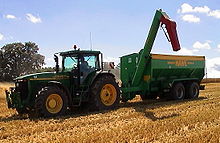
    An agricultural engineer designs the machines and tools used in farming including tractors, planters, animal housing facilities, harvesting machinery, drainage and soil conservation systems, water and flooding systems and much more. They are responsible for maintaining the efficiency of these machines and systems, making improvements to those that fail in order to meet the appropriate standards.

    Who do They Work for?
    Many work as consultants for large production companies or engineering firms that manufacture agricultural machinery and storage facilities. There are also teaching and research opportunities at colleges and universities and with branches of the federal government that deal with the farming industry. In some instances, they also work as sales representatives by selling products and engineering solutions to farmers and breeders in need.

    What Education Do I Need?
    If agricultural engineering is a field that piques your interest, it’s a good idea to focus on developing problem solving and critical thinking skills that enable you to think outside the box, so to speak. Typically, engineers will face problems with malfunctioning equipment and out-of-date practices that create time sensitive issues. Engineers must be able to think on their feet and discover solutions within the parameters given to them in the most efficient way possible.

    In high school, it is recommended that students take advantage of all available courses in mathematics, physics, chemistry and biology. In university, these courses are further explored with the addition of computer science, crop science, leadership, design and engineering courses.

  • Career Profile: City Planner

    Career Profile: City Planner

    Urban planning can make a huge difference to how people live and how visitors experience the city. Streets set in squares or rectangles, for example, are easier for visitors to follow but can be boring for the city’s residents. The number of parks and other green spaces can make a huge difference in how people feel about a city, and the organization of public transit or other methods of transportation can make a difference to the health and happiness of people in the city.

    Sometimes, good urban planning can even help transform a city. This happened in the South American city of Bogota, Colombia, several years ago. Even when the results are less dramatic, the role of city planners is very important. Becoming a city planner is a good career choice for anyone with the imagination and insight to find the best possible ways to use land in urban areas.

    Planning a city can be a lot like putting a puzzle together. Basically, the role of urban planners is to make the city as liveable and efficient as possible so that people can go to work, go home, and enjoy their lives as much as possible. Finding places for people to live is an important part of urban life. Planners need to find space for apartments, houses of different sizes, seniors’ homes, and other places for people to live. Making room for roads and public transportation systems like buses or subways is also an important part of urban planning. People also need places to shop and room for community centres, schools, churches, and many other buildings.

    Another very important part of city life is its parks and green spaces where people can spend time outdoors. When Enrique Peñalosa became the mayor of Bogota, Colombia in 1998, he wanted to do something about the crime and the huge economic differences in his city. He limited car usage in the city but also set up one of the best city bus systems in the world. He also realized the importance of green spaces. Part of his plan was to build new parks, walkways, and bicycle lanes so that rich and poor people could all get out and meet each other in public places. These ideas have not solved all of Bogota’s problems, but they have made a huge difference.

    This kind of creative thinking is essential for urban planners. Becoming a city planner normally requires at least a bachelor’s degree and often a master’s in urban planning recognized by the Canadian Institute of Planners. Many universities across Canada offer degrees in this field. City planners spend a lot of time gathering information, analyzing it, and trying to fit the information into plans that help the people in urban areas. For this work, city planners generally get paid between about $40,000 and $87,000 per year.