Category: Uncategorized

  • The Part-Time Job Experience

    The Part-Time Job Experience

    When looking for a part-time job, you don’t have to settle for just anything. There are many jobs that are tailored specifically for students that will also help you to reach your long-term career goals or just get you the experience you need to move up the corporate ladder. With the spring season fast approaching, many retailers are looking for part-time help immediately to assist them with the rush of customers.

    Retail is the most common type of part-time job for students. This includes clothing stores, convenience stores, grocery stores and most other jobs where you are required to work hands-on with the public. With so many different types of retail opportunities to choose from, you can select something in an area that is of interest to you. Like fashion? Apply clothing stores in the local mall, who generally require more people on evenings and weekends when you are likely to have some free time. If you like beauty, you can apply to work at a make-up counter in a department store. If you like sports, you can apply at many fitness-related retailers or even to be an usher at a local sports arena.

    If you enjoy being outdoors, a plethora of part-time jobs are available to you. You can deliver newspapers/flyers a few mornings a week or be a dog-walker. You can also shovel walkways or clear driveways during the wintertime. Many people are too busy to do this during the Christmas holidays, or they will be out of town on vacations. You can advertise your services in this regard on free community message boards such as Kijiji and Craigslist.

    Another important option to not overlook is the food industry. This includes restaurants and cafes as well as fast food. Most restaurant workers will need to obtain their “Food Safe” or “Smart Serve” certificates to prove they can handle food and kitchen tools in a sanitary manner. This course is generally only one day in length and will give you access to many different jobs that others without the certificate would not be able to get. Another advantage of working in the food industry is that your wage is often supplemented by tips.

    Retail jobs, while they may seem boring, will provide you with a solid foundation in the business world. You will learn how to use cash registers (many companies have their own computerized systems), handle cash and credit card transactions, do paperwork and bank deposits and practice loss prevention strategies. Most importantly, they will give you hands-on experience in customer service – this is perhaps one of the first things you will be asked about in subsequent jobs interviews. Being able to work with the public in a friendly and helpful manner will get you far in your chosen career.

  • 10 Tips For Healthy Eating

    10 Tips For Healthy Eating

    1. Start Your Day With Breakfast

    Breakfast fills your “empty tank” to get you going after a long night without food. Eating a good breakfast can help you do better in school. Easy to prepare breakfasts include: cold cereal with fruit and low-fat milk, whole-wheat toast with peanut butter, yogurt with fruit, whole-grain waffles or even last night’s pizza.

    2. Get Moving

    It’s easy to fit physical activities into your daily routine. Walk, bike or jog to see your friends. Take a 10 minute activity break every hour while you read, do homework or watch TV. Climb stairs instead of taking an escalator or elevator. Try to do these things for a total of 30 minutes every day.

    3. Snack Smart

    Snacks are a great way to refuel. Choose snacks from different food groups – a glass of low-fat milk and a few graham crackers, an apple or celery sticks with peanut butter and raisins, or some dry cereal. If you eat smart at other meals, cookies, chips, and candy are okay for occasional snacking.
    4. Work up a sweat

    Vigorous work-outs, when you’re breathing hard and sweating, help your heart pump better, give you more energy and help you look and feel your best. Start with a warm-up that stretches your muscles. Include 20 minutes of aerobic activity, such as running, jogging or dancing. Follow-up with activities that help make you stronger such as push-ups or lifting weights. Then cool-down with more stretching and deep breathing.

    5. Balance your food choices – don’t eat too much of one thing

    You don’t have to give up foods like hamburgers, french fries, and ice cream to eat healthfully. You just have to be smart about how often and how much of them you eat. Your body needs nutrients like protein, carbohydrates, fat, and many different vitamins and minerals such as vitamins C and A, iron, and calcium from a variety of foods.

    6. Get fit with friends or family

    Being active is much more fun with friends or family. Encourage others to join
    you and plan one special physical activity event, like a bike ride or hiking, with a group each week.

    7. Eat more grains, fruits, and vegetables

    These foods give you carbohydrates for energy, plus vitamins, minerals, and fibre. Besides, they taste good! Try breads such as whole-wheat, bagels, and pita. Spaghetti and oatmeal are also in the grain group.

    8. Join in physical activities at school

    Whether you take a physical education class or do other physical activities at school, such as intramural sports, structured activities are a sure way to feel good, look good and stay physically fit.

    9. Foods aren’t good or bad

    A healthy eating style is like a puzzle with many parts. Each part, or food, is different. Some foods may have more fat, sugar or salt, while others may have more vitamins or fibre. There is a place for all these foods. What makes a diet good or bad is how foods fit together. Balancing your choices is important. Fit in a higher-fat food, like pepperoni pizza, at dinner by choosing lower-fat foods at other meals. And don’t forget about moderation. If two pieces of pizza fill you up, don’t eat a third.

    10. Make healthy eating and physical activities fun!

    Take advantage of physical activities you and your friends enjoy doing together and eat the foods you like. Be adventurous – try new sports, games, and other activities as well as new foods. You’ll grow stronger, play longer, and look and feel better! Set realistic goals – don’t try changing too much at once.

  • First Jobs that Don’t Come with Fries

    First Jobs that Don’t Come with Fries

    One of the first milestones you’ll hit after puberty and before graduation will be your first job. Nothing says adulthood like going to work (even if it’s part time). Noreen Rasbach, writing for The Globe and Mail, found that 65 per cent of high school students have a part time job.

    Think you’re ready for the leap? Hesitate about a job that requires you to ask, “do you want fries with that?” Gotajob.com puts it nicely, “It is a common misconception among teens that the only jobs available to them are in fast food restaurants or grocery stores. Those types of positions are often most visible, and they are great jobs, but they are not the only options.” Here are some other places to apply.

     1. Lifeguard/ Swimming Instructor

    Typically thought of as a summer job, you can still do this year round at community centres and branches at the YMCA. If you’re a strong swimmer and have completed the necessary courses as well as your First Aid/CPR, you could be teaching the doggie paddle to toddlers in no time.

    2. Tour Guide

    If you’re bilingual, consider a job where you take members of the public around a gallery, museum or part of your city. This is the perfect job for a detailed oriented person with a knack for remembering factoids.

    3. Tutor

    Did you ace biology last year? Have you been taking piano since 3? Advertise yourself as a private tutor. Private tutoring companies will charge parents an arm and a leg for their own certified tutors. Prove your stuff to interested parents (show them report cards, ask a teacher for reference, play Mozart’s Sonatas).

    4. Pet-Sitter

    Know of a family going on holidays or just taking off for the weekend? Offer to walk Fido and feed Fluffy while they’re away.

    5. Retail

    It may be a bit harder to get a retail job with no experience, but try and aim for a seasonal position either in the summer or during Christmas. I’ve worked for 5 years at a toy store from lowly sales clerk all the way up to assistant manager. Every year I’ve seen the staff double from July-August and again from November-December.

    Whatever job you land, make sure you make time for the most important thing: school. In a 2007 Statistics Canada report, working teens are averaging 7.1 hours a week. Ask yourself if you could realistically juggle a part time job on top of school, homework and extracurricular activities. Simona Siad from The Star interviewed 16 year old Tulin Akdemir, who warns “You have to have a part-time job to make money, then you have to keep your grades up and then all your extra things. It’s really hard.”

    Any of the jobs mentioned above are temporary and short-termed. Ease yourself into the working world with a few of these so you can get a sample of what you really like and what you would like to avoid. Even if you disagree; there’s no rush to growing up!


  • Don’t Be THAT Girl

    Don’t Be THAT Girl

    Your hair is so ugly! Did you gain weight? Have you heard some of these or other worse things uttered in the hallways? Were you the one who said some of those nasty things? A recent article from the New Zealand Herald found that 85 per cent of teenage girls have experience some sort of bullying. The most shocking thing is that when it comes to girls, some of this bullying is coming directly from their friends.

    If you’re the victim of a friend’s torment you may be blaming yourself first and bringing unnecessary doubt and confusion to yourself. Rachel Simmon, author of Odd Girl Out, found “one of the chief symptoms of a girl’s loss of self-esteem is the sense of being crazy, of not being able to trust one’s own interpretation of people’s actions or events”. If you don’t understand why your BFF is turning on you, it may be her problem – not yours.

    Now, if you’re on the other side of the equation and are part of bullying, please think about your actions. It’s a false position of power to be the bully. Girls may form cliques and have their own way of dressing, talking or sharing of a secret. Leora Tanenbaum states it simply in her book Catfight, “the ironic thing about being included is that it necessarily entails exclusion”.  Bullies need to ask themselves why they are excluding others. There isn’t a guarantee that you’ll stay in the exclusive clique forever; you may just end up being the outcast.

    Some would tend to think that bullying would involve violence, but this isn’t always the case. Getting a group of friends to ostracize, say hurtful things and spread rumours about you are all forms of bullying too.

    The one thing someone being bullied should do is also the thing they will most likely avoid: it’s important to talk to your parents about what you’re experiencing. If you’re too scared to do that, you should talk to an adult you trust. Sometimes, it’s beyond your own control when it comes to bullying. It’s important to let someone in a position of authority know what’s going on. High school should be a place that will give you four years of great memories, not something you should dread.

  • The Outdoor Adventure Industry: Not Your Typical Day at the Office

    The Outdoor Adventure Industry: Not Your Typical Day at the Office

    A brief window into the thrill based and skill based world of adventure sport.

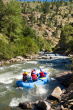
    The vast array of dangerous jobs out there has started to receive more exposure, especially with reality TV recognizing our love to experience these jobs from the comforts of our couch. From coal mining to deep sea fishing, television seems to cover it all. However, a less exposed but speedily growing industry falling into the “dangerous jobs” category is outdoor adventure. Whether it is rock climbing instructors, heli-ski guiding, white water kayak or raft guiding, Canada’s adventure sport scene is booming. An interview with Trevor Cardozo, who has rafted for Canadian Rockies Rafting in the Canmore/Banff area of Alberta, provides some insight on what it takes to work in a job so vastly different from the typical nine-to-five/sit at your desk kind of job that many of us will likely end up in.

    What made you decide to enter the outdoor adventure industry?

    I had done a ten day canoe trip in Quebec when I was in high school, and that was kind of my crash course into the outdoor adventure world. I got accepted into university for a computer related program, but decided to rethink what I wanted to do, and to instead attend Algonquin College’s Outdoor Adventure diploma program, because of my experience on that canoe trip. The Algonquin program became my springboard into a career of climbing, paddling and eventually water raft guiding. Many people enter the industry because of the adrenaline rush, but for me it was more the ability to not be stuck in an office and be in the outdoors all the time.

    How do you deal with the “danger” aspect of the job?

    Always be on your toes, thinking about risk management and minimization. Know the difference between perceived risk and inherent risk, especially in rafting, as people often have a misconceived idea of it, often assuming it may be safer than it actually is.

    What are the some of the skills needed to succeed as a raft guide?

    You have to be really personable, loud and assertive. It is your job to make sure people have a great trip, so you almost need to be an entertainer. Between rapids there can often be quite a bit of time spent on flat water, and you want make sure your customers are not bored.

    What advice would you give to someone who wants to get into the outdoor adventure industry?

    Do it! There are basically two routes to go through. The first being broad outdoor adventure and education training, through companies like NOLS and Outward Bound, or college programs like the one at Algonquin (at the Pembroke ON campus) or Thompson Rivers University (in Kamloops BC). The second way to get into the industry would be to go directly to the company you are interested in working for, with no experience and work your way up.. if you take that route, you need to pay your dues.. work hard, work a lot and maybe even work for free.. but it will be a great learning experience. Specifically with white water rafting, most companies offer a guide training program. Some companies charge for this or others will pay you for it, but not until the end of the season, to ensure guides do not skip out after training and work for another company. A great certification to get that most companies will require is Wilderness First Responder.


  • Too Cool for School !

    Too Cool for School !

    “A human being is not attaining his full heights until he is educated.” – Horrace Mann

    It is important to remember messages such as these when the pressure of high school really sets in. Will I make friends? Will I fit in? Will my teachers be too strict? – It takes a few years and a couple life lessons to really understand the insignificance of these questions. High school isn’t a popularity contest or a soap opera, it’s a learning institution that will help to mold you into the person that you one day hope to be. It’s a stepping stone on the path to a life that you can be proud of.

    Statistics Canada reports that 191,000 young people aged 20 to 24 had not completed a high school diploma and were not attending school in 2009-2010, though this is a significant drop from the 340,000 in 1990-1991, it is still a cause for concern. Too many high school students are not taking their education seriously and are putting their futures on the back burner.

    It may seem cool to work in a fast food restaurant or a trendy clothing store for now, while you are living at home with your parents or guardians, and your income is solely for partying or material things. But eventually that roof with no longer be over your head, and your free ride will be over. Suddenly, those 32 hours a week and that minimum wage job won’t seem so glamorous anymore. You’re faced with the reality of bill payments and rent cheques and that bank account is getting smaller and smaller every month. This is when it hits you… “I should have just toughed it out and stayed in school.”

    It takes a lot of hard work and motivation to succeed in this world. A cushy, high paying job won’t just be handed to you on a silver platter (unless you are one of the lucky few, but let’s face it… if you were, you wouldn’t need us.) and every dollar in that bank account will have been earned with pride.

    Whether you’re bullied, burdened or just plain lazy, a high school diploma is an accomplishment that is recognized all over the world, and there is nothing that should keep you from it. Keep your eye on the prize and before you know it, you’ll be throwing your hat in the air, anxiously awaiting what comes next…


  • Debt: Your New BFF

    Debt: Your New BFF

    Debt is a four letter word that should not be feared.

    Students who learn how to manage debt during university are paying themselves a great investment. You may be hearing horror stories of friends of friends who are paying off student loans years after graduation. Even the media pitches in and tells tales of students with debt so large that it seems unlikely they will ever pay off.

    No one wants to start out in life saddled with debt, but this could really be the best thing you do for yourself.

    Good Debt vs. Bad Debt

    A $1000 handbag or watch from your favourite designer is bad debt. $1000 towards books and supplies is good debt. Debt that goes towards something that will benefit you in the future is fine. Using borrowed money to earn your degree will only guarantee yourself a chance to earn much more than someone without a degree or diploma.

    Dr. Richard Settersten and Barbara E. Ray’s book Not Quite Adults highlights this fact, “taking on a little debt for a bigger payoff down the road is smart”. Settersten and Ray also shared Nobel laureate, Milton Friedman’s advice: people should borrow the most early on when their earnings are the smallest, save a lot when they are in their highest earning years in midlife, and then start spending all those savings after they retire.

    Be Realistic

    BMO Financial Group surveyed students across Canada and found that half believe that they will graduate with zero or less than $10,000 debt. This doesn’t quite match up with the findings from Statistics Canada, which states the average student graduates with $18,800. Be realistic when you’re borrowing money and always know how much you’ve taken out and how much you’re spending.

    Be Strategic

    Arthur Chan, who took out Canada Student Loans for fives years at Carleton University to complete his engineering degree, graduated with a debt of $21,000. He wasn’t able to find a job in his field until 8 months after graduation. Now, 2 years in a full time position with the government of Canada, that massive loan is all but a distant memory. How did he do it?

    Just because you’re able to borrow a large amount of money, doesn’t mean you have to spend all of it. Arthur lived at home during university and took public transportation everyday to keep costs low. He also worked part time retail jobs during summer vacations. When he wasn’t able to find a job right away, he applied for interest relief on his student loans. Once he was able to secure a job, he used his earnings to get rid of the debt as quickly as possible. The key is to learn how to save as much as you’re able to borrow.

    With tuition costs rising across Canada, sometimes adding everything up really discourages prospective students. Don’t let debt deter you from getting the education you want. Remember: education is a right, not a privilege.


  • Get Hooked on Summer Journaling

    Get Hooked on Summer Journaling

    School is out for the summer and for most students, summer journaling is the last thing on their minds. Sure it is fun to hang out with family and friends, watch TV, go online; or just lay back and relax, but how can these experiences be enjoyed and reflected upon later after this summer becomes just a memory?  You can capture these special moments through summer journaling.

    Some may be wondering why they should bother to keep a journal, and what is to be gained from doing so. It has been proven through scientific research that “the mindless summer movies, books and television you’re enjoying may be harmful to your intellectual health”; but once critical and active thinking is involved in these activities, intelligence is found considerable better ¹.  Writing each day through the summer will keep your mind busy. The brain is a muscle, the more you work it  the stronger it will become. However, do not get too bogged down with writing; in order to have something to write about you need to experience summer.

    Journaling can be whatever you make it out to be. Now is the time to write whatever you want – the key is to let yourself go and embrace the freedom writing grants you!  During school, students are often confined to write in a certain style, and given a specific topic; the aim is to instruct students in important writing skills and to encourage critical thinking. Although these tools are necessary, they are only the spring board into a deeper realm of writing. There are so many things to write about, and different ways to express yourself through writing.

    Summer journaling does not have to be limited to an essay format, or personal response however, you can follow these styles if you so desire. There are many other ways to write, such as writing: a song, poem (rhyme, free verse, haiku etc), paragraph, or any other way you come up with – the possibilities are endless! It is a good idea to set a minimum of how much to write per day (i.e. 3 lines, a paragraph etc), but do not set a maximum. By setting a limit you confine yourself; writing without limitations allows room to grow and mature. It is up to you to decide what to write about, ideas may include what you did that day; what you would like to do this summer, what you did past summers, favorite things (sports, hobbies, places), or what you see yourself doing in 5 years. If you are stuck for creative ideas, there are resources such as Lorraine M. Dahlstrom’s Writing Down the Days: 365 Creative Journaling Ideas For Young People ². Dahlstrom lists historical events throughout her book, and suggests ideas to write and expand on. If you are unable to find this book at your local library, or purchase it from a bookstore or online, you could do your own search for special events or people that are connected to the day you are writing on.

    Write to enjoy yourself. It can be a reflection on your day, or you could begin your day by writing – it is up to you. If you miss a day, do not worry. Some of you may not be used to writing daily, but over time it will become a habit, and maybe you will even continue keeping a journal after this summer is over. While you are having fun, you are also exercising your mind and improving your writing skills. By keeping a journal, you will be able to reflect back once you are older, and relive these special moments. So what are you waiting for? Create and preserve these memories through summer journaling!

    ¹ Harris, Misty. “Stupidity seems to be contagious, study finds Mindless fluff may harm you intellectually.” Calgary Herald. 16 June 2011. Print.
    ² Dahlstrom, Lorraine M. Writing Down the Days: 365 Creative Journaling Ideas For Young People. Minneapolis: Free Spirit Publising Inc. 1990. Print.