
The trades sector in Canada is constantly growing and changing. So how do you know which career path is right for you? Here at Jobs People Do, we’ve assembled a list of some of the hottest jobs in the trades industry that will be in high demand for years to come. Take a look at just some of your options and then click on the link to be taken directly to career information. Find out what kind of education you will need and how much you can expect to be paid.
Tag: canada
-

November Scholarships of the Month – Apply Now!
You’re in your first year of post-secondary and in the midst of a myriad of assignments and preparing for exams – so you’re probably not thinking about scholarships. But by taking only a few minutes out of your day to apply, you can be on the fast track to free money to help fund your education. If you’re planning on entering college or university next September, many scholarships for 2015 are also accepting applications now. Read on to see what we found this month all across Canada!
1. Beggs-Dowling-Mathieu Scholarship – Open to all students across Canada. Amount: $1000. Deadline: September 30, 2015.
2. Bourse commémorative Ken Hildebrant – Open to Quebec students studying an Engineering field. Amount: $2000. Deadline: September 30, 2015.
3. Bracebridge Generation Award – Open to Ontario students active in environmental causes and/or community service. Amount: $1000. Deadline: September 30, 2015.
4. Pipe Line Contractors Association of Canada Student Bursary – Open to students whose parent is employed (or has history of employment) with a company who is a member of the Pipe Line Contractors Association of Canada. Amount: Depends on need. Deadline: November 24, 2014.
5. CIPS Alberta Blaine Feniak Memorial Scholarship – Open to students in Alberta and Northwest Territories who are enrolled in a Computer Sciences program. Amount: $500. Deadline: September 30, 2015.
6. Barney Danson Scholarship – Open to students with vision loss across Canada who have proven their dedication to success through their academic, personal and charitable endeavors. Amount: $5000. Deadline: May 31, 2015.
7. Pearl & Max B Herman Bursary – Open to Bachelor degree students at the University of Regina. Amount: $5500. Deadline: September 30, 2015.
-

Why Canada Needs More STEM Students
As a wealthy, diverse and constantly growing nation, Canada needs students and workers going into the valuable fields of engineering, technology, science and mathematics. While these can be some of the most challenging career paths, they can also be some of the most rewarding. The acronym STEM stands for science, technology, engineering, and mathematics.
There are many other subcategories within the STEM fields like biology, geology, psychology, robotic engineering, aerospace engineering, industrial engineering, software design, computer hardware design, anthropology, sociology and a whole lot more! STEM fields are the backbone of society and new students are always needed to design, improve, innovate and create.
Graduates of STEM programs are extremely valuable to Canada and make great contributions to the Canadian economy and culture. The achievements of Canadians in STEM fields are known worldwide and it’s up to the next generation of students to continue that legacy of greatness. Engineers are responsible for buildings and structures and are required for just about any major project, from bridges to houses to high rise condominiums. Scientists and mathematicians are needed for a huge variety of jobs, from biologists and chemists to the robotics experts that created the world famous Canadarm or some of our leading bio medical doctors and researchers.
STEM graduates are needed in almost every field, be it politics, conservation, law enforcement, architecture or military. Former STEM graduates create and plan the roads we drive on, the planes in the sky, the computer programs we use, and they even helped to design your home or school. This wide variety of STEM-based careers is integral to the functioning of society. Simply put, if there were no more STEM students the world would be a much more chaotic place to live!
Not only do STEM graduates benefit their country, they also benefit themselves. They can open the doors to a wide variety of jobs and careers that put your intellect and creativity to the test as well as paying out steady incomes. Unfortunately, Canada currently isn’t producing as many STEM students as it once did, according to data from the Conference Board of Canada’s website.
Now more than ever, Canada needs students to step up and study STEM programs and career paths. Take a look at STEM today!
-
All About Apprenticeships
What is apprenticeship?
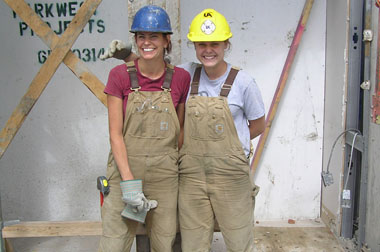
Apprenticeship is an agreement between a person (an apprentice) who wants to learn a skill and an employer who needs a skilled worker — “earning while learning.” Apprenticeship is a proven industry-based learning system that combines on-the-job experience with technical training to produce a certified journeyperson. Upon completion of the specified training period, apprentices receive a Certificate of Qualification. On average, 85% of the apprentice’s training, which usually takes two to five years, is spent in the workplace; the rest is spent at a training institution.What is a designated trade?
Under the terms of the Canadian Constitution, each province and territory has the responsibilities for education and training which includes apprenticeship. The legislation permits each jurisdiction to designate occupations for apprenticeship.Designated trades are governed by regulations under the Provincial and Territorial Apprenticeship Acts. These regulations outline the administrative procedures and in some cases the standards and conditions of training for specific trades (e.g. methods of registering apprentices, curriculum, accreditation, and certification).
Who administers apprenticeship programs?
Apprenticeship programs are generally administered by provincial and territorial departments responsible for education, labour and training (under the direction of the provincial or territorial Director of Apprenticeship) with authority delegated from the legislation in each province and territory.The Program is supported by a network of advisory bodies, such as Apprenticeship and Certification Boards, Local Advisory Committees and Provincial Advisory Committees.
Industry-driven provincial and territorial apprenticeship training boards are major policy-making and governing bodies for apprenticeship training relating to recommendations of trade designation, curriculum requirements and regulatory aspects of trades and occupations.
Is certification compulsory or voluntary?
The skilled trades are classified as either compulsory or voluntary. Generally, compulsory trades require workers to be certified or registered as apprentices in order to work in the occupation. Voluntary trades involve voluntary apprenticeship training and certification as workers are not required to be registered or certified to work in that trade.Even though many trades deemed compulsory in some of the jurisdictions are also Red Seal trades, it is not mandatory for a worker to obtain the Red Seal endorsement.
What is the Interprovincial Standards Red Seal Program?
The Red Seal Program represents industry’s recognition of an interprovincial standard of excellence for the skilled trades.Through the Program, apprentices who have completed their training and become certified journeypersons are able to obtain a Red Seal endorsement on their provincial or territorial Certificates of Qualification and Apprenticeship by successfully completing an interprovincial Red Seal examination.The Program encourages harmonization of provincial and territorial apprenticeship training and certification programs by developing and maintaining interprovincial standards of qualification for Red Seal trades, in partnership with apprenticeship and certification stakeholders. To date, there are 55 trades included in the Red Seal Program on a national basis.Legislation permits provinces and territories to designate trades and develop apprenticeship programs for their own requirements. Thus, in excess of 300 apprenticeship programs are available across Canada. The Ellis Chart, a comparative chart of apprentice training programs across Canada, is produced by HRSDC in collaboration and consultation with the provinces and territories and provides training and certification details for all of these apprenticeable programs.
How to obtain a Red Seal?
In certain trades, holders of provincial and territorial Certificates of Qualification can apply to write an Interprovincial Examination; if successful, they receive a distinctive Red Seal, which is affixed to their Certificate of Qualification.An Interprovincial Standards Red Seal can be obtained in the trades designated as Red Seal by:
– graduating from a recognized provincial or territorial apprenticeship training program; o
– meeting requirements established by the provincial or territorial apprenticeship authority; or
– having the time and experience working in a Red Seal trade assessed to qualify to write the Red Seal examination.
– passing the interprovincial standards Red Seal examination for that trade. -
We Can Make Canada’s Reality Match Its Image
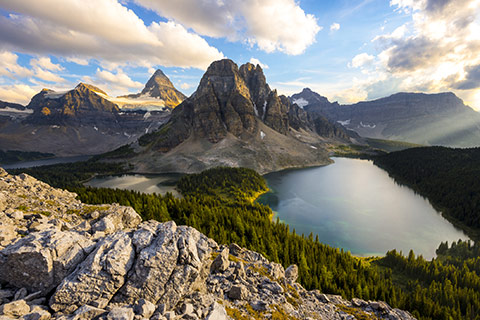
Canada is blessed with some of the last vestiges of pristine nature on Earth — unbroken forests, coastlines and prairies, thousands of rivers, streams and lakes, open skies, abundant fresh air. Many of us live in urban areas, but our spectacular landscapes are embedded in our history and culture. They define and shape us as people.
We are also defined by our Constitution, which is far more than a set of legal prescriptions. It embodies our highest aspirations and values. As our nation’s top law, one would expect it to reflect our connection to the land, air, water and wildlife that keep us alive and healthy. Our Constitution’s Charter of Rights and Freedoms gives us freedom of expression, equal protection from discrimination and the right to life, liberty and security of the person. But it doesn’t mention the environment. How can we fully enjoy our freedoms without the right to live in a healthy environment?
Some Canadians are further ahead than others. Quebec’s Environmental Quality Act and Charter of Human Rights and Freedoms both include environmental rights. Other provinces and territories — including Ontario, the Yukon, Northwest Territories and Nunavut — provide limited environmental rights. Worldwide, 110 countries enjoy constitutional rights to a healthy environment, and 181 of 193 UN member countries support recognition of such a right. Canada and the U.S. are among the exceptions.
The sad truth is that Canada fares poorly among wealthy nations on environmental performance. A recent ranking by the Washington-based Center for Global Development puts Canada last of 27 industrialized nations. The Conference Board of Canada rated our country 15th out of 17 industrialized nations for standards on air pollution, climate change, water and other environmental factors. And the World Health Organization reports that 36,800 premature deaths a year and 13 per cent of illnesses and injuries in Canada are related to exposure to environmental hazards — costing us tens of billions a year in health-care expenses and lost productivity.
The benefits of constitutional protection of the environment are many and the drawbacks few. In places with such a right, people have legal avenues to protect them from activities that pollute the environment and put human health at risk.
For example, Argentina’s constitutional environmental-rights protection was used in a case where industrial pollution was seriously affecting the health of people along the Matanza-Riachuelo River. After residents sued the national, provincial and municipal governments and 44 corporations, Argentina’s government established clean-up, restoration and regional environmental health plans. It has increased the number of environmental inspectors in the region from three to 250, and created 139 water, air and soil quality monitoring points. There’s still much to be done, but three new water-treatment plants and 11 new sewage-treatment plants mean millions of people now have access to clean water and sanitation. Many garbage dumps and polluting industries were shut down. And the local economy benefited.
A legal right to a healthy environment is not about hamstringing corporations; it’s about ensuring they’re run responsibly and that people’s health and well-being come first. It’s also about ensuring laws are enforced and penalties imposed when they’re violated. The total amount of fines imposed under the Canadian Environmental Protection Act from 1988 through 2010 (about $2.4 million) amounted to less than what the Toronto Public Library collected in overdue-book fines in one year, 2009 (about $2.7 million)! And it’s not a right-versus-left political issue. Jacques Chirac, France’s conservative president from 1995 to 2007, made constitutional recognition of the right to a healthy environment one of his priorities. More than 70,000 French citizens attended public hearings on the issue andFrance’s Charter for the Environment was later enacted with broad support from all political parties.
Evidence suggests that stronger environmental regulation spurs innovation and competitiveness, so the right to a healthy environment can benefit the economy. In the aftermath of the Walkerton disaster, Ontario strengthened its drinking-water legislation, which stimulated development and growth of the water-treatment technology sector. Countries with constitutional environmental protection, such as Norway, often enjoy high economic and environmental standards.
It won’t be easy to get the right to a healthy environment enshrined in Canada’s Constitution. But with public support and small steps along the way — such as encouraging legal protection from municipal, regional and provincial governments —we can make it happen.
-
Old Growth Forests 101
Why are old-growth forests important?
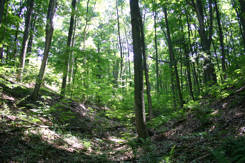
When thinking about healthy forests, it’s not often that we think about dead, dying or diseased trees but any forest manager will tell you that they’re an essential part of a healthy forest ecosystem, and a key characteristic of old-growth.
Dr. Bill Freedman, a professor of biology at Dalhousie University in Halifax, Nova Scotia, and Chair of the Nature Conservancy of Canada’s (NCC’s) National Board of Directors, explains that “old-growth forest contains some large and old trees, but all age classes are present.” Old-growth forests exist because they have not been subjected to a significant disturbance such as wildfire or clear-cutting for a century or more. Overall, it’s not easy to pin down an age at which a forest becomes “old,” because depending on the climate, geography and soil, a forest’s composition and lifespan will vary drastically.
So what makes old-growth forests unique, and why are they important? The first answer is that old-growth forests contain trees in all phases of their life cycle, from saplings, to mature trees, to dead standing trees and finally, as rotting trees on the forest floor. This provides a home for many species of plants, fungi, invertebrates, salamanders and snakes, and makes old-growth forests hotspots for biodiversity and a refuge for high concentrations of species at risk.
“Protecting old-growth forests means respecting the elders, letting them die a natural death and crash down, even if they’re diseased,” notes Mark Stabb, NCC’s Central Ontario Program Manager. Dead trees significantly change the structure and composition of the forest, but there are always saplings waiting in the shadows to take their place. “This helps us understand how they will respond to disease and natural disturbances such as fire, tornadoes or earthquakes,” says Stabb.
“There aren’t many old-growth forests left compared to a couple hundred years ago,” he adds. But the 200-year-old Happy Valley Forest (HVF) Natural Area in Ontario is a good example of a forest that is growing old. Located just 35 kilometres from Toronto, this 2,851-acre (1,154-hectare) forest is an outstanding example of mature Sugar Maple and beech forests characteristic of the Oak Ridges Moraine. The HVF is critical habitat for over 110 breeding bird species, including the nationally significant Acadian Flycatcher and Cerulean Warbler and amphibians like the Jefferson Salamander.
Dr. Henry Barnett, whose land NCC helped protect in the HVF and who has been instrumental in convincing neighbours to put their land under conservation protection, remarks, “with more than 210 acres (85 hectares) protected so far, hopefully the Happy Valley Forest will have a chance to become truly old-growth in the years ahead.”
Provided by Nature Conservancy Canada
-

Comparing Tuition Fees in Canadian Schools
When children are young, their parents sometimes begin to set aside money for different purposes. Sometimes they start special bank accounts so that their sons or daughters will have some money to spend when they get a bit older. They might also start an education fund to start to save money for a university or college program in the future. Why would they do that? They know that post-high school education can be expensive, but saving money for their children can help make it possible to continue studying. When the time comes to choose a post-secondary school, students can also help by comparing costs and seeing where they can get the best value for their tuition money.
Tuition refers to the fees students pay for being able to go to classes and to earn degrees, diplomas, or certificates. Normally, the cost of books and other supplies are not included in the tuition, which covers salaries, maintaining the buildings, and other basic costs. Tuition fees have been rising quickly almost everywhere in Canada, much faster than the cost of food, clothes, and other daily needs. In some places, the fees have almost doubled in the past five years, and in other places, they are almost four times as much as they were. One exception is the province of Newfoundland and Labrador, where tuition has been kept at the same level as it was in 2004. Ontario generally has the highest tuition fees, followed by Saskatchewan. Quebec and Newfoundland and Labrador generally have the lowest fees.
Even within each province, tuition fees can vary a lot. In Saskatchewan, for example, there is only about a $200 difference in tuition between the most and least expensive university tuitions. In British Columbia, however, the most expensive university costs seven times as much as the lowest-priced. This difference can add up to a large amount of money for a four-year program, which could cost almost $55,000 by 2023. Unless students can live rent-free with their parents, they also have the expenses of rent, food, and other necessities of life. This can add up to a lot of money. Cost is an important factor in choosing your program after high school, but it is only one part of the decision.
When the time comes for you to choose a post-secondary program, money should not be your only consideration. Sometimes, the best programs with the most support for job searching are also the most expensive. An expensive institution might also offer extra benefits, such as music or sports programs, volunteer opportunities, or a selection of courses not offered elsewhere. If these benefits are important to you, a high-priced school can be a good option. If not, a lower-cost program might be best. Beside these factors, being close to family or friends, being in a big city or small town, or other personal considerations should influence your decision. If you research your options well, you can find a program that combines good economic value with a useful education for your future.
-
Great Changes for the Great Lakes
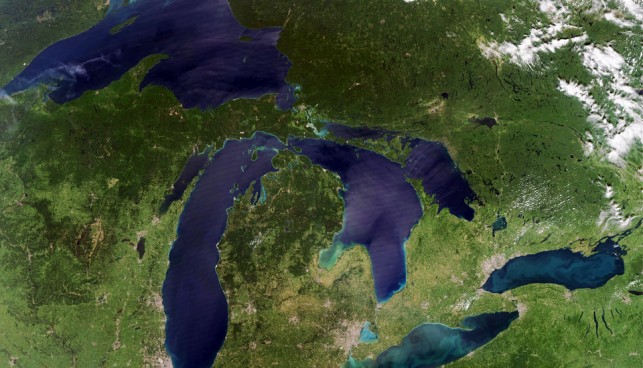
Across the world North America is known for many things; the culture, the people and the great outdoors. Part of that great outdoors is the Great Lakes. The Great Lakes are an integral part of our North American identity; and to preserve that identity in 2005 the premiers of Ontario and Quebec and the leaders of eight American states that border the lakes came together and signed the Great Lakes Water Pact.
The Great Lakes Water Pact is a pact that has introduced strict regulations in regards to the usage of the Great Lakes and it has sunk the tentative thoughts of shipping water to thirsty regions in the United States and Middle East. It was signed by the Canadian provinces and the American states that surround the Great Lakes; Ontario, Quebec, Ohio, New York, Pennsylvania, Michigan, Indiana, Illinois, Wisconsin and Minnesota. The agreement includes rules that make it difficult for communities surrounding the Great Lakes watershed to use the water and also aims to prohibit the commercial export of the lake water by restricting withdrawals of water to five gallon (twenty litres) containers.
The affects this pact has on future generations are great. The Great Lakes are a natural resource that are depleting and are not renewing as fast or as much that is necessary. More than thirty five million people rely on the lakes for drinking water, and the lakes are only able to replace one percent of that per year.
The Great Lakes Pact is important for North America’s future generation because it ensures that not all the lakes will be used up and it will be saved from disappearing. This works in the favour of future generations because it guarantees that the lakes will be there for their own usage as well just as it was there for the past generations usage. Not only does it assure fresh and natural drinking water for generations to come but it also promises that the amount of surface water in the world stays intact. The Great Lakes contains twenty percent of the world’s surface water and this pact will make sure that the surface water will remain for years to come. Without that surface water the world may dry up which in turn will not only affect people directly but also indirectly via the drying up of crops and vegetation.
The Great Lakes Water Pact was signed in the year 2005 but its positive effects will last the world for years to come, both directly to people close to them and indirectly to people around the world. Directly through the fact that the Great Lakes are a source of fresh drinking water for people that surround them and indirectly because of the Great Lakes being a source of surface water that helps hydrate crops and vegetation, and without the lakes those crops and vegetation’s would dry up and therefore not feed communities around the world.
-

Bike Riding Across Canada
Starting on her bike ride this month, Angella will be travelling through one of Canada’s smaller ecozones. This region, called the Pacific Maritime ecozone, covers approximately 196 000 km2, approximately the size of the country of Senegal. It spans the whole length of British Columbia’s western edge, which also includes Vancouver Island and the Queen Charlotte Islands. The close proximity to the Pacific Ocean means that winters are mild with temperatures ranging from 4°C to 6°C, while summers are cooler with an average temperature of 12°C to 18°C.
The Pacific Maritime region is mountainous, and by the end of the week Angella will have travelled 369 kilometres over land, but also, more than 750 metres (2470 feet) up. Her climb in elevation between Victoria and Princeton will be equal to climbing almost to the top of the world’s tallest building, the Burj Khalifa, at 2700 feet.
As Angella passes through this region, she’ll notice that the Pacific Maritime ecozone is home to the tallest trees in Canada. These trees are found in the forests that occupy 45% of the region’s land mass and cover approximately 10 million hectares. Five different forests make up this region: the Western Hemlock forest, Mountain Hemlock forest, Douglas fir forest, Arbutus and Garry Oak forest, and the famous Temperate Rainforest. Each one consists of various coniferous trees.
Angella may see a large diversity of wildlife on her ride. Woodland animals are common throughout the region, and include Black and Grizzly Bears, Moose, and Cougar. Much less common, and unique to this ecozone, is the Vancouver Island Marmot, a highly endangered animal found only on Vancouver Island.
-
Report shows action on climate change is critical
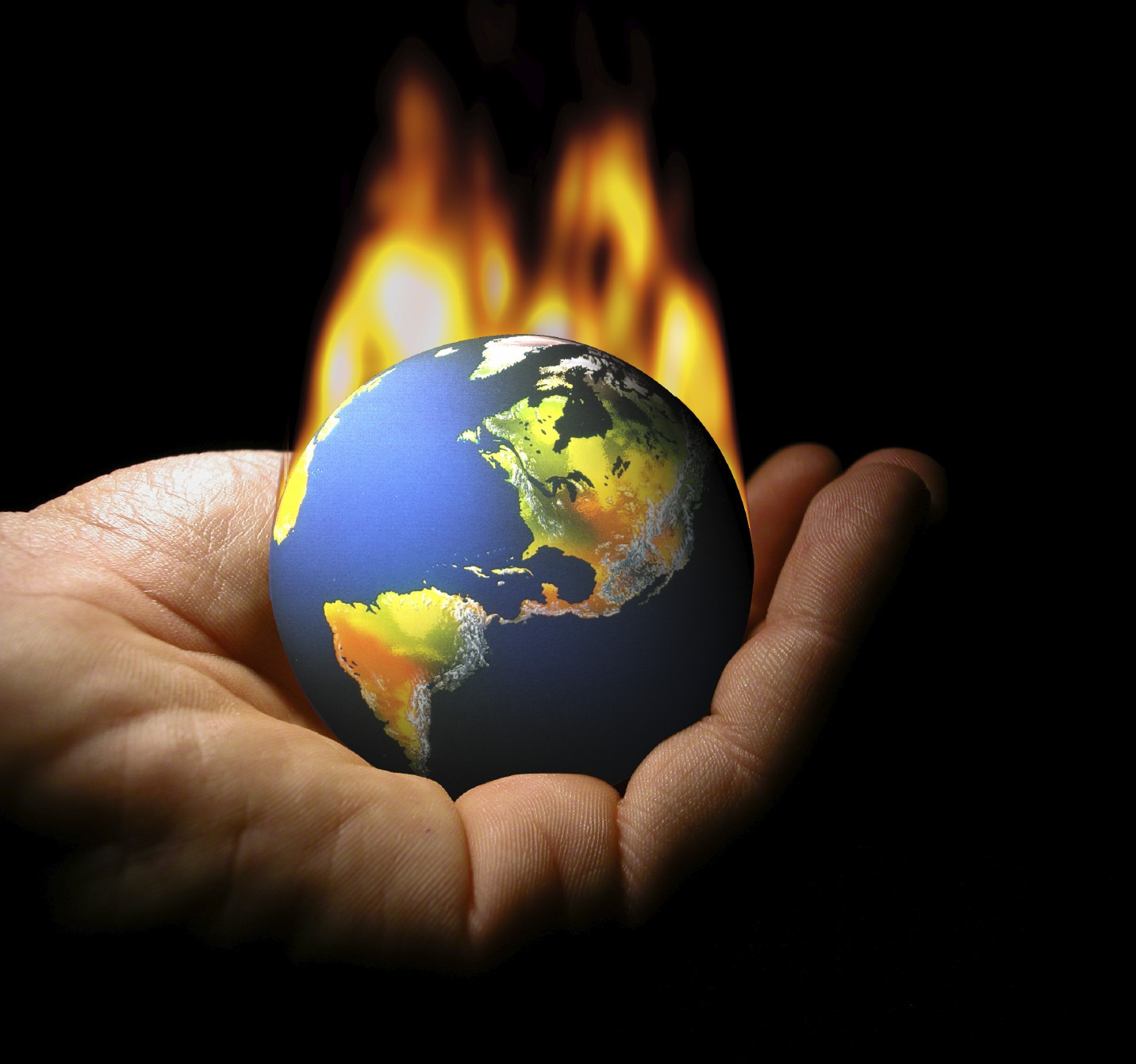
The Intergovernmental Panel on Climate Change just released the first of four chapters of its Fifth Assessment Report. It shows scientists are more certain now than in 2007 when the Fourth Assessment was released that humans are largely responsible for global warming — mainly by burning fossil fuels and cutting down forests — and that it’s getting worse and poses a serious threat to humanity. It contains hints of optimism, though, and shows addressing the problem creates opportunities.
The IPCC was set up in 1988 by the World Meteorological Organization and UN Environment Programme at the request of member governments. For the recent study, hundreds of scientists and experts worldwide combed through the latest peer-reviewed scientific literature and other relevant materials to assess “the state of scientific, technical and socio-economic knowledge on climate change, its causes, potential impacts and response strategies.”
Scientists are cautious. That’s the nature of science; information changes, and it’s difficult to account for all interrelated factors in any phenomenon, especially one as complicated as global climate. When they say something is ‘extremely likely’ or 95 per cent certain — as the latest report does regarding human contributions to climate change — that’s as close to certainty as science usually gets. Evidence for climate change itself is “unequivocal”.
According to the latest installment, which cites 9,200 scientific publications in 2,200 pages, “It is extremely likely that human activities caused more than half of the observed increase in global average surface temperature from 1951 to 2010.” It also concludes oceans have warmed, snow and ice have diminished, sea levels have risen and extreme weather events have become more common.
The report also dismisses the notion, spread by climate change deniers, that global warming has stopped. It has slowed slightly in recent years, scientists say, because of natural weather variations and other possible factors, including increases in volcanic ash, changes in solar cycles and, as a new scientific study suggests, oceans absorbing more heat.
An increase in global average temperatures greater than 2 C above pre-industrial levels would result in further melting of glaciers and Arctic ice, continued rising sea levels, more frequent and extreme weather events, difficulties for global agriculture and changes in plant and animal life, including extinctions. The report says we’ll likely exceed that threshold this century unless we choose to act.
This means a strong, concerted global effort to combat climate change is necessary to protect the health of our economies, communities, children and future. That will cost us, but far less than doing nothing. Although governments of almost 200 countries agreed global average temperature increases must be kept below 2 C to avoid catastrophic warming, we are on track for the “worst case scenario” outlined by the first assessment report in 1990. Research indicates it’s possible to limit warming below that threshold if far-reaching action is taken. We can’t let skeptics sidetrack us with distortions and cherry-picking aimed at creating the illusion the science is still not in.
The reasons to act go beyond averting the worst impacts of climate change. Fossil fuels are an incredibly valuable resource that can be used for making everything from medical supplies to computer keyboards. Wastefully burning them to propel solo drivers in cars and SUVs will ensure we run out sooner rather than later.
Working with other nations to meet science-based targets to cut global warming pollution and create clean, renewable energy solutions would allow us to use our remaining fossil fuel reserves more wisely and create lasting jobs and economic opportunities. That’s why the David Suzuki Foundation is working with the Trottier Energy Futures Project to identify clean-energy opportunities for Canada.
Shifting to cleaner energy sources would also reduce pollution and the environmental damage that comes with extracting coal, oil and gas. That would improve the health of people, communities and ecosystems, and reduce both health-care costs and dollars spent replacing services nature already provides with expensive infrastructure.
The IPCC report gathers the best science from around the world. It’s clear: There’s no time to delay. The first chapter examines the current science of climate change, the second will look at impacts and the third will consider strategies to deal with the problem. A report synthesizing the three chapters will be released in 2014. We must take it seriously.