Tag: canada

  • Could Hockey Become an Endangered Sport?

    Could Hockey Become an Endangered Sport?

    One benefit of the National Hockey League strike: it gave people time to play outside on real ice! But outdoor skating could face the same difficulties as the NHL – a drastically shorter season or outright cancellation. Research from Montreal’s McGill and Concordia universities shows global warming is already having an effect on outdoor rinks in Canada.

    “Many locations across the country have seen significant decreases in the length of the OSS [outdoor skating season], as measured by the number of cold winter days conducive to the creation of rink ice,” their study states. “This is particularly true across the Prairies, and in Southwest Canada, which showed the largest (and most statistically significant) decreases in the calculated OSS length between 1951 and 2005.”

    This echoes a 2009 David Suzuki Foundation report, On Thin Ice: Winter Sports and Climate Change. The McGill investigation looks at constructed outdoor rinks while DSF’s focuses on frozen rivers, canals and lakes, but the conclusions are similar. Both predict that, unless we rein in greenhouse gas emissions, outdoor skating in parts of Canada could be history within the next 50 to 100 years (the McGill study’s authors now say it could happen within 20 to 30 years), and the length of the outdoor skating season will continue to decline across the country.

    Meanwhile, at Ontario’s Wilfrid Laurier University, geographers have launched www.RinkWatch.org, a website where people can record information about backyard or neighbourhood rink conditions over the winter.

    “Our hope is that Canadians from coast to coast will help us track changes in skating conditions, not just this year, but for many years to come,” associate professor Robert McLeman said in a release. “This data will help us determine the impact of climate change on winter in terms of length of season and average temperatures.”

    According to the DSF report, one of Canada’s best-loved outdoor skating venues, Ottawa’s Rideau Canal, provides an example of what to expect. It concludes that, with current emissions trends, the canal’s skating season could shrink from the previous average of nine weeks to 6.5 weeks by 2020, less than six weeks by 2050 and just one week by the end of the century. In fact, two winters ago, the season lasted 7.5 weeks, and last year it was down to four. The canal had yet to fully open for skating when this column was written.

    “On Thin Ice” notes that many of Canada’s hockey heroes got their start on outdoor rinks. “Without pond hockey, we probably wouldn’t have what has become the modern game of hockey,” the authors state. The DSF study says climate change could have a profound effect on many other winter sports, from skiing and snowboarding to winter mountaineering.

    With food and water problems caused by more frequent droughts and floods, property losses and high infrastructure costs from rising sea levels, and increasing illness and death from extreme weather and pollution, hockey may be the least of our worries. But losing winter recreation opportunities, let alone our ability to produce food and keep our homes warm and people healthy, needn’t happen. Solutions to our human-created problems exist. We just need our leaders to start taking this and other environmental issues seriously.

    That’s not likely as long as we keep electing people who show more concern for the future of the fossil fuel industry than the citizens they are supposed to represent. Politicians who only look ahead three or four years — until the next election — aren’t seeing the big picture.

    We need to consider every solution possible, now — from putting a price on emissions through carbon taxes and/or cap-and-trade to stopping the rapid exploitation of fossil fuels and switching to cleaner energy sources.

    A skate or hockey game outside is a good place to start!
  • What Does A Ship’s Agent Do?

    What Does A Ship’s Agent Do?

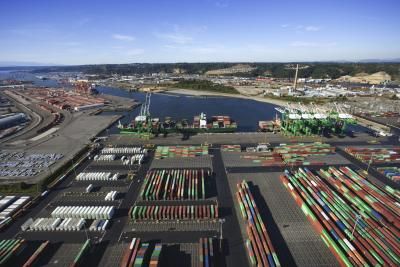
    Before he heads to the office, the ship agent boards the vessel as it arrives in the port. He walks up a steep gangway with people from the federal government who work for the Canadian Food Inspection Agency (CFIA) and Transport Canada. As the latter inspects the ship, the agent finds the captain and assists him as he signs various documents that are required before the ship is allowed to enter the port.

    It is the ship agent’s job to coordinate the arrival of all vessels that enter Canadian waters. He is thus a vital link between all the imports and exports that come in and out of the country.

    Once back at the office, the agent performs a variety of duties. When a ship plans to arrive, the agent gathers information about the vessel such as: how many members are on the crew and where they are each from, how much the ship weighs and when it was built, and what kind of cargo it is carrying or picking up. He then sends the information to Canadian Customs and Immigration. When Customs clears the ship, it is free to enter Canadian waters.

    However, a ship cannot enter Canadian ports until the federal public servants have inspected the entire ship and cleared it for loading or unloading its cargo. It is the ship agent’s role to coordinate with members of CFIA and Transport Canada. He also organizes – with the ship’s owners, charterers and stevedores – when and where the ship will be loaded with cargo.

    The agent must also host the captain while he and his crew are anchored in the port. He brings the captain cash for the crew to use while they are anchored and he coordinates with ship chandlers who supply the crew with groceries and other necessary supplies. He also arranges for crew members to be picked up and taken to the airport when they are ready to return home if a new crew is taking over the ship.

    The ship agent links Canadian ports to the rest of the world.

    He coordinates much of the activity that sees that items like steel, sugar and electronics arrive safely in the country’s ports while grain, canola, lentils, yellow peas, barley, wheat, oats and other products are loaded into the vessels and shipped to places all over the world.

  • Discovering Marine Science in The Maritimes

    Discovering Marine Science in The Maritimes

    New Brunswick is the second largest aquaculture producing province in Canada (behind British Columbia). Each year the province earns hundreds of millions of dollars as a result of aquaculture production. There are currently over 2000 people in the province working as direct employees in various capacities in the aquaculture industry. Due to the important part the industry plays in the province, it is important the public has the opportunity to become educated and engaged in the subject.

    The Huntsman Marine Science Centre and Fundy Discovery Aquarium located in St. Andrews, New Brunswick provides a unique and educational aquaculture experience for all ages. The 20,000 square foot facility first opened in 1972, but was re-built and re-opened in September 2011. The centre has a research facility, including labs, where research is being done to find a way to sustain and develop the aquaculture industry.

    There are two harbour seals that call the centre home, Snorkel and Loki, who love to entertain the crowds of people who come by to see them. Harbour seals are found in the coastal waters of the Northern Atlantic and Pacific Oceans, as well as the Baltic and the North Seas. They are brown, tan or gray in colour with v-shaped nostrils and small ear canals. There are an estimated five to six million harbour seals worldwide. The seals at the aquarium are fed twice a day and enjoy eating fish such as menhaden, anchovy, sea bass, herring, mackerel and cod. They also know a variety of tricks, which they have learned since being in captivity.

    There are two touch tanks – one that houses a variety of interesting creatures including sea cucumbers, which are rubbery and slimy and hard to hold on to; clams, which can spit water; and starfish which are hard and prickly. There are an estimated 1800 different species of starfish worldwide. They have a central disk and five arms, though some species have many more. There is also a touch tank designated for skates. There are more than 200 different kinds of skates (and I don’t mean hockey or speed skates!). The skates found at the aquarium are similar to sting rays; they are flat and shaped like a kite and have their eyes located on top of their head. They are found in the Atlantic, Pacific and Indian oceans, and they have a row of spines on their back that can stab and tear if they feel threatened by predators.

    Other interesting sights to see at the aquarium include a large sturgeon tank, a yellow lobster named Fiona and a blue lobster named Lily. Only one out of every two million lobsters is blue, and one out of every thirty million lobsters is yellow.

    If you enjoy learning about marine life, why not consider becoming a Marine Biologist?

  • Projects Abroad: Offering Students Short-Term Volunteer Opportunities

    Projects Abroad: Offering Students Short-Term Volunteer Opportunities

    Projects Abroad is a youth-oriented volunteer trip association that can help you plan a volunteer trip to help shape you career, your education and your life.

    The company offers the opportunity to do two weeks to several months of volunteer trips in many of the destinations where they operate. For volunteers who don’t have the time to commit to a month or more of volunteering abroad, but would still like to contribute to the community or their project of choice, then short-term two-week volunteer placements are a great option. These trips are not available in all situations; they have hand-picked only the countries and projects where it is suitable for both the host community and the volunteer to be there for such a short time. To see where these trips are available, check out their prices page – if there is a price listed, then it is possible to go for two weeks.

    Although you will not be able to make quite the impact that our longer-term volunteers make, in your two weeks you will be working intensely within the local community and building relationships. This will impart a level of cultural insight that is not possible for tourists to achieve.

    These trips operate in the same way that normal four-week or longer projects do, with some small adjustments to help you make the most of your two weeks abroad. For instance, they ask that you arrive on the weekend so that they can give you a formal induction to the area and culture before your first day of work on Monday.

    International Volunteer Work: What you get on 2 Week Trips

    Volunteers on 2 Week Trips are given the same benefits as those who join for longer periods of time. Start dates are flexible – just pick any weekend to arrive – and you’ll begin your project quickly after your arrival to maximize the amount of work you can do in country.

    In-country staff will be available to assist you throughout your two-weeks. You will be a part of an extensive volunteer network and meet people from all around the world. In some circumstances, you may be living with a local host family, which will provide you with the opportunity to get completely immersed in the local culture during your stay. On other projects, you may live with volunteers in a community-housing situation.

    Meaningful Volunteer Work in Two Weeks: 2 Week Trips and 2 Week High School Specials

    Short Term Volunteer Opportunities with Children: whether you’re taking time off from school, work, or just need a small career-break, there is always a way for you to squeeze a two week adventure into your schedule.

    For high school students (ages 16-19), we recommend the “2 Week Specials” program. These are group projects that have a high level of structure and central planning by local staff. You will be in a group of students your own age for the entire project. Local staff are always close at-hand. It’s a great way to travel and volunteer abroad for younger people who have never done this before. Staff members are with these groups.

    For ages 20+, we recommend joining projects for a month or longer. Most volunteers go for about two months. But if you can only squeeze in two weeks,  a “2 Week Trip” is worthwhile and productive as well.

    For more information about studying abroad, contact www.projects-abroad.ca

  • Let’s Resolve To Make It A Real Happy New Year

    Let’s Resolve To Make It A Real Happy New Year

    Wouldn’t it be wonderful if world leaders resolved to look at life in a different light this New Year? They could follow the example of Bhutan. In 1971, the small country, nestled in the Himalayas between China and India, rejected the idea of gross domestic product as the measure of progress. Instead, leaders focused on gross national happiness.

    The idea is finally gaining traction around the world, and I’m humbled and pleased to be involved with a global initiative to promote it. World leaders took the concept seriously enough to hold a United Nations Conference on Happiness in April 2012, and Bhutan was recognized for its environmental leadership at the recent UN climate summit in Doha, Qatar.

    Life isn’t perfect in Bhutan. It’s a poor country where most homes don’t have electricity. Crime is increasing and climate change is making life difficult for the farmers who provide much of the landlocked country’s food. Still, according to the Guardian, life expectancy in Bhutan has doubled over the past 20 years, almost all children now go to primary school and the country has been improving its infrastructure.

    Bhutan has also enshrined environmental protection and intergenerational equity in its constitution. The Right to a Healthy Environment is another initiative I’m excited about. The David Suzuki Foundation and I have been working with environmental lawyer and professor David R. Boyd and Ecojustice to promote the idea in Canada. Boyd’s book, The Right to a Healthy Environment: Revitalizing Canada’s Constitution, offers a wonderful analysis of where the world’s nations now stand on the concept, as well as strong arguments for why Canada should join the more than 140 nations that have put environmental protection in their constitutions.

    Caring for the environment can help achieve gross national happiness in many ways — by giving our children a more secure future, improving human health, ensuring resources are available to meet the needs of citizens, offering recreational and spiritual connections with nature and giving people a sense of pride and respect for the natural systems that keep us alive and healthy.

    There’s more to happiness than just having a clean environment — and Bhutan has yet to get there. According to research for the UN Conference on Happiness, “The happiest countries in the world are all in Northern Europe (Denmark, Norway, Finland, Netherlands).” Although these countries are wealthy, the study points out that money isn’t the only factor, as happiness is decreasing in countries like the U.S. “Political freedom, strong social networks and an absence of corruption are together more important than income in explaining well-being differences between the top and bottom countries,” the researchers write. “At the individual level, good mental and physical health, someone to count on, job security and stable families are crucial.” Note that the happiest countries all have healthy economies and robust social programs.

    We can also look at how various countries responded to the recent economic crisis. Those that bailed out banks and reduced social spending are facing the same kinds of problems as before. Iceland approached its massive financial meltdown in a way that was pretty much the opposite of that taken by the U.S. and Europe, refusing to rescue its banks and increasing social spending, among other measures.

    Iceland still has problems, but it has recovered faster than other nations, and its social safety net remains strong. Inequality has been reduced, and the crisis spurred citizens to propose and develop a new constitution, which is being considered by parliament.

    There’s an old saw that says the definition of insanity is to keep doing the same thing over and over expecting different results. In the case of leaders who focus almost entirely on economic growth and corporate interests, it’s a recipe for disaster. As George Monbiot recently wrote in the U.K.’s Guardian, “In return for 150 years of explosive consumption, much of which does nothing to advance human welfare, we are atomising the natural world and the human systems that depend on it.”

    As light gradually returns to the north and we celebrate a season of sharing, our leaders could brighten all our lives by considering what really makes our societies strong, healthy and happy.

  • Whales of the Bay of Fundy

    Whales of the Bay of Fundy

    The Bay of Fundy is located between New Brunswick and Nova Scotia and is home to the world’s highest tides. The tides range in height from 11 feet to 53 feet depending on location. They change between high and low tide twice a day, carrying with them a hundred billion tons of water.

    The story of the Bay of Fundy, as told in Micmac lore says, “It was a giant whale, who angered the god Glooscap, and created such a splash with his mighty tail that the water sploshes back and forth to this day.” Although this story is entertaining, scientifically speaking the Bay’s tremendous tides are formed by its unique shape, which was created hundreds of millions of years ago.

    In the summer months the Bay of Fundy is the feeding ground for half of the world’s population of endangered North American right whales and 12 other species of whales. They feast on the enormous amounts of krill, plankton, squid and schools of young herring, cod, pollock and mackerel. It is also the preferred location for whales to give birth, mainly because of the vast amounts of food available and due to the protection the bay provides. At any given time the population of whales in the area ranges between three and four hundred.

    The first species to arrive in late spring are the finback and minke whales and harbour porpoises. The endangered right whale usually arrives in mid-July and stays until Fall.

    The most common whales in the Bay of Fundy are:
    The Minke Whale: Can grow up to 30 feet and weigh up to 10 tons. These whales travel in pods of 2 or 3, and can dive for up to 25 minutes without surfacing for air.

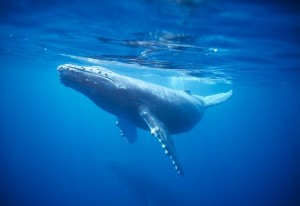
    The Humpback Whale: Can grow up to 60 feet and weigh up to 30 to 50 tons. The females of the species are usually larger than the males. These whales enjoy spy hopping, breaching and tail lobbing and usually put on a good show for those who go whale watching.

    The Finback Whale: The second largest whale in the world (next to the blue whale) and generally only frequent the bay during their migration periods, when they are seen following their food sources. The finback can grow up to 82 feet in length, and they usually travel in pods of 2 to 7 whales. They can even live for up to 100 years.

    The North American Right Whale: The most endangered species of whale in the world. There are fewer than 35 left worldwide. These whales migrate to the Bay in the summer months to mate. They can grow up to 50 feet and weigh up to 45 tons.

    The best time to view the many different species of whales found in the Bay of Fundy is August.

  • An Energy Plan Must Be About More Than Just Energy

    An Energy Plan Must Be About More Than Just Energy

    Feeding our energy appetite is top of mind for many people these days. Some argue we should get coal, oil and gas out of the ground as quickly as possible, build more pipelines and make as much money as we can selling it here and abroad. Their priorities are the economy and meeting short-term energy needs so we can live the lives to which we’ve become accustomed.

    Many others question those priorities. Do we gain comfort and happiness by driving inefficient automobiles, buying and scrapping and then buying more stuff that we must work harder to pay for, and selling resources to enrich the fossil fuel industry and to allow other countries to follow our unsustainable path?

    Some governments and industry favour the short-term view. But it’s a “false economy” — it will cost us more in the long run. What about our children and grandchildren and their children and grandchildren? Do we not want them to live healthy and happy lives? If we pollute the air, water and soil that keep us alive and well, and destroy the biodiversity that allows natural systems to function, no amount of money will save us.

    While rushing to exploit our valuable and diminishing fossil fuels, Canada’s government is simultaneously “streamlining” environmental regulations and review processes, cutting scientific staff and departments and limiting public debate on projects that could irreparably damage our rich natural heritage. Some provinces are attempting to water down hard-won environmental laws, like endangered species legislation, that act as a critical hedge against environmental degradation.

    The federal government is also neglecting its legal obligations to protect species at risk. Ecojustice, on behalf of five conservation groups including the David Suzuki Foundation, recently launched a lawsuit to challenge the government’s multi-year delays in producing recovery strategies for species that would be affected by the proposed Enbridge Northern Gateway project.

    If we don’t slow down and try to look at ways out of the mess, energy issues will continue to increase, like the Hydra of Greek mythology. With pipelines, the main issue is rapid tar sands expansion. But other massive energy projects are also coming down the pipe — from huge dams, like the Site C in northern B.C., to proposed drilling for oil and gas in the Gulf of St. Lawrence and the Arctic. To what end?

    Not only are fossil fuel companies making record profits, they’re being subsidized by Canadian taxpayers to the tune of $1.4 billion a year. Instead of giving them money, shouldn’t we be compelling them to put at least a small portion of their enormous profits into reducing the massive greenhouse gas emissions they cause?

    A large part of the problem is that we are increasing our fossil-fuelled ambitions at breakneck speed in the absence of a national energy strategy. No one seems to know where we’re going, but the end of the road is looming, and it might lead to a steep drop. We’re already harming precious ecosystems and are ready to put even more at risk without having an idea of the often irreplaceable value they represent. With climate change and its impacts, along with deforestation, pollution and increasing urbanization, we’re condemning millions of people to lives of poor health, desperation and even death.

    Still, we’ve also created much that is good. We have political systems that encourage public debate and access to information. There are politicians and industry leaders who have joined countless citizens, First Nations, and environmental, labour and social-justice organizations to question current policies and actions. We have science, medicine and technology that have allowed many of us to live longer. We need to find ways to reconcile our existence with the limits of our finite planet.

    What Canada really needs in the short term is a national energy strategy — one that goes beyond fracking and tar sands and pipelines to take into account these many other factors, including wiser use of fossil fuels. It must help us make the transition from our wasteful addiction to polluting and ever-diminishing fossil fuels to conservation and renewable energy. Globally, we need to shift from the outdated 20th-century notion of measuring progress with gross domestic product to a development paradigm that takes into account well-being and happiness, and that accounts for nature’s valuable services.

  • The Importance of Wetlands

    The Importance of Wetlands

    What Are They?
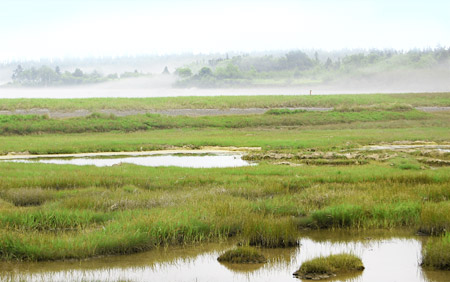
    A wetland is a habitat where land meets water such as ponds, marshes, swamps, bogs and fens. To classify as a wetland, the area must be completely covered or partially covered with water for a significant amount of time over the course of a year. This could be from flooding due to rain or melting snow, or because it exists as an established waterway. Wetlands are home to aquatic and land creatures, a combination that creates an incredible habitat able to function at great efficiency. This produces a rich environment for its inhabitants – wetlands sustain more life than any other ecosystem!

    Swamps: streaming water, often confused with marshes, set apart by the presence of trees and shrubs.
    Ponds: shallow waters, surface free of vegetation.
    Marshes: continually flooded with lots of surface vegetation.
    Bogs/fens: high water levels, large accumulation of peat, looks like solid ground but easy to fall through.

    Why Should I Care?
    Wetlands are home to more than 200 species of wildlife. Canada has a diverse population of amazing creatures, many that are endangered or at risk. Scientists have estimated that a third of these rely upon the wetland ecosystem. Migrating birds return to the same spot each year, and if that wetland is now a Superstore they have lost nesting grounds and their food source.

    Wetlands act like sponges, preventing floods from rainfall and melting snow. They also filter the water from pollution and chemicals, cleansing it before it recycles to the larger water basins. Amazingly, wetlands also remove and store greenhouse gases from the environment, making them important to the future of climate change as well.

    Cause to Worry
    Canada is home to many varieties of wetlands. It is estimated that 14% of the country is covered by a wetland, though the number shrinks every year. Wetlands are in danger of disappearing across the globe due to agriculture and residential development. According to the Alberta Wilderness Association, 70% of wetlands have been destroyed in that province alone. It is only in more recent years people come to understand the great importance of wetlands and their impact on our country. Without these powerful ecosystems, fowls, amphibians, mammals, reptiles and plants will eventually become extinct.

    What Can I Do?
    There are numerous organizations that recognize the value of wetlands and work hard to see them untouched and preserved. There are many things still yet to be done and much awareness that still needs to be raised. One factor in the decline of wetlands is the rapid consumption of water. We all need to conserve our water intake. Limiting the chemicals and pesticides we use will also have a positive effect on this ecosystem. Perhaps the most important thing one can do to help protect the wetlands is to educate themselves and others on the subject and become willing advocates. Finally, we can all take the time to enjoy the remaining wetlands and allow ourselves to be reminded why they are important.

  • Endangered Animals of Canada

    Endangered Animals of Canada

    The vast, wondrous beauty of Canada is enriched with incredibly diverse wildlife. From the smallest insect to the largest mammal, the country proudly hosts some of the most beautiful creatures on the planet. But with great beauty comes great responsibility, and as the dominate species on the planet we have been charged with the task of caring for these animals. There have been times throughout history when we as a people failed in this and a species was lost. Today, despite watch groups and dedicated scientists, our wildlife continues to disappear. At present there are over 600 animals and plants in the At Risk Public Registry.

    We are considered to be living during a time of great threat to our wildlife. Never before has there been so many humans populating the world and our activity is continually threatening the ecosystems and upsetting the balance of nature. We build shopping centres, residential developments and parking lots all the while not paying much attention to the habitats that are destroyed in the process.

    There are five different classifications that the Government of Canada uses to keep track of this growing problem:
    Extinct –a species that no longer exists in Canada or elsewhere.
    Extirpated – a species that no longer exists in Canada’s wild but lives elsewhere in the world.
    Endangered – a species that may become extinct or extirpated.
    Threatened – a species at risk of endangerment in Canada if the nothing is done to stop the problem.
    Vulnerable – a species, who because of declining numbers (or other reasons), is at risk.

    Nine species are currently extinct in Canada: Dawson’s Caribou, Sea Mink, Great Auk, Labrador Duck, Passenger Pigeon, Deep-water Cisco, Longjaw Cisco, Banff Longnose Dace, and the Blue Walleye.

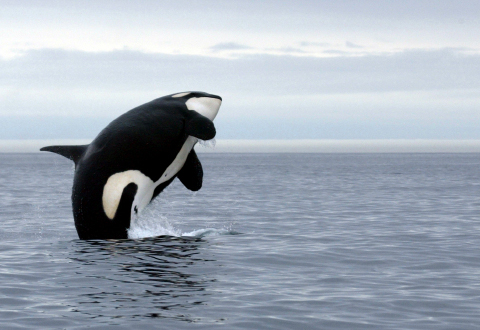
    The Woodland Caribou is on the endangered list because of the destruction of the Boreal Forests. The Golden Eagle lives in Ontario but is endangered because of loss of habitat. Chemical dumping in the ocean has put the Killer Whale on the list as well. Pollution has killed so many Spotted Turtles that they too are now on the list. Amphibians represent the largest animal group threatened with endangerment and extinction. One third of the world’s population of amphibians are threatened and, if they were to become extinct, it would be an event as epic as the loss of dinosaur life on the planet.

    A common factor in all of these creatures is the fingerprint of humanity. More must be done to protect Canada’s wildlife. In 2003 the Species at Risk Act was introduced, and yet many delays in implementing the Act have had a direct impact on threatened species. Awareness plus action is the only hope for our vulnerable, threatened and endangered species.

  • How Animals Survive the Arctic Tundra

    How Animals Survive the Arctic Tundra

    The Arctic tundra, a snowy biome that is housed within the Arctic Circle, is characterized by freezing temperatures, strong winds and permafrost. Yet, despite being one of harshest environments on earth, many animals call the Arctic home. So how do animals living in the Arctic, a place that has months of continuous light followed by months of continuous darkness, survive in such a harsh habitat?

    Only a limited number of animal species in the Arctic do not migrate or hibernate during the winter months. The ones that do brave the winter have become well adapted to the extreme conditions and are able to survive year round. Some notable adaptations include the following:

    Bigger is Better
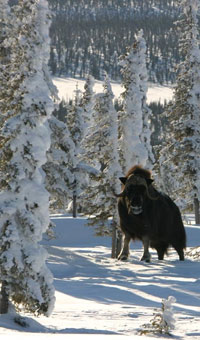
    Polar animals seem to be larger in size, have shorter limbs, denser fur and more fat and blubber than their counterparts in more temperate climates; these characteristics help reduce heat loss. It is also important to note that only larger animals, like the muskox, roam the Arctic in winter and huddle in herds to keep warm.

    Dig for Cover
    Smaller animals, such as the collared lemming, go under the snow for warmth, shelter and protection. These smaller animals dig elaborate tunnels under the packed snow and live on the roots of plants during the winter months.

    Fur Better, not Fur Worse
    As the temperature dips, animals replace their summer coats with thicker, longer coats. The snowy owl, for example, is covered in fluffy white feathers from head to toe These feathers are overlapped with more feathers to ensure the owl will remain warm in cold weather. The Arctic fox replaces its brown coat with a heavier white coat that not only keeps it warm, but also provides camouflage. The muskox grows plenty of shaggy, coarse hair that covers everything but its feet.

    Tick Tock
    A research team in Alaska studied the heart rates of two types of Arctic rodents exposed to continuous daylight, nocturnal porcupines and the Arctic ground squirrel. Despite having no time cues, the animals seemed to respond to something that provided them with regularity and allowed them to retain a normal day/night, 24-hour cycle and a biological clock. So what was the one constant factor that kept the animals’ cycle on schedule in Alaska? It was the sun, which moves overhead in a circular motion and, at midnight, is tipped to the north. The animals are aware of the position of the sun in the sky, and the nearness of the sun to the horizon can act as a clue to animals to maintain a 24-hour cycle.