Tag: career profile

  • Trades Profile: Welder

    Trades Profile: Welder

    Welders permanently join pieces of metal by applying heat, using filler metal or fusion process. They join parts being manufactured, build structures and repair damaged or worn parts. They also fabricate parts, tools, machines and equipment used in the construction and manufacturing industries.

    Welders may specialize in certain types of welding such as custom fabrication, ship building and repair, aerospace, pressure vessel, pipeline, structural welding, and machinery and equipment repair.

    They work for employers such as fabrication shops, steel and platform manufacturers, petrochemical refineries, mechanical contractors, transportation contractors (heavy machinery, aircraft, shipbuilding), and specialized welding shops. They can also be self-employed. Their work may be performed outdoors or indoors, and travel may be required to jobs in remote locations.

    Welders require attributes such as good mechanical ability, manual dexterity, good vision, excellent eye-hand coordination, the ability to concentrate on detail work and work as part of a team. They also require the ability to work quickly and accurately, to visualize a finished product, to reason logically and to understand metallurgy.

    Occupational hazards in this trade include: sparks, gases, hazardous fumes, burns, heavy lifting, exposure to ultra-violet light and infra-red rays, working at heights, in confined spaces and in trenches.

    With experience, welders may advance to positions such as welding inspector, lead hand or welding supervisor. Some welders open their own repair shops or work as rig welders, contracting out their services.

  • Career Profile: Veterinarian

    Career Profile: Veterinarian

    When people get sick, they go to a doctor. Do you know where they take animals that are sick? The doctors who look after animals, whether they are pets like cats and dogs or farm animals like sheep, are called veterinarians, or vets. Just like doctors for humans, veterinarians are experts in health and diseases for their patients. Becoming a veterinarian takes a lot of hard work, but it can be an enjoyable and rewarding profession for people who like helping animals.

    Taking care of animals can be complicated, especially since, unlike human patients, animals are unable to tell their doctors about any problems they are having. Veterinarians have to be able to diagnose problems just by doing tests and by looking at the animals for signs of illness or injury. They need verbal skills to be able to talk with the animals’ owners, but they also need to know about animal behavior, such as what it means when a horse lies down on the ground or a dog hides under the furniture. Problem-solving is an important part of the work. Veterinarians have to look at how the animal is acting and use their knowledge of diseases to determine the issue and decide on treatment. Someone who loves animals and spends time with them is likely to have some of these necessary skills for veterinary work.

    Besides an understanding of animals, veterinarians need formal education. Usually people start out with at least two years of studies in an area such as agriculture or general science. Next, they take about four years of studies at a university to get a Doctor of Veterinary Medicine degree. This degree teaches them about illnesses, medications, regular care, and anything else they need to know. Once they finish, they have to take an exam to receive a certificate of qualification.

    Veterinarians can follow one of two basic streams. Many veterinarians work with pets, such as dogs, cats, and hamsters. Others work with farm animals, where they might have to deal with large animals like cows and horses or small animals like chickens. Veterinarians for pets can often work out of offices since the animals they treat are small enough to bring into buildings. However, veterinarians who work with large animals normally have to travel to see the animals in barns or stables. Some veterinarians work in government departments, teaching, or research.

    Working as a veterinarian can be a stressful job. The animals can be difficult to handle, especially when they are in pain or are afraid of what is happening to them. For people who really love animals, it can also be difficult to give their patients painful treatments or vaccinations. Because of stresses like these, many veterinarians change professions after about twenty years, although some stay in their work for an entire career. On average, veterinarians make about $70,000 per year, although the salary varies according to where they work and the types of animals they treat.

    Do you want to help animals? Maybe you should consider becoming a veterinarian.

  • Hot Jobs: Careers in Trades

    Hot Jobs: Careers in Trades

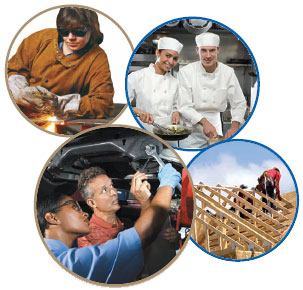
    The trades sector in Canada is constantly growing and changing. So how do you know which career path is right for you? Here at Jobs People Do, we’ve assembled a list of some of the hottest jobs in the trades industry that will be in high demand for years to come. Take a look at just some of your options and then click on the link to be taken directly to career information. Find out what kind of education you will need and how much you can expect to be paid.

    Aboriginal Child Development Practitioner
    Agricultural – Dairy Herdsperson
    Agricultural – Fruit Grower
    Agricultural – Swine Herdsperson
    Agricultural Equipment Technician
    Alignment and Brakes Technician
    Appliance Service Technician
    Arborist
    Architectural Glass and Metal Technician
    Assistant Cook
    Auto Body and Collision Damage Repairer
    Auto Body Repairer
    Automotive Electronic Accessory Technician
    Automotive Glass Technician
    Automotive Painter
    Automotive Service Technician
    Baker
    Baker-Patissier
    Bearings Mechanic
    Blacksmith
    Brick and Stone Mason
    Cabinetmaker
    Cement (Concrete) Finisher
    Chef
    Child and Youth Worker
    Child Development Practitioner
    Composite Structures Technician
    Computer Numerical Control (CNC) Programmer
    Concrete Pump Operator
    Construction Boilermaker
    Construction Craft Worker
    Construction Millwright
    Cook
    Developmental Services Worker
    Die Designer
    Draftsperson – Mechanical
    Draftsperson – Plastic Mould Design
    Draftsperson – Tool and Die Design
    Drywall Acoustic and Lathing Applicator
    Drywall Finisher and Plasterer
    Educational Assistant
    Electric Motor System Technician
    Electrical Control (Machine) Builder
    Electrician – Construction and Maintenance
    Electrician – Domestic and Rural
    Electrician (Signal Maintenance)
    Electronic Service Technician
    Elevating Devices Mechanic
    Entertainment Industry Power Technician
    Exterior Insulated Finish Systems Mechanic
    Facilities Mechanic
    Facilities Technician
    Fitter – Assembler (Motor Assembly)
    Floor Covering Installer
    Fuel and Electrical Systems Technician
    Gemsetter / Goldsmith
    General Carpenter
    General Machinist
    Hairstylist
    Hardware, Lumber and Building Materials Retailer
    Hazardous Materials Worker
    Heat and Frost Insulator
    Heavy Duty Equipment Technician
    Heavy Equipment Operator – Dozer
    Heavy Equipment Operator – Excavator
    Heavy Equipment Operator – Tractor Loader Backhoe
    Hoisting Engineer – Mobile Crane Operator 1
    Hoisting Engineer – Mobile Crane Operator 2
    Hoisting Engineer – Tower Crane Operator
    Horse Groomer
    Horse Harness Maker
    Horticultural Technician
    Hydraulic / Pneumatic Mechanic
    Industrial Electrician
    Industrial Mechanic Millwright
    Information Technology – Contact Centre Customer Service Agent
    Information Technology – Contact Centre Sales Agent
    Information Technology – Contact Centre Technical Support Agent
    Information Technology – Hardware Technician
    Information Technology – Network Technician
    Institutional Cook
    Instrumentation and Control Technician
    Ironworker – Generalist
    Ironworker – Structural and Ornamental
    Light Rail Overhead Contact Systems Lineperson
    Locksmith
    Machine Tool Builder and Integrator
    Marine Engine Technician
    Metal Fabricator (Fitter)
    Micro Electronics Manufacturer
    Motive Power Machinist
    Motorcycle Technician
    Mould Designer
    Mould Maker
    Mould or Die Finisher
    Native Clothing and Crafts Artisan
    Native Residential Construction Worker
    Network Cabling Specialist
    Optics Technician (Lens and Prism Maker)
    Packaging Machine Mechanic
    Painter and Decorator – Commercial and Residential
    Painter and Decorator – Industrial
    Parts Technician
    Pattern Maker
    Plumber
    Pool, Hot Tub and Spa – Installer
    Pool, Hot Tub and Spa – Service Technician
    Powered Lift Truck Technician
    Powerline Technician
    Precast Concrete Erector
    Precast Concrete Finisher
    Precision Metal Fabricator
    Pressure Systems Welder
    Process Operator – Food Manufacturing
    Process Operator – Power
    Process Operator – Refinery, Chemical, and Liquid Processes
    Process Operator – Wood Products
    Pump Systems Installer
    Railway Car Technician
    Recreation Vehicle Technician
    Refractory Mason
    Refrigeration and Air Conditioning Systems Mechanic
    Reinforcing Rodworker
    Relay and Instrumentation Technician
    Residential (Low Rise) Sheet Metal Installer
    Residential Air Conditioning Systems Mechanic
    Restoration Mason
    Retail Meat Cutter
    Roll Grinder / Turner
    Roofer
    Saddlery
    Saw Filer / Fitter
    Sheet Metal Worker
    Ski Lift Mechanic
    Small Engine Technician
    Special Events Coordinator
    Sprinkler and Fire Protection Installer
    Steamfitter
    Surface Blaster
    Surface Mount Assembler
    Terrazzo, Tile, and Marble Setter
    Thin Film Technician
    Tire, Wheel and Rim Mechanic
    Tool / Tooling Maker
    Tool and Cutter Grinder
    Tool and Die Maker
    Tool and Gauge Inspector
    Tractor-Trailer Commercial Driver
    Transmission Technician
    Truck and Coach Technician
    Truck-Trailer Service Technician
    Turf Equipment Technician
    Utility Arborist
    Water Well Driller
    Welder
    Wooden Boat Rebuilder
  • Career Profile: Glazier

    Career Profile: Glazier

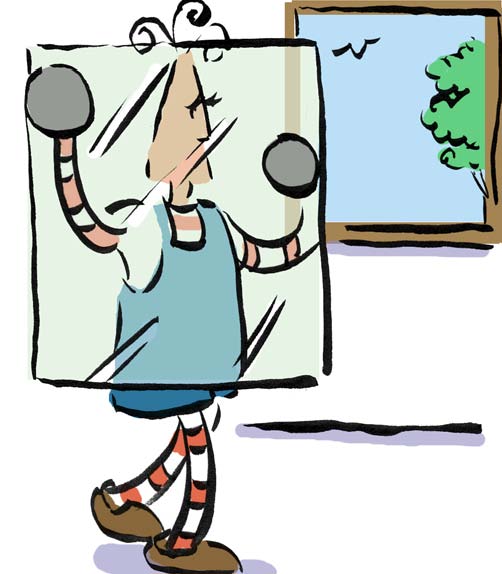
    Every building has windows, and almost every room in a building has windows with glass in them. Some windows have fancy stained glass and others have plain glass, but they all have one thing in common. All of these windows required the work of a glazier – a specialist in glass. Glaziers are tradespeople who cut glass and fit it into various shapes and sizes of window. They work in new buildings, but they also help to repair breaks and to restore windows to their best condition. Being a glazier involves a combination of knowledge and skills in a trade that many people can enjoy.

    Windows come in many different forms. They can be the small ones in car doors, the glass in kitchen windows, large storefront windows, or even skylights on the roofs of buildings. Some glass even comes in several different colours for making stained glass windows. Glaziers install and repair all of these different types of glass. They have to be able to measure spaces where the glass will go and know how to use power tools with breakable material.

    Working as a glazier can be somewhat difficult. Sometimes glaziers get cuts from either the metal edges or from broken glass, and they have to be careful how they work. They might work with poisonous chemicals or be injured from lifting heavy pieces of glass. Glaziers work together with others to lift the glass into place, but they still need a certain amount of physical strength and an ability to climb ladders and manage heights. Although the job does not normally require great strength, it requires some physical ability and stamina.

    People become glaziers through a combination of education and experience. Besides being able to cut glass and fit it into metal, they often need to be able to read blueprints and to estimate costs for projects. Vocational training or an apprenticeship can be useful to teach people the skills they need to know for the work, such as the mathematical calculations for estimating costs. Learning from other people on the job is also an important part of training.

    Wages for glaziers in Canada are highest in areas of southern Alberta around Calgary and Banff and lowest in the Montreal area, but the average is about $20 per hour. Some glaziers work mainly in people’s homes, but others work in factories, stores or offices. They might work with all types of glass or specialize in one type, such as stained glass. Wherever there are windows that need glass, glaziers are at work.

    Does a job as a glazier sound like the kind of job you would enjoy? Maybe you should consider it as a career option.

  • Career Profile: Miner

    Career Profile: Miner

    Imagine a very dangerous job where most of the work happens underground. Working as a miner is a difficult but very necessary job. Miners go deep into the ground to dig out gold, copper, zinc and many other metals that we use every day. Without miners, our world would be a very different place. If you don’t mind dangerous and often dirty working conditions, you might want to take on this essential job.

    In Canada, about 400,000 people work in mining and related industries, and almost half of the money people make in some provinces comes from mining. Some of these people work above the ground with processing minerals, but many of them work down in the mines, cutting into rock walls and digging out the minerals that they find.

    Even if you have never been in a mine, you probably know something of what happens there. Many of the substances that we use come from deep inside the earth, often buried in rock. Gold and silver from the ground can become jewellery, but they also have many other uses in manufacturing and medicine. For example, copper is often part of the wires that carry electricity or the pipes that carry water and other things that we use every day, such as coins. Everything that has metal in it comes from the ground, and much of it comes from the work of miners.

    The work that miners do is very important, but it is not easy.  They have to know how to use various types of equipment but also be in good physical condition to carry heavy loads or push large machines. Miners work with all kinds of rock and metal, and accidents are common. Another problem is breathing down in the mines. Sometimes, miners who work underground for many years develop diseases from breathing in the dust from the different kinds of rock. Working underground can also be very hot, and miners have to be careful not to get sick in those conditions. The work is hard, but it can also be good for people who like physical labour.

    The difficulty of this kind of work also means that miners are fairly well paid. Generally, miners earn between $15.00 and $35.00 per hour, which is between about $32,700 and $115,400 per year. The requirements for becoming a miner can vary from one company to another, but a high school diploma from a vocational school is usually necessary. The vocational training should include studies in mining procedures and also information on how the industry works. Certification for using different tools is also useful.

    It can be difficult to know what the job is really like before starting to work in a mine, but getting as much background information as possible is helpful. You might not be able to practice working in a mine before you actually get a job, but you can prepare yourself for this dangerous but very necessary career.

  • Career Profile: Telephone Repair Technician

    Career Profile: Telephone Repair Technician

    Learning to use something that is constantly changing can be a challenge. Have you ever learned to use a new phone, only to have the technology change as soon as you learned it? Telephone repair technicians often face that challenge. Their work is changing all the time and they constantly have to learn new methods to keep up with the new technology. For people who like technology and enjoy working with their hands, however, working as a telephone repair technician can be a good and fulfilling career.

    Telephones, especially these days, have a lot of technology in them. Cell phones can be especially difficult to fix, but even the older styles of phones can have a lot of small parts and tricky connections. Telephone repair technician have to be good with their hands and to be able to work with very small objects without dropping or breaking them. They also need to understand the technology to be able to fix the problems. They have to know how traditional landlines work and also have an idea of how signals connect with cell phones so that people can talk with each other.

    Some telephone repair technicians learn about their work from experience or from other people on the job. Sometimes, a high school diploma and a few years of experience can be enough for telephone repair technicians to get good jobs. However, many employers now want technicians to have professional certification, which involves learning about the different parts of the job and then passing a special test.

    Another way for telephone repair technicians to get to know their jobs is through apprenticeships. This way, they get to see first-hand how to work with telephone equipment and with the wires that connect home phones to the outside lines. Many telephone technicians also work with installing phones and also cable television or even satellite equipment. They might also need to know about how fax machines, pagers, and other pieces of equipment work.

    Working conditions for telephone repair technicians can sometimes be difficult. Often, they have to work outside, repairing phone lines that have been brought down by storms or icy weather. They might have to climb high on telephone poles to work with wires that could give them electric shocks if they move them the wrong way. The need for repairs can come at any time, and technicians often have to work days, evenings and weekends. However, the pay is generally higher than for similar jobs, and some workers can make $25 per hour.

    Being a telephone repair technician can be a good job for people who enjoy the challenge of dealing with equipment.  Does it sound like something you want to do?

  • Motorcycle Mechanic

    Motorcycle Mechanic

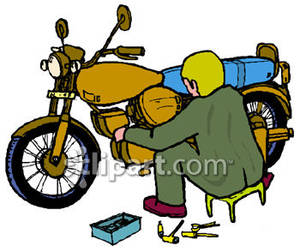
    Motorcycle mechanics work on motorcycles and other units such as motor scooters and all-terrain units. They inspect, clean, test, assemble, diagnose, maintain and repair engines, transmissions, drive systems, steering assemblies, braking systems, chassis, suspension, electrical systems, vehicle management systems, fuel systems and exhaust systems.

    Motorcycle mechanics work on motorcycles and other units such as motor scooters and all-terrain units. They inspect, clean, test, assemble, diagnose, maintain and repair engines, transmissions, drive systems, steering assemblies, braking systems, chassis and suspension, electrical systems, vehicle management systems, fuel systems and exhaust systems. They may specialize in repairing, rebuilding, customizing or servicing these systems or assemblies.

    Motorcycle mechanics work with hand, power, pneumatic and measuring tools, shop equipment, and diagnostic and testing tools. Reference material, documentation and computers are also necessary tools in this trade.

    Motorcycle mechanics may work in service shops of motorcycle dealerships, manufacturers and retailers or in independent service establishments. They may specialize in specific motorcycle, scooter and all-terrain unit makes or types.

    The work environment may include noise, fumes, odours, hazardous compounds, drafts and vibrations; therefore, safety procedures are important. The work often requires considerable standing, bending, crawling, lifting, pulling and reaching.

    Some important attributes of motorcycle mechanics are good hand-eye coordination, mechanical aptitude, time management skills, document use, numeracy, logical thinking and decision making skills, excellent communication and the ability to educate themselves as technology advances. They must also be competent to test ride units.

    Experienced motorcycle mechanics may advance to supervisory positions, shop foreman, service manager or instructors. Some mechanics may open their own garage or motorcycle specialty shop. With additional training, motorcycle mechanics can transfer their skills and knowledge to related units and equipment such as, but not limited to, snowmobiles, watercraft and outdoor power equipment.

  • Career Profile: Printing Press Operator

    Career Profile: Printing Press Operator

    Printed words are everywhere in our world. We see them on posters, street signs and all kinds of other places. Many of the materials that people read have gone through a printing press. If you look at a book, you can find out the name of the author, the editor and the publisher. One person who is never mentioned is the printing press operator. However, printing press operators have very important jobs. Without them, many of the books, magazines and newspapers that we read would not exist.

    In the last few years, computers have changed the way people read. Printed books, magazines and newspapers have become less popular as many people have changed over to electronic devices instead of paper. This shift has also affected job prospects for printing press operators, reducing their chances for employment. However, their work is still valuable. Universities, libraries, governments and others still use printed documents every day. Whether the documents are textbooks or novels, they are still important for helping people find the information they need or for giving them a chance to relax and enjoy an interesting story. Printing press operators help people have access to these books.

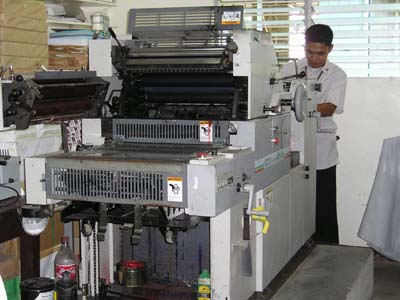
    The work that printing press operators do can vary a lot. Some people work only with machines that print paper documents, but others work with plastic, metal and other materials. They might work with illustrations and designs or mainly with written text. Printing is normally the last stage of the publication process. When the printing press operator receives a book or magazine to print, it normally has everything in order and all of the different sections in place. For a book, this means that the cover and title page come first and that the book is set up the way the author and publisher want it to look. The printing press operator then sets up the machine to print the pages according to the instructions.

    The training required to become a printing press operator varies, depending on the employer. Many printing press operators work for small businesses, although some work for larger companies. They might need only a high school diploma to get a job, although official training in printing techniques is helpful. Vocational schools that offer programs in printing, photofinishing and related fields can help train printing press operators for the kinds of work they will do. Basic computer skills are also very useful, and knowledge of book publishing can also help printing press operators get good jobs.

    Finding a good job often depends on a printing press operator’s flexibility. Some people work in paper manufacturing and other areas related to publishing and books. Any extra skills that printing press operators learn can help them to earn more and to get jobs more easily. Wages start at about $13 per hour and go up to almost $35 per hour. Experienced printing press operators earn over $40,000 per year in some parts of Canada.

  • Career Profile: Airport Baggage Handler

    Career Profile: Airport Baggage Handler

    When people go on trips by airplane, they might not think much about everything that goes on to get them and their luggage to their destination. One exception to that is when something goes wrong, such as when their luggage goes to the wrong place. Passengers might not know much about how the process works, but airport staff know that the work of baggage handlers is essential. Without baggage handlers, air travel would be very difficult and often uncomfortable.

    What makes airport baggage handlers so important? Most people, except on very short trips, need to take clothes, toothbrushes and other items with them. They might have books, snack food, gifts and even computers or medical supplies with them. Some of those items can fit in the storage areas under or above the passengers’ seats, but not all of them. When companies send products like rugs or furniture by airplane, these items also need somewhere to go. A lot of mail also travels by air. Most airplanes have a special luggage area below the passengers for anything that is too large to fit into the main part of the plane. Getting all of the luggage, mail and other shipments in and out of the plane can be a big job.

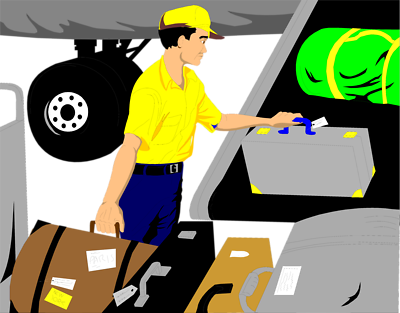
    Airport baggage handlers are the people who put the luggage in at the beginning of each flight and take it out at the end. They use equipment such as fork lifts and conveyor belts to move luggage from one place to another. They tie the luggage down inside the plane to make sure that it stays in place throughout the flight. A certain level of physical strength is necessary for baggage handlers in case their equipment fails or they have to lift luggage onto trucks or conveyor belts. The need for strength might be even greater in small airports, where limited resources mean that much of the work has to be done by hand. Baggage handlers also need to be able to work quickly and efficiently to make sure that they cause as few delays as possible. Some of their work happens outside and they need to be prepared for bad weather.

    If you want to become a baggage handler, the most important education you can have is a high school diploma. Some airlines might also want applicants for the job to have some post-high school academic or vocational education. The best way to learn about educational requirements is to find an airline where you would like to work and then to find out what specific training is necessary. Next, you can apply for a job with that airline. Job prospects vary from one area to another, but they will probably improve when older workers start to retire. Salaries for baggage handlers start at about $20,000 per year, but experienced baggage handlers can make $60,000.

    Do you enjoy helping other people get to where they need to go? Are you physically strong and able to carry heavy loads? You might want to consider a career as a baggage handler.

  • Career Profile: Lawyer

    Career Profile: Lawyer

    Are you interested in the law? Lawyers are intelligent, perseverant and outspoken individuals responsible for promoting the rights and values of their clients. They do incredibly varied work, from drafting a house deed to suing corporations for damages to defending our rights in court. Studying the law is a lot of work, but it is incredibly rewarding. If you’re looking to be on the front lines of one of our most important social institutions, this career is one worth fighting for.

    Here’s an overview of the process and requirements you need to become a lawyer.
    • An undergraduate university degree (4 years). There is no requirement for what field you wish to major in — many future law students pursue a degree in social science or communications, but law schools definitely accept students from all fields.
    • The LSAT. You must score high enough on the Law School Admission Test to meet your chosen law school’s cut-offs. (As well, you must meet the GPA standing with your undergraduate degree.)
    • Law school (3 years).
    • Articling (10 months — you apply for a position between 2nd and 3rd year). Basically, this involves working under the guidance of an already qualified lawyer. You get paid, too!
    • The Bar. Finally, you must pass the Bar Admission Course including its required exams.

    If you’re looking to become a lawyer, there are a variety of fields of law to explore, including:
    • Criminal – often popularized in movies or TV; deals with criminal offenses and offenders. Positions are either defense (speaking on behalf of the accused) or Crown attorney (prosecuting on behalf of the government).
    • Corporate – deals with the relationships between corporations or businesses, including contracts, taxes, etc.
    • Public Interest – involves doing legal work for public interest groups, directly linked with human rights, education, and aid
    • Torts – deals with personal injury law; filing lawsuits on behalf of your client, who was wronged in some way by another
    • Family – deals with marriage, divorce and custody of children

    Your duties as a lawyer vary depending on the field you’re in. Most lawyers conduct research for cases, consult with clients, present cases in court and file lots of paperwork. If you’re looking for an easy ride, being a lawyer is not the job for you — it’s an incredibly demanding career, requiring a lot of skills, determination and hard work. That being said, the higher the risk, the higher the reward: lawyers are often paid quite handsomely for their efforts, especially in the private sector.

    If you’re opinionated, determined and love a good debate, a career in law is something worth investigating. Don’t let the lengthy process discourage you: you can do anything you set your mind to if you’re passionate about your work. For all you future lawyers out there — study hard and be prepared for the career of a lifetime.