Tag: career profile

  • Career Profile: Roofer

    Career Profile: Roofer

    Roofers install, repair and replace flat and sloped roofs. They work with membrane roofing systems that consist of a variety of materials with different application methods. They also install, replace and repair shingles, slate, shakes, roofing tiles, sheet metal and other preformed sheeting on sloped roofs.

    Essential Skills
    Reading
    Roofers read instructions on work orders as well as application and installation instructions for roofing products and materials. They read information sheets to learn about new products and materials. They also need to refer to blueprints and specifications to complete roofing jobs.

    Document Use
    Roofers reference documents such as work orders, plans and specifications and site specific safety plans that are required for construction, alteration and repairs. They identify the location and orientation of parts in assembly drawings of equipment. Roofers read Workplace Hazardous Material Information System (WHMIS) documentation to obtain and follow safe handling and application procedures.

    Writing
    Roofers may write in logbooks and on contract forms and work orders to describe the work that needs to be done. They may fill out maintenance and inspection reports. They are required to complete safety documents according to jurisdictional regulations.

    Numeracy
    Roofers measure the length, width and height of roof surfaces so they can order the correct amount of materials to complete a roofing job. They also use drawings to calculate material requirements. Roofers use numeracy skills to determine the layout of shingles. They may use thermometers to measure the temperature of roofing materials and working environments to ensure conditions are appropriate for application of the materials.

    Oral Communication
    Roofers communicate with colleagues, other trade workers, manufacturers and supervisors to discuss and review job and safety requirements. They speak to customers to explain procedures used for application and disposal of roofing material. They may also use specialized communication such as hand signals to communicate with crane or hoist operators when moving material and equipment.

    Thinking Skills
    Roofers use problem solving skills to address oversights and discrepancies on the job site. They assess roof conditions and consult with supervisors and clients to adjust the scope of a roofing job. They must anticipate changes in weather to prevent damage to an existing roofing structure and to roofing material. Roofers use decision making skills to decide the start and end of work considering factors such as weather and the availability of supplies and labour. They use critical thinking skills to judge the quality of finished roofing jobs. They also test to make sure roofing materials are sealed and have adhered properly.

    Working with Others
    Most roofers work collaboratively on teams to complete roofing projects. They discuss safety, work processes, installation improvements and quality control.

    Computer Use
    Roofers may use email to communicate with others in the industry. They may also use the internet to look up product and safety information.

    Continuous Learning
    Roofers are continuously learning in order to keep abreast of new roofing products, application procedures and safety precautions. They take WHMIS and provincial construction safety courses, as well as other safety-related courses to stay current. Manufacturers sometimes provide training on their products. Roofers may also learn from manuals and newsletters.
  • Career Profile:  Farmer

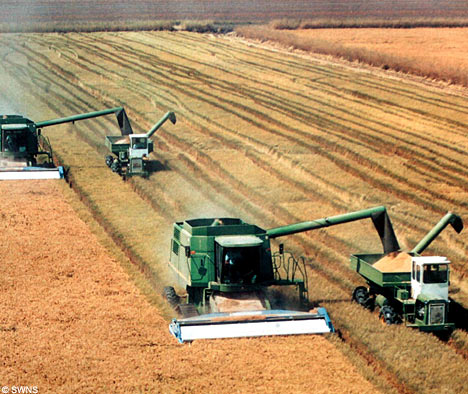
    Career Profile: Farmer

    Every day, people cook and eat food that has come from farms. Bread comes from grain that grows on farms, and fruits and vegetables also often come from there. Milk, cheese and eggs come from animals that live on farms, and also much of the meat that people eat. Farmers grow the food and take care of the animals so that people in the cities and around the country can eat. Working as a farmer can be a difficult and dangerous job, but it is an essential part of every society.

    Farming is a very old occupation which is found in almost every part of the world. People living in North America have grown crops like corn and beans for hundreds of years. However, when settlers came from Europe they brought many other crops with them. Farmers found that British Columbia, with its warm winters and wet climate, is good for growing many types of fruit like peaches and apricots. They discovered that they could grow grains like wheat and barley in places like Manitoba and Saskatchewan, with long, cold winters and short, hot summers.

    Flexibility is an important part of being a farmer. In the past and even now in many countries, farms were small and farmers would be involved in many different types of work. Besides growing grain, vegetables and fruit, they might raise chickens for eggs and for meat, keep bees for honey and possibly even raise fish or other animals. However, in countries like Canada, many farmers concentrate on growing one type of food, such as grain or fruit. They learn how to prepare the soil, fertilize the plants and care for everything the plants need to grow and thrive. Farmers who work mainly with animals learn how to deal with medications, diseases and injuries and to help the animals with finding food and other needs.

    Farming can be a tough job. Grain, fruit and vegetable farming tend to be very busy in spring, when farmers plant their fields, and in fall when they harvest the crops. Animals require a lot of care throughout the year, and many farmers wake up early every morning to milk the cows or to take the animals from the barn to the fields. When diseases hit the crops or animals, farmers can lose a lot of their earnings. Their income depends on the weather, the soil, the health of their animals and many other factors. Farming can also be a very dangerous occupation with all of the accidents that can happen.

    Despite the difficulties of farm life, many people enjoy it. Sometimes, people who grow up on farms decide to take over when their parents retire, but others start out on their own. A degree in agriculture is helpful but is not necessary, since farmers learn a lot from other people and from experience. Farming can be a very good life for people who love to work with their hands and to be outdoors. You might want to consider this ancient occupation.

  • Career Profile:  Archaeologist

    Career Profile: Archaeologist

    When you go to museums, you learn a lot about the past. Some museums have information about the relatively recent past, but others give information about people who lived many centuries ago in countries around the world. How do people in the twenty-first century know about the ancient Romans or even the settlers who came to North America two hundred years ago? Much of what people know about the past comes through the work of archaeologists who try to understand other cultures and people through what they left behind.

    Suppose that you wanted to find out about your great-grandmother’s life. You might ask your parents and grandparents for information, and you might also look at old diaries and maybe some of the things she owned. Archaeology is a lot like that kind of search. The main difference is that archaeologists are usually searching for information on whole communities and cultures instead of just one person. They often work far away from home, trying to learn about ancient people and to understand how they lived.

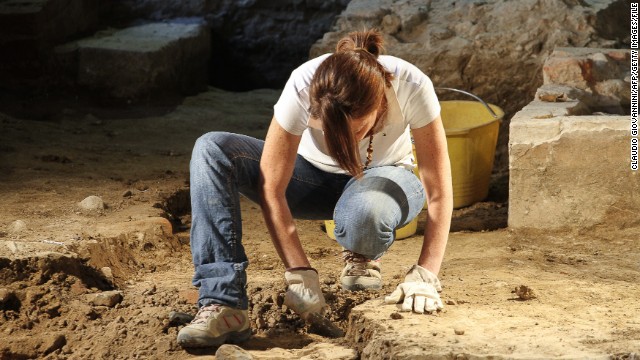
    Part of what archaeologists do is to look for objects that show what life was like in the era they are studying. Some objects might be made of gold or silver, but archaeologists can still learn a lot from even the tiniest beads or other things that the people used. Archaeologists also look for whatever written records they can find, whether they are written on paper, stone, or anything else. Digging for ancient objects, or artifacts, can be slow and difficult work, but it can be very rewarding.

    Before archaeologists get to the point of digging for artifacts, they need to study and learn about what other archaeologists have discovered. They need to learn about ancient civilizations and practice the skills they need for recognizing and preserving artifacts. This process usually involves getting at least a Master’s degree and sometimes a Ph.D. in archaeology at a university. Through this type of program, students learn about fossils, ancient art, museums, and many other topics. They might learn to read Latin and other ancient languages like Egyptian hieroglyphics and find out what people in the past used for medicine and what they ate. A wide range of knowledge can help archaeologists know how to look for artifacts.

    Being able to analyze and interpret what they find is also important for archaeologists. Only a part of their work is digging for artifacts. They also have to analyze and organize what they find, research the history and the objects, and then write about what they discover. For all of this work, they might receive between $55,000 and $60,000 per year, working for a private company, a university, or possibly the government. Working hours can be long when they are out digging, but otherwise, archaeologists usually keep regular office hours. Jobs in the area are limited, but flexibility and a wide range of knowledge can help.

    Do you love history and learning about the past? Why not consider working as an archaeologist?

  • Renewable Energy – A Trade for the Future

    Renewable Energy – A Trade for the Future

    Are you seeking a future-centric career? Looking to make a difference in the world? Want to join an industry destined to flourish significantly within your lifetime?

    With a growing awareness of the negative impacts humans have had on the environment, the increasing concern of environmental problems such as global warming, and the fight to preserve and find alternative ways to sustain the environment and human life, the renewable energy sector provides many opportunities for a rewarding career.

    As more alternative energy options are unveiled, more positions within the renewable energy sector are becoming available. Perhaps you’ll be the person responsible for energy audits, a technician working on solar panels, a designer of wind farms, or working to promote more sustainable building practices. The opportunities are endless and will continue to grow thanks to government initiatives to improve energy practices.

    In 2009, Ontario introduced a Green Energy Act, which was committed to promoting and supporting green energy projects and supporting energy efficiency province-wide, joining in a worldwide initiative to move toward renewable practices.

    The Ministry of Energy has also introduced many incentive programs, including tax rebates, to encourage Canadians to make energy updated to their homes. This could include installing solar panels or wind turbines, geothermal heating or cooling, and more.

    As the renewable energy sector grows, more programs are being offered at post secondary institutions throughout the province and country. Programs are for energy technicians, renewable energy technicians, sustainable building construction, sustainable agriculture, wind turbine technicians and more.

    If you’re looking to explore a rewarding career with opportunities for further growth, development and innovation, then a renewable energy career is perfect for you.

    Depending on the type of renewable energy career you’re interested in pursuing, there are apprenticeship, diploma, and degree opportunities available to suit your wants and needs. The opportunities are endless.

  • Career Profile: Print Journalism

    Career Profile: Print Journalism

    The field of print journalism is an exciting and challenging career path. Journalists have been an important part of society for hundreds of years, writing in newspapers, periodicals, magazines and now, with the widespread use of the Internet, websites.

    A print journalist working in 2014 has to master skills that journalists in former years didn’t have to consider. It’s a fast-paced and ever-evolving field, requiring the ability to think quickly and work under deadlines. For those who are dedicated, journalism can be a very rewarding field.

    Aspiring journalists learn how to write a variety of articles, from straightforward news pieces to music, sports, fashion and culture articles. Journalists learn to be proficient in photography, newspaper and magazine layouts and stay up-to-date with computer programs. Journalists need to know how to conduct proper interviews, ethics behind good journalism, the history of journalism and current issues in the media. Nowadays, Twitter, Facebook and Tumblr have been added into the journalist’s tool belt, as they have to keep up-to-date with current events at all times.

    Journalists are expected to find their own story ideas, especially as the jobs move from steady positions at newspapers such as Metroland and The Toronto Star to contract positions for freelance writers. A good journalist is always on the lookout for potential stories and has a sharp eye for detail.

    Reporters can find jobs doing a variety of things aside from writing. They can work at newspapers, magazines and trade publications, writing about subjects such as fashion, sports, crime, science, medicine, fitness, travel and more. Aside from reporting, other jobs in the field include editing, doing layout, drawing cartoons or copyediting. The editor and copyeditors make sure that the stories reporters submit are verified and true, as well as removing or altering sections. In addition, copyeditors have the important job of checking and correcting the grammar, style and spelling of articles. A poorly written article reflects badly on the publication.

    A journalist’s wage varies depending on the size of publication, seniority, what stories they cover and whom they interview. The average starting wage is $19,000 but it can go up into the six figures for the best and most experienced reporters. Some journalists become famous for their writings and exploits. Tom Wolfe, known for his famous non-fiction New Journalism book The Electric Kool-Aid Acid Test, was one of the first celebrity journalists. Others include the famed novelist Ernest Hemingway, music critic Lester Bangs (who was portrayed in the film Almost Famous) and Rolling Stone reporter Hunter S. Thompson, known for pioneering Gonzo journalism and writing Fear and Loathing in Las Vegas and The Rum Diaries, both of which were adapted into major Hollywood movies starring Johnny Depp.

    Print journalism is an exciting, fast-paced and challenging career path that would be rewarding for those who like to do something different every day and don’t want to work in an office.

  • Working as an Automotive Service Technician

    Working as an Automotive Service Technician

    Do you…
    • Enjoy working with your hands?
    • Enjoy fixing cars, trucks, motorcycles or small engines?
    • Want to learn more about electrical, hydraulics (fluid power), pneumatics (air power) and mechanical components in machines?

    If you answered “yes” to any of the questions above, then a career as an Automotive Service Technician may be right for you!

    What Is An Automotive Service Technician?
    An Automotive Service Technician is a certified and skilled tradesperson who diagnoses and repairs motor vehicles (e.g. cars, minivans, SUV’s, light duty trucks and medium duty trucks).

    An Automotive Service Technician performs various duties that help maintain a vehicle as well as repair it. Some of these job activities include:
    • Engine maintenance and repair
    • Transmission maintenance and repair
    • Exhaust system repair
    • Body repair and adjustments
    • Brake maintenance and repair
    • Steering, suspension and alignment repairs

    Where Does An Automotive Service Technician Work?
    An Automotive Service Technician may work in:
    • Dealerships
    • Independent automotive shops, repair shops and garages (owned by other people or themselves)

    Some Automotive Service Technicians may prefer to work as:
    • Teachers in high school teaching automotive class
    • Teachers in colleges that offer an accredited Automotive Service Training program

    What Does A Typical Day For An Automotive Service Technician Look Like?
    A typical day for an Automotive Service Technician in a dealership or automotive shop usually begins when a customer brings their vehicle to the shop. The customer tells the service advisor what the problems are with their vehicle. The service advisor documents the problems on a work order. The vehicle and corresponding work order is then given to an Automotive Service Technician who begins to work on this particular job.

    An Automotive Service Technician follows a certain procedure when working on a new job. He/she:
    1. Reads the work order written up by the service advisor.
    2. Examines the vehicle to further assess the problems mentioned on the work order.
    3. Provides the service advisor with an estimate on how much it will cost to fix the problems.
    4. Waits for the service advisor to confirm that the customer is OK with the repair costs before fixing the problems.
    5. Fixes the problems once the service advisor gives the go ahead.
    6. Takes the vehicle for a test drive and/or performs operational checks to ensure that the customer’s concerns are resolved.
    7. Informs the service advisor that the customer can pick up their vehicle.

    How Do You Become An Automotive Service Technician?
    1. Attend a college that offers a certified Automotive Service Technician training program.
    2. Complete the Automotive Service Technician program successfully.
    3. Find a suitable employer who will hire and train you as an Automotive Service Technician apprentice. (Complete your apprenticeship booklet/hours/activities at work and get it signed off by your employer).
    4. Write the Automotive Service Technician certification exam put out by the Ministry of Training, Colleges and Universities.
    5. Pass the exam, obtain your 310S license and become a licensed Automotive Service Technician!

  • STEM Jobs: Petroleum Engineer

    STEM Jobs: Petroleum Engineer

    What is a Petroleum Engineer?
    Oil and gas are two of the most crucial energy resources we rely upon in the modern world. Oil and gas companies extract the deposits of these resources from the earth and facilitate their distribution as an energy source. But how do they know where to dig? This is where a petroleum engineer enters the picture. Petroleum engineers are tasked with finding oil and gas deposits as well as developing ways to extract those deposits from the ground. They design, plan and execute drilling projects to ensure the safest, most effective way of implementing oil and gas wells.

    On-the-Job Duties
    The day-to-day duties of a petroleum engineer include designing and implementing ideal methods of drilling. Often they are responsible for monitoring the drilling area (including the ground, the rocks and the equipment) to ensure optimal conditions for drilling operations that harvest the maximum amount of oil and gas deposits.

    Who do they work for?
    Petroleum engineers are most often hired by companies who produced petroleum, but they can also find employment as consultants, researchers, and policymakers with the government. In some sectors petroleum engineers can also be called oil and gas reservoir engineers, well logging engineers, mud engineers, sub-sea engineers and drilling engineers.

    Salary
    Petroleum engineers can earn a yearly salary of anywhere from $35,000 to over $130,000, depending on seniority.

    Required Education
    The educational background of petroleum engineers can vary, but all are rooted in engineering. Attaining a bachelor’s degree in either petroleum engineering or a related program like biochemical engineering is the best way start off. Next, earn a master’s degree in petroleum engineering followed by a PhD to maximize career opportunities. For some aspects of the job, like approving drilling designs, a professional engineering license will be required.

    Other Skills
    Leadership, time management, critical thinking, logic, creativity, team work, and communication are crucial to the success of a petroleum engineer.

  • Working as a Bus Driver

    Working as a Bus Driver

    For many young people, learning to drive is a symbol of freedom. When they learn that skill, they no longer have to depend on parents or other adults to take them to parties or pick them up from lessons and special events. Many people enjoy driving their own cars or trucks, and these vehicles can make it very easy to get around in the city or out to the country. For some people, however, driving is more than just a way to get from one place to another. For bus drivers, being on the road can be a career.

    Almost anyone can be a driver, even just for a few minutes. Have you ever been behind the wheel of a bumper car at a fair or maybe a tractor on a farm? People drive small and large vehicles, including riding lawnmowers, motorcycles, bicycles and regular cars. However, driving a bus is somewhat different. Whether people want to drive a school bus, a transit bus or a long-distance bus going from one part of the country to the other, they all need to learn the special requirements of bus driving. Learning and following the rules of the road is the most basic requirement for all drivers, whatever type of vehicle they use. They have to know when to use their signal lights, how to make turns properly, and when they can pass a slow-moving vehicle. Many of these basic rules are the same for bus drivers as for others on the road.

    Learning to drive a bus, however, takes some special skills. Drivers have to learn how to handle vehicles that are much larger than most of the cars and trucks on the road and to deal with bad weather conditions such as snow and rain. They have to be able to manage special features of each bus, such as braking systems which are very different from what they know with cars. Physical strength to endure long hours behind the wheel and the ability to concentrate on the dangers of the road are important characteristics of bus drivers. An ability to stay calm in difficult situations and a friendly attitude to passengers are also important qualities.

    How do people become bus drivers? The first step is to learn how to drive an ordinary vehicle like a car. However, most people need special training in whatever type of bus driving they want to do. Long-distance bus companies like Greyhound have training programs that combine theory and practice in a six-week course. School bus companies like First Student Canada have short, intensive courses or longer ones that last several weeks. Drivers learn safe driving, how to handle the vehicles they will be using, basic repair, and how to deal with people.

    Salaries for bus drivers can vary a lot, depending on where they live and what they do. Some drivers get minimum wage, but experienced drivers can get twice as much as that. You might never become rich as a bus driver, but you can have a rewarding career.

  • Career Profile: Painters and Decorators

    Career Profile: Painters and Decorators

    Type of Work
    Painters and decorators apply paint, wallpaper and other finishes to interior and exterior surfaces of buildings and other structures.

    Sources of Employment
    Employment opportunities will come primarily from positions freed up by painters and decorators who retire, leave the trade or receive promotions to painting and decorating contractor or supervisor positions or, if they have the qualifications, to construction manager positions. Some opportunities will result from employment increase.

    Labour Pool
    Job opportunities will be available for the many experienced painters and decorators who are unemployed, for graduates with a Vocational Studies Diploma (DEP) in commercial and residential painting, and especially for people who meet the conditions for obtaining an apprentice certificate without having a diploma (see Training). It is possible to obtain a painter apprentice certificate issued by theCommission de la construction du Québec (CCQ) without completing a Vocational Studies Diploma in commercial and residential painting when there is a regional shortage. The proportion of new apprentices who do not have this diploma is very high. In fact, between 1998 and 2012, about 78% of new painter apprentices did not have this diploma. This situation seems strange considering the CCQ’s policy to encourage workers to take vocational training to access construction trades. It could be explained by the lack of interest in training among youth or a lack of places in vocational training schools. Furthermore, this occupation lends itself very well to on-the-job training combined with supervision by an experienced painter who passes his knowledge on to the apprentice.

    Industries
    According to census data, in 2006 about 75% of painters and decorators worked in the construction industry, most of them in building finishing work (65%), but also in residential building construction (8%). There were also significant numbers in the manufacturing sector (7%).

    Employment Characteristics
    According to census data, women held about 13% of the jobs in this occupation in 2006, a percentage that has been rising significantly since 1991 (7%). The annual average income data given in the “Characteristics” section of the “Statistics” ($29,538) should be used with caution. The data include only the 27% of painters and decorators who worked full time and full year in 2005. The average employment income for those who did not work full time and full-year was only $17,925.

    Because of the tightening up of entry conditions for this trade, the level of education of roofers and shinglers improved greatly between 1991 and 2006, although it is still below that for all occupations. The proportion of painters and decorators with at least a post-secondary diploma rose from 30% to 54%, while the proportion of those who did not have at least a secondary school diploma dropped from 41% to 23%. Seasonal unemployment is relatively high. Thus, the average number of employment insurance claimants is three times higher from January to March than in August.

    Education and Training
    In Quebec, apprentice and journeyman certificates of competency from the Commission de la construction du Québec (CCQ) are required to work on construction sites. To obtain an apprentice painter certificate, you must:

    – have a Diploma of Vocational Studies (DVS) in commercial and residential painting and a guarantee of 150 hours of work from an employer.
    – in the event of a regional shortage, where CCQ data indicate that under 5% of apprentice certificate holders in a region are available, provide a guarantee of 150 hours of work, have taken a safety course, and meet the entry conditions for the commercial and residential painting course. Apprentices without a diploma are also required to participate in a training activity in order for their certificate to be renewed.

    To become a journeyman, an apprentice must complete an apprenticeship period of 6,000 hours (including DVS training, if applicable) and pass the CCQ qualification exams. The certificate is automatically renewed each year if the holder has appeared on an employer’s monthly report in the 14 months preceding the renewal date. Otherwise, workers must renew their certificates.

    For painter jobs not subject to the Decree for the construction industry, employers usually require a DVS in commercial and residential painting or an apprentice or journeyman certificate.

    Training in tender estimating provided by school board employer services is an asset for self-employed workers and those seeking a promotion.

    Red Seal certificate holders can work anywhere in Canada.

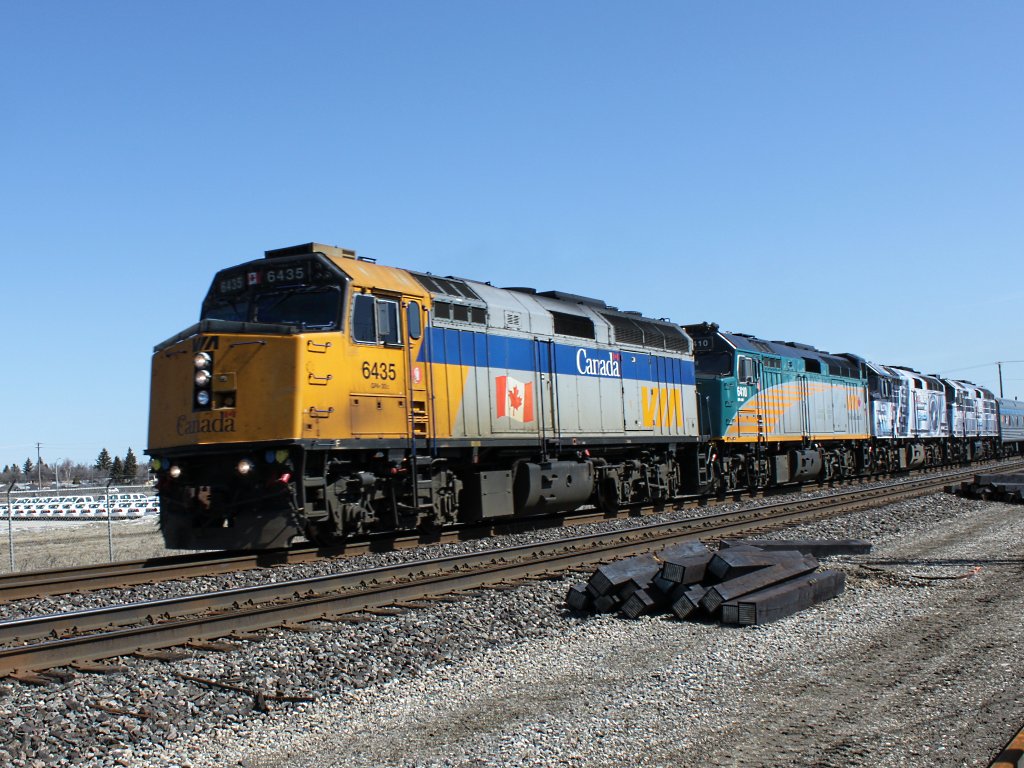
  • Career Profile: Train Engineer

    Career Profile: Train Engineer

    Depending on how old you are, you might already be learning how to drive a car. How would you like to drive something much larger? One of the biggest vehicles you might ever drive is a train. With experience and education, train (or locomotive) engineers can have good, fulfilling careers.

    Travelling by train is not as common now as it once was, but railways are still very important for carrying grain and other goods and for passenger travel. Every day of the year, trains travel around the country, sometimes for short trips and sometimes for long ones. The kinds of people who work on these trains depends on what the trains are carrying, but one person remains the same. Every train has a person who is called a train engineer or locomotive engineer. These are the people who drive the trains and make sure that they get to the right destinations safely.

    Being a locomotive engineer involves much more than just driving a train from one place to another. A lot of the work happens before the train leaves the station, especially in small towns where there are not many staff members to look after everything. In that case, an engineer might check the equipment to make sure that it is working properly and repair anything that is broken or wearing out. This part of the work often requires a lot of mechanical knowledge and the ability to use tools to repair the different parts of the train. Even when other people do the actual repairs to the trains, the engineer should know what changes are necessary.

    Another part of work as an engineer is doing paperwork. This job might include checking forms to make sure that the right amount of grain or lumber is on the train or filling in the proper documents for driving the train over the border into the United States. This part of the job takes practice, and it also requires a fairly good reading ability with complicated documents. Knowledge of mathematics is also helpful. Learning to read and understand technical documents, such as government forms, is a good way to get started.

    Becoming a train engineer does not usually require any special education, but it requires experience. After completing their high school diplomas, people start by trying to get work as conductors on trains. After about two years, they can transfer to the engineer training program and get a certificate which officially allows them to work as engineers. The training covers topics like how to stop and start the train and how to read the signals which tell engineers which track to take and what dangers to look for.

    Locomotive engineers have a lot of responsibility, and they often work long hours with few days to relax between trips. However, experienced engineers can make $95,000 per year, and the average pay is $78,000. For people who enjoy working with machines and who love to travel, a job as a locomotive or train engineer can be ideal.