Tag: dream job

  • Dream Job: Astronomer

    Dream Job: Astronomer

    Imagine what it would be like to travel among the stars and planets, visiting the Big Dipper and stepping out onto the surface of Venus. Most people have never had the chance to travel out into space, and most of the planets are too far away to visit. However, one group of people can visit the stars and planets by studying them and learning all about them. Astronomers have the chance to study the skies and teach others about the amazing things that they find there.

    Depending on their jobs, astronomers might focus mainly on research or teaching. Astronomers study stars, planets, asteroids, comets and anything else that they find in our galaxy and beyond. They invent telescopes and other instruments that help them record what they see. Some of them might develop new theories that help people to understand the universe better and to predict what might happen in the sky.

    Sometimes, this kind of knowledge can be very important for life on earth. Storms on the sun, for example, can affect the weather on earth. Eclipses, where the moon covers part or all of the sun, can also cause problems unless people know they are coming and can prepare for them. The information that astronomers provide can help to make life much easier for many people.

    Several jobs are closely related to work in astronomy. Physicists, cosmologists, nuclear physicists and physics research scientists all work with the same kinds of theories, computer software and scientific instruments. They might have to work in different ways to achieve results, but they all use the same basic methods of gathering and processing information.

    Much of the work that astronomers do is solitary or in small groups of scientists and researchers. However, the ability to communicate with other people is also important. Do the things that you see in the skies fascinate you? Maybe you should consider becoming an astronomer.


  • Real Jobs: Comedian

    Real Jobs: Comedian

    Knock, knock. Who’s there? It’s a comedian.

    Do you like to tell jokes? Do your friends and family tell you that you’re funny? If so, you might want to consider becoming a comedian when you grow up.

    Telling jokes to make people laugh is only part of what it takes to be a comedian. Finding humour in everyday life is also important. Comedians observe people and try to understand why they act the way they do. Often, they begin by looking at their own lives and finding the humour in what they do and then seeing how it applies to other people. A joke about how the comedian eats popcorn, for example, might make other people think about the funny ways that they eat. All comedians find ways to laugh about everyday life, but some comedians do even more.

    Satire is a special kind of comedy that points out people’s weaknesses, usually in a funny way. Often, satire is about politicians, business leaders, or other well-known people. The idea of satire is not just to laugh, but also to change the way people think and act. Rick Mercer is a good example of a Canadian satirist. He began his comedy career in 1994 with This Hour Has 22 Minutes, and he later became known for his own program, the Rick Mercer Report. The program is about current events, political leaders and the ways that people work together.

    Not all comedians have their own television programs. Some of them play small parts on other people’s shows, but others perform in clubs, at parties or even restaurants. Most comedians start slowly, maybe by telling a joke or two at a special event and then working their way up to presenting their jokes at a comedy club.

    Becoming a comedian basically takes a lot of practice and a sense of humour. Although some comedians take classes to learn the skills they need, most prefer to learn from other entertainers as they work. The main quality that these people need is an ability to talk in front of large groups of people. If you love to be with people and you love to be funny, a career as a comedian might be right for you.

  • I Want to Be A Robot!

    I Want to Be A Robot!

    Miss Inglis’ kindergarten class at Parliament Oak elementary school had to answer a special question this week. The question: what do you want to be when you grow up?

    The study of childhood occupation aspirations has been going on for decades and approached from many different angles. From the psychological transition of fantasy to realistic choices, to gendered influences on the traditional roles children choose.

    In a 1952 Ginzberg study, it was noted that children go through three stages in choosing occupations: “fantasy choices (before age 11); tentative choices (ages 11 to 17); and realistic choices (ages 17 to young adulthood).”

    Parliament Oak kindergartener Jack wants to be a robot. Maddie wants to be a rock star and James wants to be a spy.

    These children’s choices are fantastical. But as the workforce in Canada shifts towards the service industry and technological occupations, even a mail carrier may soon be considered a fantasy career choice.

    However, some career choices will stand the test of time. For example, kindergartener Ciaran wants to be an animal scientist, and Alexander wants to be a doctor. Career choices in science are likely to continue to be in high demand despite rapid changes in technology.

    Gender influences noted by scientists Levy, Sadovsky, Troseth, and Stroeher determined that early in life, especially from ages four to seven, young boys and girls are likely to choose traditionally male or female careers.

    This was a very common theme in Mrs. Inglis’ class; Oskar wanted to be a soccer player, Brian a policeman, Sophie a hair stylist, and Katherine a bride. However, social psychologists Garrett and Tremaine reported, “as children get older, they tend to be more flexible in choosing non-stereotyped careers”.

    An interesting aspect of these studies done in the 1970s is that boys reported to have double the amount of fantastical career choices than young girls. Garrett and Tremaine’s research noted, “girls learn early on that few adult vocations are open to them.”

    Today, we are living in the crossover effect of male/female college enrolment rates. According to the Population Reference Bureau organization, it officially occurred in 1993 and now leaves males seven percentage points behind females when it comes to college populations.  This change improves the likelihood of female success in the workplace and increases their vocational opportunities.

    Mrs. Inglis’ class did not reflect that change, with boys and girls averaging at very similar amounts of choices. The students are set to graduate this week, and it will be neat to see what they will become, and who will find success in the workforce of the future. My money is on the robot kid, but only time will tell.

  • What’s a Living Statue?

    What’s a Living Statue?

    Suppose that you could make a good living just by standing still. If you are physically fit, have good self-discipline, and enjoy acting, you could become a special kind of performer called a living statue. Ever since circus performers first started acting as living statues, this form of mime has become extremely popular, especially in Europe. People like Petronella Carter of London, England have made the art of being a living statue into a career.

    The name “living statue” describes what the job involves. Basically, living statues pretend to be real statues of various people, such as famous authors, painters, or characters from books or movies. They might join with other living statues to create a scene from history or everyday life or they might work alone.

    Every year, living statues in Europe hold competitions in the Netherlands to see who is best in various categories. Children, amateurs and professionals compete to see who has the best costume, best act, and most interesting entertainment. Each person portrays a certain character, such as a girl selling flowers or a man carrying luggage. These competitions bring a large audience to watch both the stillness and the movements of living statues.

    Being a living statue involves working on many different aspects of character, costume, and movement, according to Petronella Carter. She has been working as a living statue since the 1990s. During these years, she has learned a lot about the art and her own skills in portraying various characters.

    Many living statues work at street festivals and other outdoor events, but Petronella works mainly indoors, where she has a greater range of costumes and characters to use. Sometimes, she has to spend an hour and a half putting makeup all over any part of her body that is not covered by clothes. This makeup helps her to look like a statue made of bronze or other metals.

    Through her work, Petronella has developed ways of dealing with the challenges of being a living statue. She limits the amount of time she stands in one spot and has learned to control her breathing. Petronella can ease the pain of sore limbs with small, slow movements that no one is likely to notice. However, she also knows that standing still is not enough.

    Movement is what makes the difference between a living statue and a stone or metal one. Most living statues make an occasional small movement or even a large action. They might wink an eye or give out flowers to people going by to show that they are alive.

    Becoming a living statue does not require any special education, but it involves a lot of self-discipline and training. If you want to join this profession, you could start by learning to be a mime and by slowly increasing your ability to stand motionless.

  • Real Jobs: Hot Dog Vendor

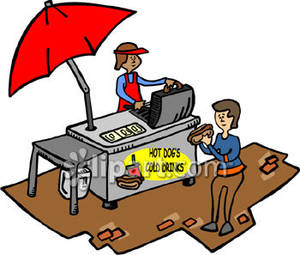
    Real Jobs: Hot Dog Vendor

    Some jobs seem like they can’t be real – just think of being a hot dog vendor.  Everyone loves hot dogs, and it seems like a dream that you could even work with them. Work in this field can be very good for independent people who enjoy being with people and dealing with food.

    You and your family might sometimes eat food from street vendors. You go to a food cart and ask the person for a hot dog with mustard or ketchup, and then the vendor puts the food together and gives it to you. Hot dog vendors spend much of their time selling food to people on the street or in office buildings.

    The first step in becoming a hot dog vendor is to learn about how to handle the food. Wieners are easy to cook, but they have to be stored properly. Buns also have to be fresh, and the condiments (like ketchup and mustard) also require care. Before they start to work, hot dog vendors need to know about handling food safely and about cooking meat properly.

    Some hot dog vendors learn all that they need to know by working with others on the job. Others, however, might decide to take classes at a college or cooking school. A small percentage of hot dog vendors might even get a degree in a subject related to food or even something completely different. Education has little effect on a hot dog vendor’s salary, but it can help to provide background information that can be useful for the work.

    Besides learning about how to handle food, hot dog vendors need to learn about their equipment. They have to use fuel tanks, cooking utensils, and anything else that they need to run the business.

    Do you love food and being with people? Why not consider working as a hot dog vendor?

  • Dream Job: Hockey Player

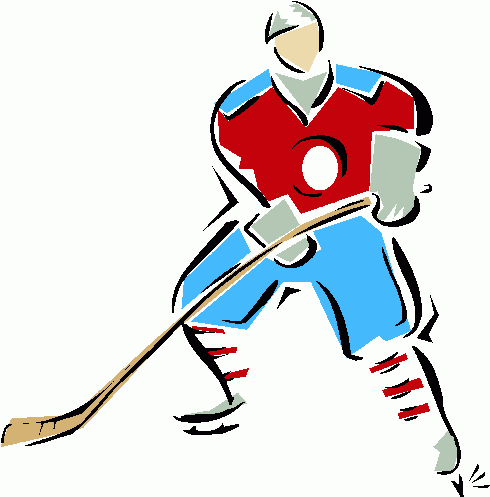
    Dream Job: Hockey Player

    Many people dream of being a famous sports star when they grow up, but not everyone achieves that dream. Have you ever wanted to become a star in a sport like hockey? A Canadian athlete named Hayley Wickenheiser has become well known for her amazing athletic abilities and for her work in helping others. Like other hockey players, she has worked hard at her sport while also balancing it with the rest of her life.

    Becoming a professional hockey player takes a combination of talent and hard work. Hayley Wickenheiser discovered her athletic abilities early. She grew up in Shaunavon, Saskatchewan, where she became skillful at several different sports, including hockey and softball. When she was fifteen years old she started playing hockey at the Women’s World Championships as part of the Canadian National Women’s Team. The team won seven gold medals over the next years. Hayley later played on men’s teams in Finland and Sweden, and she has won gold and silver medals at several Olympic Games. She is now known as one of the best athletes in the world.

    For most athletes, the time they spend on playing their sport every year is fairly short because the work is seasonal. However, they spend a lot of time during the rest of the year on training and keeping themselves healthy. They run, lift weights, swim, cycle, and continue to practice their skills. They try to keep themselves healthy by eating good food and avoiding anything that might make them sick. They keep themselves strong so that they can play well.

    A career in sports is not usually very long, and most athletes move on to other jobs by the time they are about thirty years old. Some athletes have to leave sports because of injuries, but most of them leave because of age, when they no longer have the energy to keep up with the demands of the sport. Hayley Wickenheiser has continued in professional sports longer than many other athletes, but she is also preparing for a different career after she finishes playing hockey. In 2013, she received a science degree in kinesiology from the University of Calgary, which will help her if she works to help other athletes play better.

    Besides her sports and her studies, Hayley has been working in several other areas. She works with several groups that encourage girls to get into sports, and she also works with a group that buys mosquito nets for people in countries that have trouble with a deadly disease called malaria. Hayley has traveled to Africa to work with the charity that she started, Right to Play. Her personal life is also busy, since she is looking after her son in addition to everything else that she does. She is already well known for her hockey skills, but people also recognize her for this charitable work.

    Are you good at playing hockey?  If you practice your skills and become part of local teams, you might someday be able to make hockey your career.

  • Dream Job: Ice Cream Taster

    Dream Job: Ice Cream Taster

    Imagine a job where you could get paid to eat your favourite food all day. Could anything like that be real? Working as an ice cream taster, for example, sounds like an imaginary job, but it really does exist. A man named John Harrison samples many different flavours of ice cream every day as part of his job for Edy’s Grand Ice Cream. Becoming an ice cream taster like John Harrison involves education, constant learning and daily care of the taste buds.

    People who want to work as ice cream tasters might start by getting a job in an ice cream shop and learning about different flavours, as well as finding out what people like to eat. Knowing how to preserve ice cream and to make it look and feel right is also very important. After high school, the next step is normally to get a university degree in an area such as food sciences.

    A food sciences education will help the ice cream taster learn more about different flavours and how they interact with each other. Courses in this program are also helpful for learning about proper food handling procedures and other things that ice cream tasters need to know. Working as an apprentice in an ice cream manufacturing company is another way of learning the skills necessary for the job.

    For John Harrison and other ice cream tasters, taking care of the taste buds is very important. Do you know how your taste buds stop working properly when you burn your tongue with a hot drink? Anything that affects the taste buds can influence an ice cream taster’s work. Before John Harrison goes to work, all he has for breakfast is some oatmeal with tea to drink. He has about sixty types of ice cream to try every day, and he has to make sure that his breakfast has no effect on his taste buds.

    Ice cream tasters have to develop methods of having only one taste in their mouths at a time. Normally, they roll the ice cream around in their mouths and then spit it out. John Harrison starts his day with lighter flavours like vanilla and then works up to stronger flavours like chocolate. Between flavours, he eats a plain cracker to get rid of the previous taste. Sometimes, he has to sample flavours that he does not like, but he has to think about what others might enjoy.

    Do you love to try new ice cream flavours? Do you have very sensitive taste buds? If so, you might want to consider becoming an ice cream taster.

  • Working with Nature: Park Rangers

    Working with Nature: Park Rangers

    Every year, people across Canada go to visit national or provincial parks. They go hiking or camping, and they spend time walking in the forests or swimming in the lakes. Have you ever thought of the people who help keep those parks going? Someday, you might be able to look after the animals and people in these places if you decide to become a park ranger – also called a warden.

    Park rangers or wardens are people who help to keep parks running smoothly, helping both the animals that live there and the people who come to visit. If you love the outdoors and want to help preserve it for the future, working as a park ranger might be the job for you.

    Many different activities can be part of a park ranger’s job. Rangers have to know how to deal with both large and small animals and to be able to work with them safely. They have to know about the different types of animals in the area and to be able to help them when they are sick or injured. This work can often be dangerous. Moving animals from one place to another spot inside or outside the park is also a dangerous but important part of the job.

    Knowing about the plants in the area is also important for park rangers. If they know the locations of poison ivy, for example, they can tell people what areas to avoid and where they need to be careful. They can take people on nature tours to teach them all about the animals and plants they might see.

    Learning all about the plants and animals in the park takes a mixture of education and experience. Normally, park rangers have four-year degrees in areas such as wildlife biology or botany (the study of plants). Having a general knowledge is important, but park rangers can also become specialists in one or two areas, like bears or insects.

    In some cases, the work of park rangers is close to law enforcement, especially when they work with people who come to visit the park. Park rangers help to enforce the rules, such as the regulations about when people can build fires or what they can do in campgrounds. They might also have to search for people who are lost or help anyone who has been injured or is feeling sick. Park rangers have to know basic first aid and to be able to deal with whatever happens.

    If you decide to become a park ranger, you should be prepared to live in a small community instead of a city so that you can be close to your work. You should be comfortable with working alone but also be able to work with people and to talk with the public. If this kind of job sounds good to you, maybe you should consider becoming a park ranger.

  • Dream Job: Sports Coach

    Dream Job: Sports Coach

    Many people dream of becoming great hockey players or tennis stars. A few of them manage to fulfill their dreams and to play in the sport they love. However, the career of an athlete is usually fairly short. Depending on the sport, athletes might be finished by the time they are twenty-five or thirty years old. What can they do after that?  Some of them get into an entirely different type of work, like teaching or accounting. Others, however, stay in their sports through becoming coaches. That was the case for Michel Therrien, coach of the Montreal Canadiens hockey team.

    If you play on a sports team at school or a community centre, you probably know a bit about what coaches do. Basically, they help the athletes in the sport to play better than before. They might help players improve a certain part of their style, such as how they hold a hockey stick, or they might just generally encourage them to keep on practicing. Often, being a coach involves making decisions about who will play and for how long. Being a coach involves an ability to deal with people calmly and to make good decisions quickly.

    Normally, coaches work in sports that they also have played in the past. Michel Therrien, for example, used to be a player for the Montreal Canadiens hockey team. Now he is the team’s coach. His experience as a player is useful in helping him understand how players can improve their hockey skills. He also knows how to advise the players on the best way to play their game. For example, he might see how a really fast skater can help someone who is slower but very good at getting goals. He can see when a player is working well with the others and when someone needs help. Michel Therrien has experience with both the Montreal Canadiens and the Pittsburgh Penguins, and everything he has learned has helped him to become a better coach.

    The requirements for being a coach can vary a lot. Coaches for school teams are usually teachers with degrees in education, and many coaches take courses to become certified in their area. Through these programs, they learn different coaching techniques and ways of dealing with people. Experience, however, is often the most important way to learn the work. Many people start out as assistant coaches and learn from someone who has been doing the job for a long time. Michel Therrien started his coaching career in the Quebec Major Junior Hockey League, where he coached two teams before becoming a professional hockey player.

    If you love sports and dream of playing them for the rest of your life, becoming a coach just might be the job of a lifetime!

  • Turning a Hobby into a Small Business

    Turning a Hobby into a Small Business

    Everyone’s got something they’re good at—and there might be a way for you to turn your weekend hobby into pocket money. More and more people are starting their own businesses from scratch, with some hard work and just a little help from the Internet. Wondering how to get your own skills out on the market? Here are some things to consider.

    First of all, think about what you have to offer. Once you’ve pinned down a unique (and marketable) talent, you can brainstorm ways to apply it in order to win over your customers. This is a good opportunity to combine your interests with your skills: if you’re into fashion and you’re good with your hands, for example, jewelry-making, sewing or dyeing might be a good place to start. The best part about launching your own business is that no talent is too “out there”. In fact, having an original, unconventional talent can make you stand out in a positive way.

    By connecting to your audience early on, you can quickly think of ways to adapt your concept to fit your potential clients. Don’t shy away from networking tools like YouTube, Instagram or Etsy: the Internet is a great way to connect supply to demand. Considering you’re taking on a new initiative, though, the support (and probably help) of your family, friends and community is invaluable to get the word out about your new idea. You might want to start locally and branch out from there.

    If your idea gets off the ground, building a team is a fantastic way to expand your franchise. Recruiting friends (AKA newfound business partners) to take over branches of your small business has great potential for new epiphanies. Plus, there undoubtedly will be ways that a talented friend or two could take your business to the next level—a people-person (to network, find opportunities and spread the word), a graphic designer (to promote you with posters and flyers), or an organizer (to make sure you’re staying on top of things and under budget) are just some examples of teamwork at its finest.

    If you’re serious about turning your hobby into a small business, take it from someone who’s been there: seek more advice from business professionals, whether they’re individuals in your community or those who have managed to make it big (if you can get a hold of them!). They were once in your shoes, and they’ll definitely have some insight to offer.

    Most importantly, don’t be afraid to take a risk. Many successful businesses started very small (and took ages to get off the ground), so don’t get discouraged if your idea doesn’t stick right away. Reflect, revise and reinvent your initiative as time goes on, and keep a positive attitude throughout. Think of it this way: if you don’t keep trying, you’re definitely not going to succeed. You can do it!