Tag: dream job

  • Dream Job: Painter

    Dream Job: Painter

    Imagine that your work is famous across Canada. That might not happen for a plumber or an electrician, but it can happen for the kinds of people who paint pictures. Do you know about any famous Canadian painters? You might have heard of some artists called the Group of Seven, who were well-known artists in the twentieth century. If you are interested in becoming an artist and you develop your talents, you might also become a well-known painter.

    In 1920, several Canadian artists were beginning to develop a new style of painting. These painters were especially interested in painting using the same modern style as the well-known painter, Tom Thompson. They decided to support each other by forming the Group of Seven. Artists such as A. Y. Jackson and Franz Johnson thought that by working together, they would be able to develop their skills much better than they could by working alone. They travelled throughout Ontario and studied European painters to learn more about art. The style of art that they developed is still easy to recognize now.

    Tom Thomson, who had inspired the artists of the Group of Seven, died in 1917 and was never part of the group. However, artists who followed his time also followed the style that he had preferred. The landscapes around Lake Superior were some of their favourite subjects to paint. Later, their style influenced artists like Emily Carr and others.

    You might never be as famous as the Group of Seven, but you can still become a painter if you are flexible and willing to work in all kinds of areas. Painters can work for businesses, schools, magazines or museums. A special type of education is generally not a requirement, but a degree in the fine arts can be helpful. Under half of the artists in Canada have formal training from a university or college.

    Special festivals and fairs are good places for painters to sell pictures to people, and art shows give customers the chance to look around for what they want. If people like your art, it might even end up in an art gallery.

    An important part of becoming a painter is developing a personal style. You might use only bright colours or darker shades. You can work with others to develop your favourite type of art or you can work alone. Whatever style you prefer, you can become an effective and successful artist.
  • Jobs with Animals: Dog Groomer

    Jobs with Animals: Dog Groomer

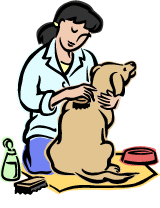
    I interviewed Kelly Booth, a local dog groomer. We talked about dog grooming as a career, some challenges she faces at work, and what she enjoys about her job.

    M: Being a dog groomer isn’t a typical occupation. When and how did you decide to pursue it as a career?
    K: I knew I wanted to work with animals, so I just started applying to pet stores and veterinary clinics. I dropped off my resume at PetSmart where the manager explained the process of becoming a groomer. I would start as a bather and, if I showed potential, they would send me to the grooming “academy” which is run by PetSmart. So this is what I did, and I’ve been doing it for about three years now.

    M: What kind of schooling is required, and how long does it take?
    K: The training I received was pretty basic. I just went to an “academy certified” PetSmart store where I was trained how to groom. This lasted about a month and we learned how to do the different cuts on the main breeds of dogs.

    M: What are some typical challenges that you face at work?
    K: As you can imagine, working with dogs is not always easy. They can be temperamental and unpredictable. The most common challenge I face is grooming dogs that are just generally uncooperative, i.e.: pulling their legs when I’m trying to brush them or groom them, not standing, squirming when I’m trying to do their nails, etc. I get bit and scratched quite a lot. It can be frustrating and scary because I’m dealing with sharp objects and it can be dangerous.

    It’s also really hard on your body. A lot of groomers end up getting carpal tunnel and back and leg problems.

    M: What is the career path for someone who has just completed their schooling?
    K: I started as a bather/brusher, which is basically just bathing and brushing out the dogs, clipping their toenails, and cleaning their ears. After about six months, I started my training. After that, I had to do a 100-dog “apprenticeship”, in which I had to groom twenty shave-downs, twenty sporting dogs, twenty short-legged terriers, twenty long-legged terriers, and twenty hand-scissor cuts. When I was finished that, I became a commissioned groomer.

    M: What are the typical earnings per dog?
    K: The earnings vary depending on the cut that the pet parent wants. For example, a simple shave down ranges from $55-$65 or $80-$90 for a hand-scissored poodle. Some larger dogs, like a Newfoundlander or an Old English Sheepdog, can be $100-$120. Commissions are typically 50-70%.

    M: What is your favourite thing about your job?
    K: I love working with animals. Sometimes we get dogs that like to give hugs and kisses. And the little puppies are always so much fun! I also really like being able to use my hands to create something. Helping the dogs feel better after being all matted is really rewarding.

  • Dream Job: Voice Actor

    Dream Job: Voice Actor

    A hidden group of people is making a big impact on our society. Voice actors might seem invisible, but they are everywhere. Have you ever watched an educational television program? Do you watch cartoons or play video games? If you have, you know the work of a voice actor. Just like regular actors on television or in movies, voice actors play many different roles. Instead of appearing on the screen, they use their voices to provide the words in many different movies, televisions, commercials, and more.

    The general public might not know what voice actors look like or even recognize their names. However, voice actors have an important role in all kinds of media productions. They provide the voices of cartoon characters and read the narration on programs about all kinds of topics. Have you ever watched a program about a famous scientist or maybe about deserts or wild animals? If so, you most likely heard a voice actor speaking. Commercials on television or radio also often have voice actors talking about the product or service, giving information on the choices that are available.

    Video games, telephone messaging systems, and training videos all use voice actors. Audiobooks, where people make recordings of novels or other books, are also the work of voice actors. These books are useful for people who are blind, but also for people who want to listen to a book in the car or who have trouble holding books for any reason. Voice actors might read short stories, complete novels, biographies, history books, and more.

    Like the people who act on television or in movies, voice actors learn their skills by going to acting school. Many universities and colleges offer courses in the performing arts. Courses in readers’ theatre are especially good for learning how to put different emotions and ideas into the voice. Taking roles in community productions can also be very useful practice.

    Most regular acting happens in groups, with one or more actors and several people on the film crew. Voice acting, however, often happens with one person alone in a studio with a sound engineer listening nearby. Bad weather or problems with messy hair or the wrong clothes are not issues for voice actors. However, health is an important factor. No one can avoid ever getting a cold or the flu. However, being able to speak clearly is very important for voice actors. Voice actors need to try to keep themselves healthy and to prevent illness if possible.


  • Dream Job: Game Show Researcher

    Dream Job: Game Show Researcher

    Watching game shows can be a fun way to relax. Do you or your family like to watch them? One of the very popular game shows is a quiz show called Jeopardy. The show features three people answering all kinds of questions about topics like sports, history and languages. Have you ever thought about the people who write those questions? Game show researchers help to provide the material to keep shows like Jeopardy running, educating and entertaining people.

    Some game shows involve a lot of action and audience participation, but Jeopardy is different. It involves three people at a time answering questions read out by the host, Alex Trebek. The show has gone through several versions with different rules and styles.

    Each show features three basic sections: jeopardy, double jeopardy, and final jeopardy. The first two sections include six different topics or categories with five clues in each one, which any contestant can answer. Final jeopardy involves one category, and all of the contestants must try to answer that one. Questions can come from almost any field that people might know, including history, language, science or mathematics.

    When people watch the show, they might not know how much work goes into research for each episode. A whole team of people spend hours every day looking for information to use on the show. Michele Silverman Loud is one of those people. She graduated from Tufts University in the United States and hoped to become a journalist.

    When Michele was unable to find work in that field, she applied for work as a researcher for Jeopardy. She enjoyed the work and later moved into being a clue writer for the show, using the information from the research team. Since the show is on television five days a week, she was never out of work.

    Both the researcher and writer jobs require a certain amount of knowledge but not any particular education. Most people in this field have at least a bachelor’s degree. However, the ability to find good information and write clearly is more important. Finding good sources of information is the first step. If the information is wrong, the contestants and the audience will be unhappy. Clear writing is also essential to avoid confusing the players. Researchers and writers have to know how to write something that is easy to understand

    Can you imagine working on a fun game show for a living? You can do it! Dream big.

  • I Want to Be a Music Teacher

    I Want to Be a Music Teacher

    Listening to music can be fun, but learning to play an instrument can be even better. Have you been taking music lessons? Some people can learn to play an instrument on their own, just by practicing their skills. Most people, however, need to learn from an expert. Music teachers help students learn the theory and techniques of playing music.

    Becoming a music teacher begins with knowing music. If you choose to become a piano teacher, you should know how to play the piano, and if you decide to become a clarinet teacher, you should be able to play your instrument. However, playing well is not enough. You also need to know about music theory, music history, and possibly even about composing (writing) music. How much you need to know depends on the age of your students and the level of music they want to learn. Students who want to reach a professional level of musical ability will need a teacher with a high level of skill in the instrument.

    Besides professional skills, music teachers need to know how to work with students, some of whom might not be interested in what they are learning. Some music teachers work in schools, where they teach regular classes to groups of students, but others teach students one or two at a time, either in their own homes or in the students’ houses. Flexibility in choosing a location depends on the size of the instrument and the needs of the teacher and students. A flute, for example, is much easier to carry than a piano.

    Another important skill is the ability to make arrangements for events like music recitals. In school, students do assignments and take tests to show what they have learned. How can anyone test a student’s musical ability? One way is through recitals, when students play music in front of an audience. As a music teacher, you might have to help students choose and practice the pieces they want to play. You might also need to make other arrangements for events like these, such as renting a room and finding chairs where people can sit. Even if you get help for tasks like these, you will have to learn the organizational skills to make sure that everything gets done.

    If you love music and enjoy sharing your skills with others, the job of music teacher might be a good choice for you.

  • What Do You Want to Be When You Grow Up?

    What Do You Want to Be When You Grow Up?

    “What do you want to be when you grow up?”

    It’s the classic question that every kid has heard at some point, usually before they are finished kindergarten. You’ve probably heard it at every birthday, every get-together, every parent-teacher night you’ve ever been to. And you may or may not be able to answer it. That’s okay – it’s difficult to know what you want to do when you grow up. What most kids don’t know is that they don’t need to choose just one thing.

    In today’s world, many jobs require a wide variety of skills, and it is becoming more and more common for adults to do several different jobs rather than just one. The best thing that you can do is figure out what you like to do, then work on getting good at it – even if you don’t know what kind of job you want to do. That way, you’ll be ready for anything.

    You might enjoy video editing, computer programming and writing. You might start off with a job in programming, and then decide later that you’d prefer to work in video editing. Maybe you’ll write for a magazine in your spare time. It’s always possible to change careers, or to take on a side-job in order to do everything that you enjoy.

    Never limit yourself to only one option – if you have a wide variety of interests and skills, you’ll have a wide variety of job opportunities by the time you’re old enough to choose one (or two, or three)!

  • Let’s Take a Trip to the Vet

    Let’s Take a Trip to the Vet

    Just like people, sometimes animals get sick or injured and need to see a doctor. A doctor that specializes in taking care of animals is called a veterinarian, or a vet for short.

    Most vets work in clinical practices, meaning they work directly with animals. However, some vets work doing research, teaching or work for the government.

    Dr. Jaime Buchanan is a veterinarian at the Kingston Veterinary Clinic in Kingston, Ontario. Her job is to treat animals for diseases and injuries and to inform owners of how to prevent their animals from getting sick.

    Doctor Buchanan says animals go to the vet most often because they are sick or injured. She says, “the most common problems are vomiting, diarrhea and skin problems. And some of the common injuries include: lameness (limping) and wounds or cuts.” She also says, like people, many animals have regular check-ups to make sure they are healthy. They have vaccinations, which are needles with medicine that help prevent diseases, flea treatments and de-worming.

    However, unlike people, animals can’t tell someone when they aren’t feeling well. Doctor Buchanan says, “it can be very difficult to diagnose animals because they can’t tell you how they are feeling or where they are hurt.”

    In order to figure out exactly what the problem is, she says the vet, “starts by taking a thorough history of the problem from the owner. They do a physical exam, checking the animal from head to tail. This includes looking at their teeth and gums, listening to their heart, taking their temperature and feeling their abdomen, among other things.” If the problem is not obvious, the vet may need to do further tests like blood work or X-rays to determine why the patient is sick.

    Depending on what is wrong, treatment for the animal may include going home and taking medication, like pain pills or antibiotics. Or, if they are very sick, they may need to stay in the hospital and have an IV (intravenous fluids) and be closely watched to ensure the treatment is working.
    Doctor Buchanan says some of the symptoms pet owners should watch out for are, “vomiting, diarrhea, breathing problems, skin and ear problems, and changes in water intake or urination.” She says if your animal is not eating or drinking or if they seem to have less energy than usual, call your veterinarian.

    When you take your pet to the vet, Doctor Buchanan says you can expect to see “other animals and people in the clinic. You may also see the receptionist and veterinary technician in the waiting room. In the exam room, you can watch while your pet is examined. And you may even get to listen to the animals’ heart with the stethoscope or help hold and comfort your pet.”

    The vet will explain everything step by step while they are completing your animals check-up, and Dr. Buchanan says don’t be afraid to ask questions because the Doctor will be more than happy to answer them.

    If you love animals, maybe becoming a veterinarian would be your dream job!

  • Dream Job: Detective/Private Investigator

    Dream Job: Detective/Private Investigator

    Suppose that you lost something very important and you wanted to get it back. What would you do? You might look around and ask your friends and family if they had seen what you were looking for. Searching for things that are lost is only one of the many things that private investigators do. Working as a private investigator involves solving mysteries, finding information, and much more.

    You might have heard of fictional detectives like Sherlock Holmes and Hercule Poirot. Do you know any names of real-life private investigators? One of the most famous detectives was Allan Pinkerton. He was born in Glasgow, Scotland in 1819 and moved to the United States in 1842. In 1847, he joined the Chicago police department in 1847 and became the city’s first police detective in 1849. The next year, in 1850, he formed the Pinkerton Detective Agency in Chicago. The Pinkerton Agency worked together with the police in solving crimes and arresting criminals. By 1855, the agency had also started to work in security, guarding shipments that went by railway. Since then, security has been a large part of what Pinkerton agents do.

    Private investigators work in all kinds of areas. They might be hired by businesses to help deal with problems between bosses and workers or by the government to help investigate crimes. Some private investigators specialize in finding people who are missing or in store security. Other investigators do a variety of work, depending on who hires them and what skills they have. If you decide to become a private investigator, you might already want to start thinking about what area of work interests you the most.

    Except for security work, the most important part of a career in private investigation is the ability to find information. Investigators often need to ask people questions or to search online and print sources for information, and they have to be able to analyze what they learn to find a solution to their problem. Searching for information might also include surveillance, where the investigator watches to see what people are doing. Investigators often need to be able to use cameras and other equipment to be able to record what they discover. They have to learn different techniques for finding and interpreting information.

    Often, investigators learn these techniques through career colleges and other training schools. Investigators need to know the law well, and a degree in criminology or corporate law can be very helpful. In most parts of Canada, private investigators also need to get licenses to practice their work. The Canadian Private Investigators’ Resource Centre is a good place to check for specific information on these requirements.

    Want to help solve mysteries? Maybe a detective/private investigator will be your future job!

  • Becoming A Dancing Choreographer

    Becoming A Dancing Choreographer

    If you ever watch the ballet or any other kind of dance, you might think that the dancers’ movements come naturally. They might seem to flow out of what the dancers are thinking or feeling as they try to tell a story or show emotion with how they bend their arms or move their legs. If you take dance lessons, however, you know better. You know that in most dance performances, choreographers have carefully planned each movement that the dancers make. A good choreographer works in the background to make sure that the combination of dancing and music create an experience that the audience, musicians, and dancers will all enjoy and appreciate.

    Many people can probably name at least one or two famous dancers they have seen or at least heard about through newspapers or television. Very few of them, however, are likely to be able to name even one choreographer. That’s because choreography is not really supposed to be seen. Choreographers who do their jobs well and who work with good dancers produce a performance where the dance seems to flow out of the music naturally and doesn’t seem forced or awkward. Whether the dancers leap into the air or stand on their toes and twirl around, the movements have to seem to come out of the story they are trying to tell, with music as the unifying background.

    Being able to tie movement, story, and music together takes a lot of skill and practice. One of the best-known choreographers of the twentieth century, Martha Graham, was able to make music and dance work together. She had many chances to practice her skills in her seventy-year career. Her father was a doctor who believed that the body and mind were closely connected. He recommended physical movement as a cure for nervous diseases for his patients. However, he would not allow his daughter to learn how to dance.

    Later on, Martha studied and then taught at the Denishawn School of Dancing and Related Arts in California. She was especially interested in modern dance, and she choreographed many performances over the next years. Like most other people in her field, Martha Graham learned choreography through a combination of education and experience.

    Choreographers usually start out as dancers, learning the basics of movement from other people in the group. When they know enough about dancing and the limits of what dancers are able to do, often after about five years, they can start choreographing dances. Many people also get an education in the fine arts, music, or related subjects before they begin on their careers. Others gain experience through working with dance companies and learning from other choreographers.

    Dancing is a physically demanding job, and most dancers stop quite young. However, working as a choreographer is a good way for people who love dancing to continue to work in their chosen field.

  • Dream Job: Voice-Over Artist

    Dream Job: Voice-Over Artist

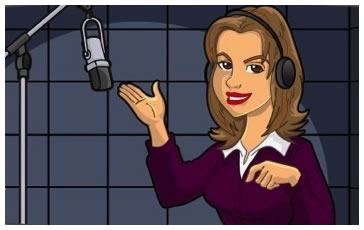
    Ever wonder who does those silly voices for cartoons like The Simpsons, Family Guy and Bob’s Burgers? Voice-over artists. These behind the scene artists spend hours perfecting their craft. They may have one character or multiple characters to voice, from cartoons to computer games to voice prompts. Voices over artists are quite present behind the scenes.

    Now, don’t let the simplicity of vocalizing into a microphone fool you. Voice-over acting requires great effort and perseverance. As veteran voice over artist Sarah Krieger puts it, “You have to be able to get a point across, relate a feeling, and nail it the first time. It’s being able to act on a mic.” Regardless of how distinct your voice is, you still need to provide a demo tape and find a talent agent much like an actor or singer would. Don’t be discouraged, because voice-over acting is a promising career if sought with enough passion and diligence.

    Voice-over artists are employed in a variety of fields, from TV and radio commercials to cartoons. They are expected to read scripts with a clear and concise tone and deliver multiple types of vocal tones to convey messages to their audience. They may even have to read multiple scripts at once and multi-task in a variety of ways.

    If you enjoy reading and acting, this might be the career for you. It is a challenging start with promising rewards. On average, the entry-level voice over artist makes between $20-30 an hour.