Tag: environment

  • Healthy Kids Need Time In Nature

    Healthy Kids Need Time In Nature

    Ontario’s Healthy Kids Panel recently proposed a strategy to help kids get onto a path to health. The problem is that the path doesn’t lead them into nature. Though the report quotes parents’ comments and research showing kids spend dramatically less time outside than ever, it doesn’t encourage time in nature.

    That said, many of the report’s recommendations should be implemented and supported locally, provincially and nationally to reduce the risks of obesity. Encouraging parents and children to be more critical about dietary choices and requiring more information and labelling from restaurants and food producers is long overdue.

    Ontario isn’t the only province working to reduce obesity rates and support parents raising healthy children, particularly in the early years. Alberta released relevant reports in 2011 and Quebec has had a ban on advertising junk food to children since 1980. No one can argue against public awareness and education around the benefits of healthy eating and active living. But a provincial, patchwork approach to addressing these issues isn’t enough. We need a national strategy to get our kids eating healthy foods and being active in nature.

    Although it seems logical that much of the time spent being active will take place outside, the Ontario report acknowledges that “many communities are not designed to encourage kids to move or be physically active…and have few safe green spaces.” One parent in a focus group explains that the parks in his community are either gated or locked up once school is closed. So, even when there is green space, it’s not always accessible.

    Last year, the David Suzuki Foundation conducted a survey with young Canadians and found that 70 per cent spend an hour or less a day outdoors. The 2012 Active Healthy Kids Canada Report Card says they spend almost eight hours a day in front of screens. So it’s not that kids don’t have time to be outside. It’s just not part of their lifestyle.

    Much has been reported about a recommendation by the Ontario panel to ban junk food advertising that targets children under 12. This has worked in Quebec and is being discussed in Alberta. But the approach has invited criticism from those who argue that people should have the right to choose. It’s always tempting to focus on making bad things less accessible, but perhaps policy-makers should be more creative and focus on ways to make good things more accessible.

    Being in nature is good for all of us. People who get outside regularly are less stressed, have more resilient immune systems and are generally happier. And it’s good for our kids. Studies show spending time in nature or green spaces helps reduce the symptoms of ADHD. Even in built playgrounds, kids spend twice as much time playing, use their imaginations more and engage in more aerobic and strengthening activities when the space incorporates natural elements like logs, flowers and small streams, according to research from the University of Tennessee at Knoxville.

    Despite all the obvious health benefits of spending time outside, provincial and federal governments are failing to integrate a daily dose of nature into their policies. It’s also something we as a society are failing to make a priority in the lives of our children. This inexpensive and effective way to make our lives healthier and happier should be an obvious solution.

    We need to make sure our neighbourhoods have green spaces where people can explore their connections with nature. We need to ask teachers and school board representatives to take students outside so that nature becomes a classroom. And we need to stop making the outdoors seem like a scary place for children by helping parents understand that the benefits of playing outside outweigh the risks.

    It will take public education and awareness-building as well as changes to the way we build cities and live in our communities to bring nature back into our lives. Connecting kids to nature every day needs to be a priority policy objective in any strategy for healthy children and could easily have been integrated into the recommendations from the Ontario Healthy Kids Panel. Taking our kids by the hand and spending time outside with them will have the added benefit of making us healthier and happier adults.

  • Corporate Social Responsibility: More than Just A Policy

    Corporate Social Responsibility: More than Just A Policy

    Corporate social responsibility can sound like a mouthful, and you may find yourself wondering what it even means. What those three words strung together refers to is the amount of accountability a company undertakes for basically being a good citizen in the communities in which they conduct business. Being a good citizen as a corporation can involve many things, such as being environmentally friendly, donating money to charity, having responsible waste management practices and generally how they serve and treat their customers. Sometimes corporate social responsibility is something that is only discussed in offices, a string of words that is thrown around on paper and never really makes it to the ground or into the businesses in the community. This is a problem, and it is increasingly a problem as climate change becomes ever more present in our lives.

    Businesses and corporations that do have social responsibility are the businesses that you may consider to be avant garde. They are the businesses that are always one step ahead and pride themselves on educating their customers and really taking the lead on problems like third world poverty and environmental problems. Businesses who practice corporate social responsibility aim to have a positive impact on their communities. Starbucks is a great example – they supports charities, have good waste management practices, serve healthy options and treat their employees with respect and care, ensuring they are paid more than minimum wage and have benefits.

    The importance of corporate social responsibility cannot be underestimated. It is very important for employees as well as for the community in which they conduct business. When a company decides to set an example and takes the lead on important global issues, a community benefits by learning and by being able to follow in the footsteps of a large corporation. When a corporation does not do their part in the communities in which they conduct business, they create a problem because they generate much more waste and they do not contribute as effectively to the well-being of the community population in terms of paying fair wages and providing the support that many employees need. Because corporations are so large, they can have a bigger impact when they take on more responsibility.

  • Controlling the Rage of Forest Fires

    They are difficult to control, unpredictable, and can destroy acres of land in minutes. It is estimated that forest fires decimate 10 million acres of land each year in North America alone. While it is difficult to give an exact count of how many wildfires there are in a given year, Newfoundland and Labrador suffer from more than 160. A safe guess would be in the hundreds of thousands.

    Forest fires are unplanned, unwanted fires caused by humans or nature. These types of fires are stopped with aggressive counter actions by trained fire fighters who are more successful when wildfires are reported early.

    Most fires are started by people. In fact, four out of five forest fires are due to the human factor. There are three elements that must be present in order for a forest fire to start. These are known as the fire triangle; conditions that present the perfect storm: oxygen, fuel and a heat source.

    Heat Source: This is where humans play their biggest role. A heat source can come from cigarettes, matches, campfires, or lanterns. It can also come from natural sources such as lightning, hot winds and the sun.

    Fuel: Anything flammable including brush, wood, leaves, grass and homes. The more fuel the greater the fire.

    Oxygen: the air.

    Taming the fires is a matter of simplifying the equation. Take away one of the elements in the fire triangle and you solve the problem. Fire fighters do this by using water to eliminate the flame or the heat source. They work to clear away fuel, thus starving the fire. Another method is called controlled burning – firefighters may start a fire to end one. A controlled burning takes fuel from the uncontrolled fire.

    Homes and whole cities can be destroyed by forest fires if they are not detected early, but nature intended this disaster to be for good. Wildfires are important to maintaining the balance of nature. Now that scientists know more about this, a greater number of controlled burns are being sanctioned.

    When fire eats away at the vegetation, they are feeding the soil important nutrients – basically the cycle of life at its simplest. Fire is a way to purge the bad. It kills off disease and aggressive insects that might damage fragile ecosystems.

    Forest fires are something of an anomaly. They create chaos and end life, but they also restore balance and allow new life to emerge.

  • Enjoy Nature and De-Stress

    Enjoy Nature and De-Stress

    The man-made world is very much a world that is constructed of indoor environments. We are in our car, we are in our house, we are in the mall, we are at the movies. Indoors is our main environment. This is normal, but we must not forget the benefits of outdoor environments and fresh air. We are often so busy doing things that we don’t make time to go outdoors just for the pure pleasure of it. Maybe you have a river by your house, or a forest that you’ve always wondered about. Knowing that being around nature and just being out in the fresh air is actually good for you may provide extra incentive to get out there and explore.

    When we are in outdoor environments we are immersed in oxygen-rich air – much more oxygen-rich than the air in even the most ventilated of buildings. This oxygen will help your red blood cells’ ability to regenerate and will immediately help you to feel better. Newer buildings have higher standards for the quality of air, but older buildings may be very poorly ventilated, causing stuffy air to dominate. If you go to school in an old building that has air that will affect you day after day, fit in some time outside to help you to get the oxygen-rich air that your body craves.

    Not only is there more oxygen available in the fresh air, but the fresh air and being out from under a ceiling will give you a feeling of freedom and space that you don’t get from being in indoor environments. There is something mentally reassuring about being out in the fresh air that will help you to feel better. Being outside is also a great stress reliever because it gives you some time to simply relax and enjoy nature. Who knows what new ideas will come to you when you have time to let go and clear you mind. You might want to consider bringing a notepad with you to jot down anything that comes to you, or bring a friend who you can have some good quality conversation with. You also may want to leave your cellphone or any other connection to the “indoor world” behind. This will allow you to fully enjoy being in a new environment.

    So take 10 minutes to get out of your house or take the day to go hiking, bicycling or walking along a path. Removing yourself from being directly beside a roadway will mean that you are breathing fresher, less polluted air. If possible, surround yourself with trees because trees are reservoirs of carbon dioxide, improving the quality of the air.

    Wherever you are outside, enjoy the fresh air and breathe deeply!

  • Fall In Love With Nature

    Fall In Love With Nature

    A recent Ipsos Reid poll conducted for the Nature Conservancy of Canada (NCC) shows that more than 97 percent of Canadians believe that getting outdoors is important to their family’s well-being. The new findings complement an earlier poll that found Canadians are happier when they are connected to nature.

    We already know about the valuable health benefits (both mental and physical) of getting outside and talking a walk. But the recent research gives us more information on how Canadians feel about the importance of nature to their happiness and to their families.

    The study found:
    • 97% of Canadians agree that nature is important to their family’s well-being;
    • 90% felt that being outdoors in nature is an important element in their family’s recreational activities;
    • 87 % felt that given the choice, they would prefer to spend family time outdoors in nature, rather than indoors.

    What better way to spend a long weekend than to go and explore what nature has to offer? Nature is alive this time of year with many fun things to do in your backyard or local park. Winter bird identification, exploring the types of trees that may look vastly different in the summer, following tracks of animals in the snow or taking a meandering walk are perfect examples of winter activities that are fun for all ages and can offer an exhilarating day in the beauty of nature.

    Get happy, get outside.

    “Our mandate of protecting the land that brings so much joy to Canadians becomes even more important was we learn just how much Canadians depend on it for their own happiness and well-being,” said John Lounds, President and CEO of the Nature Conservancy of Canada. “We want to encourage Canadians to go outside and explore what nature has to offer in the winter.”

    The Nature Conservancy of Canada has accessible properties from coast-to-coast where Canadian families can visit for free. Check out www.natureconservancy.ca/timefornature for a starter list of places to see.

    The Nature Conservancy of Canada (NCC) is the nation’s leading land conservation organization, working to protect our most important natural areas and the species they sustain. Since 1962 NCC and its partners have helped to protect more than 2.6 million acres (more than 1 million hectares), coast to coast.

  • The Collapse of the Great Barrier Reef

    The Collapse of the Great Barrier Reef

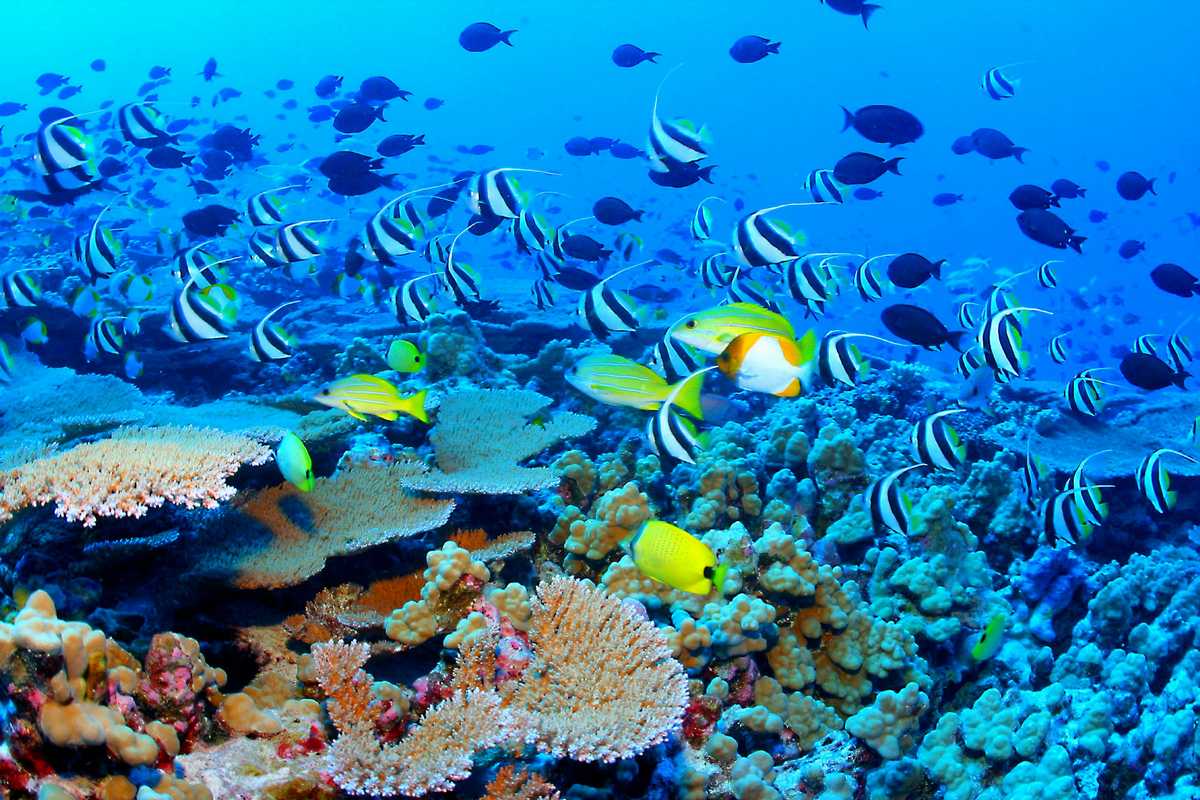
    Imagine what it would be like to look down into the ocean and see brilliantly-coloured fish darting in and out of the world’s largest area of coral. Do you know where that is? If you thought of the Great Barrier Reef off the coast of Australia, you were right. For many years, the Great Barrier Reef has been known as the biggest and best coral reef in the world, but that might not be the case for much longer. The Great Barrier Reef is collapsing, and unless something changes it might soon be gone.

    The Great Barrier Reef is a huge coral reef covering 348,000 square kilometres off the coast of Australia. Some parts are 2000 metres deep, while others are fairly shallow. Like other coral reefs, the Great Barrier Reef is actually made up of a lot of different types of plants and animals. Corals look like small trees with branches sticking out in all directions, but they’re not. The brightly-coloured tree-like shapes are the skeletons of animals, but instead of being on the inside of the body, like for people, they’re on the outside. Altogether, the Great Barrier Reef has four hundred types of coral and 1500 types of fish, as well as many other animals.

    All of that amazing life is in danger. Scientists believe that about half of the corals on the Great Barrier have died in recent years, probably because of human activity. Coral reefs have always lived on cycles. Storms or diseases would kill some of the plants and animals, but then they would recover. Recently, the recovery process has been very slow or has even stopped entirely in some areas. The long-term loss of the corals has happened mainly since people started clearing trees off the land in the late 1800’s to make room for farming and raising animals.

    Because of these activities, mud, fertilizers and other toxic substances started to wash into the lagoons and then out to the reefs. Slowly the plants and animals on the reefs started to die. Pollution from boats and other sources might also have been part of the problem.

    Why does it matter if the Great Barrier Reef disappears? The loss could mean the disappearance of some species of animals, such as the marine turtle. Six of the world’s seven species of marine turtles live in the Great Barrier Reef. The loss of the turtles might then affect another type of animal, which would then change another type, and the problem could eventually affect the food that people eat. Scientists are unsure of exactly how coral reefs affect life on land and in water, but they know that the reefs are important.

    Almost every area of the world is facing pollution problems because of human activity. Oceans, rivers, and land are dying because of chemicals and garbage that people throw away. However, you can help. Keeping your own home and school clean and trying not to pollute the environment might prevent disasters like the collapse of the Great Barrier Reef.

    If the plight of the environment and the Great Barrier Reef interests you, why not consider a career as an Environmental Scientist? An Environmental Scientist applies their knowledge of the natural world to help preserve and protect nature.

  • Let’s Resolve To Make It A Real Happy New Year

    Let’s Resolve To Make It A Real Happy New Year

    Wouldn’t it be wonderful if world leaders resolved to look at life in a different light this New Year? They could follow the example of Bhutan. In 1971, the small country, nestled in the Himalayas between China and India, rejected the idea of gross domestic product as the measure of progress. Instead, leaders focused on gross national happiness.

    The idea is finally gaining traction around the world, and I’m humbled and pleased to be involved with a global initiative to promote it. World leaders took the concept seriously enough to hold a United Nations Conference on Happiness in April 2012, and Bhutan was recognized for its environmental leadership at the recent UN climate summit in Doha, Qatar.

    Life isn’t perfect in Bhutan. It’s a poor country where most homes don’t have electricity. Crime is increasing and climate change is making life difficult for the farmers who provide much of the landlocked country’s food. Still, according to the Guardian, life expectancy in Bhutan has doubled over the past 20 years, almost all children now go to primary school and the country has been improving its infrastructure.

    Bhutan has also enshrined environmental protection and intergenerational equity in its constitution. The Right to a Healthy Environment is another initiative I’m excited about. The David Suzuki Foundation and I have been working with environmental lawyer and professor David R. Boyd and Ecojustice to promote the idea in Canada. Boyd’s book, The Right to a Healthy Environment: Revitalizing Canada’s Constitution, offers a wonderful analysis of where the world’s nations now stand on the concept, as well as strong arguments for why Canada should join the more than 140 nations that have put environmental protection in their constitutions.

    Caring for the environment can help achieve gross national happiness in many ways — by giving our children a more secure future, improving human health, ensuring resources are available to meet the needs of citizens, offering recreational and spiritual connections with nature and giving people a sense of pride and respect for the natural systems that keep us alive and healthy.

    There’s more to happiness than just having a clean environment — and Bhutan has yet to get there. According to research for the UN Conference on Happiness, “The happiest countries in the world are all in Northern Europe (Denmark, Norway, Finland, Netherlands).” Although these countries are wealthy, the study points out that money isn’t the only factor, as happiness is decreasing in countries like the U.S. “Political freedom, strong social networks and an absence of corruption are together more important than income in explaining well-being differences between the top and bottom countries,” the researchers write. “At the individual level, good mental and physical health, someone to count on, job security and stable families are crucial.” Note that the happiest countries all have healthy economies and robust social programs.

    We can also look at how various countries responded to the recent economic crisis. Those that bailed out banks and reduced social spending are facing the same kinds of problems as before. Iceland approached its massive financial meltdown in a way that was pretty much the opposite of that taken by the U.S. and Europe, refusing to rescue its banks and increasing social spending, among other measures.

    Iceland still has problems, but it has recovered faster than other nations, and its social safety net remains strong. Inequality has been reduced, and the crisis spurred citizens to propose and develop a new constitution, which is being considered by parliament.

    There’s an old saw that says the definition of insanity is to keep doing the same thing over and over expecting different results. In the case of leaders who focus almost entirely on economic growth and corporate interests, it’s a recipe for disaster. As George Monbiot recently wrote in the U.K.’s Guardian, “In return for 150 years of explosive consumption, much of which does nothing to advance human welfare, we are atomising the natural world and the human systems that depend on it.”

    As light gradually returns to the north and we celebrate a season of sharing, our leaders could brighten all our lives by considering what really makes our societies strong, healthy and happy.

  • The Great Pacific Garbage Patch: Filling the Ocean with Plastic

    The Great Pacific Garbage Patch: Filling the Ocean with Plastic

    Have you ever been to a garbage landfill? Have you seen cities where the garbage lies on the street without ever being cleaned up? If you have, you know all about the smell and the general unpleasantness. Did you know that the biggest landfill in the world is actually not on land but in the water? Far out in the Pacific Ocean is an area called the Great Pacific Garbage Patch, where plastic and other litter has been floating around and polluting the water. The patch is a major concern for scientists and other people who want to keep the oceans healthy.

    The world’s biggest garbage dump is made up of two sections in the Pacific Ocean, one between California and Hawaii and the other off the coast of Japan. The two sections are connected by a current called the Subtropical Convergence Zone and together make up the Great Pacific Garbage Patch. The area where the Garbage Patch is located is called the North Pacific Subtropical Gyre, a section of slowly spinning water. The area is often called an oceanic desert since it has very few plants or animals other than tiny plankton.

    Instead of animals, however, the North Pacific Subtropical Gyre has huge amounts of garbage, about 90% of which is plastic. The trouble with plastic is that it never completely disappears but instead photodegrades, breaking into smaller and smaller pieces of plastic called “mermaid tears” or “nurdles.” Garbage can float around in the ocean for years or even decades, but eventually it ends up in one of the garbage patches, often floating just below the surface or sinking down to the ocean floor. Some scientists estimate that the size of the garbage patch could be as big as the state of Texas, although others believe it to be much smaller. However big it is, it’s a cause for concern.

    As the pieces of plastic or other garbage float around in the water, they pick up poisons from fertilizers and other substances that wash into the ocean or they join other kinds of garbage floating in the water. Thousands of birds and marine animals, possibly up to a million every year, die from eating or being caught in the ocean’s garbage. Debris that floats in towards the land pollutes beaches along the coasts of countries like Japan and Canada, sometimes even piling up several feet high in some areas.

    Where does all of this garbage come from? Some of it comes from people dumping trash from ships, but about 80% of it comes from land. It could be garbage carried by the wind from landfills or from city streets, which eventually makes its way to the ocean. It could come from litter that people drop into in the lakes and rivers before it floats down to the oceans. That’s why some towns have banned plastic grocery bags, which make up a large part of the litter. In some towns and cities, volunteers help to clean up beaches and other areas where garbage accumulates.

    Every small change can help to get rid of garbage in the oceans. What will you do to keep the world’s water clean?

  • Whales of the Bay of Fundy

    Whales of the Bay of Fundy

    The Bay of Fundy is located between New Brunswick and Nova Scotia and is home to the world’s highest tides. The tides range in height from 11 feet to 53 feet depending on location. They change between high and low tide twice a day, carrying with them a hundred billion tons of water.

    The story of the Bay of Fundy, as told in Micmac lore says, “It was a giant whale, who angered the god Glooscap, and created such a splash with his mighty tail that the water sploshes back and forth to this day.” Although this story is entertaining, scientifically speaking the Bay’s tremendous tides are formed by its unique shape, which was created hundreds of millions of years ago.

    In the summer months the Bay of Fundy is the feeding ground for half of the world’s population of endangered North American right whales and 12 other species of whales. They feast on the enormous amounts of krill, plankton, squid and schools of young herring, cod, pollock and mackerel. It is also the preferred location for whales to give birth, mainly because of the vast amounts of food available and due to the protection the bay provides. At any given time the population of whales in the area ranges between three and four hundred.

    The first species to arrive in late spring are the finback and minke whales and harbour porpoises. The endangered right whale usually arrives in mid-July and stays until Fall.

    The most common whales in the Bay of Fundy are:
    The Minke Whale: Can grow up to 30 feet and weigh up to 10 tons. These whales travel in pods of 2 or 3, and can dive for up to 25 minutes without surfacing for air.

    The Humpback Whale: Can grow up to 60 feet and weigh up to 30 to 50 tons. The females of the species are usually larger than the males. These whales enjoy spy hopping, breaching and tail lobbing and usually put on a good show for those who go whale watching.

    The Finback Whale: The second largest whale in the world (next to the blue whale) and generally only frequent the bay during their migration periods, when they are seen following their food sources. The finback can grow up to 82 feet in length, and they usually travel in pods of 2 to 7 whales. They can even live for up to 100 years.

    The North American Right Whale: The most endangered species of whale in the world. There are fewer than 35 left worldwide. These whales migrate to the Bay in the summer months to mate. They can grow up to 50 feet and weigh up to 45 tons.

    The best time to view the many different species of whales found in the Bay of Fundy is August.

  • An Energy Plan Must Be About More Than Just Energy

    An Energy Plan Must Be About More Than Just Energy

    Feeding our energy appetite is top of mind for many people these days. Some argue we should get coal, oil and gas out of the ground as quickly as possible, build more pipelines and make as much money as we can selling it here and abroad. Their priorities are the economy and meeting short-term energy needs so we can live the lives to which we’ve become accustomed.

    Many others question those priorities. Do we gain comfort and happiness by driving inefficient automobiles, buying and scrapping and then buying more stuff that we must work harder to pay for, and selling resources to enrich the fossil fuel industry and to allow other countries to follow our unsustainable path?

    Some governments and industry favour the short-term view. But it’s a “false economy” — it will cost us more in the long run. What about our children and grandchildren and their children and grandchildren? Do we not want them to live healthy and happy lives? If we pollute the air, water and soil that keep us alive and well, and destroy the biodiversity that allows natural systems to function, no amount of money will save us.

    While rushing to exploit our valuable and diminishing fossil fuels, Canada’s government is simultaneously “streamlining” environmental regulations and review processes, cutting scientific staff and departments and limiting public debate on projects that could irreparably damage our rich natural heritage. Some provinces are attempting to water down hard-won environmental laws, like endangered species legislation, that act as a critical hedge against environmental degradation.

    The federal government is also neglecting its legal obligations to protect species at risk. Ecojustice, on behalf of five conservation groups including the David Suzuki Foundation, recently launched a lawsuit to challenge the government’s multi-year delays in producing recovery strategies for species that would be affected by the proposed Enbridge Northern Gateway project.

    If we don’t slow down and try to look at ways out of the mess, energy issues will continue to increase, like the Hydra of Greek mythology. With pipelines, the main issue is rapid tar sands expansion. But other massive energy projects are also coming down the pipe — from huge dams, like the Site C in northern B.C., to proposed drilling for oil and gas in the Gulf of St. Lawrence and the Arctic. To what end?

    Not only are fossil fuel companies making record profits, they’re being subsidized by Canadian taxpayers to the tune of $1.4 billion a year. Instead of giving them money, shouldn’t we be compelling them to put at least a small portion of their enormous profits into reducing the massive greenhouse gas emissions they cause?

    A large part of the problem is that we are increasing our fossil-fuelled ambitions at breakneck speed in the absence of a national energy strategy. No one seems to know where we’re going, but the end of the road is looming, and it might lead to a steep drop. We’re already harming precious ecosystems and are ready to put even more at risk without having an idea of the often irreplaceable value they represent. With climate change and its impacts, along with deforestation, pollution and increasing urbanization, we’re condemning millions of people to lives of poor health, desperation and even death.

    Still, we’ve also created much that is good. We have political systems that encourage public debate and access to information. There are politicians and industry leaders who have joined countless citizens, First Nations, and environmental, labour and social-justice organizations to question current policies and actions. We have science, medicine and technology that have allowed many of us to live longer. We need to find ways to reconcile our existence with the limits of our finite planet.

    What Canada really needs in the short term is a national energy strategy — one that goes beyond fracking and tar sands and pipelines to take into account these many other factors, including wiser use of fossil fuels. It must help us make the transition from our wasteful addiction to polluting and ever-diminishing fossil fuels to conservation and renewable energy. Globally, we need to shift from the outdated 20th-century notion of measuring progress with gross domestic product to a development paradigm that takes into account well-being and happiness, and that accounts for nature’s valuable services.