Author: author below

  • Do’s and Don’t s of Social/ Physical Distancing

    Do’s and Don’t s of Social/ Physical Distancing

    By Erin Rebello

    As you all probably know, we’re in the middle of a global pandemic due to the COVID-19 virus. This is a new and scary time for everyone, but there are some very effective practices we can implement to prevent the spread of the coronavirus. As an ordinary citizen, the best thing you can do to stop the spread is to practice proper social distancing. According to the government of Canada, effective social distancing means “making changes in your everyday routines in order to minimize close contact with others”. While that makes sense in theory, it’s important that we know how to actually practice proper social, or physical distancing. Look no further than this article which will hopefully help you understand a few of the do’s and don’ts of social/physical distancing!

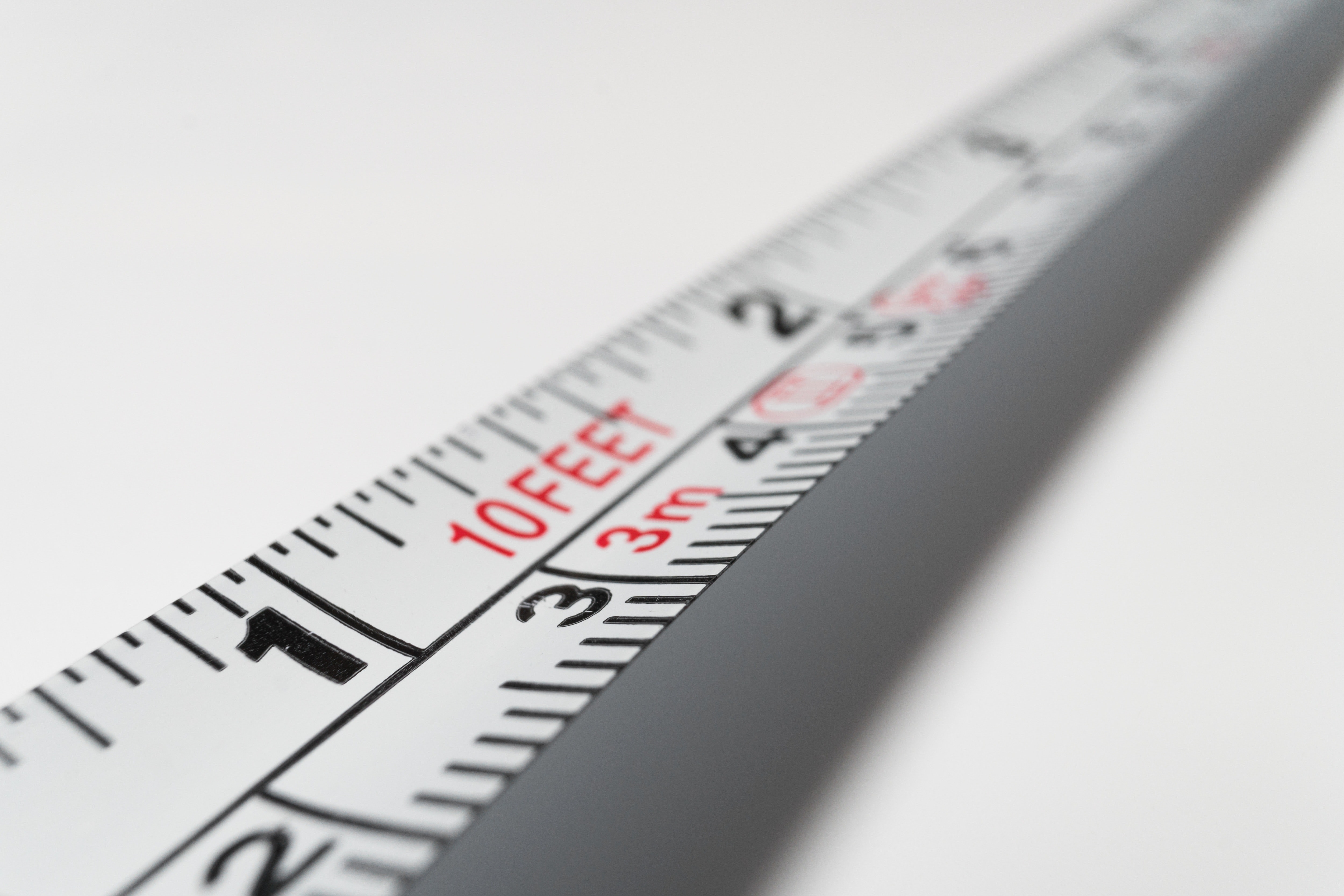
    DO stay 2 metres away from anyone you meet in public. According to the Canadian government, 2m away is the minimum distance you should stay away from a stranger in public during the pandemic. This includes on walks, at the supermarket, and even at work. Some grocery stores will even have little markers on the floors to indicate how to properly social distance while in line for the checkout.

    DON’T gather in crowded areas. Although many city parks and trails are closed, there are still numerous people who are ignoring government regulations and visiting these areas. Jungle gyms and public playsets are especially dangerous, as they are often used by many kids at the same time. Even if a child uses a playset when no one else is there, the virus can still stay on the playset for hours, making it a danger to other children.

    DO wash your hands frequently and effectively. Due to the coronavirus, it’s best to wash your hands whenever you believe that you may have come into contact with a contaminated surface. This includes after coming home from work, after being in a meeting, and after going to the grocery store. If you’re not sure, it’s best to err on the side of caution and wash your hands anyway. Also, make sure that you’re washing your hands properly! A good rule of thumb is to scrub with soap under warm water for at least 30 seconds, making sure to get between fingers and on top of your hands. If you’re not sure if you’re doing it right, there are a bunch of Youtube videos that can help! If you don’t have access to soap and water, an alcohol-based hand sanitiser is a good substitute (but hand washing is always best!).

    DON’T visit your friends and family. Not only does social distancing mean that you have to stay out of public areas, it also means that you must limit contact with EVERYONE except the people you live with. Although it may not seem like much to visit a friend, you could easily give them the virus without knowing. This is especially true for vulnerable populations such as those who are older or have pre-existing health problems. Although you may not have any symptoms of the virus, if a vulnerable person catches it, they could very well end up fighting for their lives. Even if your friends are perfectly healthy, think about the spread of the virus. Are their parents nurses, doctors, or essential workers? What if they were to pass it on to their patients or customers? While staying home may not be very fun, it is crucial to keeping everyone safe. Hang in there- all of us are in the same, giant boat.

    Source:

    https://www.canada.ca/en/public-health/services/publications/diseases-conditions/social-distancing.html

  • Time to Stand Up to Bullies … But What If You Are the Bully?

    Before CO-VID 19 hogged the headlines, you surely have come across the video of a nine-year-old boy Quaden Bayles, who was diagnosed with dwarfism achondroplasia as a baby. As he was getting into a car, he was pleading to his mother he didn’t want to go to school because his schoolmates have been bullying him.

    The video went viral, garnering 23 million views and grabbing the attention of A-List celebrities who are well-known for playing heroes onscreen like Hugh Jackman, Mark Hamill, and Jon Bernthal. The most noteworthy cheerleader for the bullied boy was Los Angeles-based comedian Brad Williams, who also suffers from the same condition. Brad launched a GoFundMe page dedicated to the boy, which raised at least $500,000.  The boy’s family eventually decided to donate the money to charity.

    Quaden’s story may have a happy ending—at least for now—but there are rampant cases of bullying worldwide that don’t receive the same news-worthy attention that Quaden did. According to StopaBully.ca, one in seven Canadian children aged 11 to 16 are victims of bullying. Concerned citizens and organizations urge the public to take action to stop bullying by encouraging people to talk about it, establish a safe school environment, and promote a community-wide bullying prevention strategy. These are all good measures, but what if you’re the one committing the offense?

    Admission is the first step

    Recognizing that you’ve bullied someone and that the action is a mistake is an ideal first step to adjusting your behaviour. However, you also have to realize that admitting it to yourself is not enough, you have to reach out to the person you’ve offended and offer a sincere apology.

    Individuals who have been bullied, on the other hand, may be reluctant to accept the apology right away, not because they are angry but because bullying affects their trust in people. The last thing you want is to force someone to accept your apology. Be patient and give it time. And it goes without saying that you have to truly show you are willing to change your bad behaviour.

    At the same time, while you come clean about your mishap, know that bullying does not define you. It’s YOUR action, but you are more than your action.

    Self-evaluation

    There are various reasons why people resort to bullying behaviour, and it’s not a one size fits all. Take the time to understand what your own reason is. Perhaps you’re jealous of the schoolmate who’s racking up A+ grades in Math and you’re not doing as well. Or perhaps you’re envious your schoolmate got a birthday gift from their parents to go to Disneyland in Orlando, Florida and you’ve always wanted to go too. Doing a self-assessment will open your mind to solutions on how you can adjust your behaviour.

    Other possible reasons are stress at home like a riff with a sibling or an event that has caused grief or sadness, such as the loss of a beloved pet.

    Reach Out

    Once you’ve come to terms with the rationale for your conduct, talk to a trusted individual whom you’ll feel comfortable with to share your story… without judgment. Speaking about it freely will help you understand that a resolve is possible.

    Bullying is a critical issue among youth today. If you’ve been in the other side, however, know that change is possible, and the best time to make an effort to make things right is now.

    SOURCES

    https://www.ditchthelabel.org/how-to-stop-bullying-others/

    http://www.stopabully.ca/bullying-statistics.html

    https://globalnews.ca/news/6579848/quaden-bayles-bullying-video/

  • 5 Quirky Games that Equal Fun while Being Safe and Healthy

    5 Quirky Games that Equal Fun while Being Safe and Healthy

    This novel 2019 coronavirus has truly established how important it is to maintain good hygiene and keep to ideal eating habits- something we all should keep in mind even when things get back to normal. In the long run, these two things will benefit us immensely and we will be able to protect ourselves better over illnesses or ailments that threaten our health.

    However, one thing we probably would do away with is quarantine. As the season in Canada was transitioning from winter to spring before the pandemic hit, we certainly can’t be blamed if we wanted to immerse ourselves in the lovely spring weather. However, as the number of cases continues to surge even well into spring, we should think of ways to enjoy yourselves while being safe and healthy within the four corners of our homes. Thankfully, these fun and quirky indoor games will allow us to do that.

    Go Bananas

    The title alone should be enough to get you excited. In this game, players must build their mini-crossword by using the letter tiles from the banana bag. The player who uses up all of their letters is the winner. While it’s similar to Scrabble because you’re forming words and a logophile will have the advantage, in Go Bananas, the winner gets to yell out “Bananas!” And that’s more fun than a Triple Word Score, isn’t it?

    Honey Bee Tree Board Game

    Don’t worry, there are no real bees involved in this game nor is Winnie the Pooh (which is bad news for those who are fans of the well-love literary character), but you can treat yourself to honey candies if you have them ready. The way this game works is that players get to choose their flower trays (which are numbered so the players have their designated flower tray) and then pull leaves out of the honey tree while making sure that the bees won’t tumble out. The game is over when all the leaves have been taken out, and the player with the least number of bees in their flower tray is the winner.

    Mouse Trap Game

    No real mouse in this game, so again, no worries! So put down those mouse traps and refrain from dialing the exterminator. It does help to think like a mouse when you play this game because the objective is to collect cheese and steal chess from the other players while making sure you don’t get trapped! Yes, this game comes with a working multi-part machine where you can hone your construction skills. Have a bowl of cheese snacks ready and you’ll surely enjoy this game more.

    Around the World in 80 Days

    Since we can’t go any farther than our homes these days, we have to fight the urge to get the travel bug. Good thing though this game will give us a good idea where to go when we are free to travel again (or explore what’s beyond our house, at least). The purpose of the game is to explore as many countries as you can and if you can go around the world the fastest then you’re the winner! For sure, it’s something we are all raring to do once the travel ban is lifted.

    Wooden Puzzles

    Jigsaw puzzles sales experienced a spike because of quarantine orders, and one company takes it to another level by offering wooden puzzles that come in a variety of designs, from animals and nature to seasonal. Yes, puzzles are cool again. If you’re really up for a challenge though, then you can go for their uniquely themed puzzles such as Shelf Life and The Collector’s Cupboard. And just a heads up, if you can’t tell by the titles, they’re definitely not for jigsaw puzzle beginners, so get ready!

    This time of COVID-19 doesn’t have to be joyless and lifeless. You can bring an energetic flair to your quarantined life by playing the quirky games suggested above. Enjoy!

    SOURCES

    https://wentworthwoodenpuzzles.com

    https://mastermindtoys.com

    https://indigo.ca

  • Great Books for Your Quarantine

    Great Books for Your Quarantine

    By Erin Rebello

    With the current quarantine in place you’re probably finding yourself with a lot of free time. What do you plan to do with your spare hours? Play video games? Bake? Sew? If you’re anything like me, you’re probably going to end up doing a lot of reading! Although some people dislike reading, it’s quite possible that they aren’t reading books that they’re actually interested in. Personally, I love indulging in a good fiction book to help me unwind, and with all the stress in the world, it makes sense to relax with reading. Books allow you to step away from the world and dissolve into the universe that the author has created. Listed below are a few of the books I’ve read and loved over the years, and I recommended all of them for a good ol’ quarantine reading session!

    The Kite Runner by Khaled Hosseini. This novel is told through the eyes of Amir, a Afghani boy living in Kabul. While the novel starts off fairly positive and cheery, as you continue through the book and Amir starts growing up, the reality of the dire situation in Afghanistan becomes clearer and clearer. Although this novel and its characters are fictional, you should know that a lot of the stuff in the book- as scary as it may seem- happens in real life. The author, Hosseini, is an Afghan-American, and is not afraid to get authentic with his audience.

    Little Fires Everywhere by Celeste Ng. If you’re into an engaging plot and incredible character development, this novel is for you! It tells the story of two very different families who come into each other’s lives through what can only be described as fate. Although it is purely fiction, Little Fires Everywhere succinctly summarizes modern-day socioeconomic issues including poverty, income disparity, and saviourism through its storyline and plot dynamics. An absolute must-read in my opinion!

    The Handmaid’s Tale by Margaret Atwood. Although it is just one of Atwood’s many written works, The Handmaid’s tale is easily her most popular (and controversial) book. The book is written from the perspective of Offred, a young woman living in the dystopian universe known as Republic of Gilead. Although she once had a loving family, she is now only wanted for her ability to bear children, and is kept in a house with many girls in the same horrific situation. Overall, The Handmaid’s tale is a cautionary tale that highlights the importance of women’s rights and bodily autonomy and the ongoing need for feminism. If you enjoy this novel, you might be interested in reading the recently-released sequel, The Testaments.

    IT by Stephen King. If you’re into horror and are looking for a loooong read, look no further than the novel IT! In recent years, this novel was released as a movie, and for good reason, too! Stephen King is an engaging writer who really knows how to concoct a good horror book! I highly recommend any Stephen King novel and that includes IT! If you’re looking for something a bit shorter, Stepehen King has written almost 100 books, so you’re sure to find something that you enjoy. My personal recommendations would have to be Carrie, The Shining, and Finders Keepers.

    Astrophysics for People in a Hurry by Neil DeGrasse Tyson. If fiction isn’t really your thing and you’re trying to learn something new, I highly suggest Astrophysics for People in a Hurry by Neil DeGrass Tyson. Right off the bat, the cover art looks amazing, but you should know that the contents are even cooler! Astrophysicist and author Neil DeGrass Tyson artfully explains the nature of various aspects of the universe and cosmos is a way that the average person can understand. This book is a gateway for curiosity and makes the reader want to learn more and truly push the envelope!

    All the Bright Places by Jennifer Niven. If I had to only recommend a single book, it would be this one. I bought the book on a whim because someone else recommended it to me, and I have to say that it’s an absolutely stunning book. The story is told from the perspective of both Finch and Violet, and discusses themes of mental health, relationships, and the hardships of being a teenager. Each and every page is filled with emotion, and although I’ve cried more than once while reading it, I highly recommend it!

  • The COVID-19 Pandemic and the Climate Crisis

    The COVID-19 Pandemic and the Climate Crisis

    COVID-19 has dominated the headlines. Story after story, from the promising to the frightening, have revolved around the pandemic. Nonetheless, this is still the same world from mere months ago. Many of the same problems and opportunities remain. As huge a matter COVID-19 is, the climate crisis is still the biggest long-term problem facing humanity. The pandemic has had a positive short-term impact on the environment and offers promise for the long-term. At the same time, it is a reminder of the daunting challenges we face.

    Since the shutdowns and social distancing measures began, there has been less activity and a decrease in carbon emissions. This includes everything from driving to flights, and shopping to working away at an office. But circumstances have suddenly changed. The air has been measurably cleaner. When California starting implementing its measures, there were noticeable drops in nitrogen dioxide in the atmosphere within just weeks. Satellite data has also demonstrated reduced pollution across China after the economic shutdown. It is clear that human activity has drastic impacts on the planet, and that we are capable of scaling back and changing our ways.

    The human impact on the environment is large and long-lasting. Concentrations of carbon dioxide were at 413 ppm (parts per million) in 2019. A year later, despite the shutdowns of the pandemic, they have increased to 416 ppm. The positive impacts are temporary and could quickly disappear once the COVID-19 measures are ended. As renowned Canadian environmental activist David Suzuki noted, “the COVID crisis is a crisis for human beings, but the climate crisis is a crisis for life on the planet.”

    As difficult as it can be during a time like this, it is important to think long-term. As our economies come back to life after this pandemic, it is crucial that there be an ambitious global framework put in place to tackle the climate crisis. The UN’s annual climate summit was set to take place in November 2020 but has been delayed. The countries in the Paris Agreement were to meet to introduce stronger goals in emission reductions. These goals currently come up far short, and it is essential that the world not fall further behind. Meanwhile, The European Union has been pressured to put a hold on important initiatives such as a carbon trading program and emissions-cutting deadlines. China has already implemented postponements on similar measures. These are delays that the planet cannot afford.

    There is plenty of hope. The measures taken to address the economic problems of the pandemic must help speed up the shift to cleaner energy sources. Economic stimulus programs around the world must focus on these investments. Bailouts for the financial industry must require banks to invest less money in fossil fuels. This is an opportunity to greatly advance green packages, more eco-friendly construction projects, cleaner transportation, and more. This will not happen naturally. We have to fight and push for our politicians to take these bold steps.

    The COVID-19 pandemic is indeed a generation-defining event. However, the world is far more complex than a single issue. This is a very short-term problem in comparison to the climate crisis. We must take this time to reconsider how we treat wildlife, what we put into the atmosphere, and how we are preparing for the future. Humanity will beat this pandemic. We now have the opportunity to take what we have learned and transform our future. We can finally properly address the climate crisis, by giving it the same urgency and action as we have done for COVID-19.

    Sources

    Baker, Rochelle. “David Suzuki on applying COVID-19’s lessons to climate change.” Canada’s National Observer. https://www.nationalobserver.com/2020/04/17/news/david-suzuki-applying-covid-19s-lessons-climate-change

    Chavez, Luciana Tellez, and Daniel Wilkinson. “How Covid-19 Could Impact the Climate Crisis.” Human Rights Watch. https://www.hrw.org/news/2020/04/16/how-covid-19-could-impact-climate-crisis

    Tenenbaum, Laura. “Sorry, Climate Change Hasn’t Gone Away Just Because of COVID-19.” Forbes. https://www.forbes.com/sites/lauratenenbaum/2020/04/06/sorry-climate-change-hasnt-gone-away-just-because-of-covid-19/#6eb6d8904e7b

    UN News. “First Person: COVID-19 is not a silver lining for the climate, says UN Environmental chief.” https://news.un.org/en/story/2020/04/1061082

  • Getting by the Crisis by Lending a Hand to the Vulnerable

    Getting by the Crisis by Lending a Hand to the Vulnerable

    As of April 17, the World Health Organization (WHO) reports that there have been 2,160,207 confirmed cases of COVID-19 throughout the world, with 146,088 recorded deaths so far. In Canada, the number of cases has surpassed 34k. There’s no doubt how this virus has devastated the world, and if measures to curb it aren’t followed to the tee, the cases and deaths will keep rising.

    While it has brought terrible effects to how we work, study, socialize, travel, shop, and others, there are members of our communities who experience far harrowing results of the pandemic, such as inadequate health care, food insecurity, shelter and housing limitations, and others.  As such, we can lend a hand to the vulnerable by informing ourselves of the issues they face during this crisis and work together to ease their burdens.

    Youth

    Our youth may bear the brunt of this pandemic as their way of life has been disrupted and they may not have the maturity and life experience needed to deal with the stress that comes with this particular crisis. Thus, their mental health could be greatly affected, and we can lend a hand as much as we can by donating or supporting organizations that support the cause to protect our youth from this crisis, like the Kids Help Phone.

    In addition, kids who live in low-income neighbourhoods across the country may be faced with health and food insecurity issues as well. Before the coronavirus hit, it was estimated that more than one million Canadian children were affected by food insecurity, and the number will likely increase as COVID-19 continues its rampage. You can help by reaching out to organizations like The Breakfast Club of Canada which started emergency fund and campaign called #FeedKidsNow. Other organizations to keep in mind are Canadian Feed the Children, UNICEF Canada, Canadian Centre for Child Protection, Adopt4Life, and SOS Children’s Village.

    Economically disadvantaged communities

    Food insecurity has long been an issue in Canada, something that’s surprising given that it is considered a developed nation and its abundance of resources. Unfortunately, according to Statistics Canada, at least 9% of Canadian households or 3.2 million individuals faced food security issues from 2017 until 2018. That number will only increase given the effects of COVID-19 to food supply.

    Fortunately, there are a slew of food banks and organizations that recognizes this problem and are determined to work to solve it, like the Daily Bread Food Bank, Canada’s largest group of food banks.  Other groups that are making an effort to provide individuals access to food are Food Banks Canada, Greater Vancouver Food Bank, Calgary Food Bank, Ottawa Food Bank, Leftovers Rescue Food, North York Harvest, Second Harvest, The Stop, and Feed Nova Scotia.

    Seniors

    Since WHO declared the novel coronavirus 2019 as a pandemic, there hasn’t been a day that goes by where we hear of news of a senior being affected. Our elderly population are among the most likely to develop severe complications or worse, die from the virus. At the same time, a number of them are also dealing with feelings of loneliness or isolation as their contact to the outside world have been limited.

    You can help the seniors within your community by offering to get their supplies and drop those off at the door or encouraging them to use technology to connect with their loved ones. Other senior members of our population face financial and food insecurity, so reach out to organizations like Meals on Wheels, HelpAge Canada, Alzheimer Society of Canada, Calgary Seniors’ Resource Society, St. Michael’s Extended Care Society, and Seniors First B.C. to help.

    Indigenous communities

    Majority of indigenous communities in Canada don’t have access to immediate health care like us in urban centres, and thus many of our indigenous brothers and sisters are bracing themselves for the full impact of the pandemic. They would benefit from receiving emergency supplies and being provided with transportation of people with health conditions. Emergency food services like KahnawakeShakotiia’takehnhas Community Services for the Mohawk community in Quebec, which recently launched a large food drive also help them deal with food insecurity.

    Other groups who focus their aid to help the First Nations are Water First, True North Aid, Native Women’s Association of Canada, Anishnawbe Health Foundation, NiijkiwendidaaAnishnaabekwewag Services Circle, Raven Trust, and The Circle.

    People with disabilities

    During this pandemic, we can’t ignore our brothers and sisters with physical and intellectual disabilities. Most of them rely on social services and with the physical distancing rules in place, they have limited access to their support workers, or worse, no access at all. Fortunately, there are local organizations such as the Society for Manitobans with Disabilities, which provides COVID-19 resources, or national non-profits such as the CNIB Foundation to help them with social services, health care, and information.

    Other organizations with the same goal in mind are CNIB Foundation, March of Dimes Canada, Society for Manitobans with Disabilities, Variety – The Children’s Charity of Ontario, and Disability Alliance B.C.

    SOURCES

    https://www.vicnews.com/news/covid-19-threatens-the-food-security-of-millions-of-canadians/

    https://www.macleans.ca/society/coronavirus-where-to-donate-and-how-to-help-canadas-most-vulnerable/

    https://www.who.int/emergencies/diseases/novel-coronavirus-2019

  • COVID-19 Stories that Prove We Can Look to Brighter Days Ahead

    COVID-19 Stories that Prove We Can Look to Brighter Days Ahead

    “The flower that blooms in adversity is the most rare and beautiful of all,” the Emperor says to Mulan to encourage her to remain optimistic and not give up the fight against a common enemy in the Disney class “Mulan.” The world now faces the greatest enemy it has ever encountered in recent times in the form of a pandemic as the number of COVID-19 cases has surpassed 2 million and still counting. However, despite this heartbreaking catastrophe, we’ve seen heroes and heroines left and right that gives us hope and reassures us that things will get better soon. They’ve proven that flowers bloom even under the direst of circumstances.

    We’ve seen this altruistic heroism in everyday folk—healthcare workers, sanitation workers, grocery and supermarket clerks, mail carriers, journalist, community workers, truck drivers, and a lot more—as they remain dedicated and focused to their duties to the public. These people deserve a salute as they sacrifice their time to be with their families and their own health to ensure the world keeps on turning.

    We’ve also seen individuals give us a glimmer of hope that the world is still a good place despite what’s happening and that all we have to do is remain faithful and strong and keep working together. Below is a look at these uplifting stories that show there’s a silver lining.

    The kindness postcard

    Social media is an efficient way for us to connect with each other during this time, and that’s what exactly what Becky Wass of Cornwall in the U.K. did—with a traditional twist. Wass created a postcard that said “Hello! If you are self-isolating, I can help” to encourage people to let her know if they need help with shopping or sending mail or simply wanted a phone call to alleviate feelings of loneliness and isolation. Wass’ husband posted an image of the postcard on Twitter with the #hashtag #viralkindness, and it quickly went viral. Around the world, a similar gesture is happening where people offer help for grocery shopping and the like for those who are unable to.

    Impromptu concerts

    Music always manages to bring people together, and before Lady Gaga curated the “One World — Together At Home” concert as a tribute to healthcare workers and other frontline workers worldwide, the folks over at Siena, Italy had the same thing in mind back in March 13, only a few days after COVID-19 was declared as a pandemic by the World Health Organization (WHO). Italy, however, was already hit hard at that time, and thus the neighbourhood decided to warm everyone’s heart by singing an Italian song on their balcony. Since then, a lot of countries followed suit, including Canada. Perhaps the most noteworthy concert has been of Andrea Bocelli on Easter Sunday who serenaded everyone while located in Milan’s Duomo cathedral. Catch him on youtube “Amazing Grace” and you’ll get chills… the good kind of chills.

    Connecting with visuals

    The elderly population continues to bear the brunt of the novel coronavirus 19, and because they are in high risk of contracting complications, most hospitals and healthcare facilities implement a no-visitors policy, while ensuring that the healthcare professionals who attend to them are properly equipped from head to toe, from masks to face shields to protective suits. A doctor in Dallas, Dr. Elizabeth Paulk, sensed that this can be truly devastating for the patients, thus she and her team come up with visuals to introduce herself and her team. These include their names and greetings, and she personally shares a personal photo of her with her two kids. Other similar gestures have popped up around the world were healthcare workers arrange phone calls or video conferences for patients and their loved ones.

    Saving with stories

    While efforts from celebrities to spread a positive message doesn’t always work out and deliver embarrassing results (a good example is Gal Gadot and her friends singing John Lennon’s “Imagine”), there are those whose efforts are successful and praise-worthy. Two of those leading the charge are American actresses Amy Adams and Jennifer Garner who launched Save with Stories via Instagram where they and their friends read children’s books aloud to raise money for charity. The page already has more than 200k followers and over 100 celebrity readers.

    The wedding must go on

    People always say that love conquers all, and this is something a Michigan couple believed in strongly. After the outbreak thwarted Amy Simonson and Dan Stuglik’s wedding plans, they decided that the show still must go on. So they enlisted the help of Menasha Packaging Co. to make cutouts that resemble guests. The cutouts came in all kinds of shapes–tall and short, young and old, with long hair, short hair and ponytails—and they were placed in an empty church to align with the state’s physical distancing orders. It wasn’t exactly the wedding of their dreams but it came close. Other couples around the world have also decided the virus is not reason enough to stop their respective weddings, some even choosing to get married in balconies and other creative ways.

    SOURCES

    https://www.ctvnews.ca/health/coronavirus/getting-married-amid-covid-19-this-couple-found-a-crafty-solution-to-save-their-big-day-1.4880479

    https://www.weforum.org/agenda/2020/04/covid19-coronavirus-reading-books-online-social-media-authors/

    https://edmonton.citynews.ca/2020/04/14/a-phone-call-a-song-small-gestures-soothe-covid-19-stress/

    https://www.cnbc.com/2020/03/16/coronavirus-compassion-the-kindness-postcard-and-other-heartwarming-gestures.html

    https://globalnews.ca/news/6673940/italy-singing-coronavirus-quarantine/

  • Brush Up on Your Vocabulary with the COVID-19 Jargon

    Brush Up on Your Vocabulary with the COVID-19 Jargon

    We all know that COVID-19 has changed our lives. While it has obviously turned things upside down, there’s no excuse not to  educate one’s self about the pandemic and delve deep into facts, not tall tales. It’s also a helpful activity to enrich our vocabulary and adapt it to what’s going on in the world now. Below is a look at COVID-19-related lingo that has inched their way into our daily vocabulary.

    Epidemic

    The World Health Organization (WHO) defines an epidemic as an occurrence of health-related events in a specific region that’s beyond normal in terms of the number of cases. Variables like the surrounding population, previous experience, exposure, time and location are considered for the WHO to qualify an illness as an epidemic.

    Pandemic

    A few months from now after we all this is over and done with, asking “Where were you on March 11 when Dr. Tedros Adhanom Ghebreyesus, WHO Director General , declared COVID-19 as a pandemic?” That was the day that changed everything. A pandemic is described  as a worldwide spread of a new disease, and thus referring to this novel coronavirus 19 as a global pandemic is redundant.

    Lockdown

    China, Italy and France were the first countries to know this jargon through personal experience. It refers to the government-imposed ban on any movement inside the country and the closing of all nonessential businesses.

    Shelter-in-Place

    While not as commonly used as lockdown, shelter-in-place has found its way into our daily vocabulary when California Gov. Gavin Newsom announced a shelter-in-place, or stay-at-home, order on March 19, which mandated social distancing and enforced home isolation.

    Flattening the curve

    This is certainly a term we look forward to hearing when we watch the news. Flattening the curve refers to a collective action to decrease or slow down the number of new cases. Flattening the curve measures include social distancing and self-isolation.

    Mitigation

    Once a virus spreads quickly, the focus isn’t how to get rid of it completely, it shifts to how to lessen its severity and slow down its spread. Mitigation measures include testing people displaying minor to major symptoms and identifying their contacts if the results are positive.

    Essential vs. Nonessential businesses and services

    In Canada, the responsibility of categorizing what would be essential businesses and services vs. non-essential fell primarily on provincial or territorial governments. Essential refers to businesses and services that need to operate despite the impositions on quarantine and physical distancing because we can’t do without them. These include health care, grocery and supermarkets, transportation, sanitation, social services, courier and mail, banks, and others. Non-essential are those we can do without for the meantime like salons, theaters, gyms, museums, casinos, sports venues and others.

    Nonessential Travel

    Non-essential travel is any domestic or international travel that is recreational or personal in nature, such as heading to Buffalo, NY for shopping.

    Self-Quarantine

    Since COVID-19 symptoms manifest any time between 1 day to 14 days, people who have come to contact with those who contracted the virus are recommended to self-quarantine for at least 14 days to see whether or not they will become ill and contagious. Self-quarantining involves staying at home at all times, not accepting any visitors, practicing social distancing measures in your household and outside, and not sharing personal things like utensils.

    Self-Isolation

    Self-isolation is a term used when someone has been confirmed to have COVID-19 and they have to stay away from the uninfected.

    Social Distancing

    Social distancing, which is probably the favourite term that has come out of COVID-19 times, refers to the conscious decision to create ample physical space (at least 6 feet) between people to  avoid spreading illnesses. Social distancing can sometimes be referred to as physical distancing.

    SOURCES

    https://www.latimes.com/science/story/2020-03-17/coronavirus-glossary

    https://www.thestar.com.my/news/regional/2020/03/20/covid-19-in-pandemic-word-definitions-shift-and-new-lexicon-emerges

    https://www.accuweather.com/en/health-wellness/know-the-terms-a-complete-covid-19-pandemic-glossary/707048

  • Keeping Motivated While Self Isolating!

    Keeping Motivated While Self Isolating!

    During a global pandemic, we have been forced to stay inside our homes in order to stop the spread of the coronavirus and many of us have also been hit with extensive levels of anxiety and stress. Staying at home does not seem like a difficult thing to do, however, it is much easier when you have nothing to do. Your home is your comfort zone; it is an environment where you can relax. A home is essentially the opposite of a workplace environment, therefore, when working from home it can be challenging to draw the line between work and home because there are less rules to abide by.

    Since we are all unable to leave our homes, it has been a bit of a struggle to maintain our lives. Many of us have never worked from home or taken online courses before; there is a lot for everyone to get used to. Since the home environment can be so distracting, the idea of having to learn does not seem inviting at all. As for issues such as anxiety and stress, anxiety is someone’s response to a potential threat. Everywhere you look there is news about the coronavirus and how fast it is spreading, it is starting to appear as a major threat. The stress is a natural response to how uncertain things have become- stress because of finances, keeping up your grades or postsecondary admissions. Everything is happening all at once; there is a lot of uncertainty and distraction involved. Therefore, it has been difficult for us to stay motivated.

    Personally, I never expected this to happen at all. At first, the pandemic had been a bit stressful because there was a whole two weeks where we had been advised not to work at all, every single one of my due dates for ongoing assignments had been pushed off and I had no idea what I was doing. My anxiety levels skyrocketed. The longer that I have been home the less I have been wanting to work. When you are at home, it can be hard to keep a routine. At school you have a set schedule, there is a designated time for everything. So now that we do not have that, it is especially difficult to stay on top of everything. However, after a few weeks of self-isolating, I have been able to conjure up a routine to keep up with my daily tasks and have time to myself. Below I have included some tips that have helped me along the way.

    Establish A Routine:  Maintaining a routine can help you feel like you are in school again and help you manage your time wisely. This is essential to being able to stay motivated and keep up with everything. You can try using a calendar or creating a to-do list to organize the days that you want to work on a certain subject/assignment or the days that you would like to try to relax and practice self-care. Make sure to set deadlines for yourself and take breaks in between work so that you do not feel too overwhelmed, this can help you to manage the stress and anxiety.

    Self-Care: Taking breaks when working is extremely important. If you have been working for a long time, it is perfectly normal to feel unmotivated or tired. Remember that when you overwork yourself, you will not perform to the best of your ability. So, if you need to take a few days to yourself then do it. For me, working out by walking on the treadmill helps me to clear my head. However, if you do not have an exercise machine or do not like to exercise reading or watching a movie can also help to get your mind off things and help you relax. Take this as a time where you can practice your hobbies and get more in touch with yourself.

    Optimism is Important! Keeping a positive mindset is always important and helps during hard times like these. Try and get through your idea with the knowledge that we are all in this together. Everything will work out the way that it is supposed to. All you need to do is stay inside and self-isolate to stop the spread and flatten the curve. However, maintaining a positive attitude is not easy for everyone so remember to be patient with yourself and remember that it is normal to feel anxious or stressed at a time like this.

    Sources:

    https://www.welcometothejungle.com/en/articles/lack-motivation-during-corona-crisis

    https://www.quebec.ca/en/health/health-issues/a-z/2019-coronavirus/stress-anxiety-and-depression-associated-with-the-coronavirus-covid-19-disease/

  • How COVID-19 is Changing Language

    How COVID-19 is Changing Language

    Language is evolutionary. Words and dialects are not born overnight, but come about over long periods of time. It is exceptionally rare to witness many words enter our collective vocabulary within weeks, but COVID-19 had led to exceptional circumstances. What are some of the words and phrases we now hear all the time that had no part of the public vernacular mere months ago? What does this mean for language, culture, and our society? Amidst the uncertainty of the pandemic, it is worth taking a look into the power of words.

    Many of the new words in our collective vocabulary are in fact not new at all. “Self-isolation” refers to staying at home or by yourself to prevent contracting or infecting others with a disease. But the term has been used since the 1830s, and in the 19th century often referred to countries separating themselves from the global economy and politics. “Social distancing” is all about keeping a safe distance from others and only stepping out for essential matters. Yet the phrase has been around since the 1950s, and back then was more about wanting to avoid socializing less as a precaution and more as an attitude.  These terms have taken on whole new meanings, scaling down in scope from politics and social attitudes to individuals and their behaviour.

    The pandemic has shifted our language. We have placed greater emphasis on individual actions and our social responsibilities. Many workers are finding various ways to “work from home.” Those in “essential services” are wearing “personal protective equipment,” or PPE, such as gloves and masks. Our individual actions are helping to “flatten the curve,” or reduce the number of cases of COVID-19 resulting in lower numbers on a graph outlining infections. These words and ideas are critical in combating the pandemic. But they also highlight the very significant ways in which we impact others by even our smallest actions.

    As we look inward to analyze our own way of being, we are also looking outward to society as a whole. People are advocating for better benefits to protect workers who have been laid off. This includes regular payments to all individuals through “Universal Basic Income,” or UBI, as well as “deferral,” “forgiveness,” and “freezes” of debt, credit, rent, and mortgage payments. This language demonstrates a greater push to fix the problems that have arisen due to corruption in politics and catering to corporations. The crisis is an opportunity for change. A vocabulary that increases self-awareness and cognizance of societal issues can lead to a transformation in what we value as important. Whereas society was previously taking small steps to address these issues, that could turn into major leaps.

    Language plays a critical role in thought, communication, and civilization. The COVID-19 pandemic is a once-in-a-generation event accelerating its evolution. We are using terminology and phrases that are forcing us to be more consciously aware of our behaviours and how they impact others. We are talking more and more about the problematic and precarious nature of our economy and the lower and working classes. As our language changes, opportunities arise to also change our world for the better. The pandemic is terrifying. But so are economic inequality and environmental destruction. Our words can put us in a more positive mindset that can lead to substantial change.

    Sources

    Jackson, Peter. “Language of a Pandemic: A glossary of commonly used words and phrases related to COVID-19”. The Telegram. https://www.thetelegram.com/news/local/language-of-a-pandemic-a-glossary-of-commonly-used-words-and-phrases-related-to-covid-19-437420/

    Makansi, Kristina. “As COVID-19 Disrupts Lives, Words Matter.” The University of Arizona. https://uanews.arizona.edu/story/covid19-disrupts-lives-words-matter

    Merriam-Webster. “Coronavirus and the New Words Added to the Dictionary in March 2020.” https://www.merriam-webster.com/words-at-play/new-dictionary-words-coronavirus-covid-19

    Paton, Bernadette. “Social change and linguistic change: the language of Covid-19.” Oxford English Dictionary. https://public.oed.com/blog/the-language-of-covid-19/